BIRDS OF THE PANTANAL (3)
Brazil - South America
The Pantanal is in the centre of South America. Spreading over a huge area of central-western Brazil, it crosses over the borders into Bolivia and Paraguay. It is the largest wetland in the world and hosts an amazing variety of birds.
The following images are more of the birds we managed to photograph on our trip to the Northern Pantanal in late August 2025.
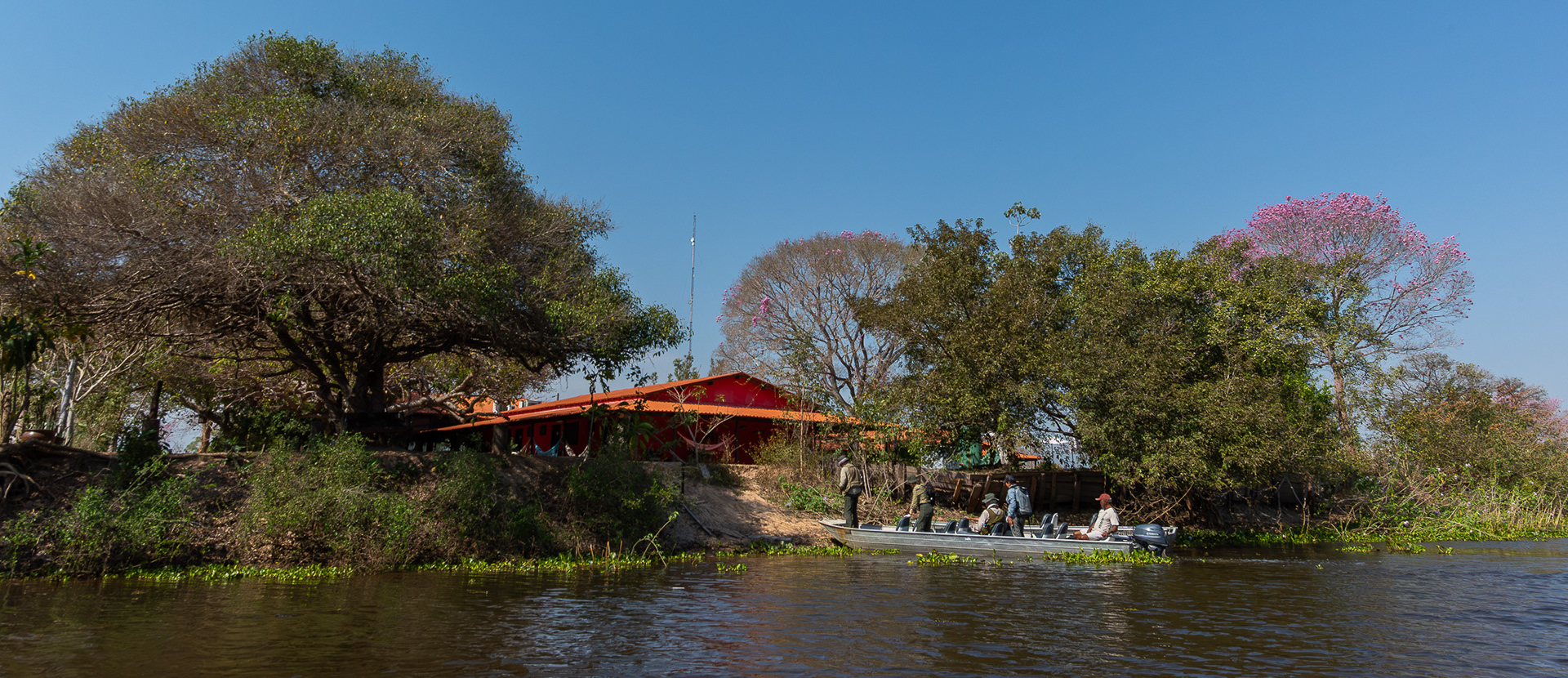
A small excursion boat moored at SouthWild Pantanal Lodge, used for birdwatching and wildlife trips along the river.
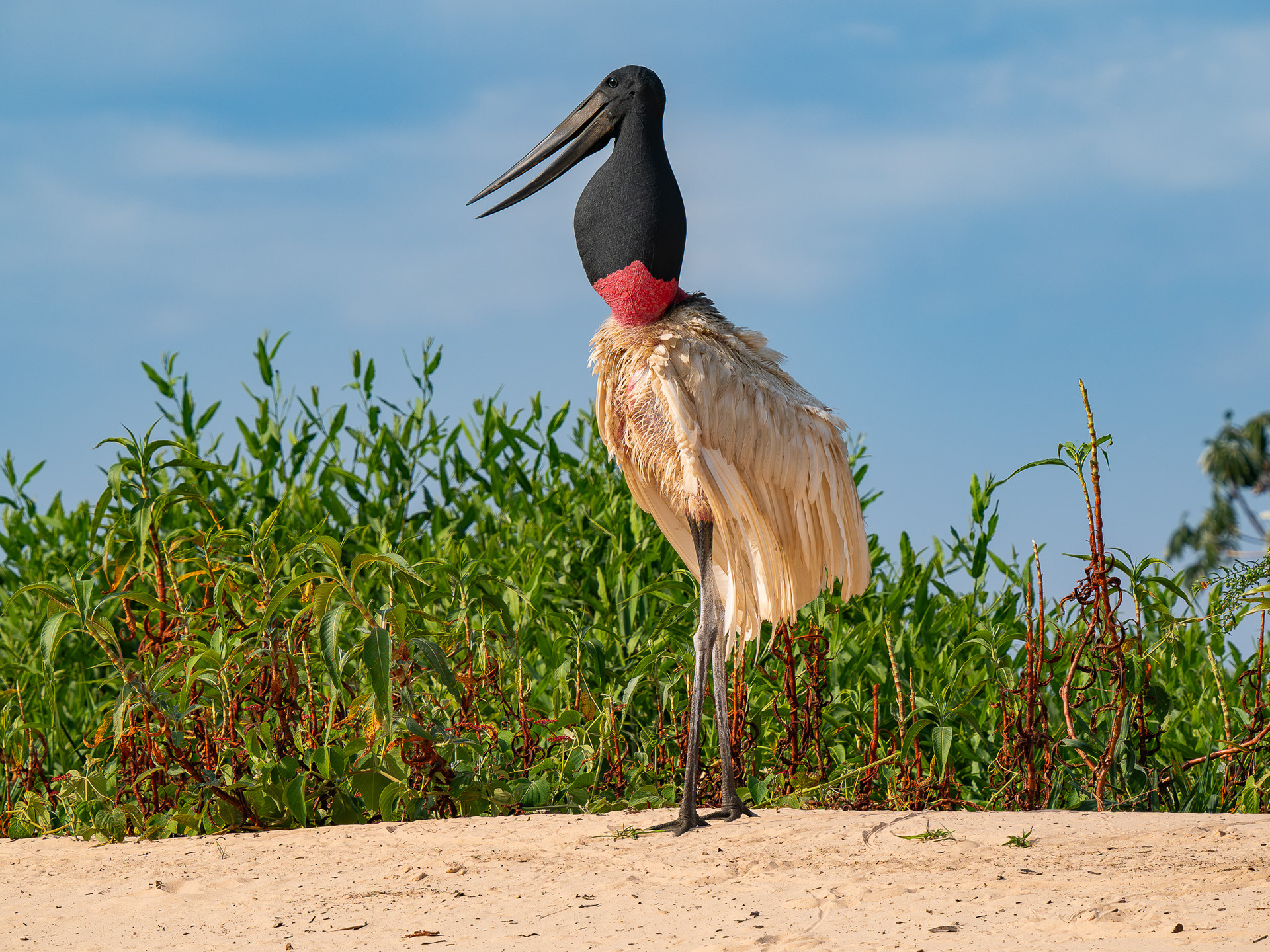
^ Jabiru Stork
The Jabiru Stork (Jabiru mycteria) is one of the most striking birds of South America and a true symbol of the Pantanal wetlands. In Brazil, especially in regions like the Mato Grosso, the Jabiru is considered a cultural icon, a living emblem of the Pantanal's wild beauty.
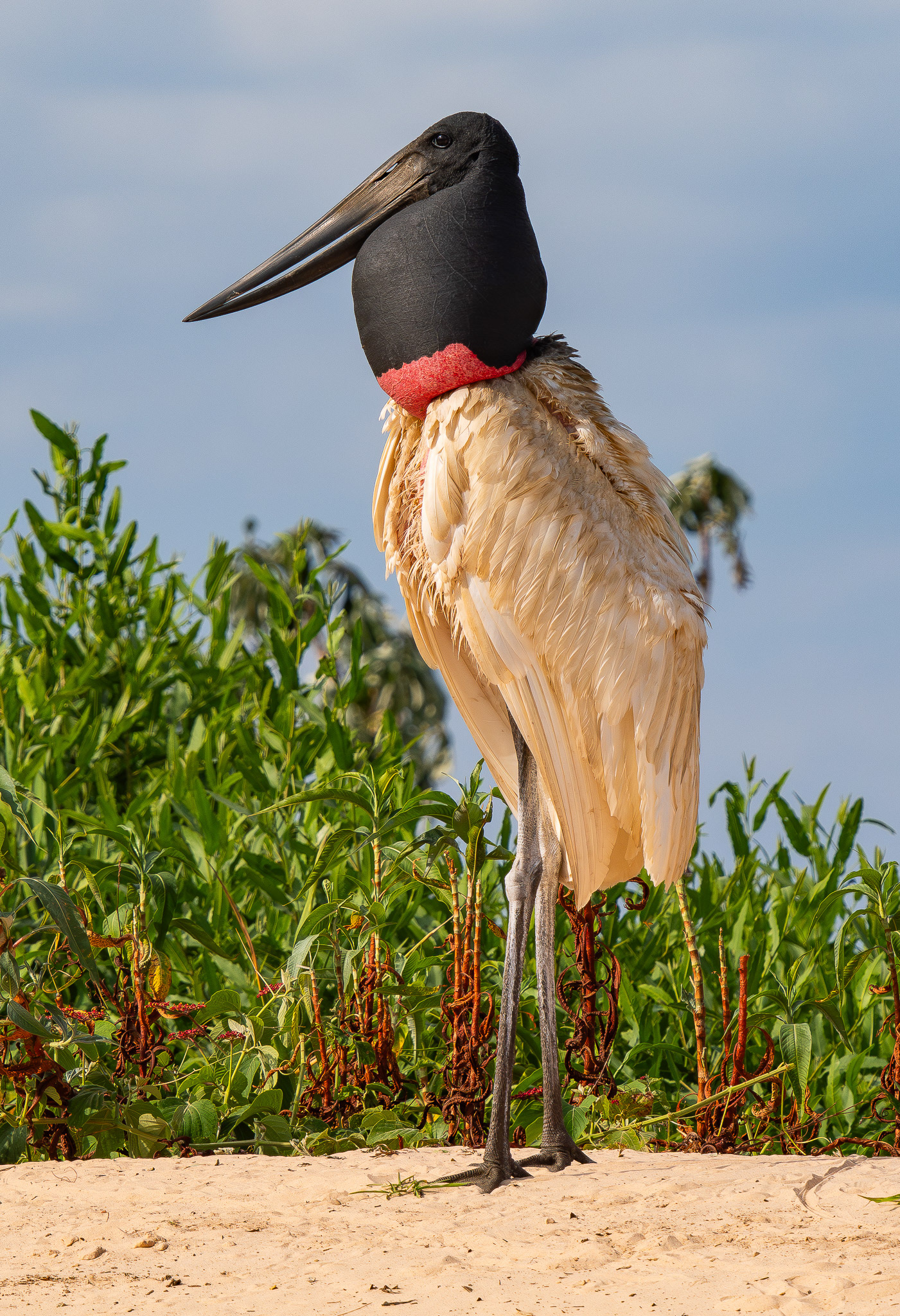
A Jabiru stands tall on a golden sandy riverbank, its swollen black neck and white plumage glowing in the warm wetland sun. Reaching around five feet in height and with a wingspan of up to nine feet, it is the largest flying bird in Central and South America.
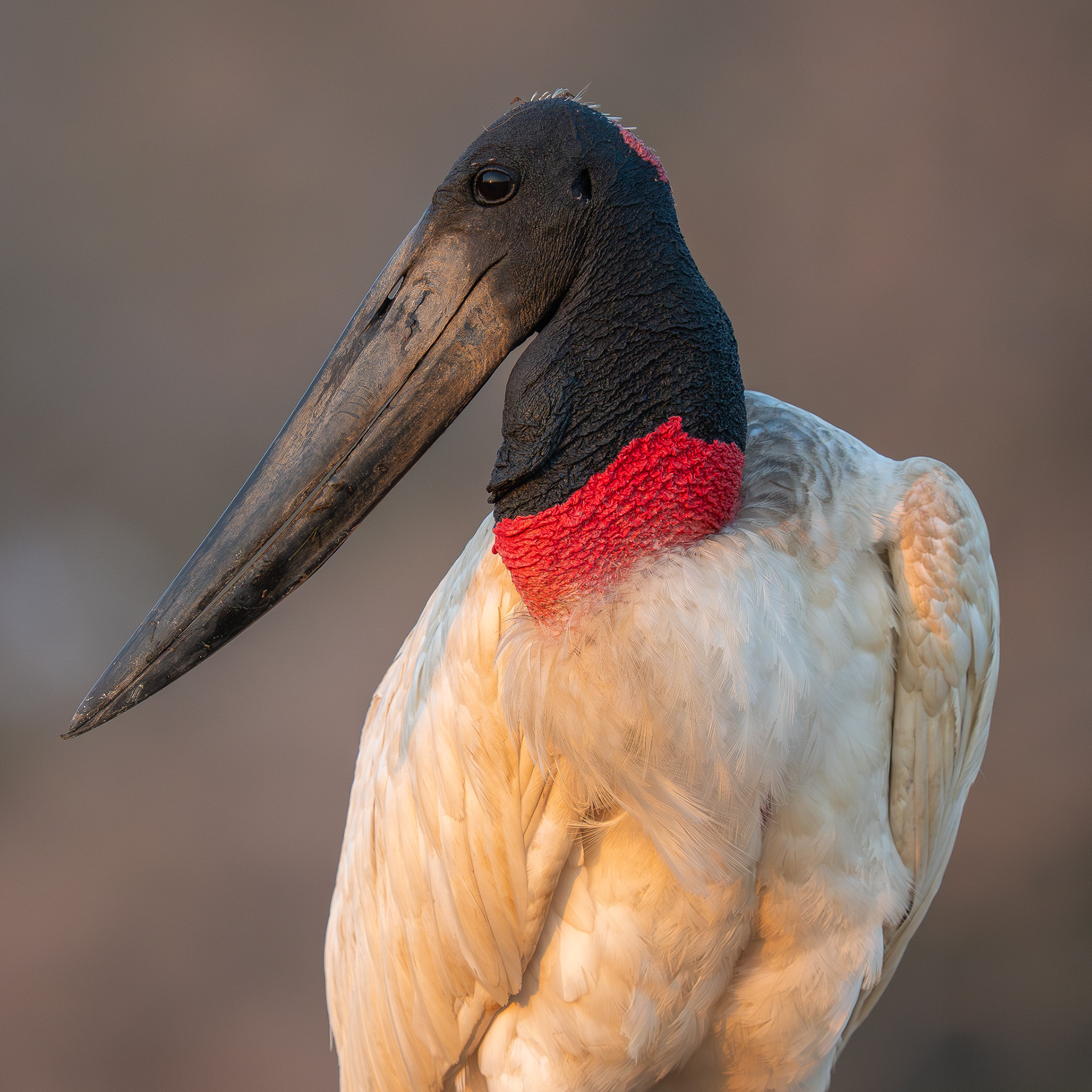
The Jabiru is easily recognised by its massive, specialised beak. This formidable tool is essential for its life in the wetlands, where it serves as its primary instrument for hunting and social interaction. The beak is entirely black, exceptionally thick at the base, and slightly upturned.
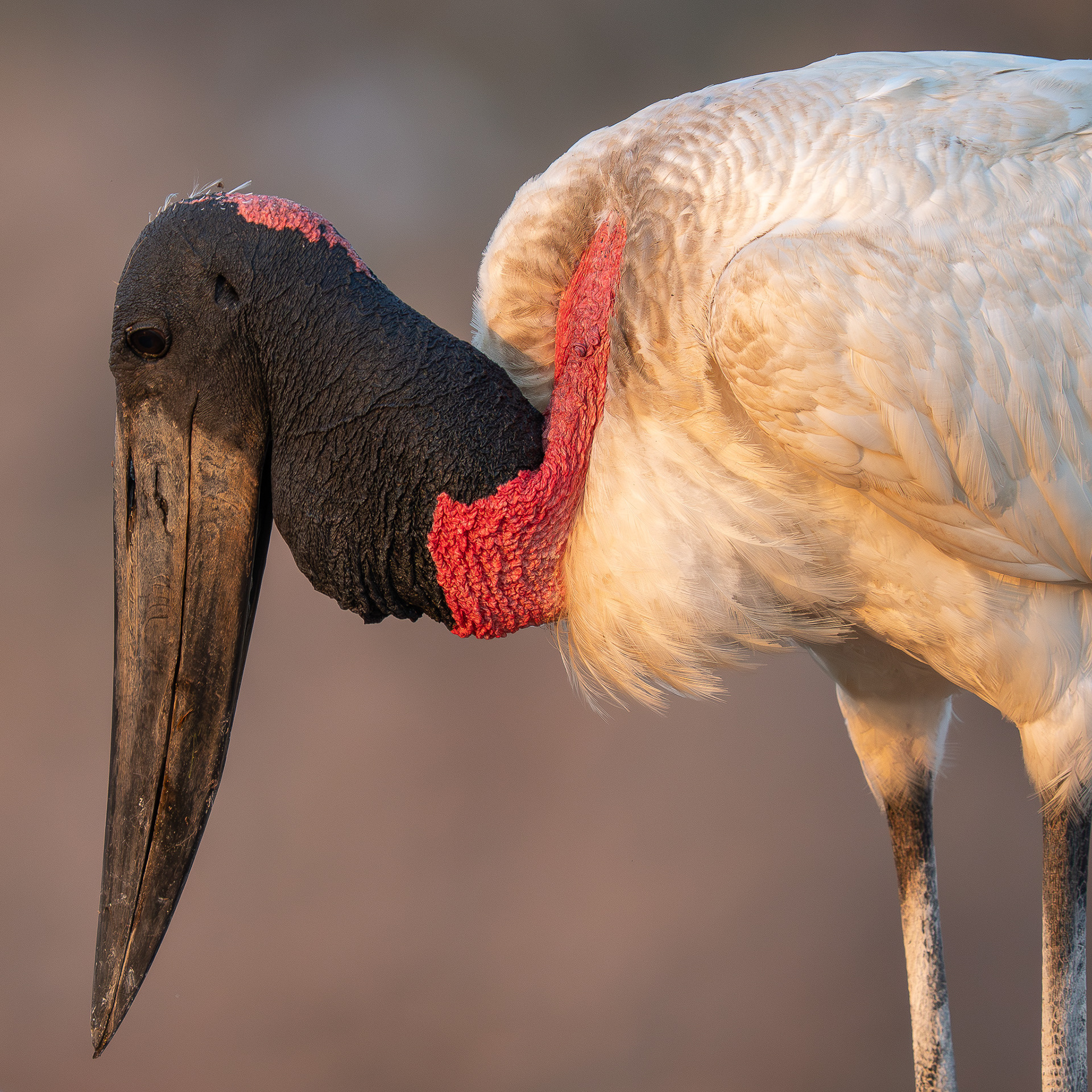
Jabiru are patient hunters, using their thick, powerful bills to grasp fish, amphibians, and other small aquatic prey. In the murky, vegetation-rich waters of the Pantanal, they often rely more on touch than sight to locate food. They also engage in bill-clattering, producing hollow rattling sounds by snapping their beaks together during territorial displays and social interactions.
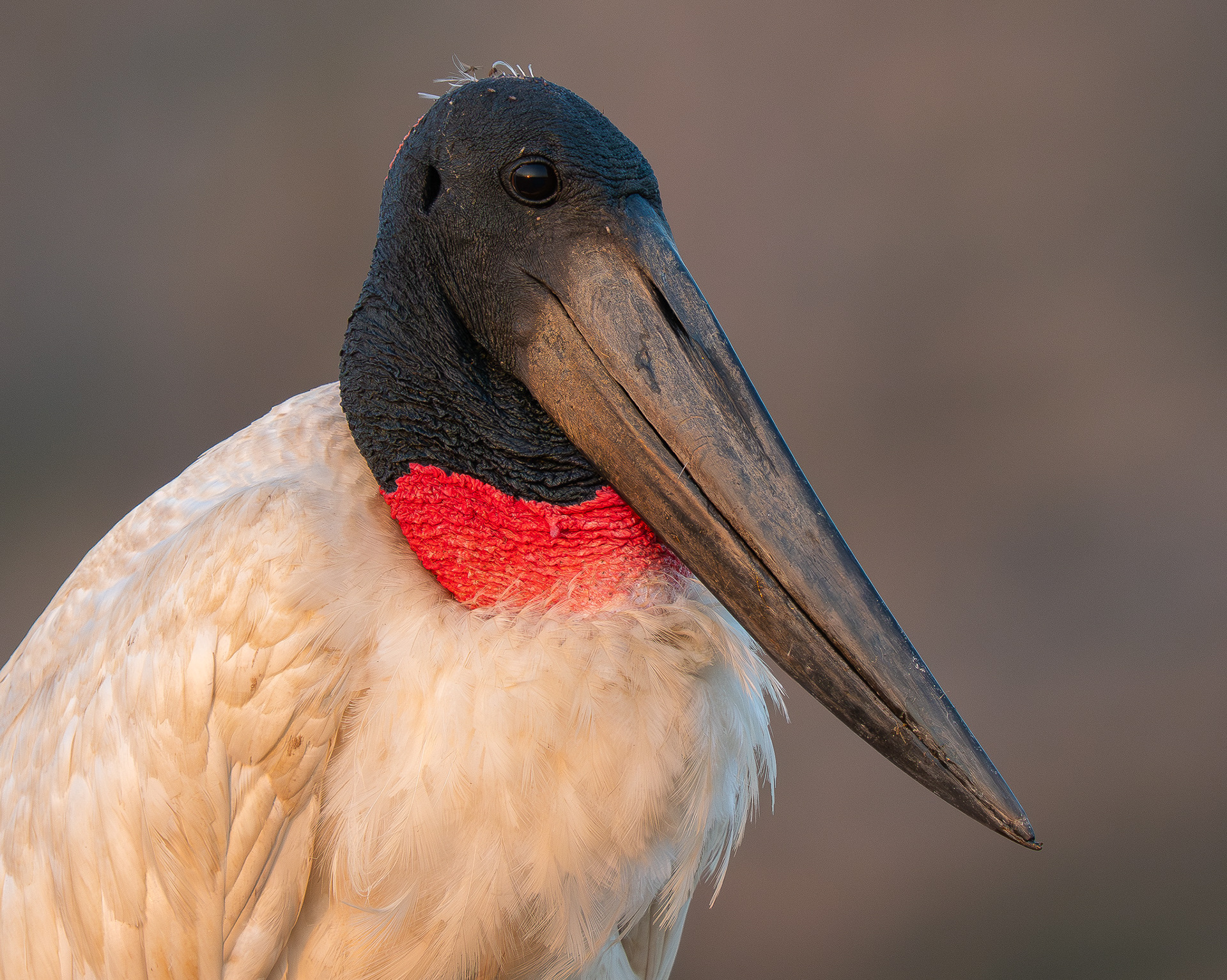
The Jabiru has a long, thick, featherless neck that is glossy black with a vivid red band at its base, which becomes even brighter during the breeding season. The bare skin helps keep the bird clean while feeding on fish and other wetland prey, and also assists with temperature regulation. Its strong, flexible neck supports its large bill and adds to its unmistakable, striking appearance.
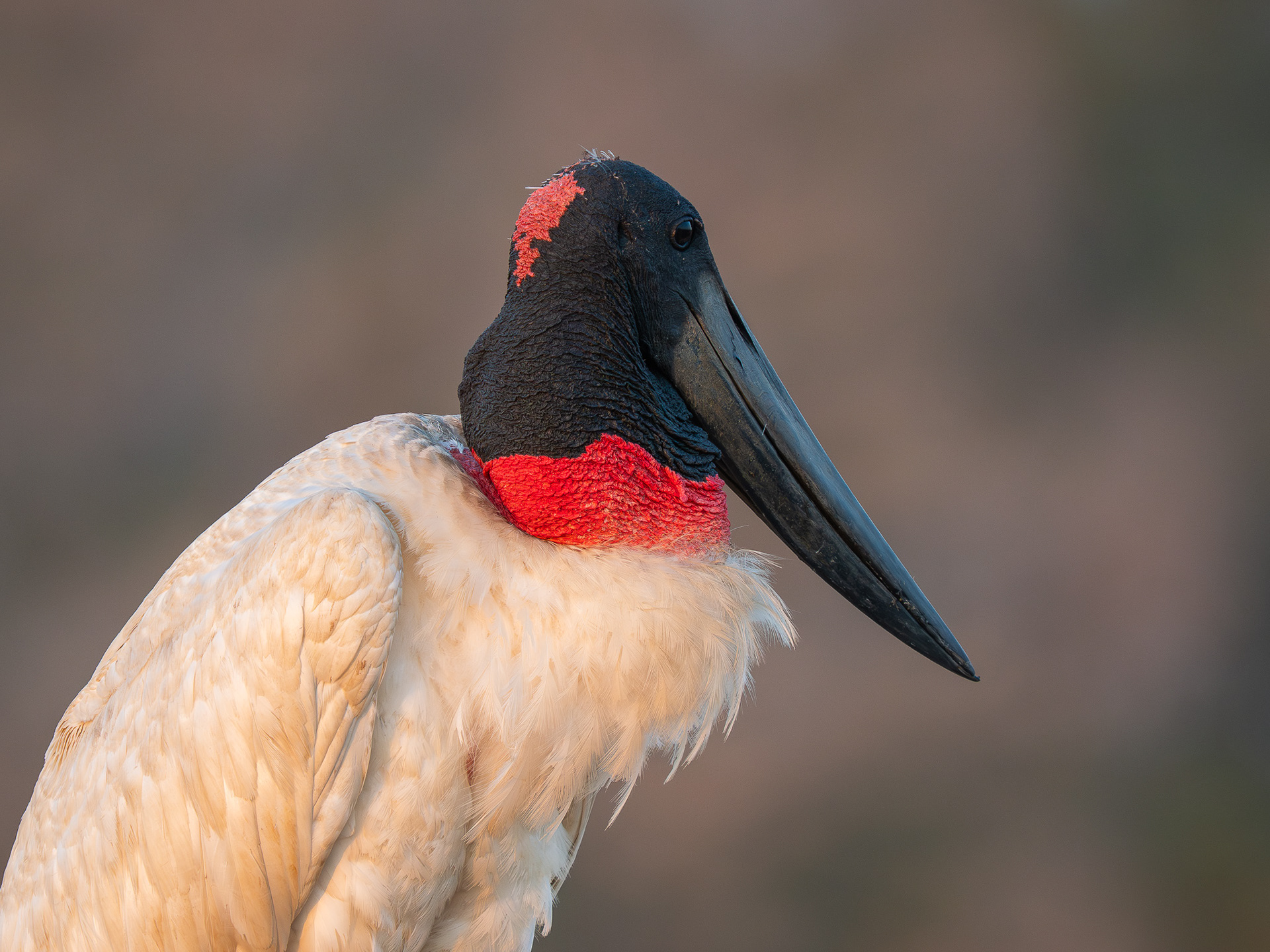
The Jabiru has a featherless patch of red skin at the base of its neck that can noticeably expand or inflate. Unlike a pelican's throat pouch, it is not used to store food. Instead, this visible skin feature can change in colour and size with shifts in blood flow, particularly when the bird is agitated, exerting itself, or engaged in courtship displays.
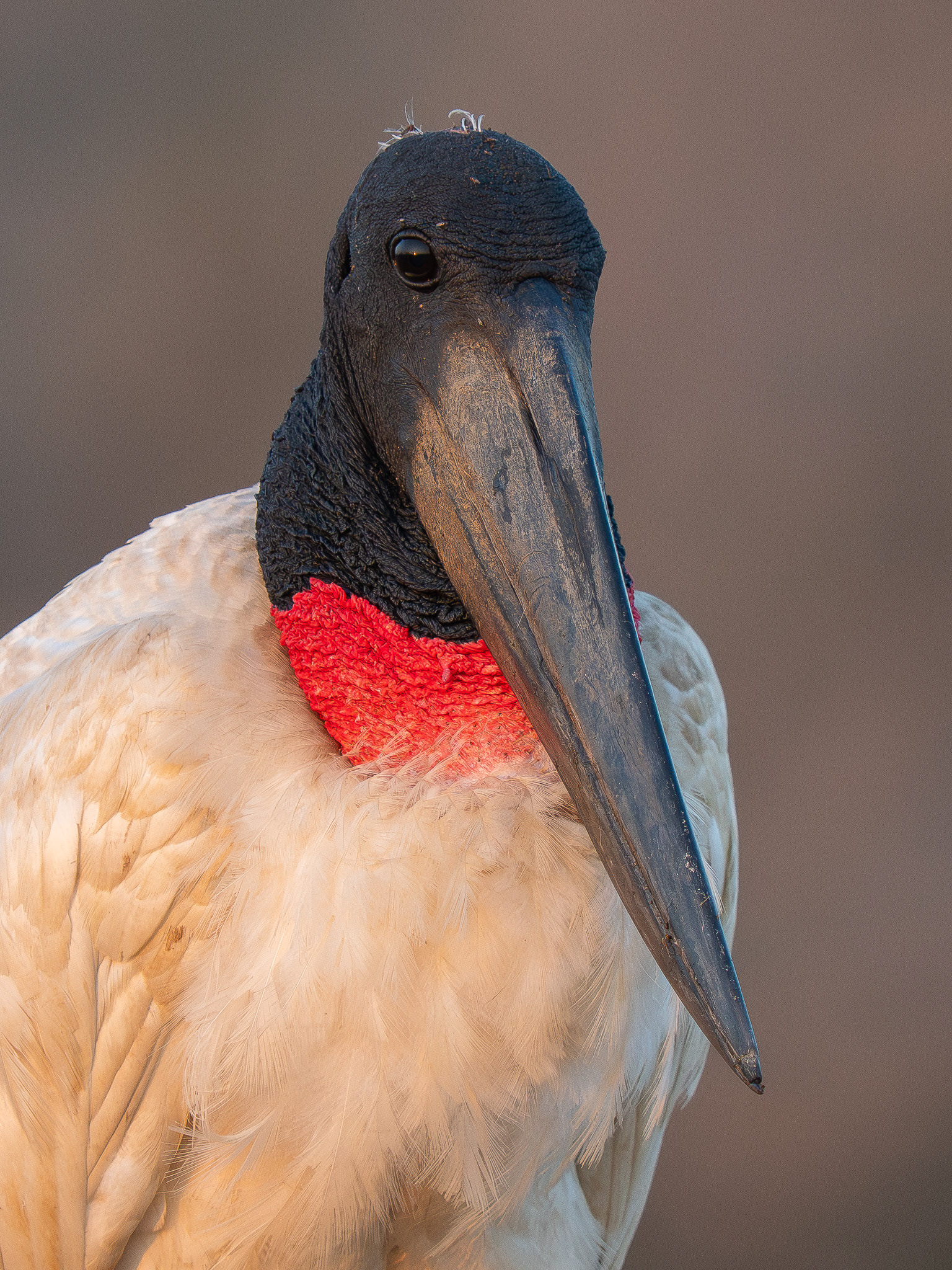
The Jabiru has dark brown to black eyes set on the sides of its head, giving it a broad field of view. Its daytime vision is excellent, enabling it to spot fish, frogs, insects, and small reptiles in shallow or muddy water. These keen eyes help it track prey, judge depth accurately, and remain alert to potential threats, relying far more on sight than smell when hunting.
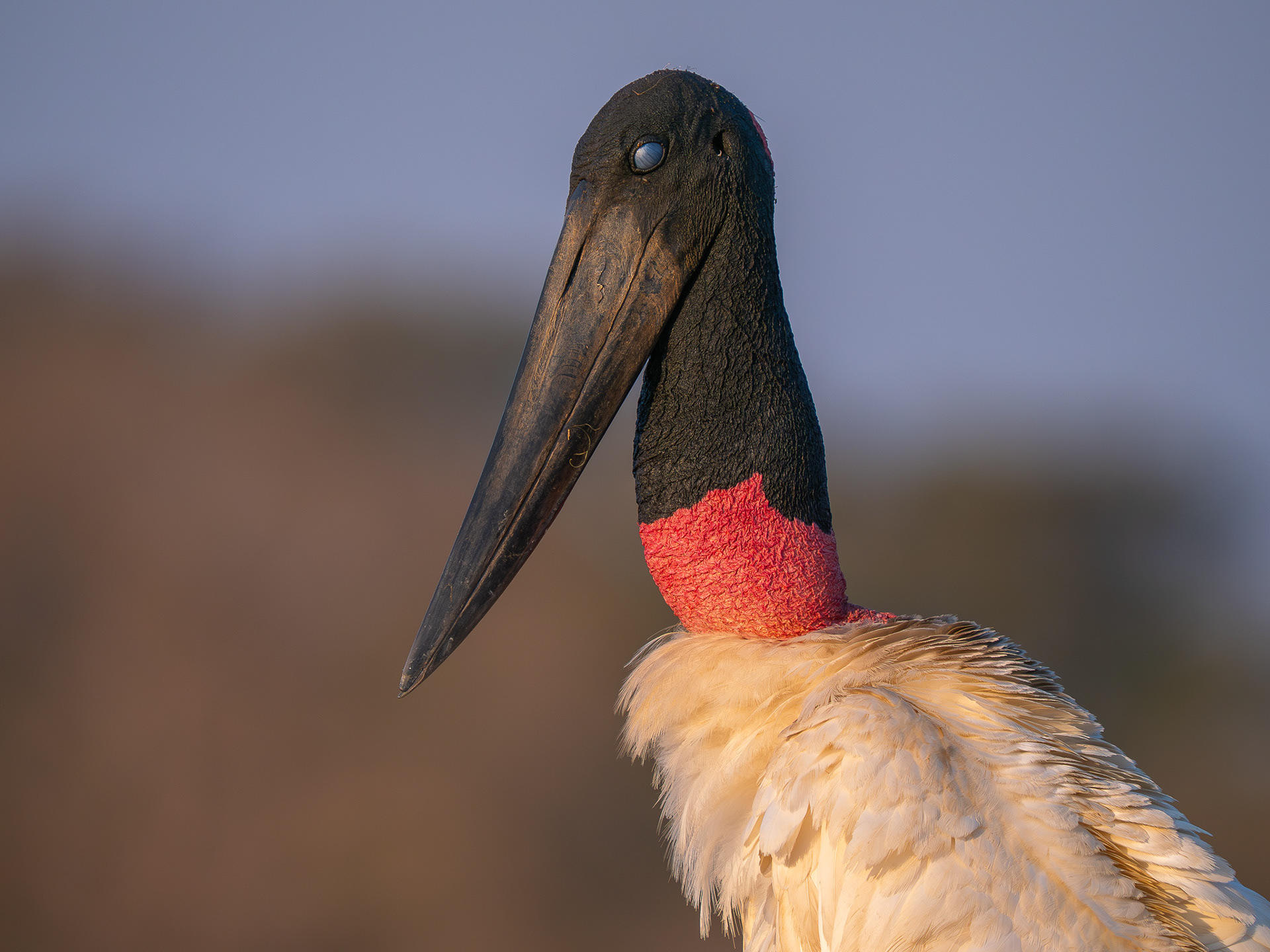
It also has a nictitating membrane, often referred to as a 'third eyelid'. This translucent tissue is hinged at the inner corner of the eye and sweeps horizontally across the cornea. It functions like built-in goggles, protecting the eye from debris, water pressure, and struggling prey. It is frequently deployed when the bird is fishing or probing underwater.
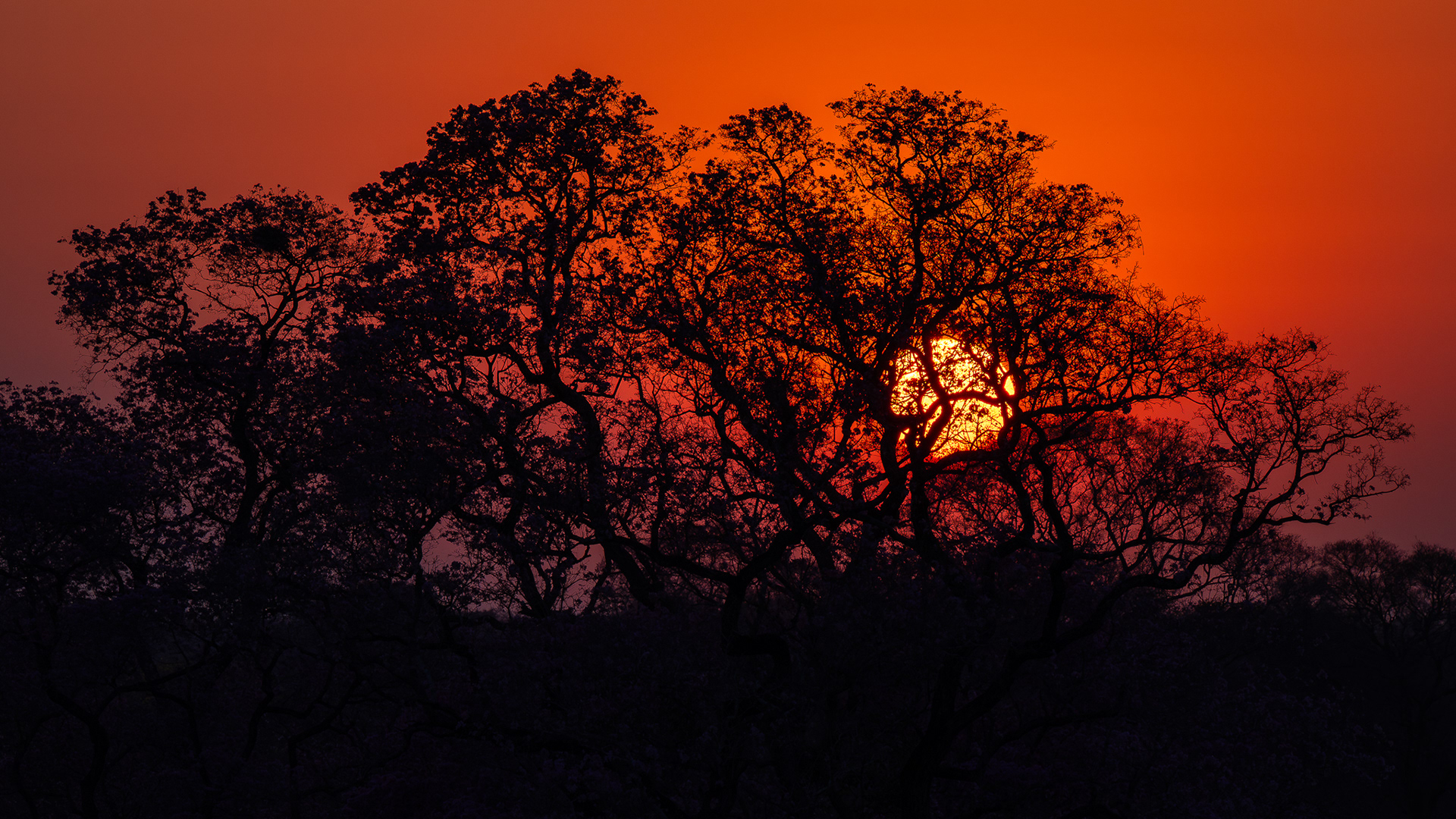
A golden sunrise over the Pantanal bathes the sky in warm hues of amber and soft orange. Dark silhouettes of trees stand in quiet contrast against the luminous horizon, their branches delicately traced by the first light of day, enhancing the tranquil atmosphere of Brazil's wild wetlands.
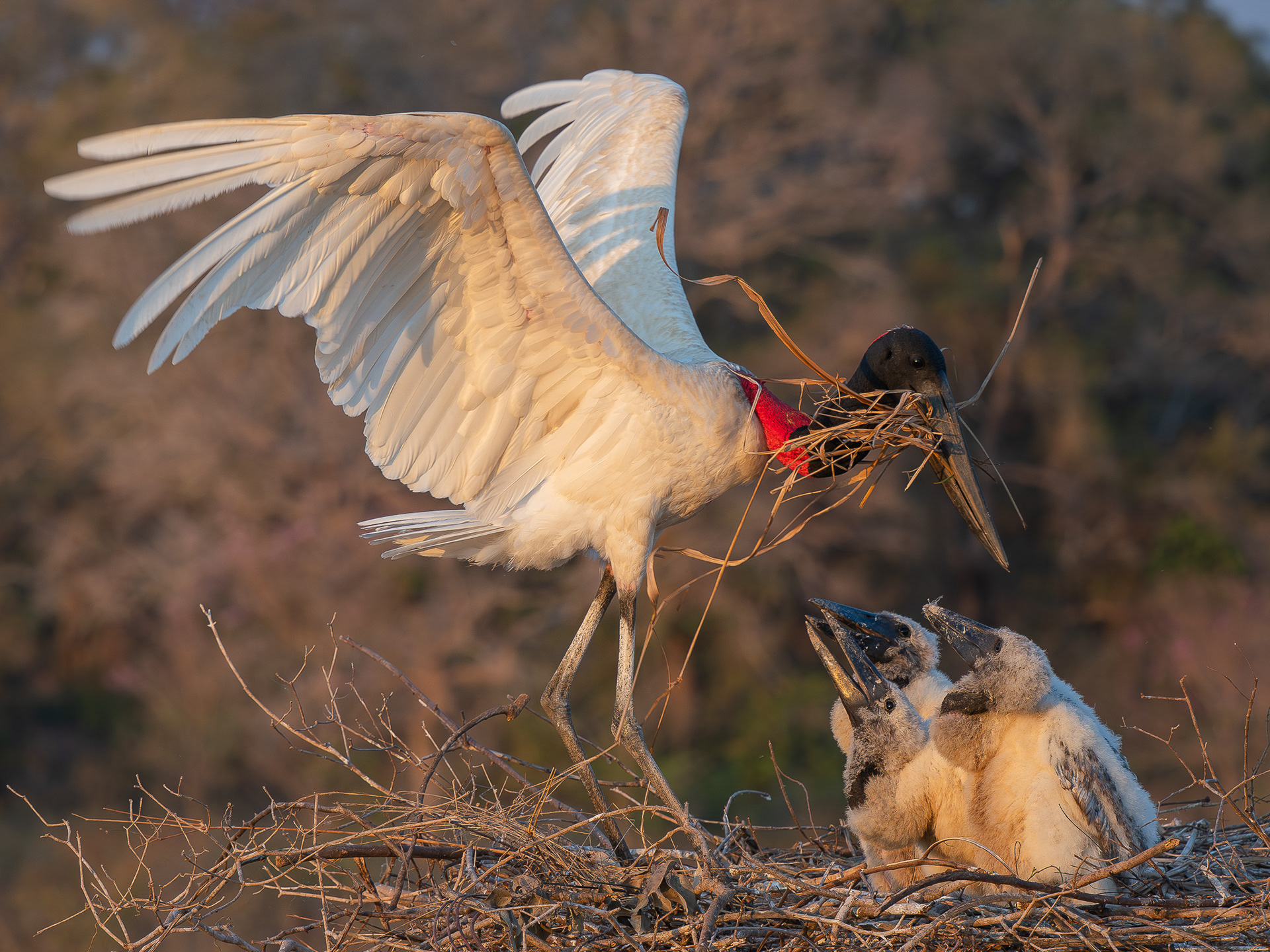
An adult Jabiru descends gracefully into its nest, wings fully outstretched, long blades of brown grass clasped in its massive bill, as three eager chicks stretch their heads skyward in anticipation.
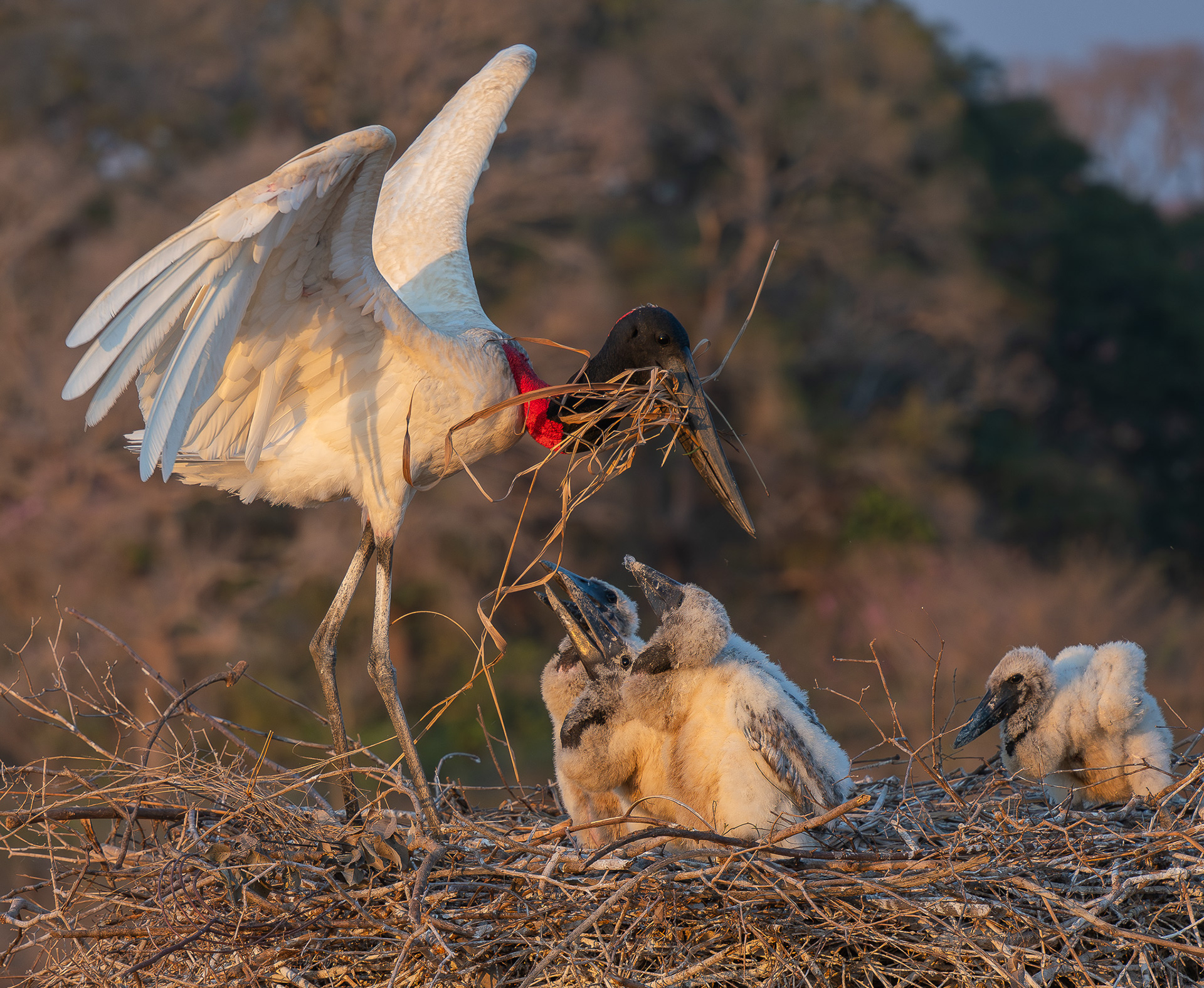
The three small chicks huddle together, their downy feathers glowing in the soft golden light of the early morning sun, while a fourth, much smaller chick, hangs back, watching from the edge.
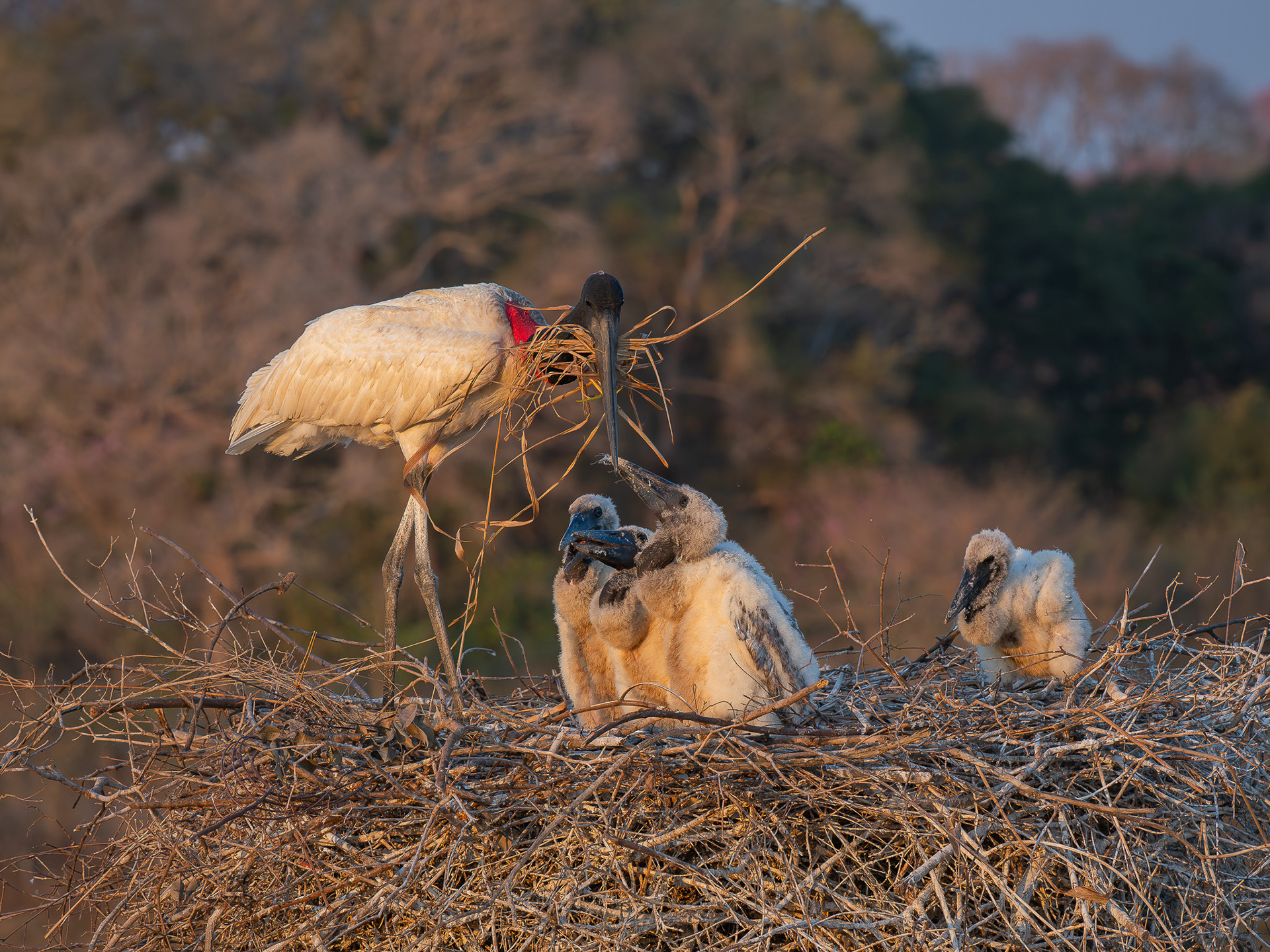
The chicks stretch their necks in eager anticipation of food, beaks slightly open and eyes bright with expectation - only to slump in mild disappointment as their mother arrives carrying not a meal, but a bundle of nesting material for bedding.
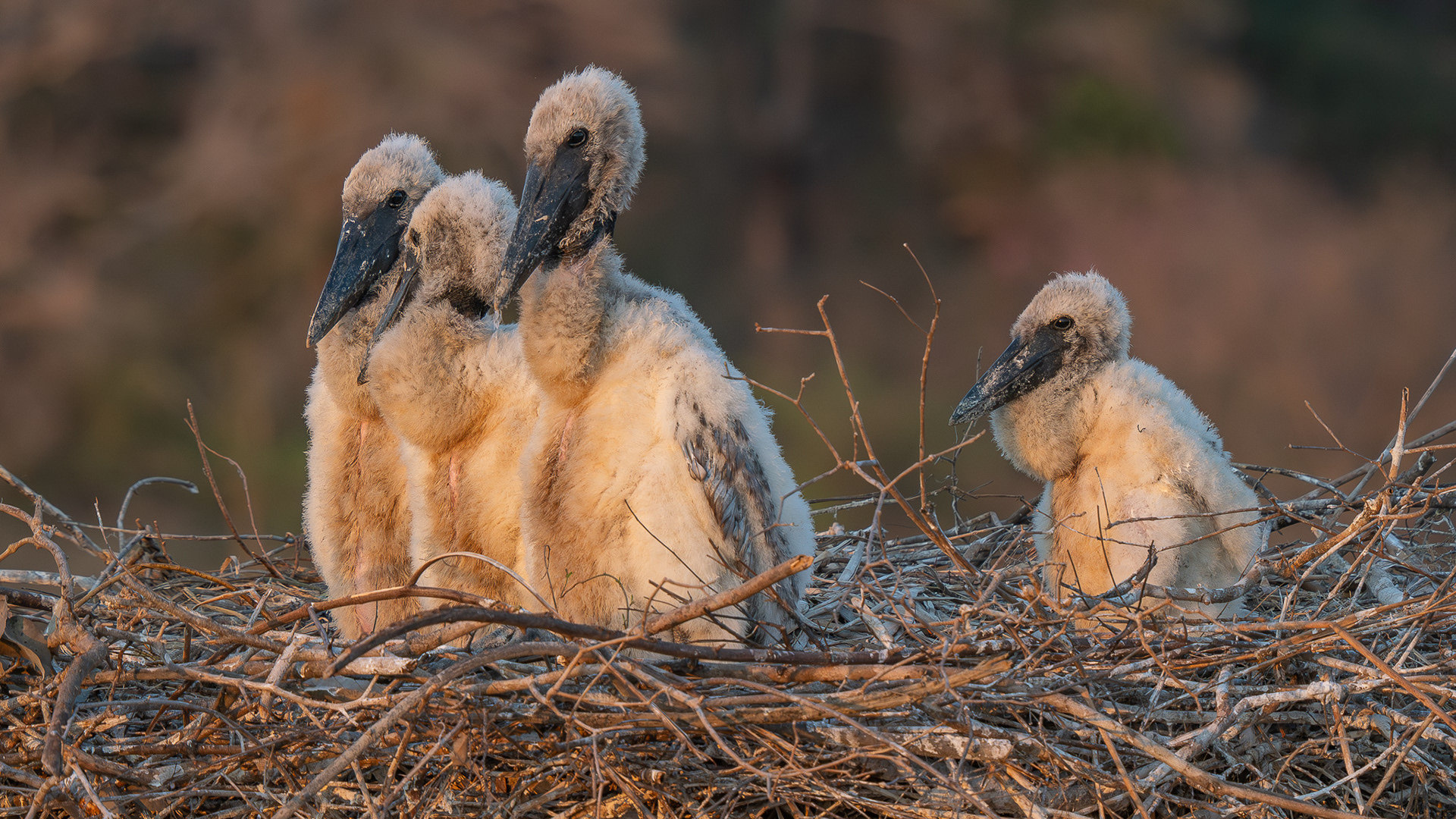
Inside the nest, three fluffy white Jabiru chicks huddle together whilst just behind them, a smaller chick sits alone. All are softly illuminated by the rising sun.
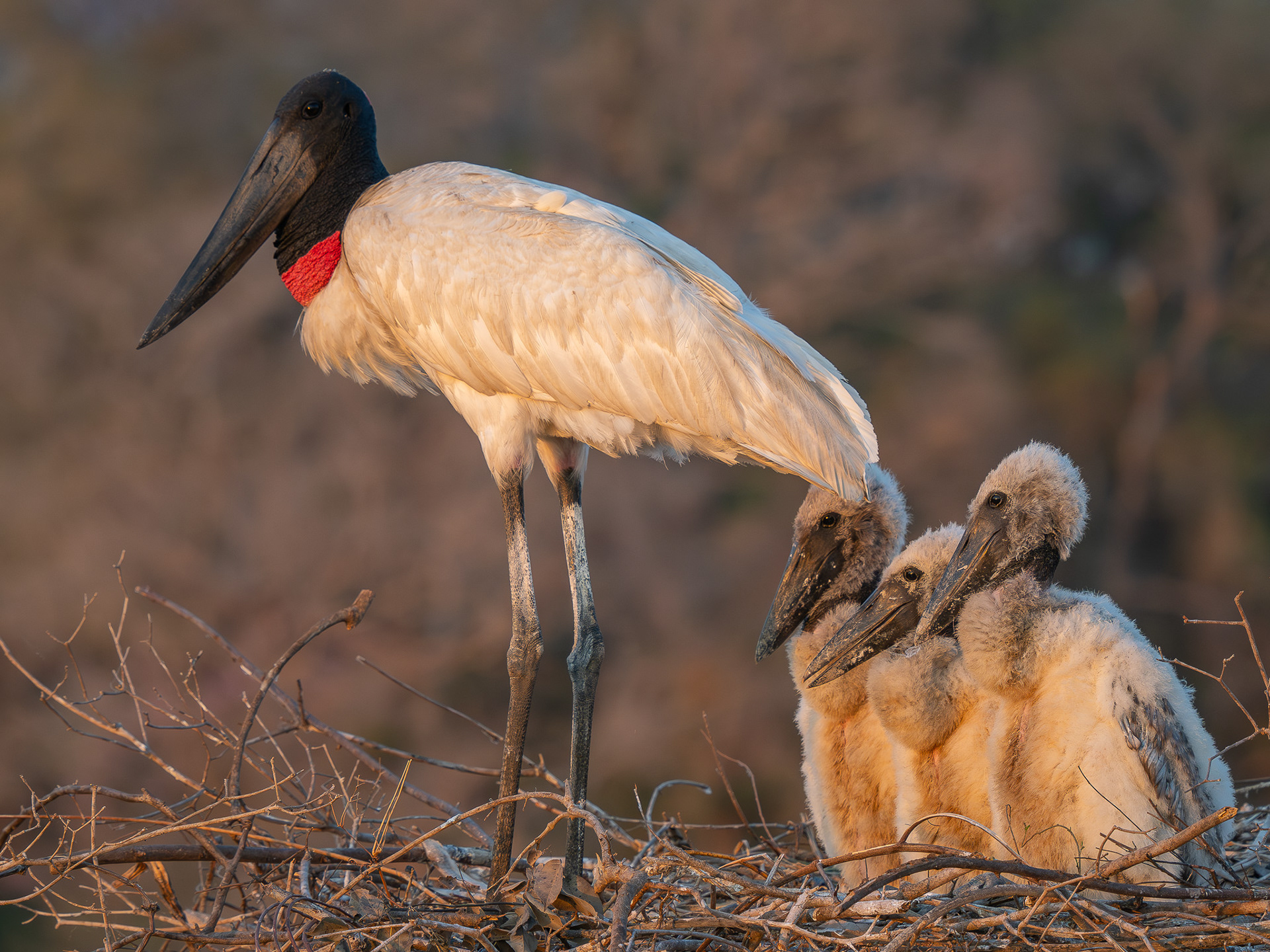
The mother stands with three of her chicks, softly illuminated by the rising sun, their white feathers glowing in the warm golden light.
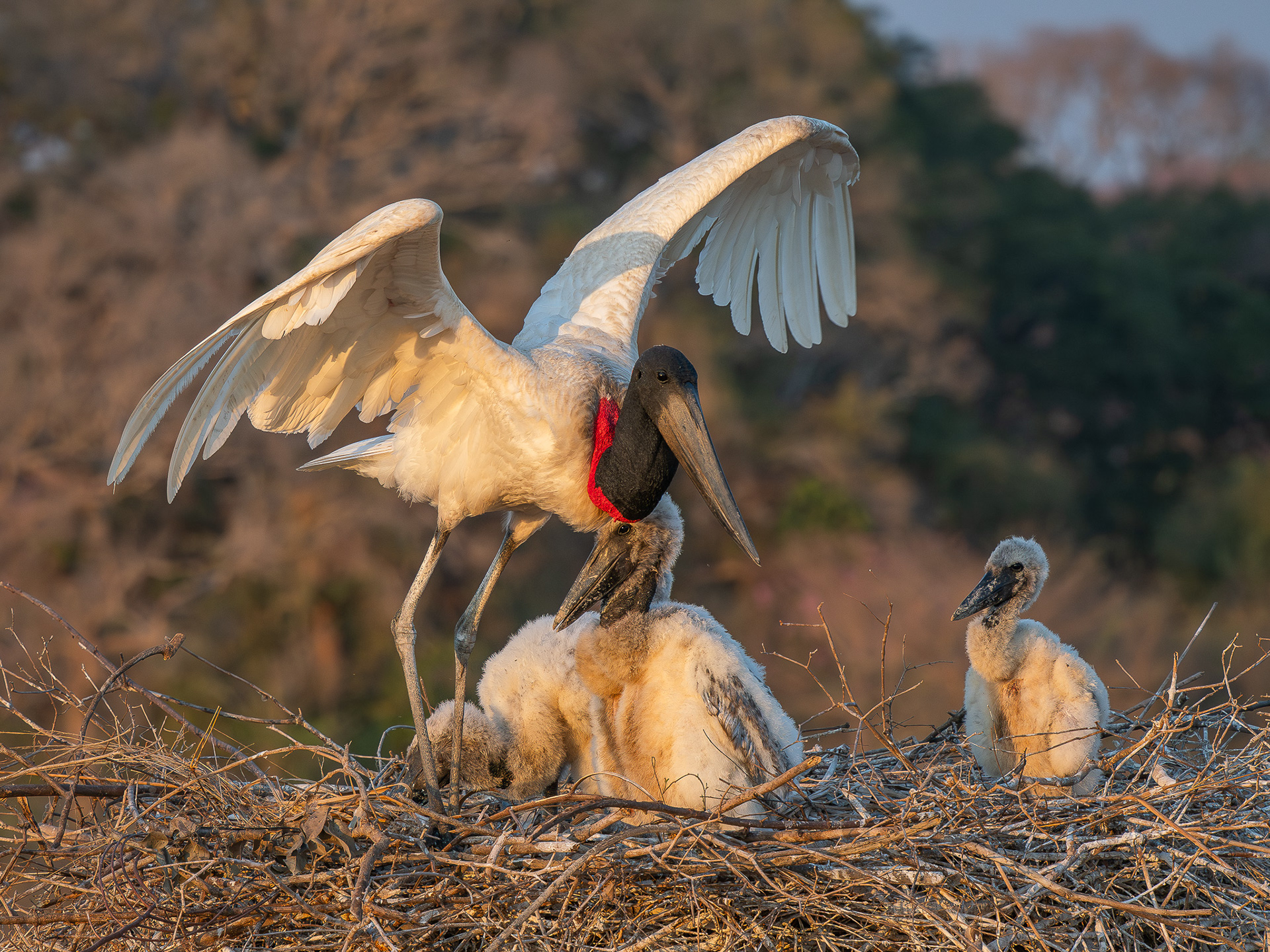
The mother Jabiru spreads her broad wings wide in preparation for flight, feathers fanned and catching the light as she readies herself to lift gracefully from the nest.
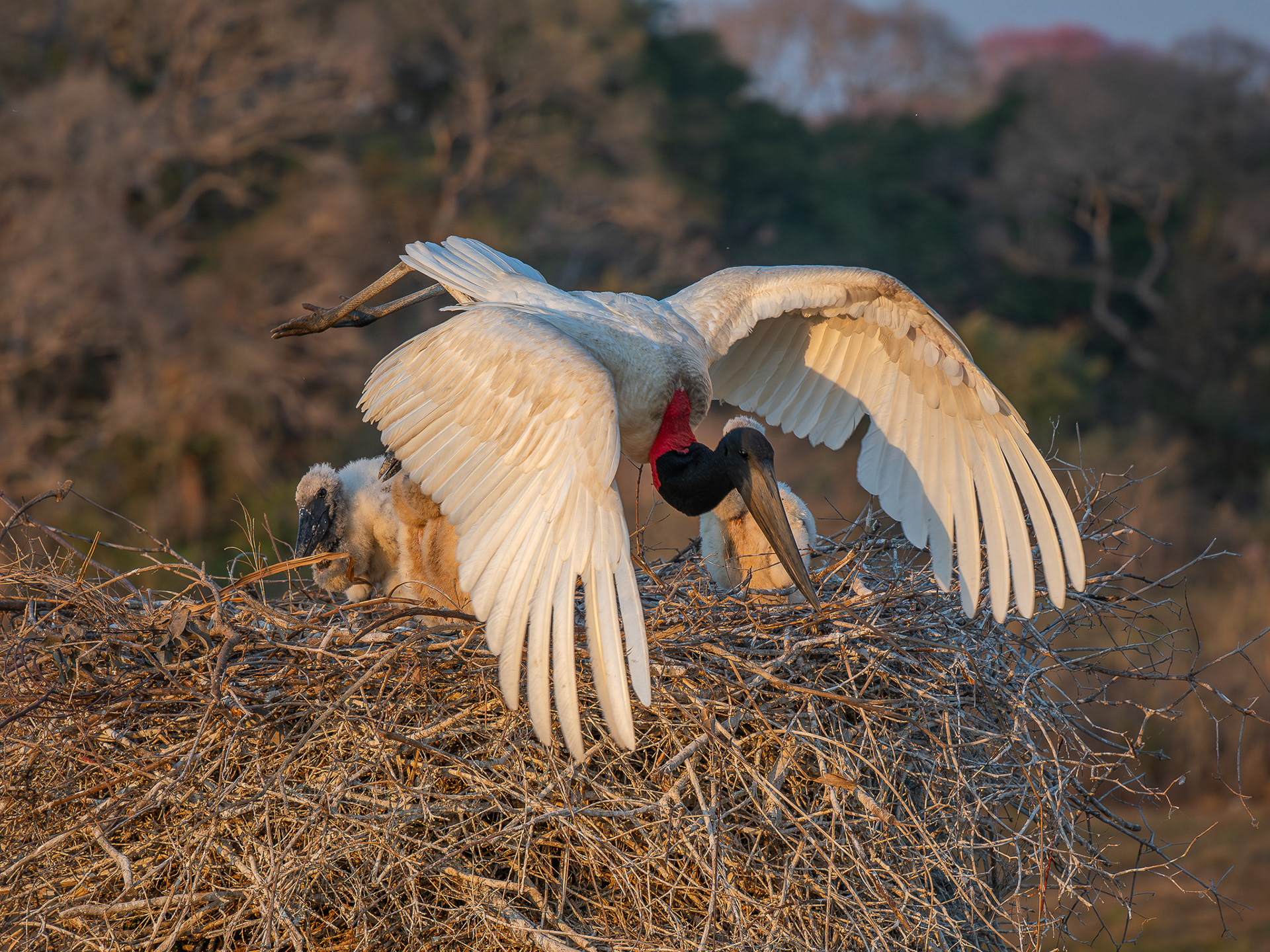
The mother Jabiru launches herself over the edge of the nest, her wings sweeping powerfully downward as she takes off.
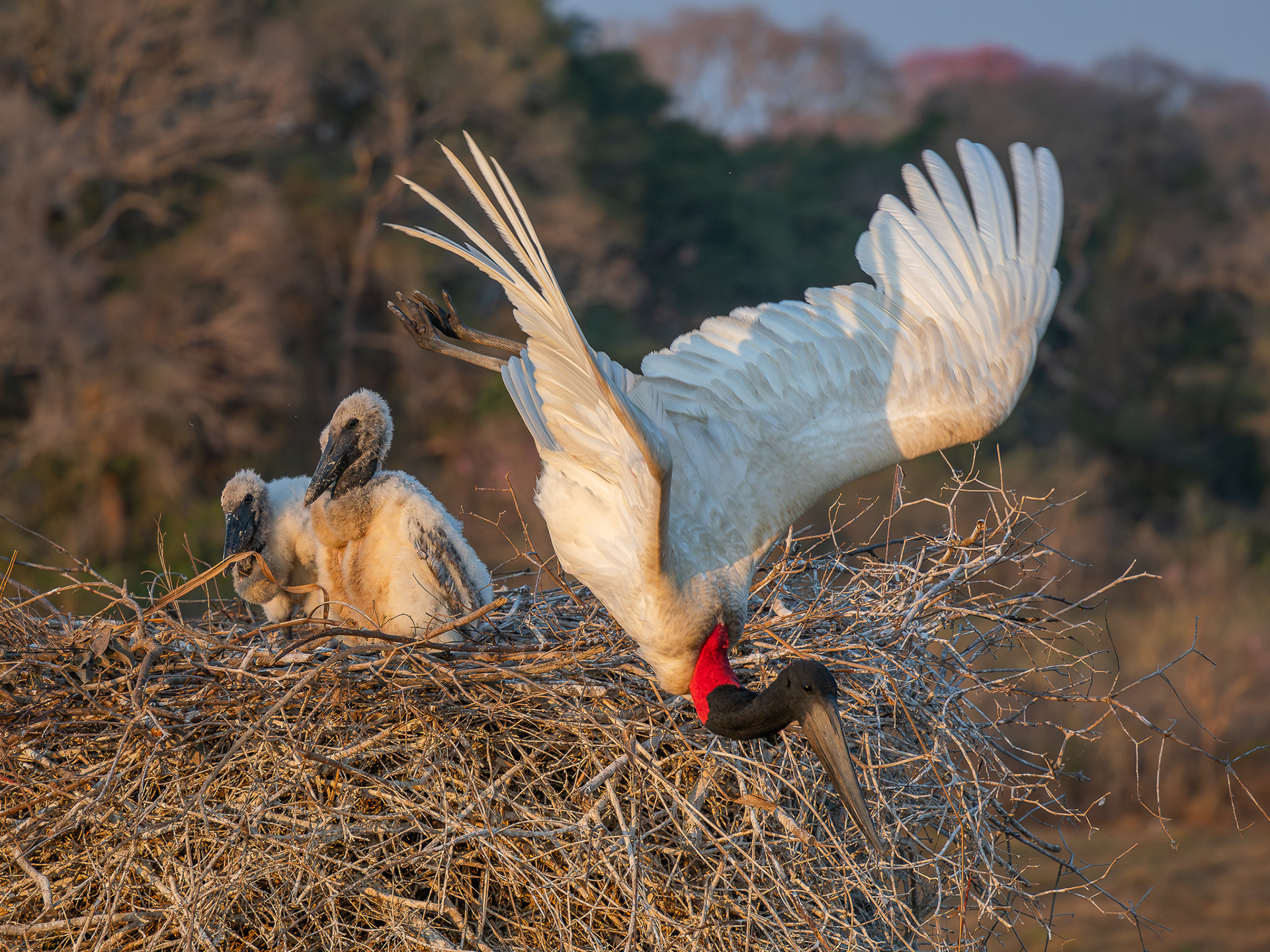
She plunges head first in a sharp, controlled dive before levelling out and gliding smoothly down to the ground below.
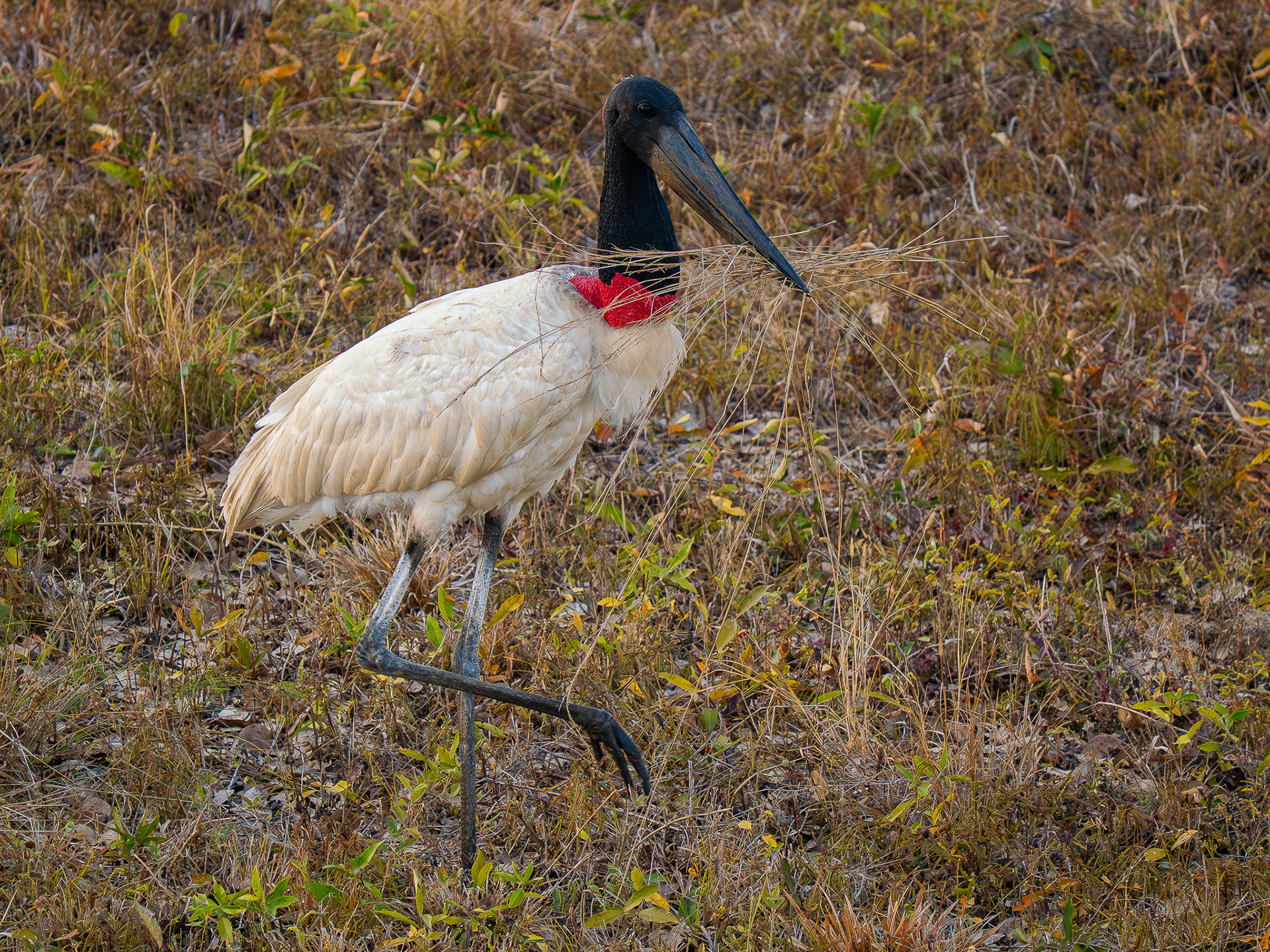
Walking slowly across the ground, she carefully gathers dry grass in her beak, selecting long strands to carry back to line the nest.
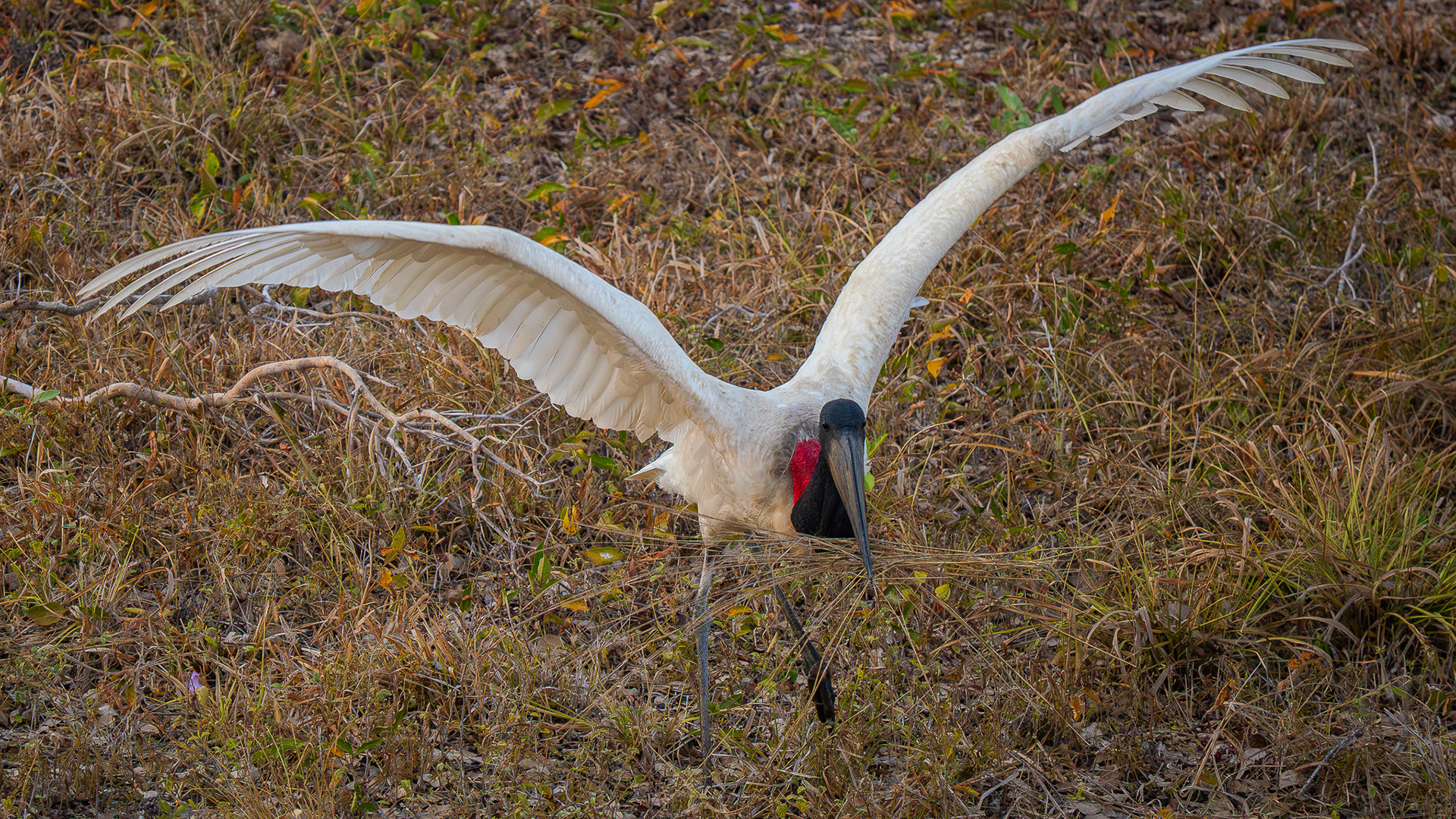
With a bundle of dry grass clasped firmly in her beak she flies back to the nest.
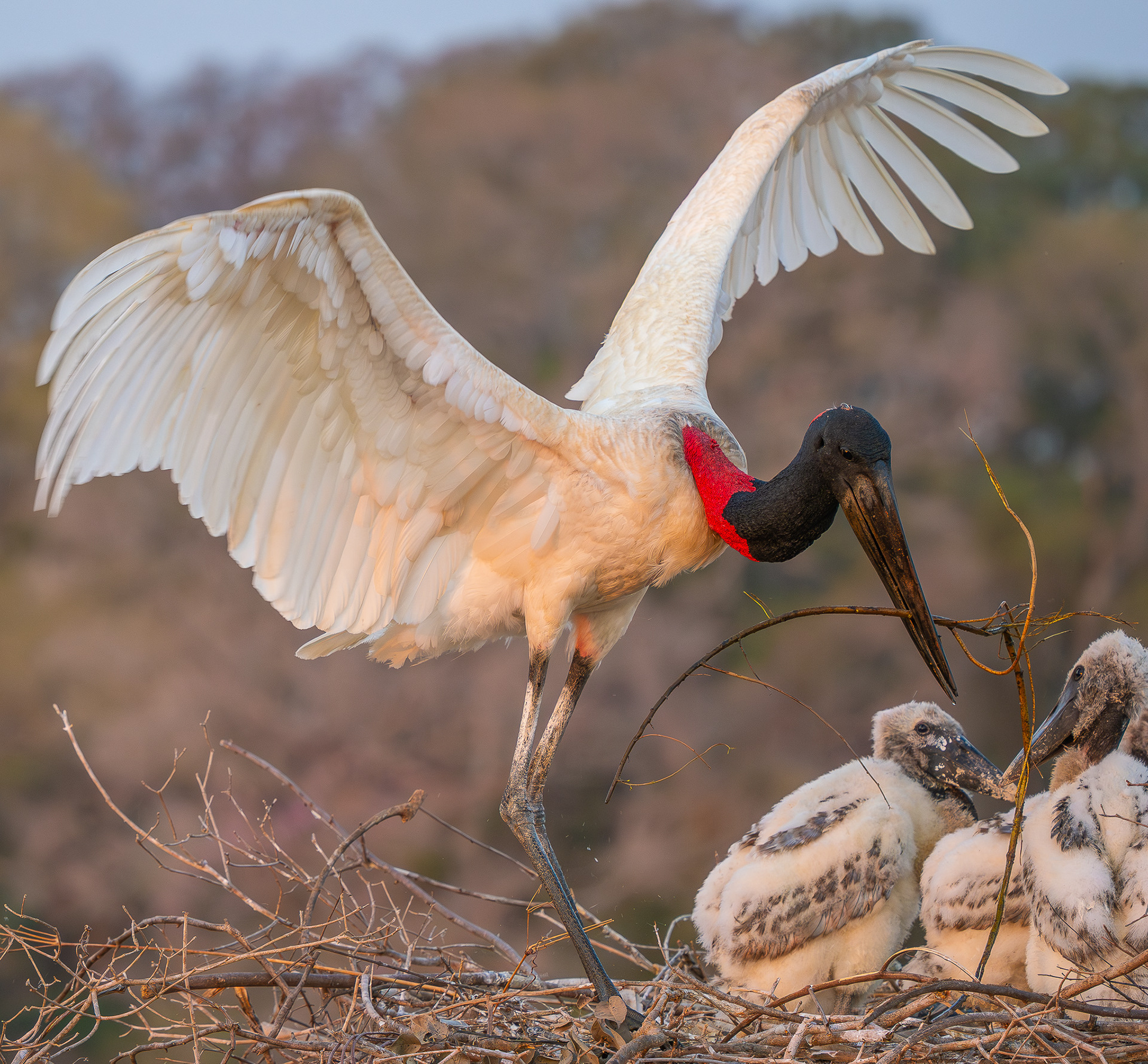
She adds the fresh material to the nest, carefully shifting and weaving sticks into place to reinforce its structure and create a safer, more comfortable space for her growing chicks.
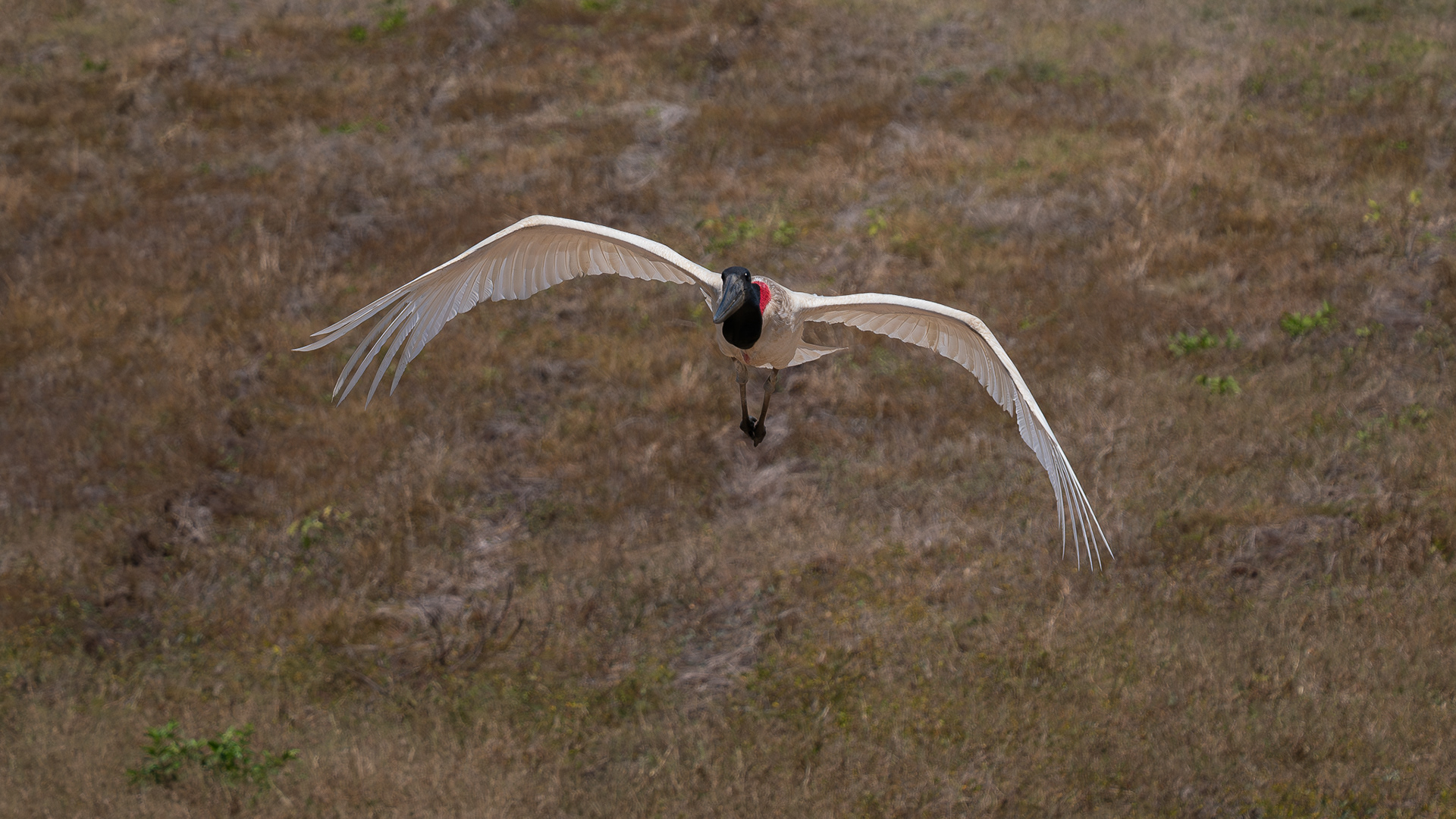
Despite their impressive size, Jabiru are powerful and graceful in flight. When airborne, they fly with their long legs trailing behind and their necks fully outstretched - a defining characteristic that distinguishes them from herons, which fly with their necks curved back against their bodies.
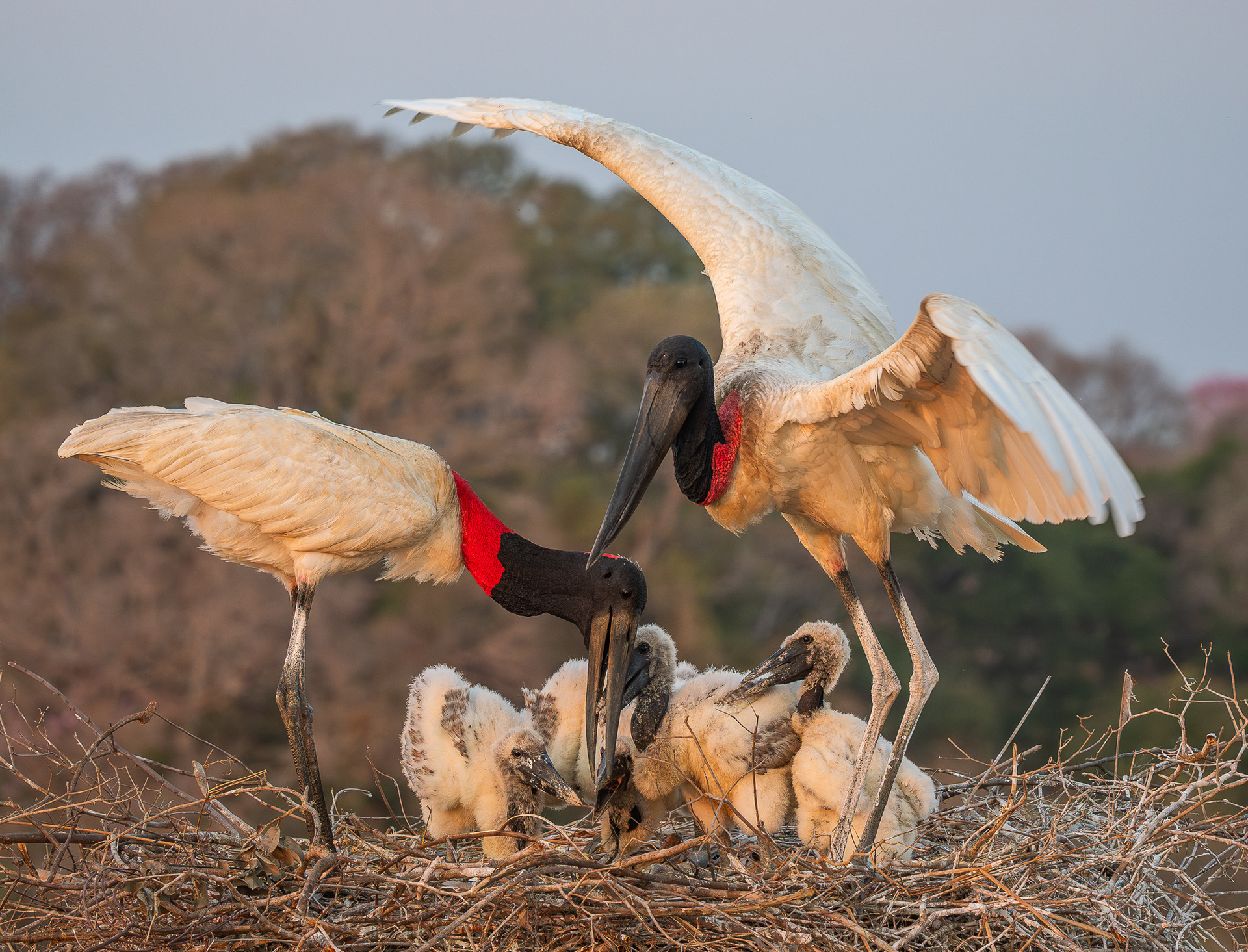
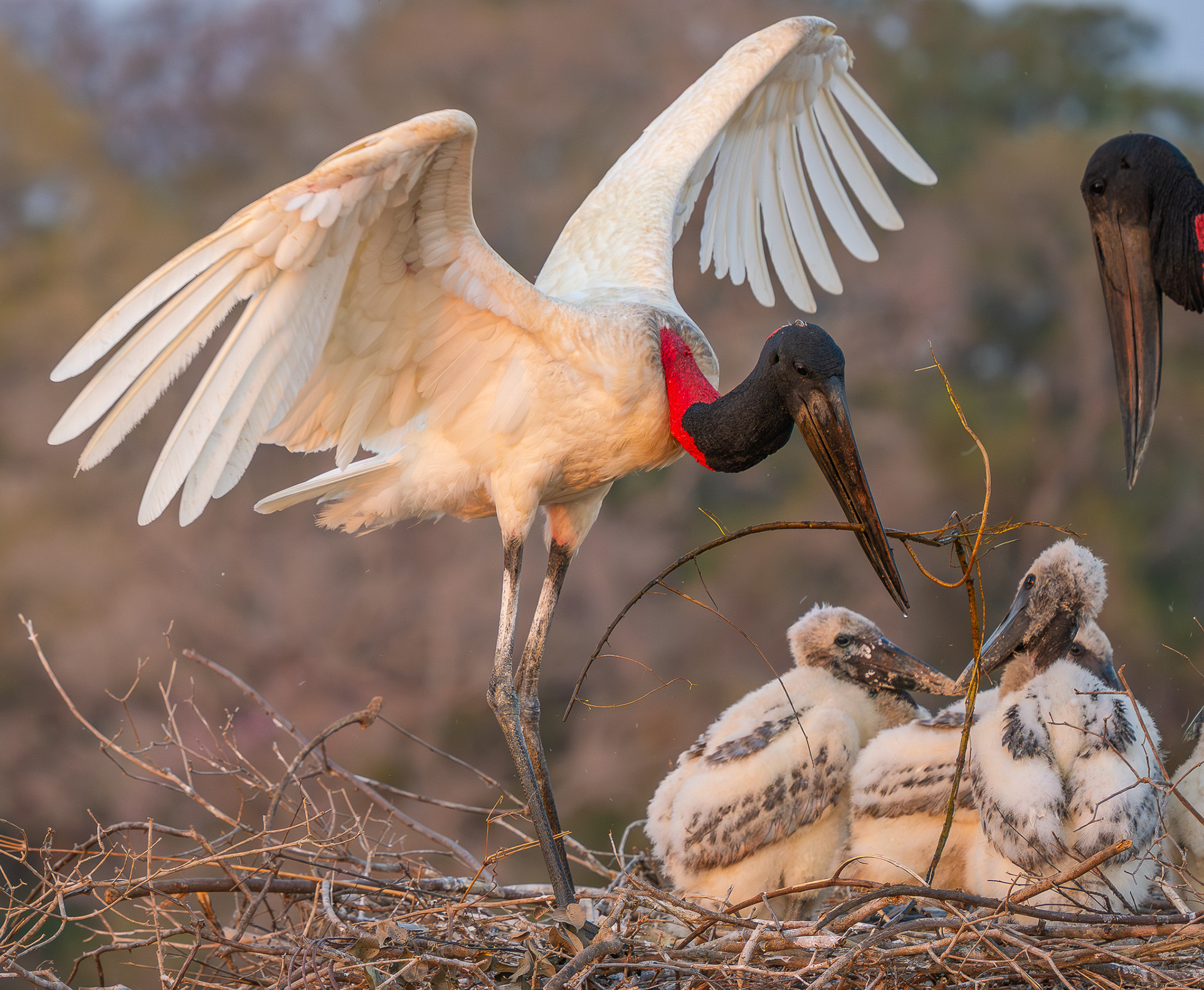
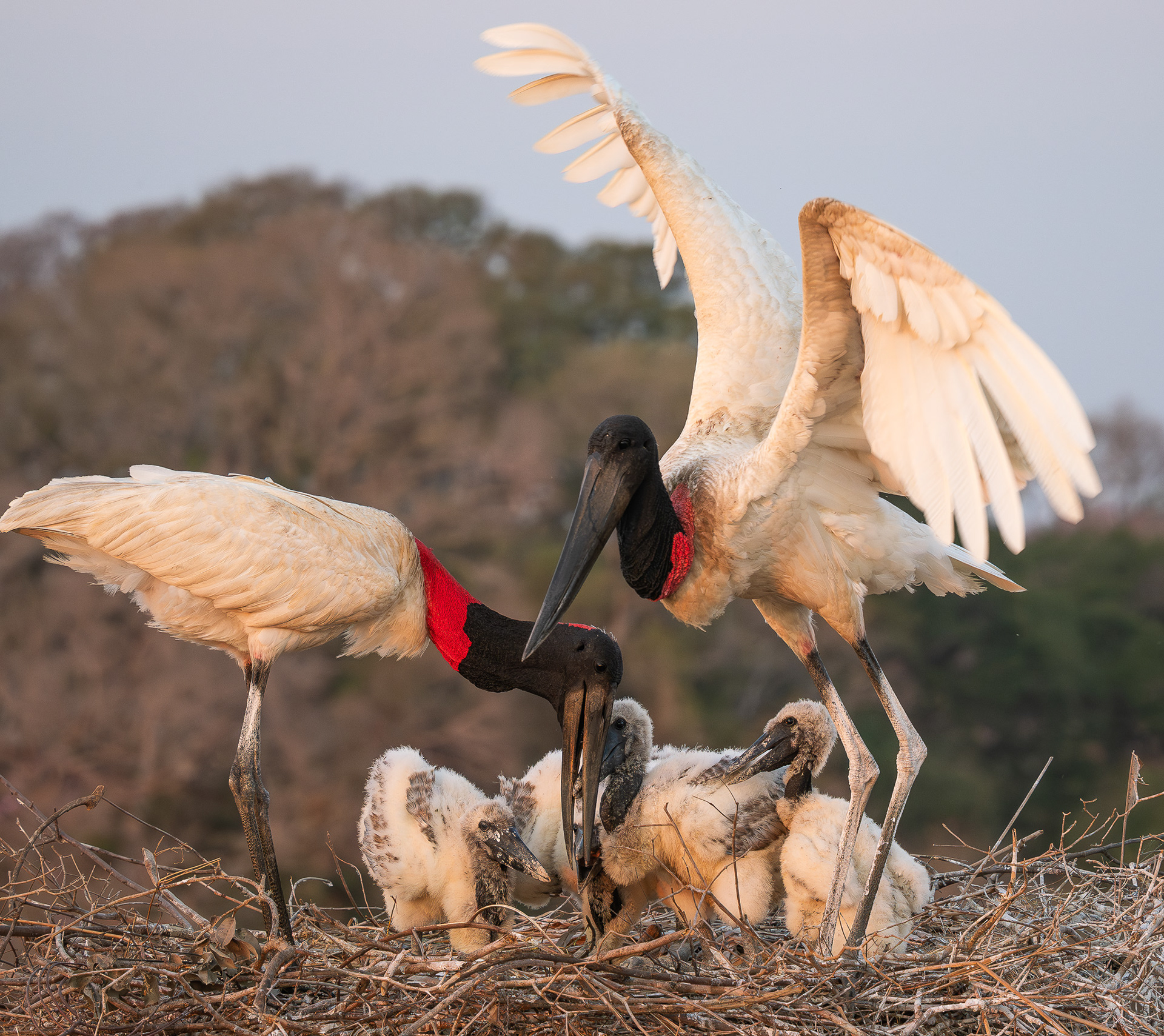
The family is joined by the male Jabiru as he arrives at the nest, wings outstretched and powerful, before settling gracefully beside his mate and chicks.
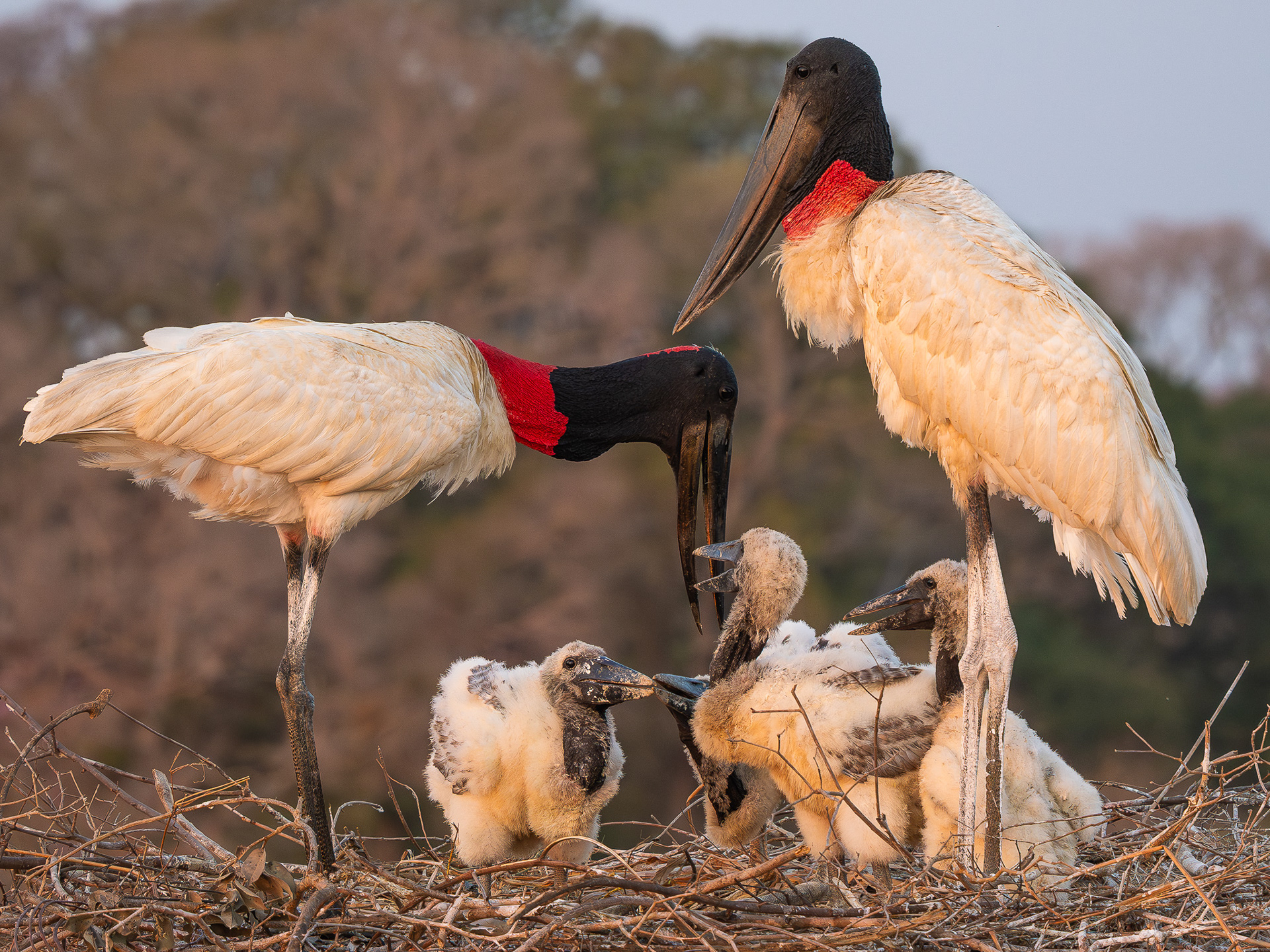
The complete Jabiru family gathers together in the nest - both parents standing tall and watchful, while their fluffy chicks cluster safely between them on top of the massive bed of woven sticks.
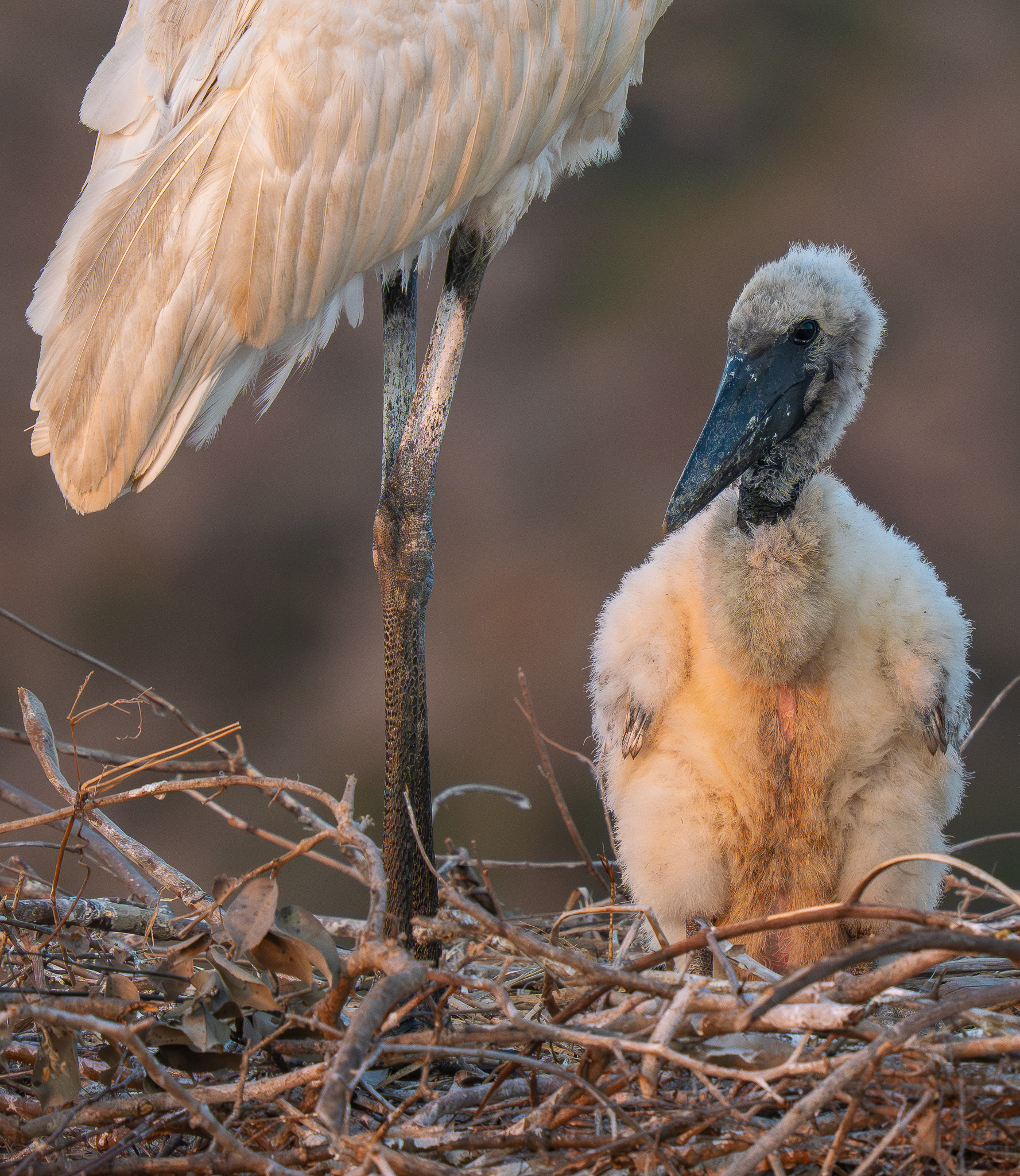
One of the chicks stands close beside its mother's long, slender legs, its soft white fluff gently warmed by the golden glow of early morning light.
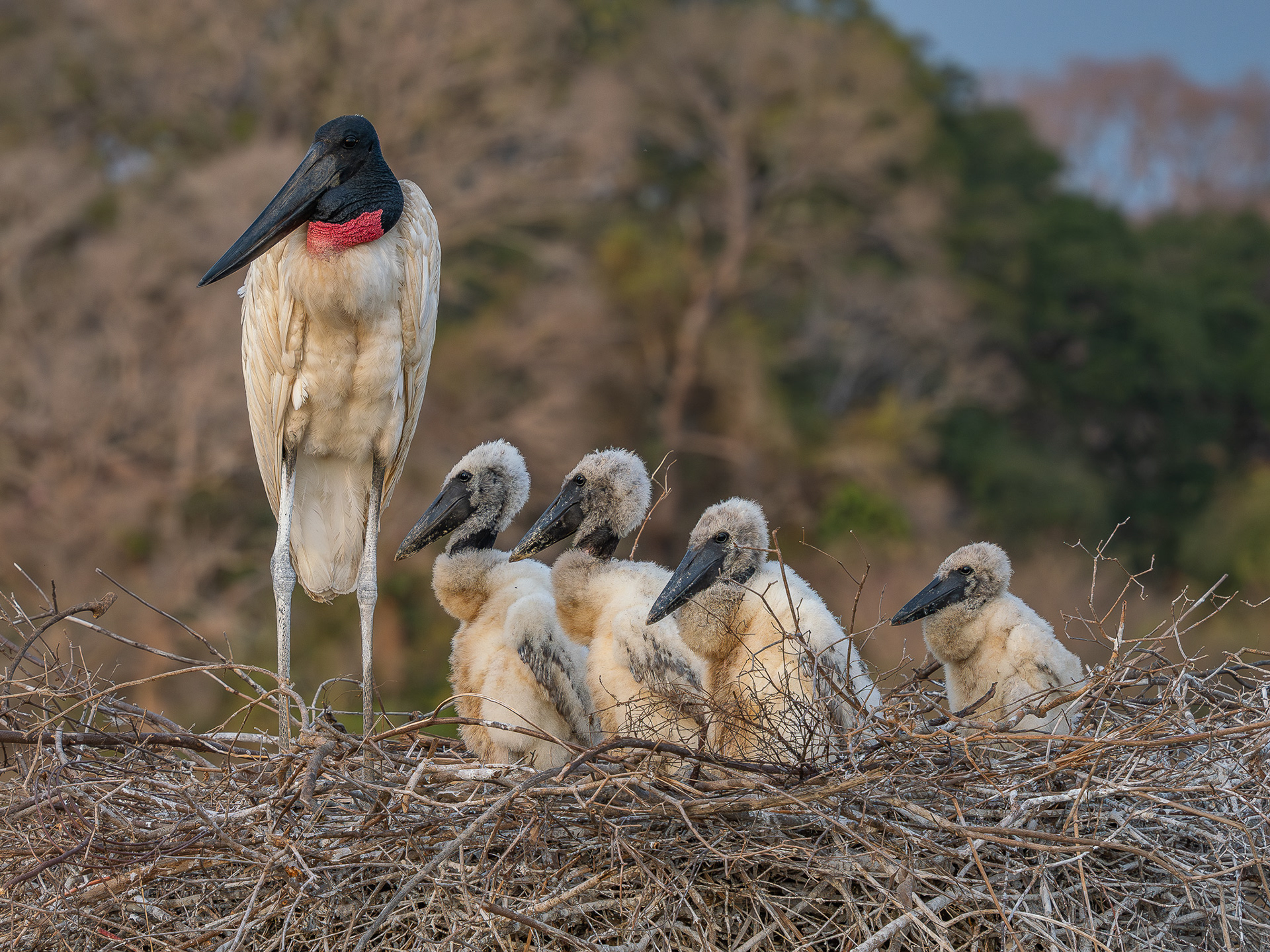
The mother Jabiru stands tall in its massive stick nest. Beneath the towering parent, the four fluffy chicks sit in a neat line, each slightly smaller than the one before it, subtly revealing the pecking order. The largest chick stands closest to the adult, alert and confident, while at the very back lingers the smallest - noticeably tinier, its soft grey fluff puffed up as it peers forward from behind its siblings. Though dwarfed by the rest, it watches just as intently.
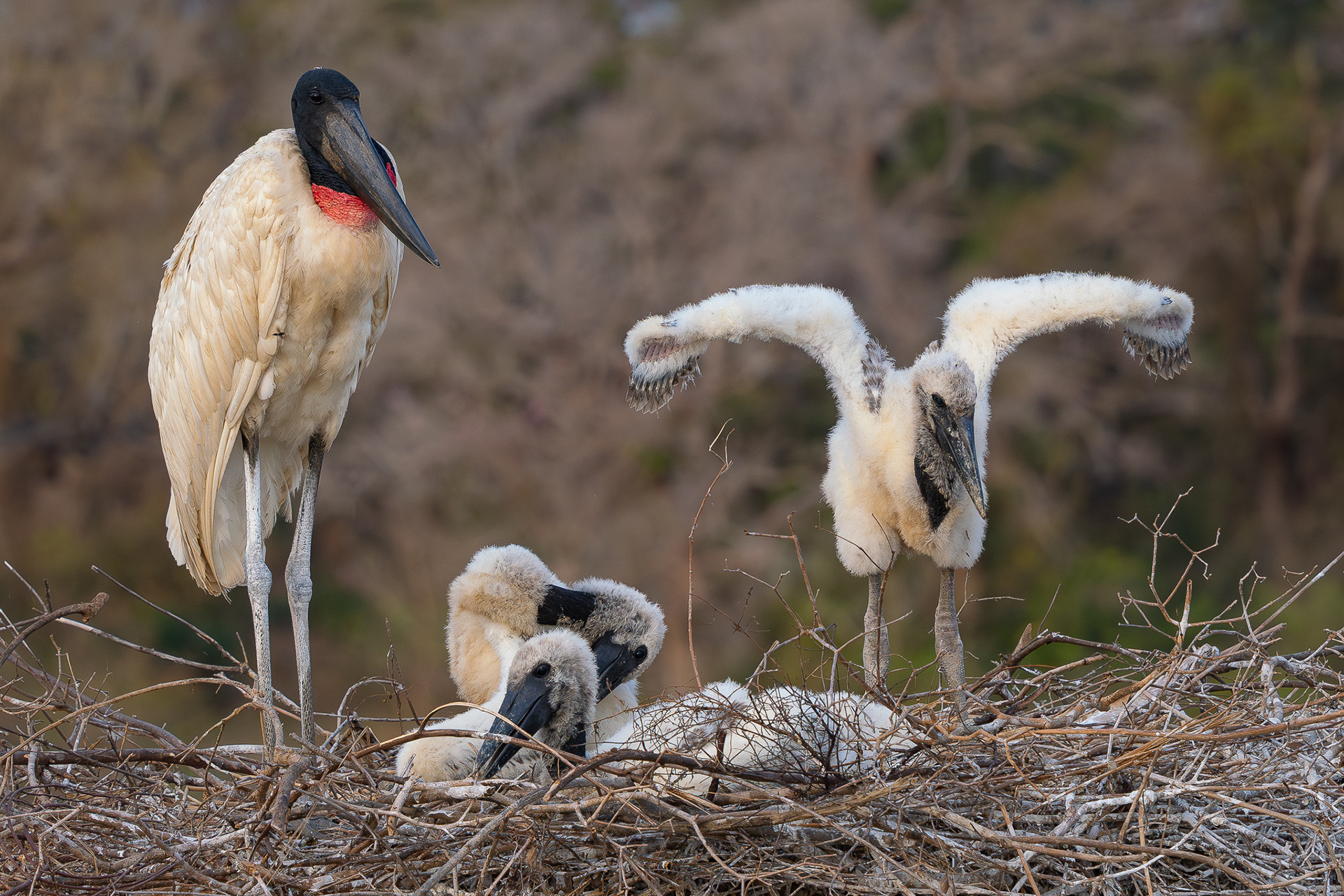
The mother watches over the nest while two of her chicks lie low, quietly preening. A third, fluffy, down-covered chick rises up, spreading and excitedly flapping its small wings.
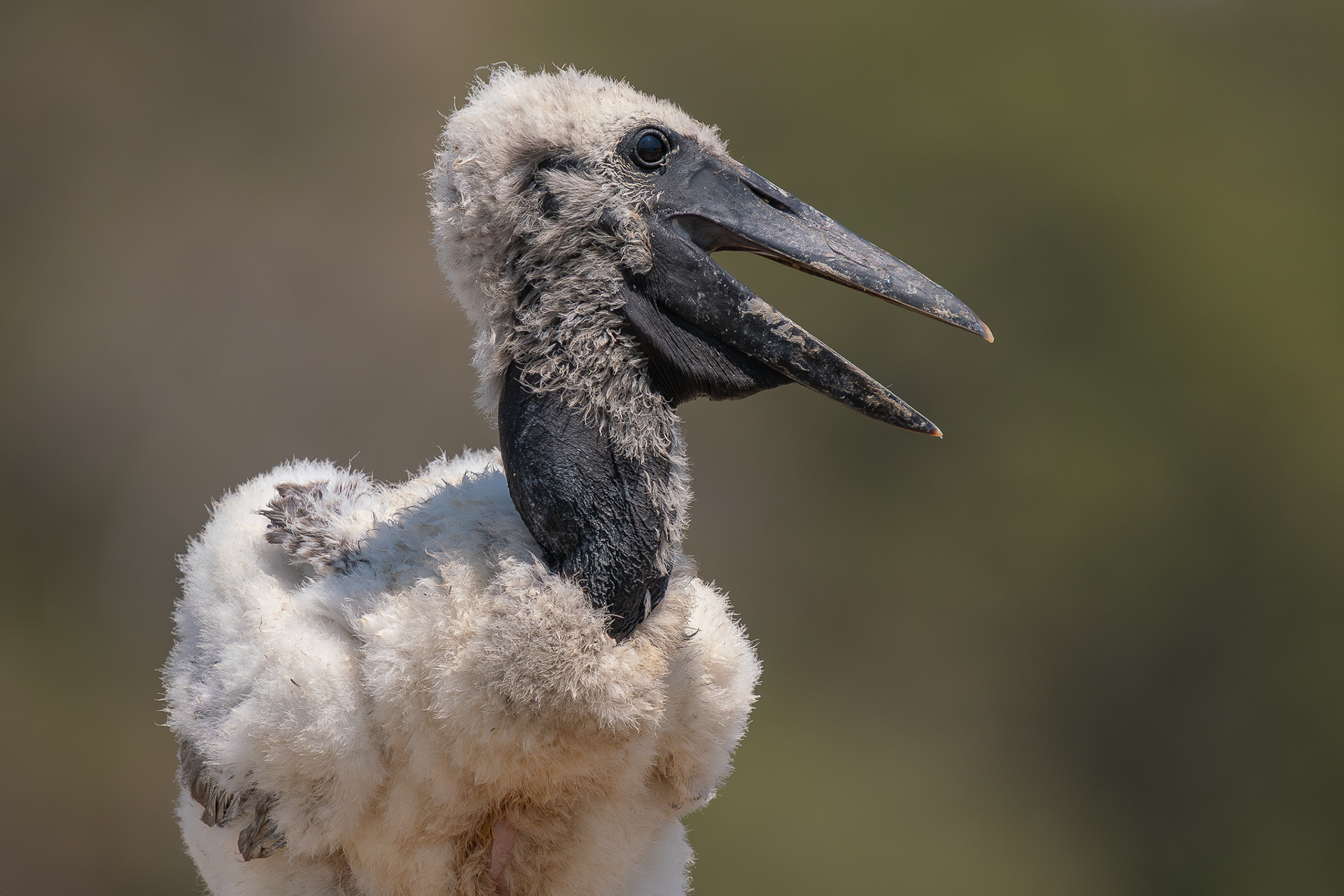
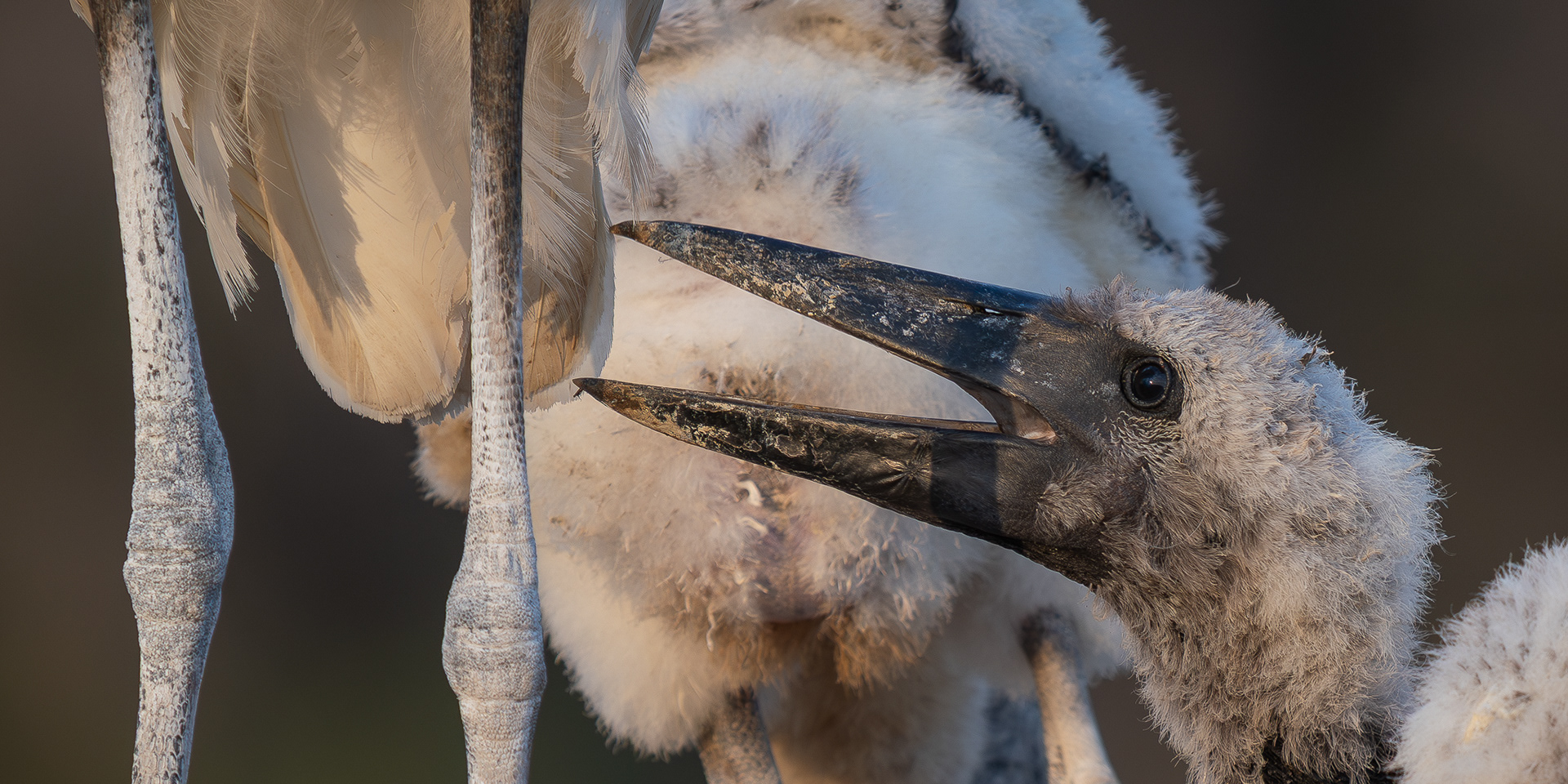
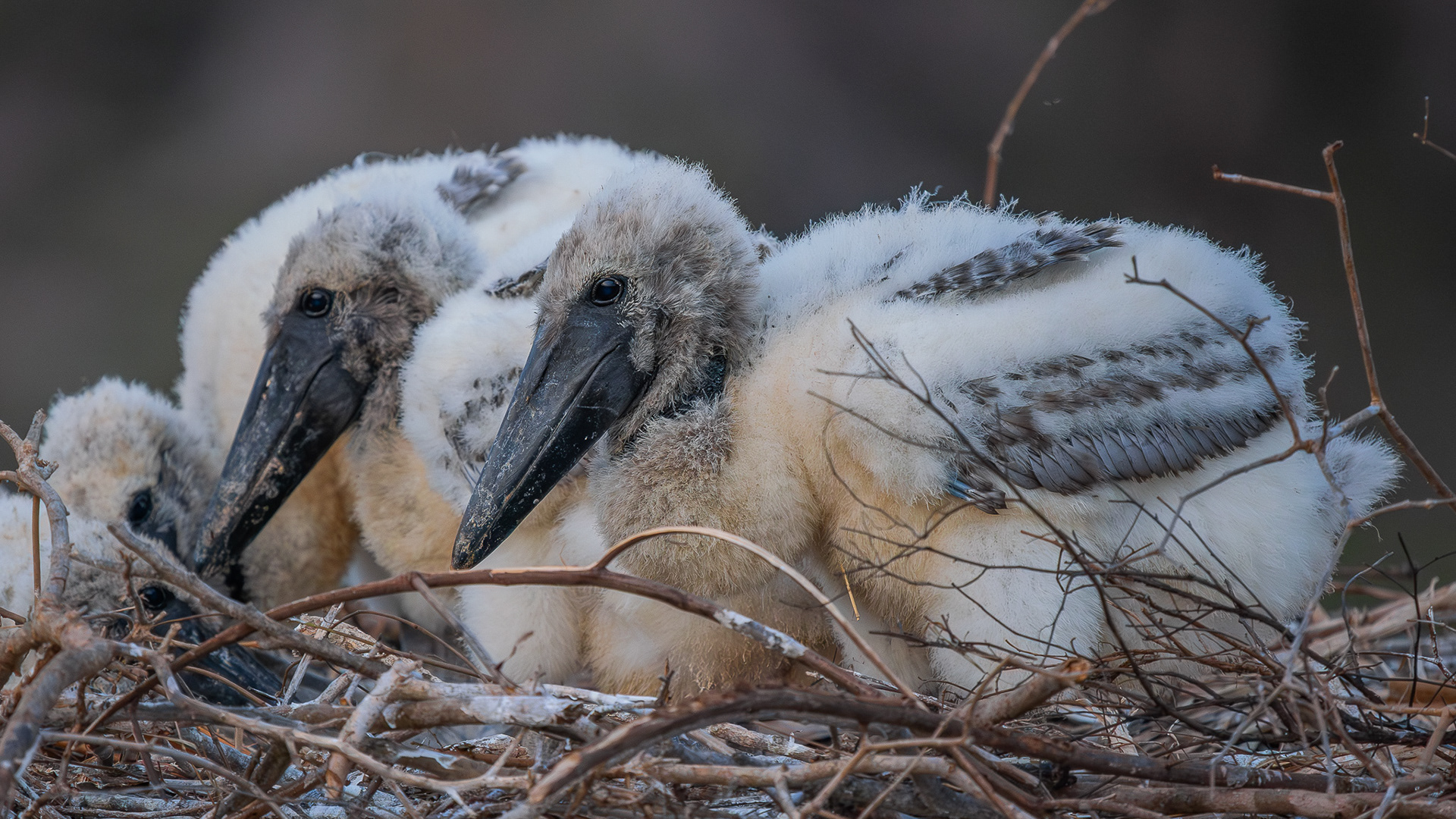
The fluffy white-downed Jabiru chicks nestle together in the massive stick nest, their ruffled feathers catching the light as they peer curiously at the world around them.
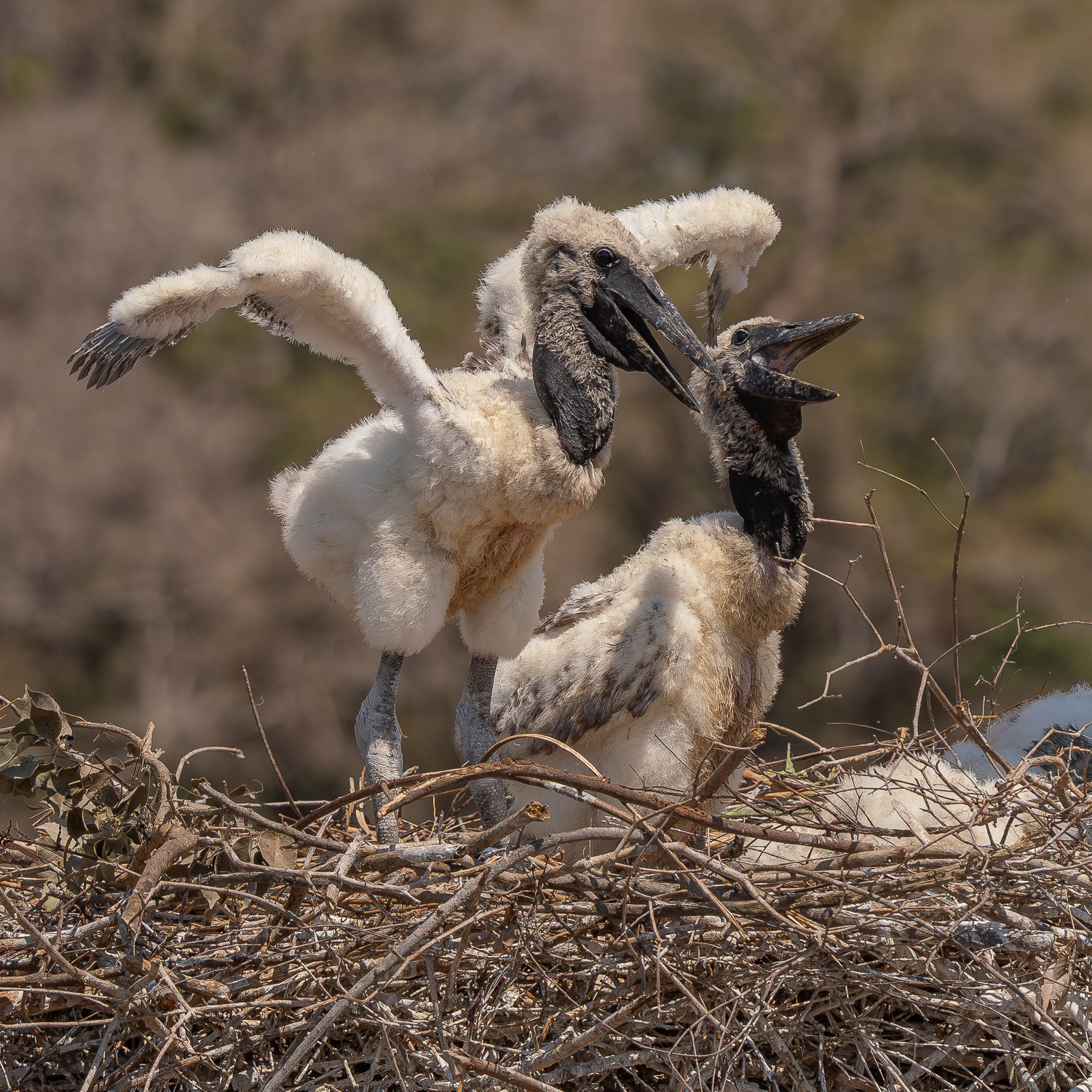
Two chicks face off in a burst of sibling rivalry - one standing tall with wings spread wide in protest, the other leaning back with its beak open in a loud, indignant call, both jostling for attention.
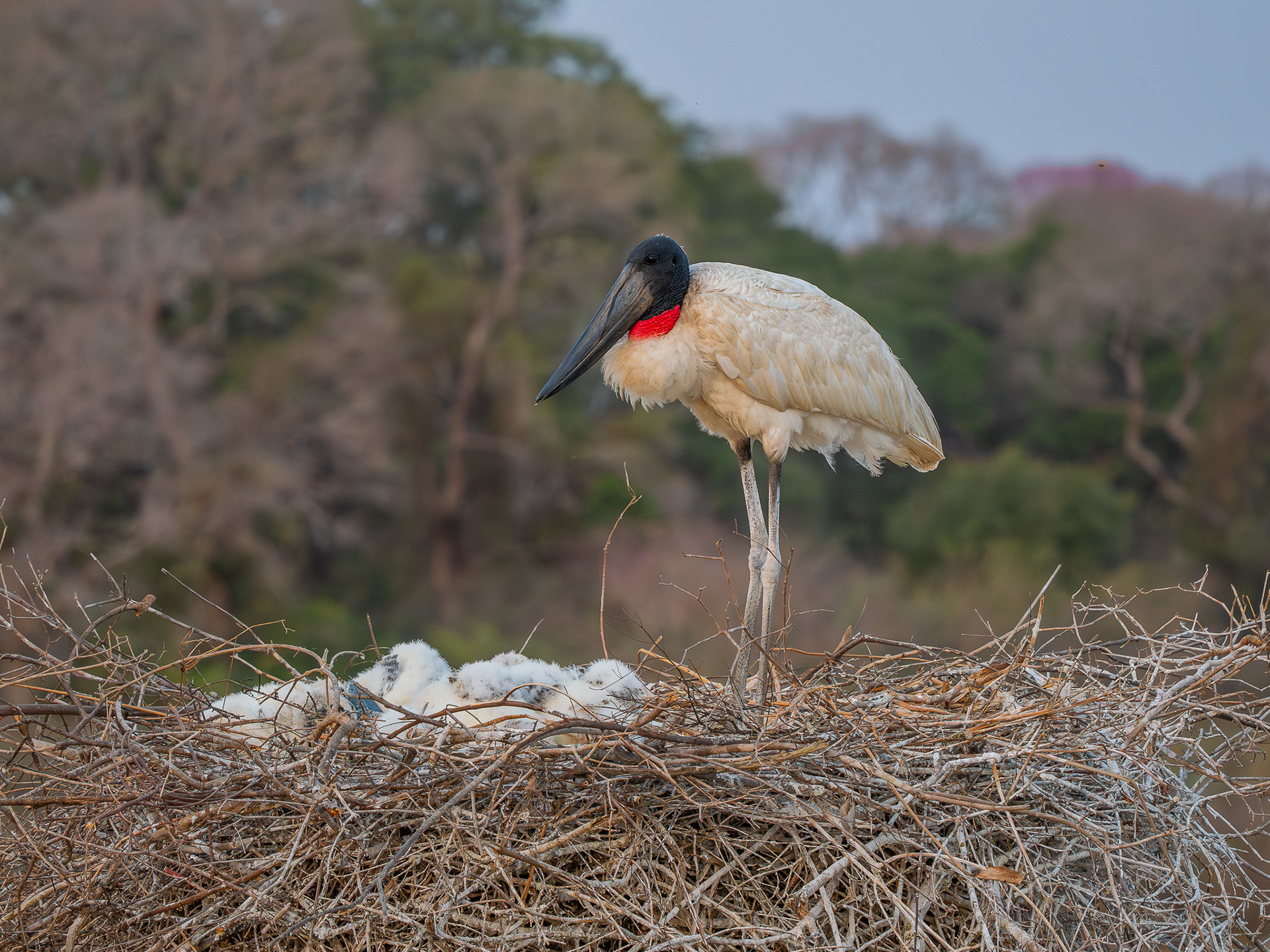
The mother stands protectively over a pile of soft white down as the exhausted chicks huddle together in a tight ball, their fluffy bodies pressed close for warmth and comfort.
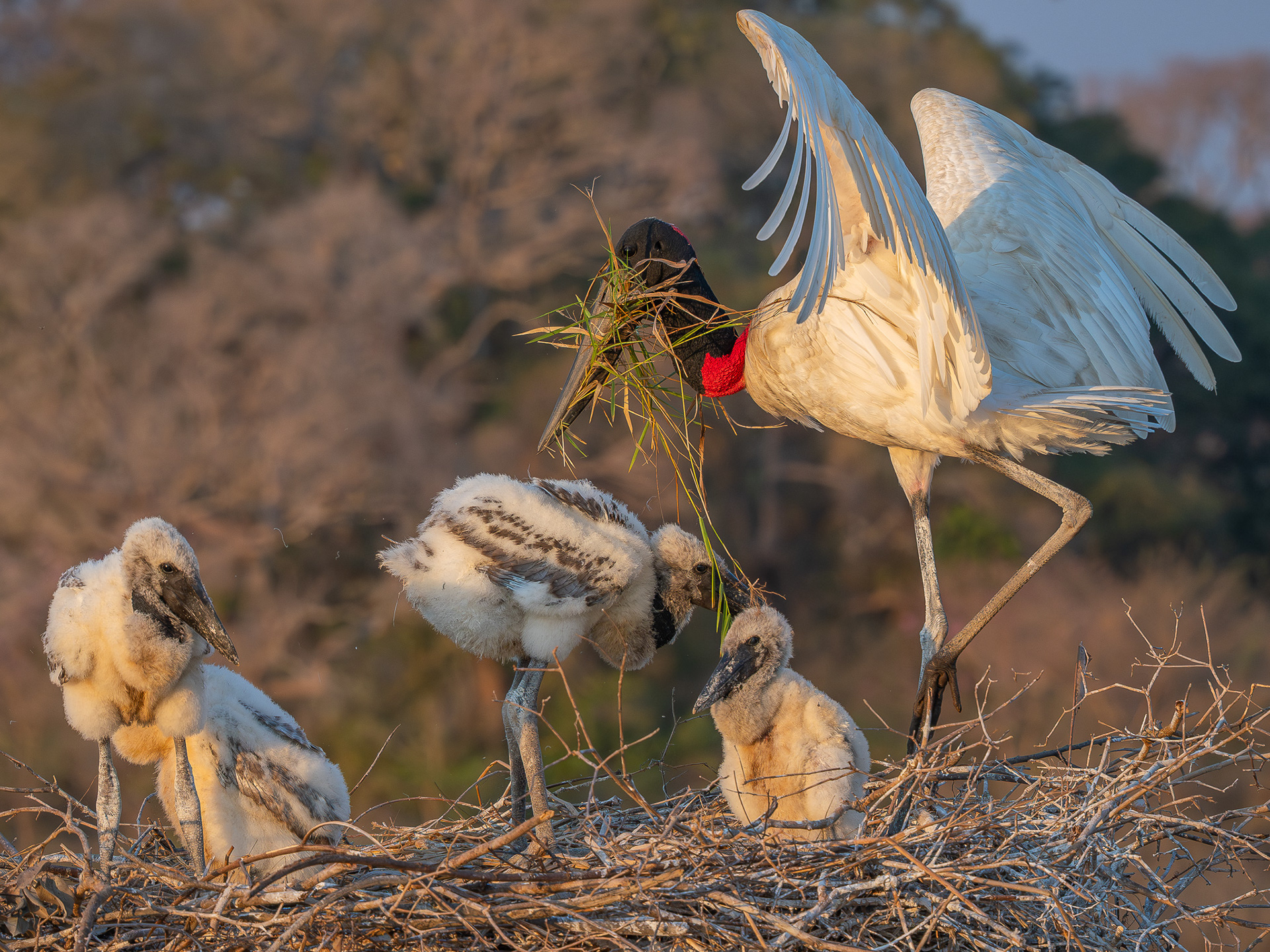
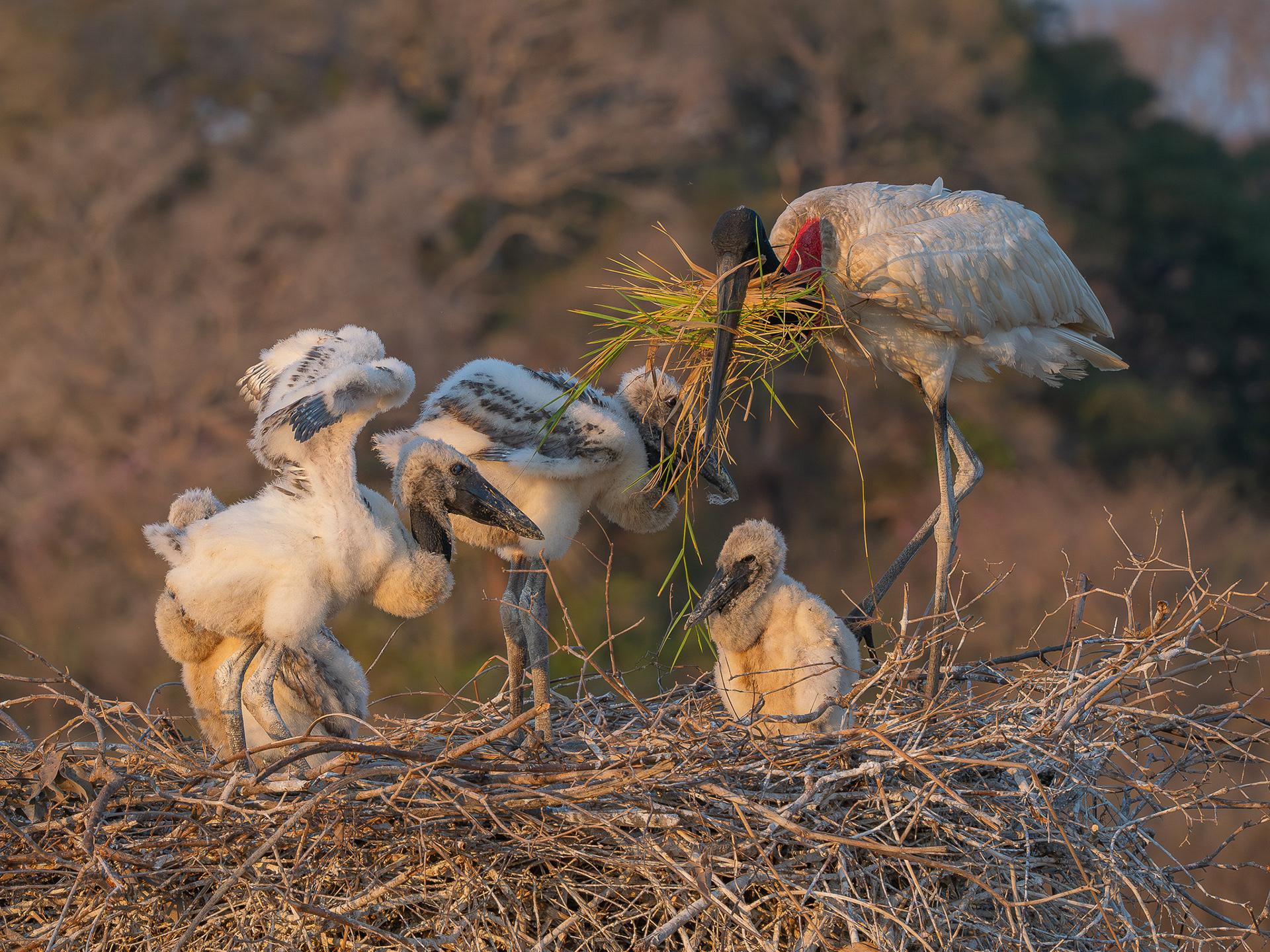
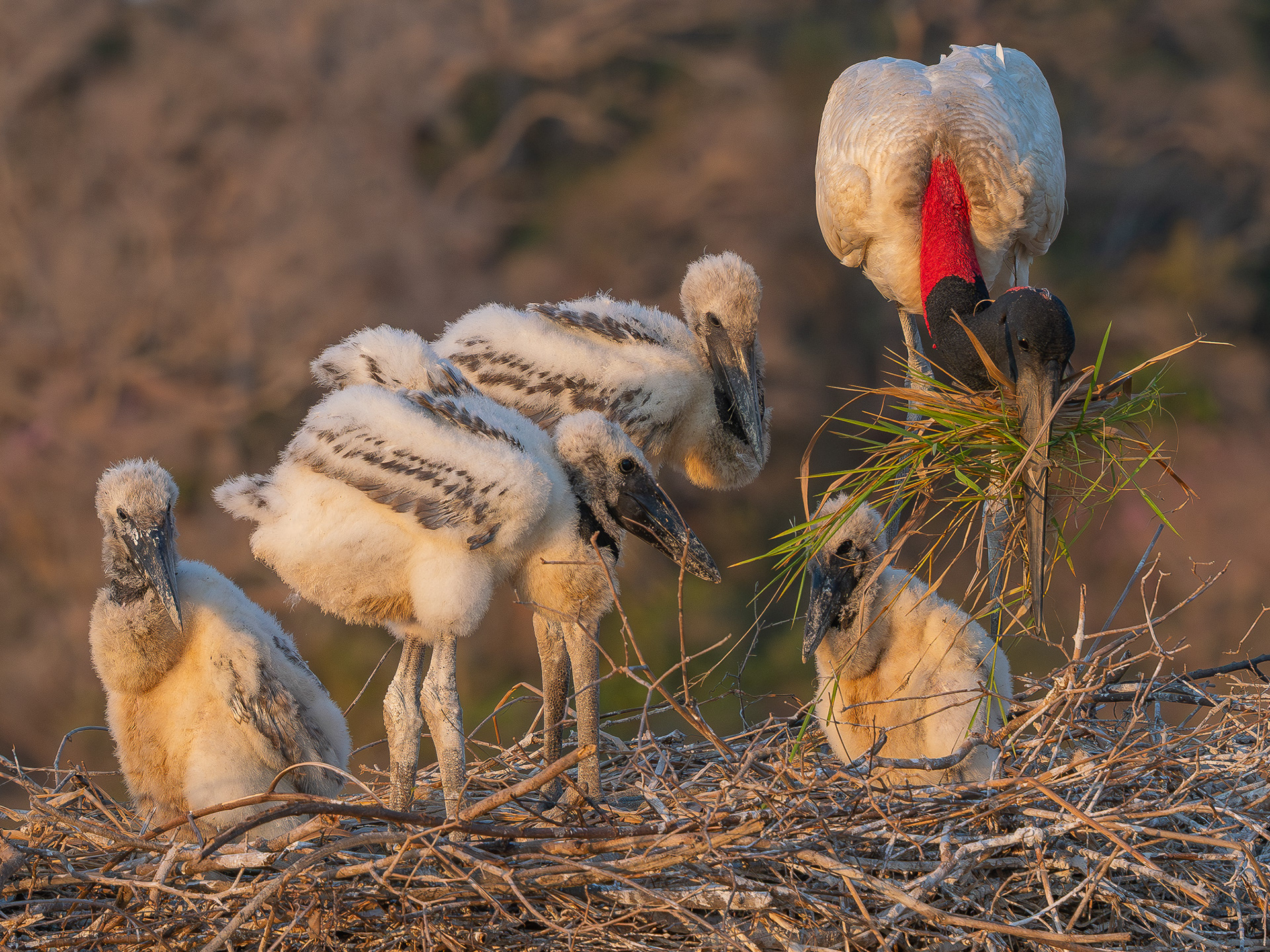
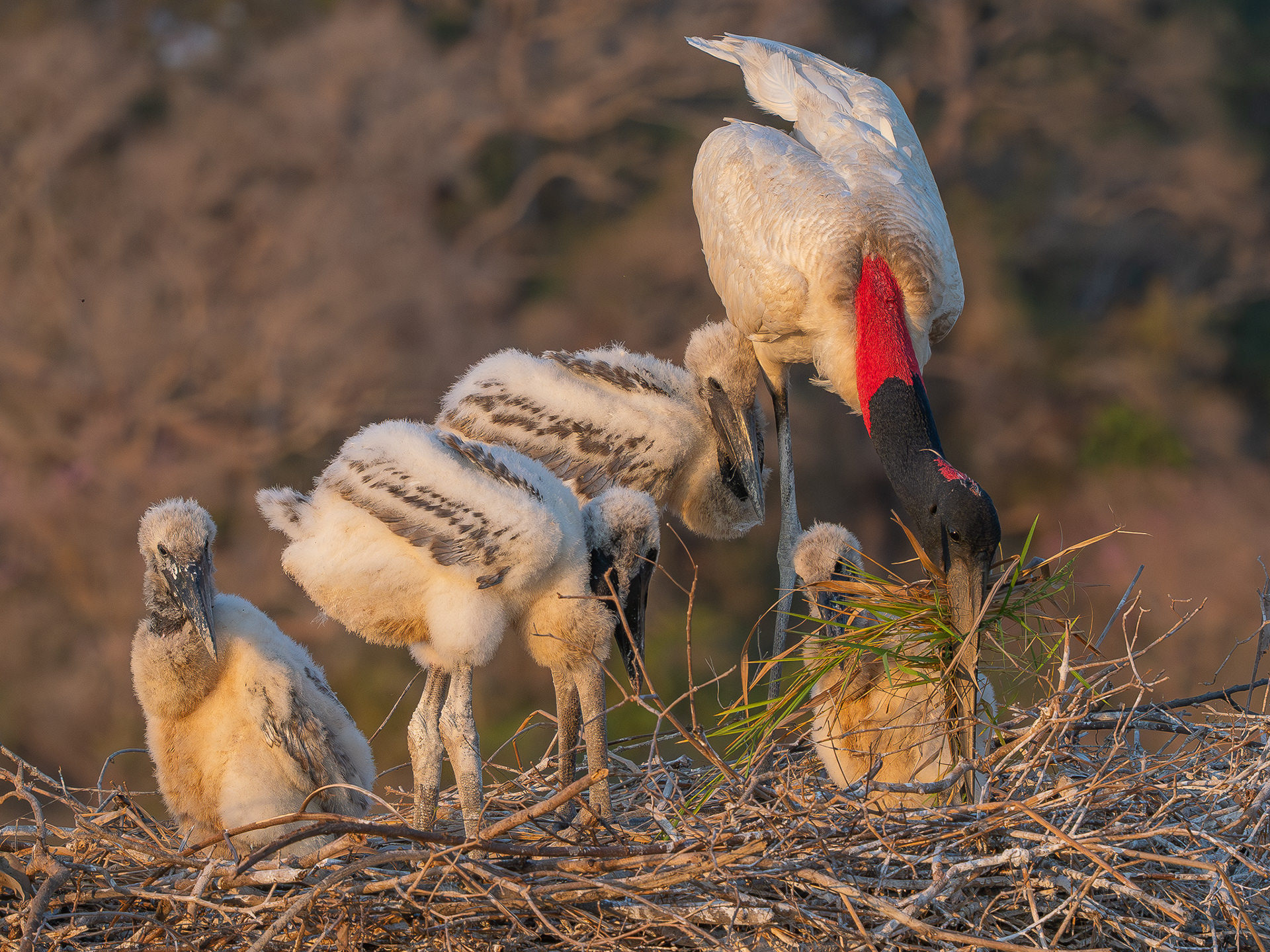
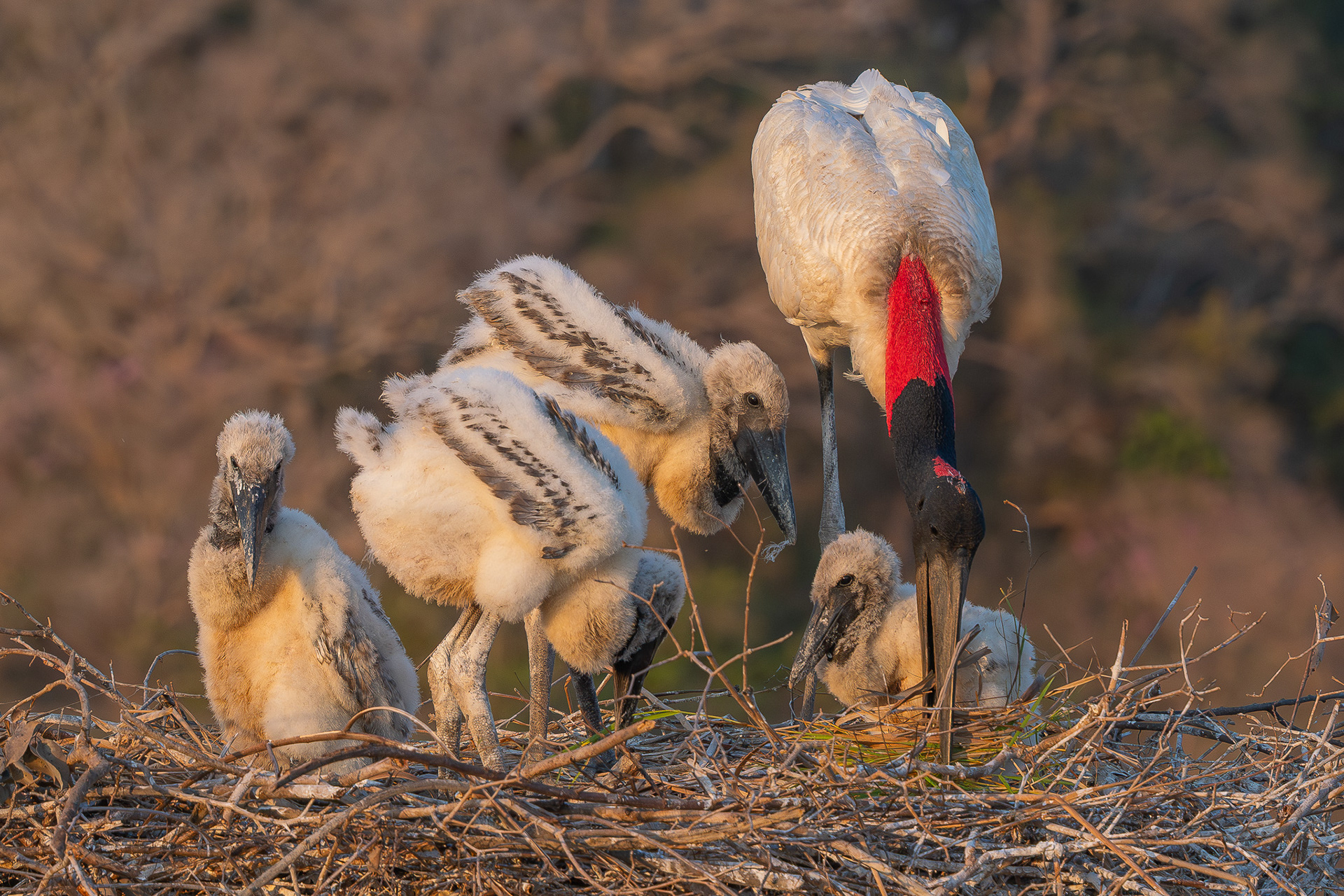
The nest is always in need of fresh new bedding, and the mother diligently gathers and replaces the dry grass to keep it clean, soft, and comfortable for her growing chicks.
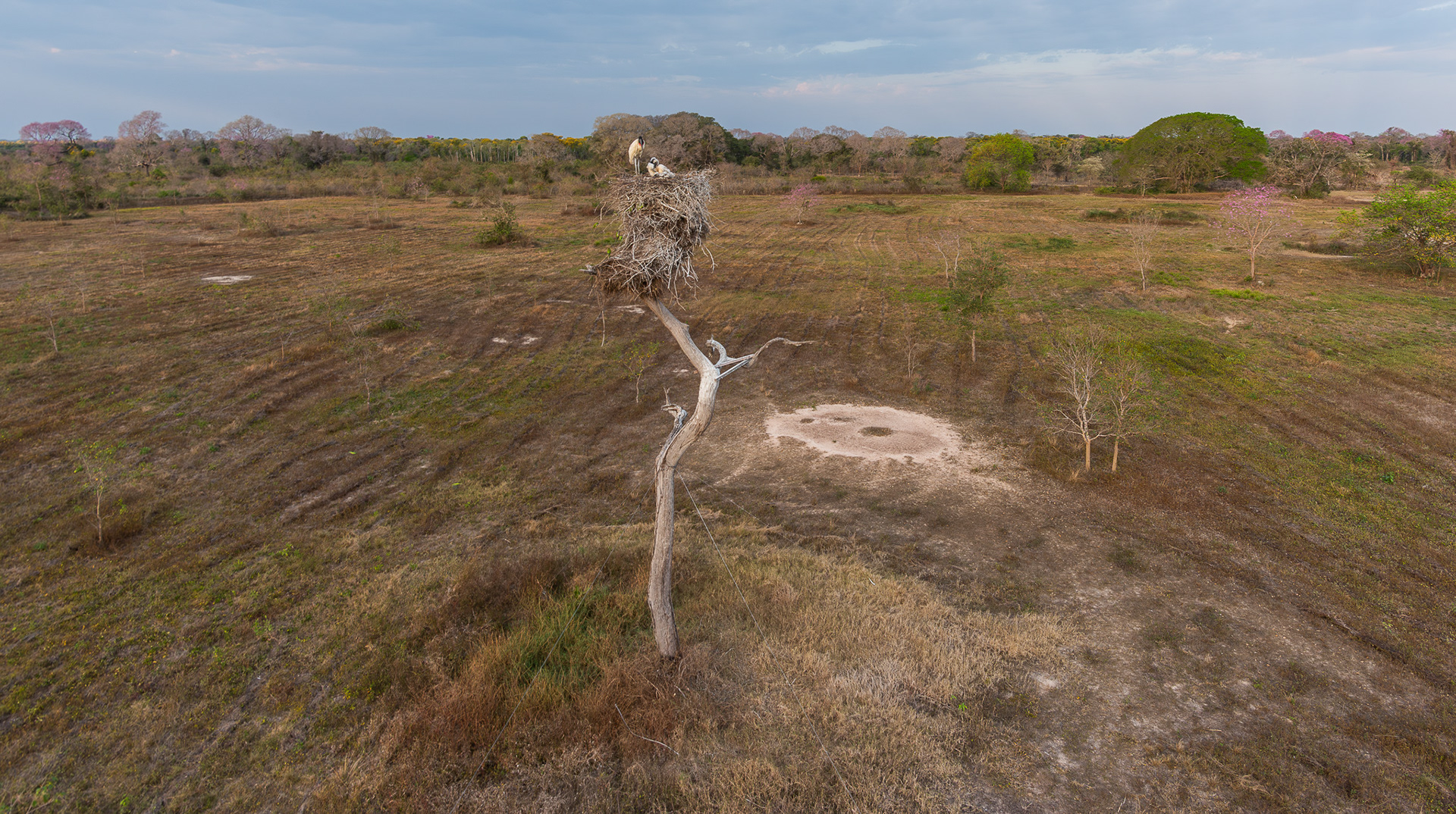
The huge nest sits high on top of a tall tree, a massive fortress of interwoven sticks rising above the ground, commanding the landscape from its lofty perch.
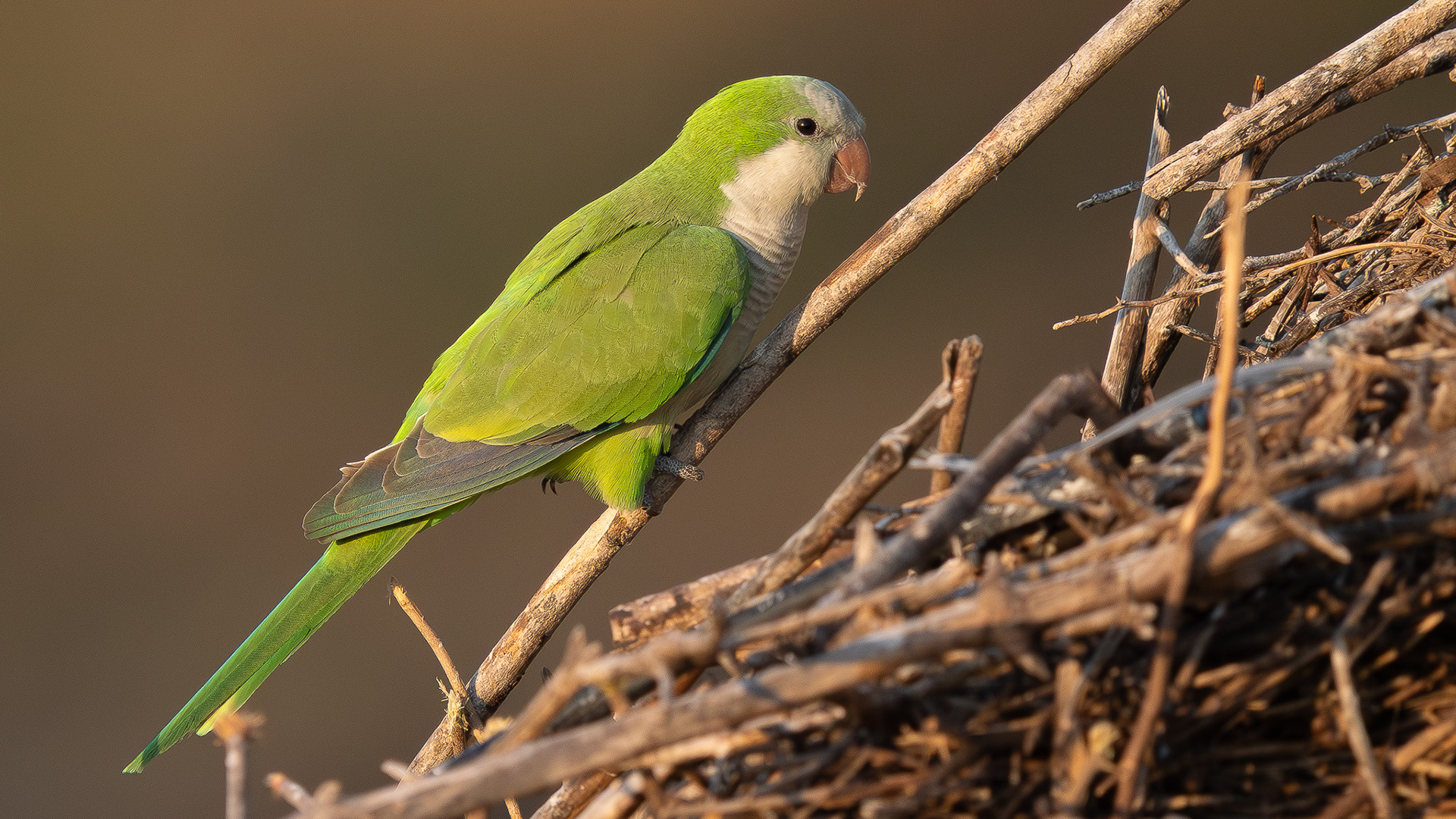
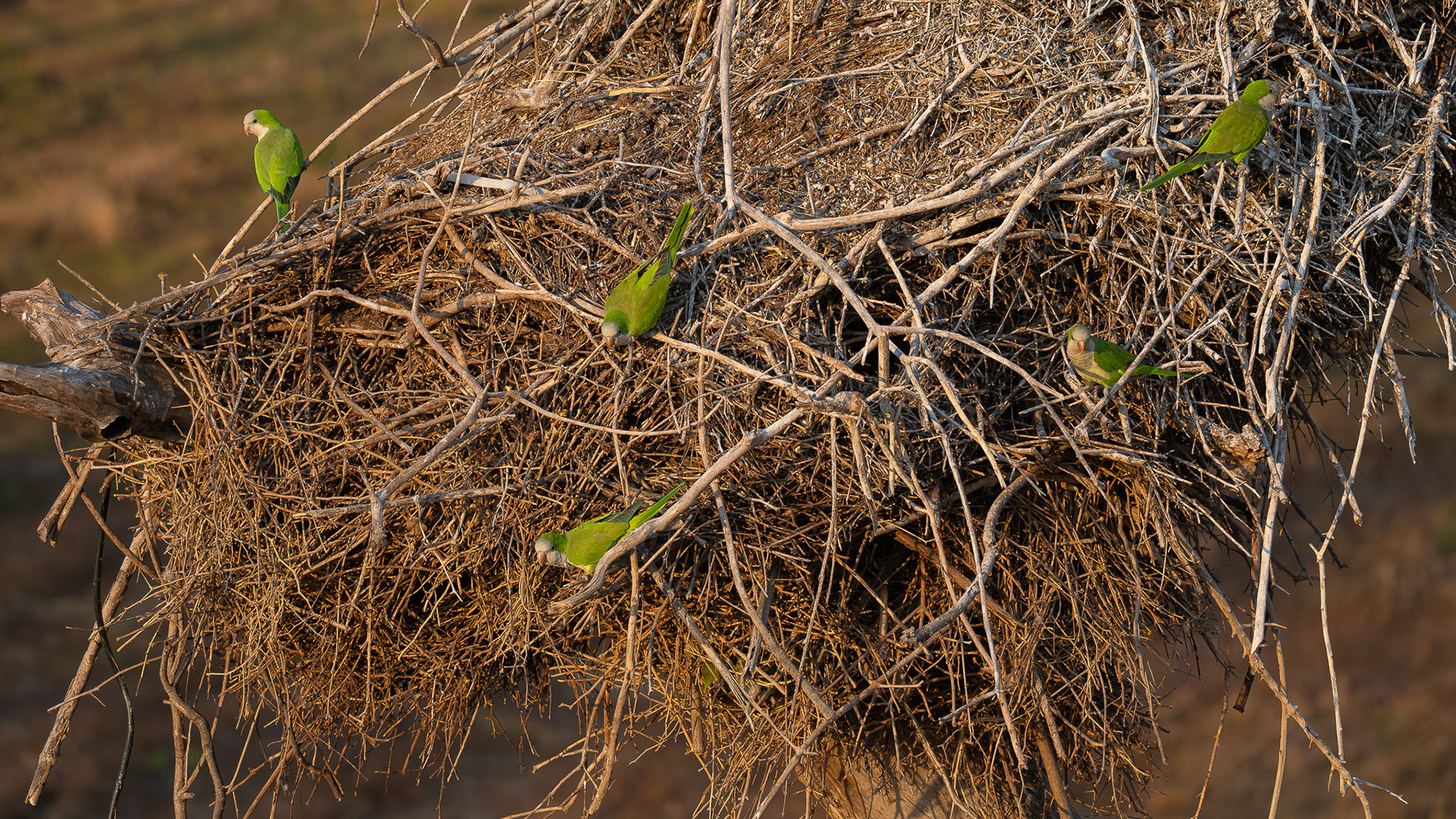
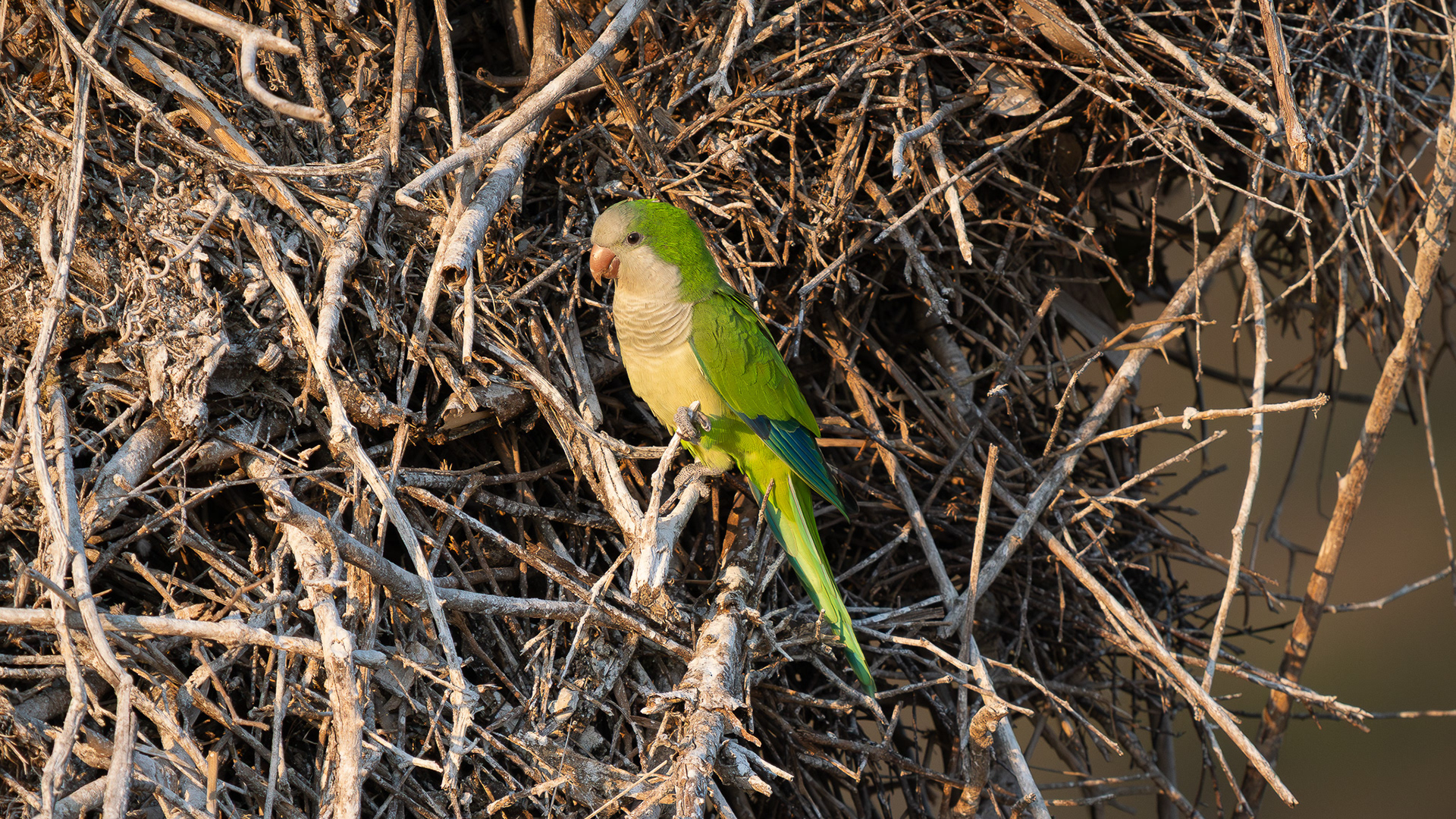
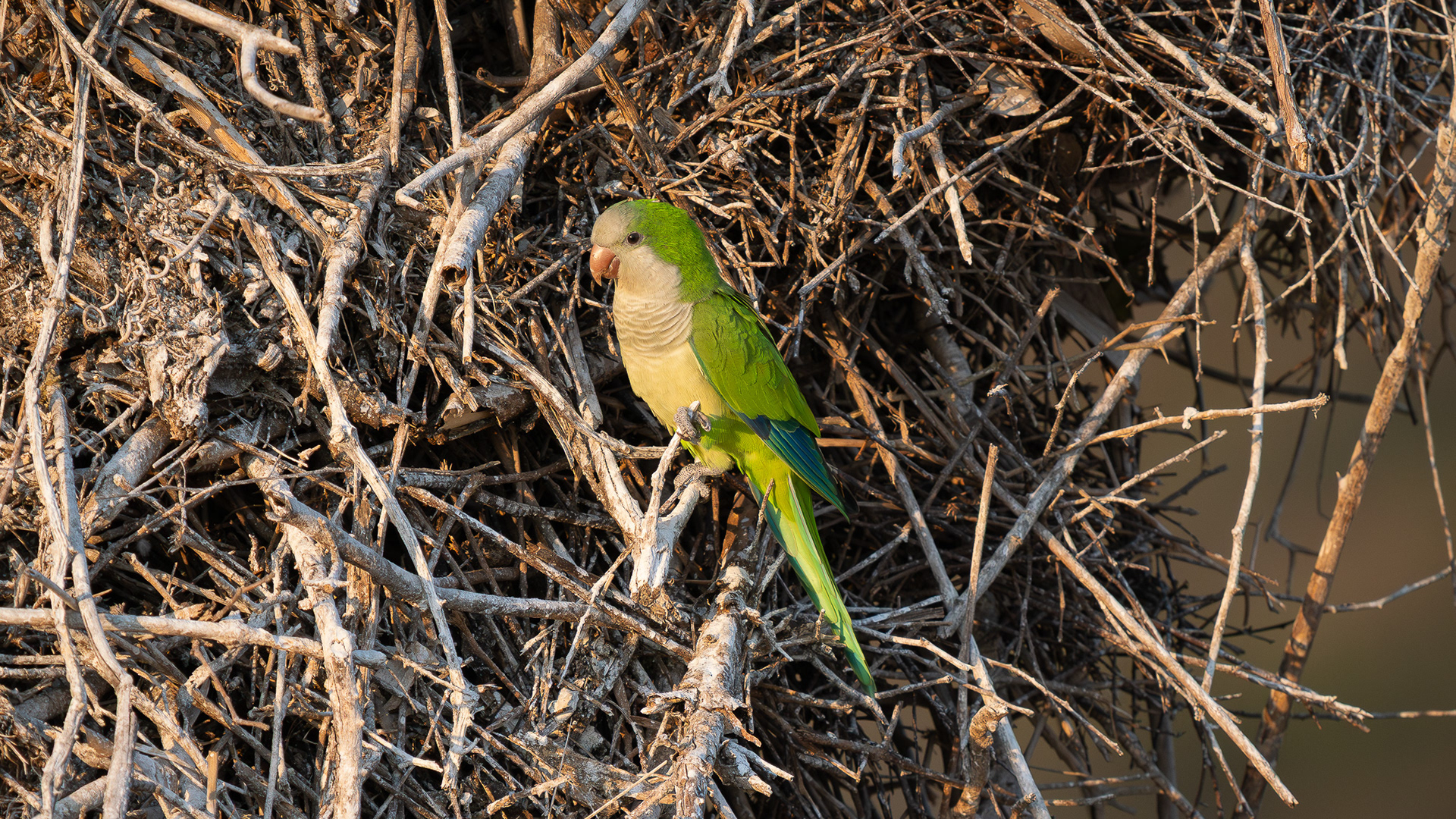
A Monk Parakeet nest occupies the lower chambers and tangled underside of the massive stick platform, cleverly taking advantage of its shelter. Their bright green feathers flash in and out of the shadows as they chatter noisily, coming and going beneath the towering home of the Jabiru above - a lively community thriving within the same remarkable structure.
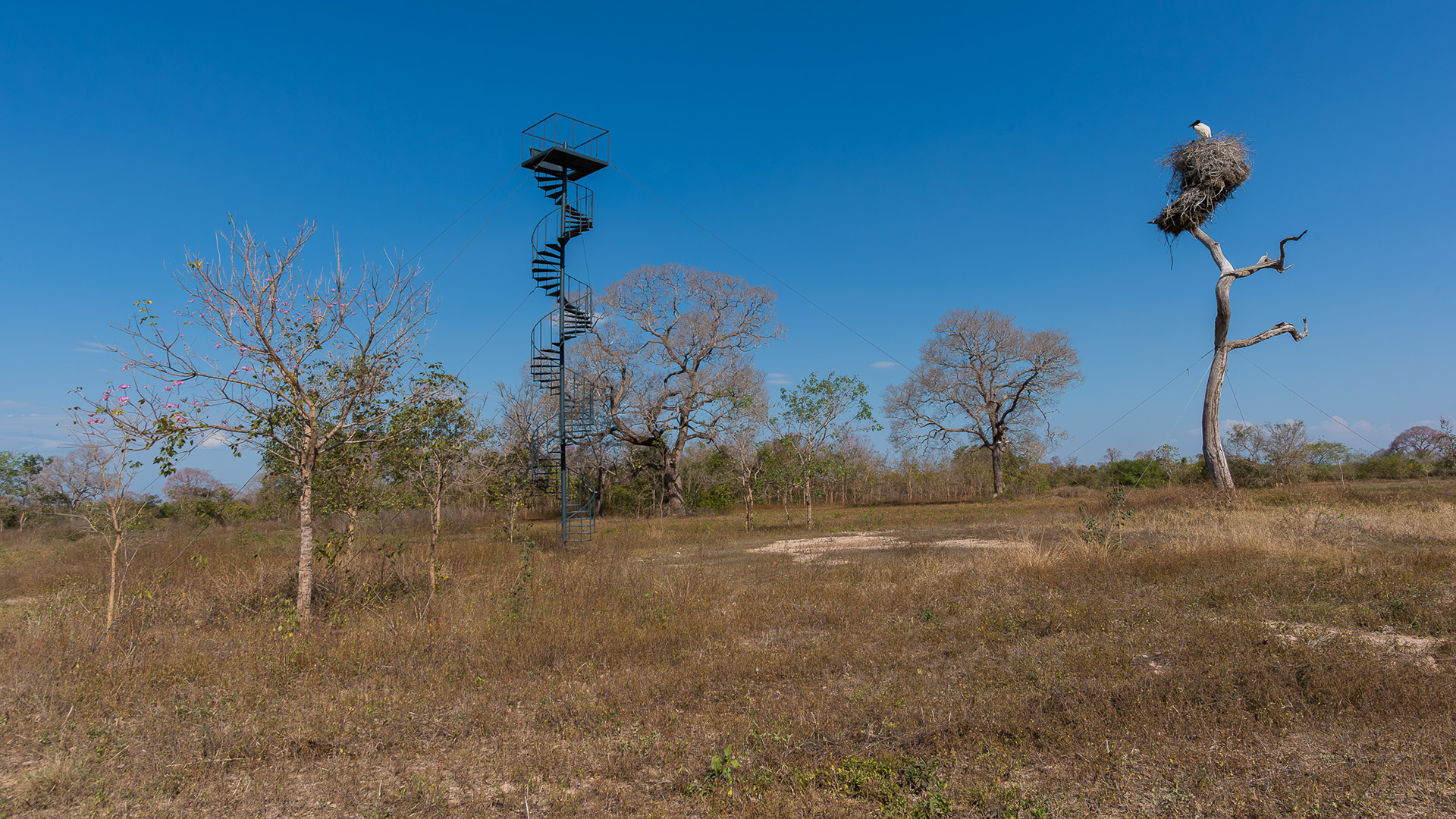
Most of the images of the Jabiru shown above were taken from the watchtower at SouthWild Pantanal Lodge, which overlooks the sweeping wetlands. From this elevated vantage point, the towering nest sits almost at eye level, offering an intimate view into the birds’ daily lives—courtship, nest building, feeding, and the tender interactions between parents and chicks - all unfolding against the vast sky and endless green horizon of this extraordinary ecosystem.
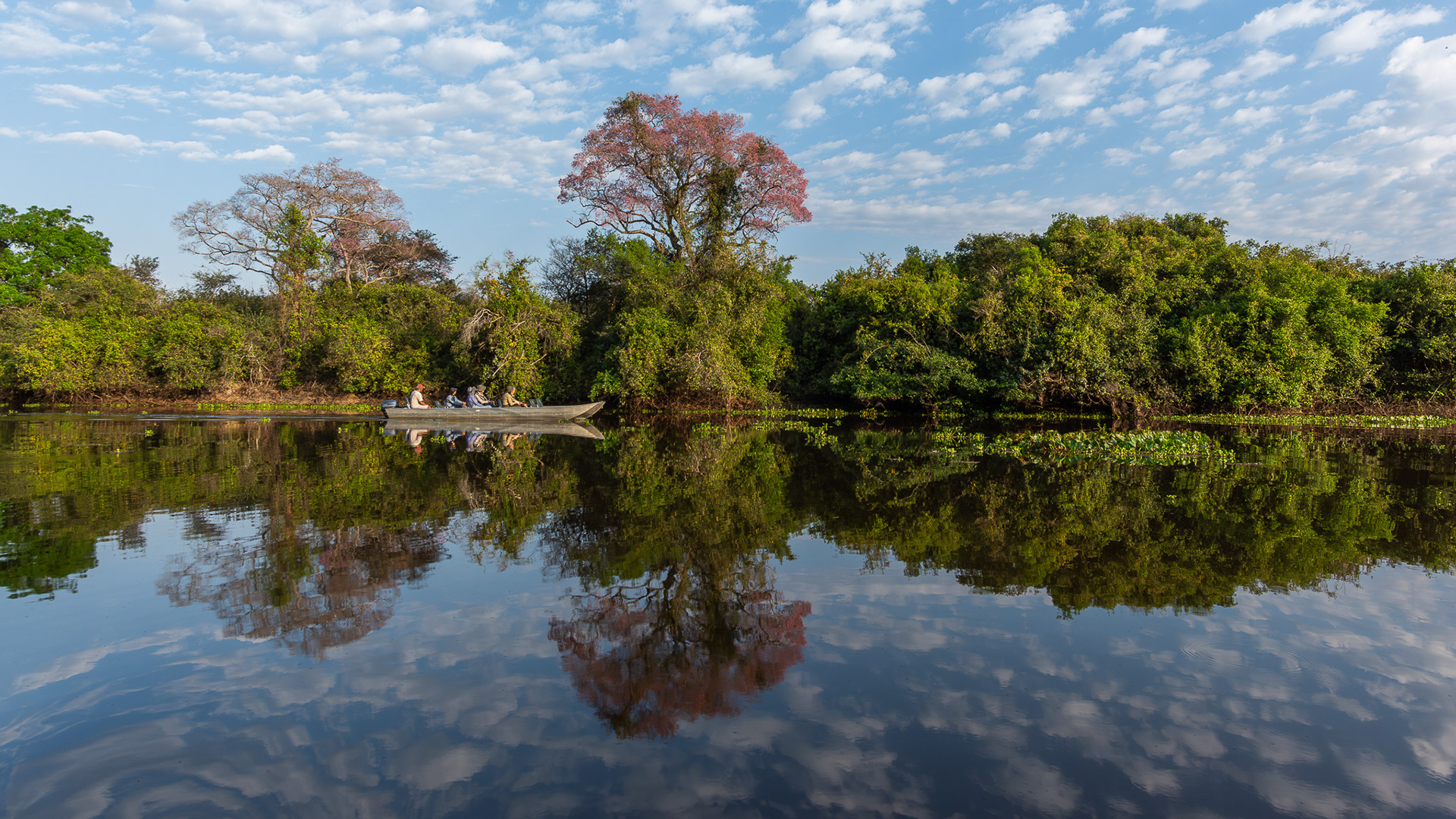
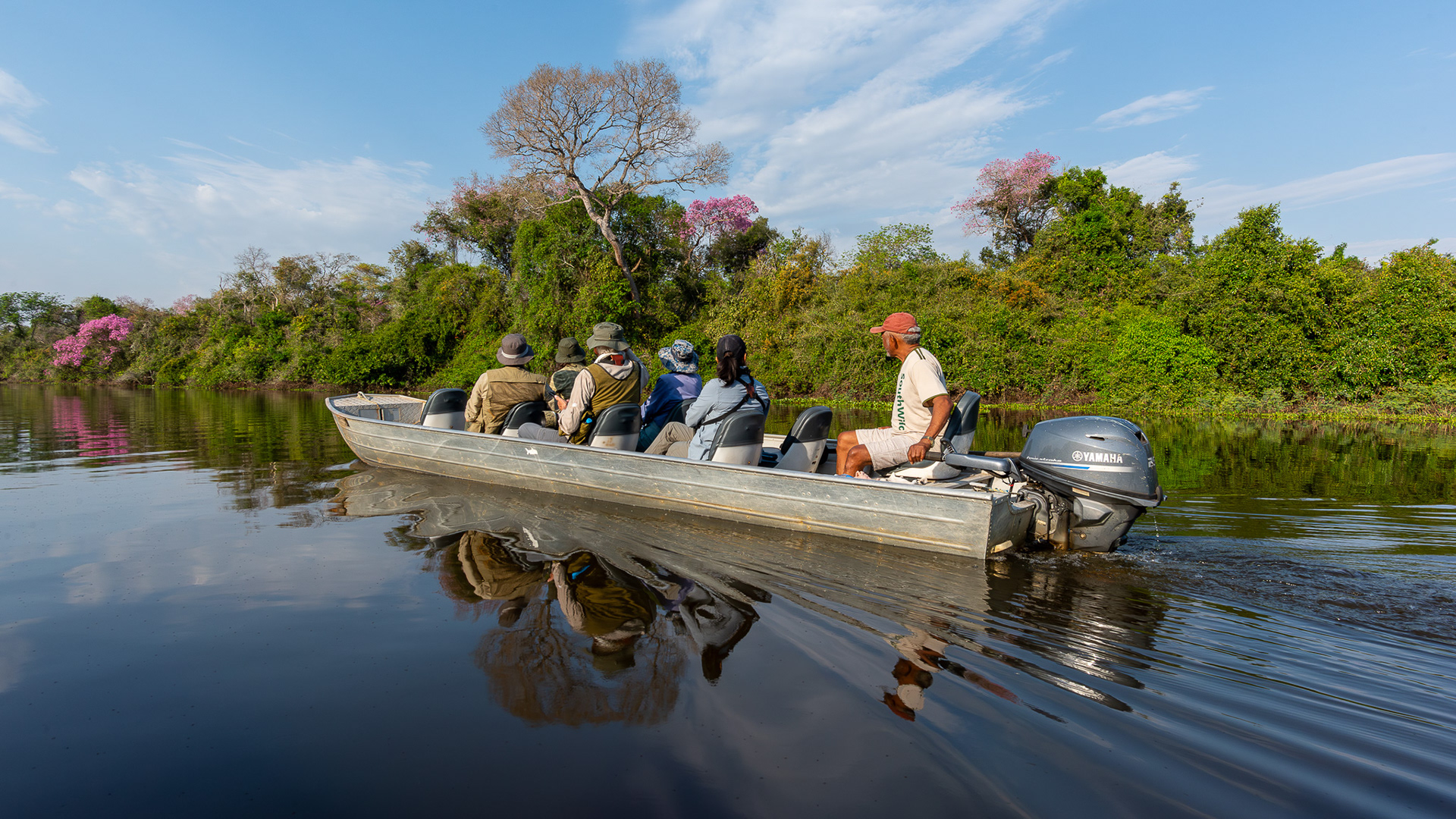
Bird watching by boat from SouthWild Pantanal Lodge offers an intimate view into the heart of the Pantanal. As the boat glides through quiet backwaters, early morning light reflects off the still surface. The air is alive with layered birdsong, and the dense riverbanks reveal a constant rhythm of movement, colour, and sound in one of the world’s richest wetlands.
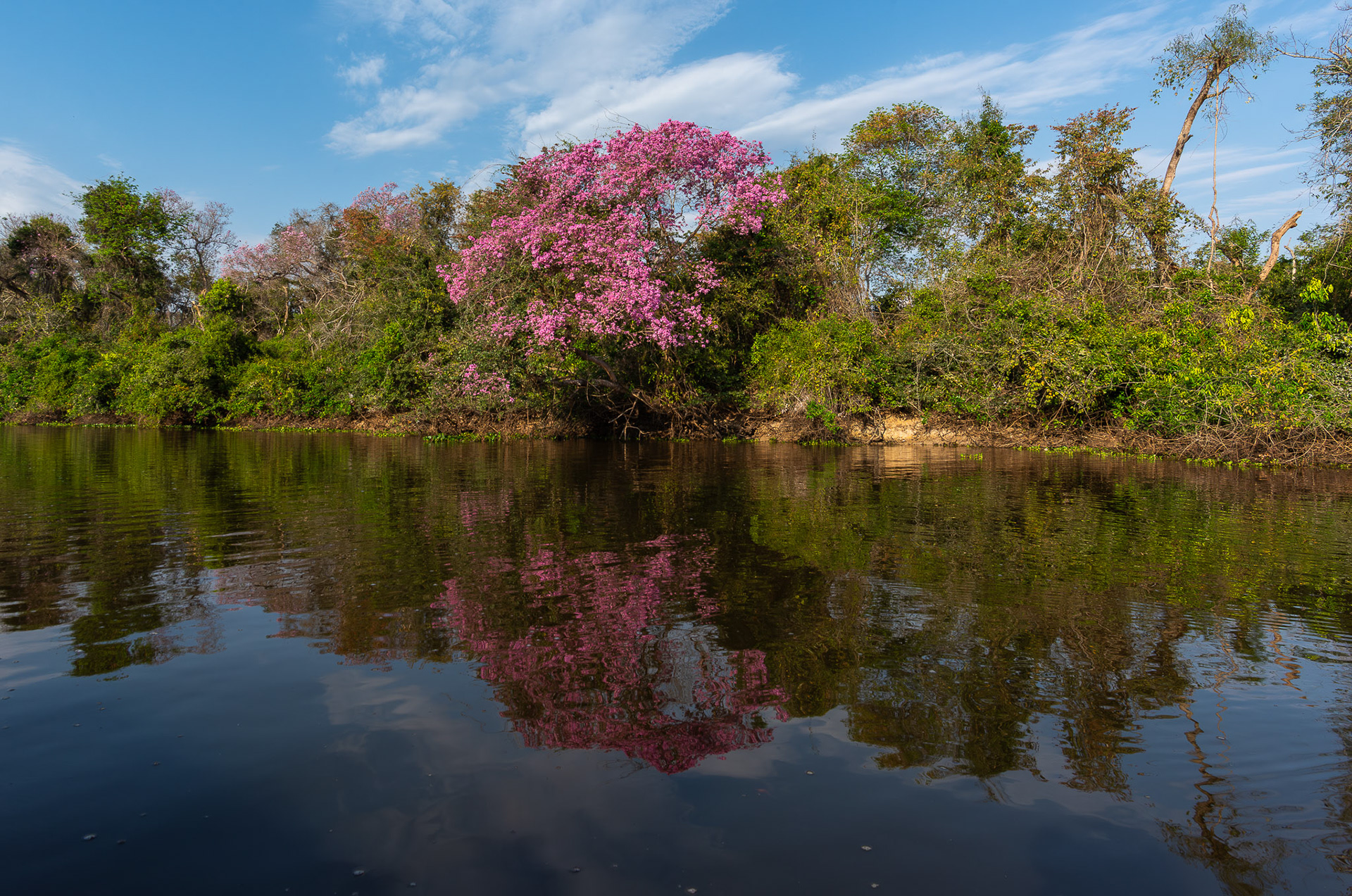
A tree bursting with vivid pink flowers leans over the riverbank, its blossoms glowing in the soft light. The still water below mirrors the canopy perfectly, reflecting a wash of pink against the gentle current.
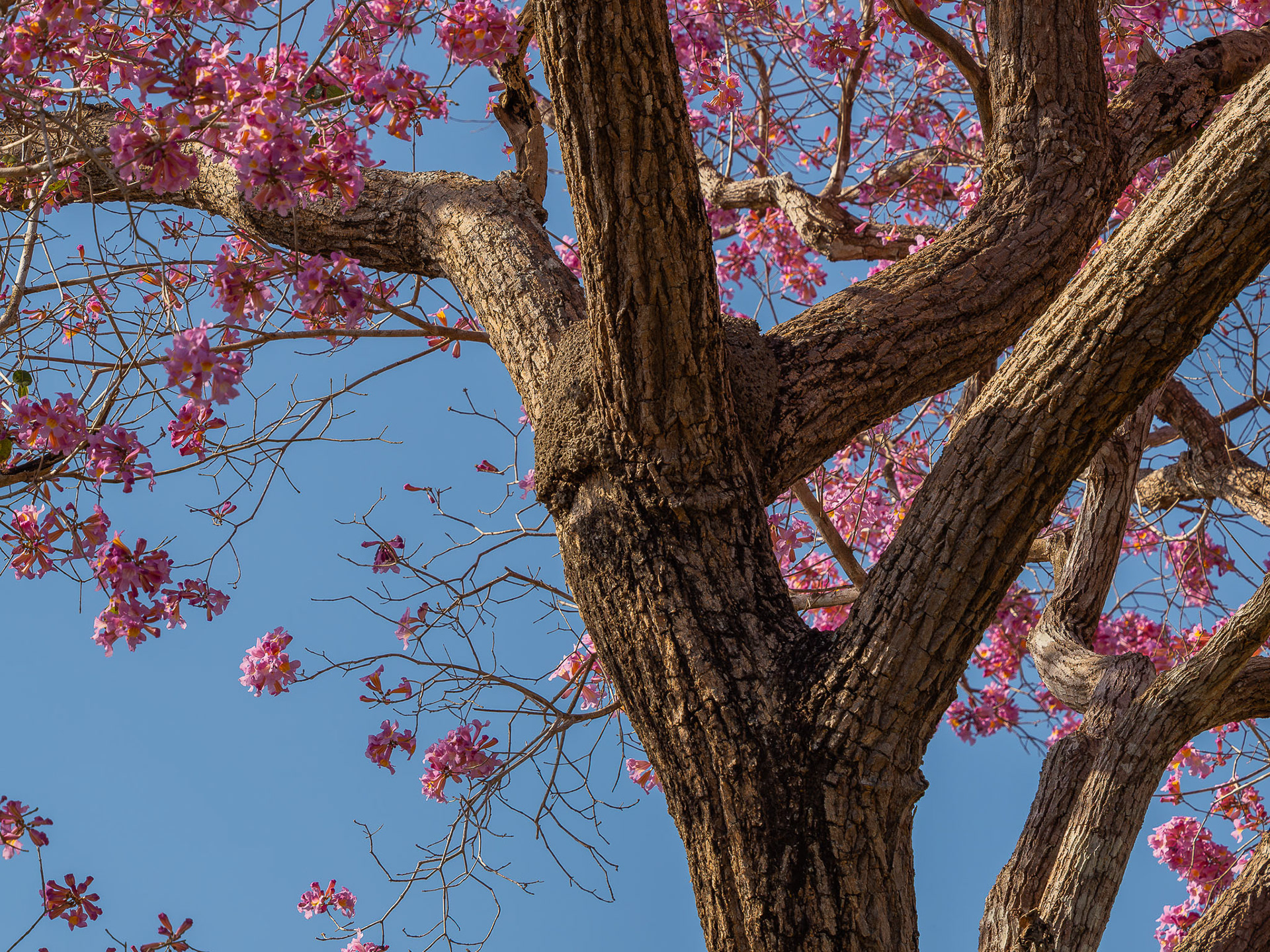
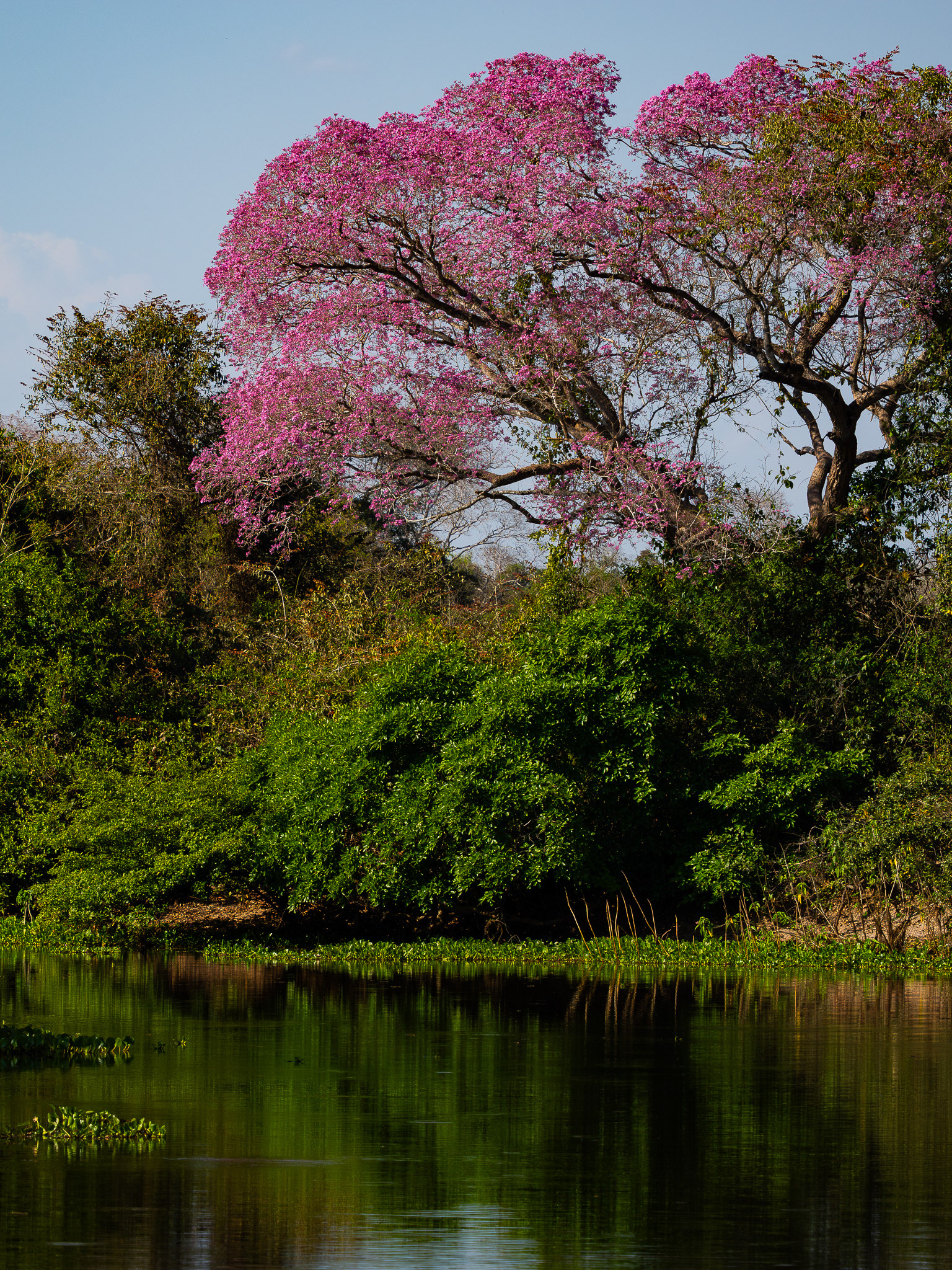
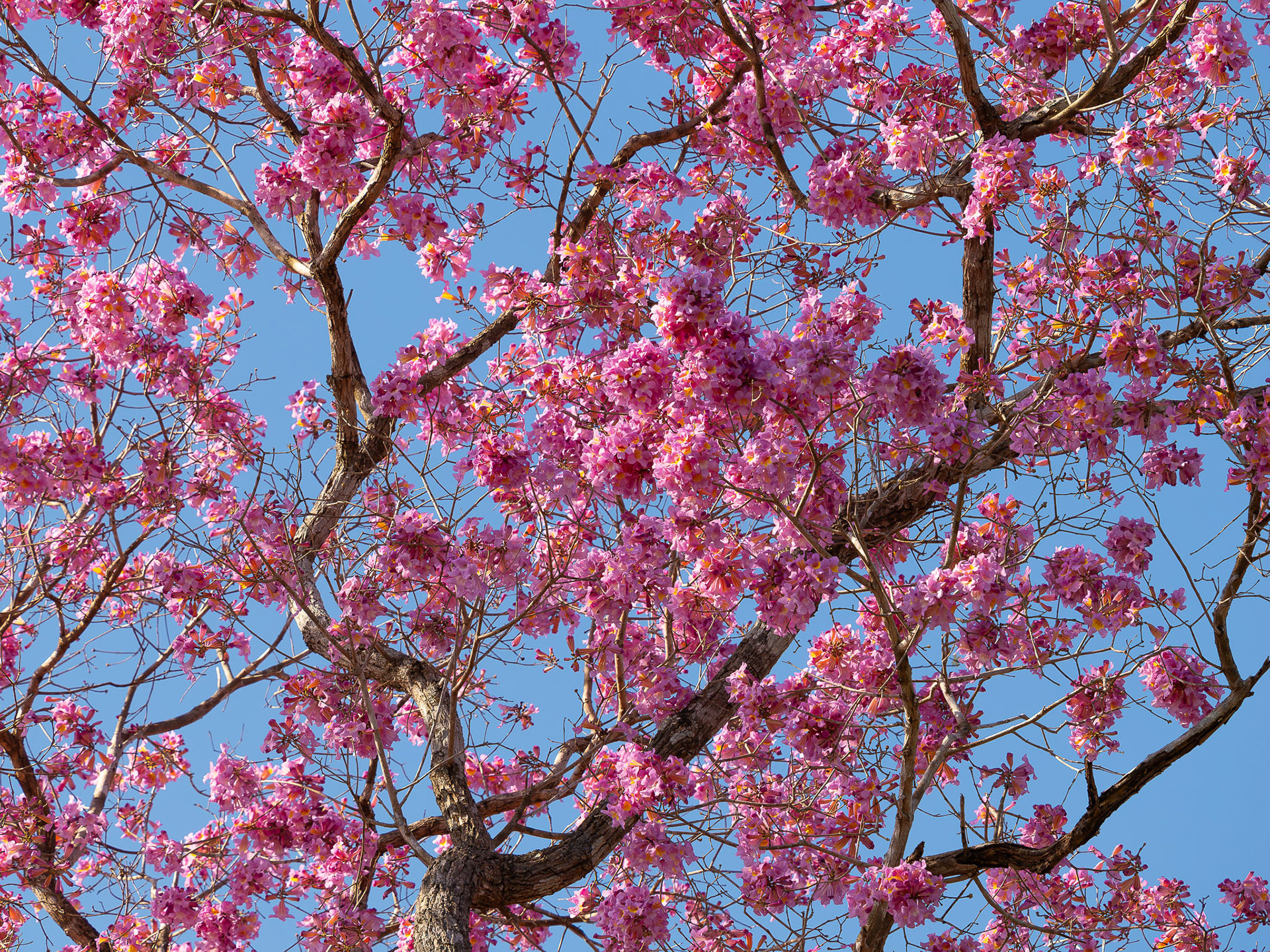
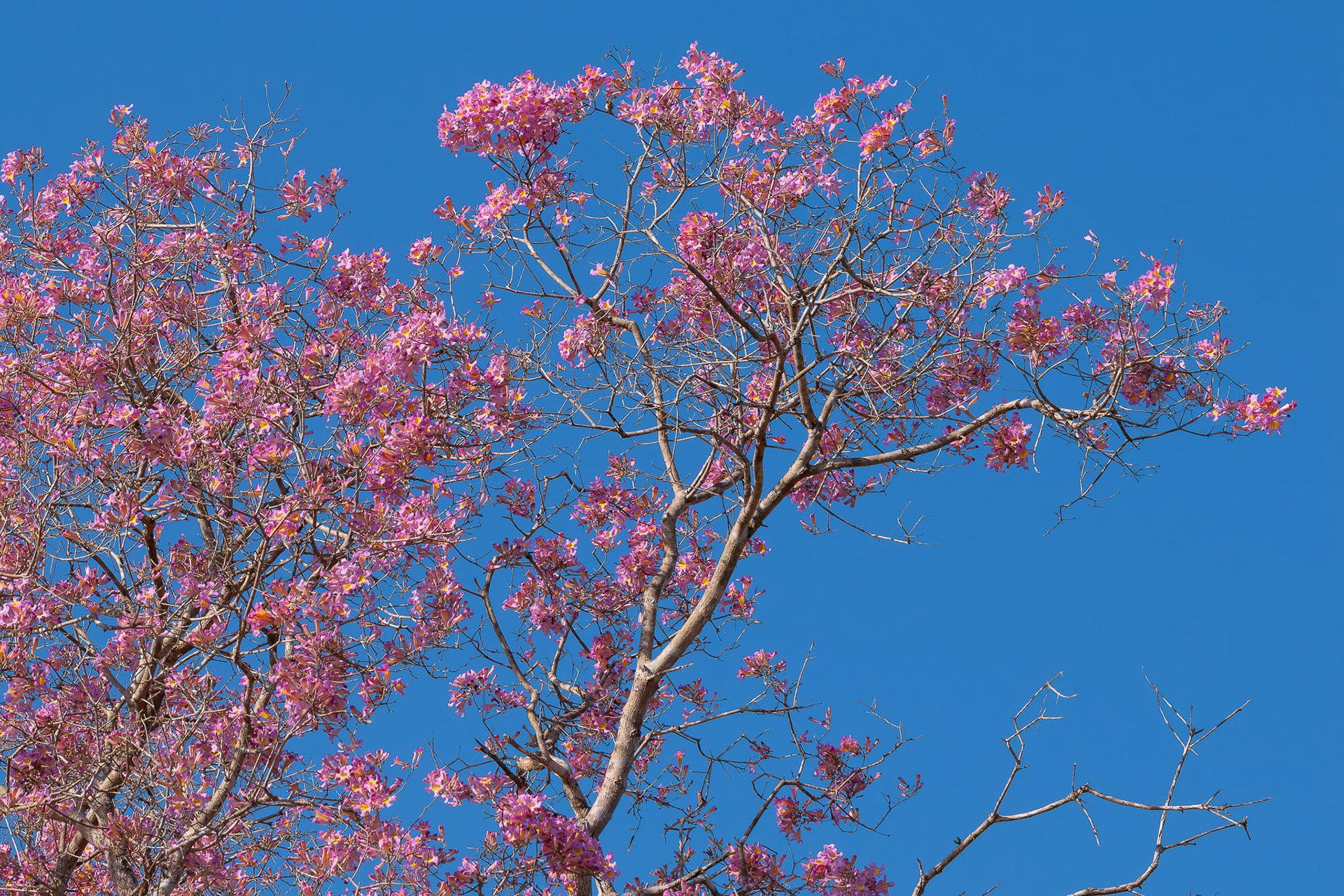
Blooming Piuva trees - their vivid pink flowers standing out against the blue skies of the Pantanal.
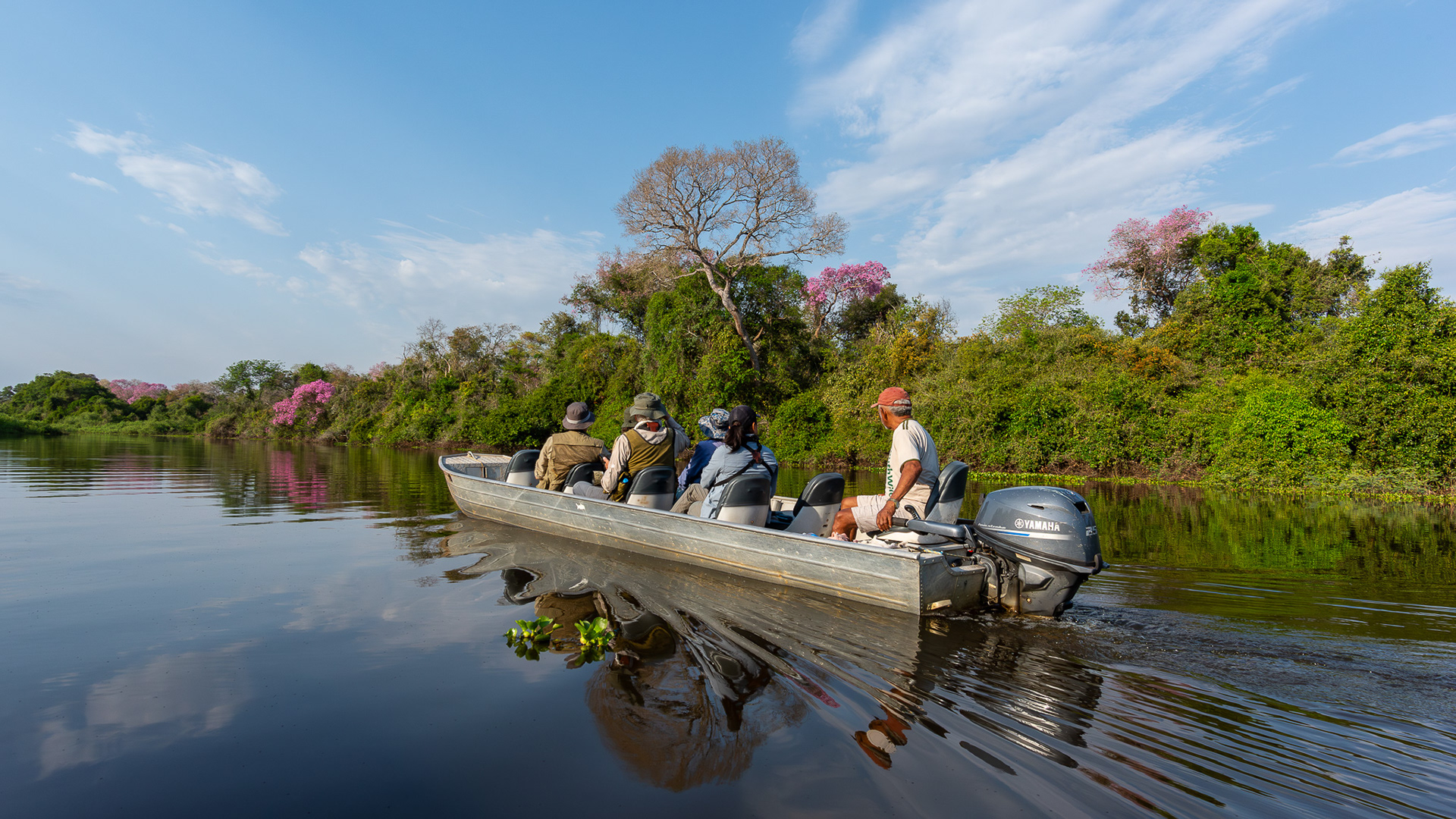
The boat moves slowly and gently along the calm, idyllic landscape, its hull barely disturbing the glassy surface as floating hyacinths drift past and the tranquil scene quietly unfolds.
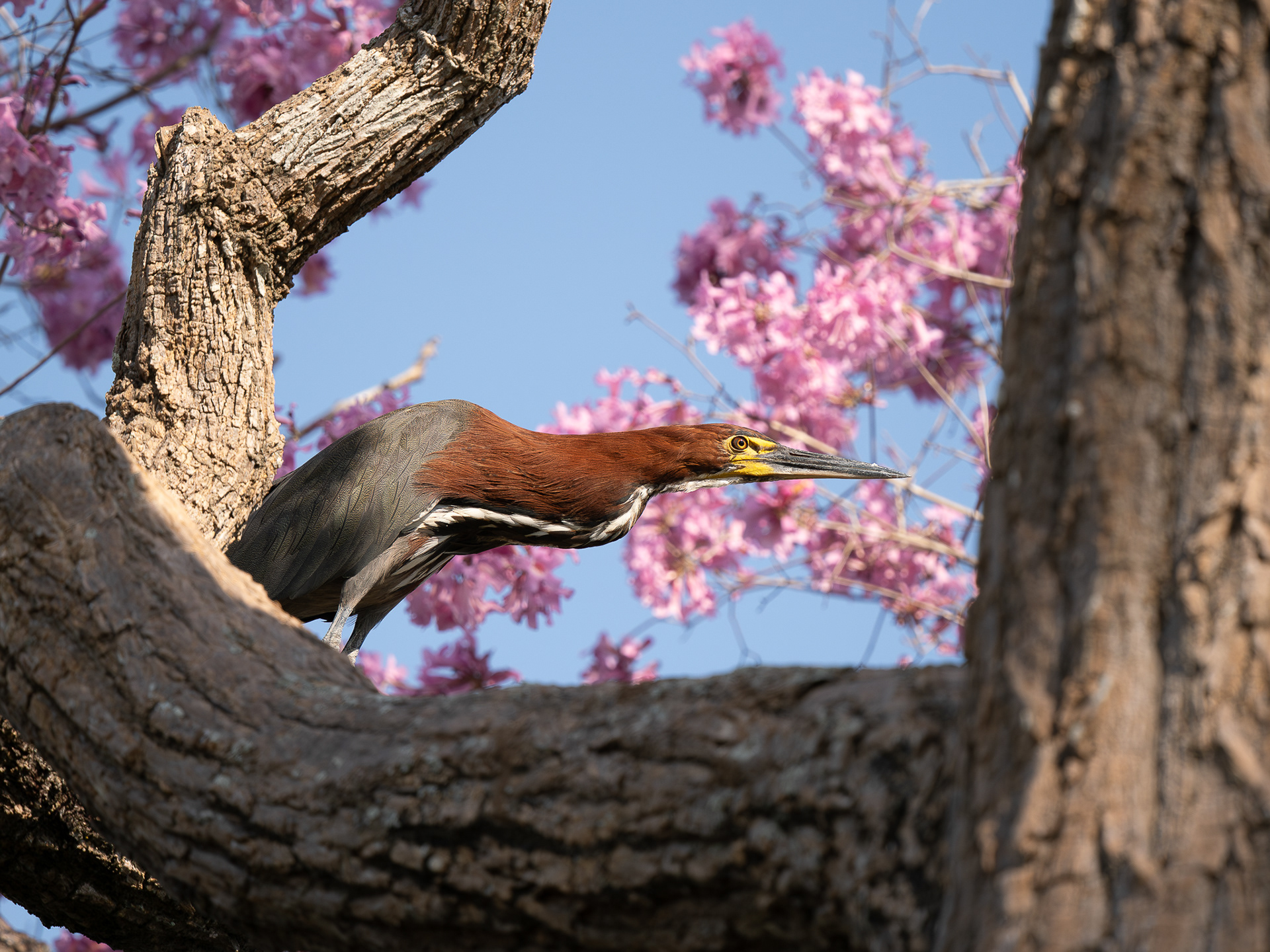
Rufescent Tiger-Heron leaning forward on a branch of a piúva tree in full blossom, its long neck stretched and bill pointed ahead as it watches the world below.
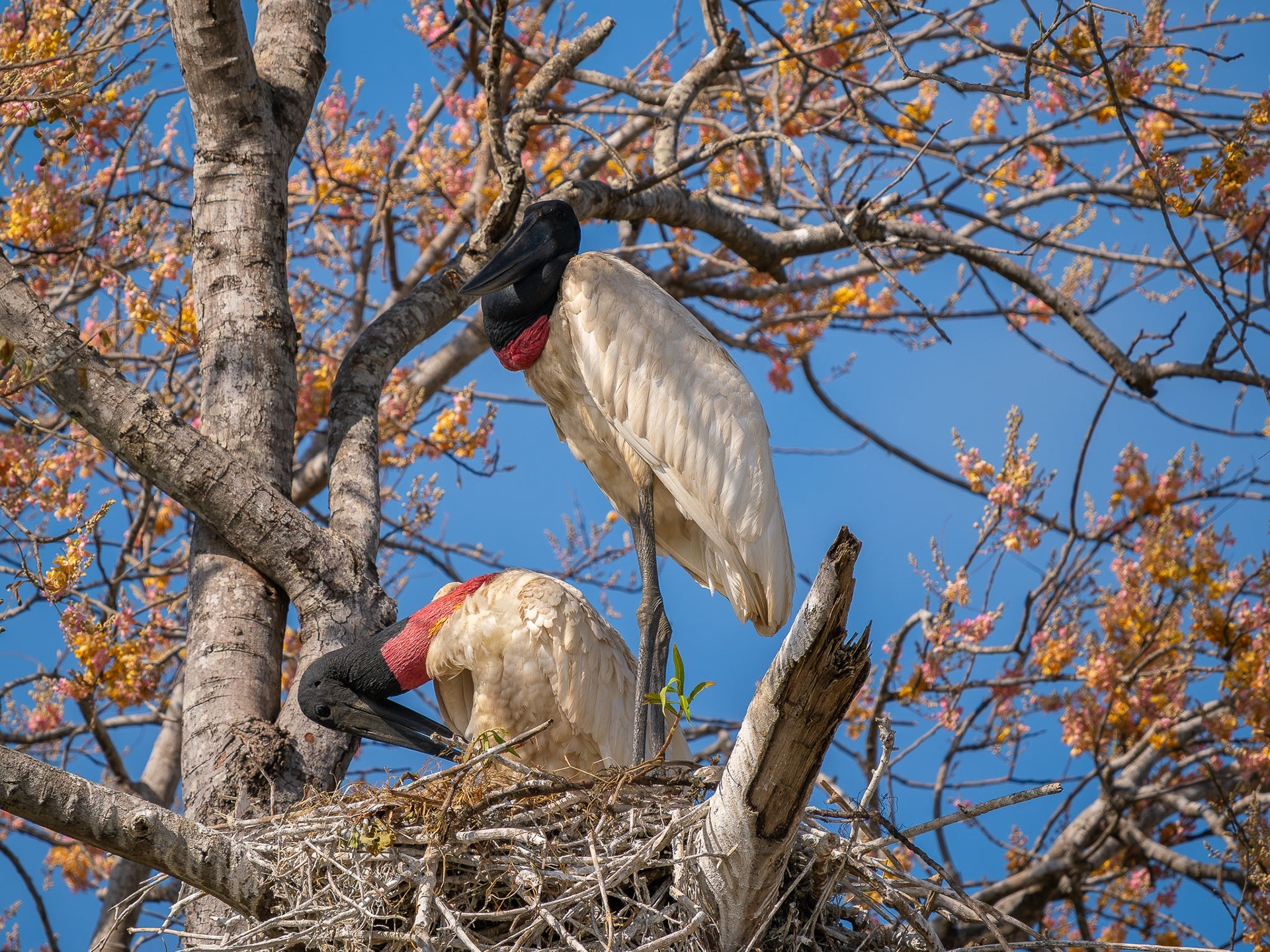
Pair of Jabiru resting together in their nest, one standing tall and watchful, the other sitting low among the woven sticks while carefully preening its feathers.
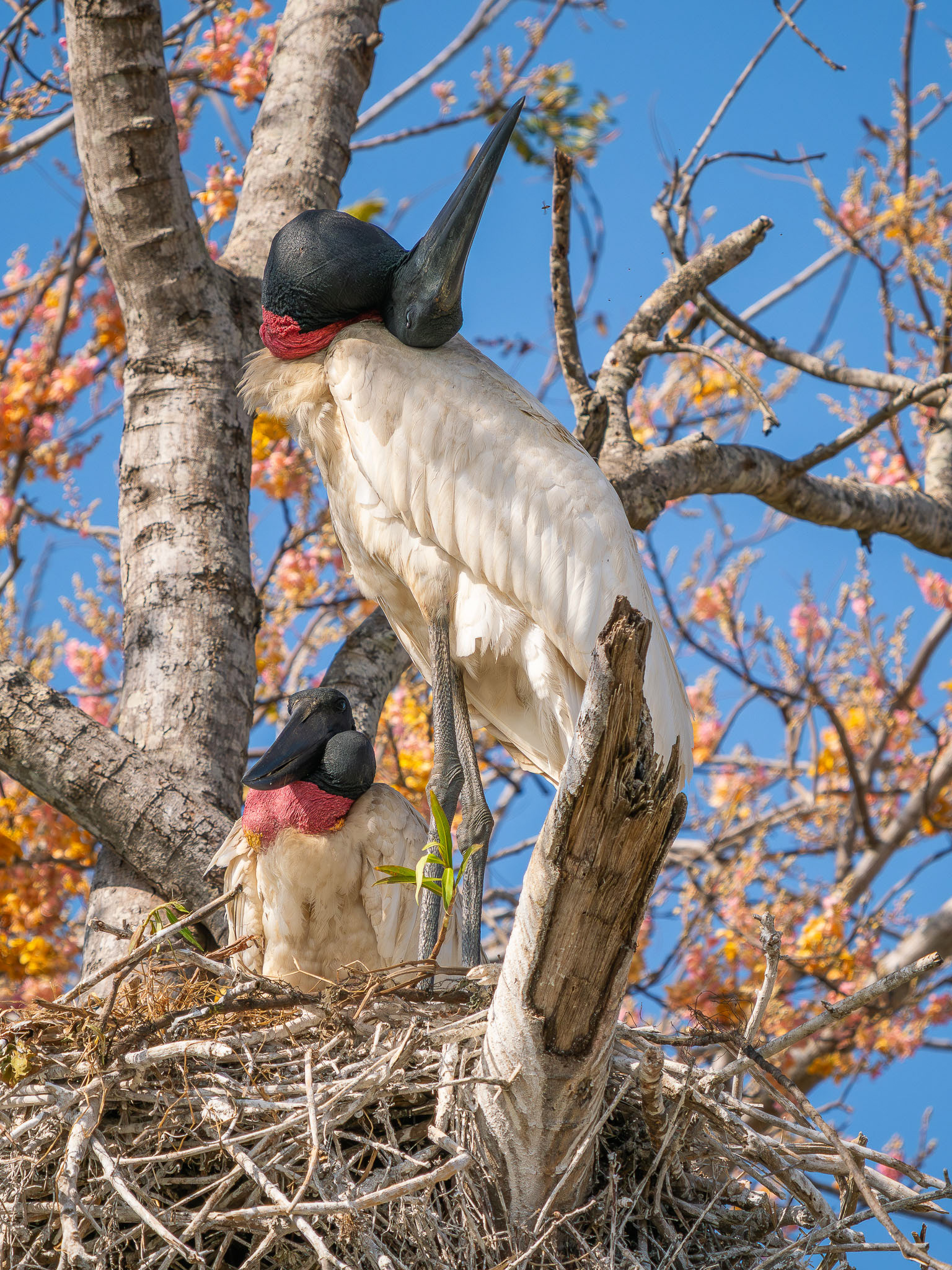
The standing bird bends its long neck backward, its beak pointing straight upward in a dramatic stretch, while the sitting bird holds its head upright, its large throat pouch and powerful neck bulging prominently beneath its heavy bill.
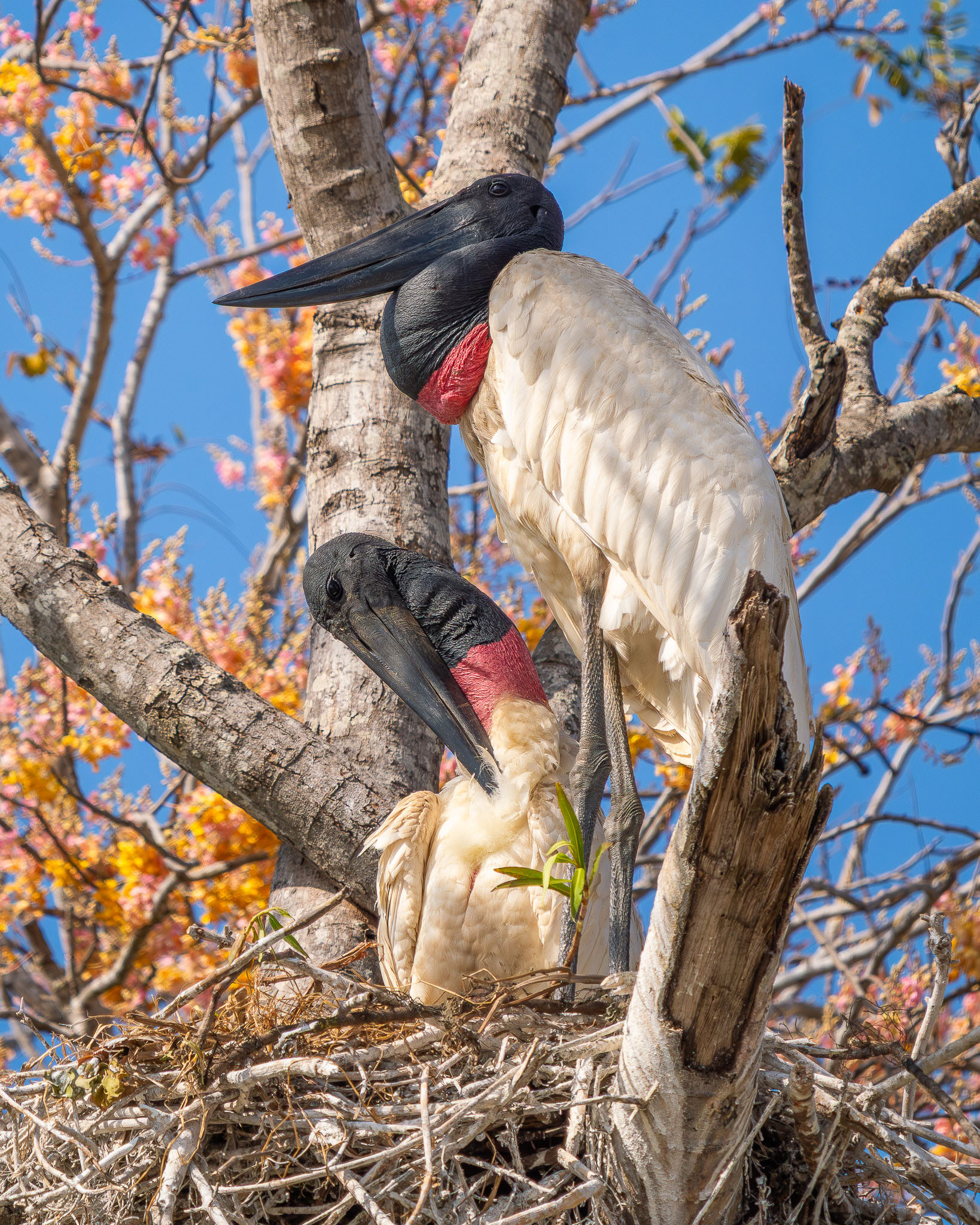
The two birds share the nest - one standing upright and alert, keeping careful watch over their surroundings, while the other sits with its neck extended forward, head bowed as its large black beak gently nibbles and preens the soft feathers of its chest.
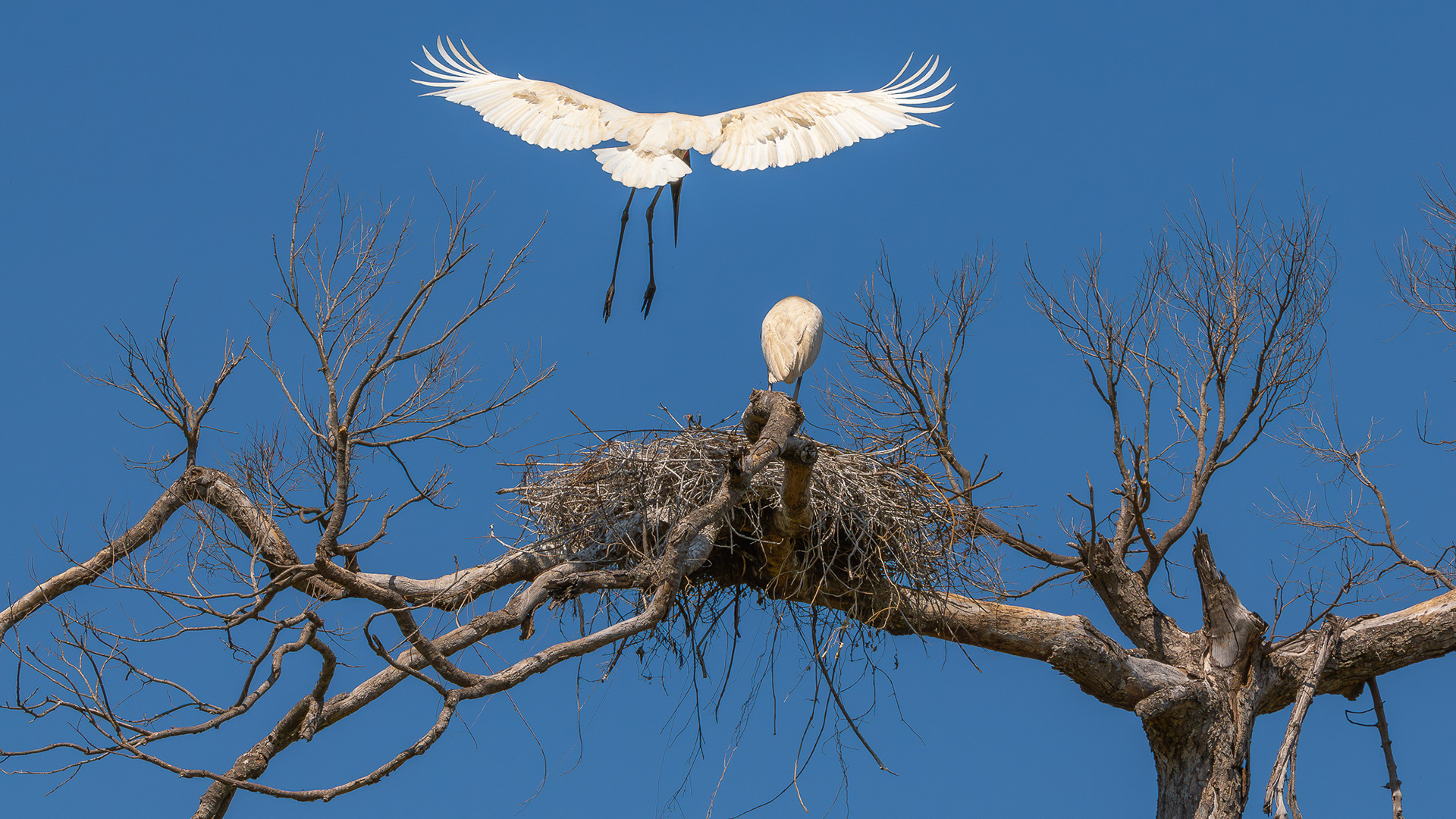
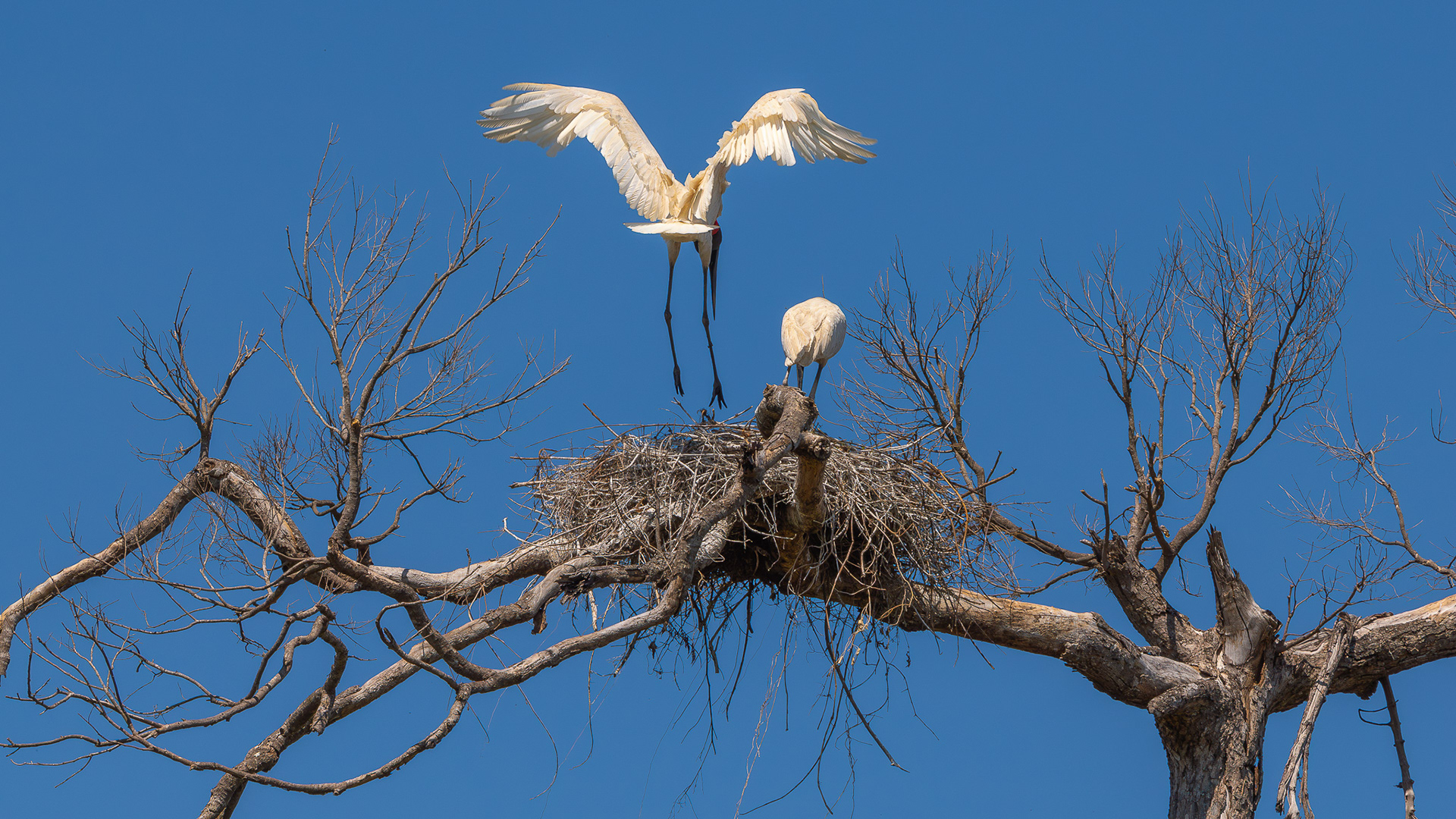
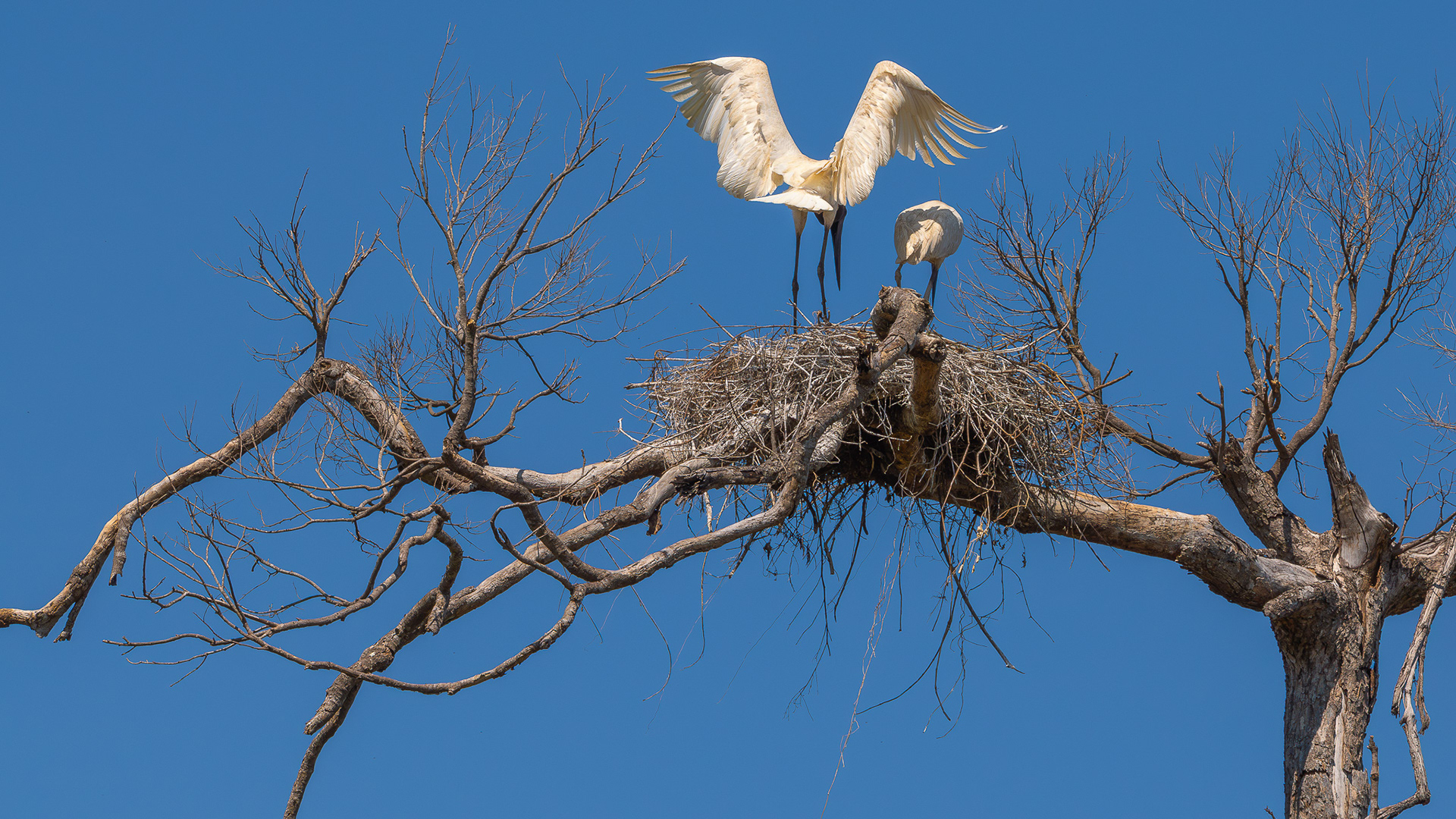
Gliding into the nest built high on a sturdy tree branch, a Jabiru moves in to join its partner, sunlight dazzling off their brilliant white feathers against the deep blue sky.
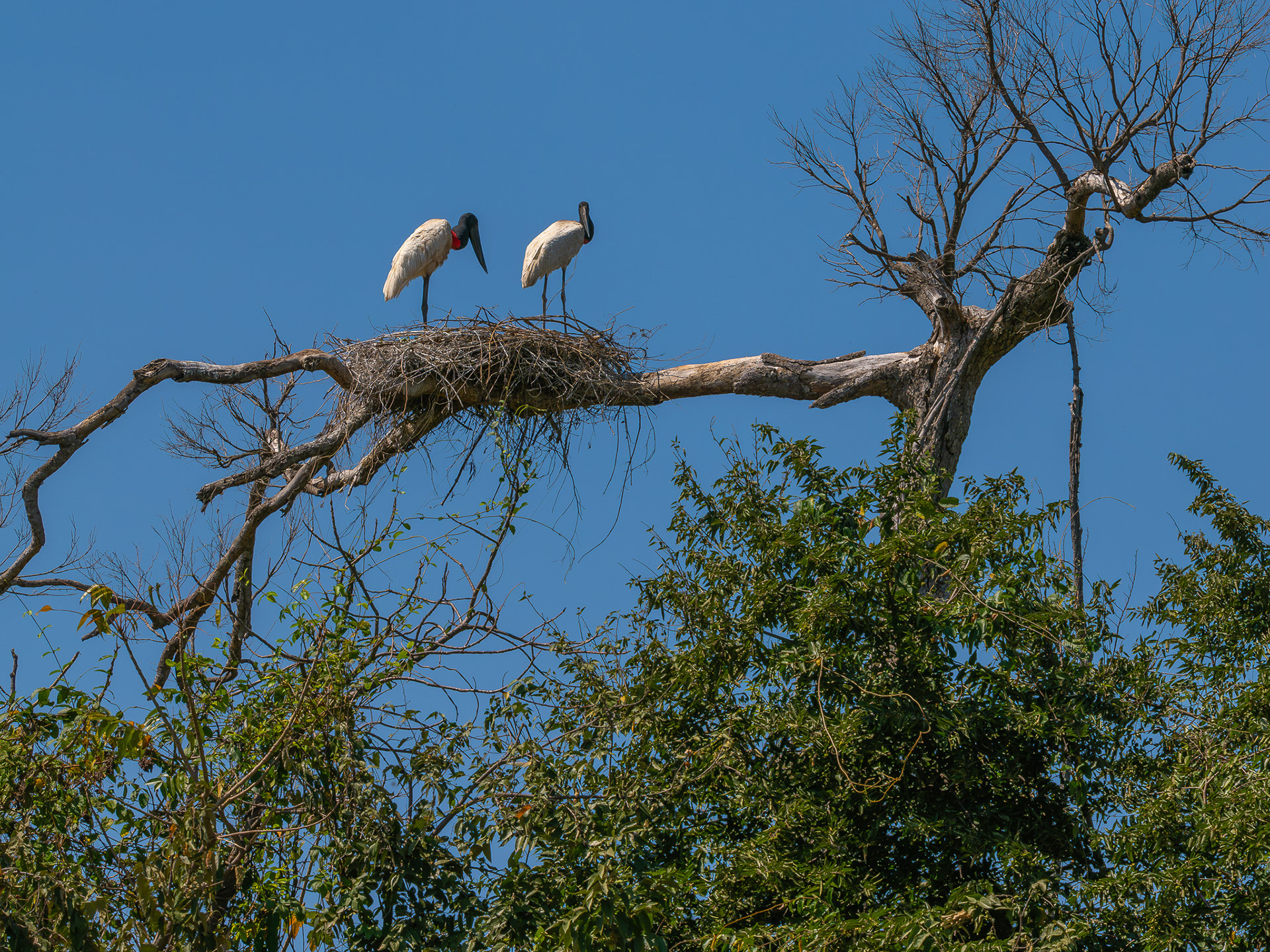
The pair stand together at the edge of the nest, overlooking the lush green forest below, tall and statuesque against the open sky.
^ Great Potoo
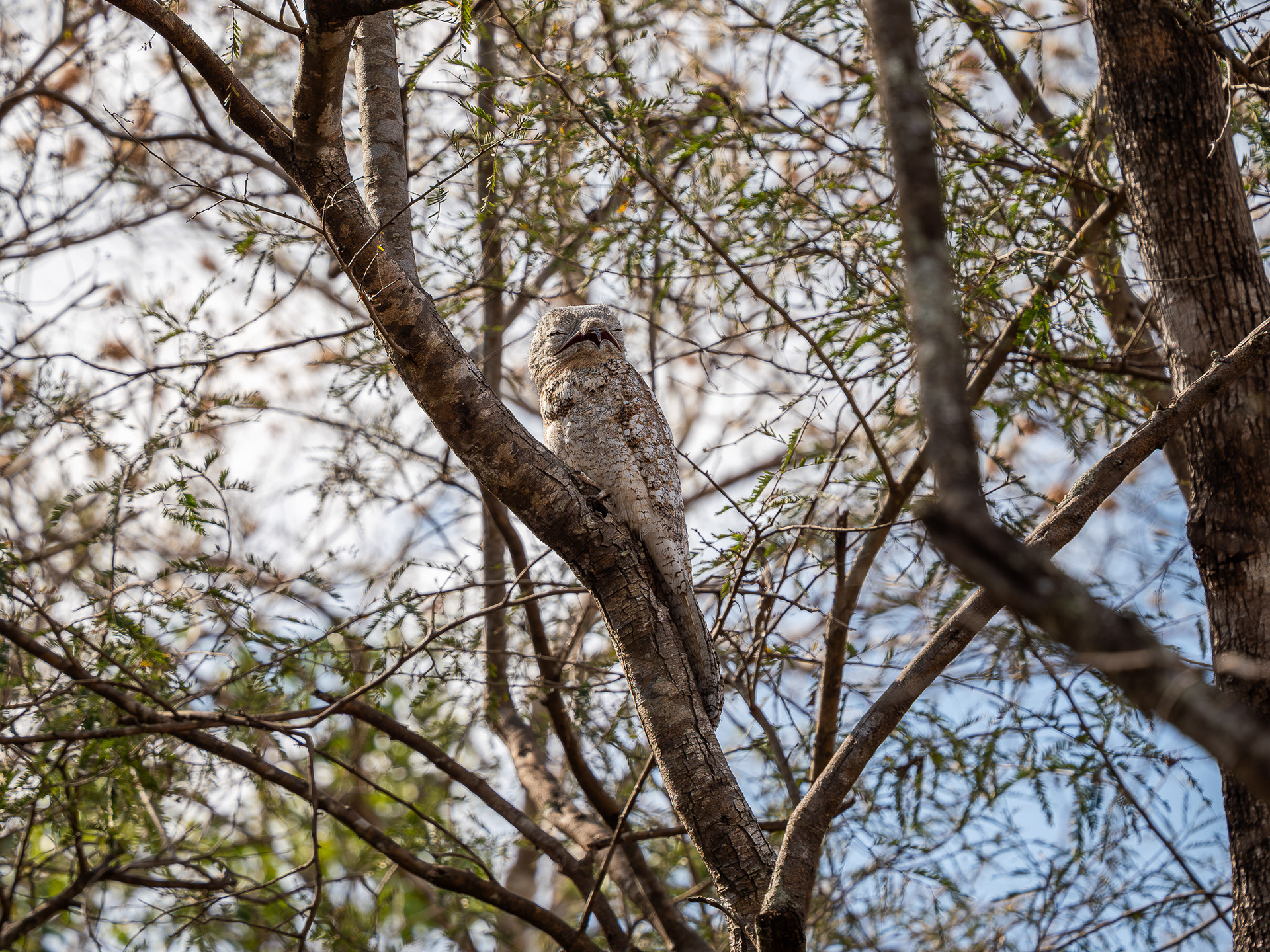
The Great Potoo (Nyctibius grandis) is a large, nocturnal bird found in the Pantanal region of Brazil and is a true master of camouflage. Perching upright like a broken tree stump - perfectly still, with its head tilted upward and its beak aligned with the branch it is almost impossible to spot. Its mottled grey and brown plumage closely resembles bark, cracks, and lichen, while its eyes remain mostly closed to narrow slits during the day. This extraordinary camouflage allows it to blend seamlessly into the trees and avoid detection by predators.
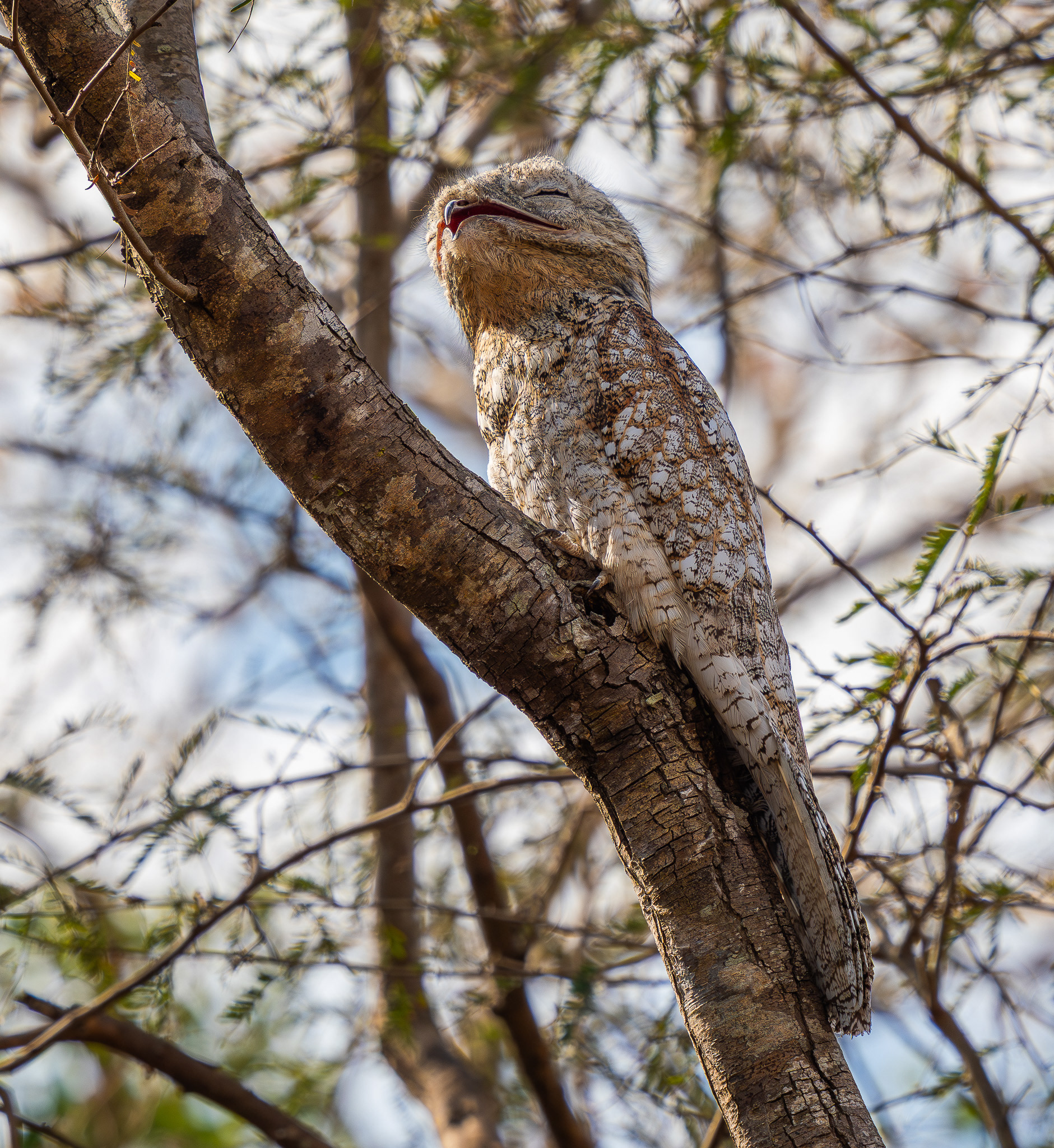
Perched upright and perfectly still, the Great Potoo mimics a broken branch. With eyes narrowed to slits and bark-toned plumage blending into the tree, it becomes almost indistinguishable from dead wood.
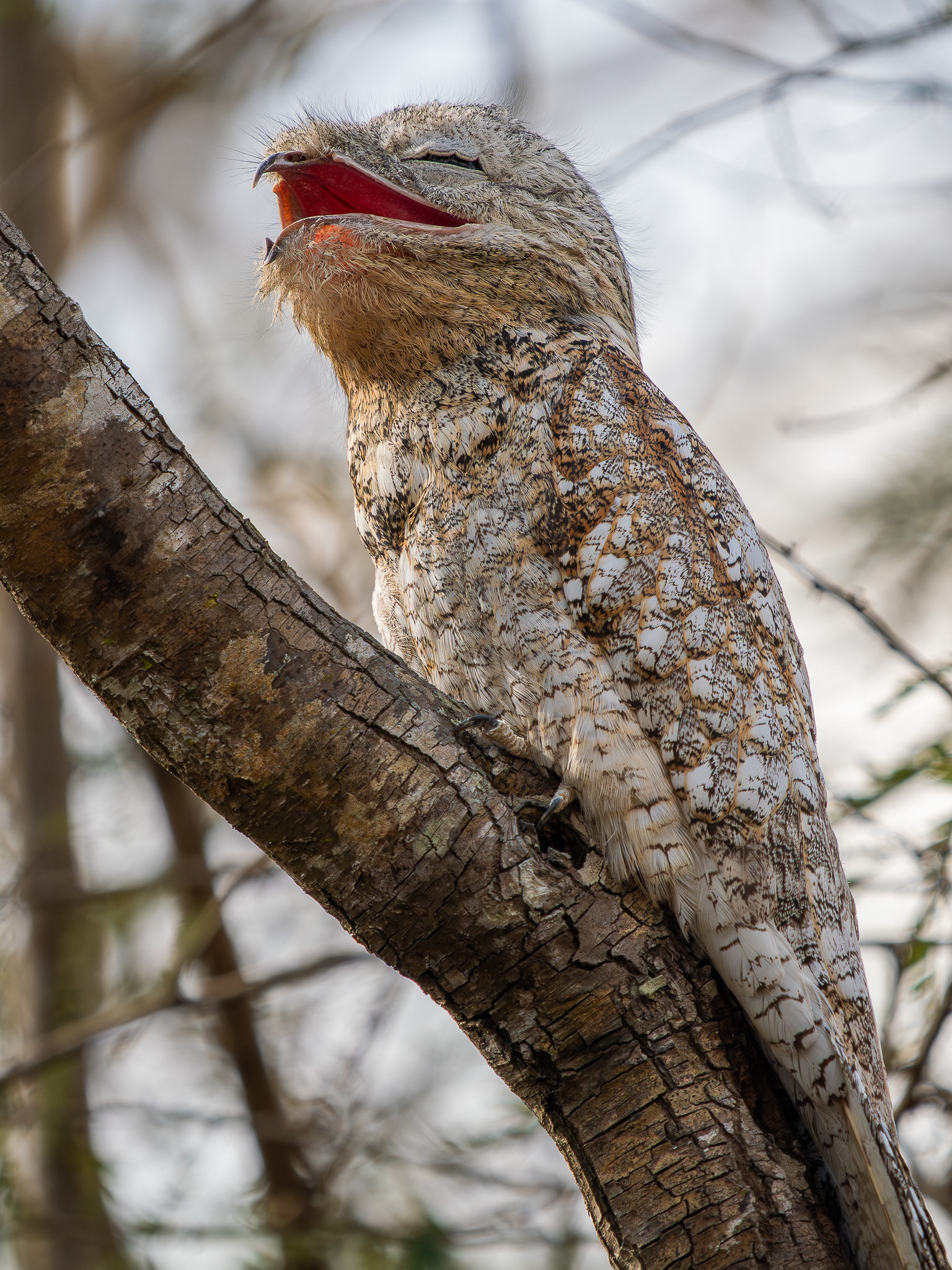
Famed for its extremely wide gape, the Great Potoo is superbly adapted for catching flying insects at night. By day, it remains motionless on branches, perfectly camouflaged against its surroundings; after dusk, it springs to life, opening its vast mouth to snatch insects from the air.
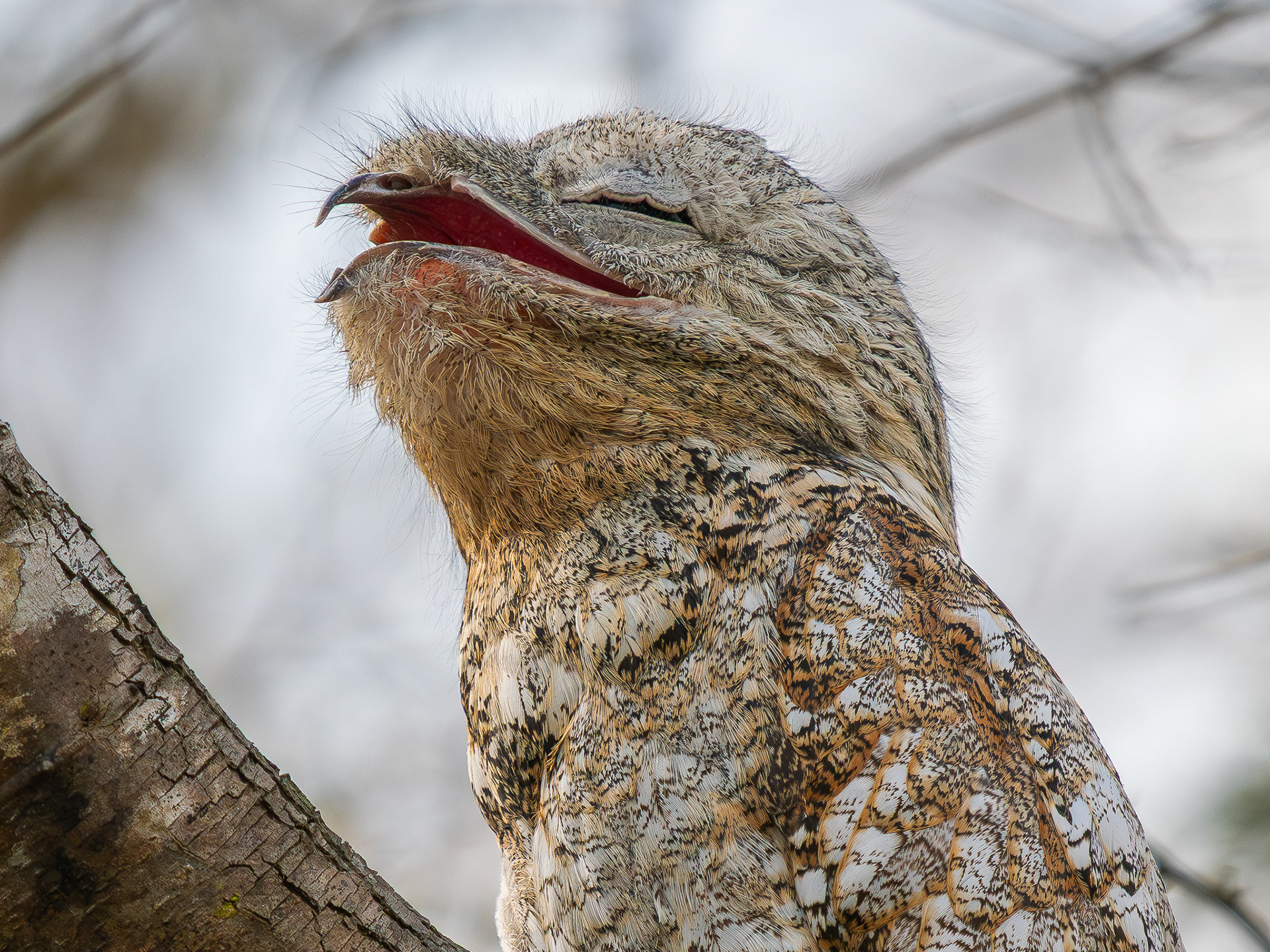
These birds possess unique slits in their upper eyelids that allow them to detect movement and monitor their surroundings, even when their eyes appear closed.
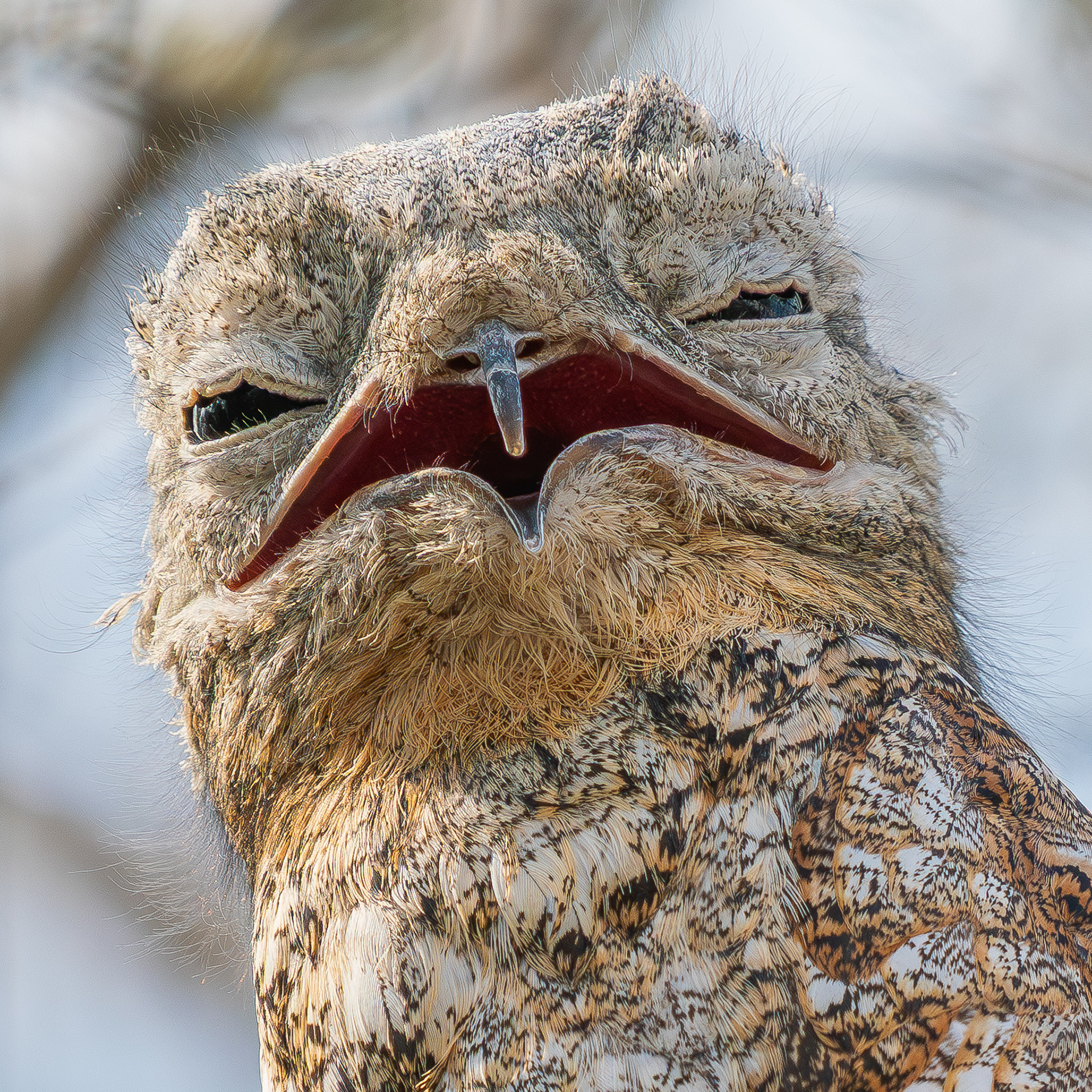
As nocturnal birds, Great Potoo become active at dusk, using their enormous, light-sensitive eyes to hunt large insects such as beetles and moths, and occasionally even small bats.
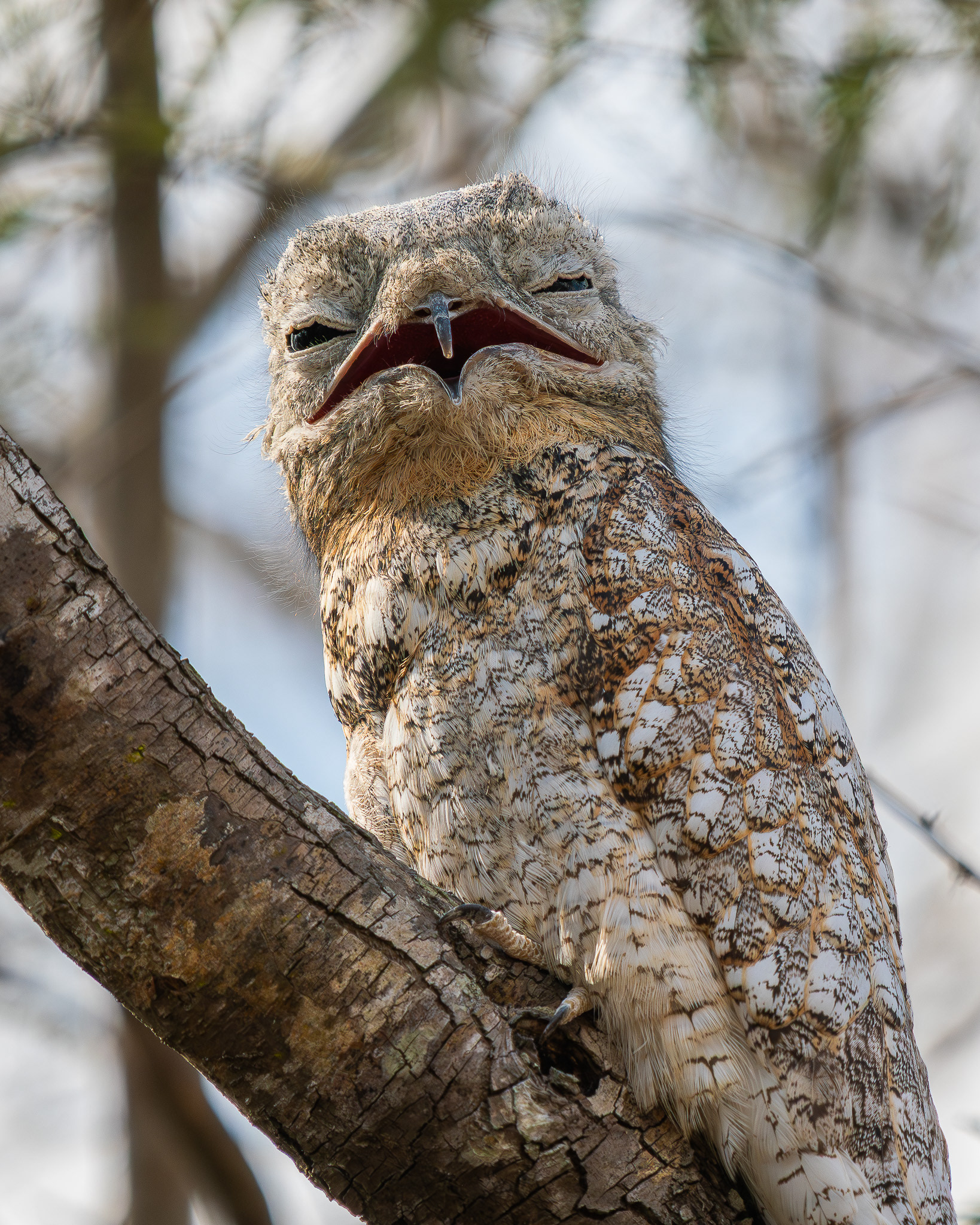
Unlike most birds, the Great Potoo does not construct a nest, instead it balances a single egg in a shallow depression or natural fork high on a tree branch.
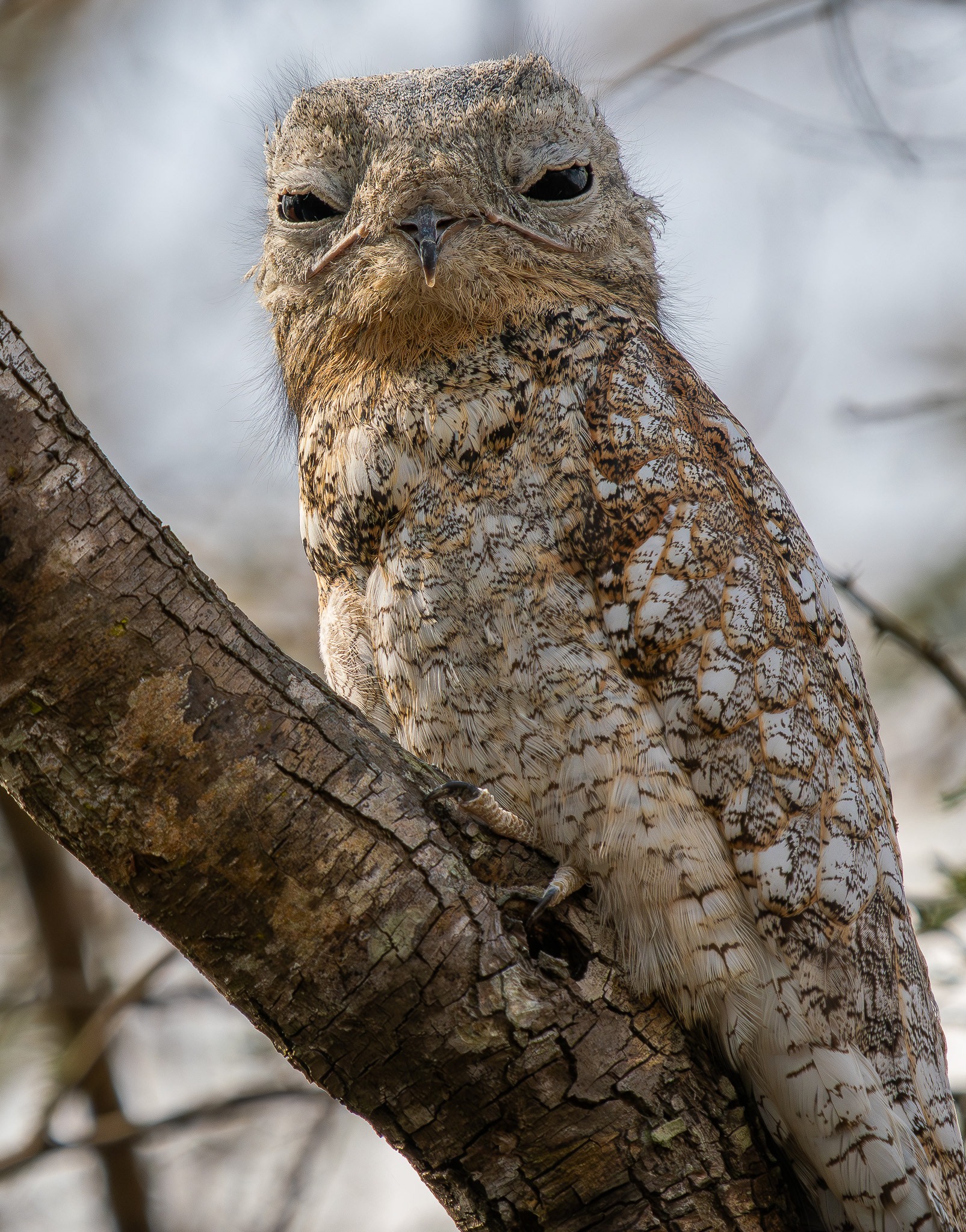
Their feet are specially adapted for clinging upright to branches or stumps. Unlike owls, the Great Potoo does not use its talons to seize prey, relying instead on its enormous mouth to capture insects in mid-air.
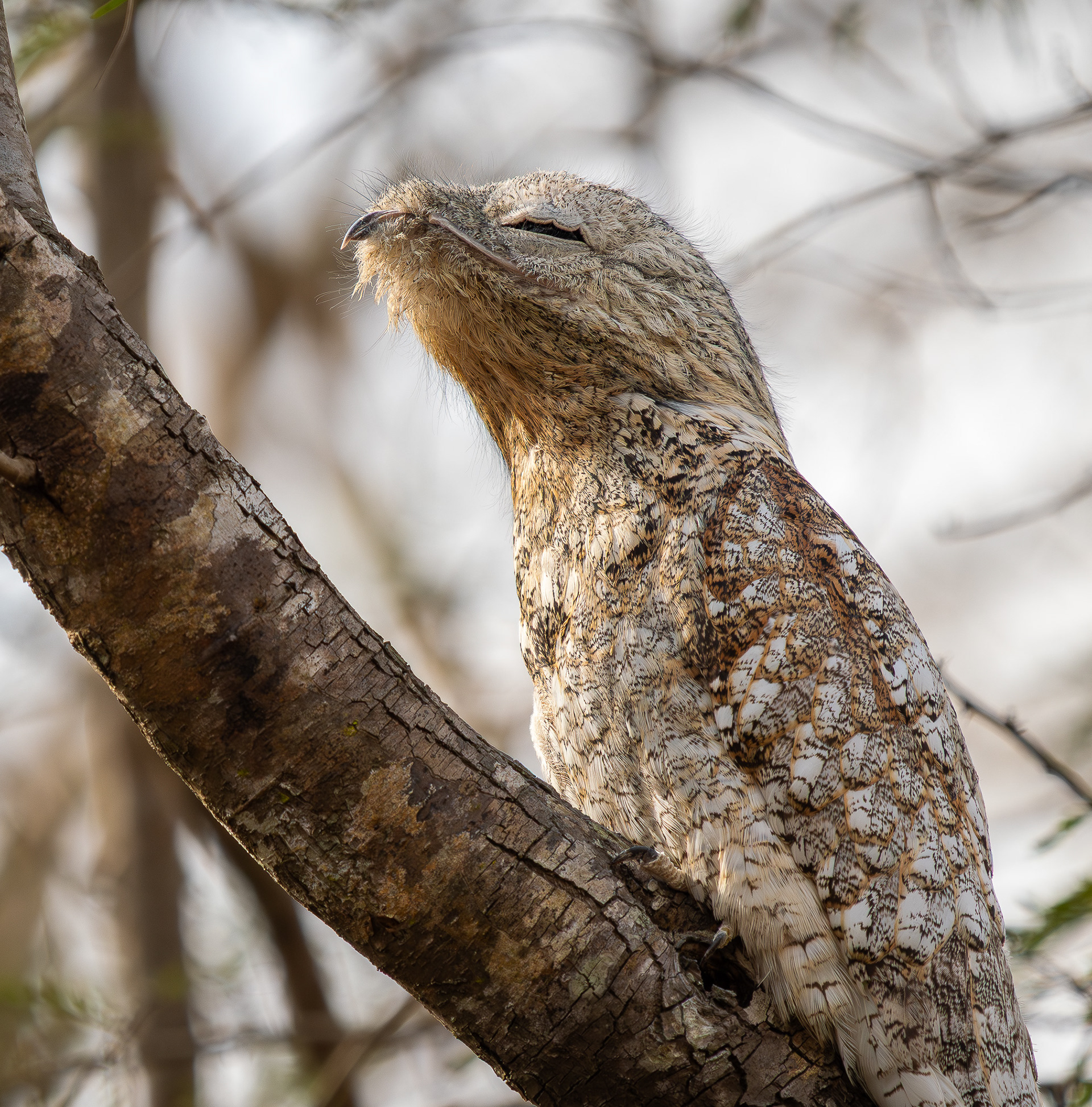
The Great Potoo is renowned for its haunting night time call - a deep, guttural moan or long, descending wail that can resemble an eerie scream echoing across the forests and wetlands.
^ Black Skimmer
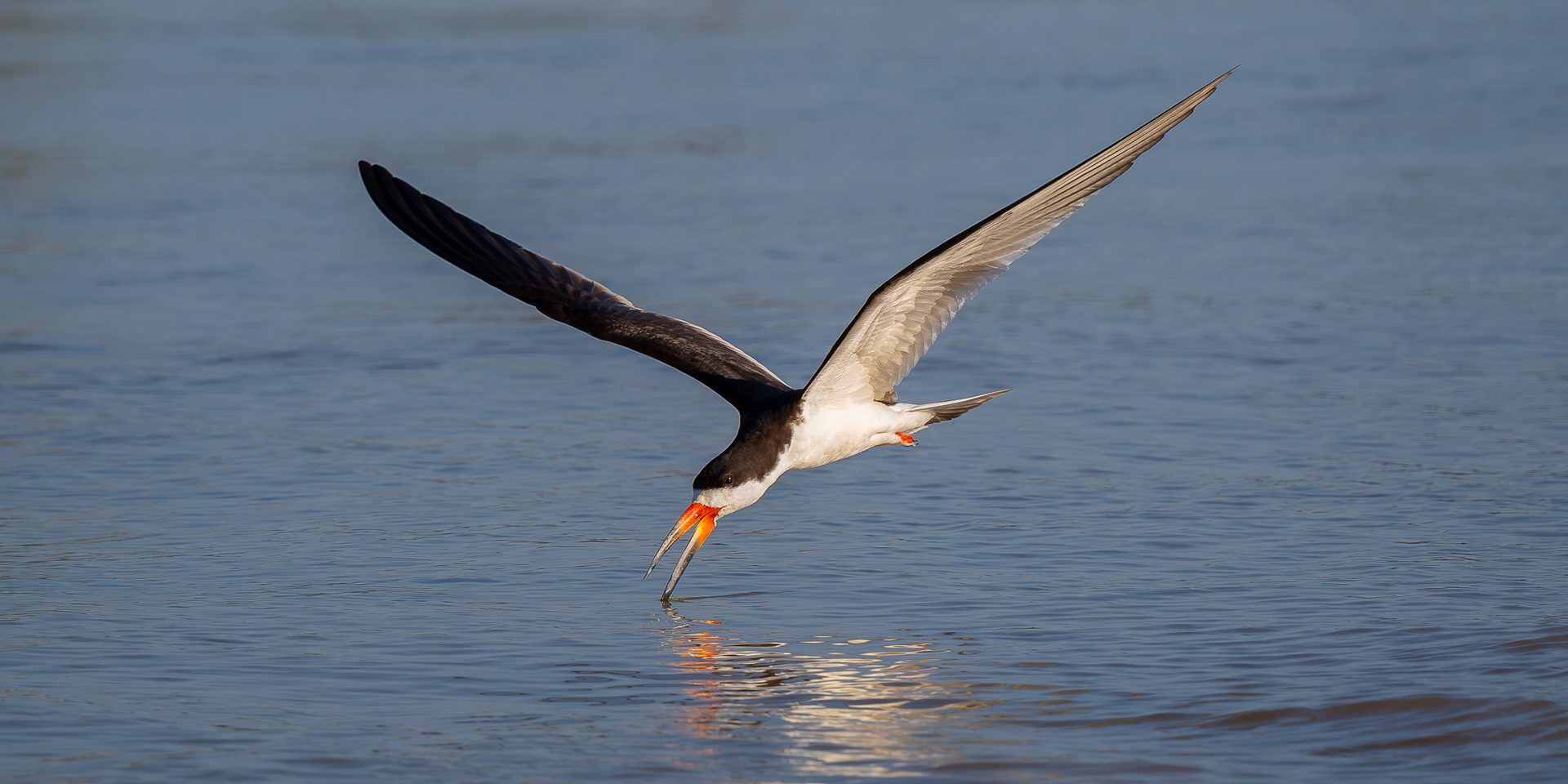
The Black Skimmer (Rynchops niger) is a striking bird found in the Pantanal wetlands of Brazil, easily recognised by its black upper parts, white underparts, and bright orange-red bill.
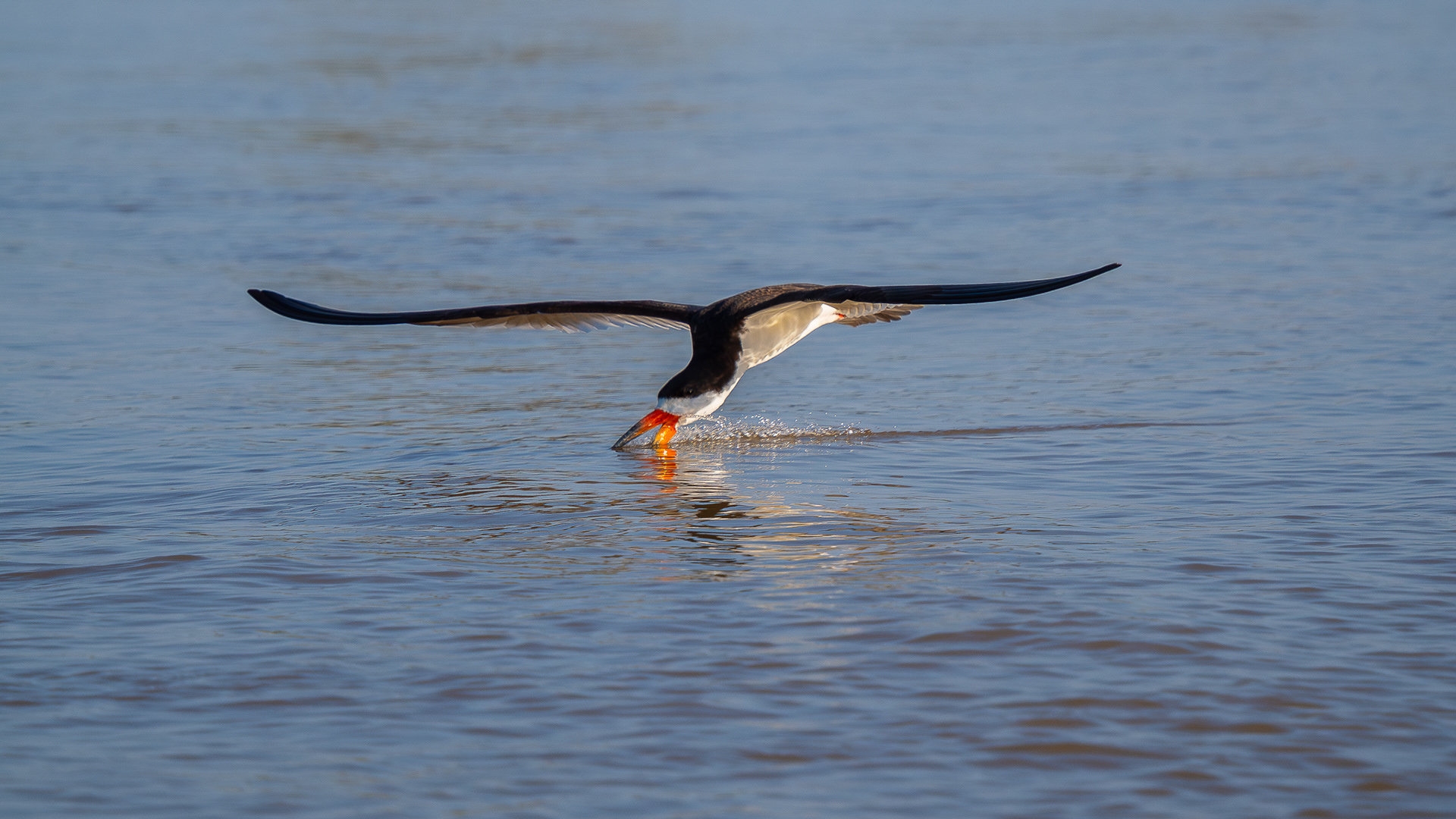
Black Skimmer feed by 'skimming' the water's surface. Flying low over rivers and lagoons, they trail their elongated lower mandible through the water, snapping it shut the instant it makes contact with a fish.
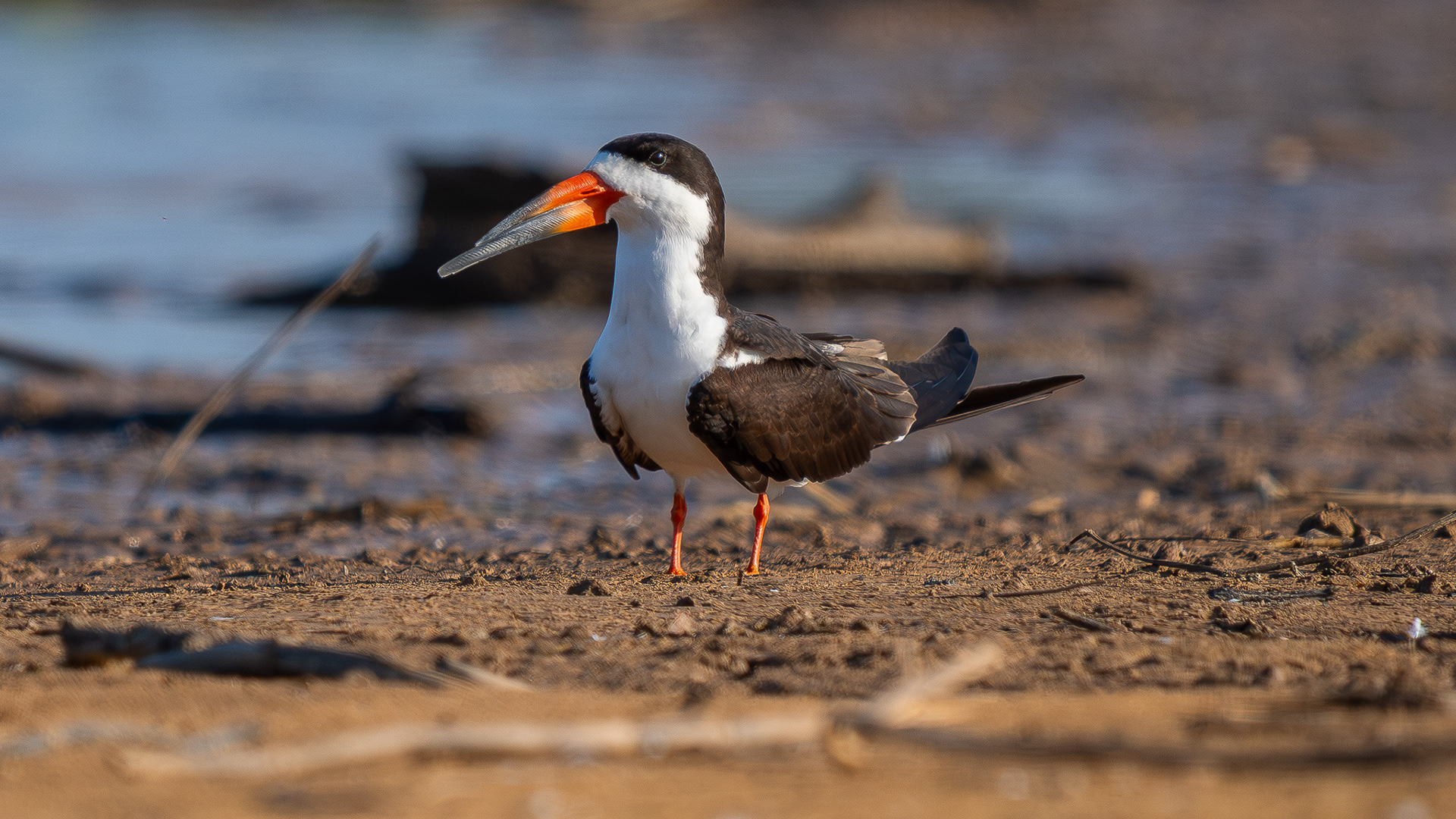
The Black Skimmer has a striking, specialised bill in which the lower mandible is noticeably longer than the upper, enabling it to skim the water's surface and snatch fish with remarkable precision.
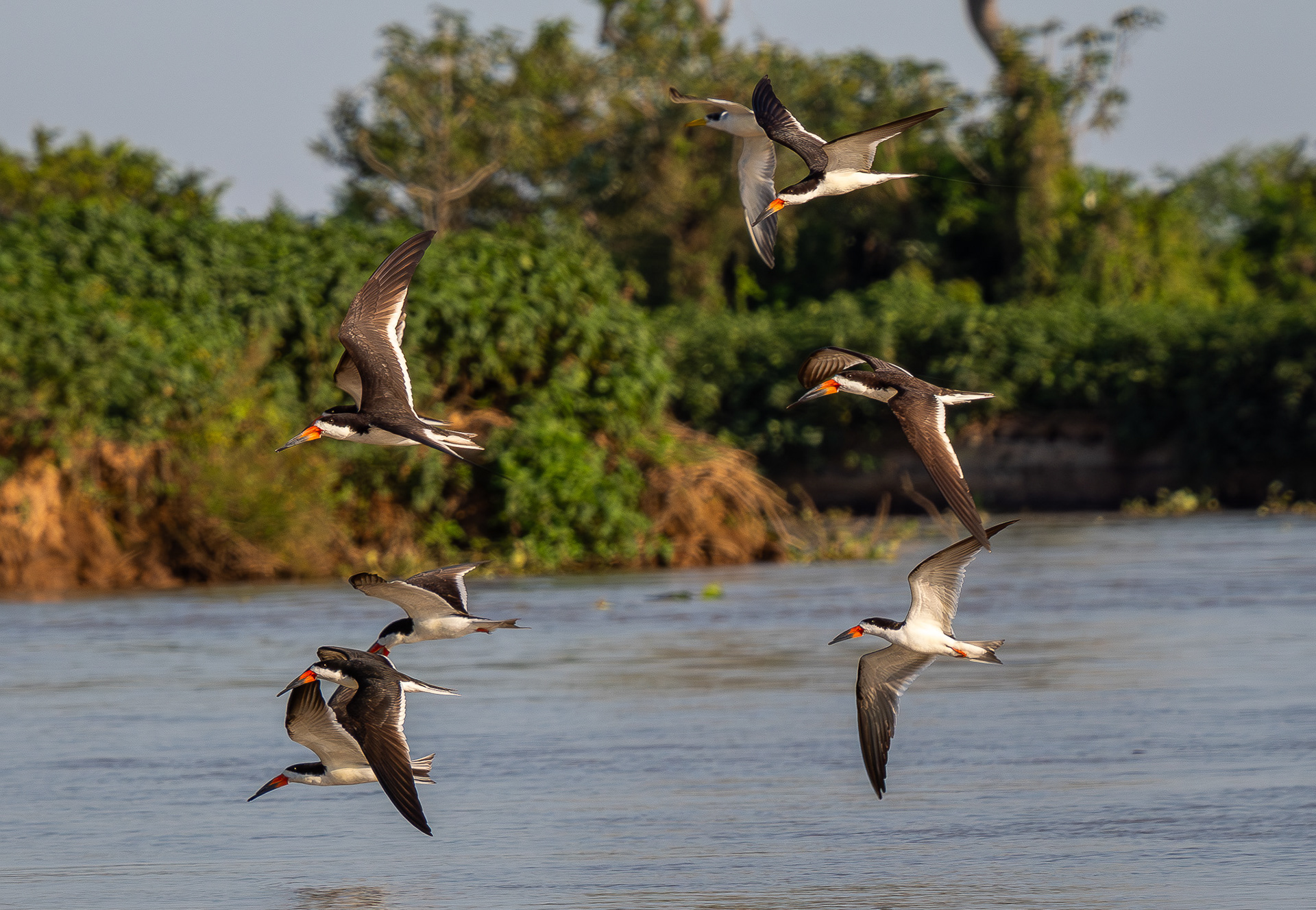
Black Skimmer prefer wide rivers, lakes, and flooded wetlands. The seasonal inundation of the Pantanal creates ideal feeding grounds, particularly in the early morning or late afternoon when water levels are well suited for skimming. They are often seen flying and feeding in small flocks.
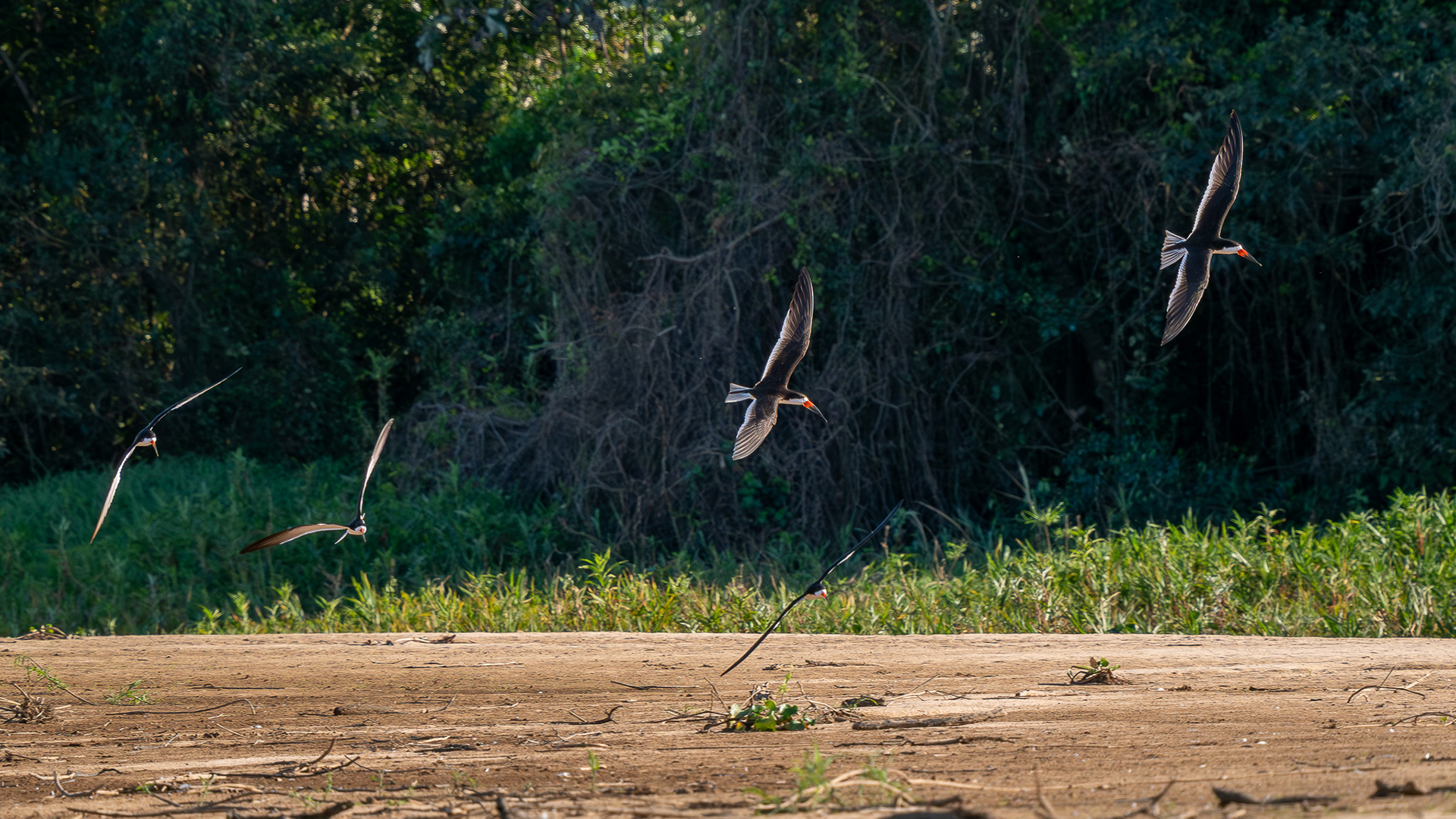
Black Skimmer glide low over a sandy riverbank in the Pantanal.
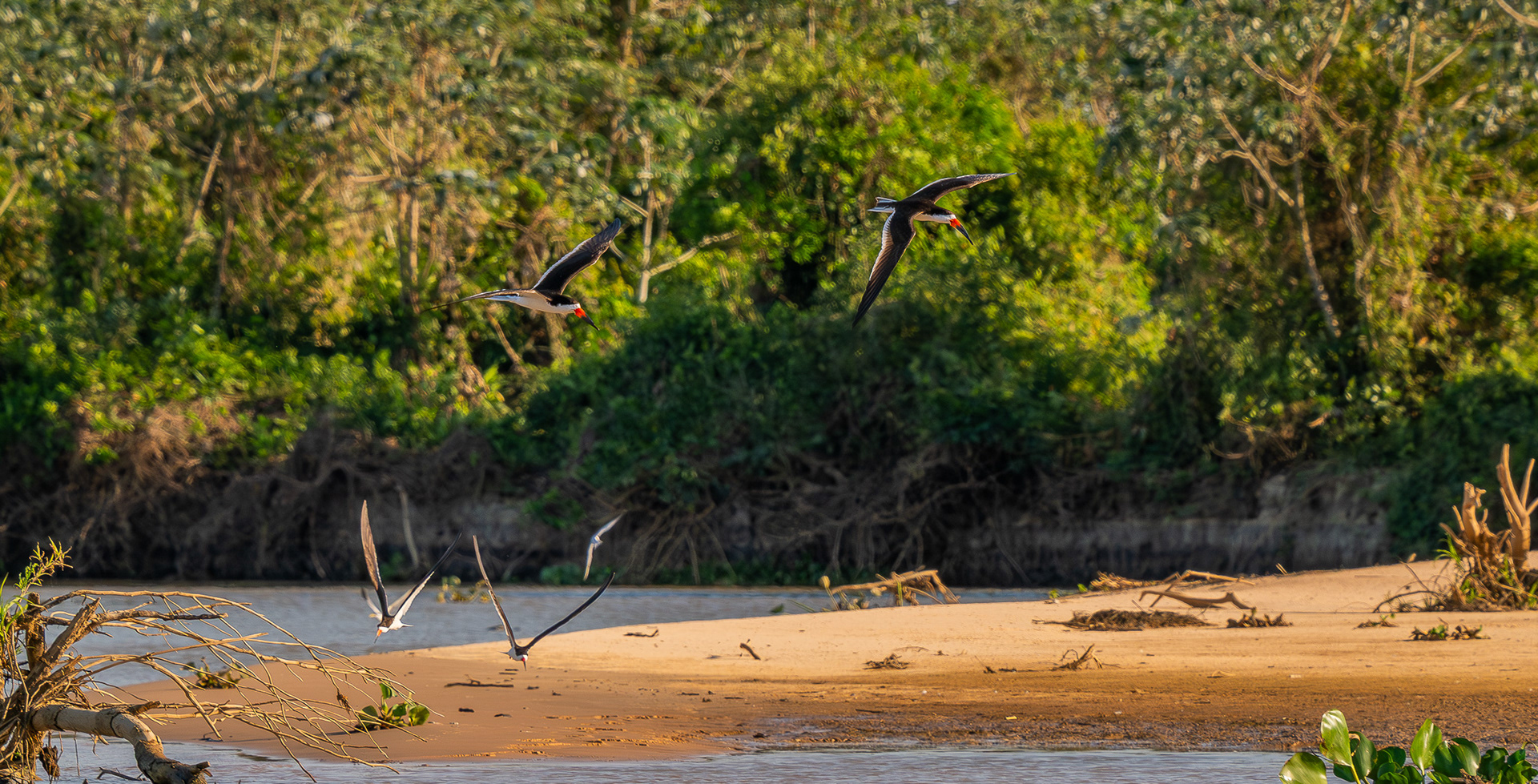
Black Skimmer breed in small colonies on sandbanks and river beaches exposed during the dry season, laying their eggs in shallow depressions - simple scrapes formed directly in the sand.
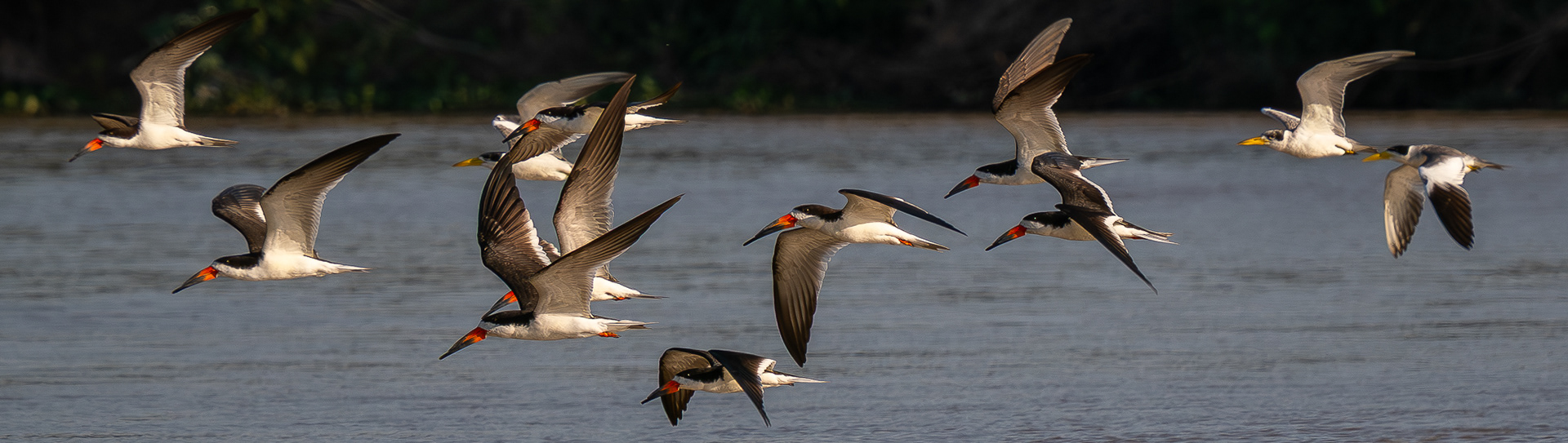
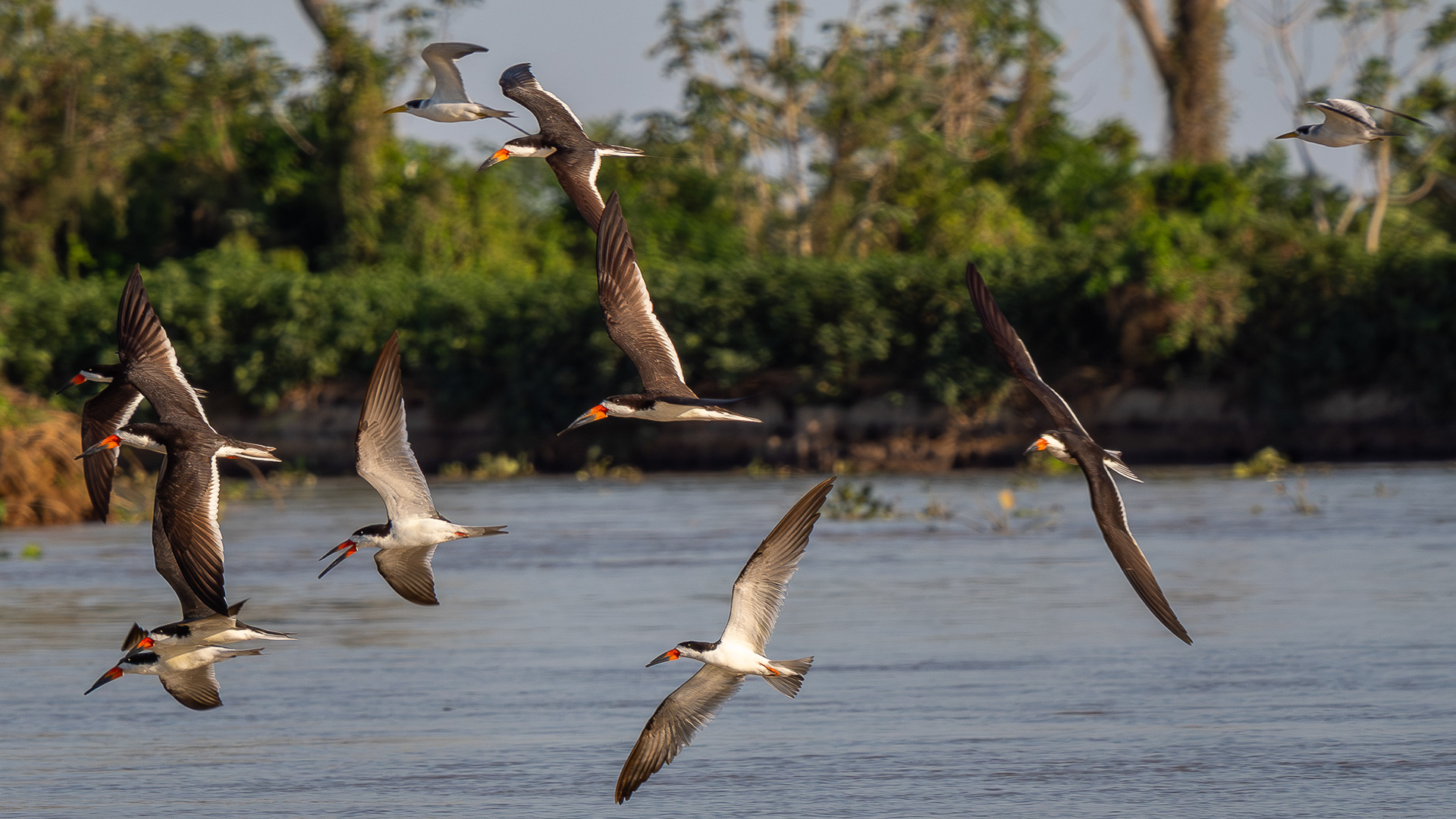
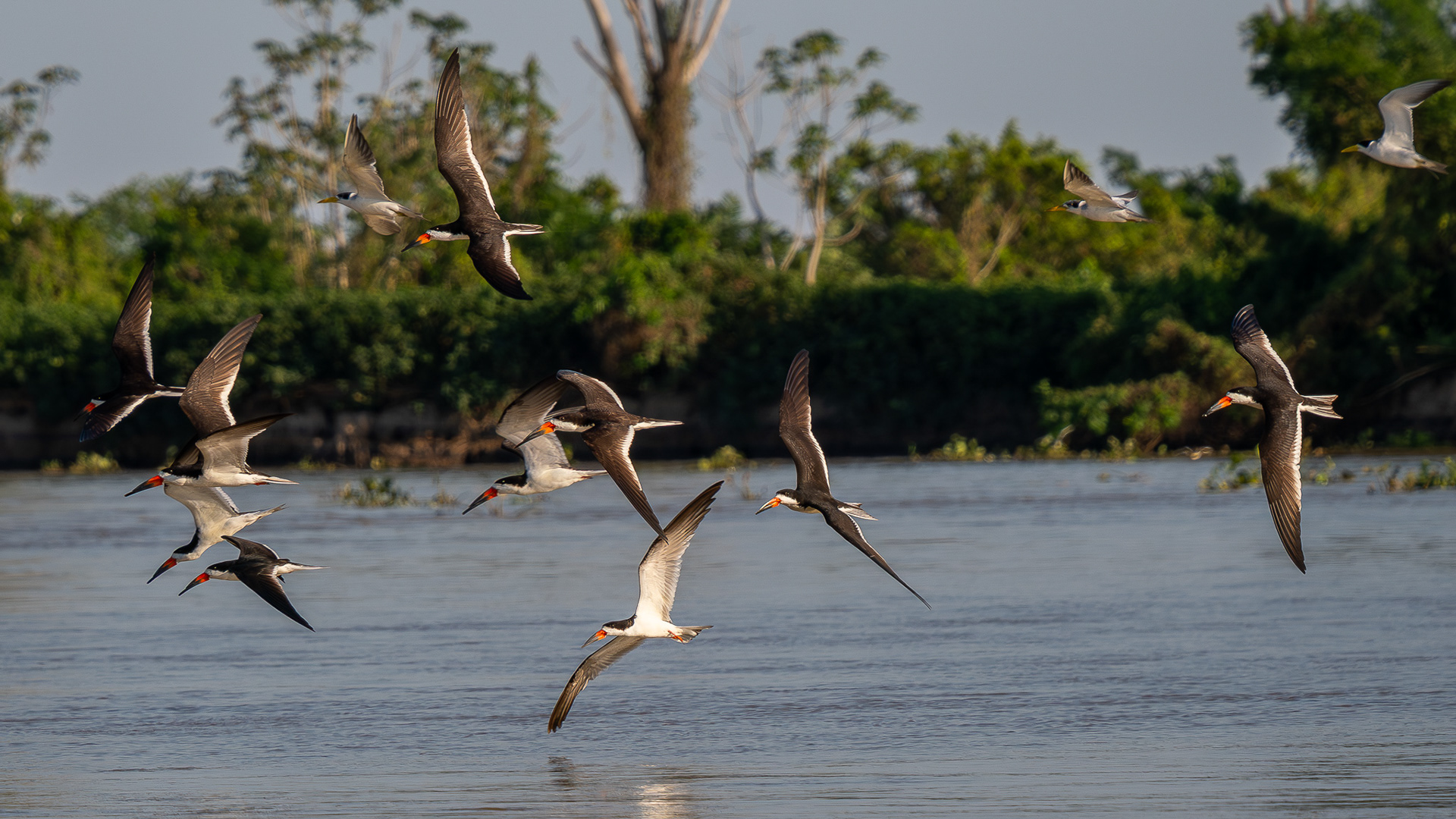
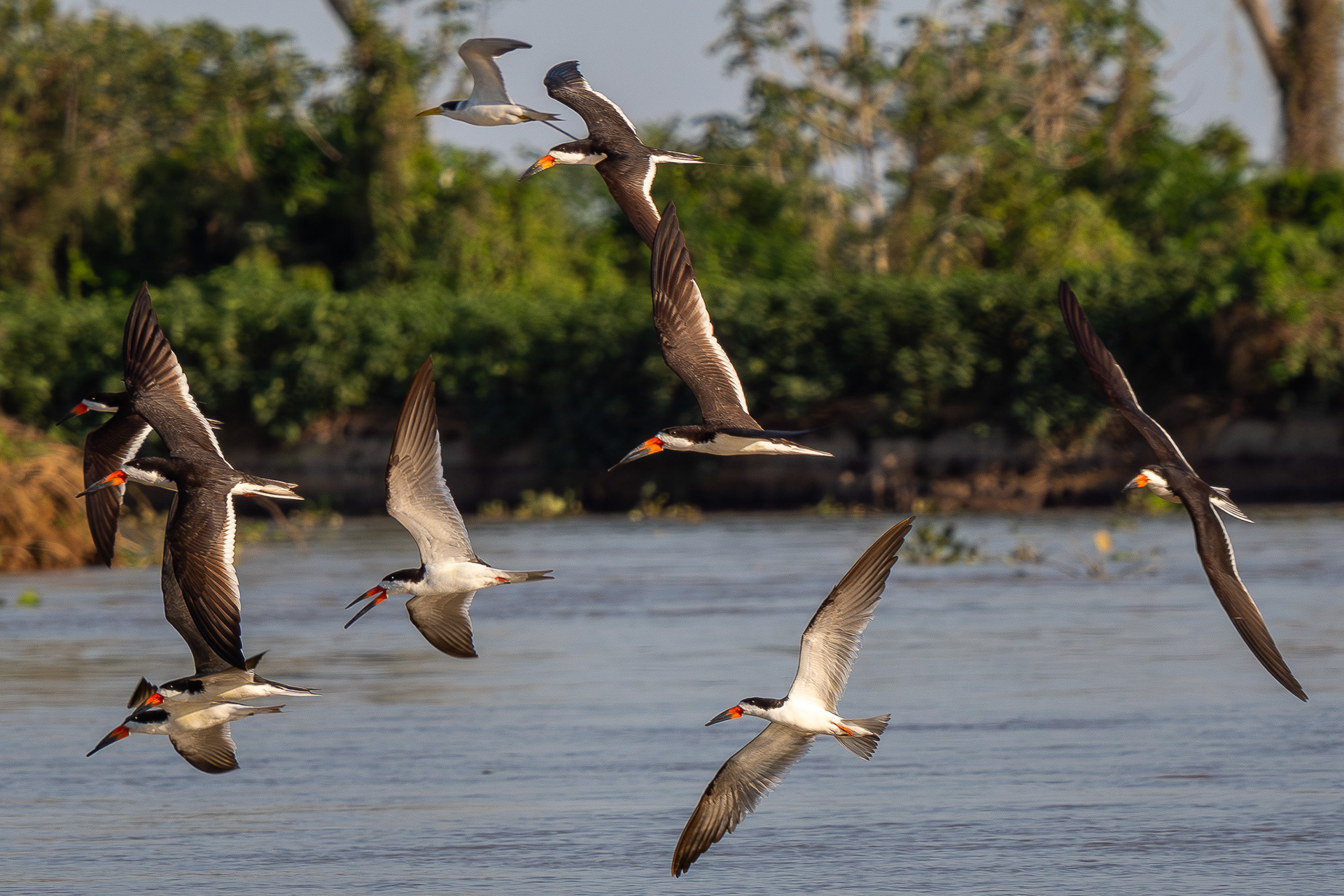
Black Skimmers fly in tight synchronised formation just above the river.
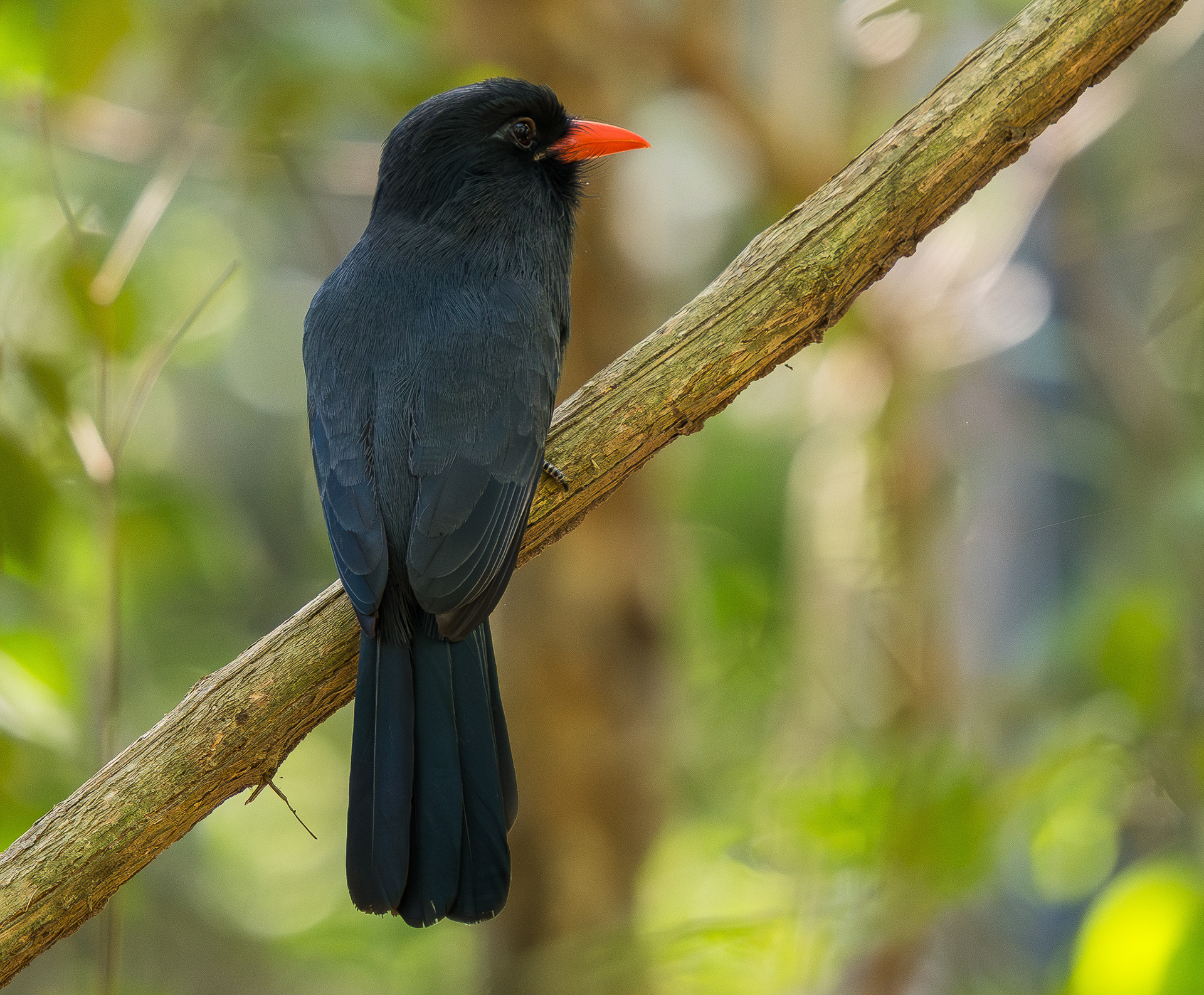
^ Black-Fronted Nunbird
The Black-fronted Nunbird (Monasa nigrifrons) is common in the Northern Pantanal, particularly along riverbanks. Easily recognised by its sooty-black plumage and bright orange bill, it is highly social and often seen in small, noisy groups. The birds perch conspicuously on open branches before darting out to snatch insects in mid-air.
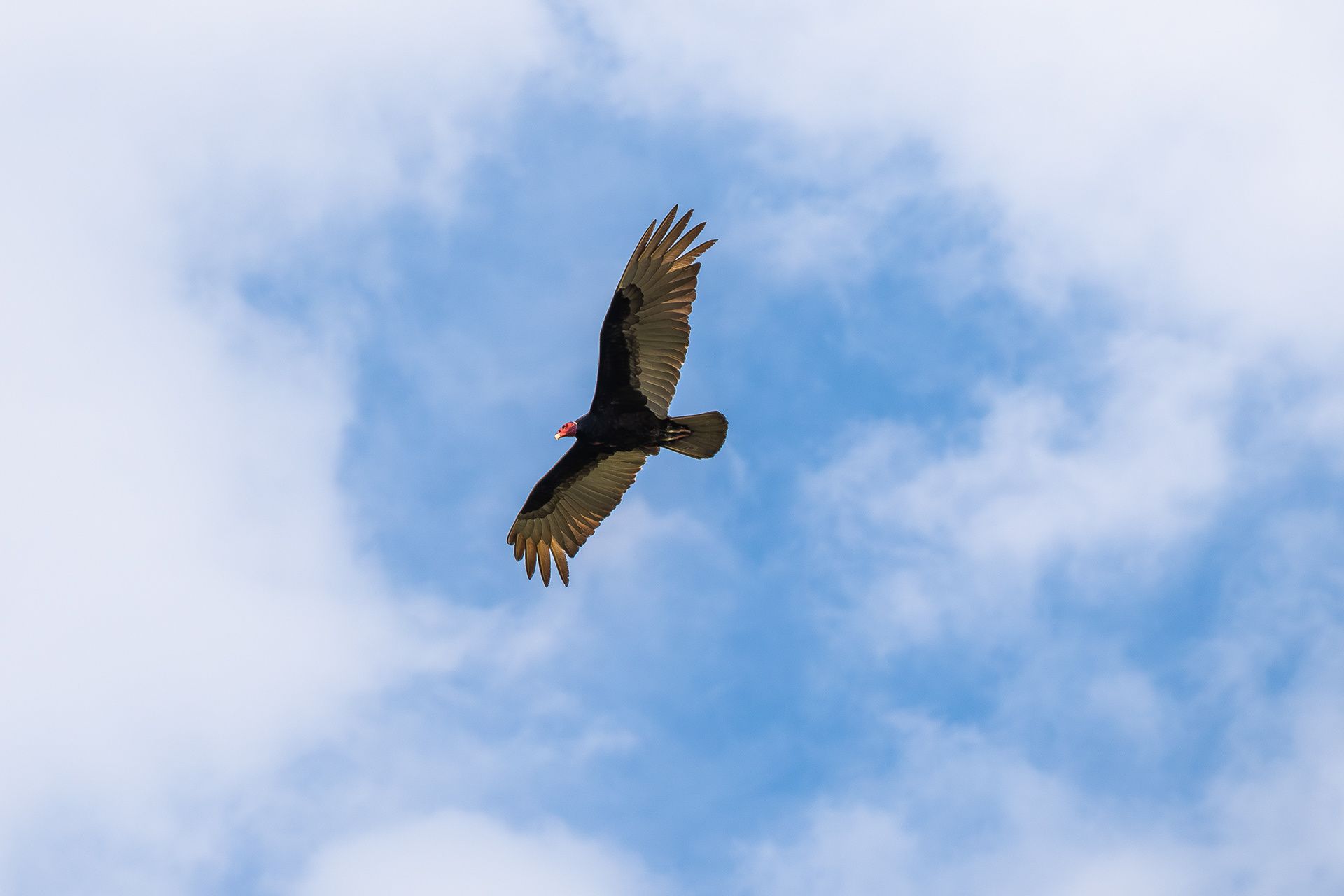
^ Turkey Vulture
A Turkey Vulture (Cathartes aura) soars effortlessly above the vast wetlands of the Pantanal, its broad wings outstretched to catch rising thermals. With a wingspan of nearly six feet, it tilts gently from side to side, riding invisible currents of warm air and circling slowly as it scans the landscape below for carrion.
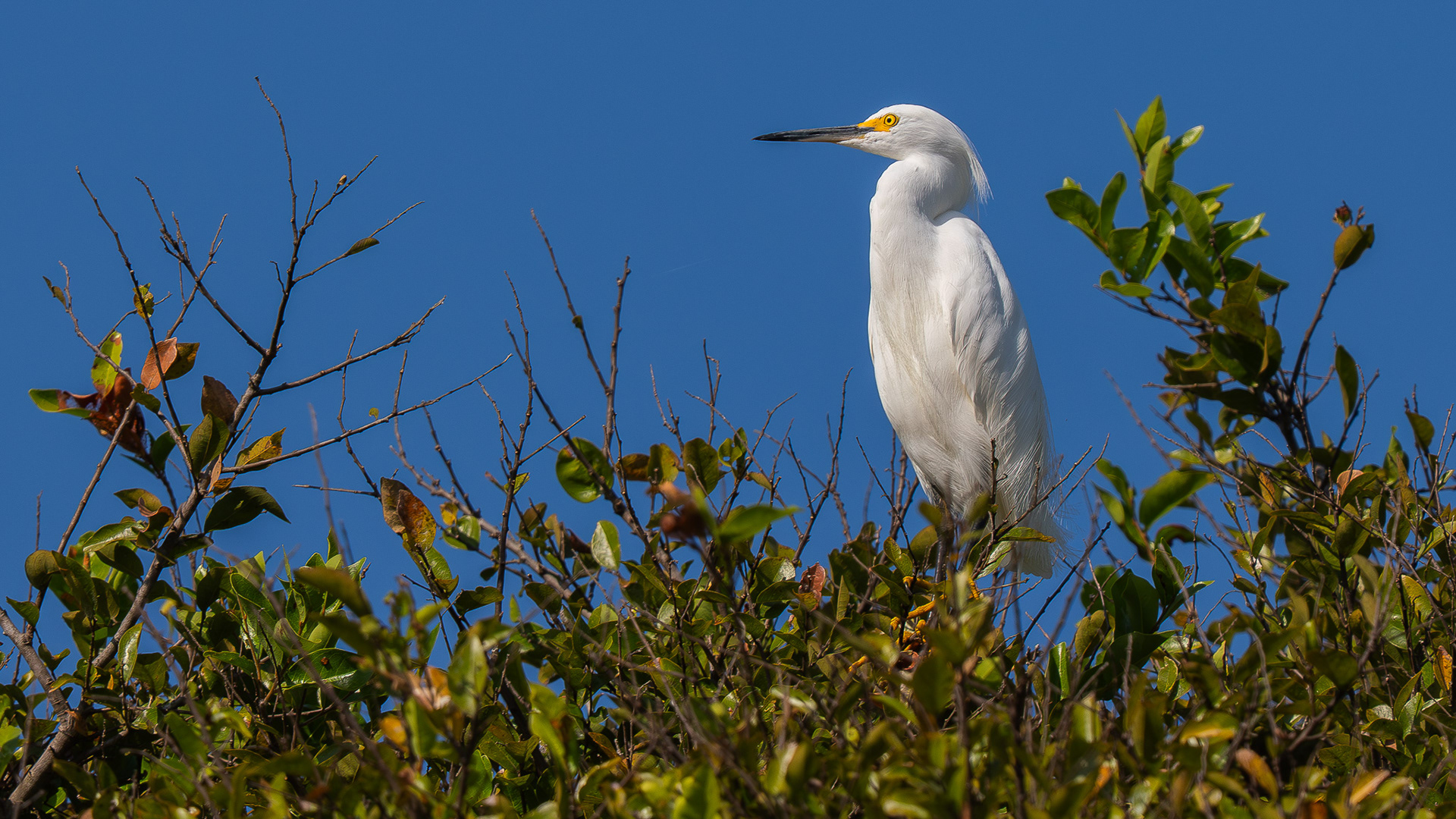
^ Snowy Egret
The Snowy Egret (Egretta thula) is a medium-sized white wading bird commonly found in the Pantanal. It feeds in shallow water, actively stirring or chasing fish and other aquatic prey, and often roosts or nests in colonies in trees near wetlands, ensuring both safety and easy access to feeding grounds.
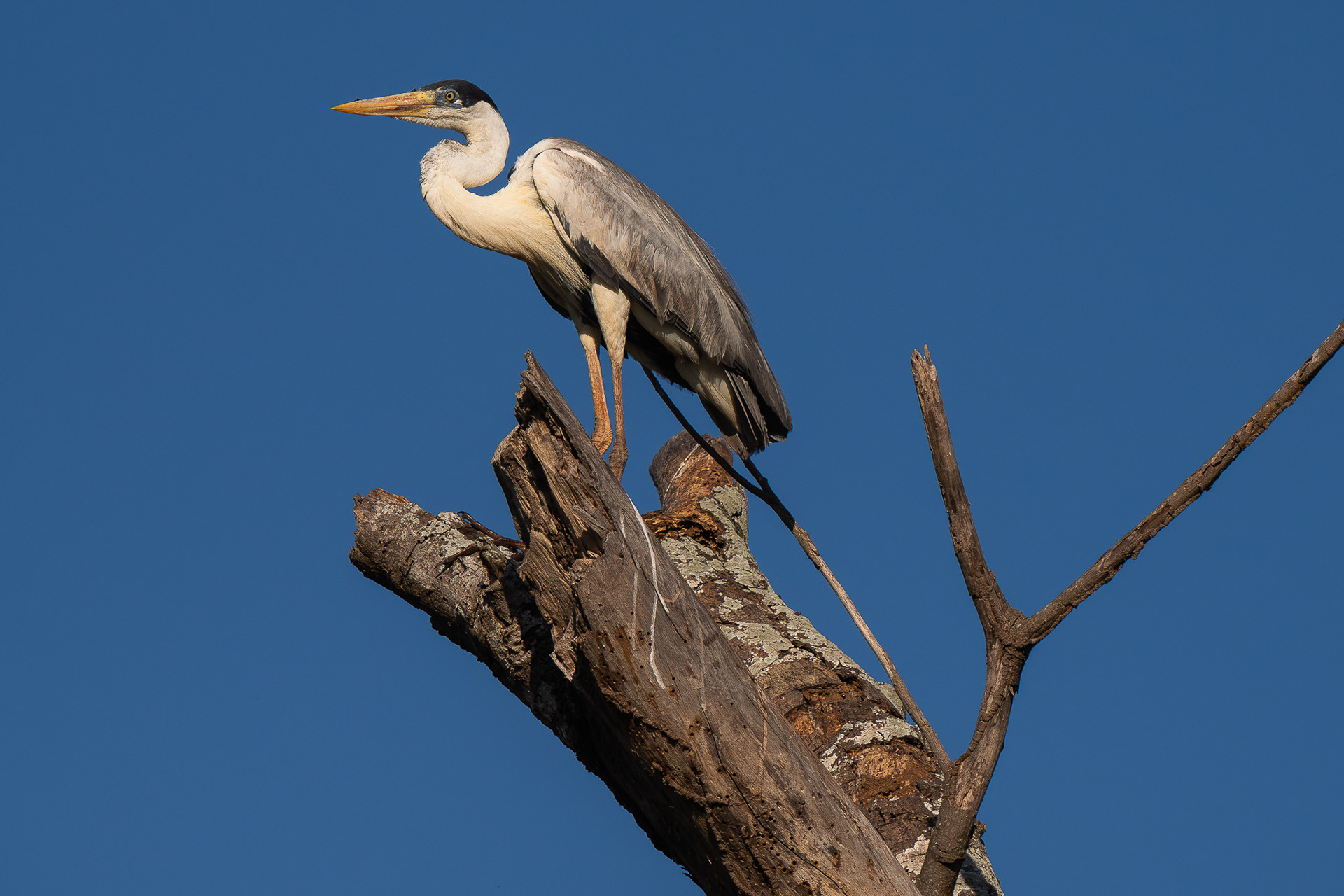
^ Cocoi Heron
The Cocoi Heron (Ardea cocoi) is the largest heron in South America. Its striking grey, black, and white plumage makes it easy to spot in the Pantanal's expansive wetlands, where it typically hunts alone in shallow water. Standing motionless or moving slowly, it uses its long beak to spear fish and amphibians, making it a familiar and iconic presence in this rich ecosystem.
Photographs: ©Don Davies
We travelled to the Pantanal with Wildlife Worldwide and were accompanied by an excellent guide and naturalist, Lucila Rosales (Lucy), whose knowledge and expertise greatly enriched our experience.