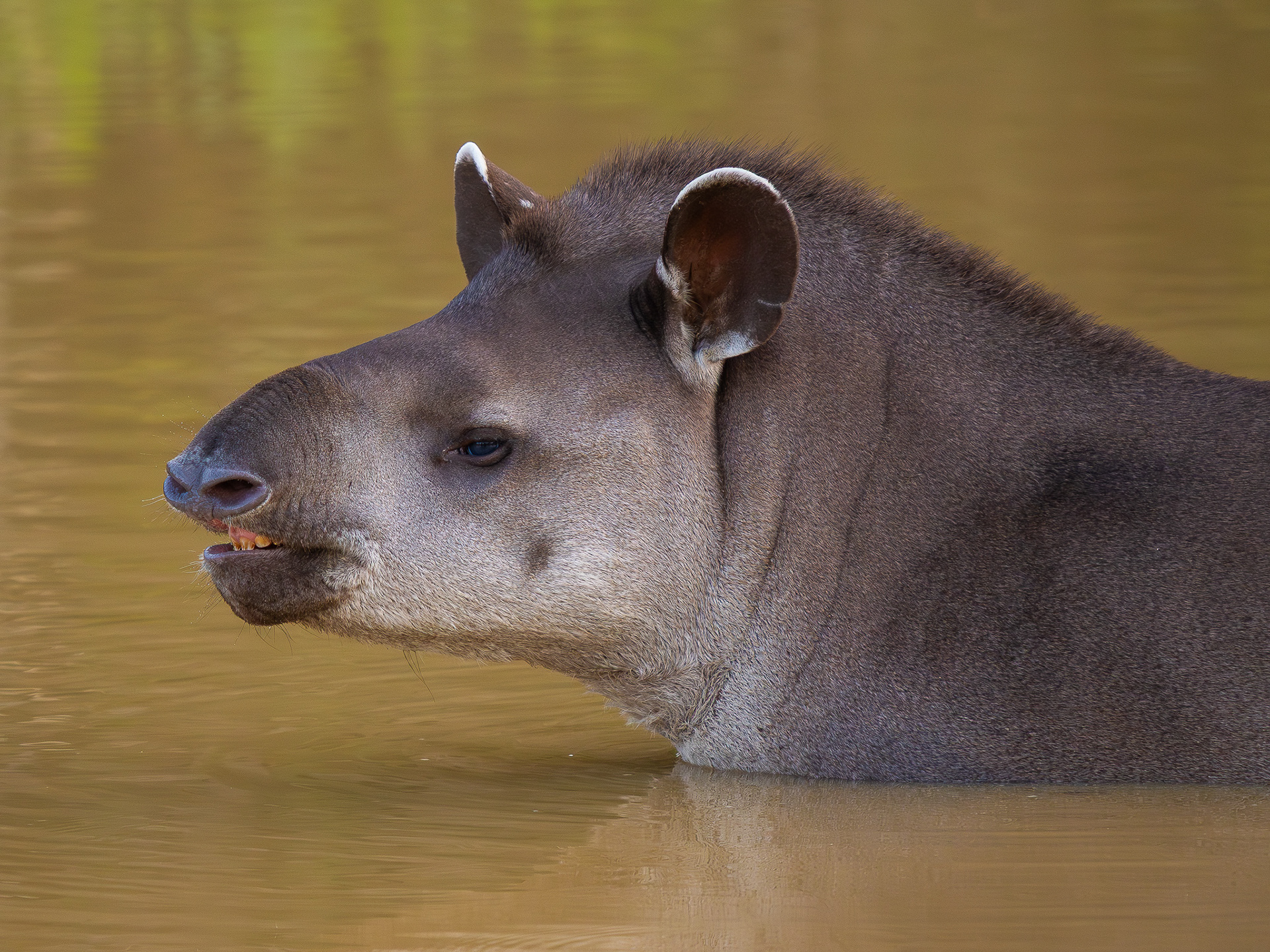
Tapir

Sunrise in the Pantanal
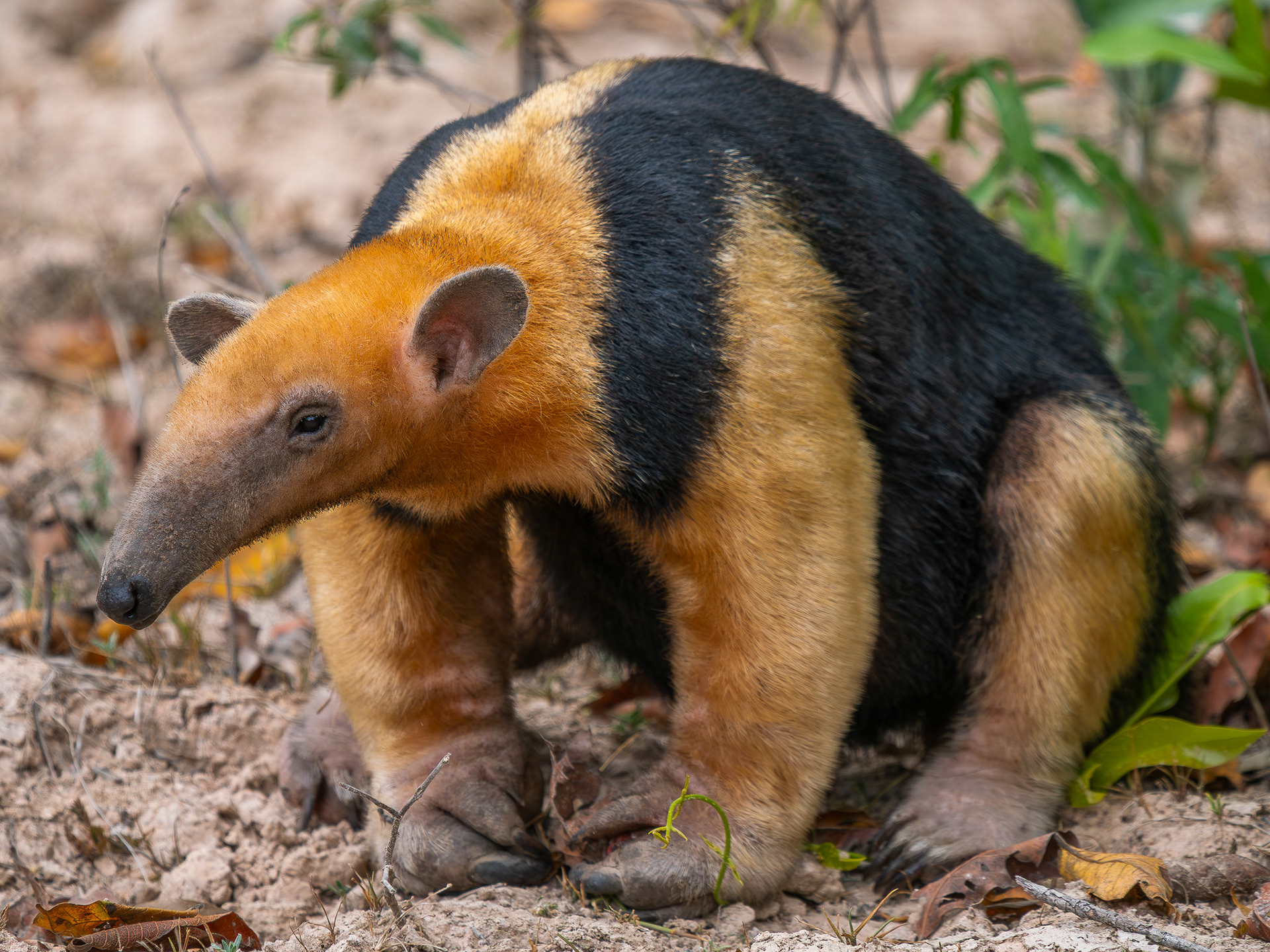
Southern Tamandua
WILDLIFE OF THE PANTANAL (2)
Brazil - South America
The Pantanal is in the centre of South America. Spreading over a huge area of central-western Brazil, it crosses over the borders into Bolivia and Paraguay. It is the largest wetland in the world and hosts an amazing variety of wildlife.
The following images show more of the wildlife we managed to photograph on our trip to the Northern Pantanal in late August 2025.
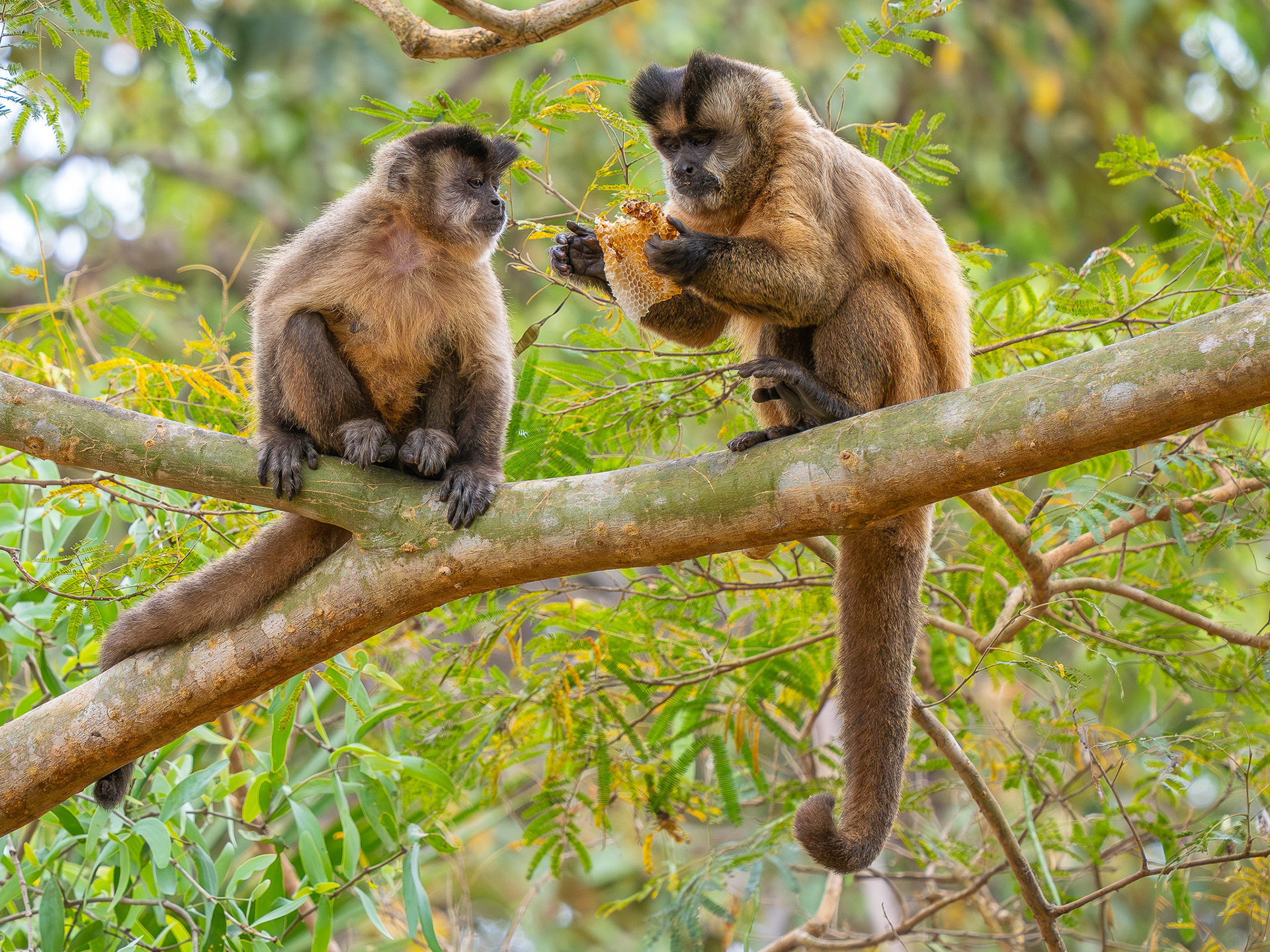
^ Hooded Capuchin Monkey
The Hooded Capuchin (Sapajus cay), also known as Azara's Capuchin, is a highly intelligent primate found in the Pantanal wetlands of Brazil. Highly adaptable, they are known for problem -solving and tool use - such as smashing nuts with rocks - and have complex social structures, with cognitive abilities sometimes compared to chimpanzees.
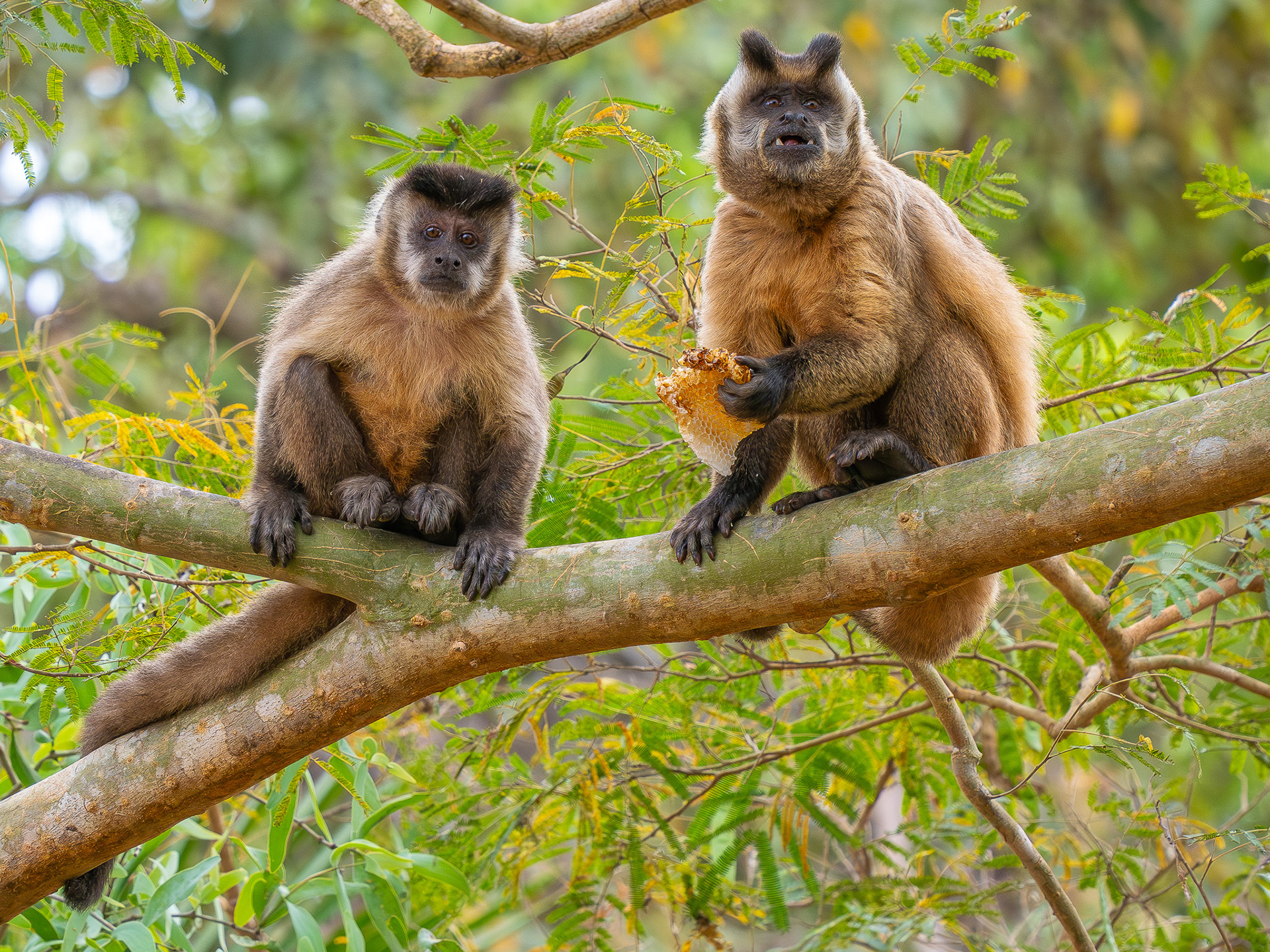
These primates are named after Franciscan Friars (Capuchins) due to the dark hair patch resembling their hoods.
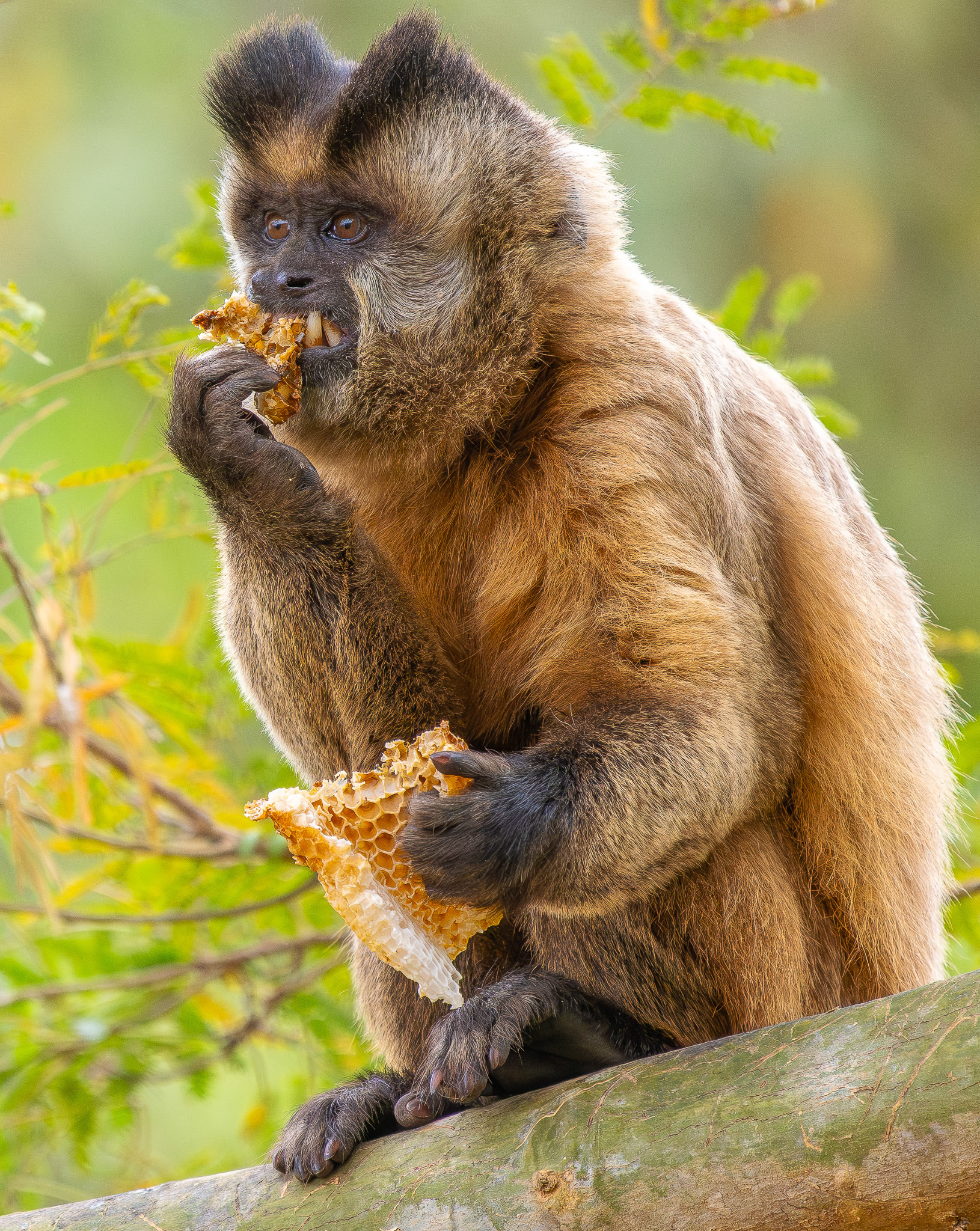
They are opportunistic omnivores, eating fruits, seeds, insects, nectar, and even tree gum and honeycombs.
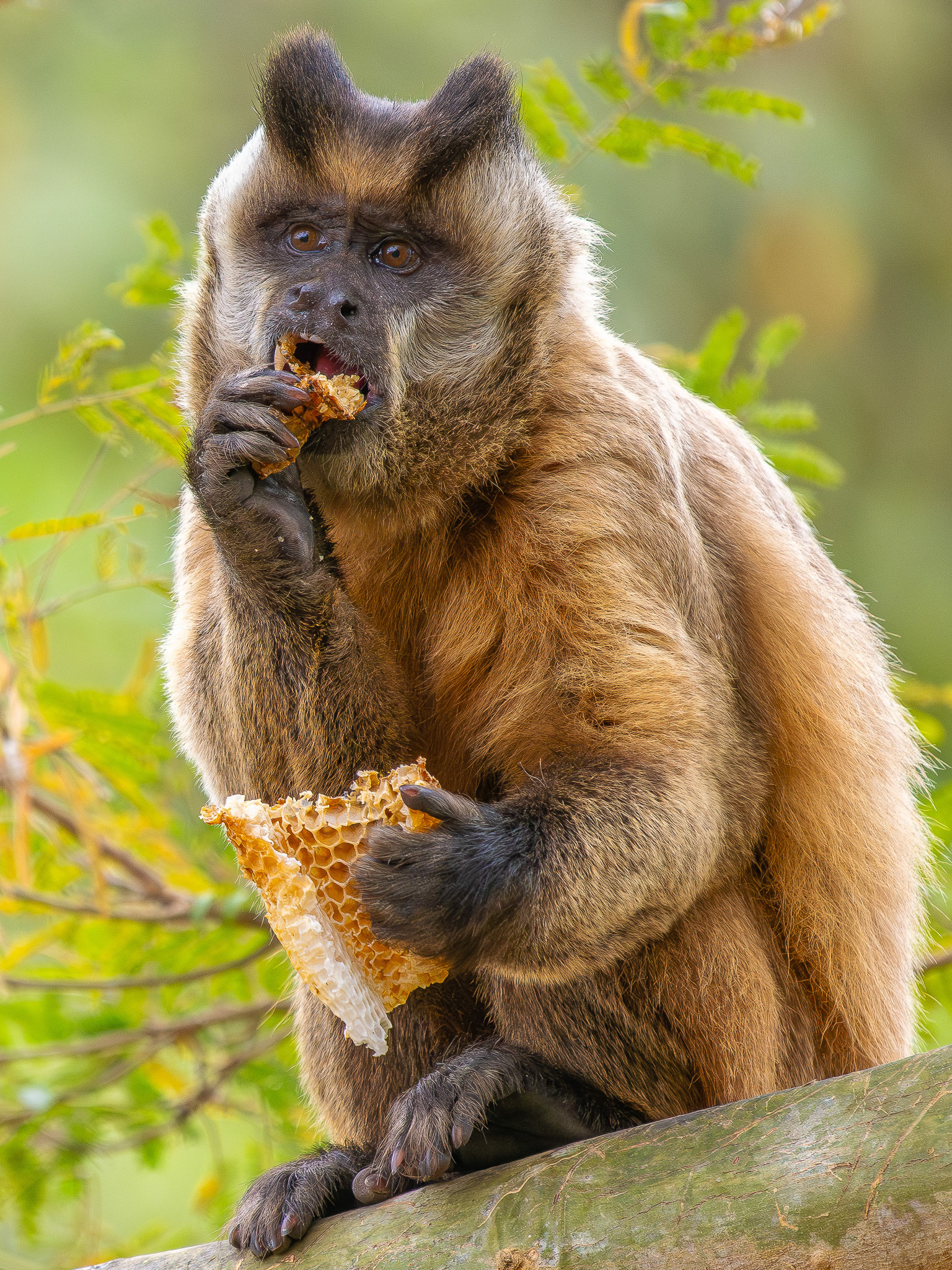
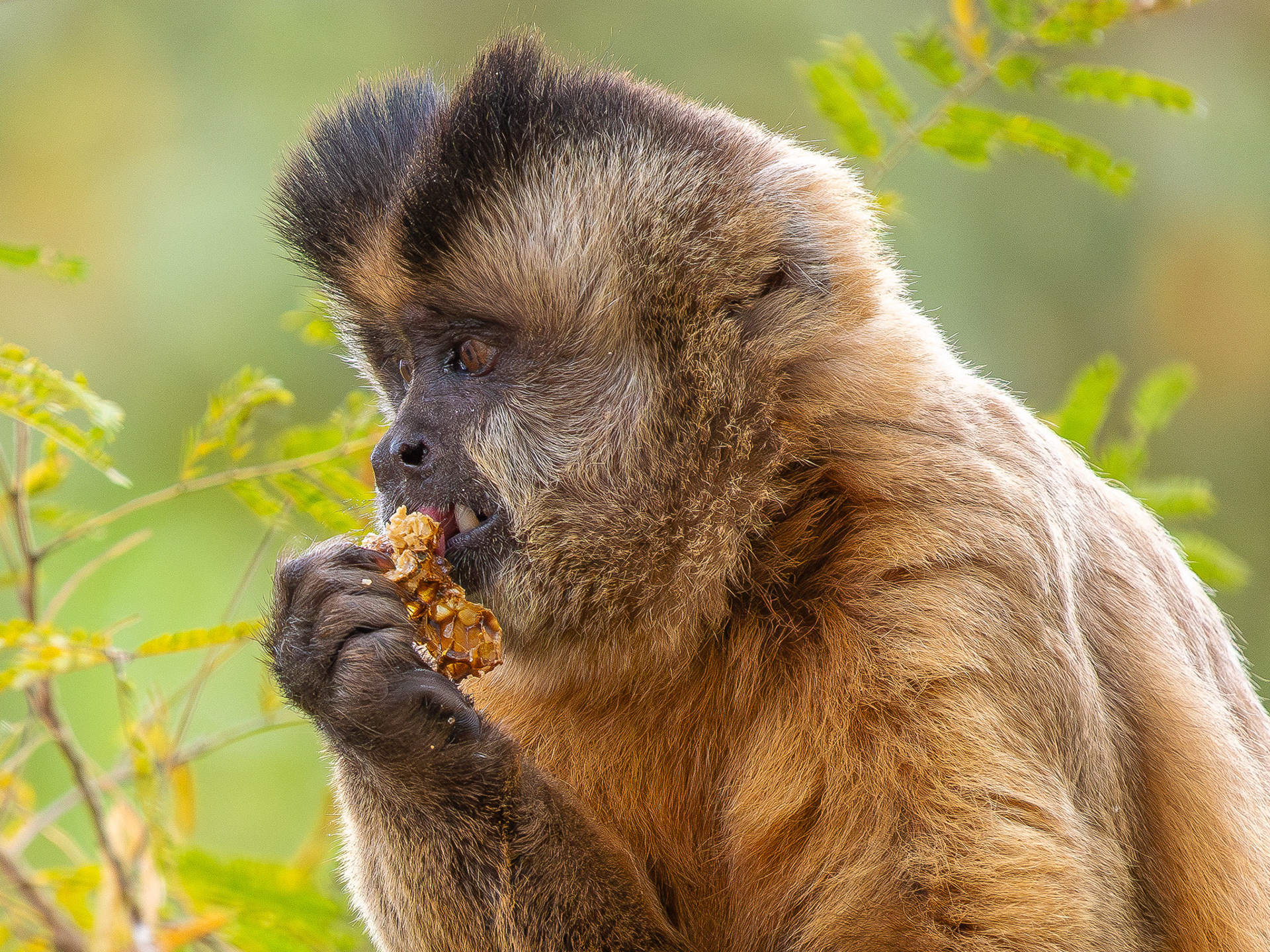
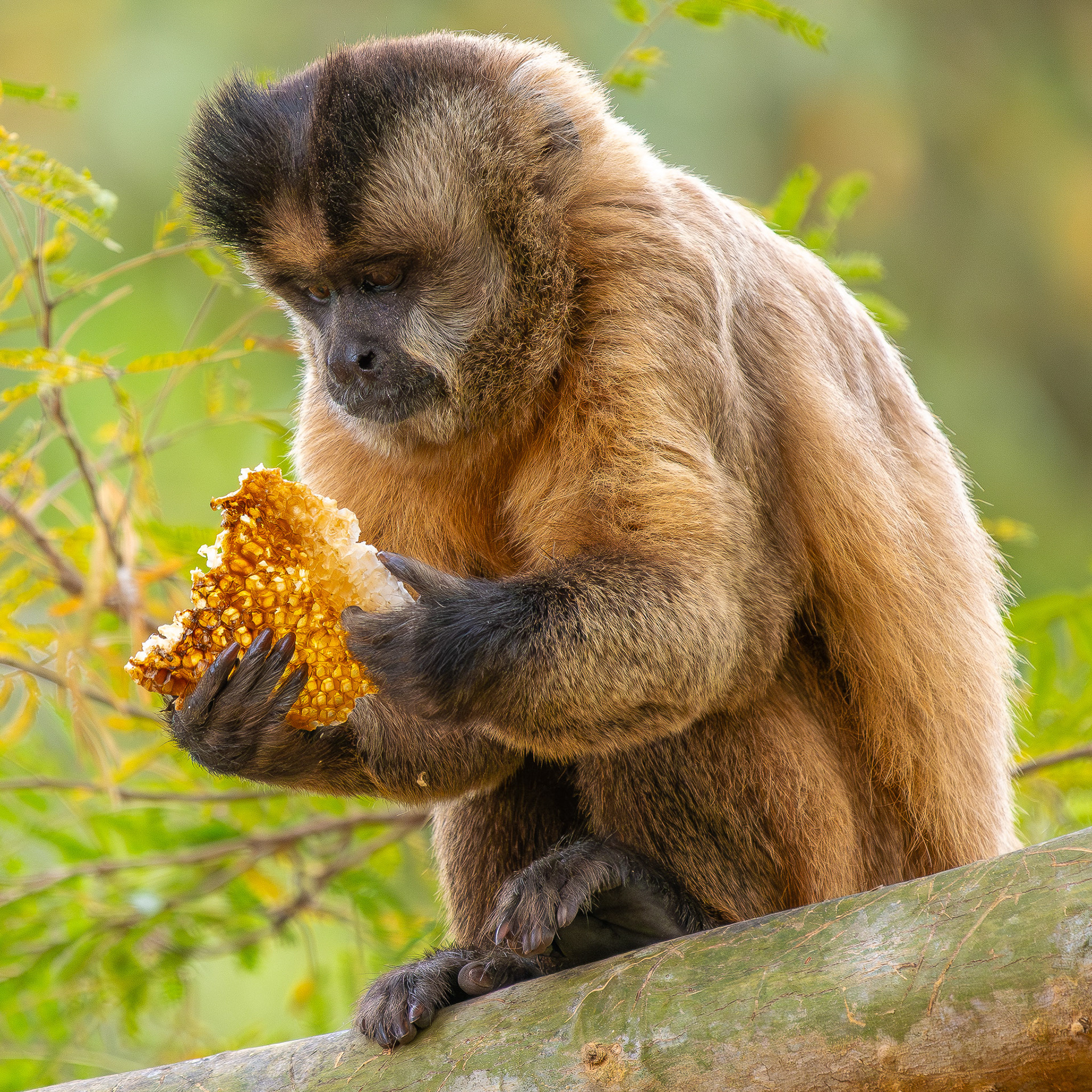
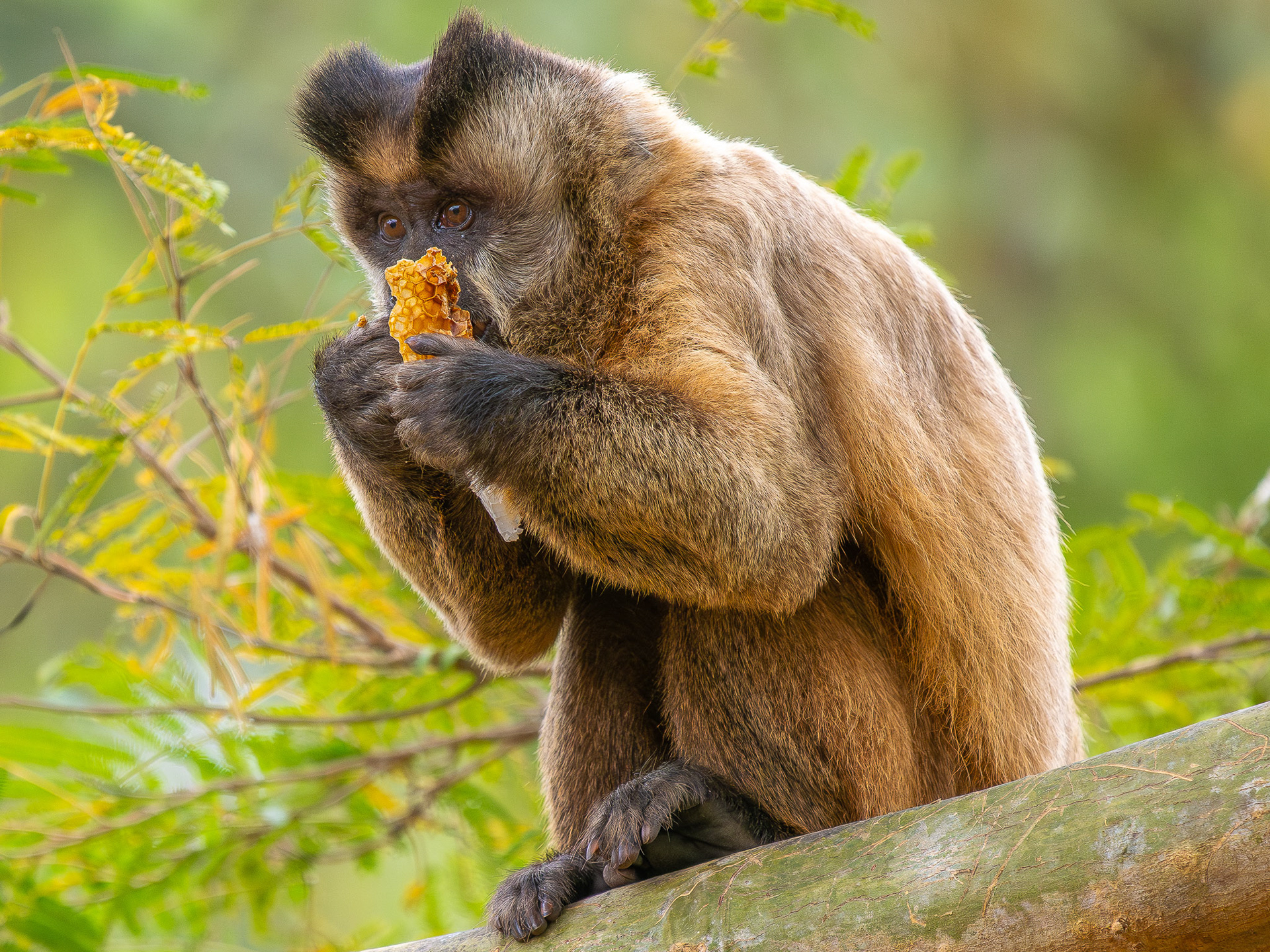
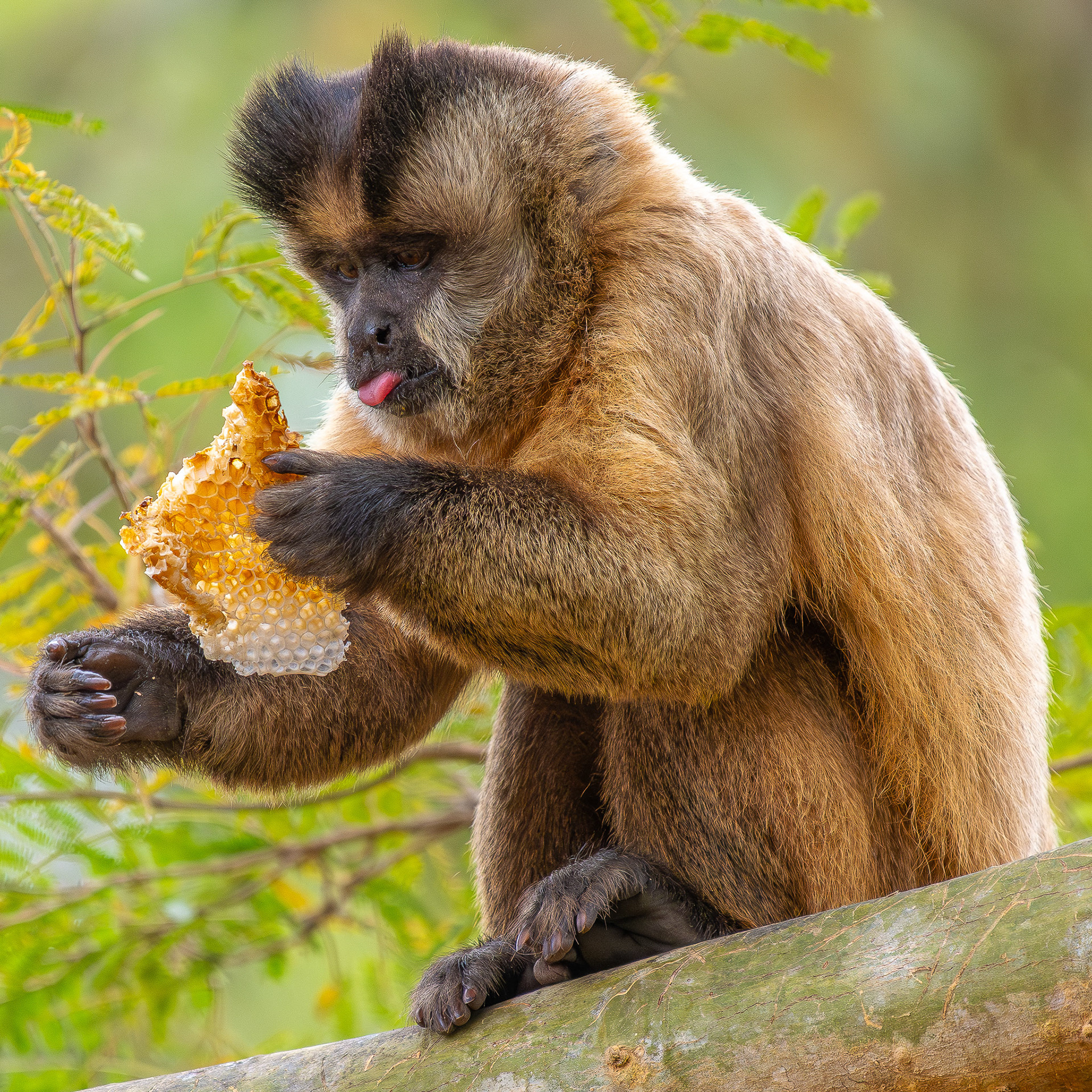
Perched high on a branch, this Capuchin guards piece of golden honeycomb, determined not to share a single sweet morsel with the rest of his troop, no matter how much they beg and chatter below.
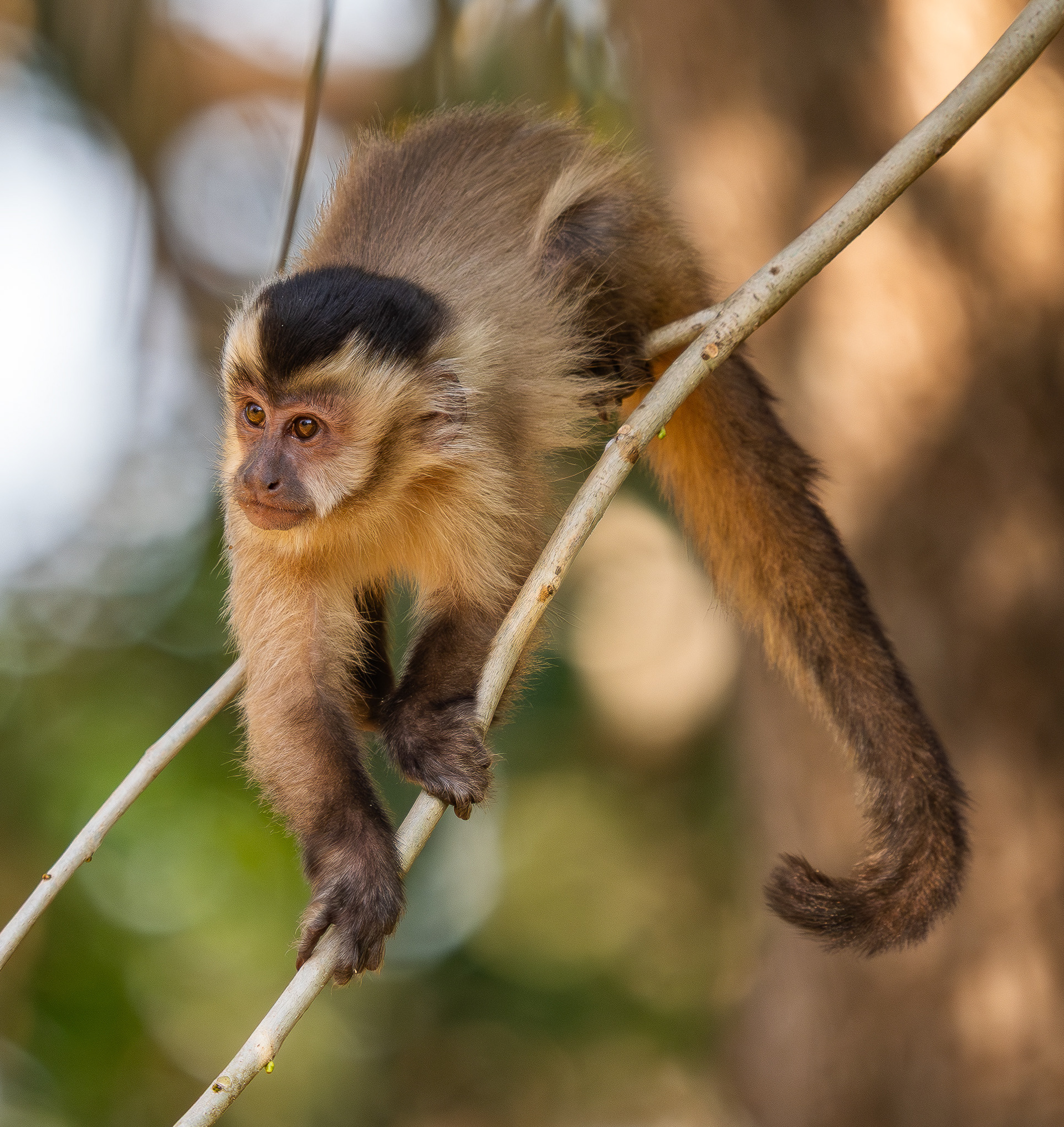
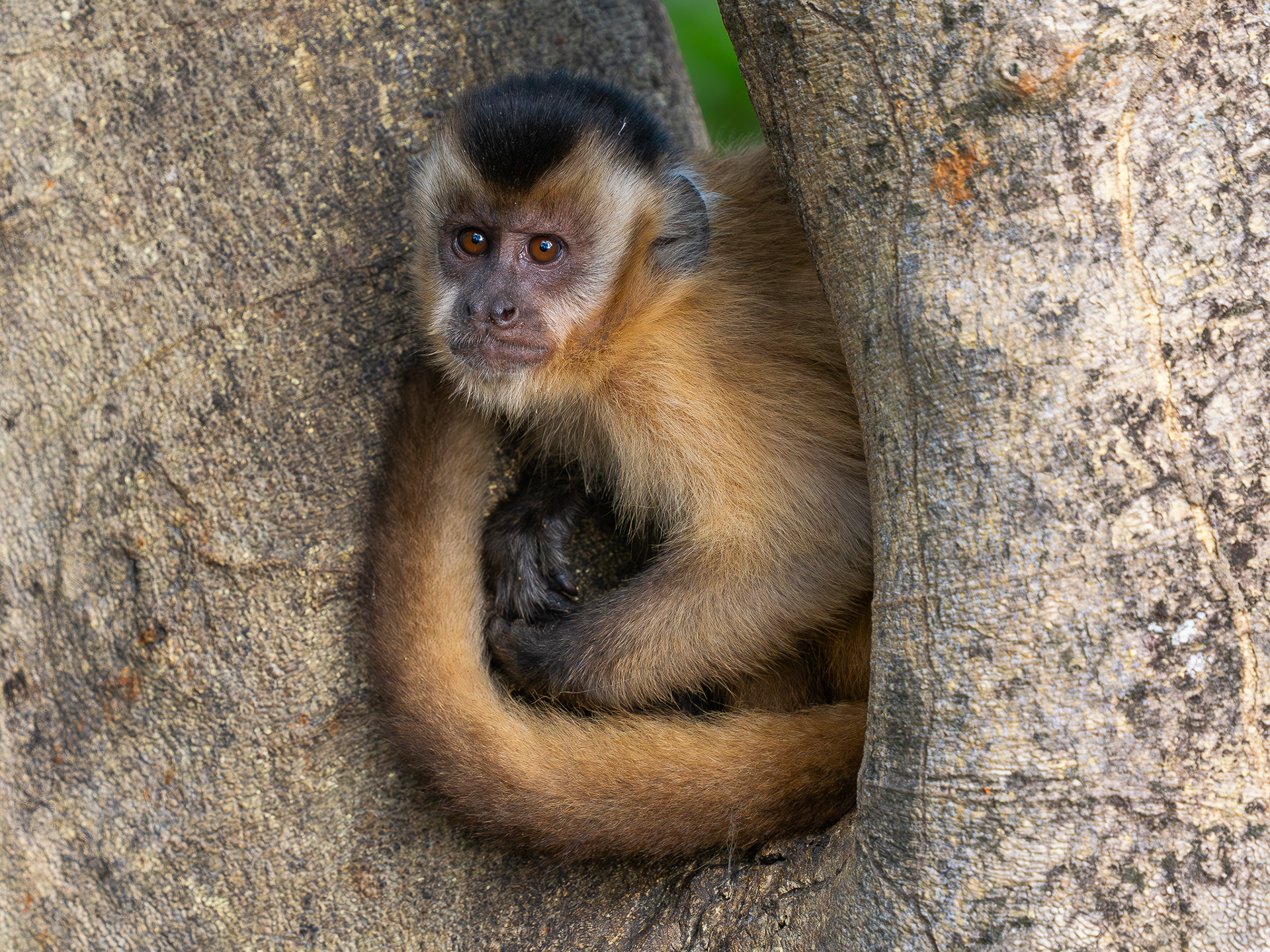
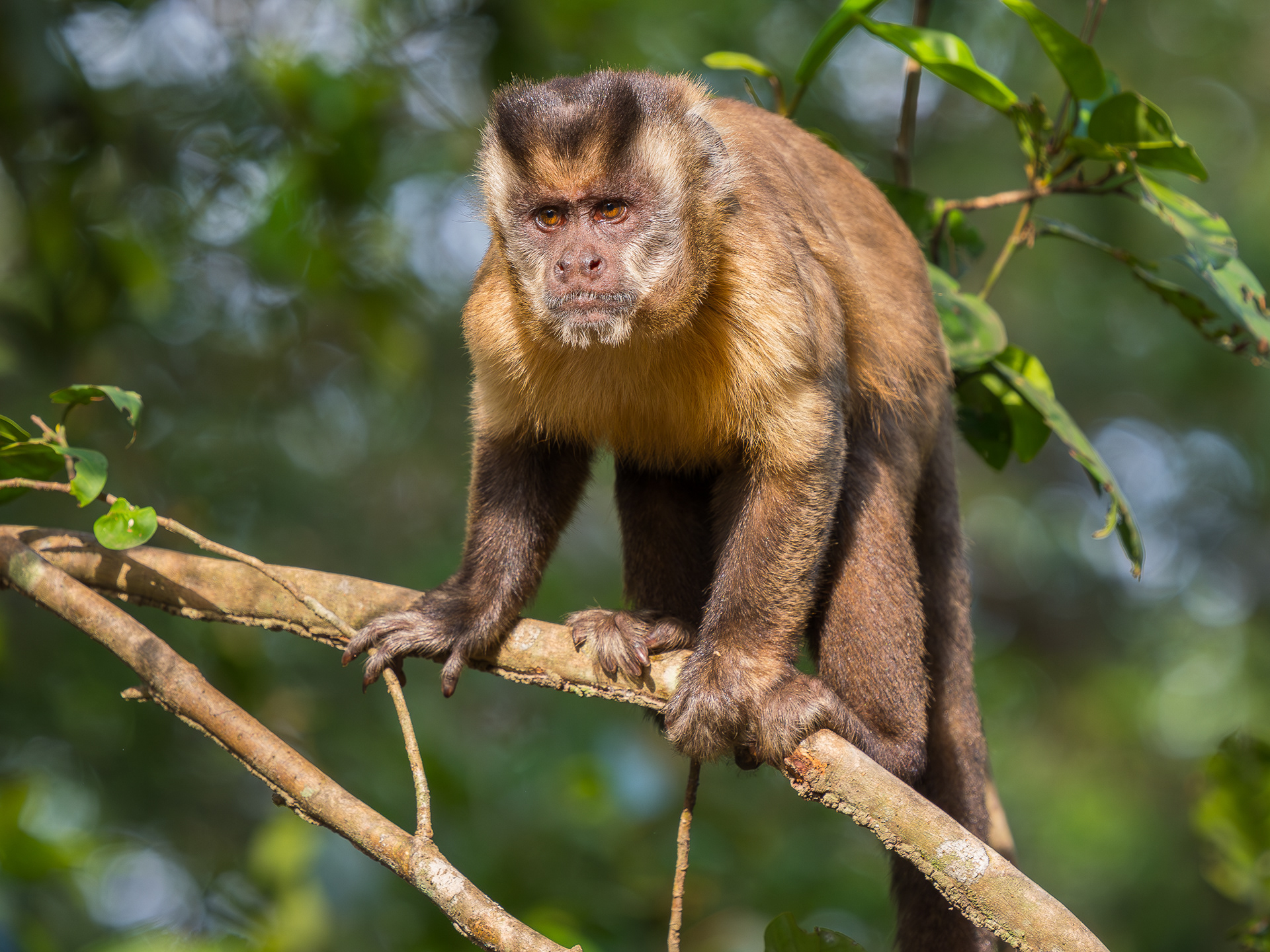
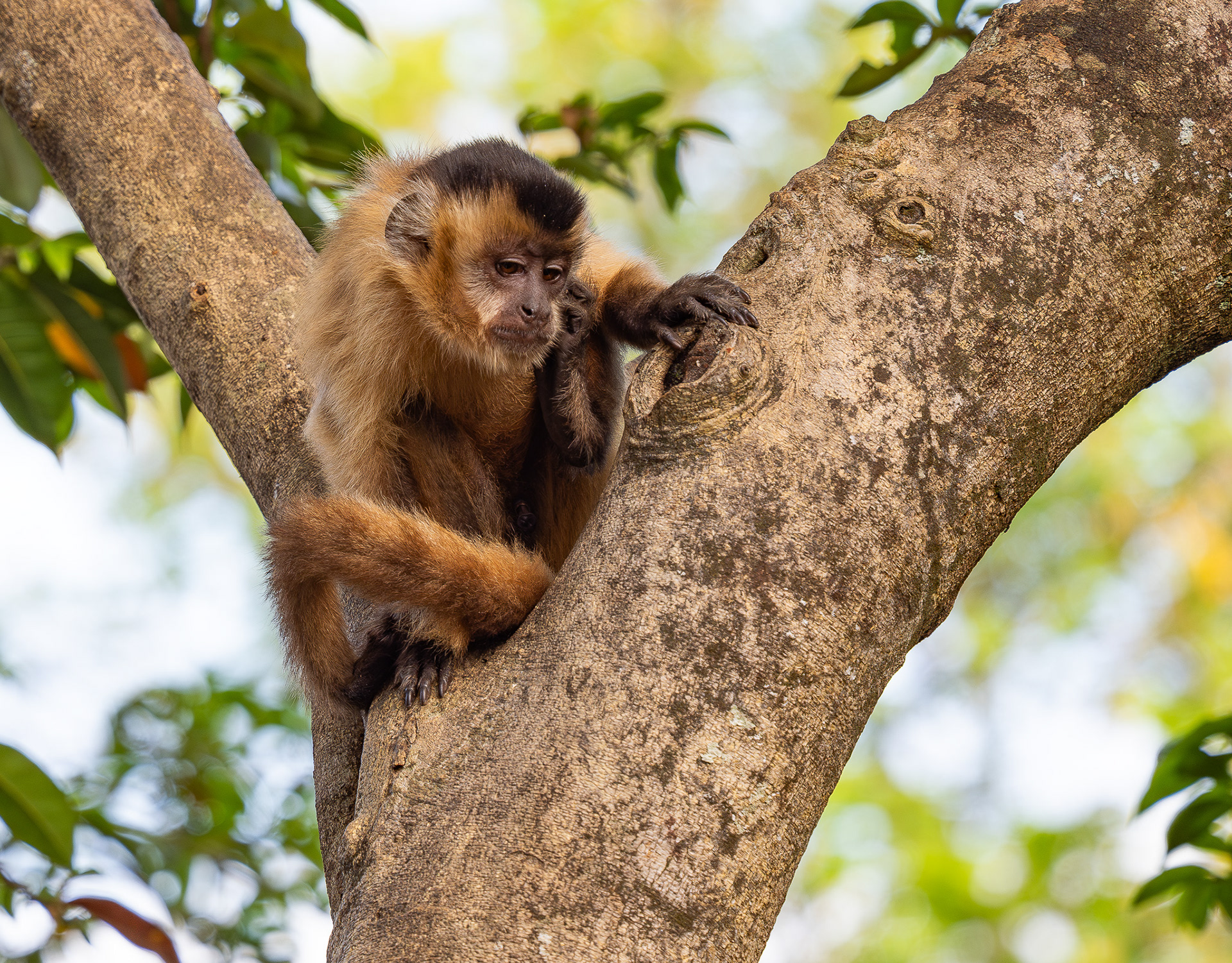
They are expert climbers and use their powerful limbs, nimble grasping hands and feet, and prehensile tails that act like a fifth limb, as they move effortlessly through the treetops whilst they forage for food and stay one step ahead of predators.
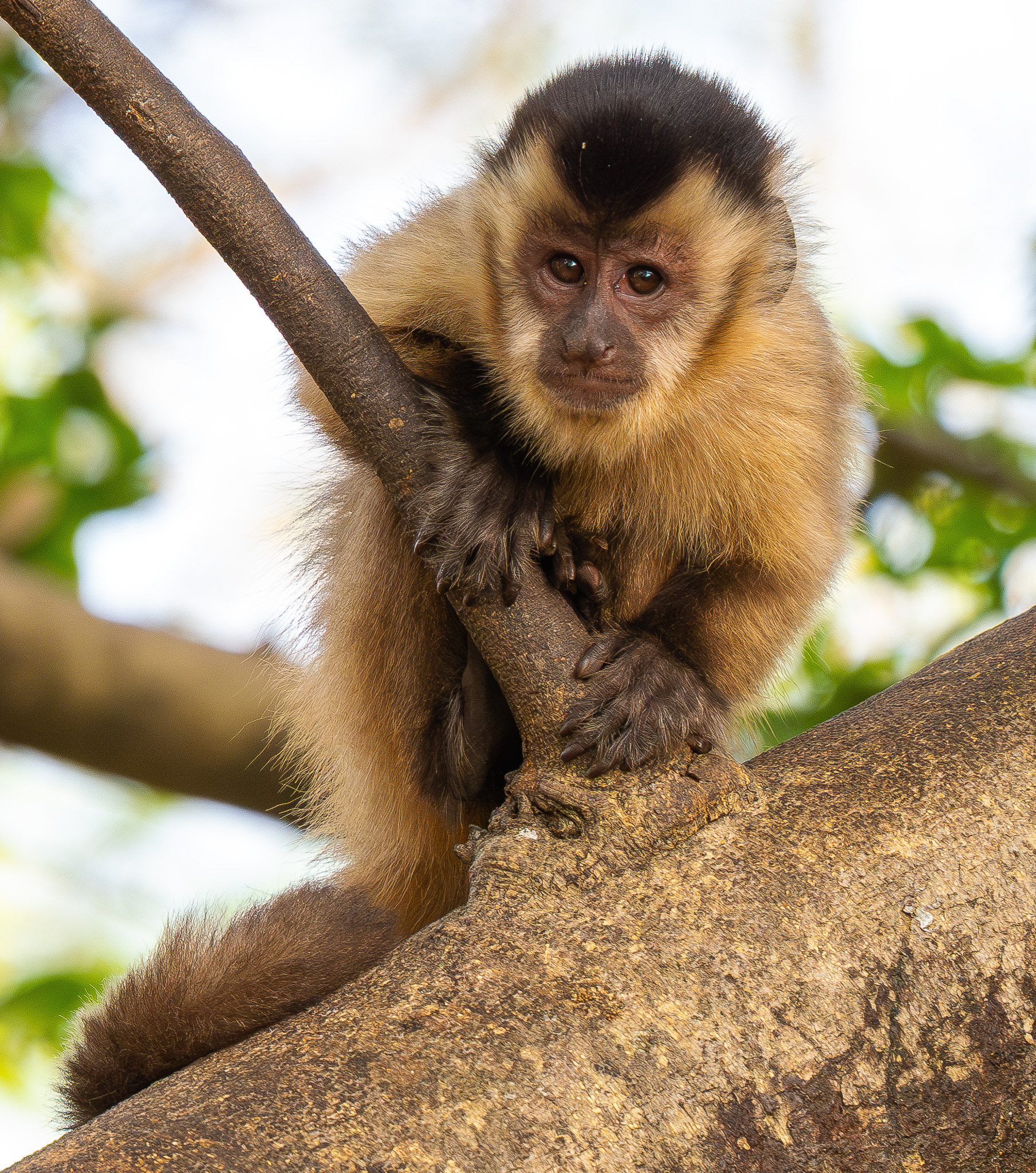
Female Hooded Capucins mature at around four years and usually remain with their birth group, whilst males mature at about eight years before leaving to find new troops or to start their own.
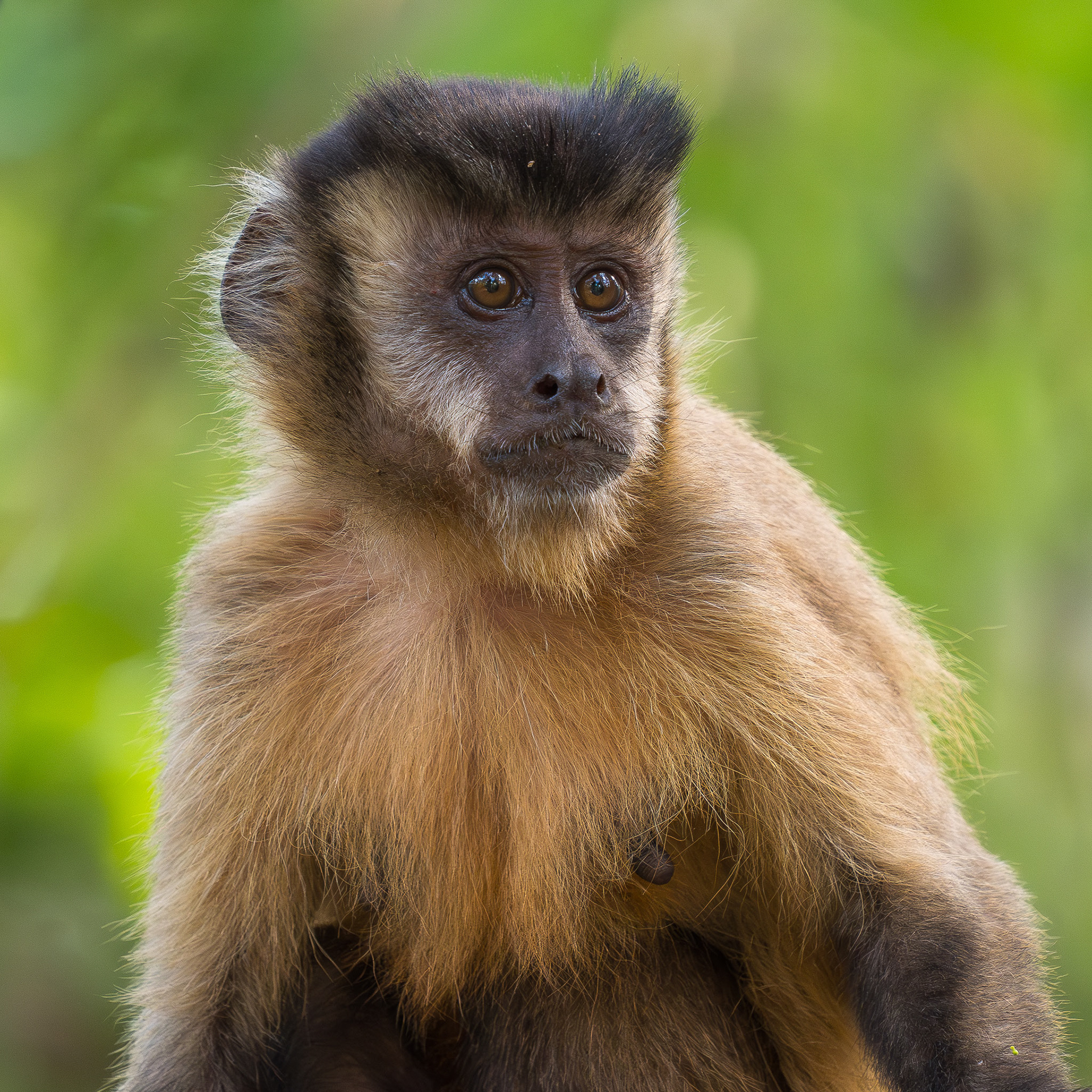
Hooded Capuchin Monkey
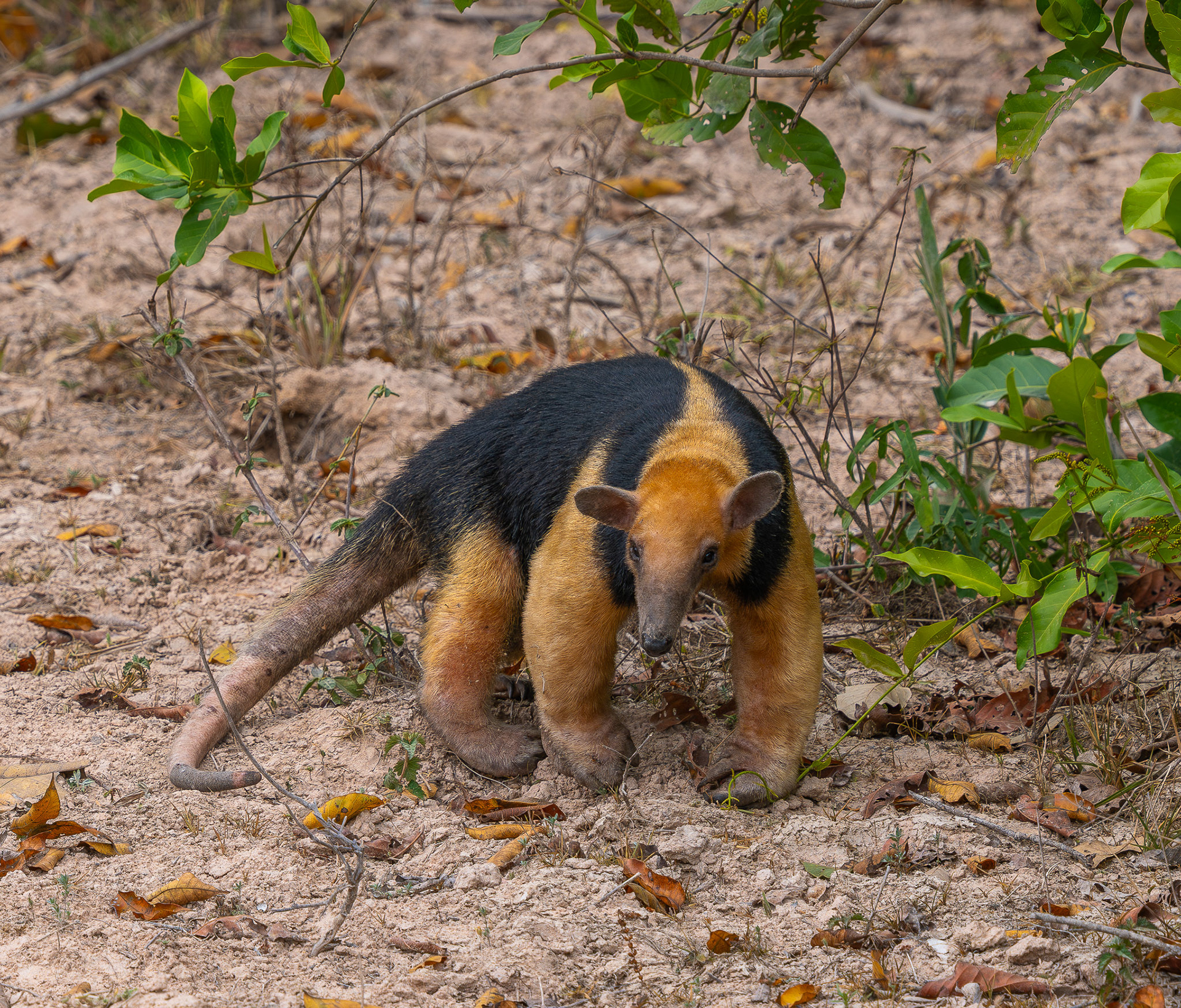
^ Southern Tamandua
The Southern Tamandua (Tamandua tetradactyla) is often called the Lesser Anteater and is a semi-arboreal mammal commonly found throughout the Pantanal wetlands. Smaller and more agile than its cousin, the Giant Anteater, Tamandua are adept climbers. They use their prehensile hairless grasping tail as a fifth limb for balance and grip in trees, which allows them to climb expertly to find food in the canopy. On the ground, they are somewhat clumsy, walking on the sides of their forefeet to avoid puncturing their palms with their long, sharp claws.
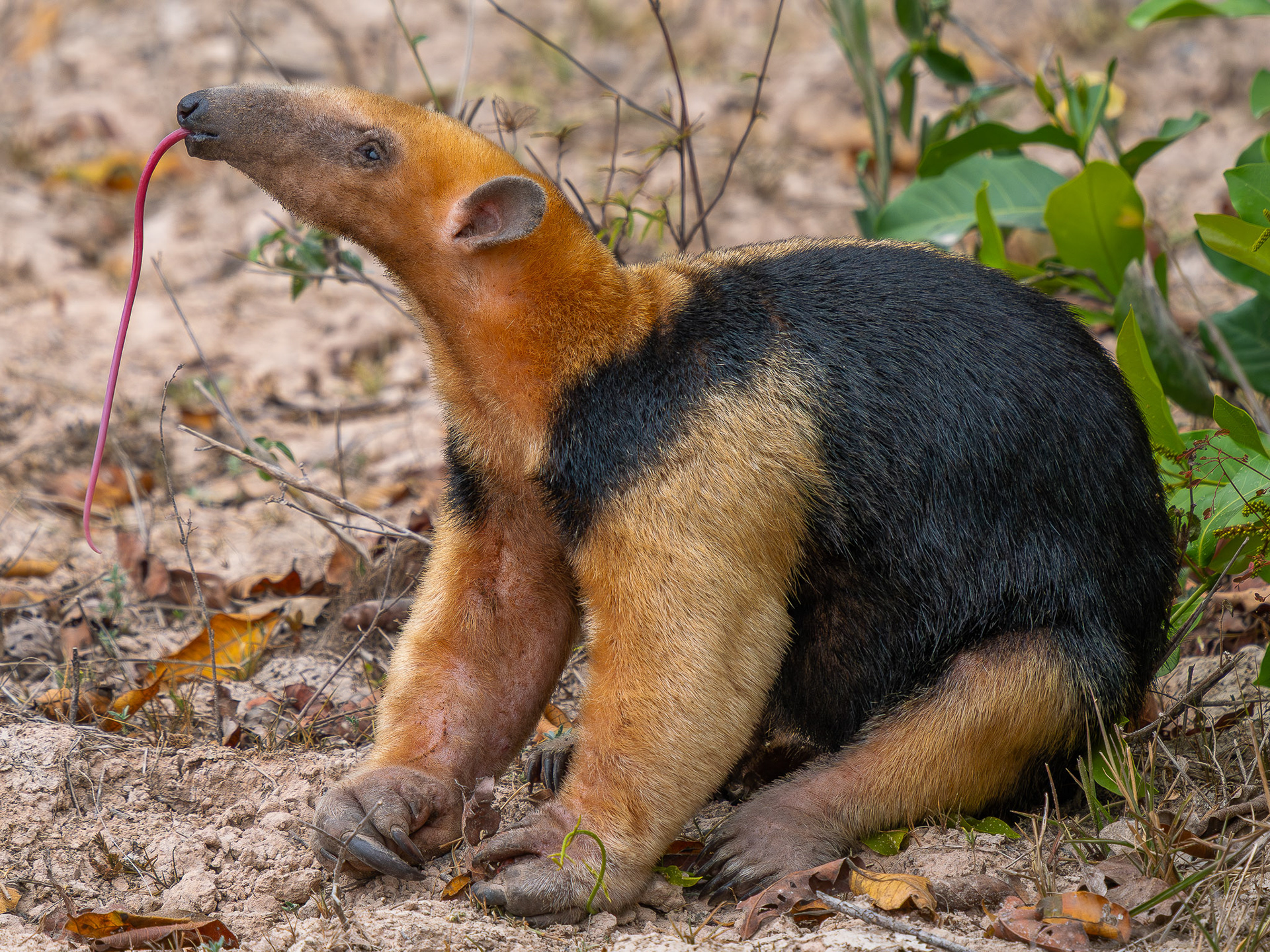
Whilst primarily nocturnal, Tamandua are often active during the day. As specialised insectivores they use their strong forelimbs and huge curved claws to tear open termite mounds and ant nests. Using their long, sticky tongues which are around 20-25 cm (8-10 in) they rapidly lap up and consume thousands of ants and termites each day.
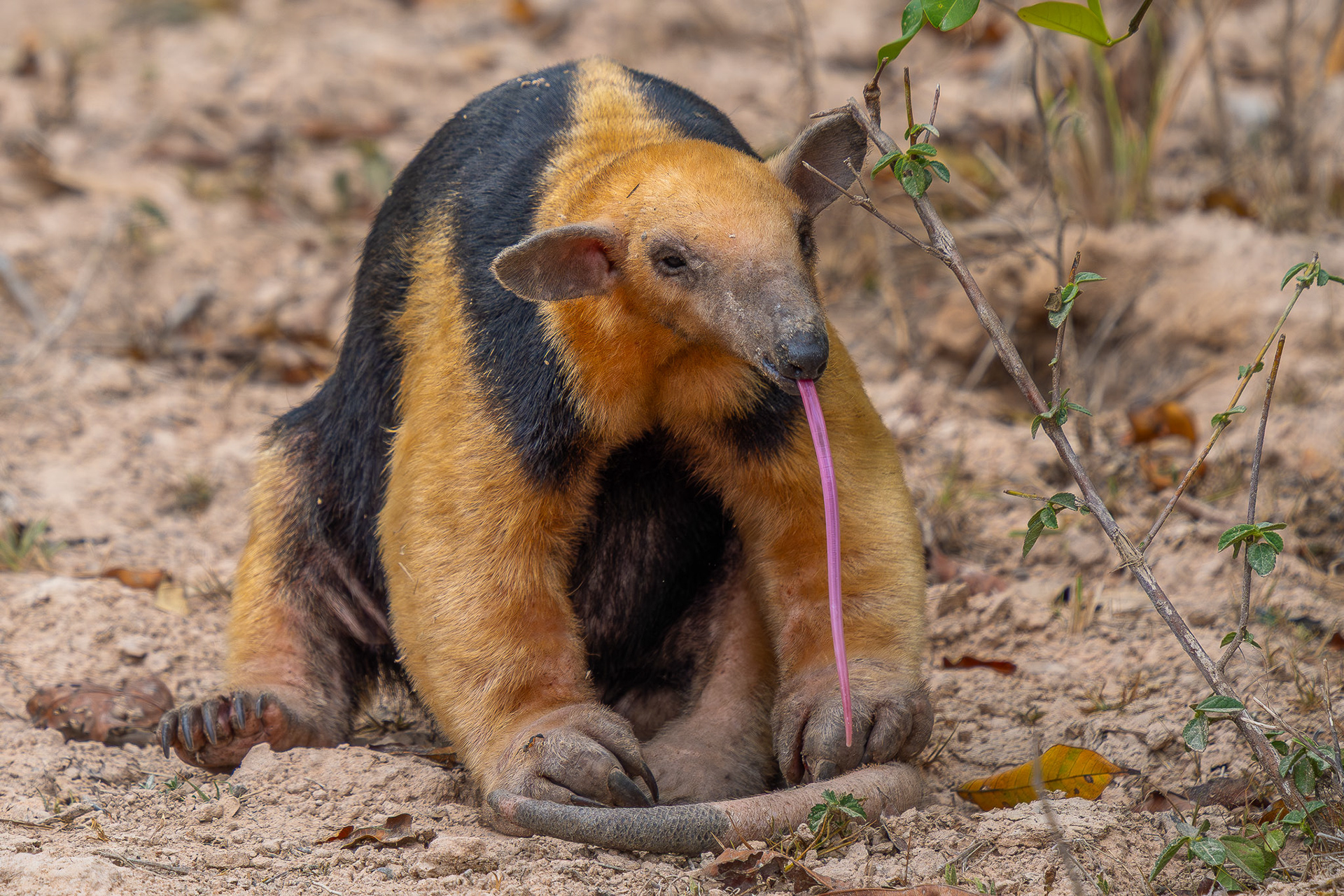
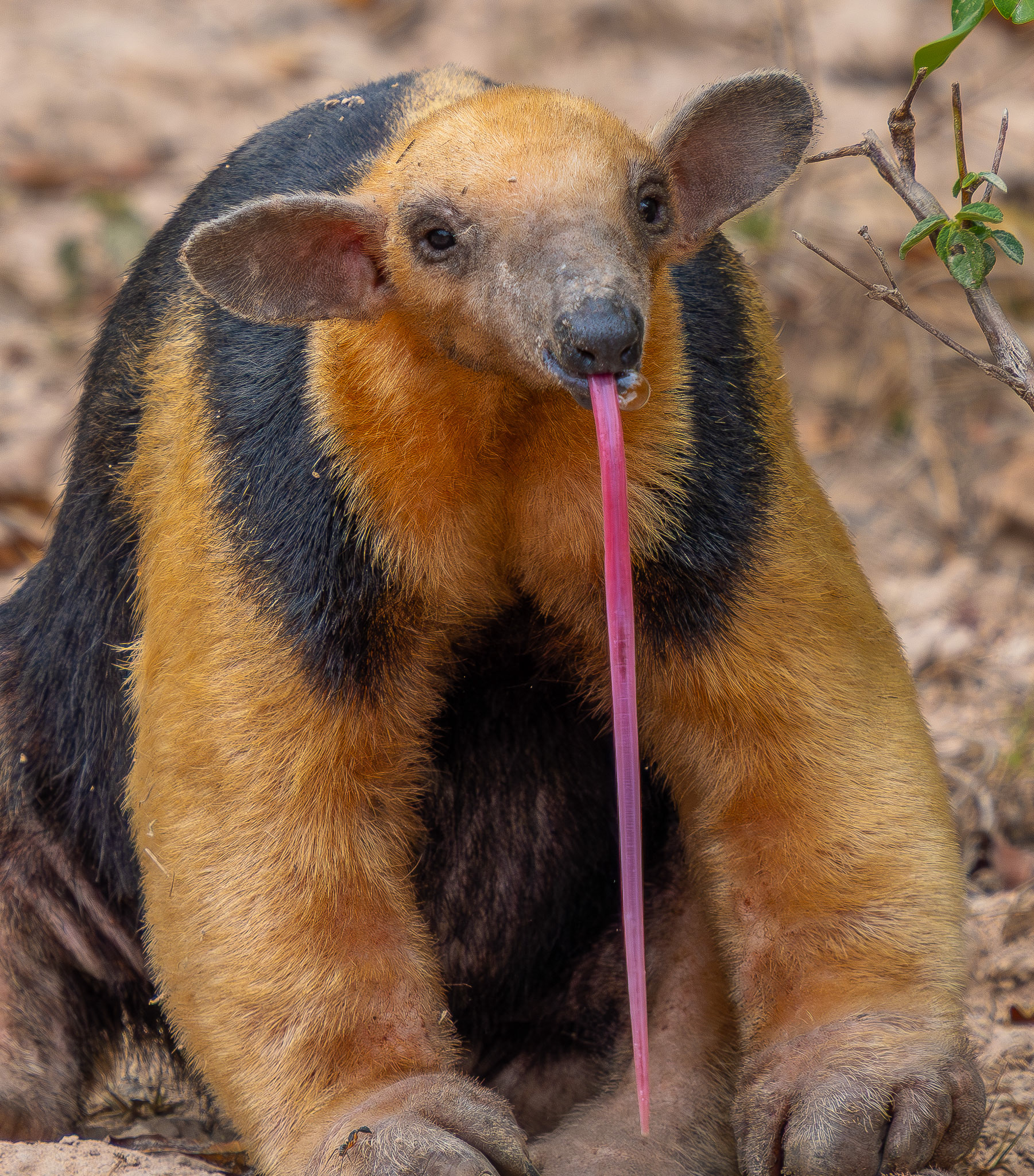
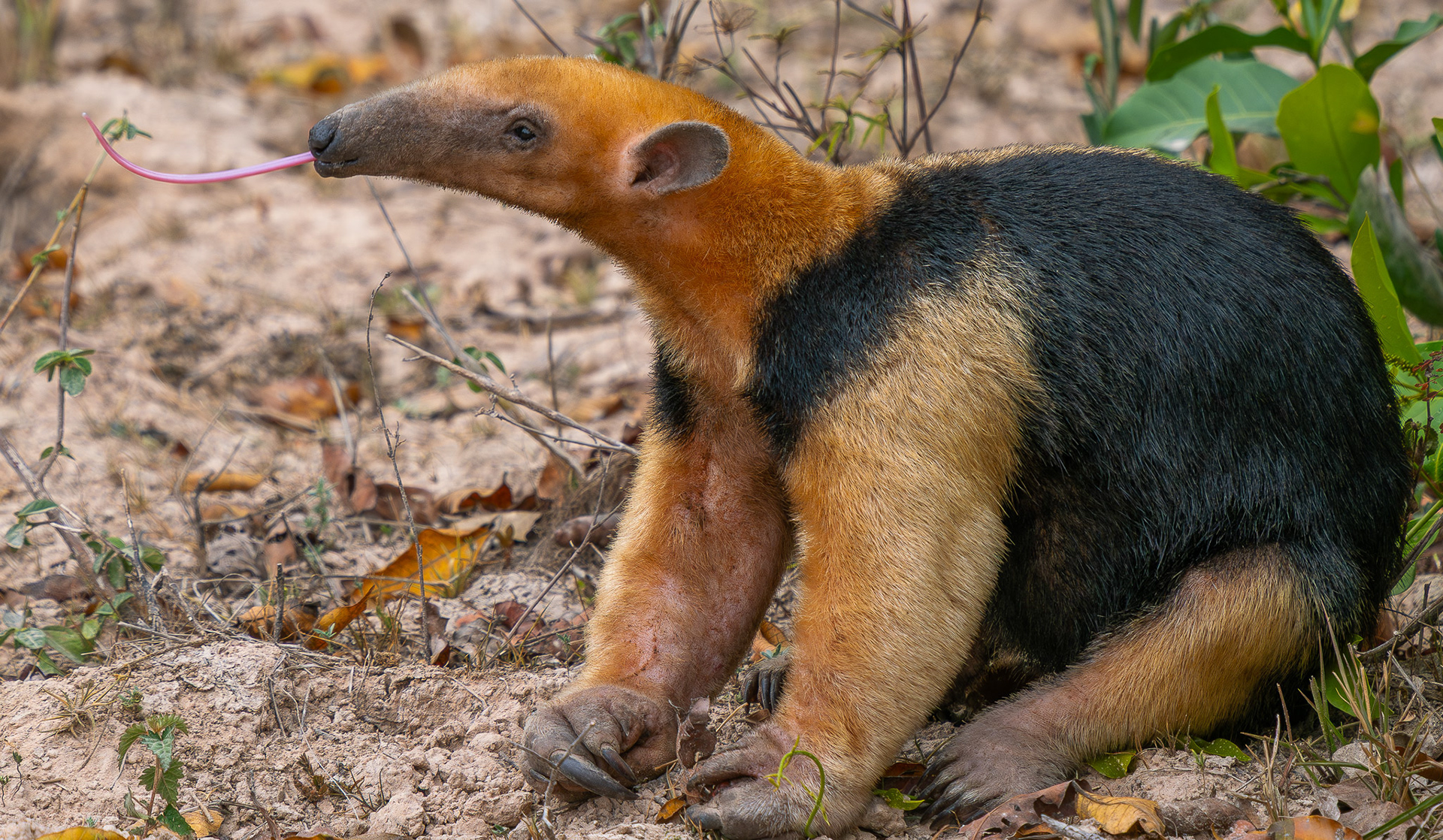
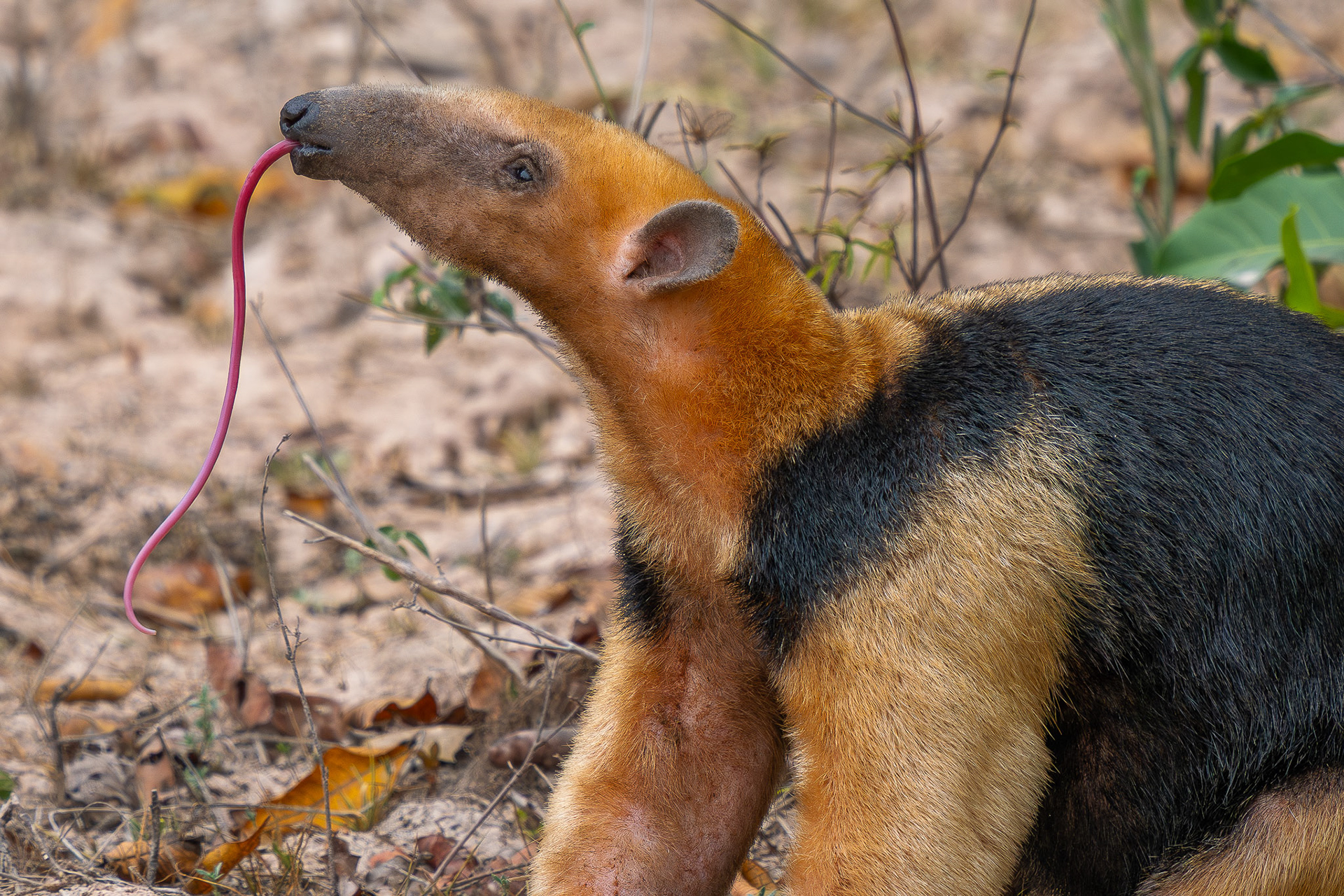
The Tamandua proudly shows off its impressively long, sticky tongue.
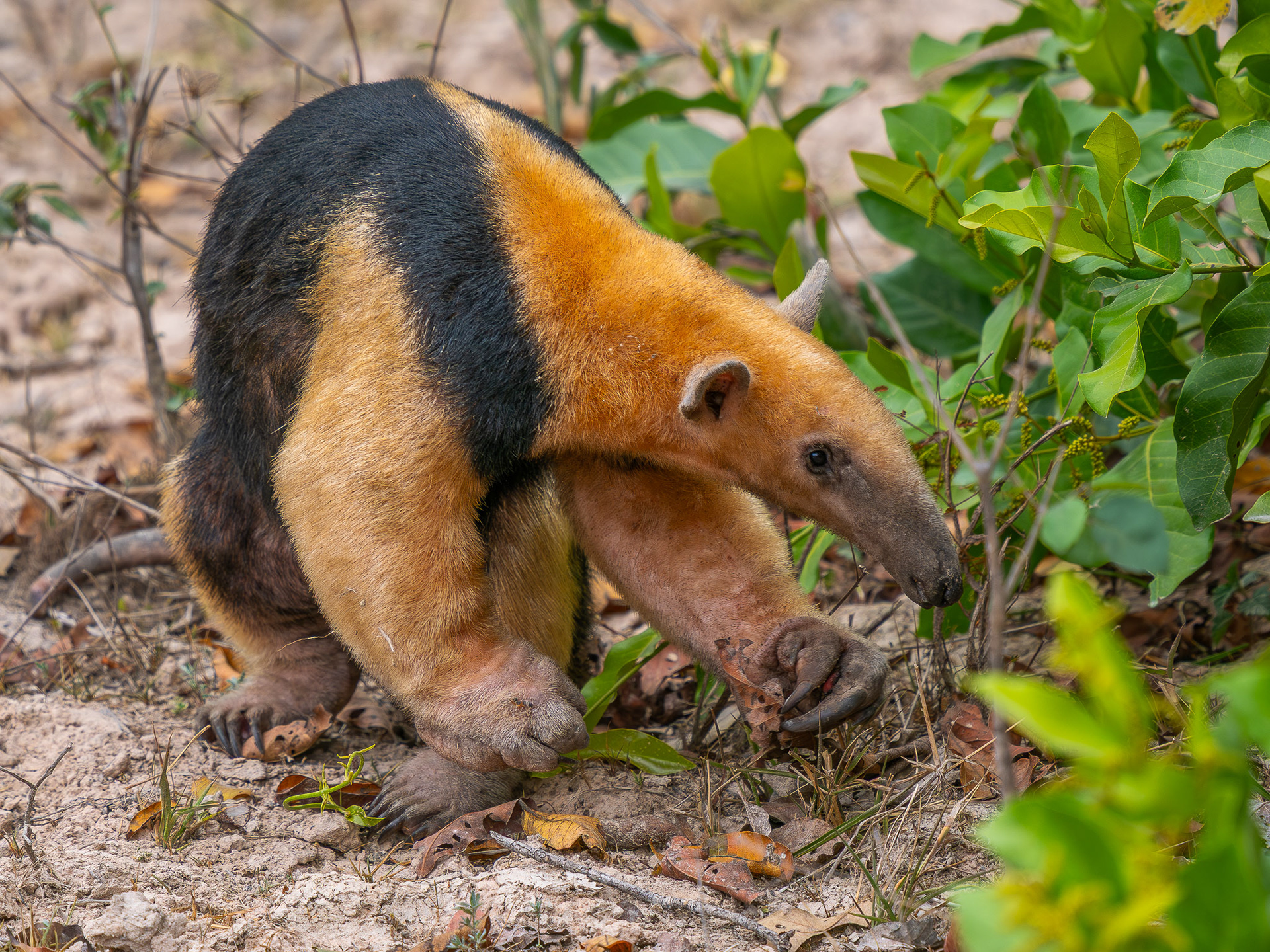
When threatened, a Tamandua rears up onto its hind legs, balancing with its tail and spreading its forearms to appear larger. It lashes out with sharp claws in defence and can release a powerful, foul-smelling musk to deter predators.
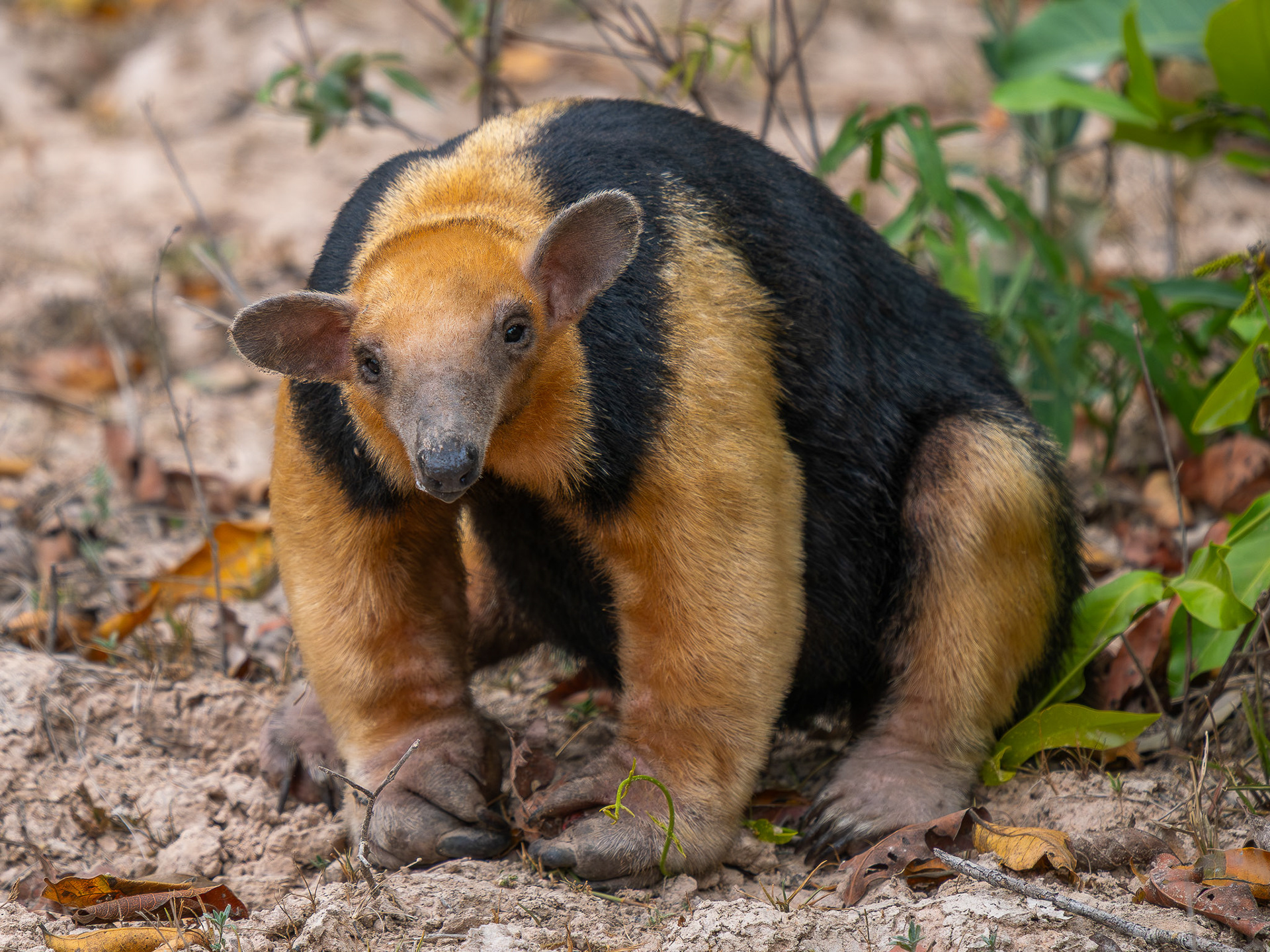
The Tamandua pauses and takes a curious look at us.
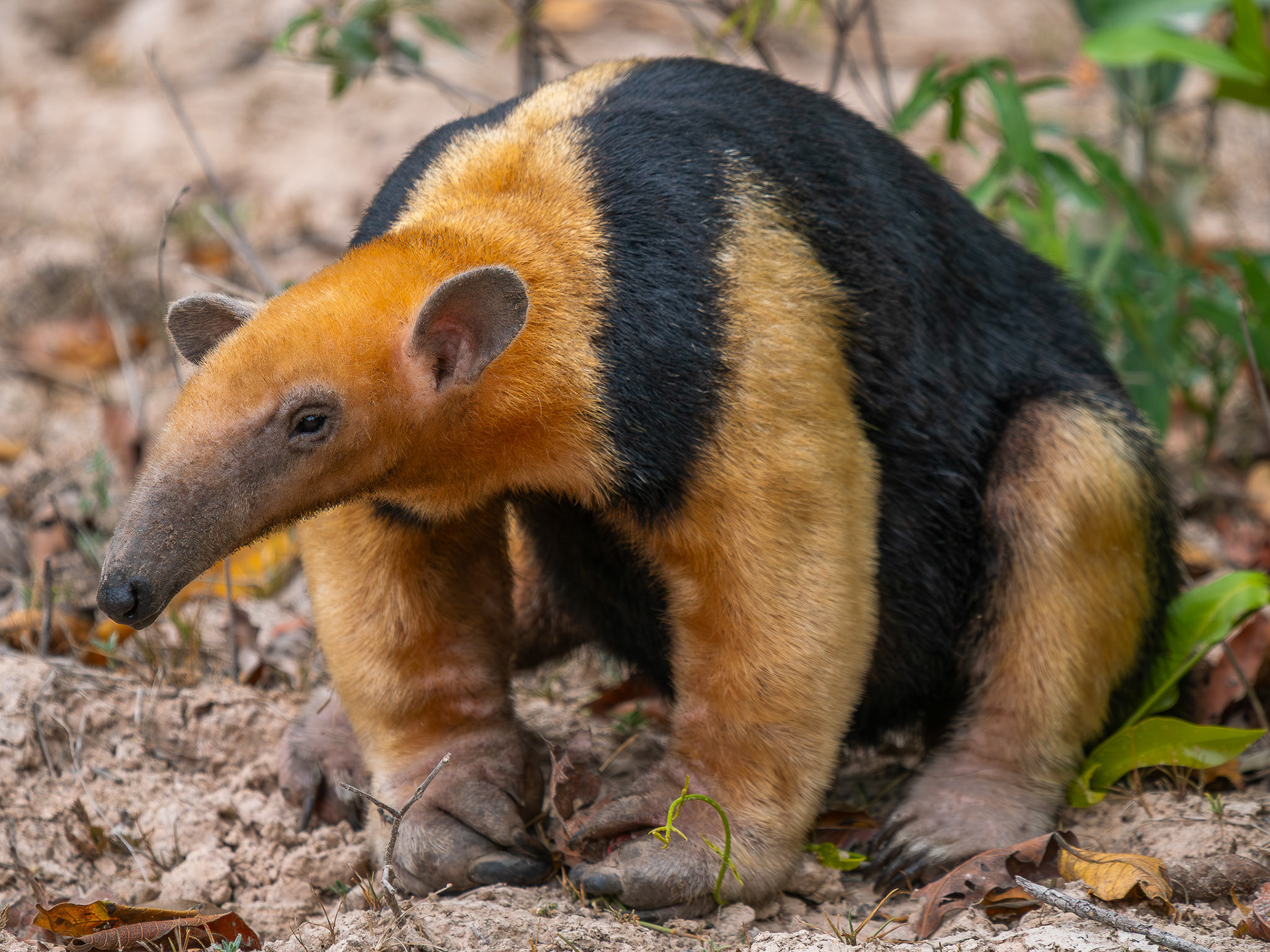
It decides we pose no threat .....
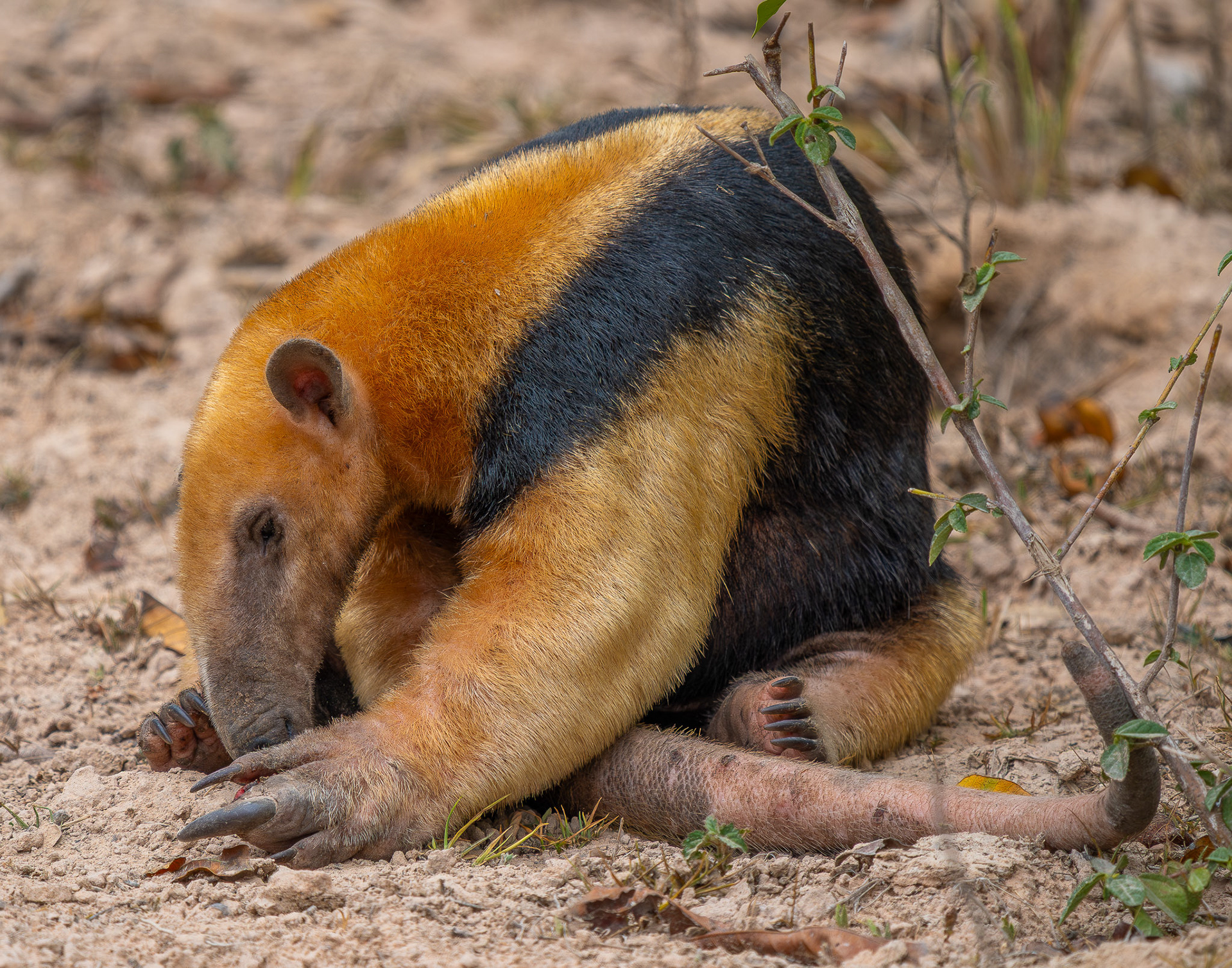
..... sits down and curls up in front of us.
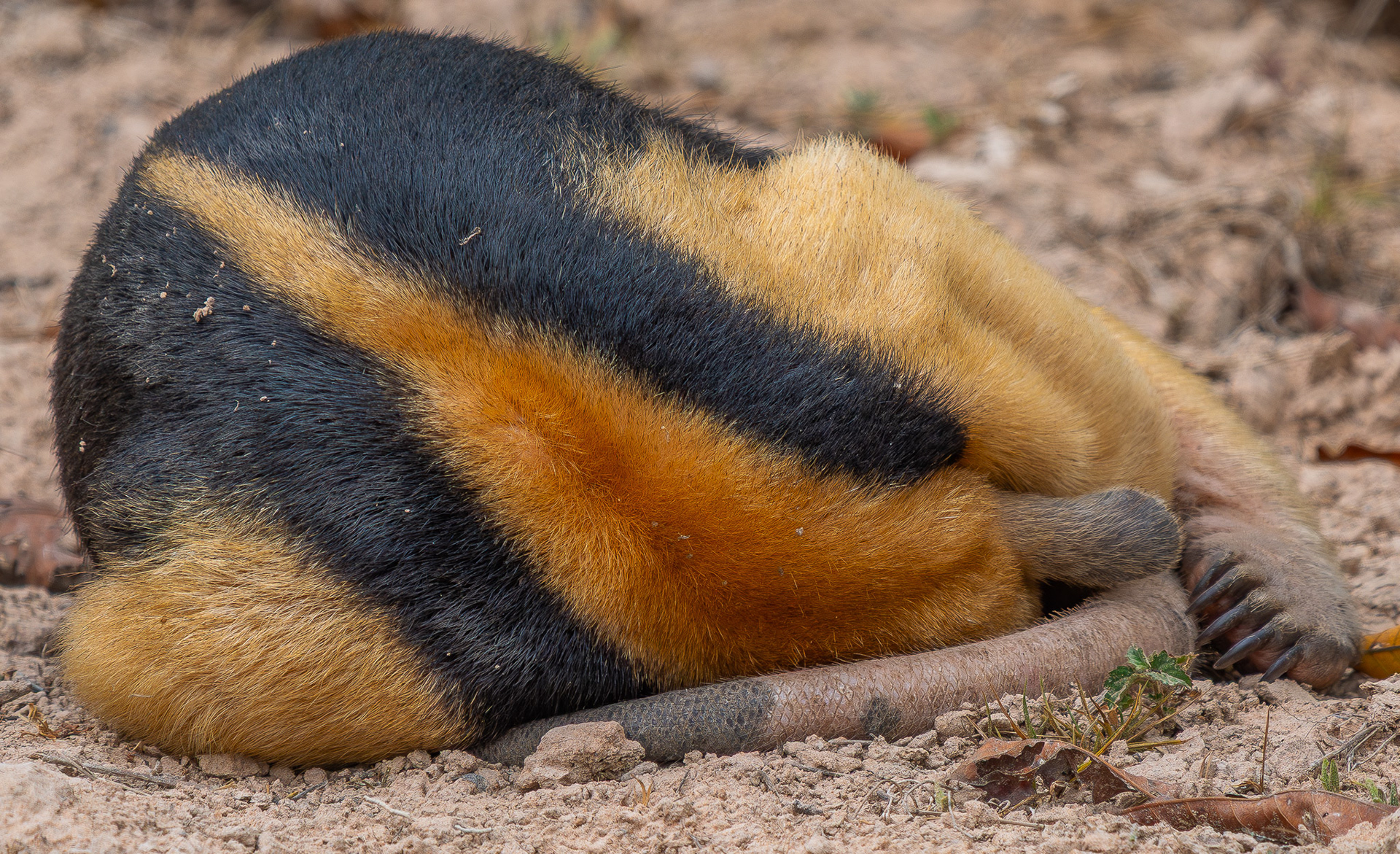
Then falls asleep.
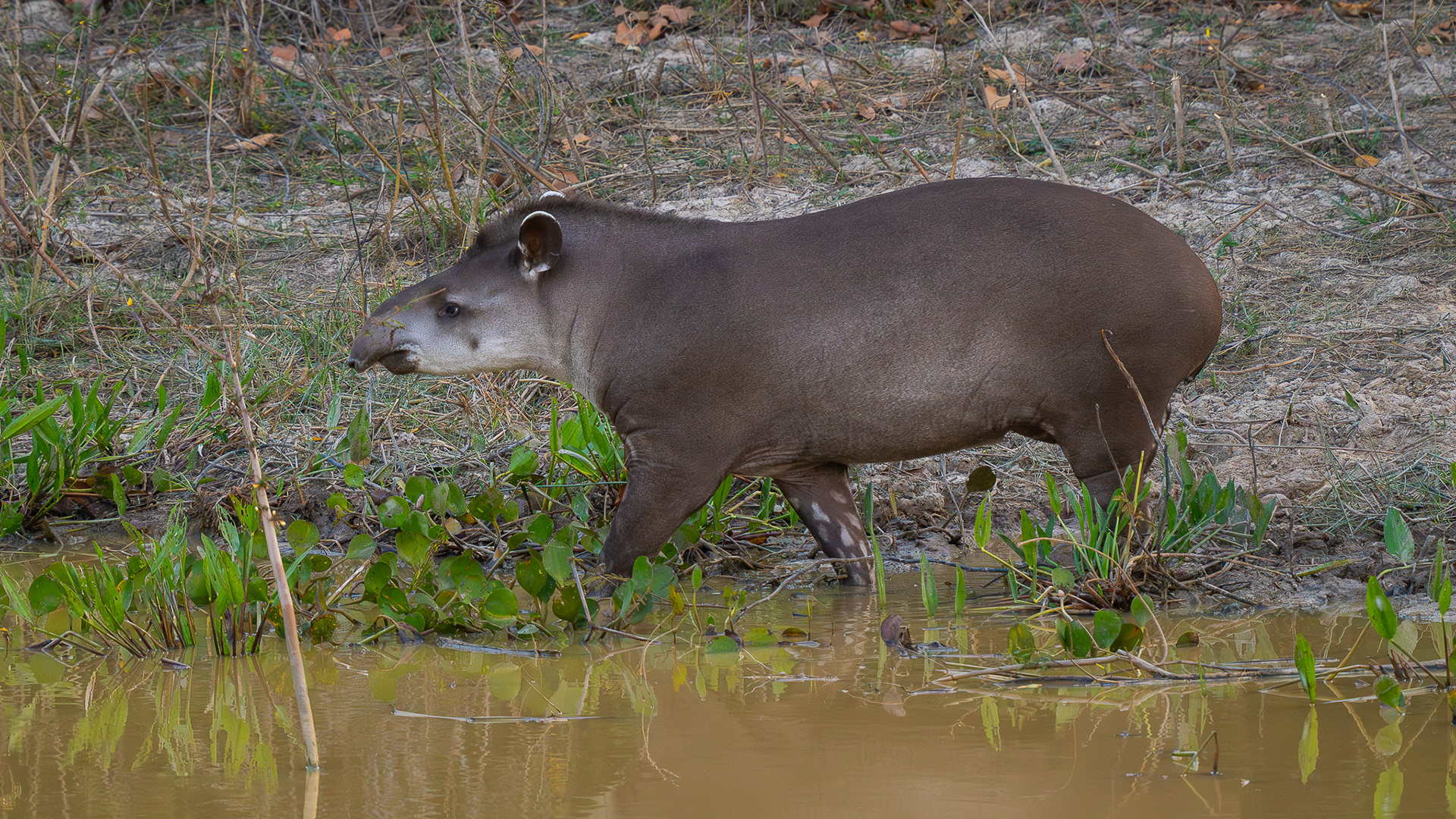
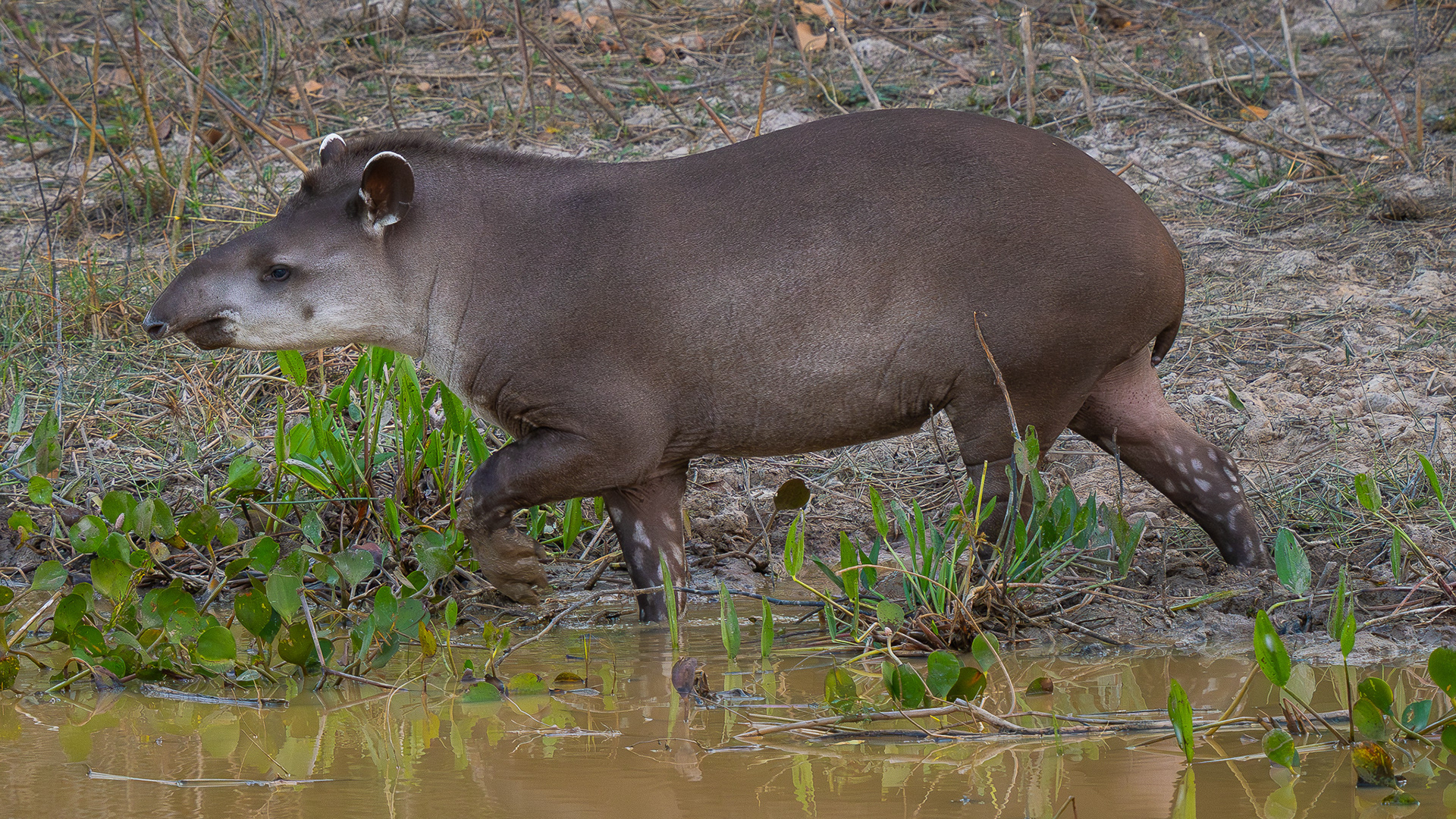
^ Lowland Tapir
The Lowland Tapir (Tapirus terrestris), also known as the South American Tapir, is the largest land mammal in South America and a key species within the Pantanal.
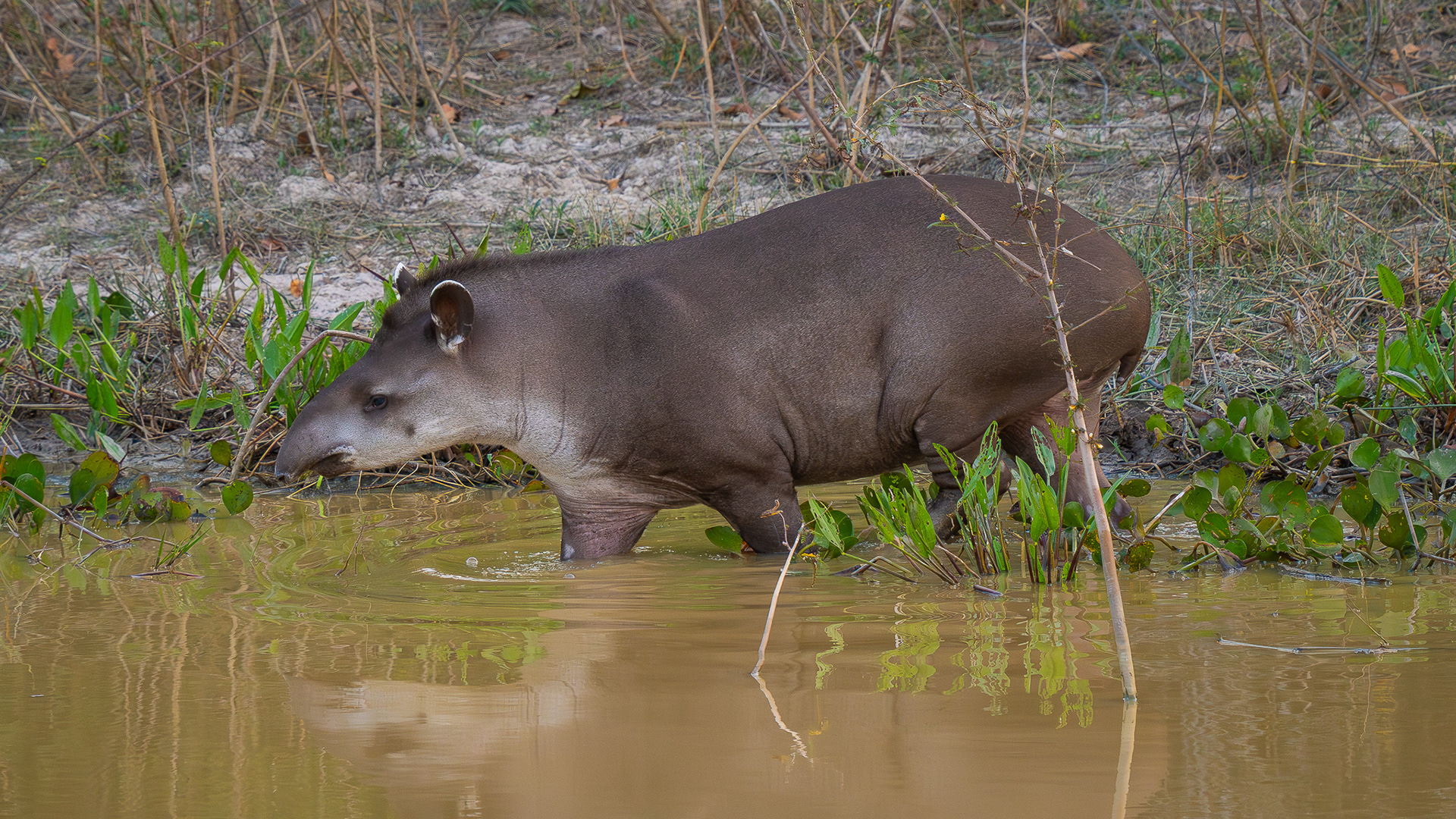
These solitary, mostly nocturnal herbivores, live near rivers, swamps and other water sources, eating fruits, leaves, buds, and aquatic plants. They are excellent swimmers and often use the water to escape predators.
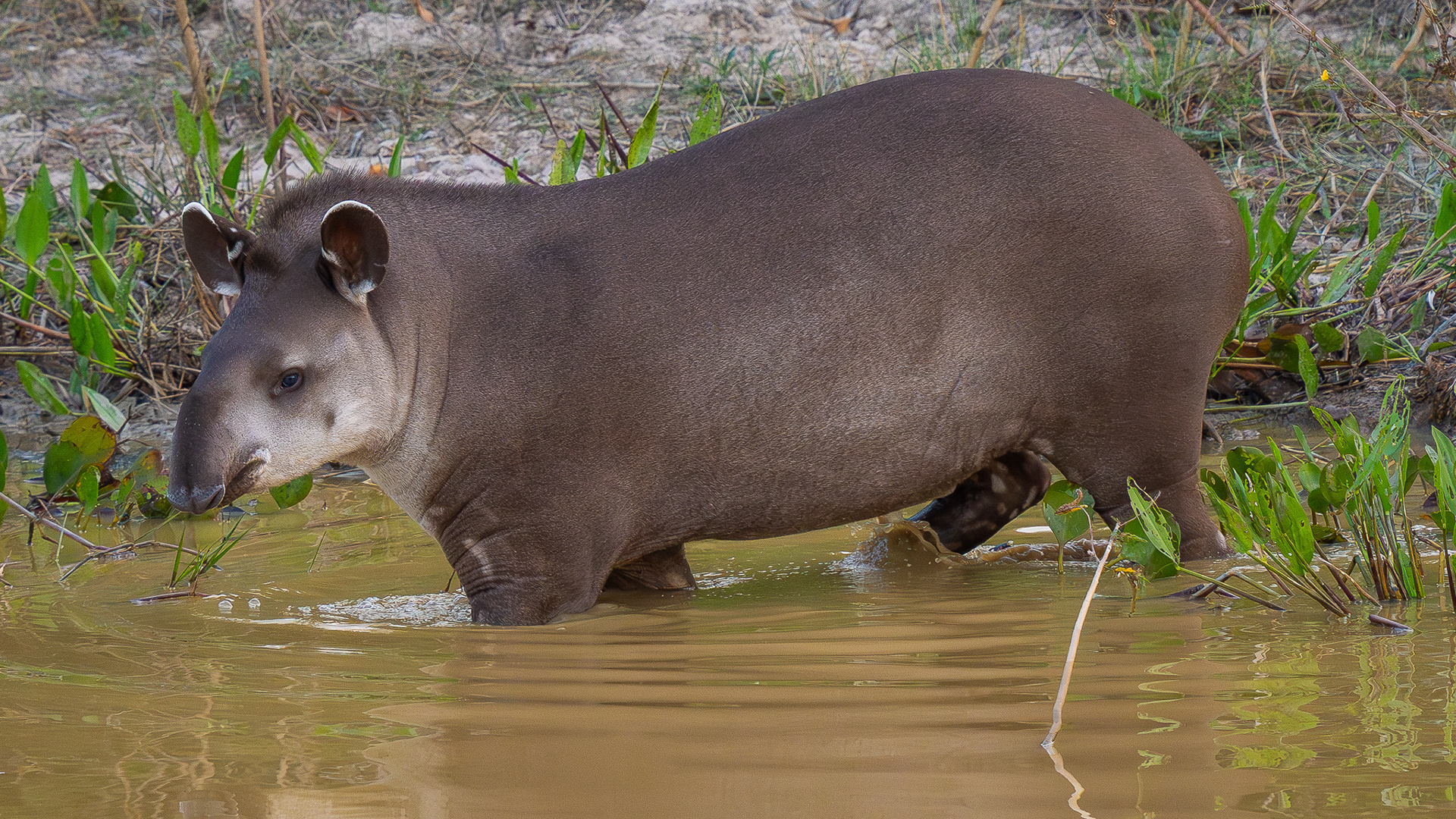
Because tapirs are semi-aquatic and spend much of their time foraging near water, these drinking spots are critical for their survival, especially during the peak of the dry season when waterholes may begin to dry up.
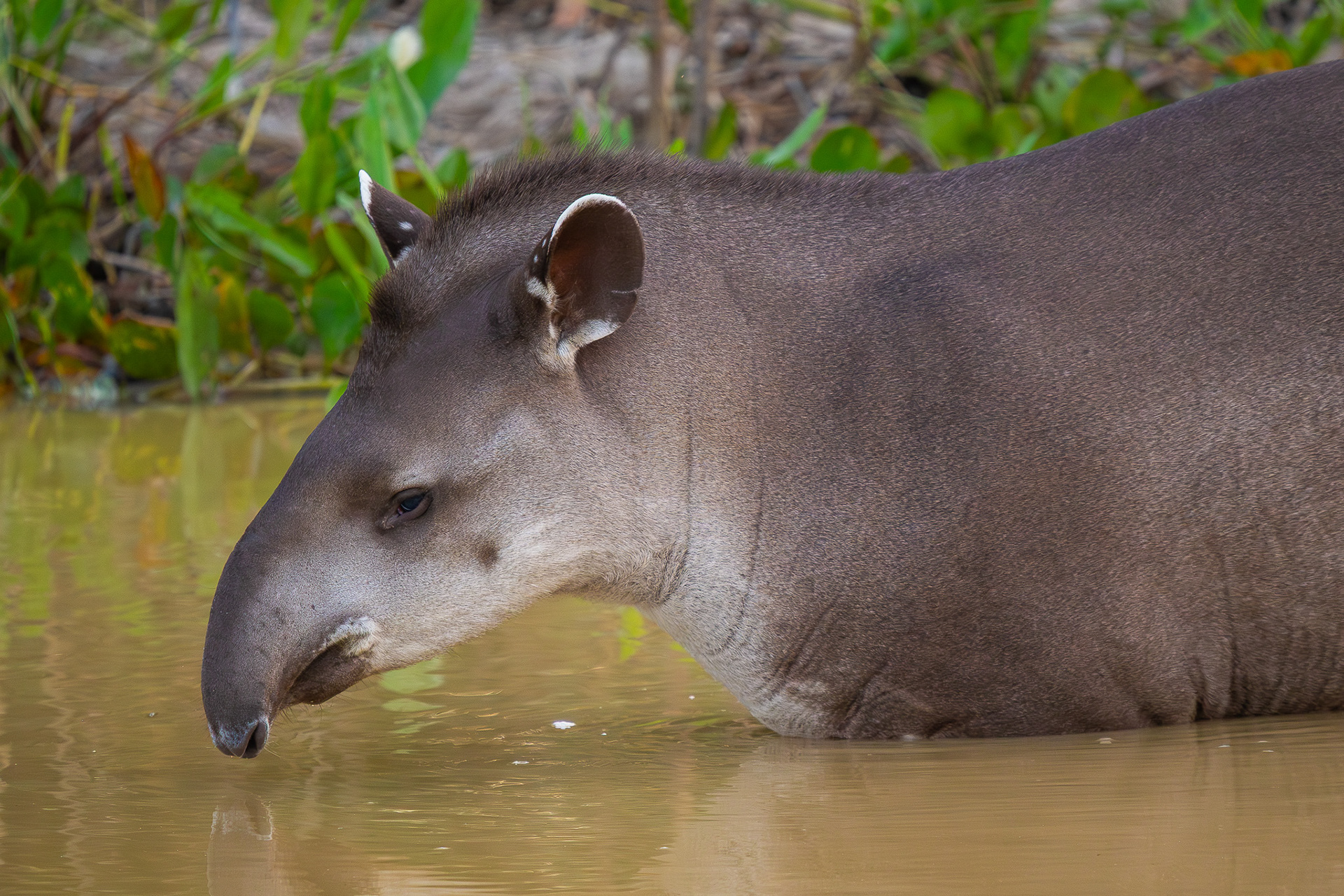
They have a short, flexible proboscis (nose) used for grabbing foliage and for snorkelling while swimming.
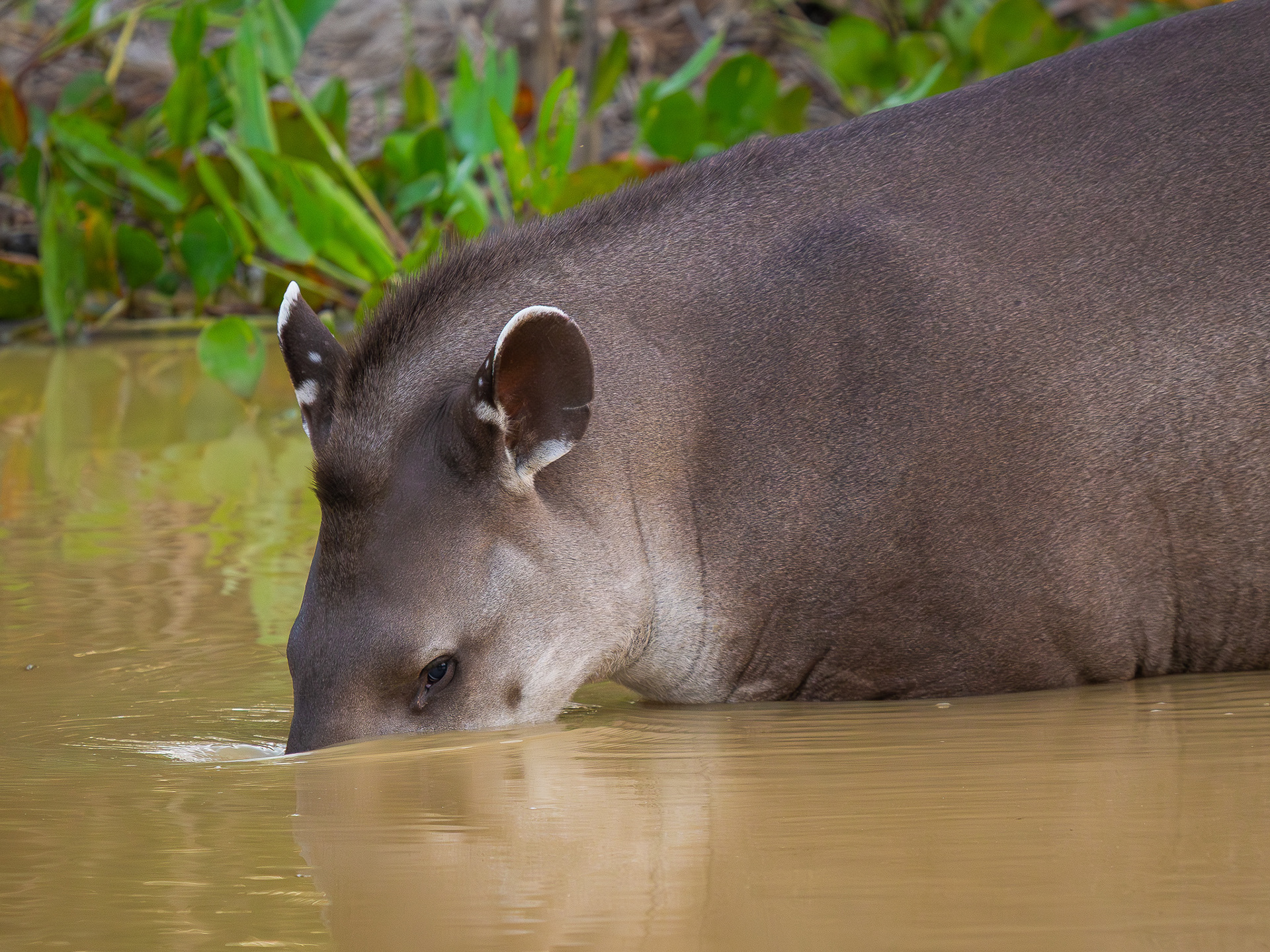
A partially submerged Tapir in the water, pausing to drink.
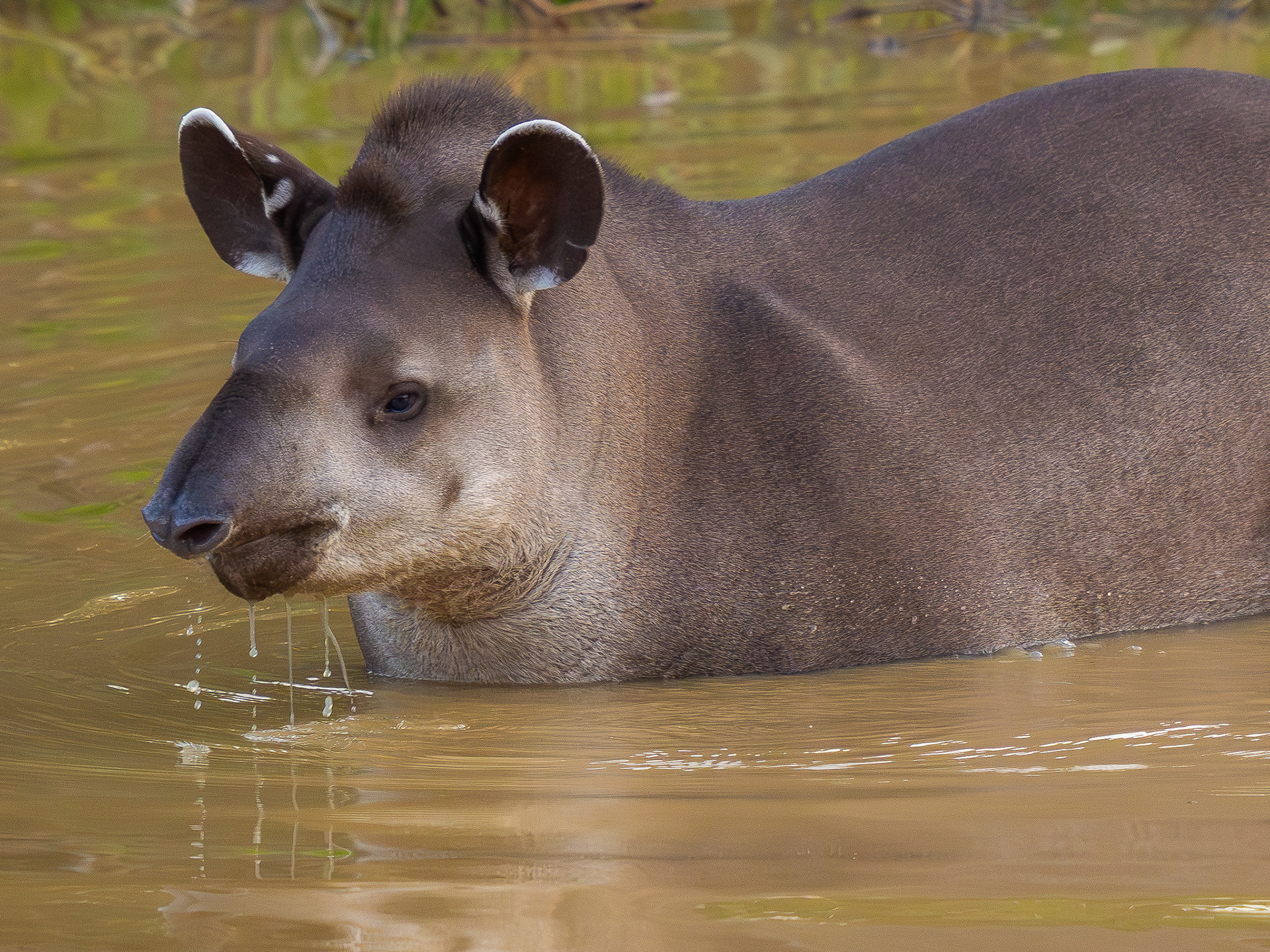
Even whilst drinking, they remain highly alert with their ears constantly twitching as they scan and listen for the faintest sign of danger. At any hint of a nearby Jaguar, they are ready to react instantly and retreat to safety.
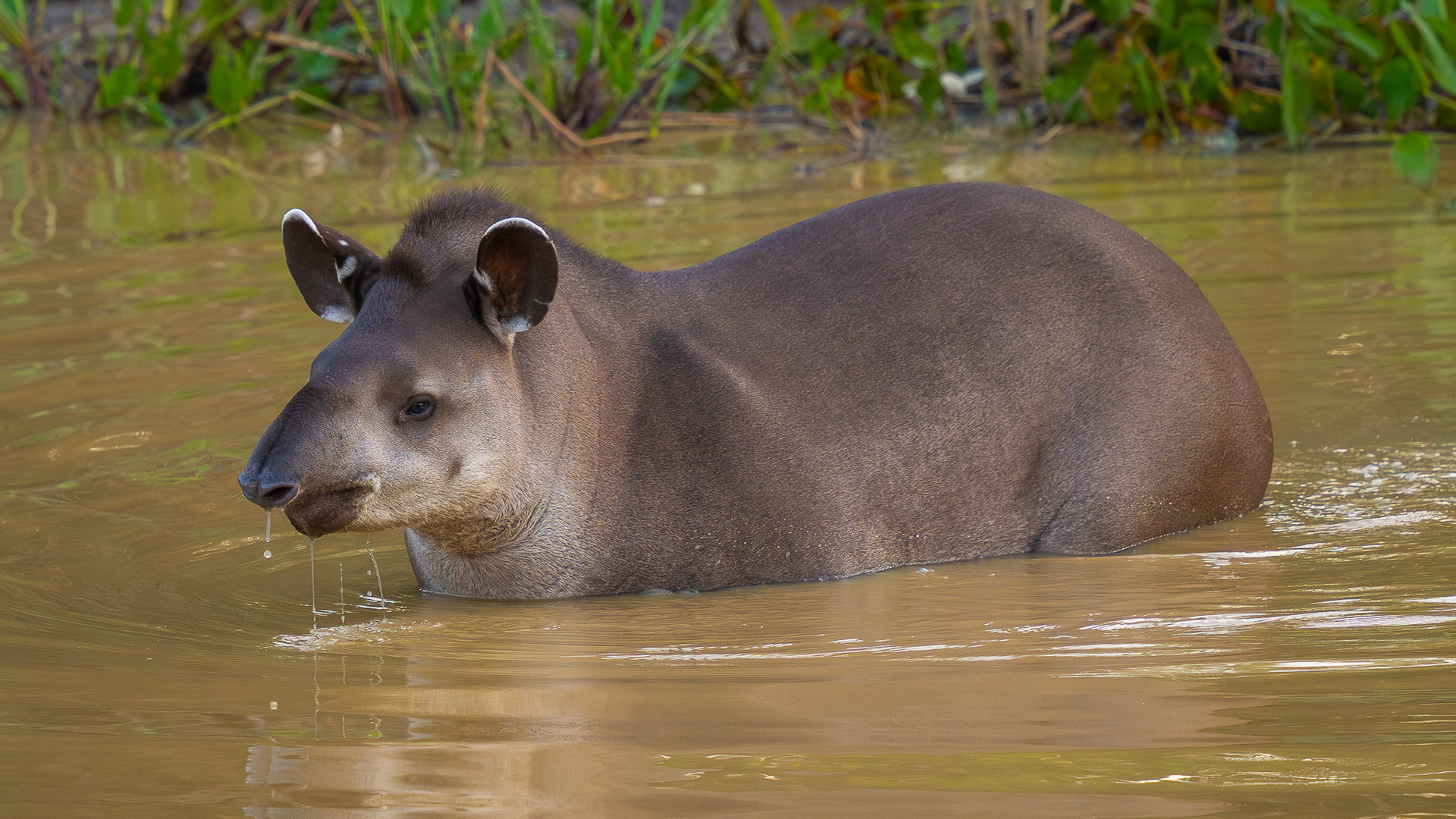
The Jaguar is the principal predator of the South American Tapir. Although Jaguars are apex predators, Tapirs are large and formidable prey. They are protected by thick, tough skin, particularly around the neck, which can make it difficult for a Jaguar to deliver a fatal bite. Their considerable size and strength, powerful jaws, and ability to escape into water or dense vegetation all enhance their chances of surviving an attack.
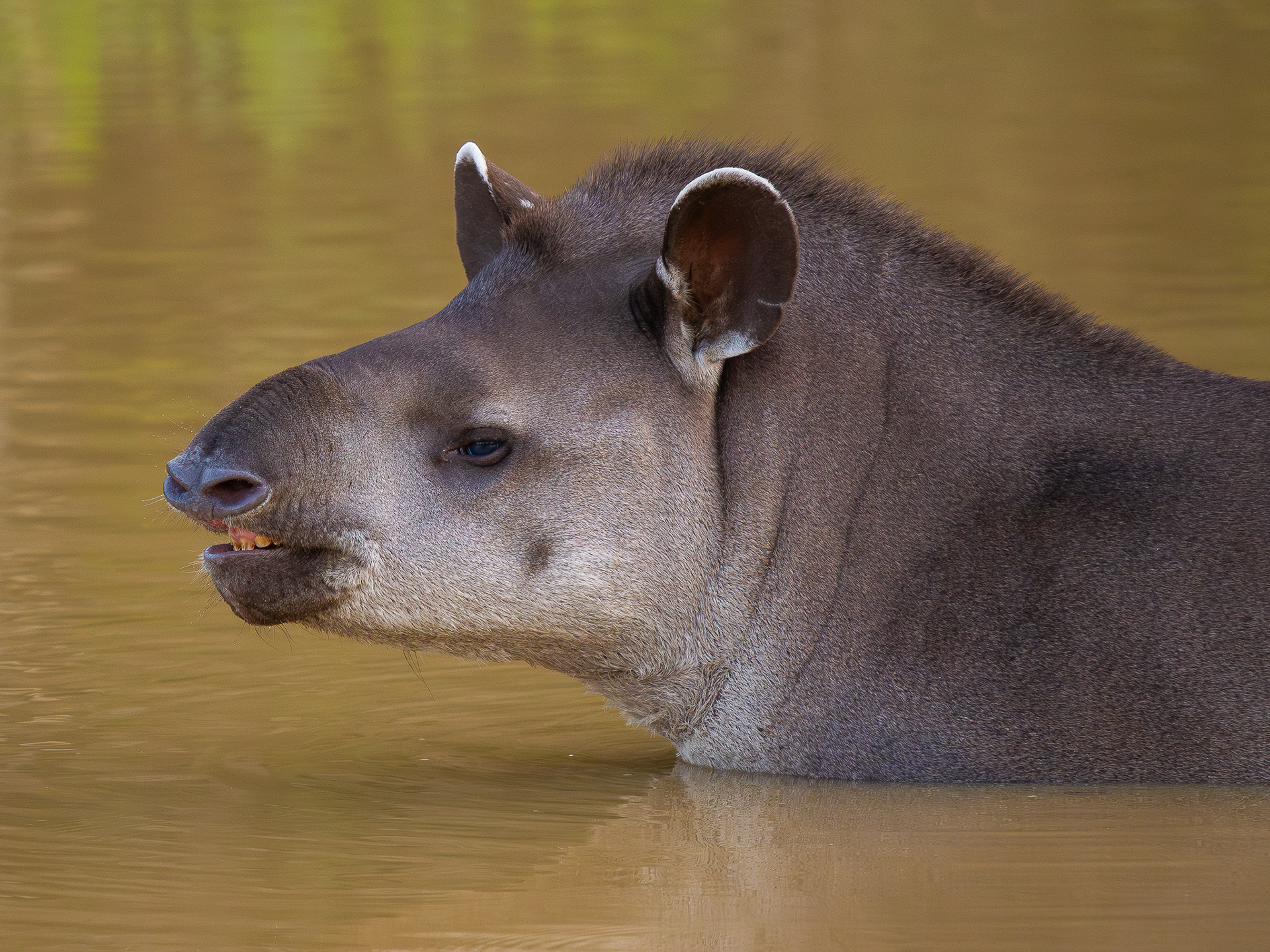
The species is classified as vulnerable, mainly due to habitat loss, hunting, and population fragmentation. The Pantanal is considered a relative haven, where pressures are generally lower than in much of its range. Tapirs are slow breeders, usually producing just one calf every few years, which makes population recovery difficult. The main threats include deforestation and the expansion of cattle ranching, both of which reduce and degrade their natural habitat.
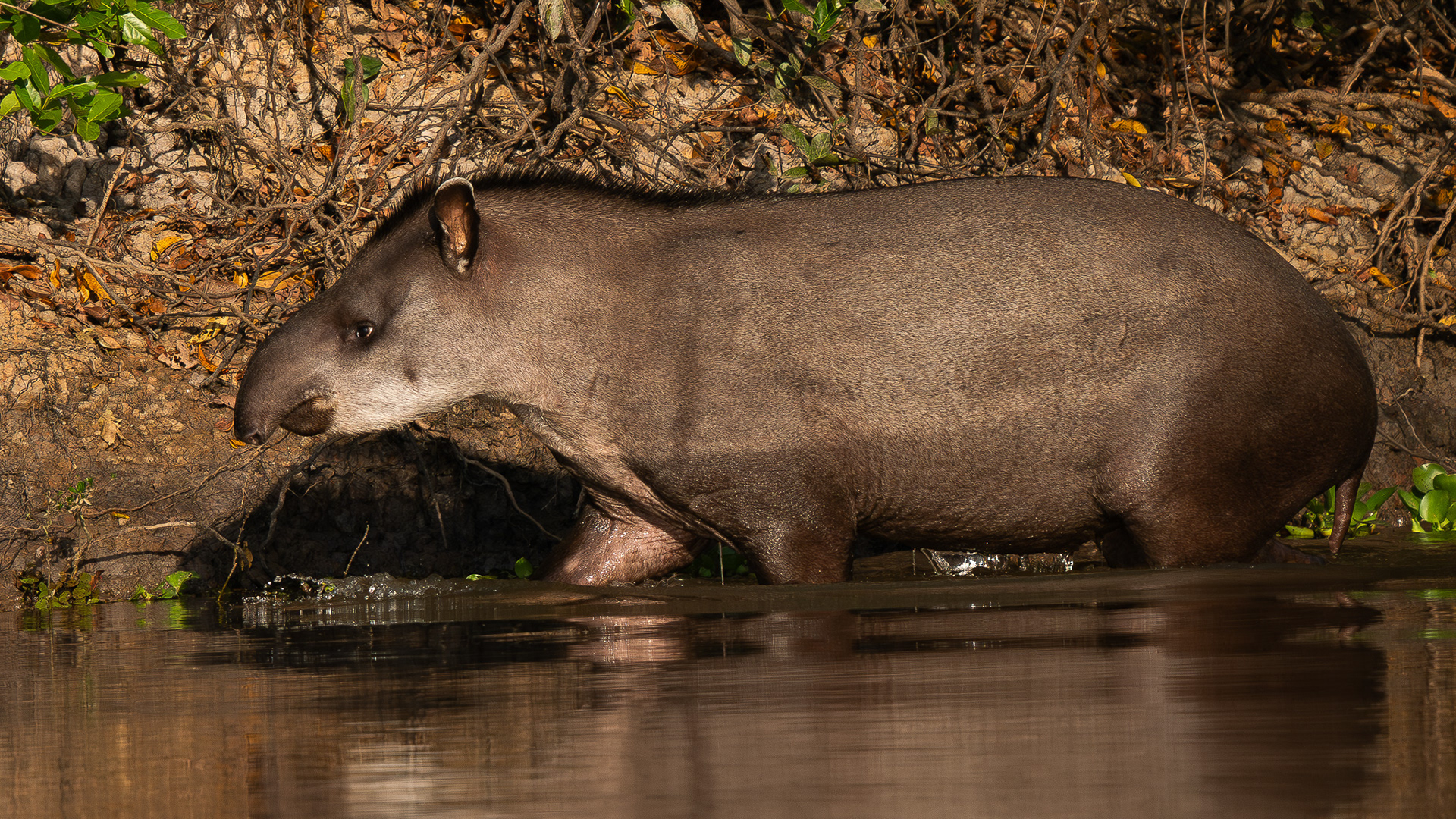
The Tapir consumes large quantities of seasonal fruit and disperses seeds over vast distances across the Pantanal, playing a vital role in maintaining plant diversity and strengthening the ecosystem’s resilience.
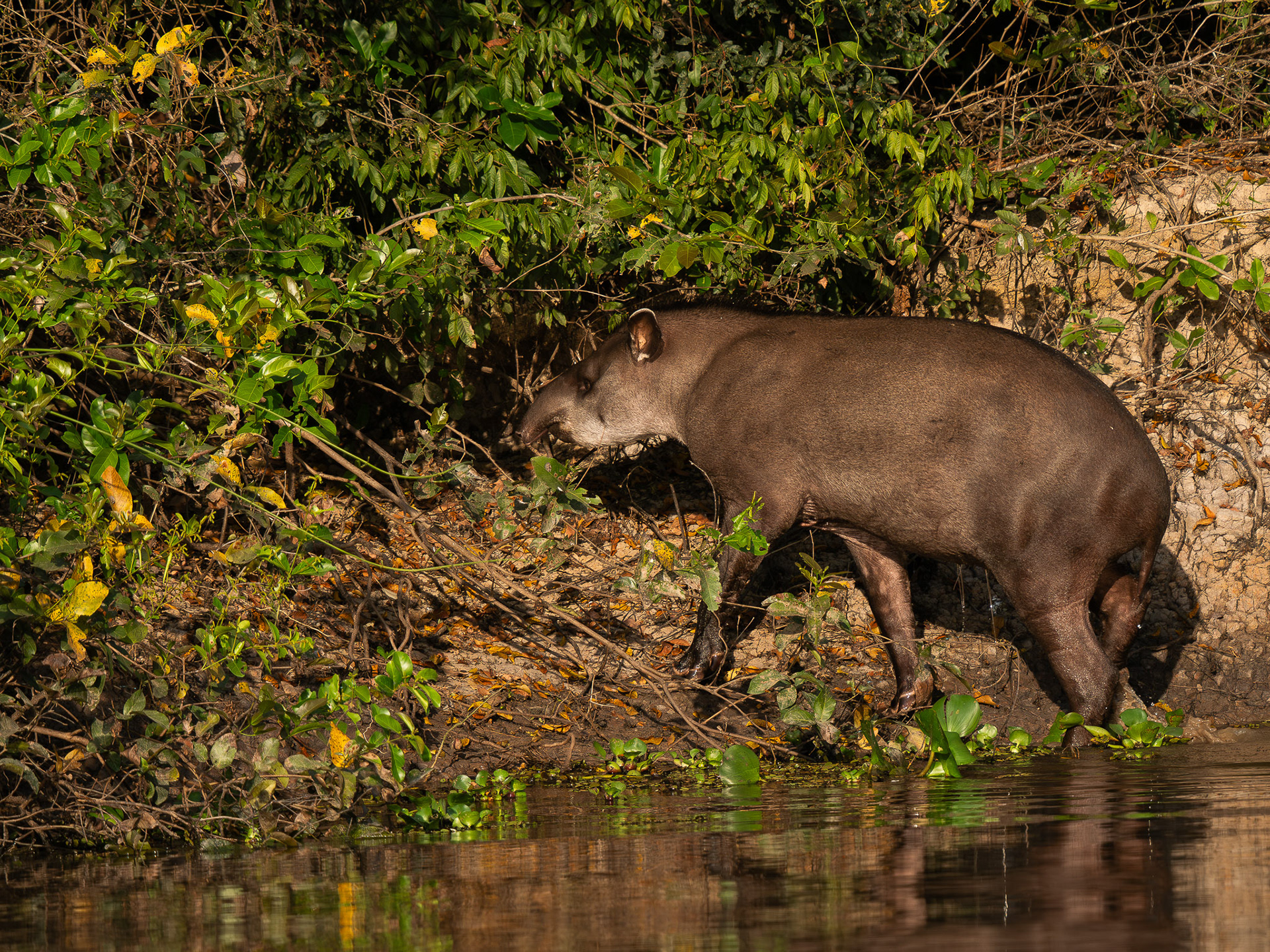
After cooling off in the river, the Tapir leaves the water and heads into dense forest, seeking camouflage, shade, and protection within the thick undergrowth.
^ Tayra
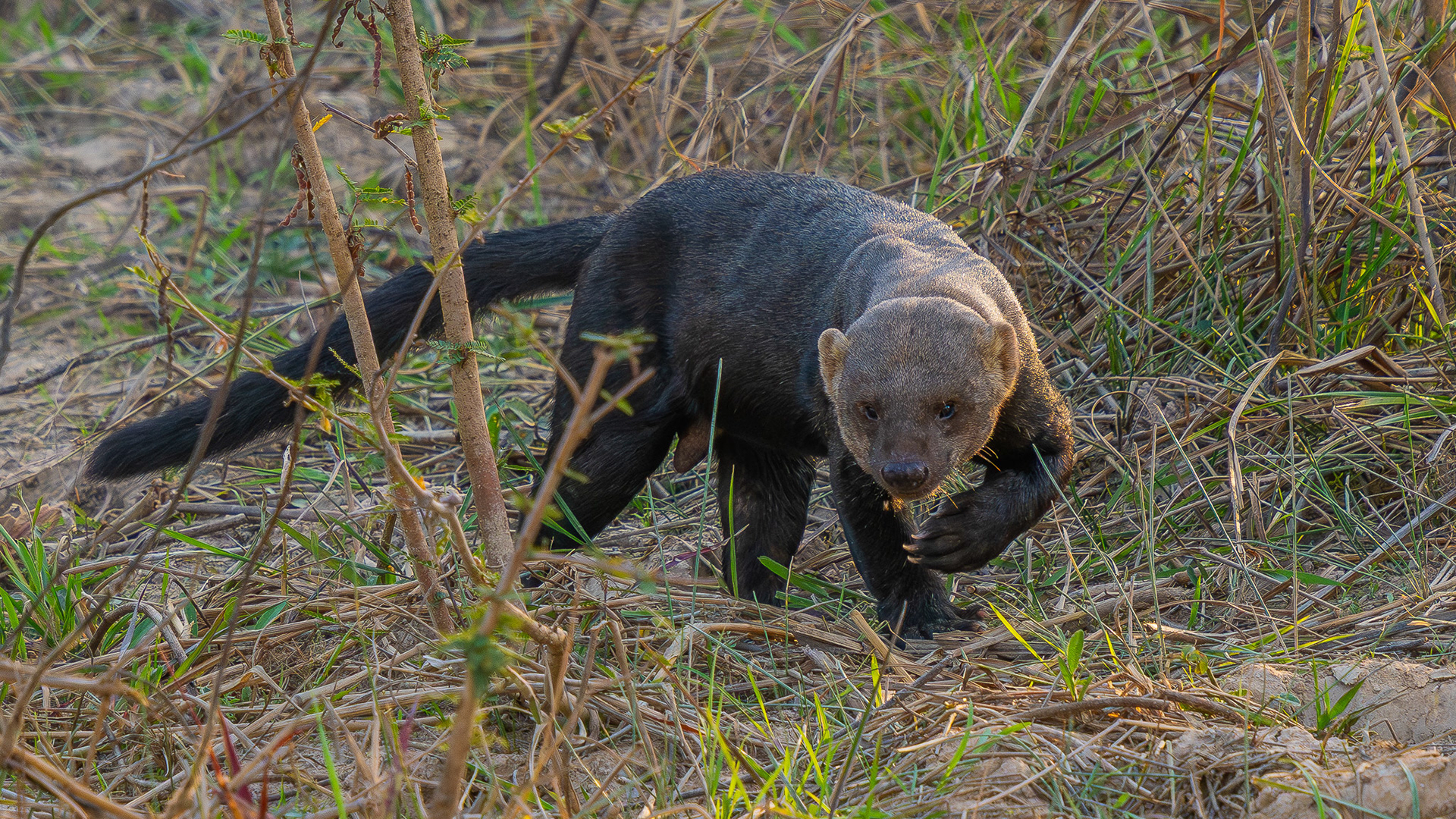
The Tayra (Eira barbara) is a large, agile member of the weasel family, recognised for its dark fur, elongated body, and bushy tail. Often nicknamed the 'honey eater' for its fondness for raiding beehives, it thrives in a variety of habitats, including the wetlands of the Pantanal, where it feeds on fruit, small animals, and, whenever possible, honey.
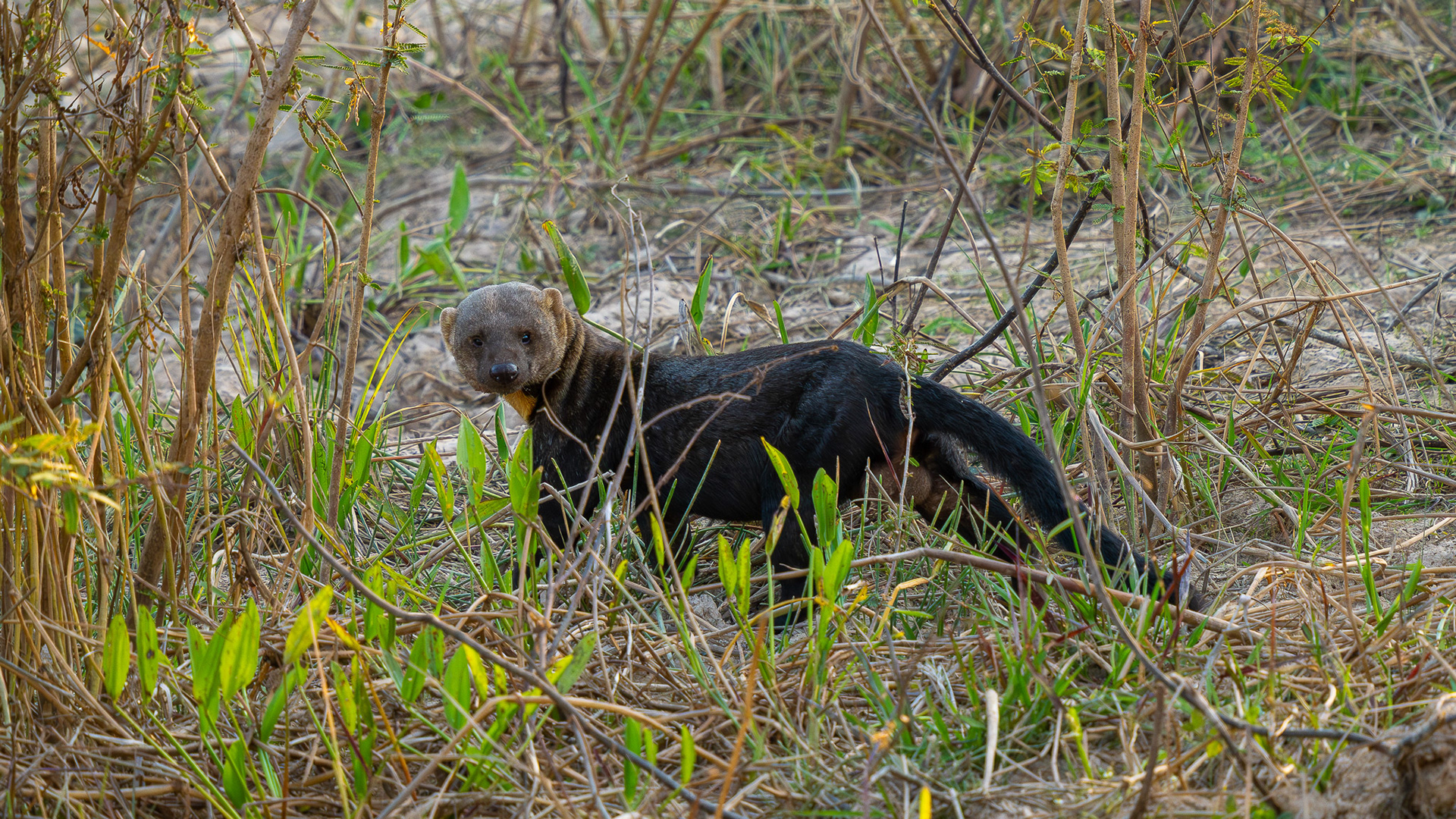
Tayras are highly acrobatic climbers, able to leap between treetops and descend smooth trunks head-first, even from heights exceeding 40 metres.
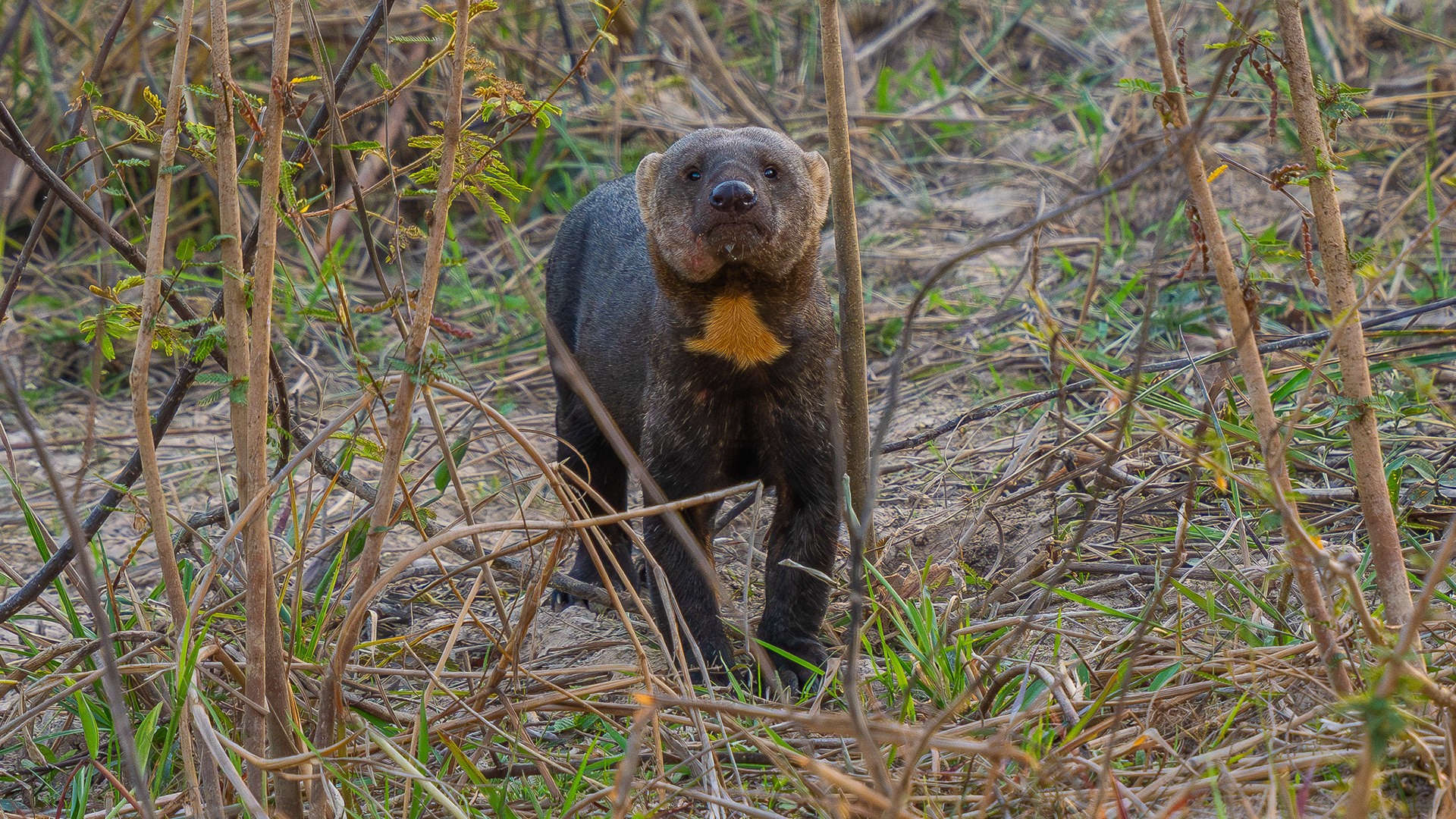
Most individuals display a yellow or orange heart-shaped patch on their chest. Like a fingerprint, this marking is unique to each animal and is used by biologists to identify individuals in the wild.
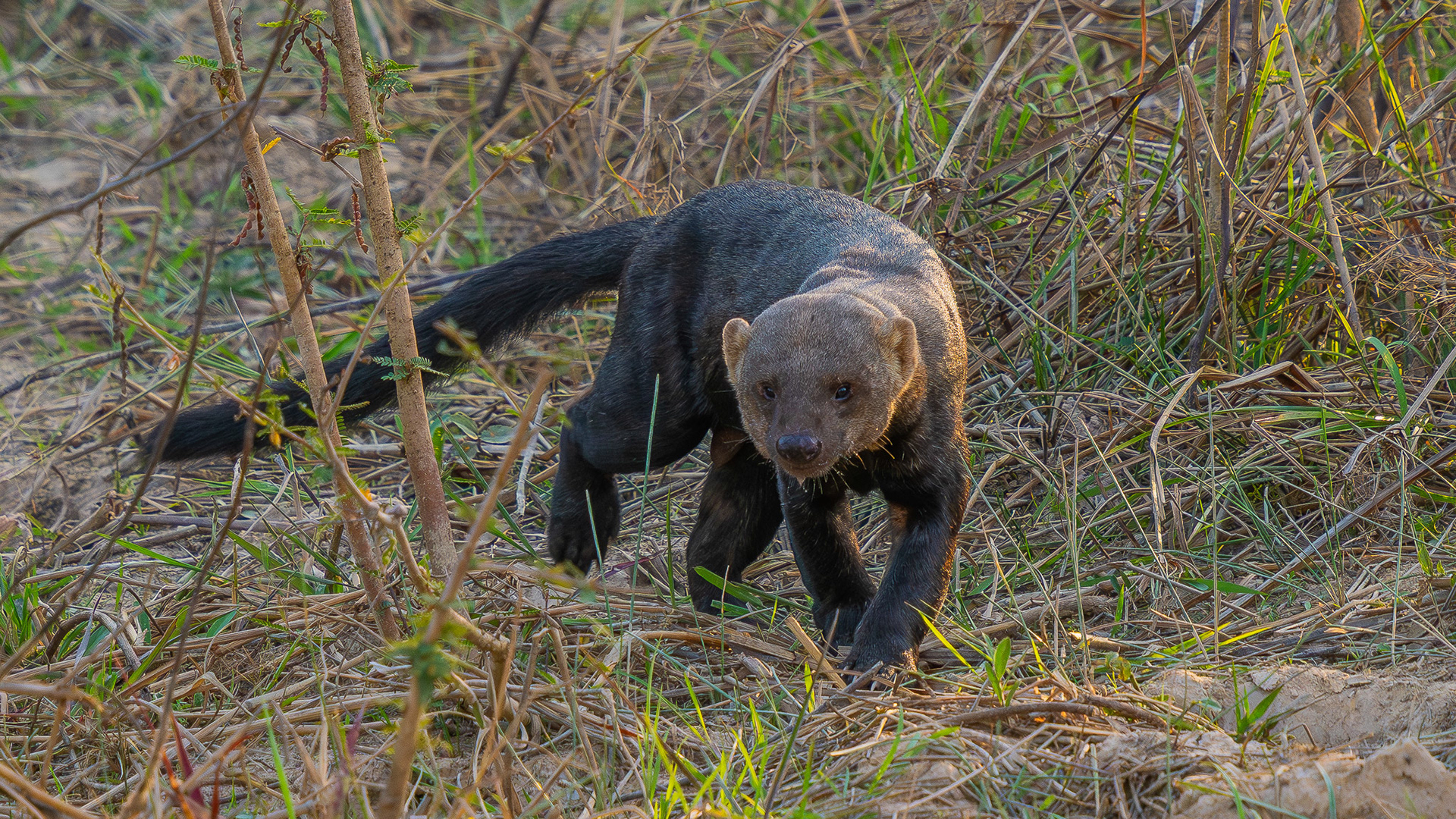
Despite having relatively poor eyesight, they are relentless hunters, tracking prey mainly by scent and often pursuing it in a bounding gallop rather than relying on stealth or ambush.
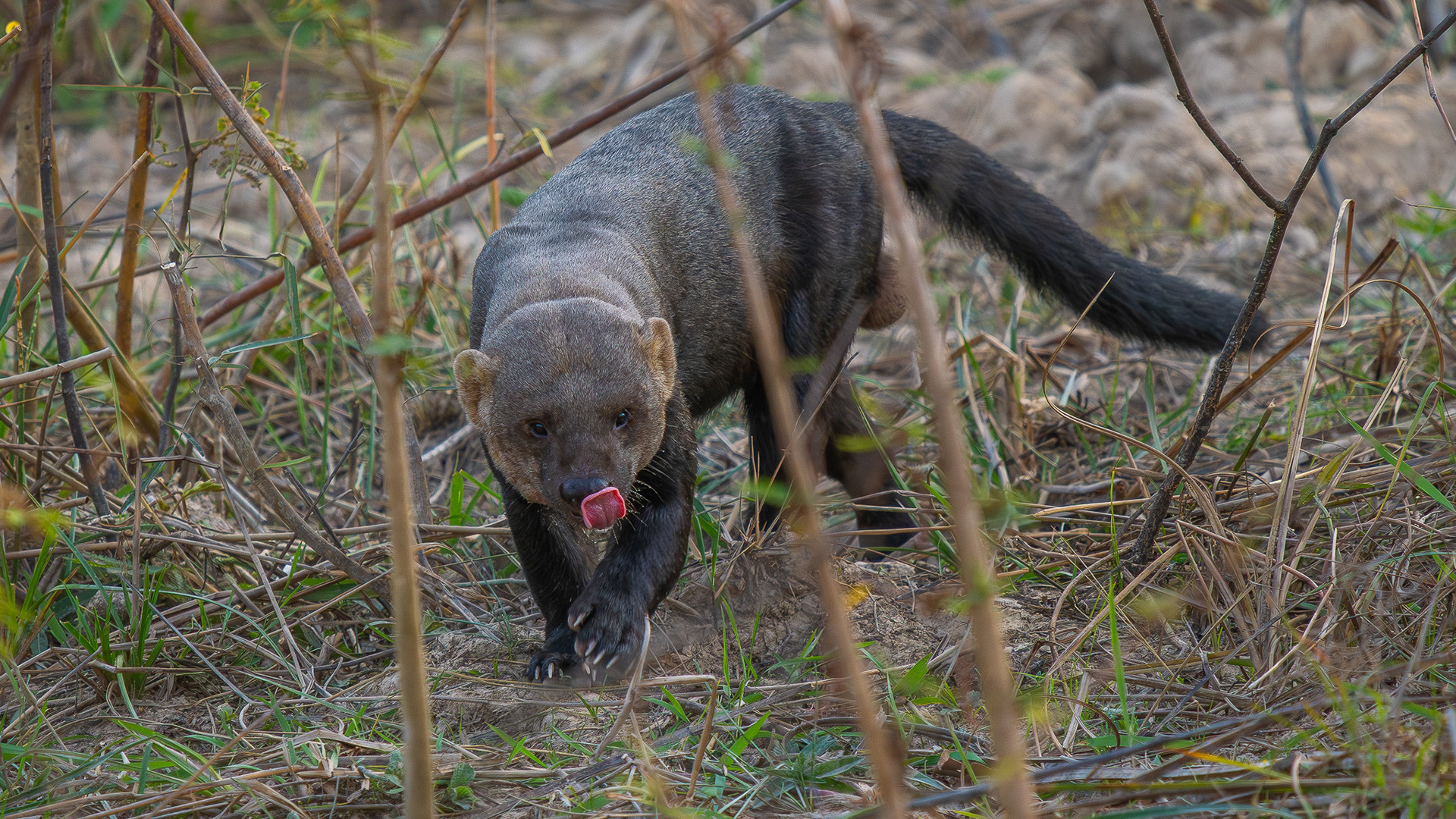
One of the few non-primate mammals known to demonstrate foresight, Tayras have been observed selecting unripe green plantains and caching them in sunny spots to ripen, returning days later to eat the softened fruit.
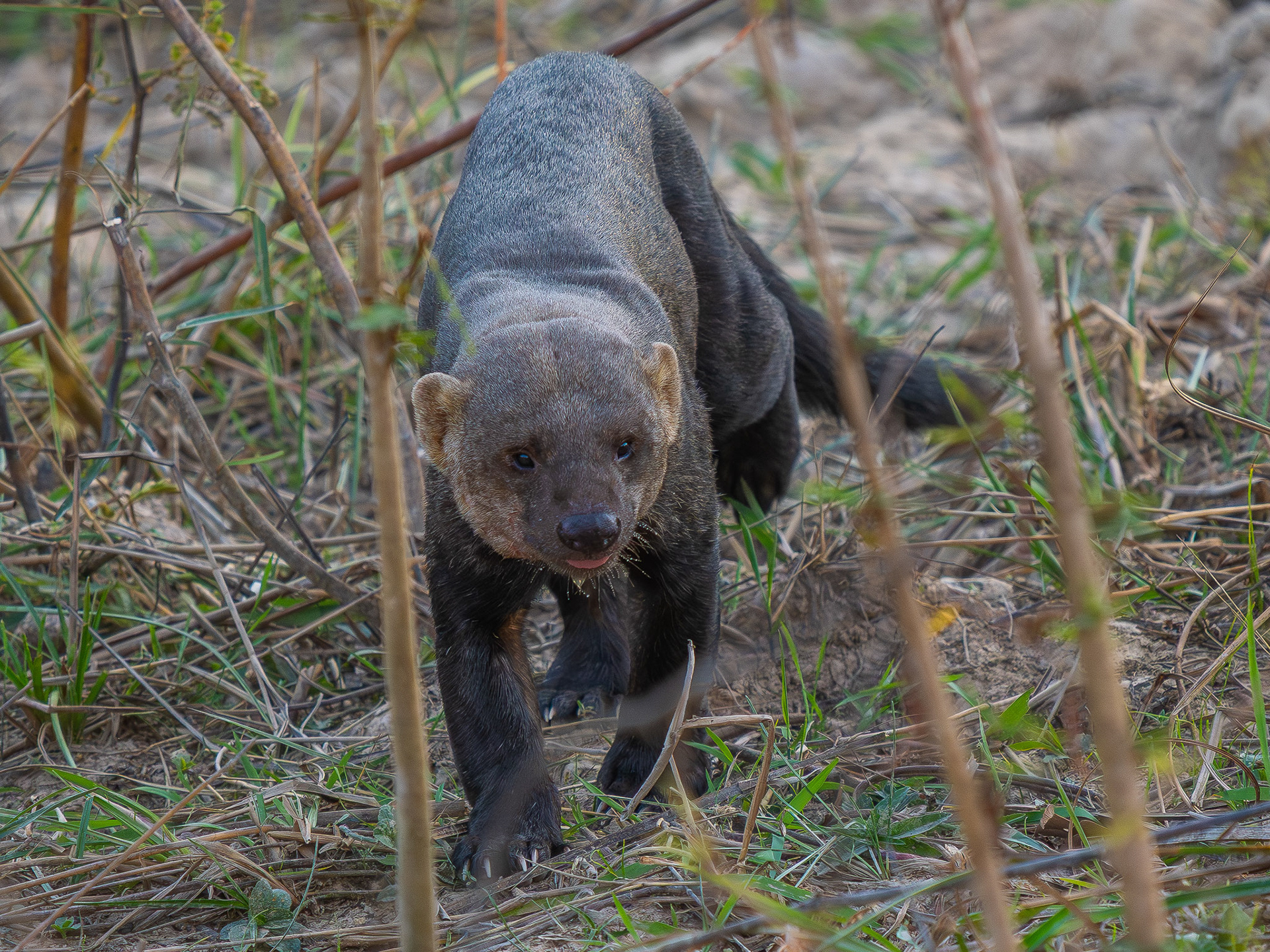
Mostly solitary and active during the day, they can be surprisingly vocal, using barks and snarls when interacting with other Tayra.
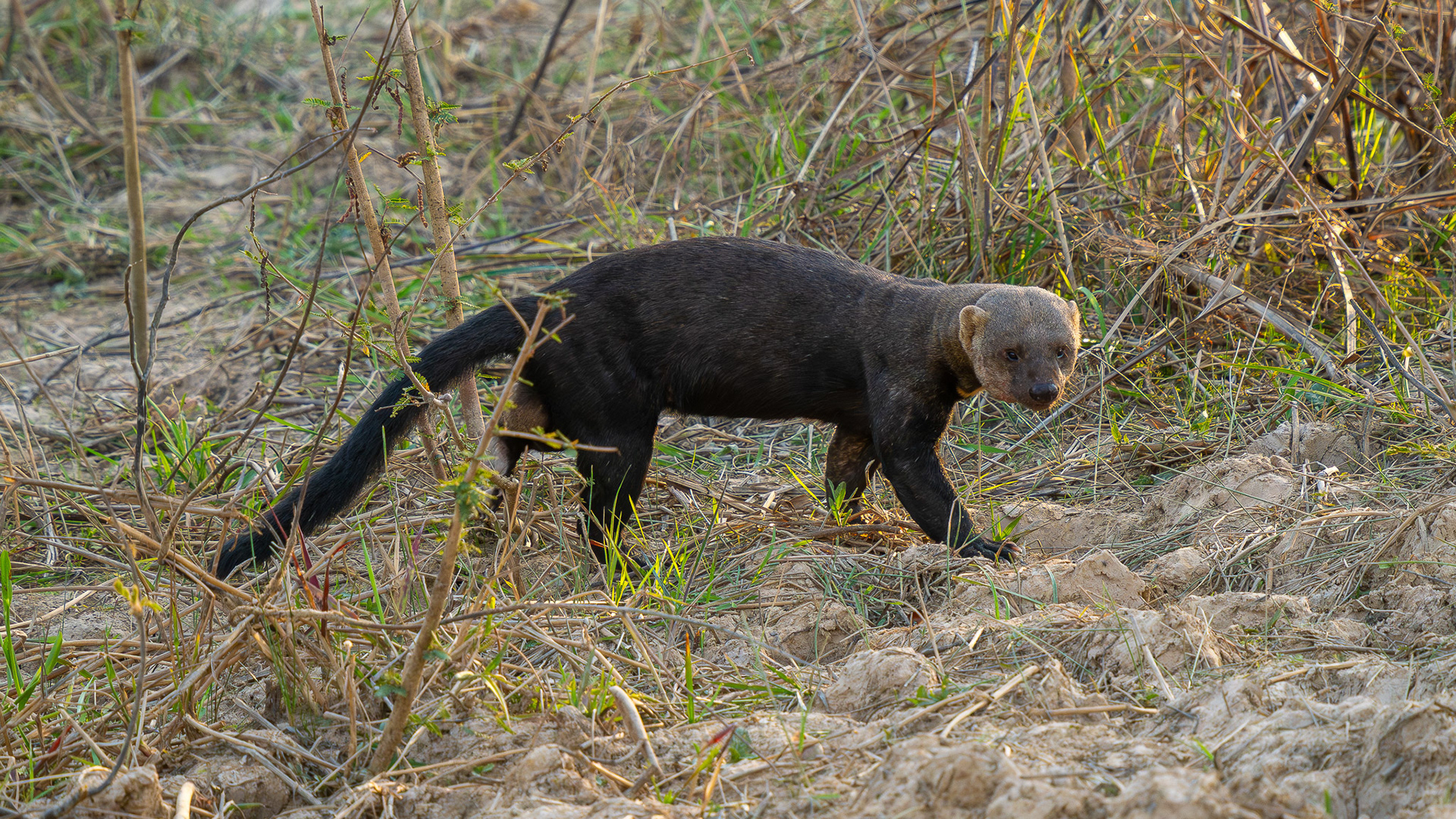
Their varied diet of fruit, rodents, honey, insects, and small vertebrates is vital to their survival, allowing them to exploit resources both in the trees and on the ground. Through their fruit consumption, they also play an important role in seed dispersal, contributing to the health of the ecosystem.
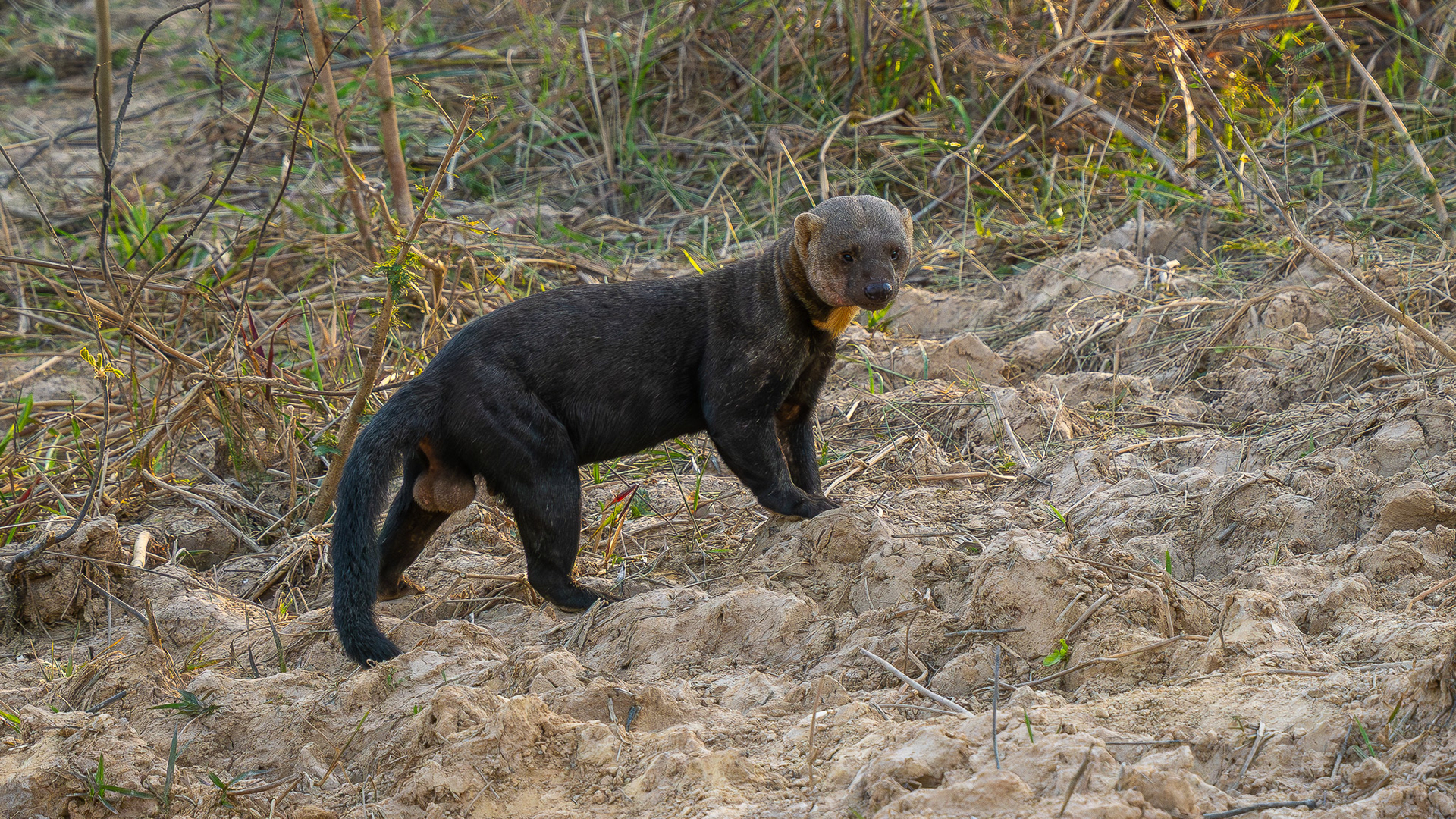
This is definitely a male Tayra!!
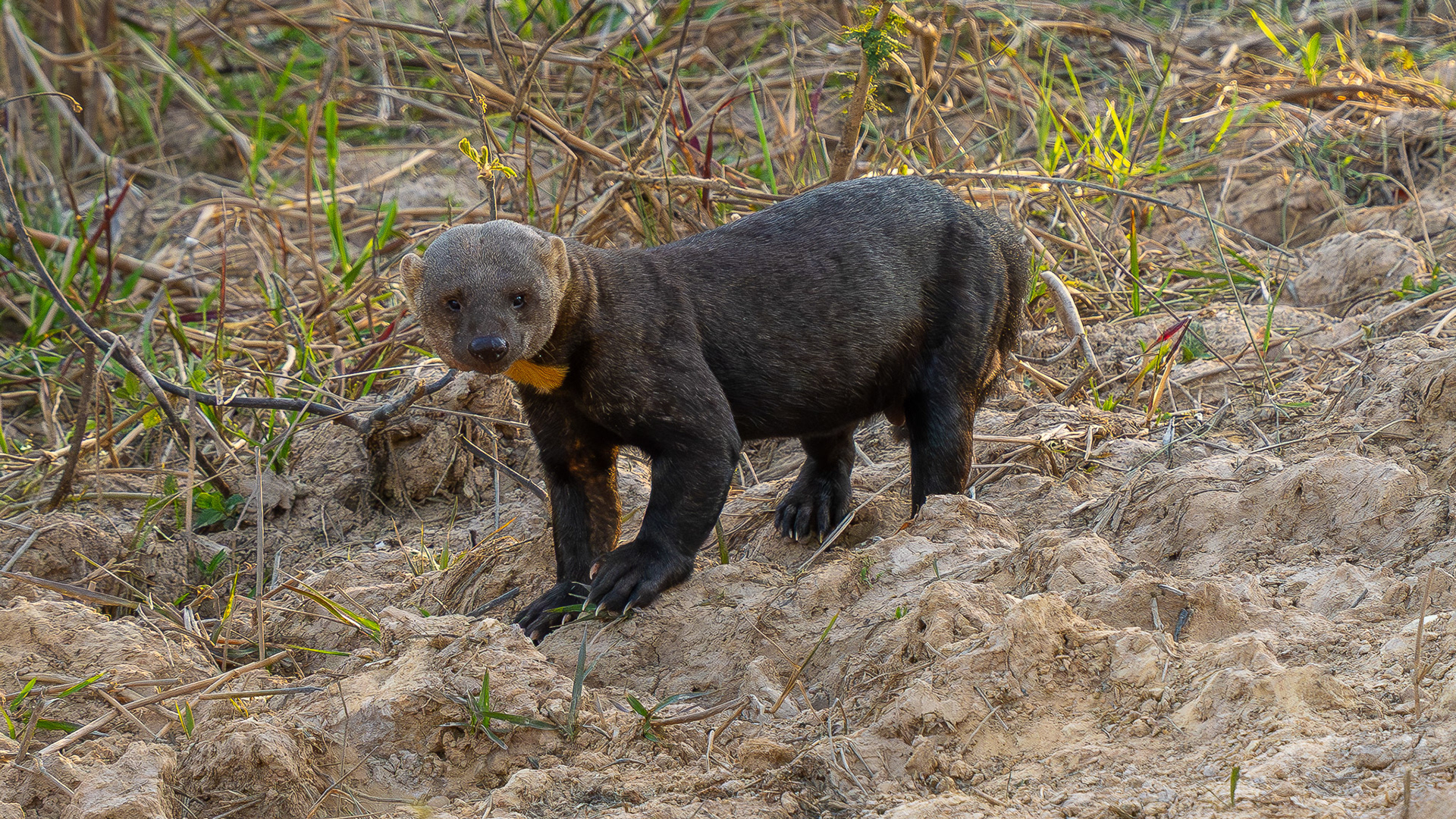
Tayra have non-retractable, sharp, curved claws adapted for climbing and running rather than digging. These specialised claws enable them to move with agility through the tree canopies and across rocky outcrops.
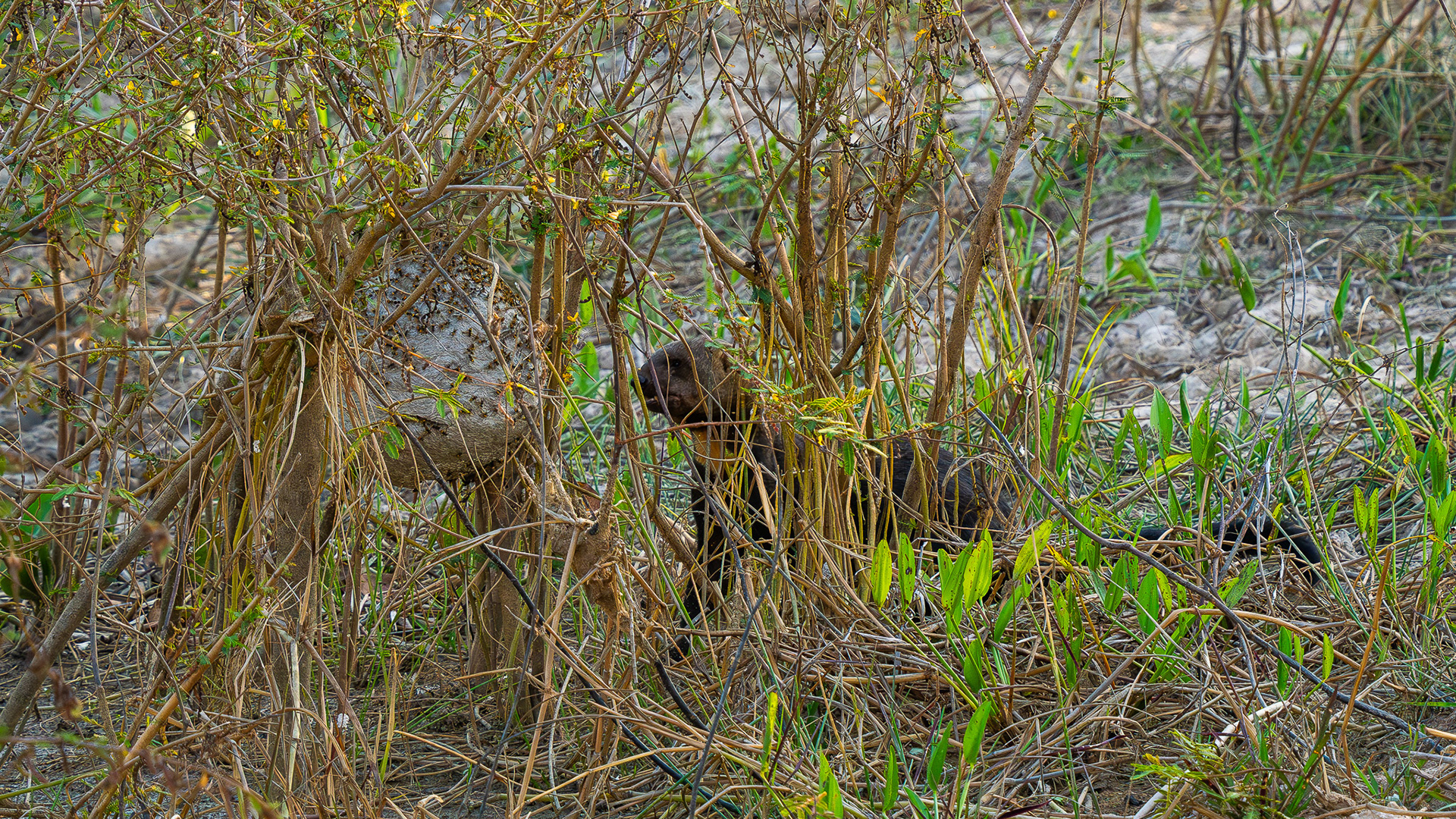
A Tayra raiding a beehive - honey is a favourite food.
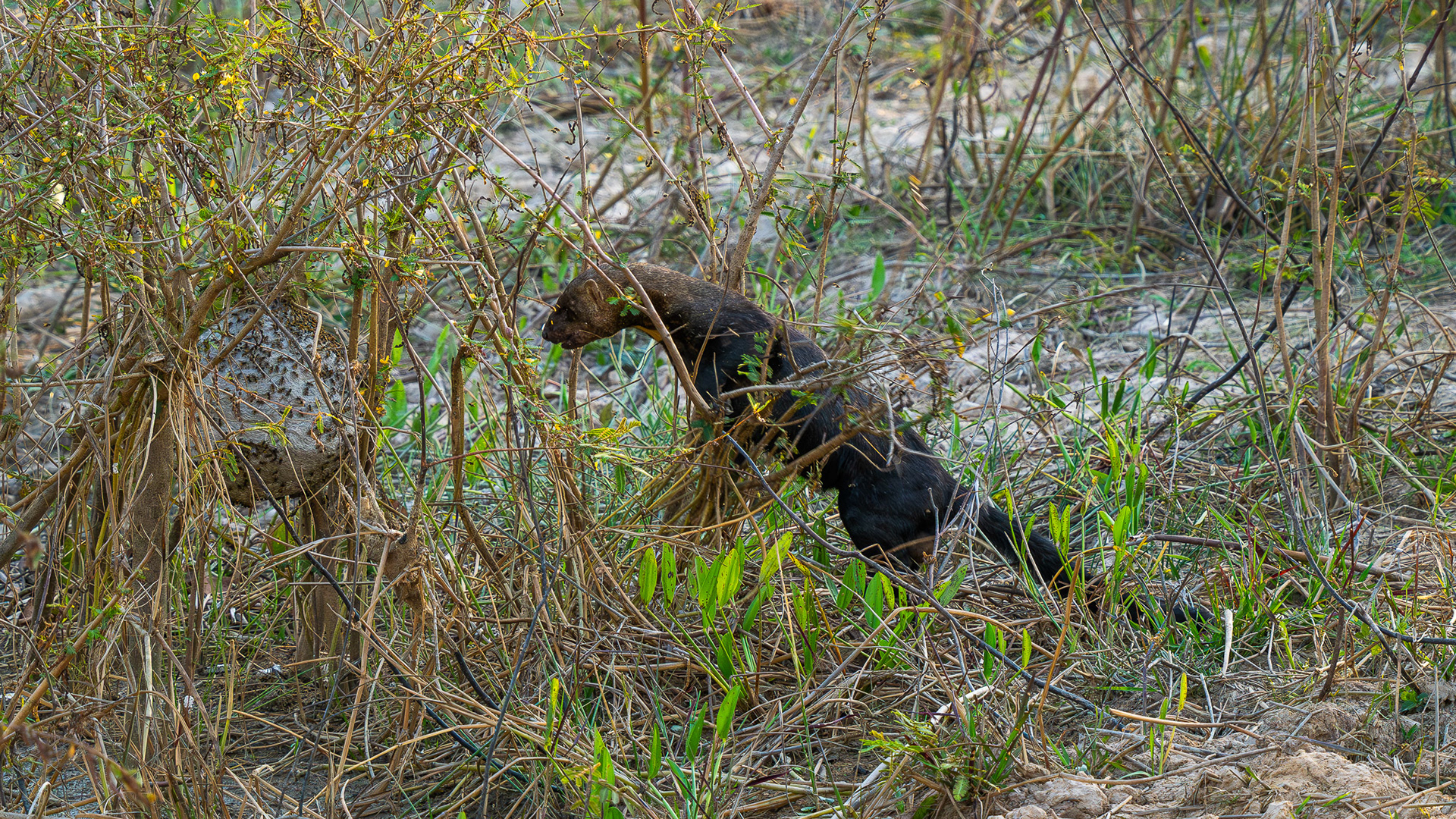
Wild bees launch a defensive swarm, attacking the Tayra in an attempt to drive the predator away from their nest at the base of the tree.
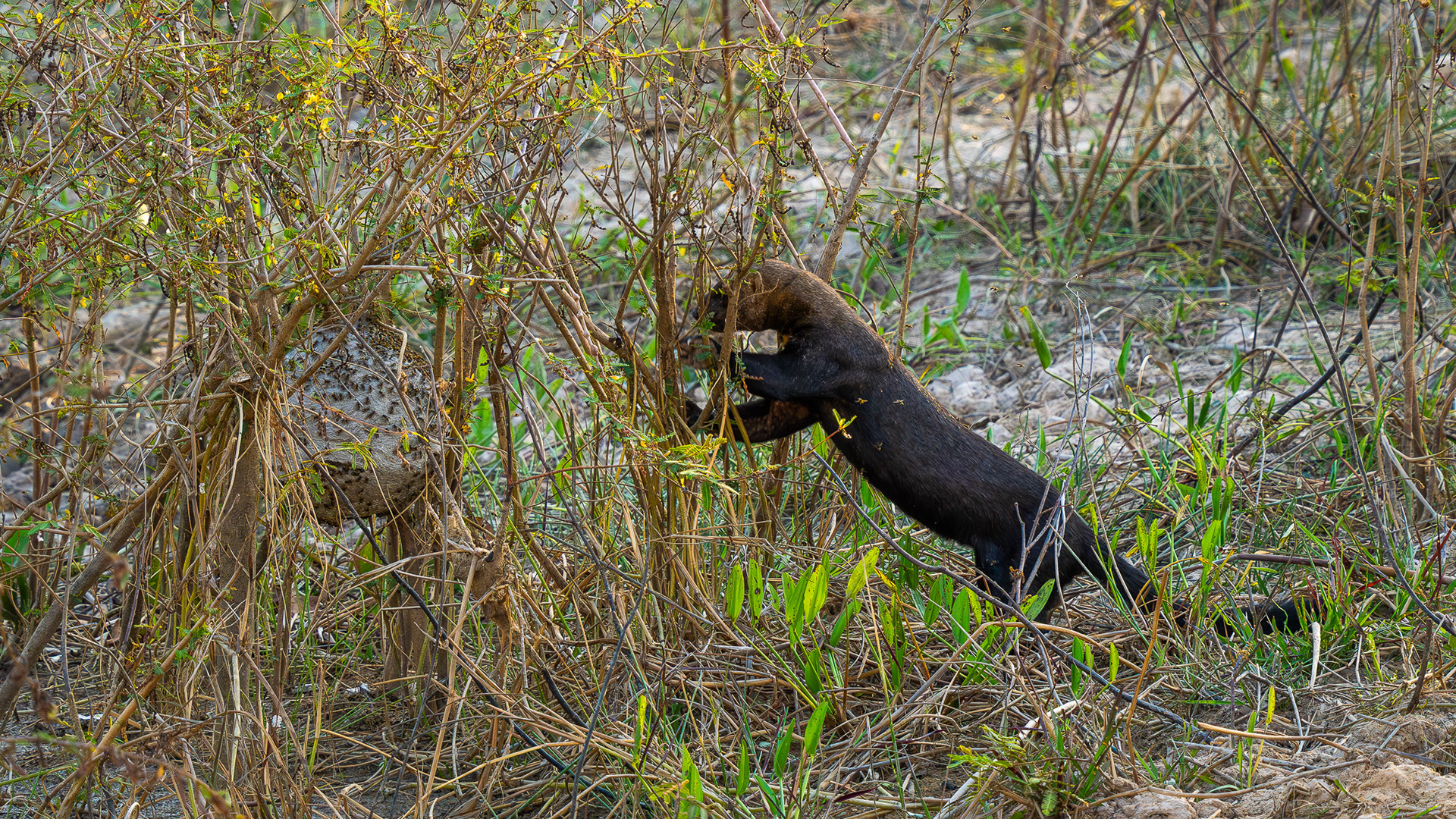
The Tayra tries relentlessly to reach the nest, undeterred by the constant attacks from the swarm of bees.
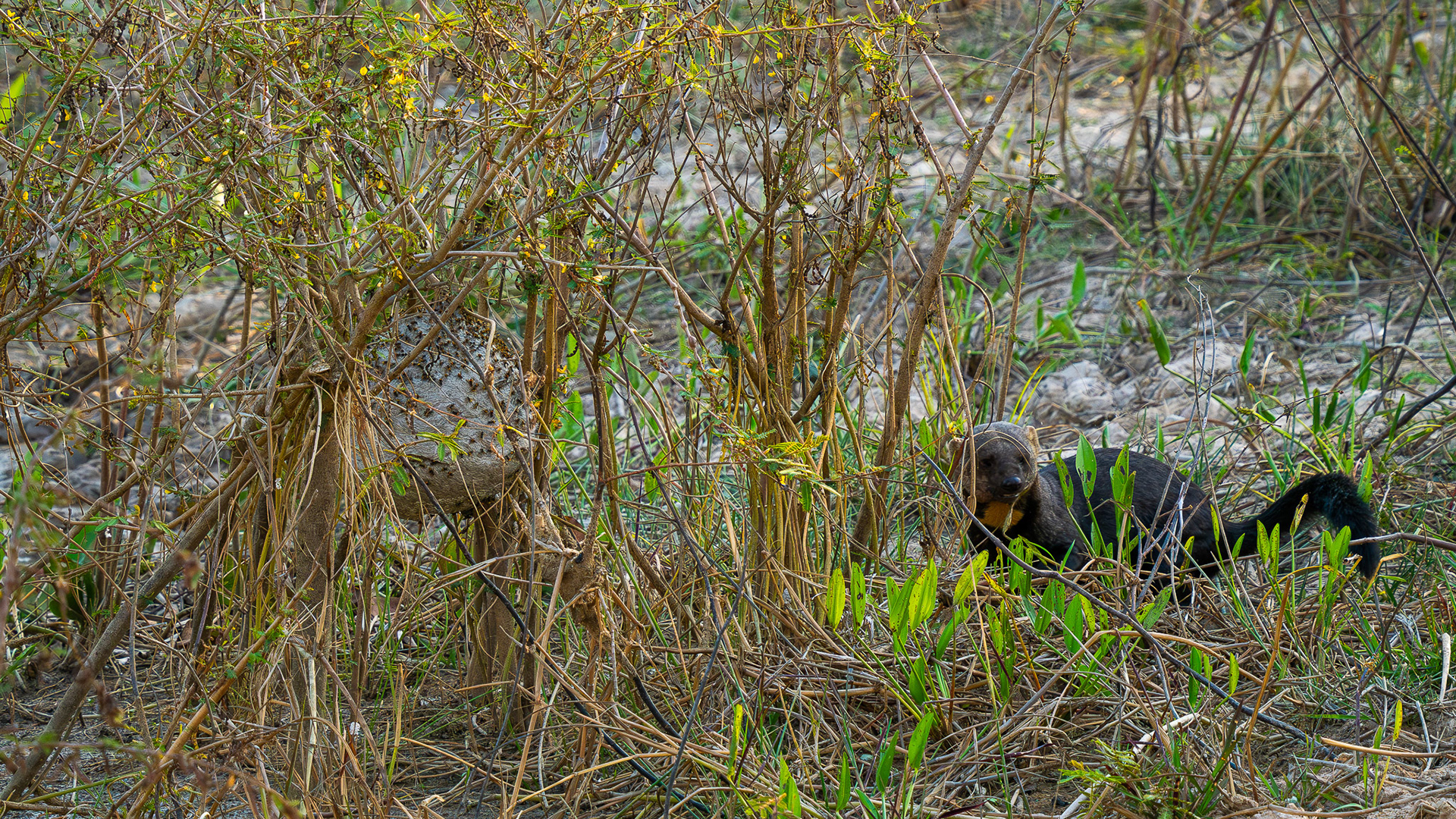
In the end, the bees prevail, successfully driving the Tayra away from their nest.
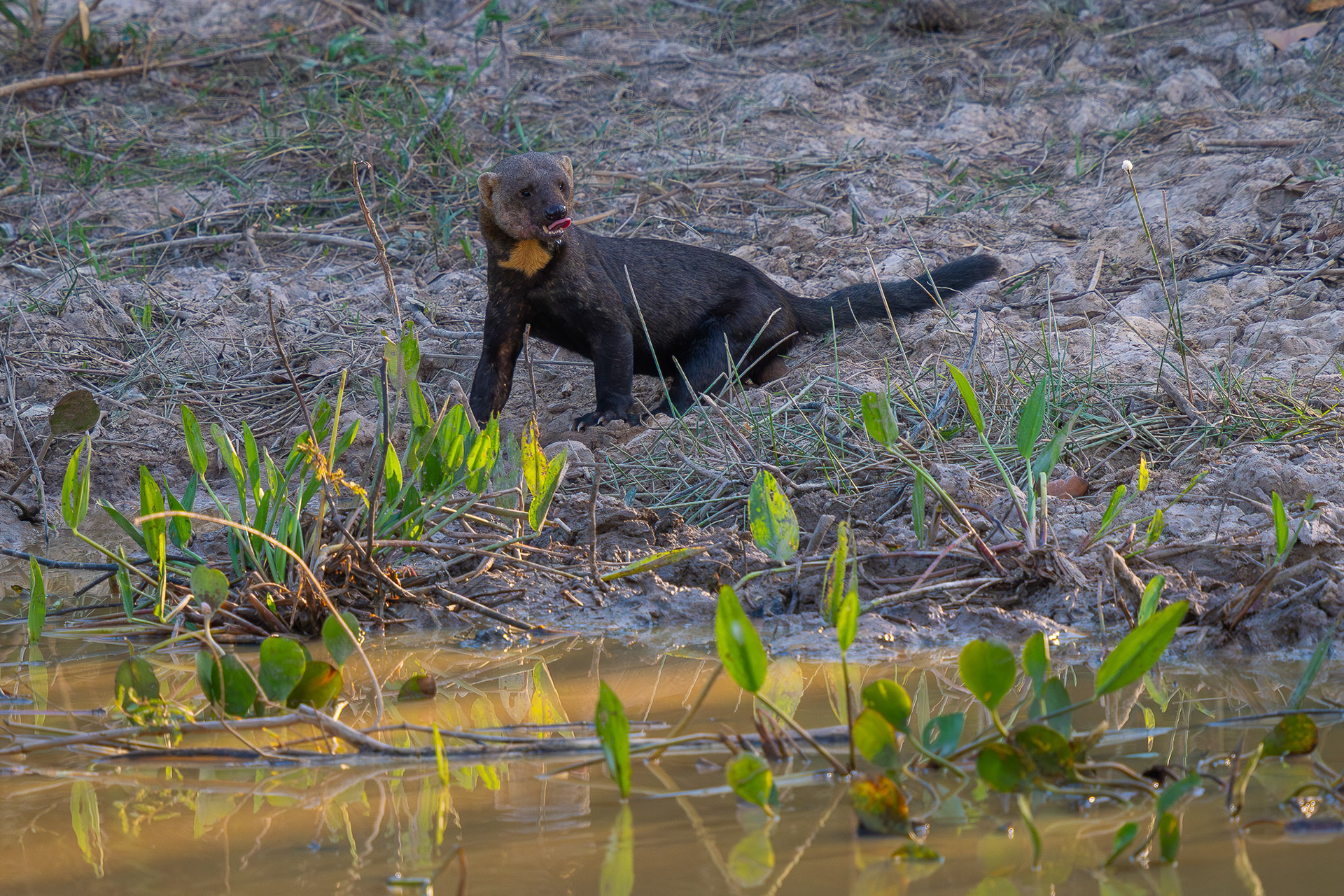
Defeated but undeterred, the Tayra heads to a nearby waterhole for a drink as the sun begins to set.
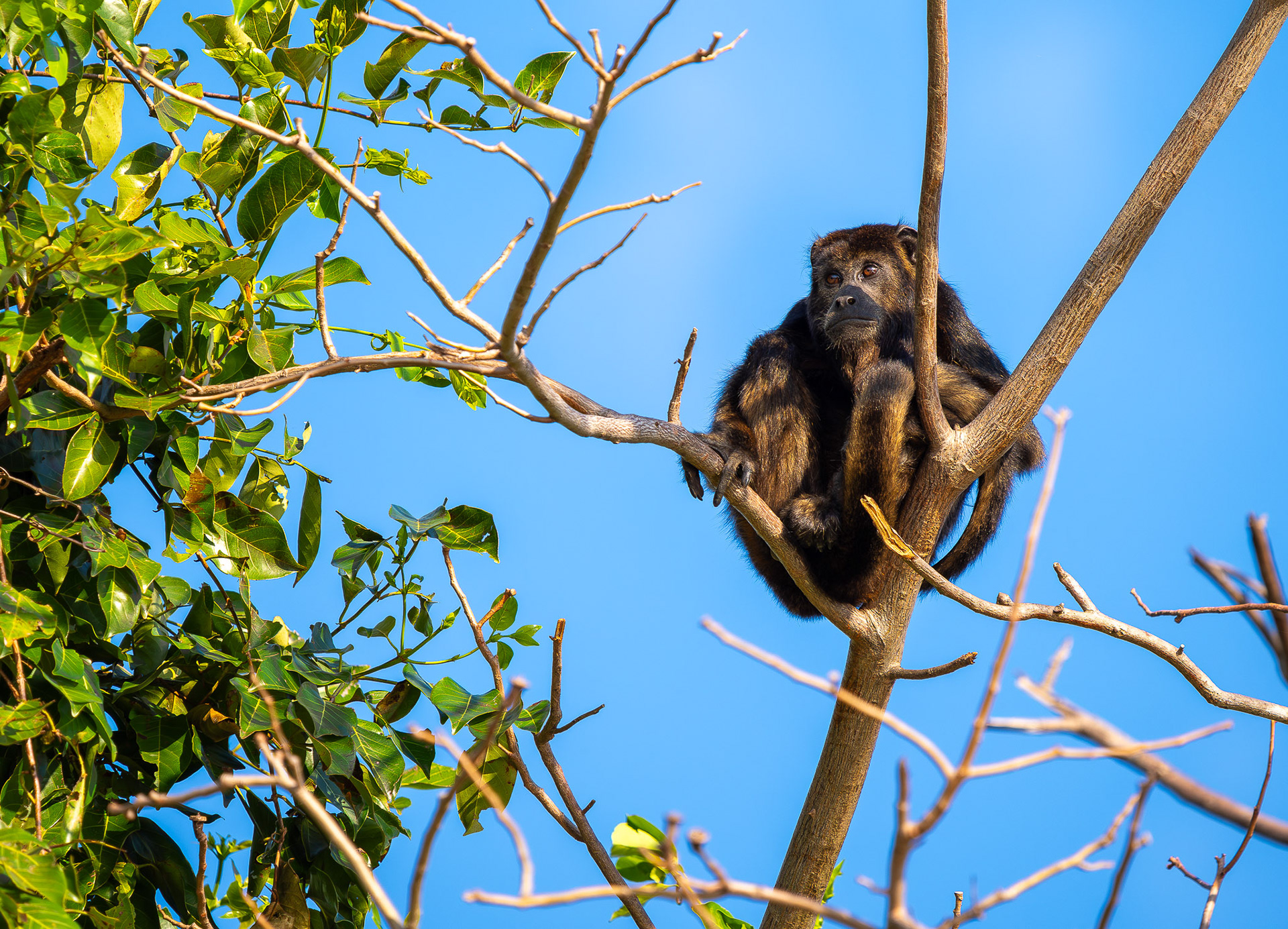
^ Black and Gold Howler Monkey
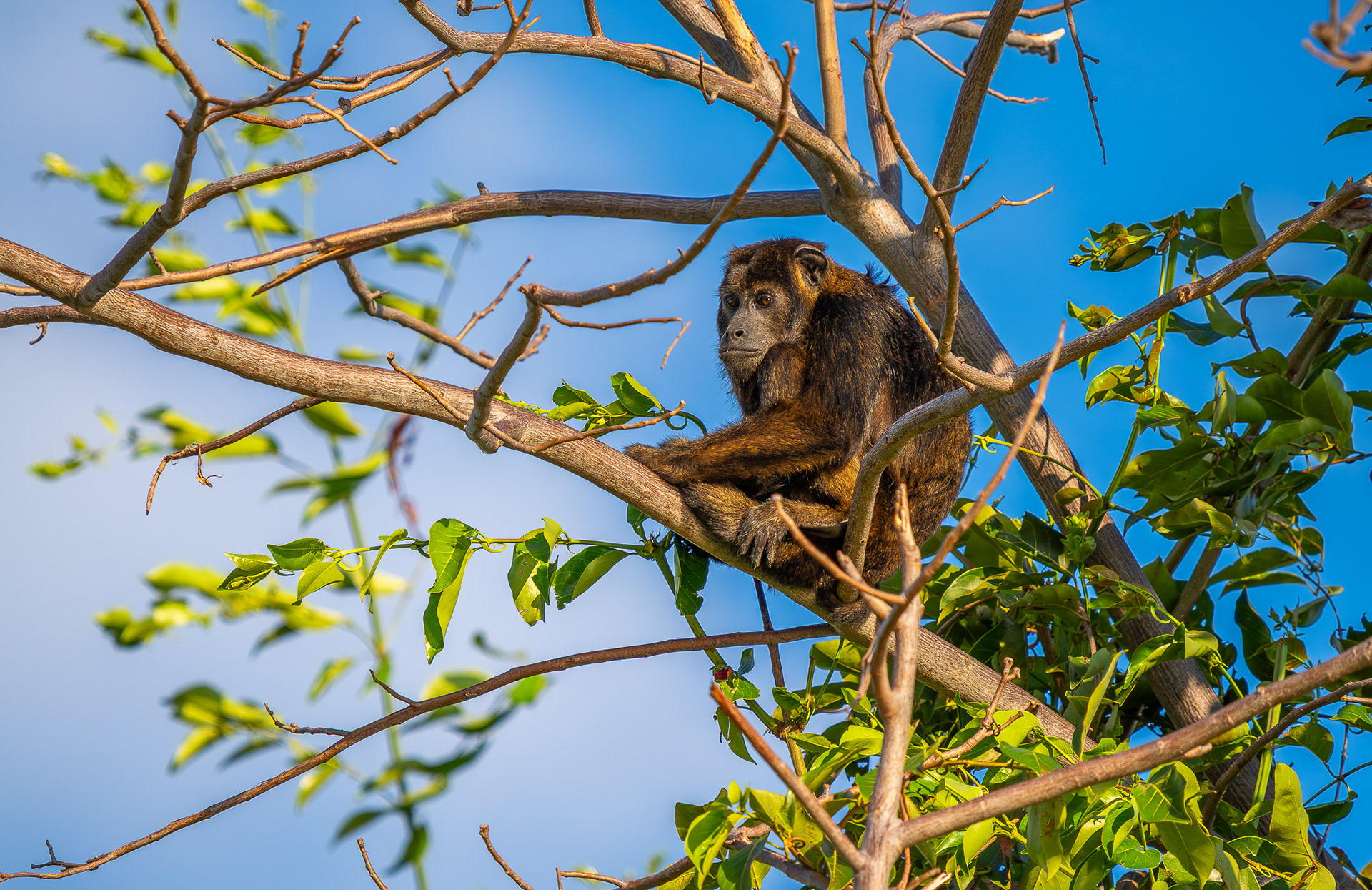
The Black and Gold Howler Monkey (Alouatta caraya) is one of the most iconic and vocal residents of the Pantanal. Its deep, resonant howl is produced by an enlarged hyoid bone in the throat, which acts as a natural sound chamber. Typically calling at dawn and dusk to mark territory and maintain spacing between groups, their powerful howls can carry for more than three miles across the wetlands.
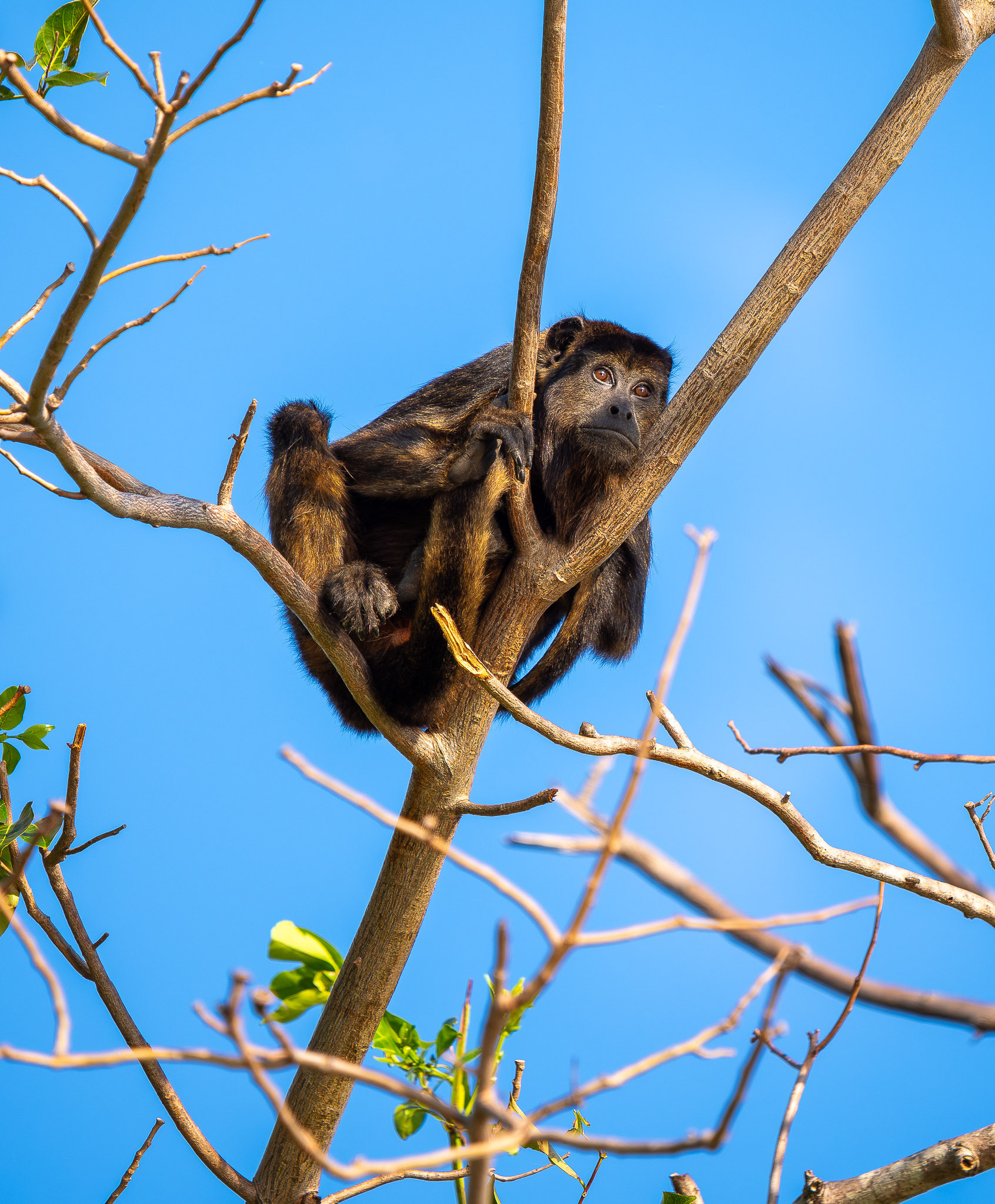
Howler Monkeys are slow-moving canopy dwellers, using their strong prehensile tails as a fifth limb to grip branches and maintain balance high in the treetops.
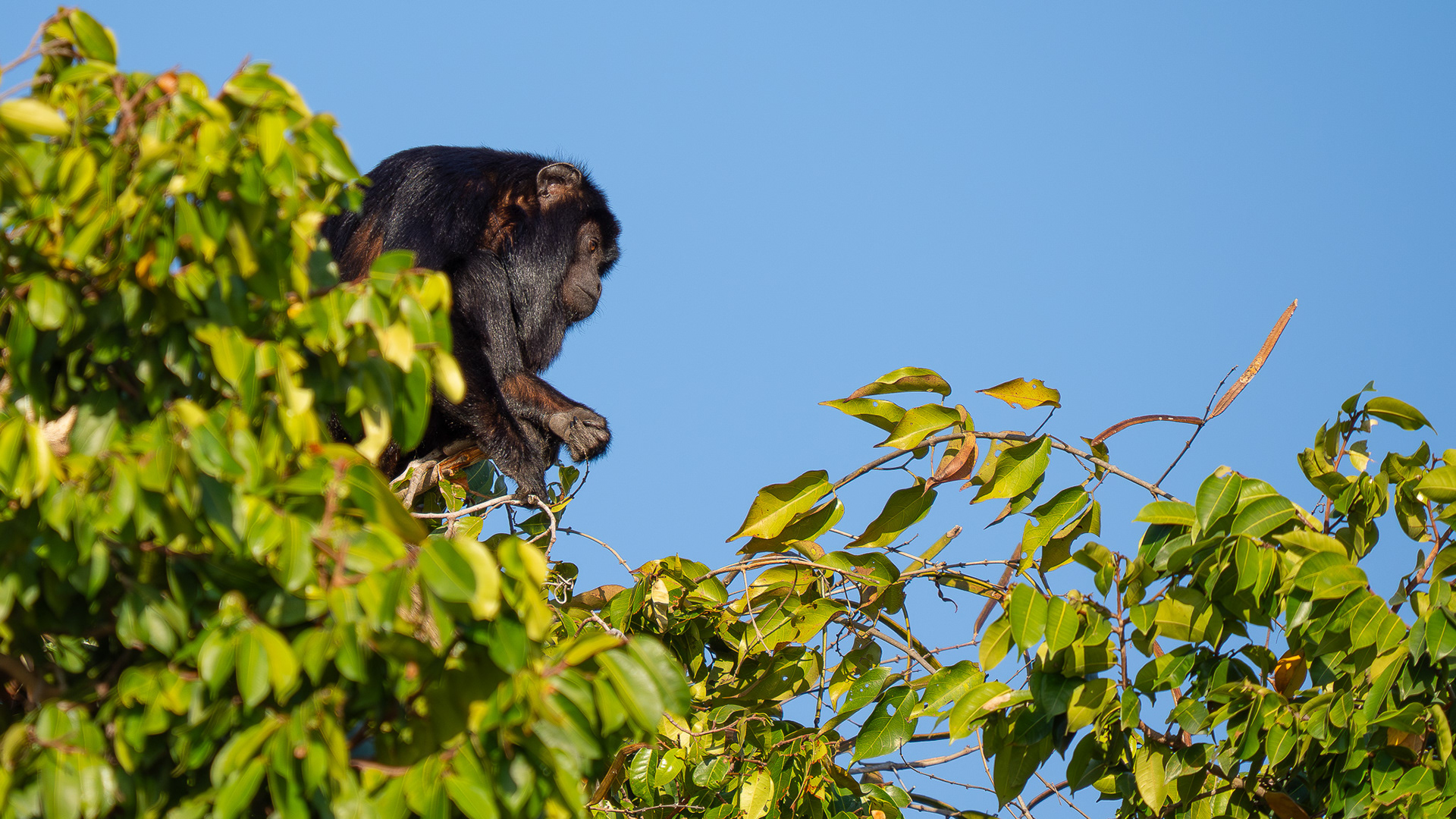
Males and females differ noticeably in colour: adult males are entirely black, while females and infants display a rich golden-brown coat.
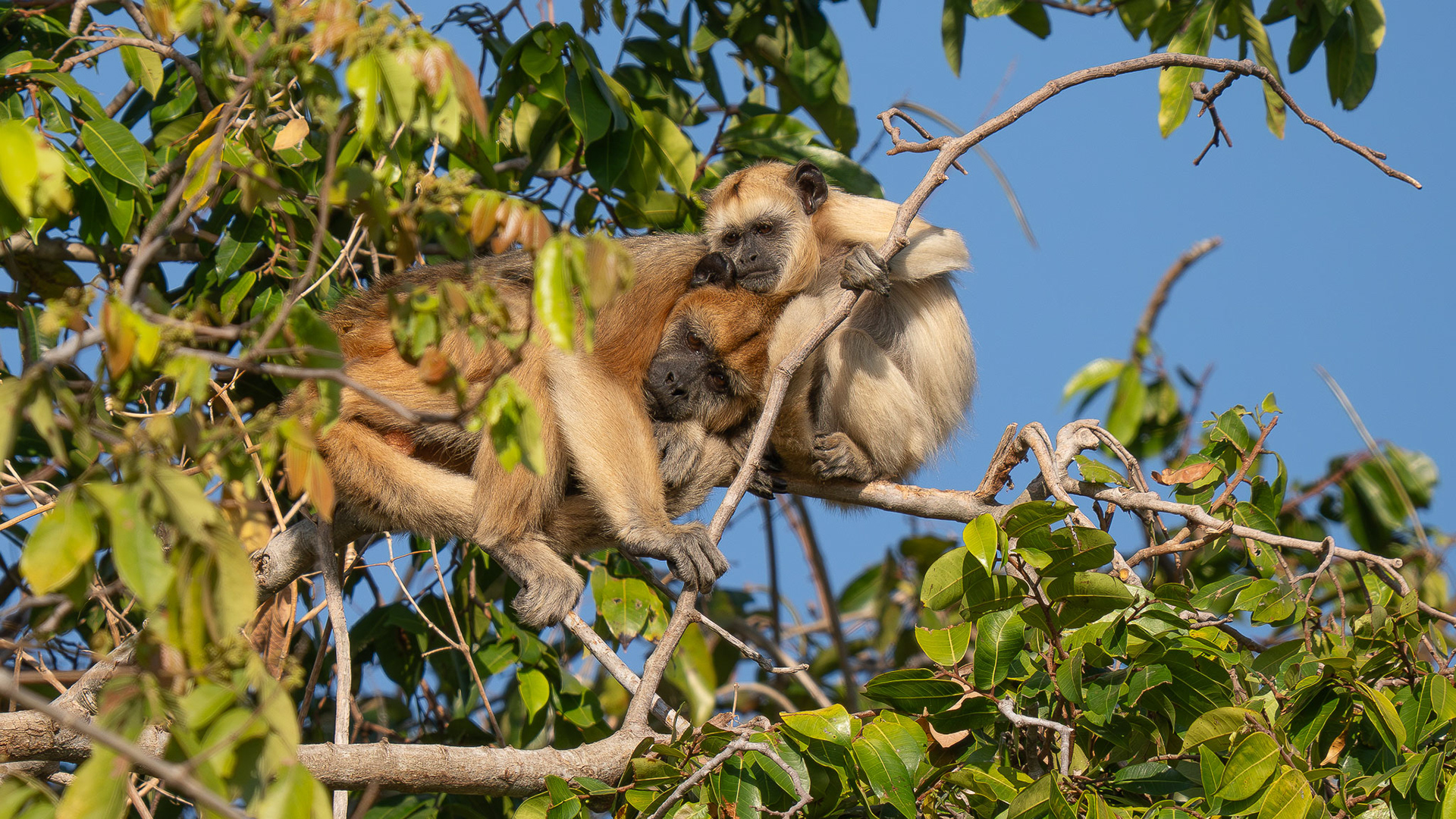
Primarily leaf-eaters, they also feed on flowers, fruits, and buds. Remarkably sedentary, they spend much of the day resting or sleeping, conserving energy while digesting their low-nutrient leaf-based diet.
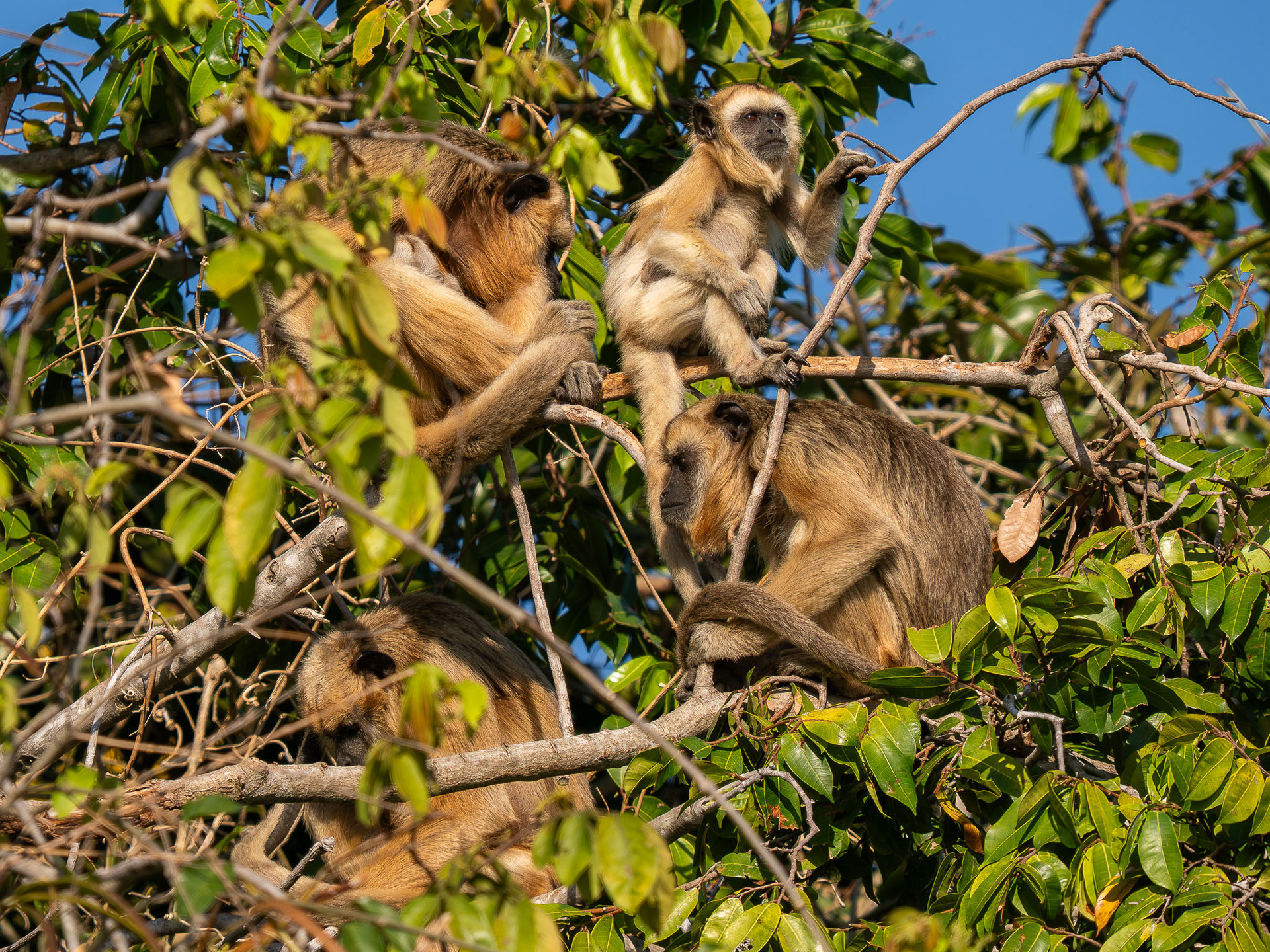
Howlers typically live in troops of 5 to 20 individuals, usually led by a dominant alpha male alongside several females and their offspring.
^ Azara's Agouti
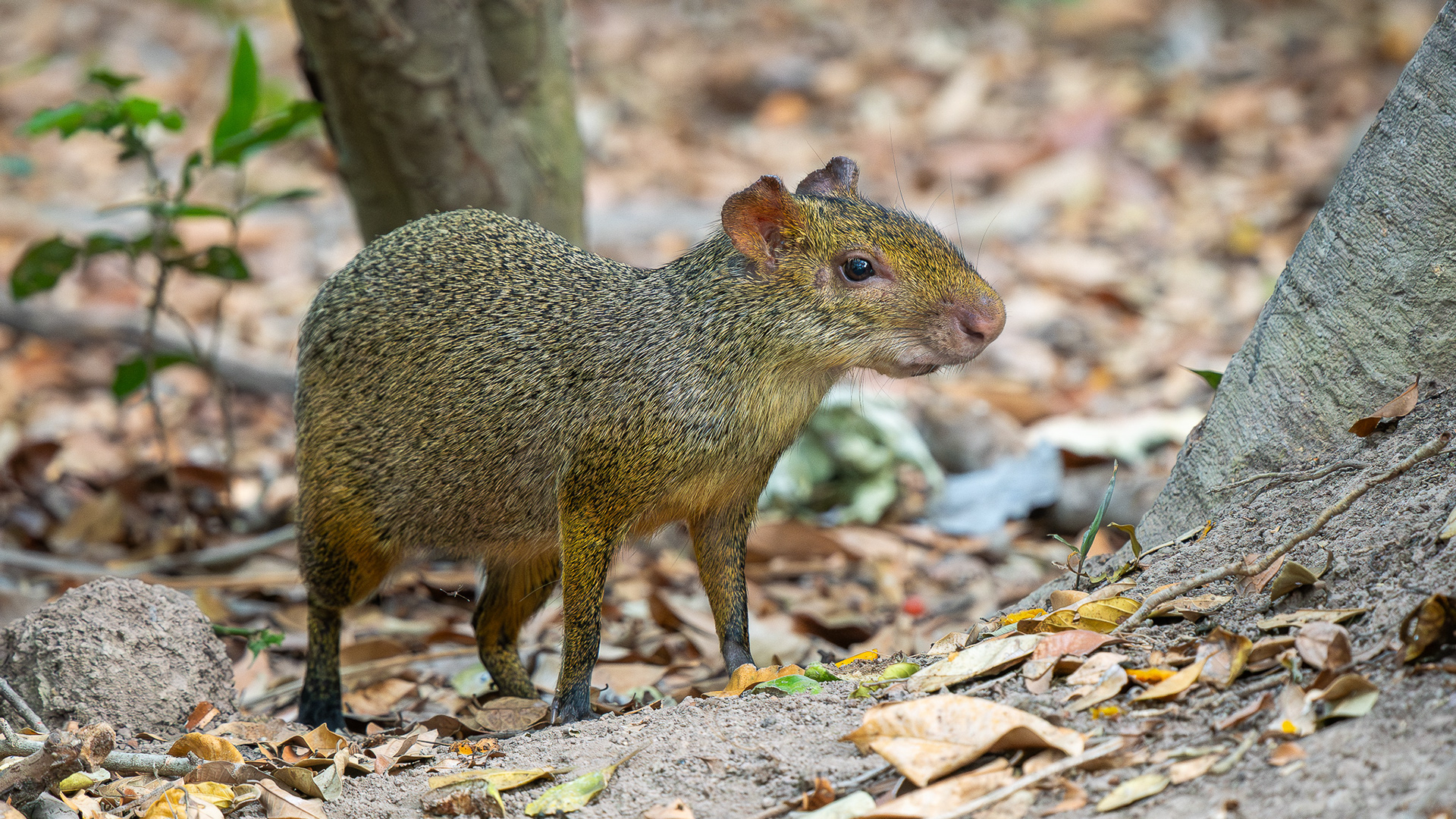
The Azara's Agouti (Dasyprocta azarae) is a shy rodent often referred to as the 'gardener of the forest'. It plays an important ecological role by burying seeds and nuts to eat later. Many of these forgotten caches germinate, contributing to forest regeneration and supporting biodiversity.
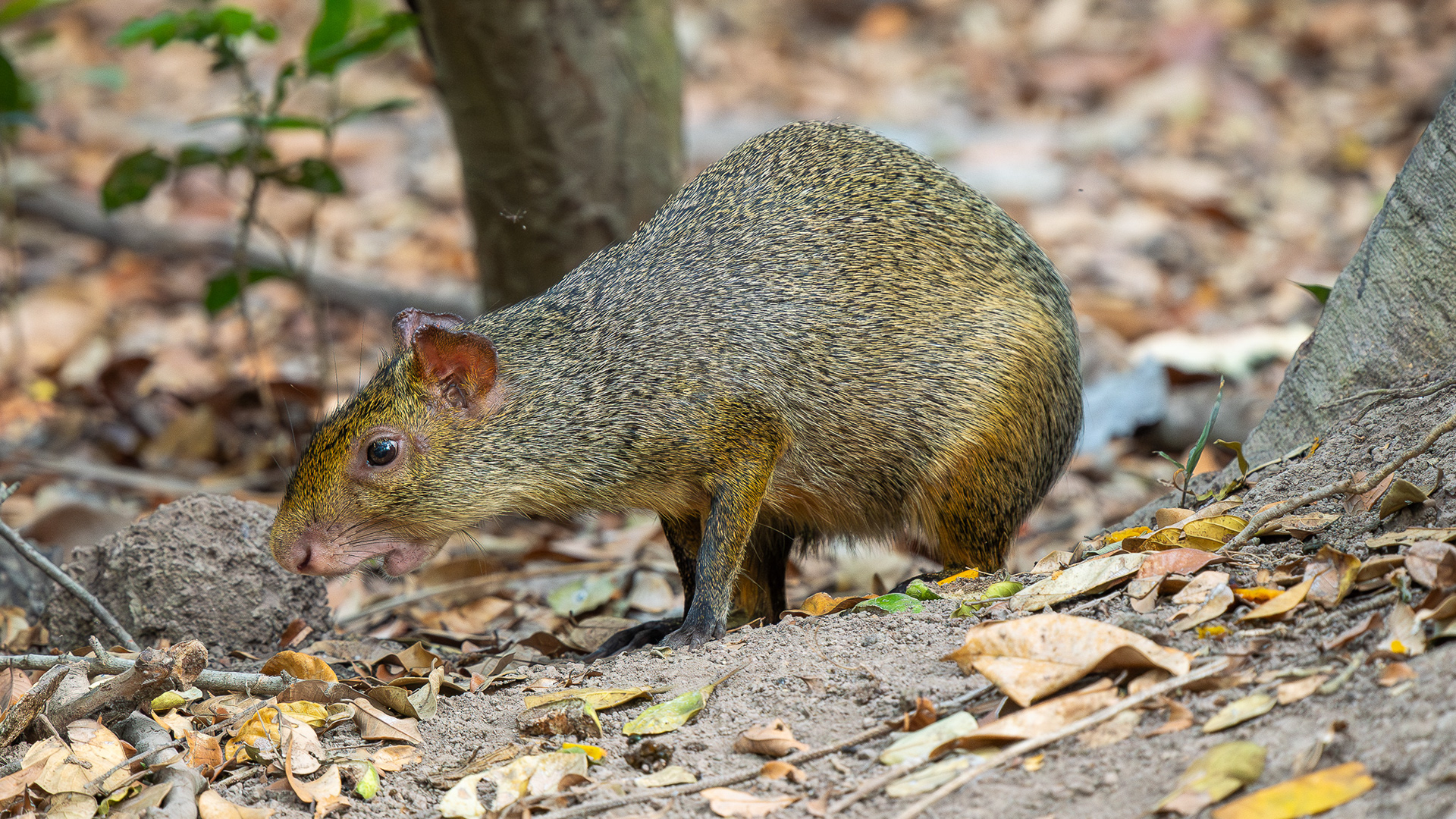
These rodents favour areas with dense ground cover and fruiting palms, which provide both food and shelter. Active during the day, they are shy and elusive, emitting sharp 'bark' alarm calls when danger is detected and relying on speed and agility to evade predators. Their short, dense, coarse fur protects them from abrasions in thick undergrowth and helps shed water during the seasonal floods of the Pantanal.
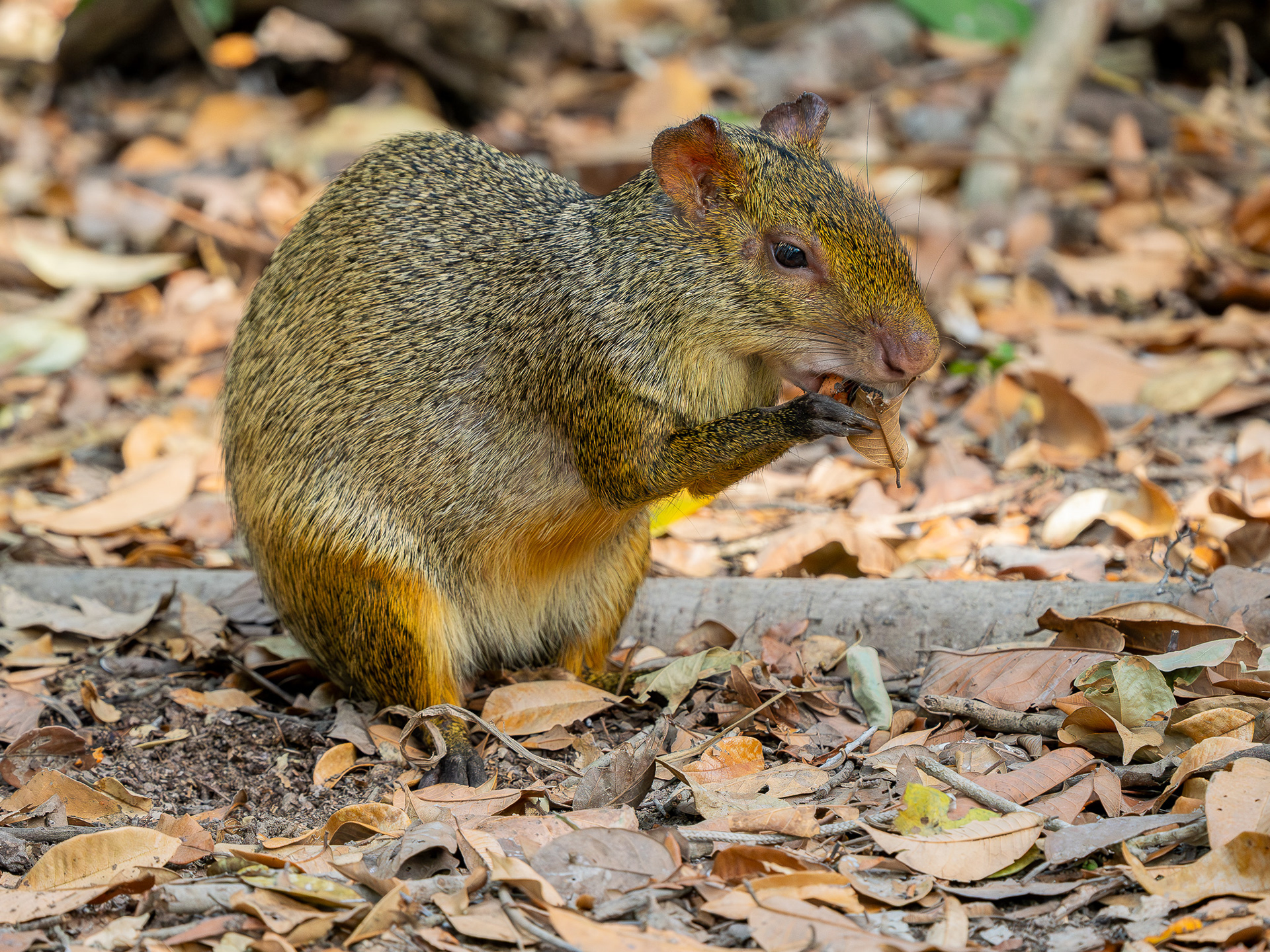
The Agouti has dexterous front paws with five toes that allow it to grasp and handle food with precision. Sitting upright on its hind legs, which have three toes, it uses its paws to hold and turn leaves, fruits, nuts, and seeds while feeding.
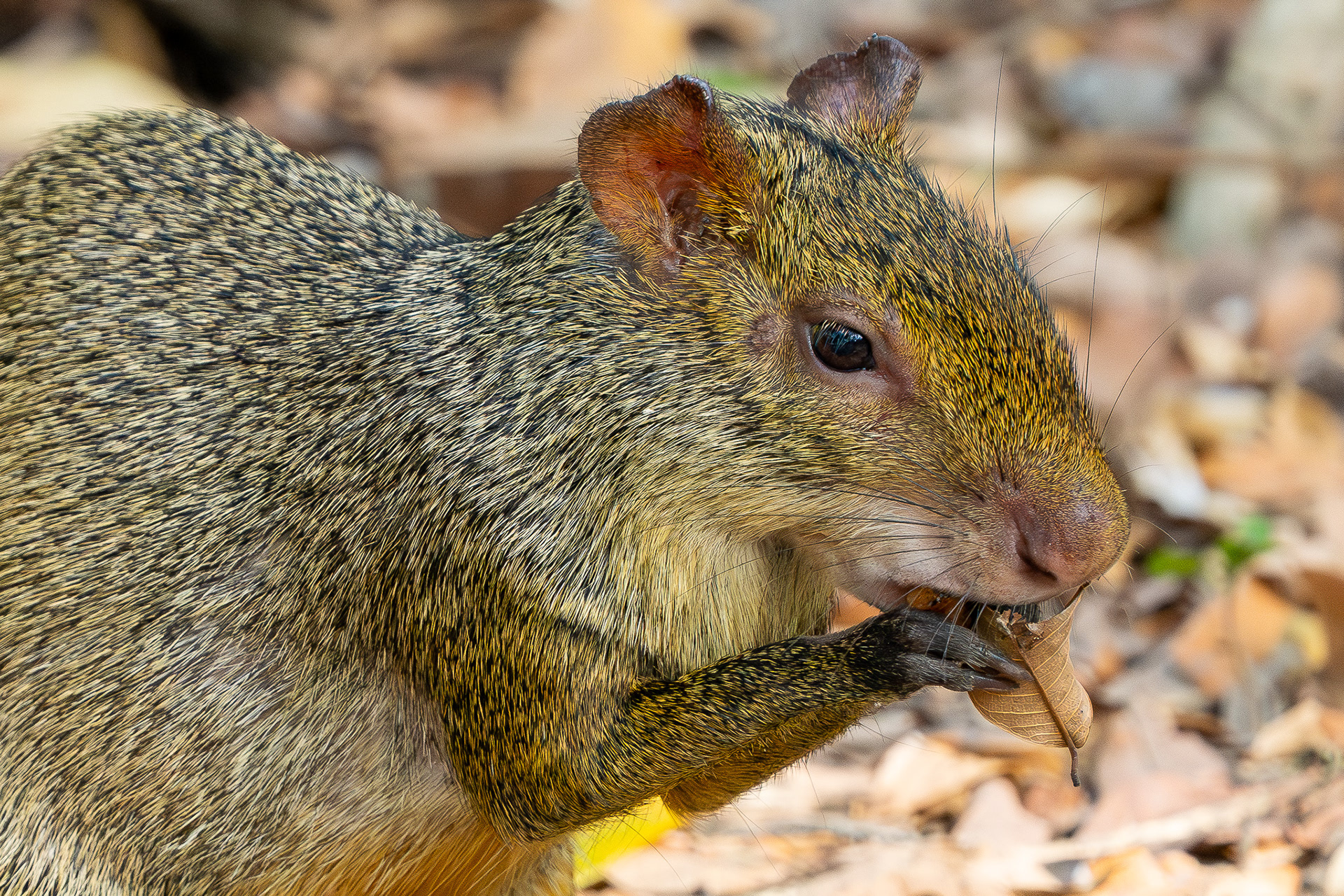
They have prominent ears for detecting predators and a keen sense of smell, often lifting their noses to test the air for food or danger. Their side-positioned eyes give them a wide field of vision, helping them spot predators such as Ocelots or Jaguars.
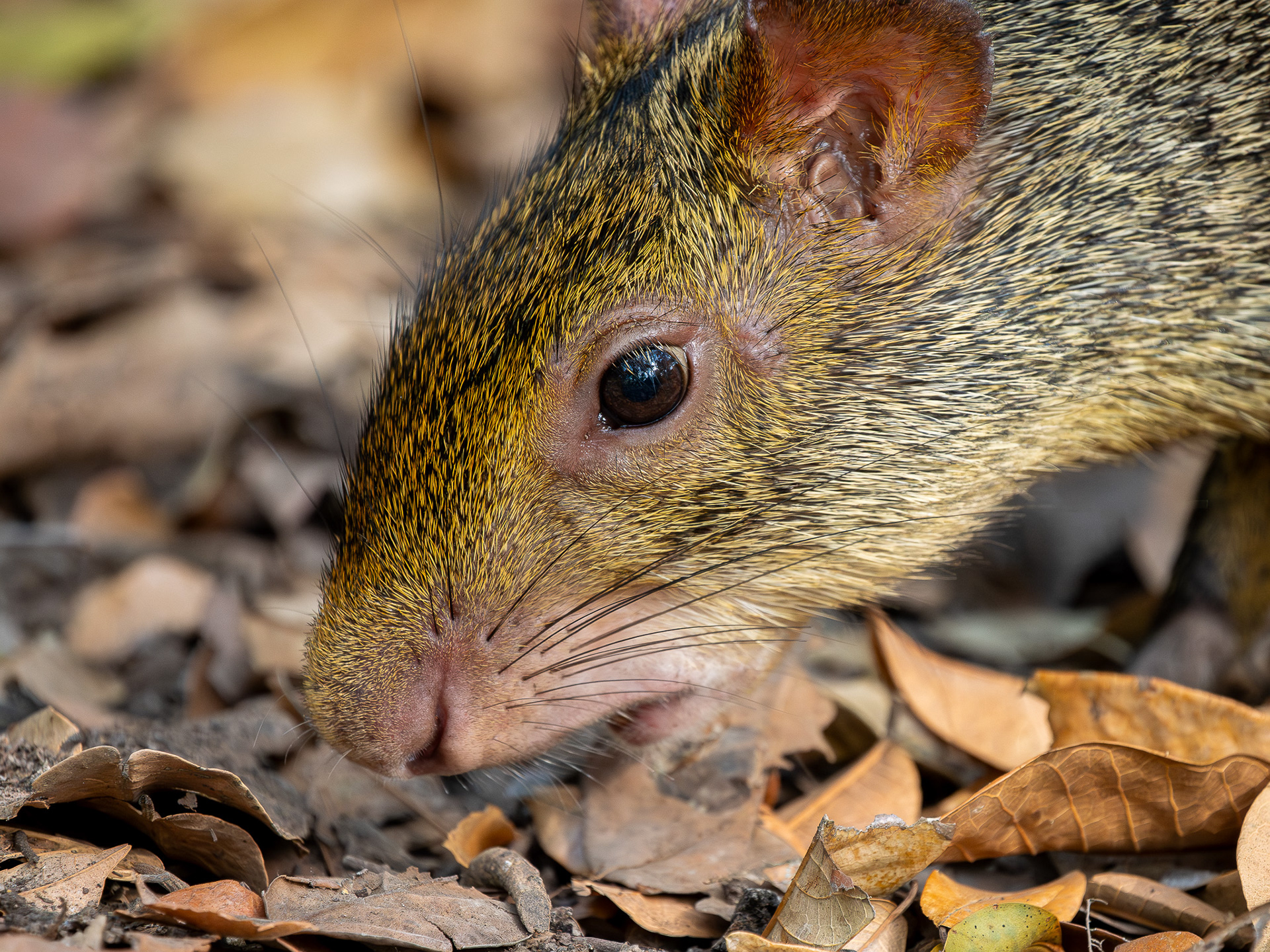
Agoutis use their sensitive nose whiskers to navigate dense undergrowth and locate fallen fruits and seeds. With powerful incisors they can open the hard pods of the Brazil nut tree, and by burying seeds for later - often forgetting some - they help disperse Brazil nut trees throughout the forest.
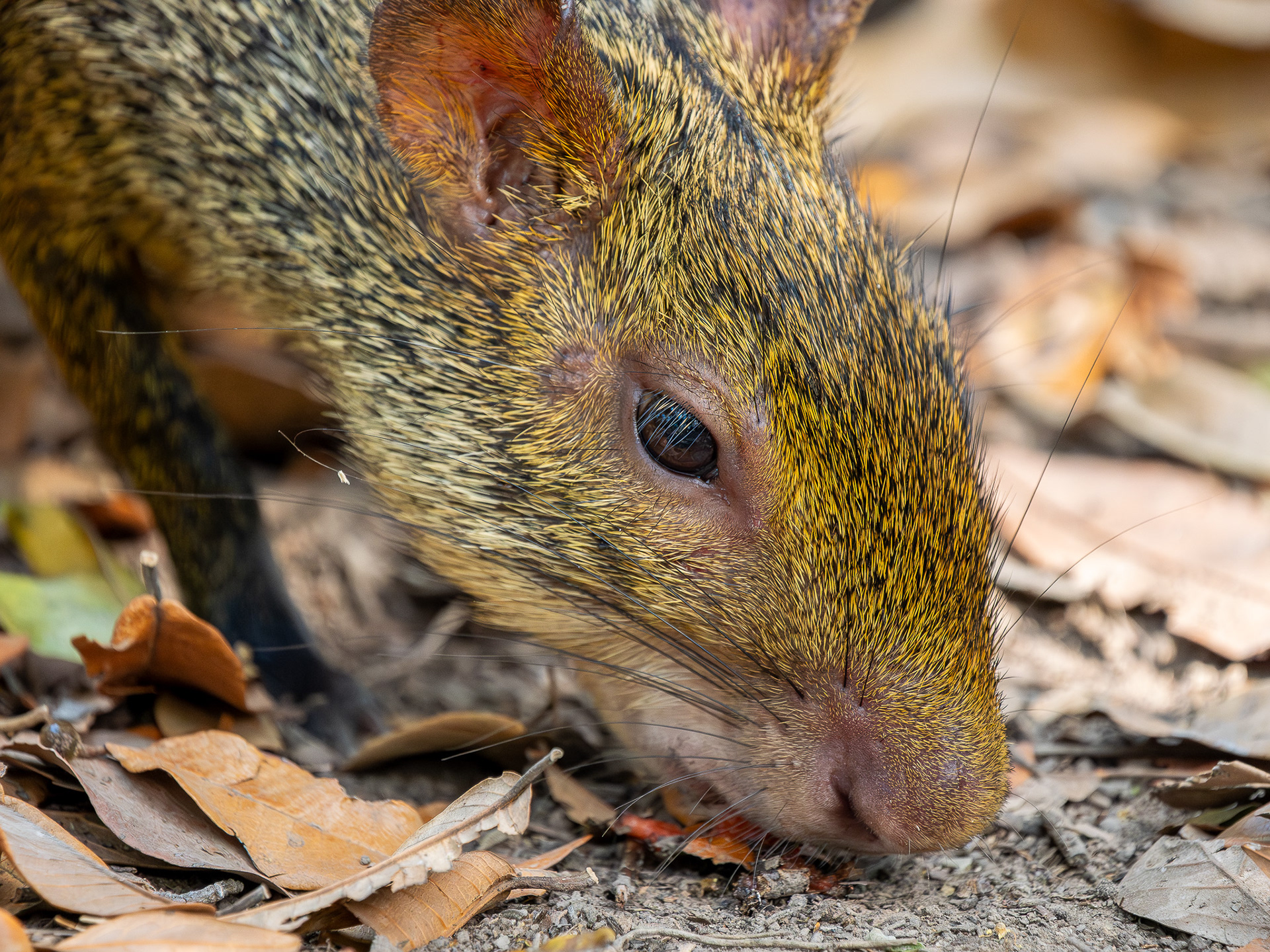
Long, fine eyelashes on their upper eyelids shield their eyes from dust and debris while they forage through leaf litter for fruits, seeds, and nuts.
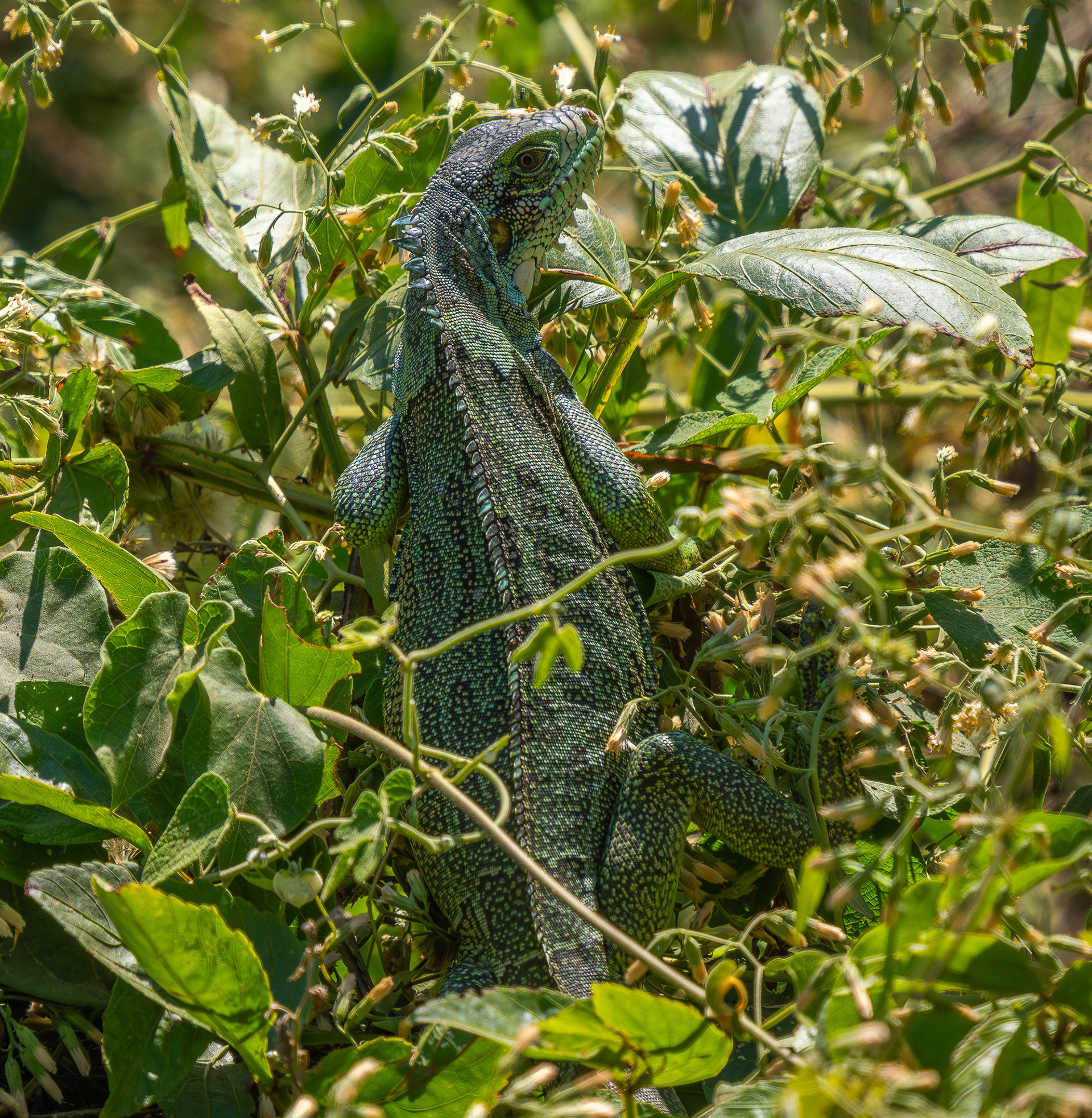
^ Green Iguana
The Green Iguana (Iguana iguana) is a large arboreal lizard that lives in trees near rivers and other water bodies, making the lush, humid environment of the Pantanal ideal habitat. Primarily herbivorous, it feeds on fruits, leaves, and flowers, though it may occasionally consume small insects.
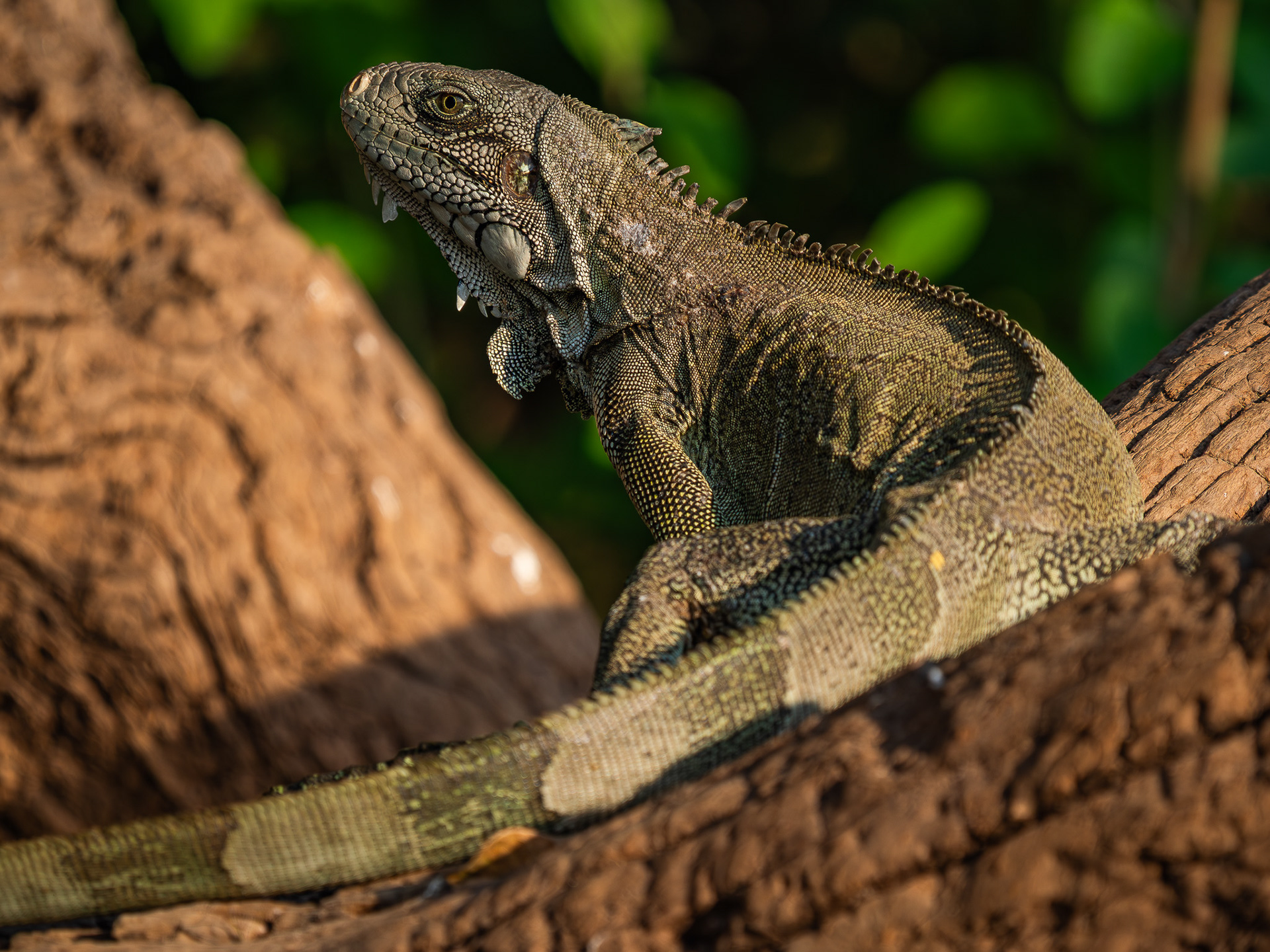
Bright green when young, they gradually turn darker green, grey, or brownish-red as they mature, helping them blend with bark and surrounding vegetation. Their textured skin mimics leaves and tree trunks, providing camouflage from predators such as hawks. They favour habitats near rivers and streams, where they can dive from overhanging branches into the water to escape danger.
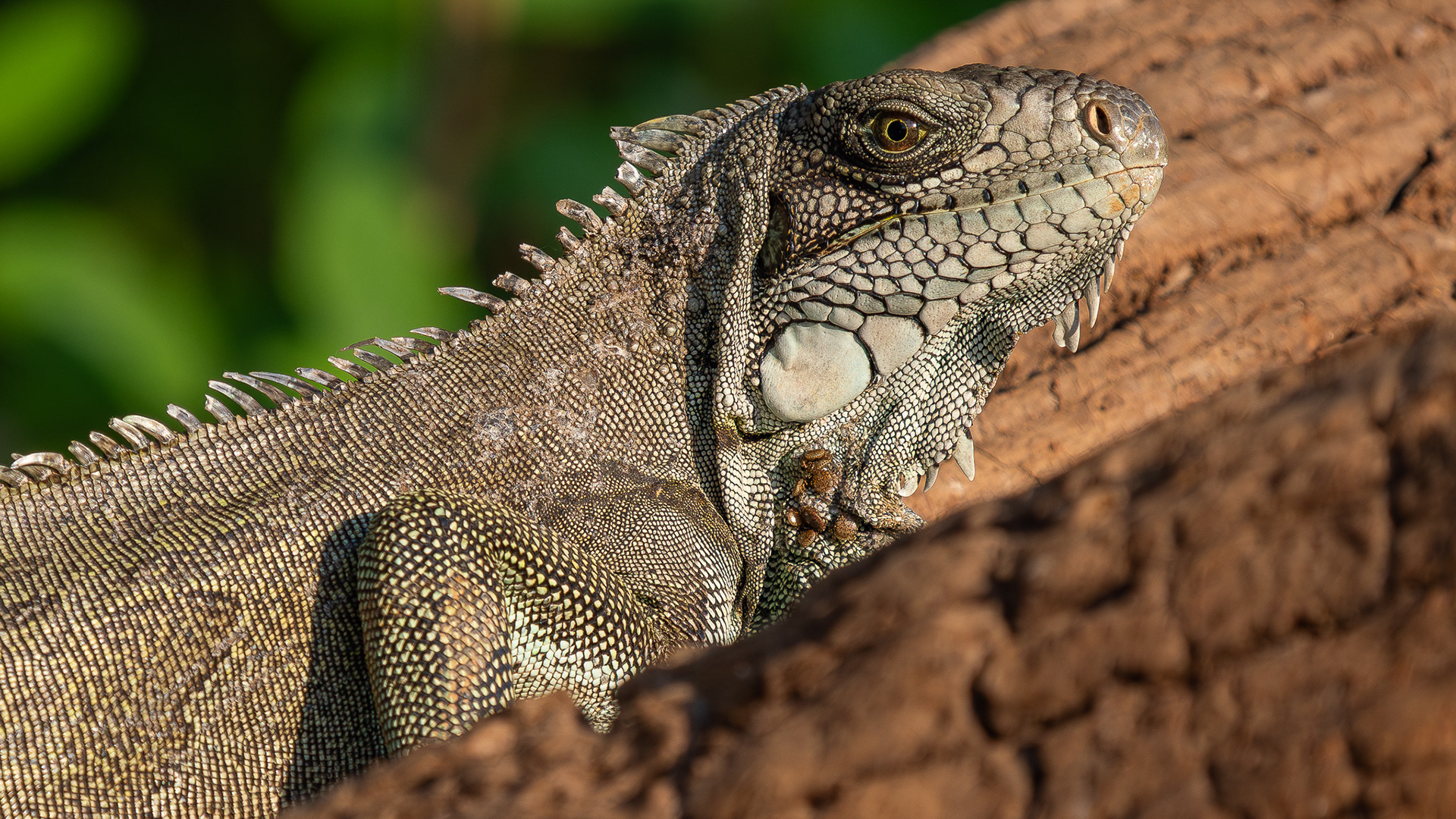
To avoid detection, they often remain perfectly motionless when a predator is nearby. They can also subtly adjust their colouring in response to temperature and mood - darkening to absorb more heat while basking in the morning sun, and becoming paler to reflect intense midday heat.
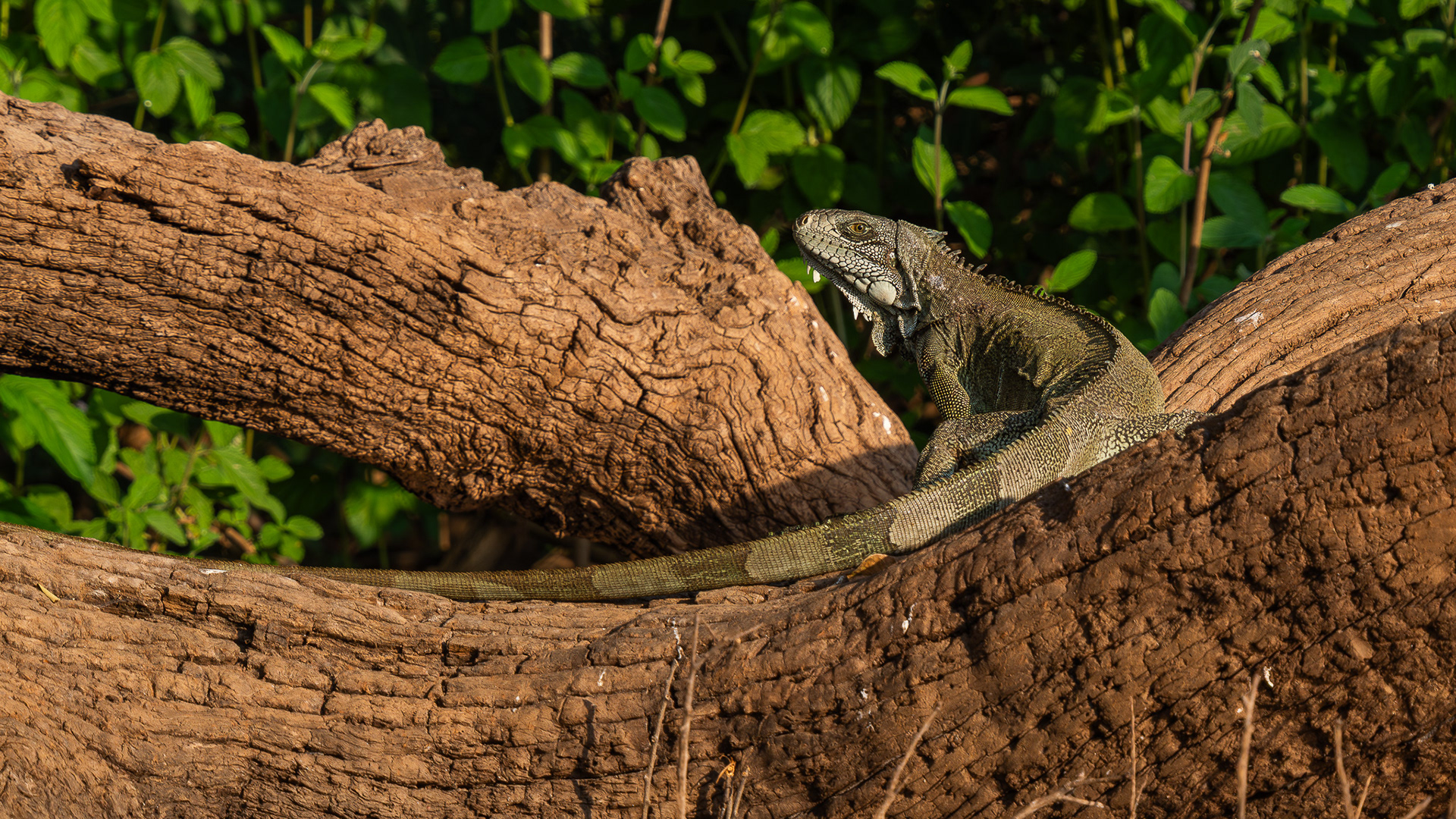
They can grow to more than five feet (1.7 m) in length and weigh up to 20 lbs. Their long, powerful tails, which make up roughly half their total length, are used for balance, swimming, and defence. The tail can be wielded like a whip against predators and is also capable of detaching to aid escape, later regenerating over time.
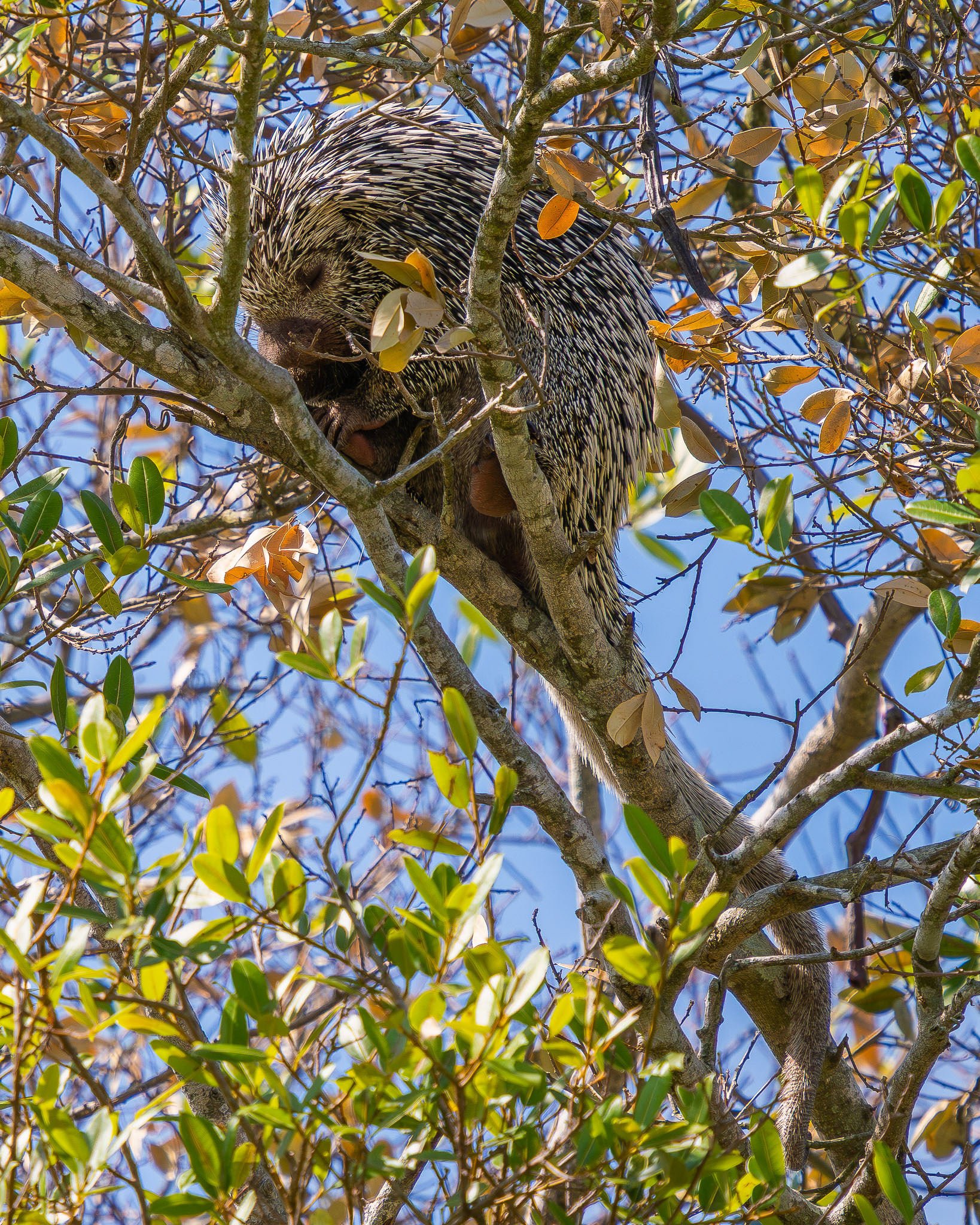
^ Amazonian Long-tailed Porcupine
The Amazonian Long-tailed Porcupine (Coendou longicaudatus) is a nocturnal, arboreal rodent found across tropical South America, including the Amazon and the Pantanal. It inhabits rainforest canopies, using its long prehensile tail for grip as it feeds on leaves, fruits, and bark. An excellent climber that rarely descends to the ground, it is protected by sharp, yellowish-orange quills that provide effective defence against predators.
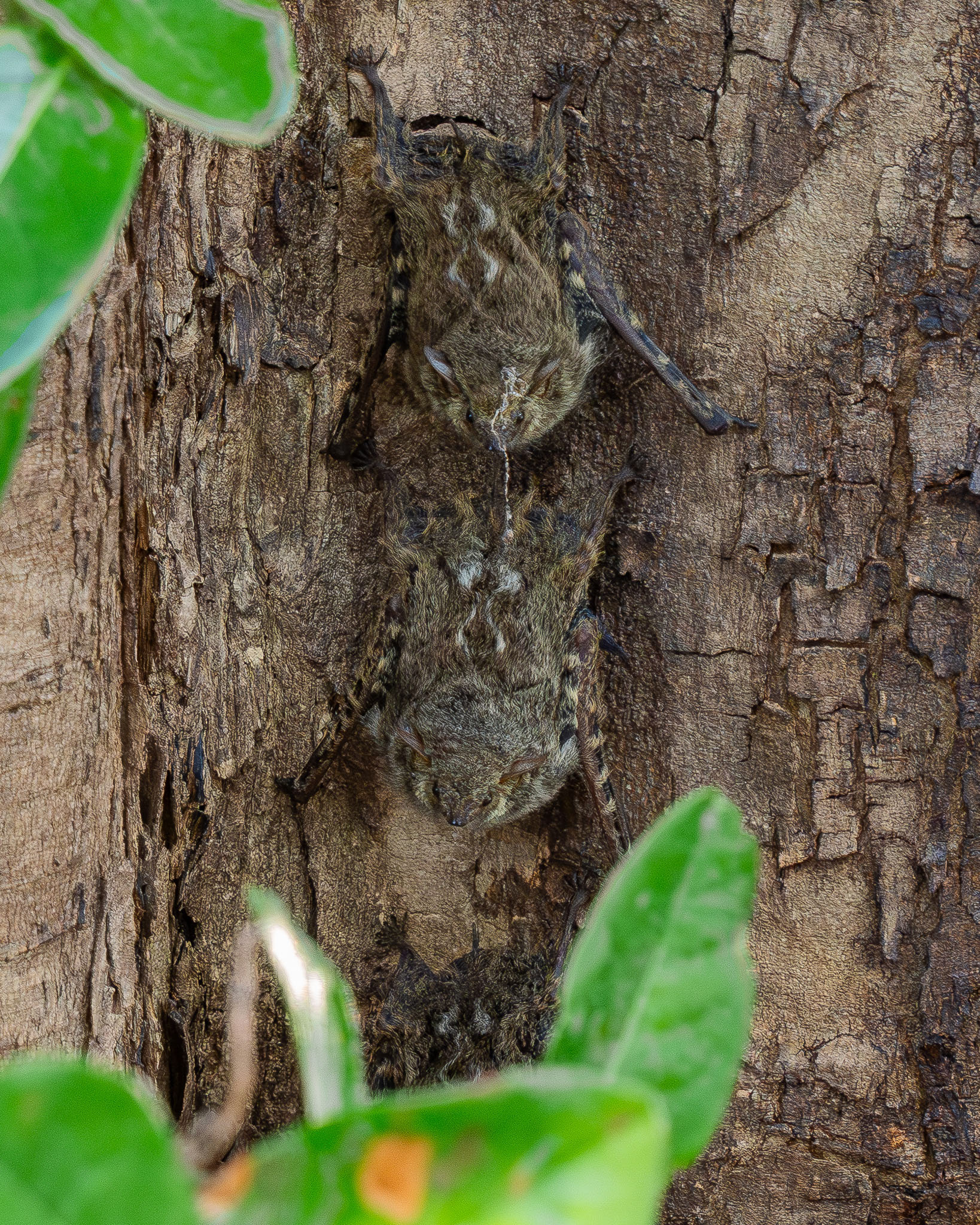
^ Proboscis Bat
The Proboscis Bat (Rhynchonycteris naso) is known for its remarkable camouflage. They typically roost in the open on the bark of tree trunks or branches, often in a vertical line. Their dappled fur and motionless posture make them look like patches of lichen or fungus.
Photographs: ©Don Davies
We travelled to the Pantanal with Wildlife Worldwide and were accompanied by an excellent guide and naturalist, Lucila Rosales (Lucy), whose knowledge and expertise greatly enriched our experience.
v Click below to view next Gallery v
v OR v