THE PANTANAL
Land of the Jaguar (1)
Brazil - South America
Spanning more than 70,000 square miles, the Pantanal is the world's largest tropical wetland and a designated UNESCO World Heritage Site. This vast wilderness lies mainly in Brazil, whilst extending into parts of Bolivia and Paraguay.
Renowned for its extraordinary biodiversity, the Pantanal is home to Giant River Otter, Capybara, Caiman and hundreds of vibrant bird species that fill the skies with colour and sound. Yet above all, it is celebrated as one of the best places on Earth to encounter the elusive Jaguar in the wild. In the Northern Pantanal, the small and remote riverside settlement of Porto Jofre, set along the banks of the Cuiabá River, has earned a global reputation as the premier destination for observing these magnificent cats in their natural habitat.
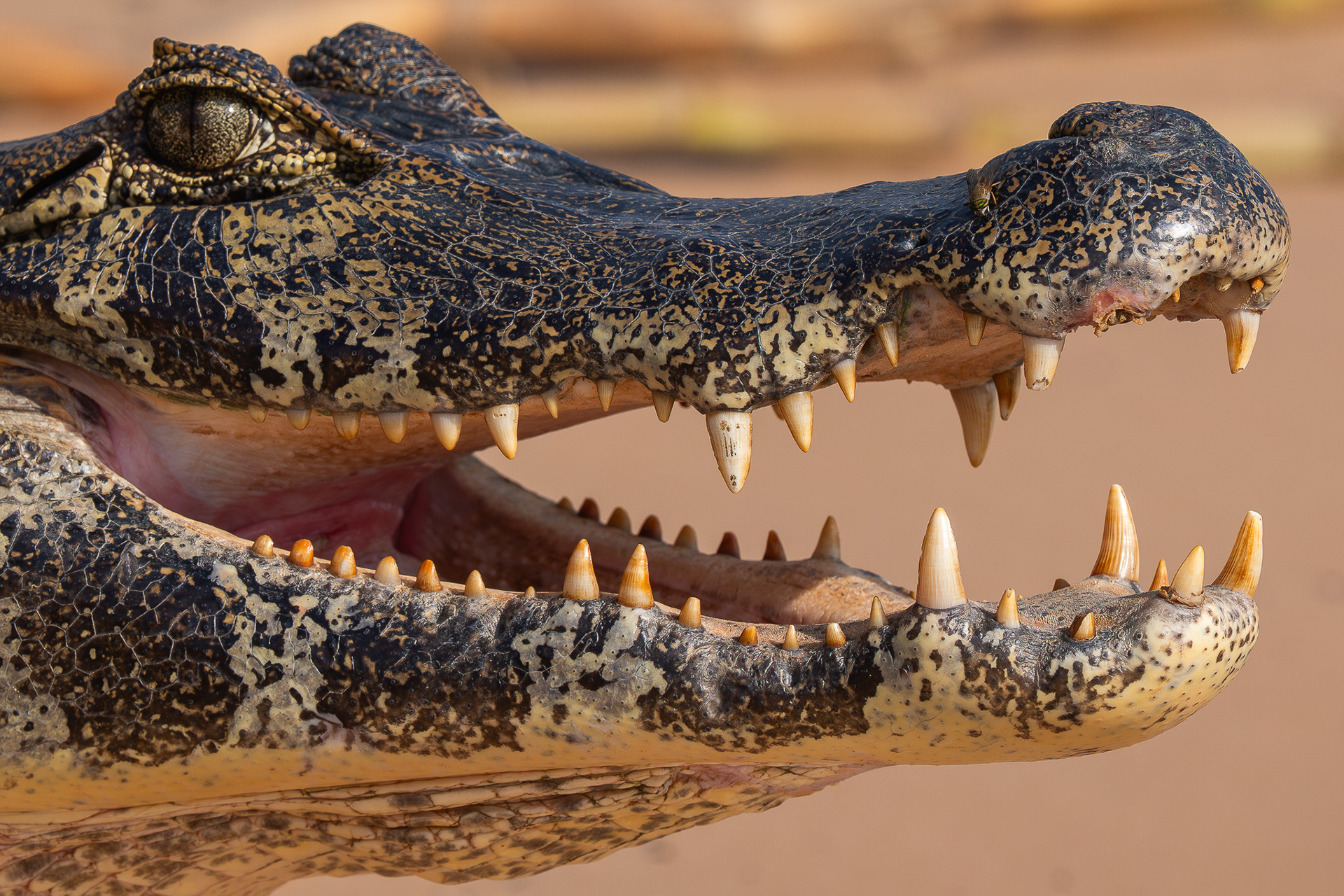
Yacaré caiman
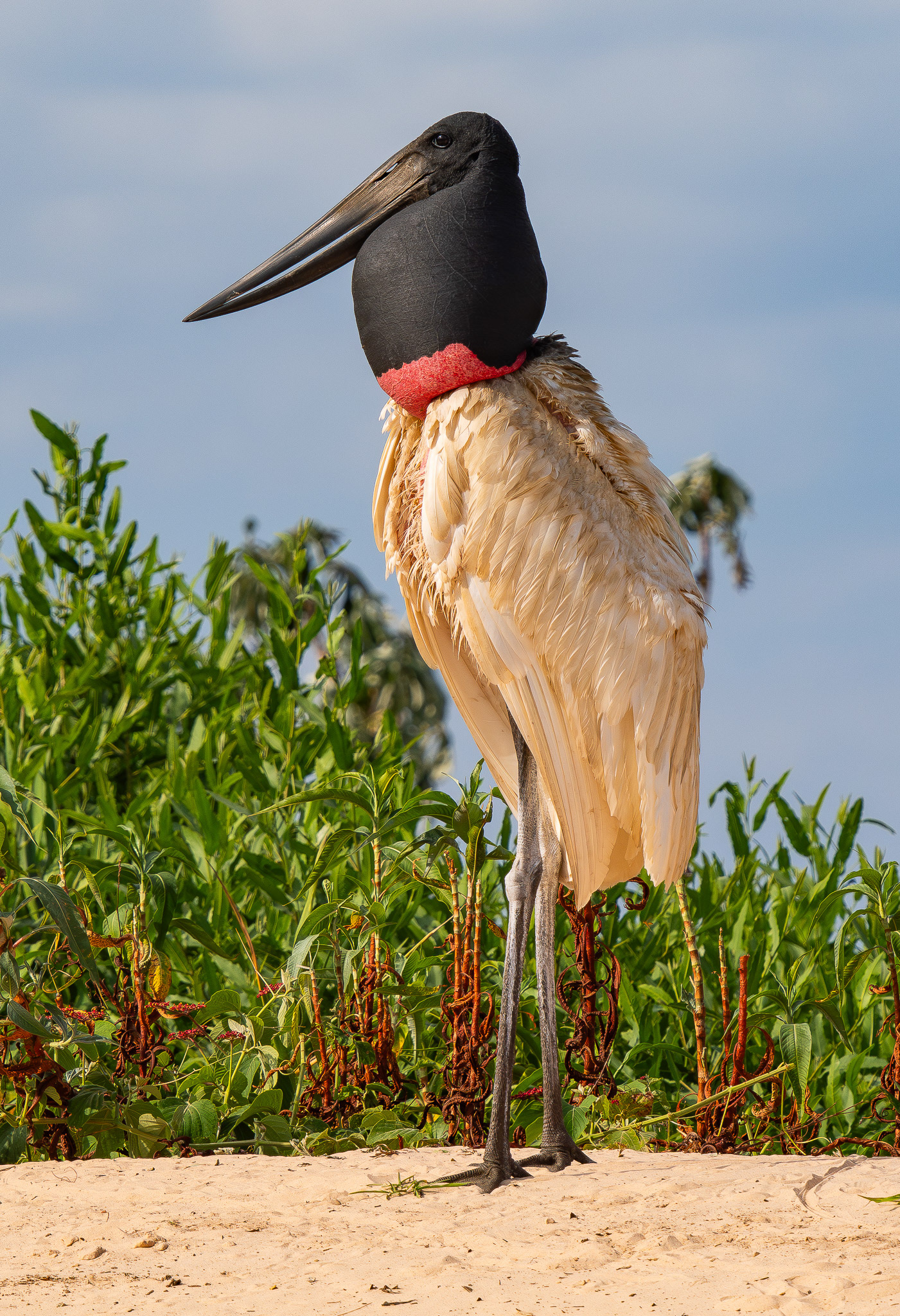
Jabiru Stork
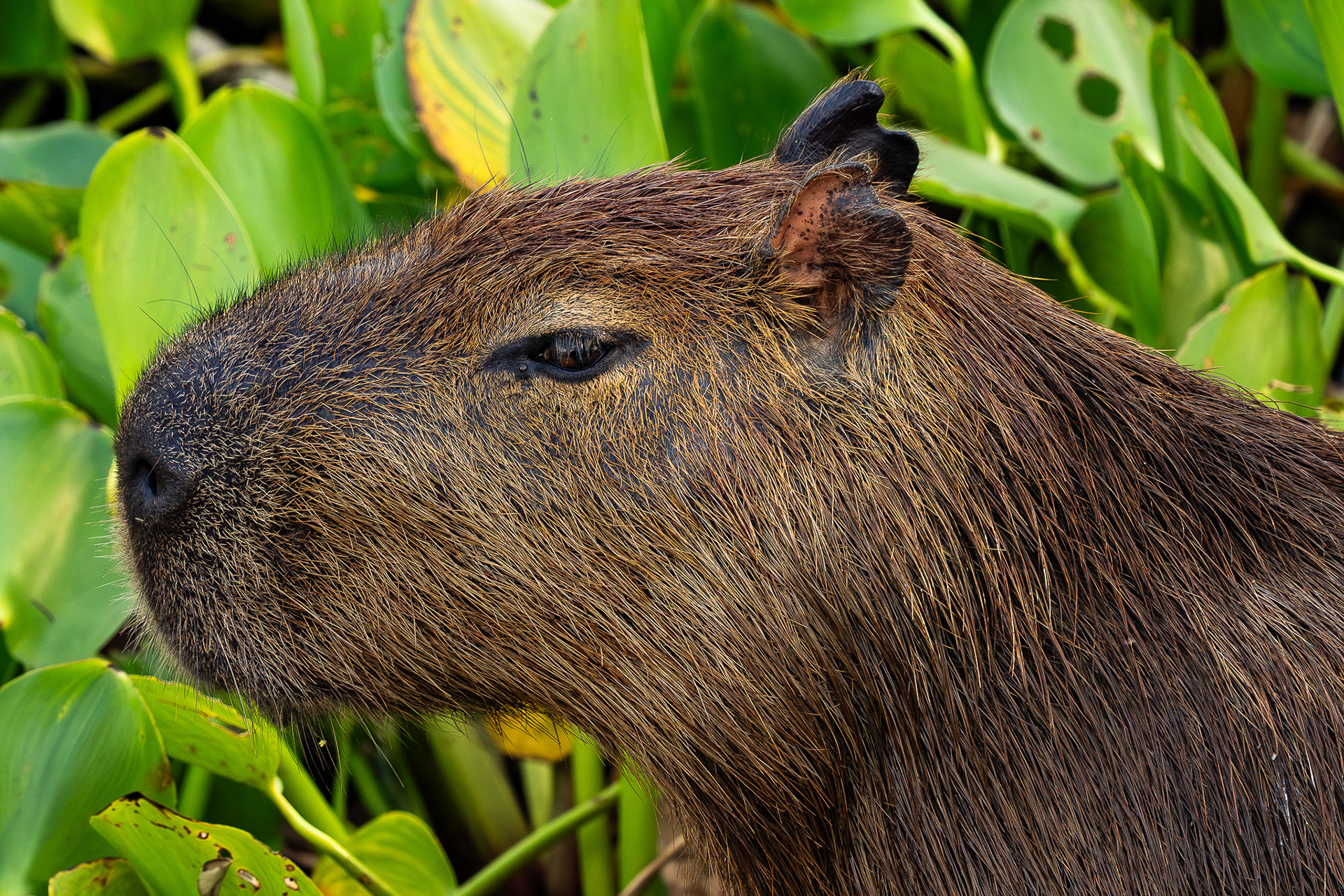
Capybara
The prime season for Jaguar sightings in the Pantanal runs from July to October, when falling water levels draw Jaguars to the riverbanks to hunt Caiman and Capybara. With this in mind, we travelled to Porto Jofre in late August 2025 in search of this iconic cat.
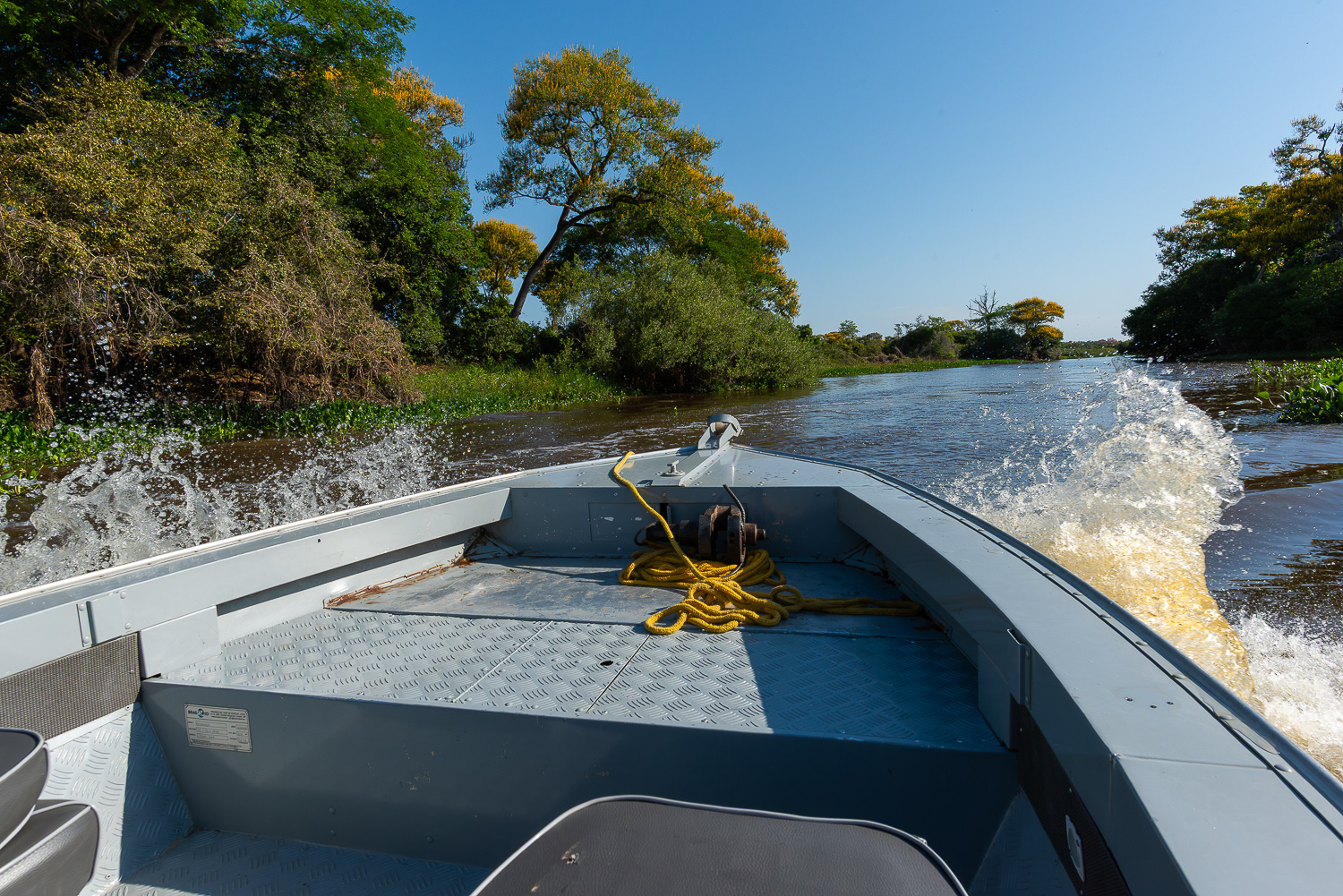
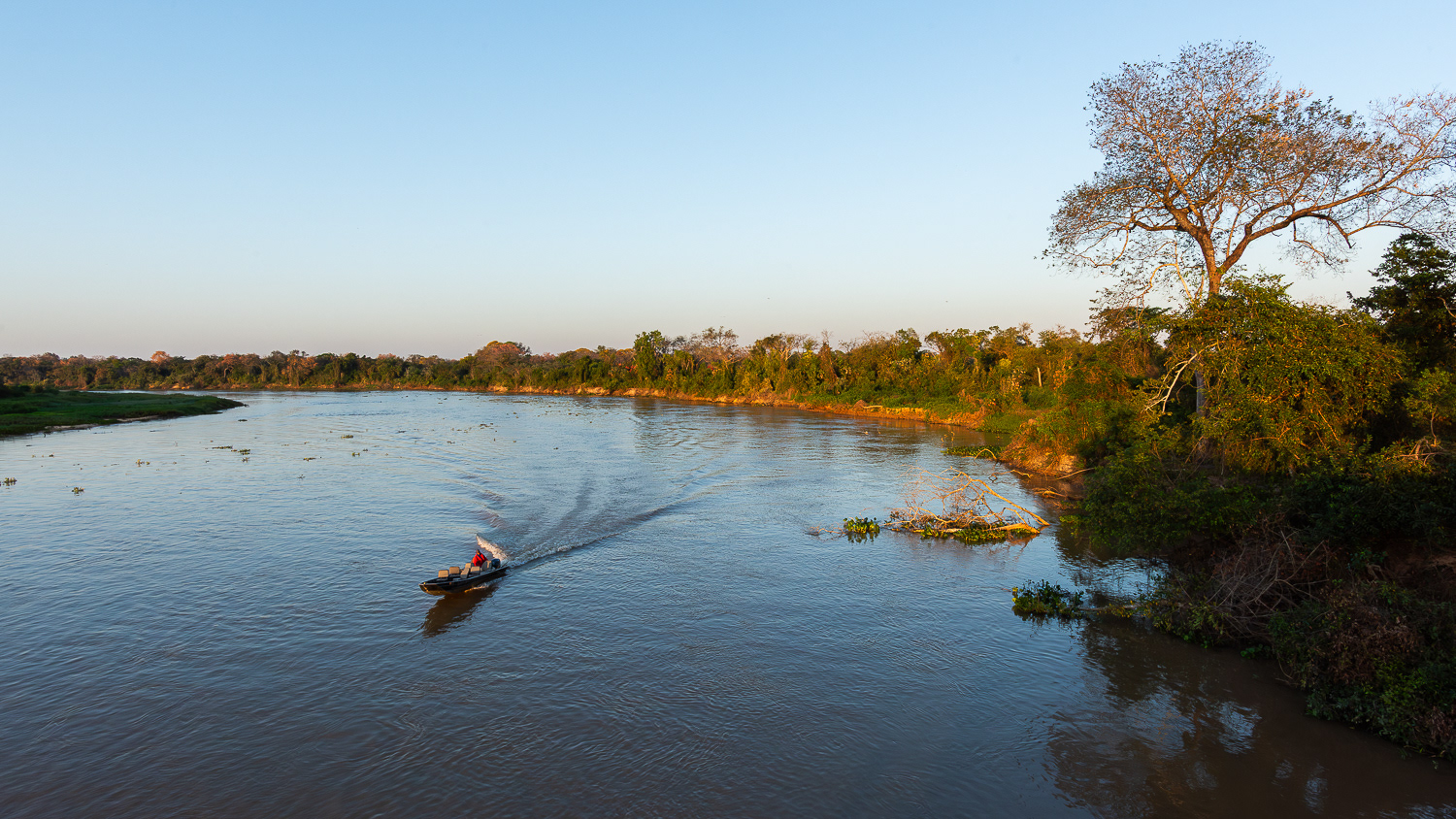
We spent four nights aboard a houseboat moored on the Cuiabá River, heading out each morning and afternoon on small speedboats to explore the Cuiabá, Piquiri River, and Three Brothers River. These excursions offered exceptional opportunities to observe and photograph Jaguars at close range in their natural habitat, along with a rich variety of other mammals and birdlife.
The following images capture some of the wildlife we were fortunate to photograph during our time in the Northern Pantanal.
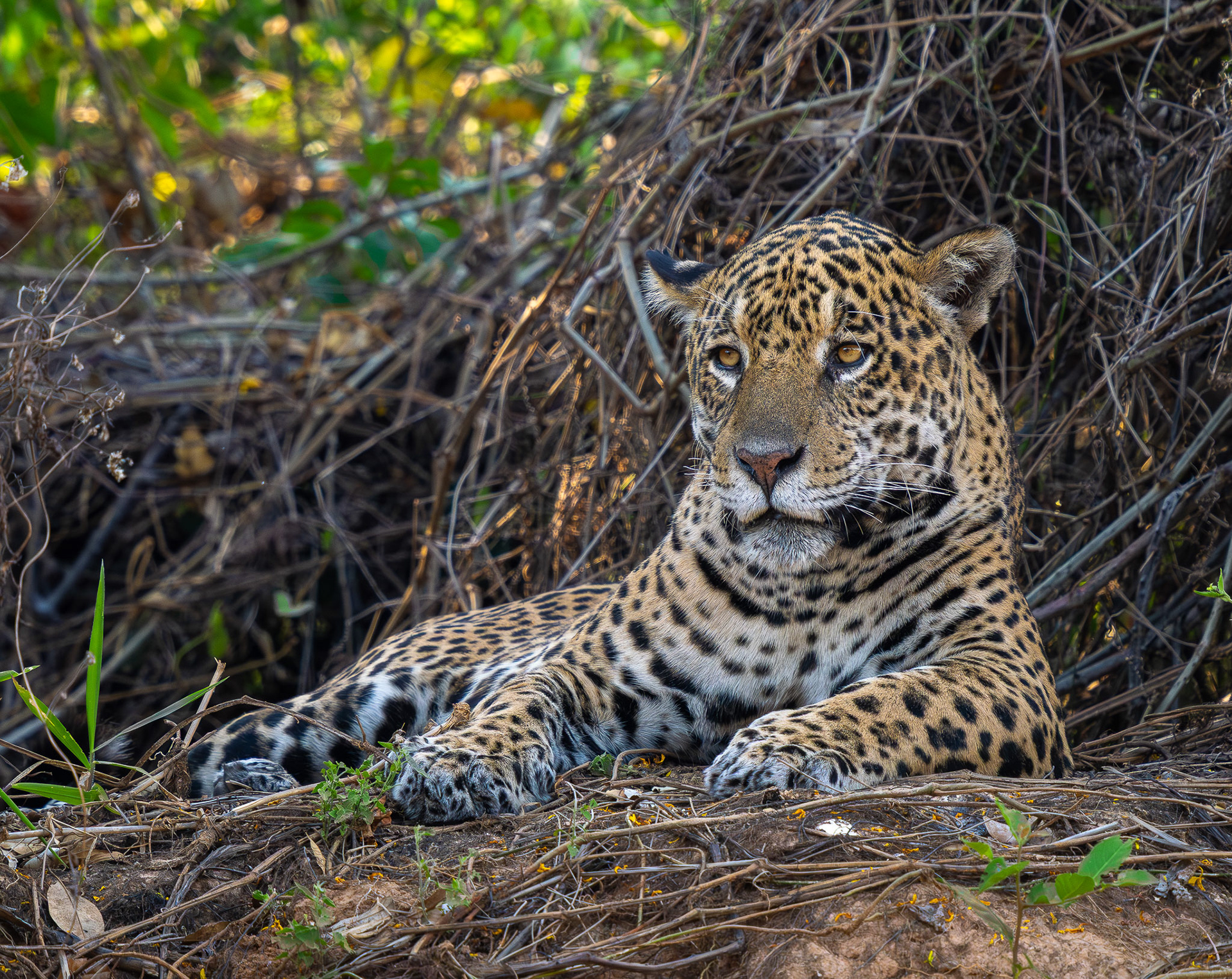
The Pantanal Jaguar
In the immense wetlands of the Pantanal, Jaguars stand as the undisputed apex predators. Powerfully built and muscular, they are superb swimmers, gliding with ease through winding rivers and seasonally flooded plains. Unlike many other big cats, Jaguars are as confident in the water as they are on land. They are particularly famed for their formidable hunting abilities, boldly stalking and ambushing large Caiman and Capybara along riverbanks and even in deep water. With their immense strength, stealth, and adaptability, Jaguars rank among the most impressive and dominant predators in this rich and diverse ecosystem.
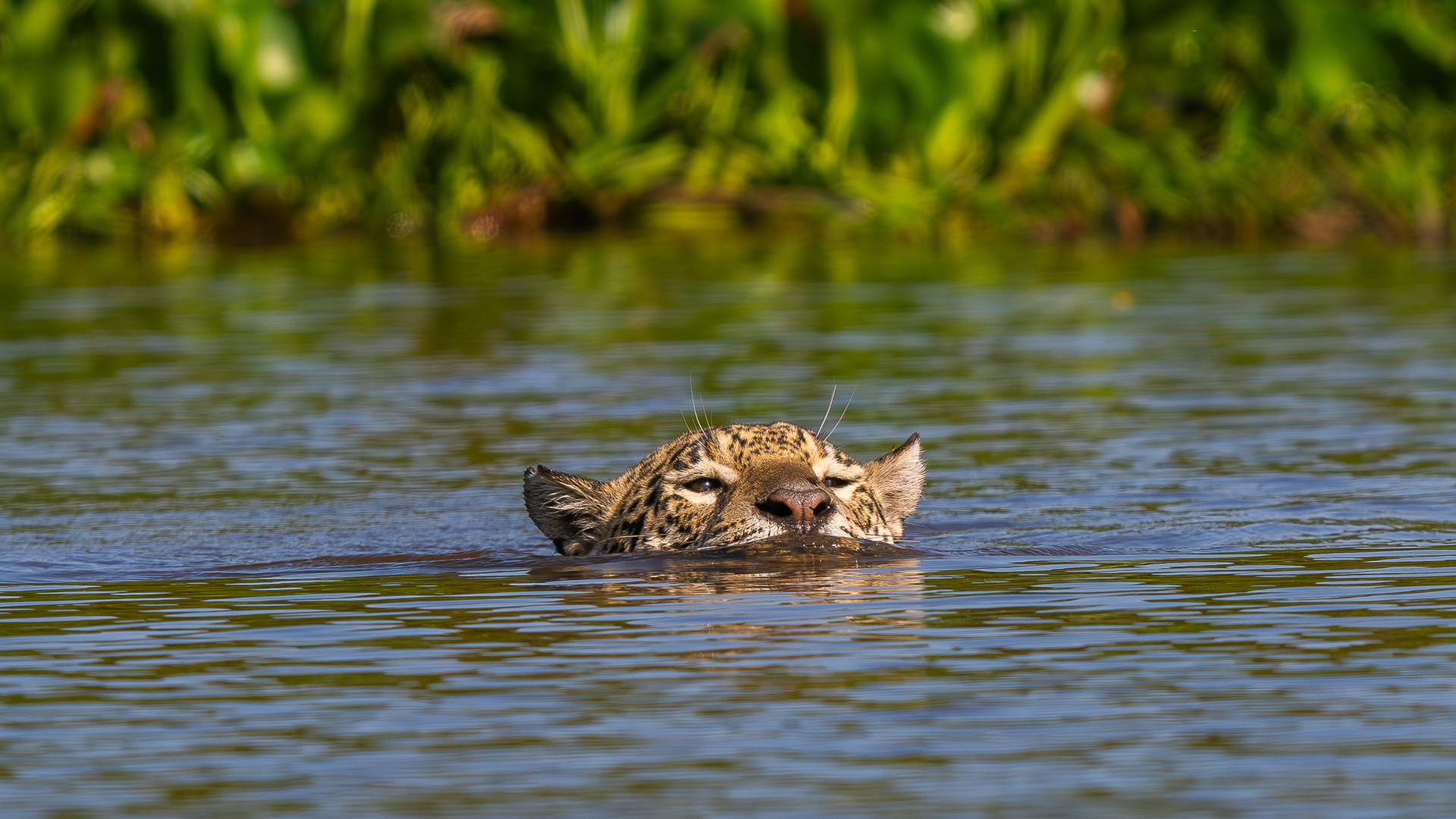
Jaguar
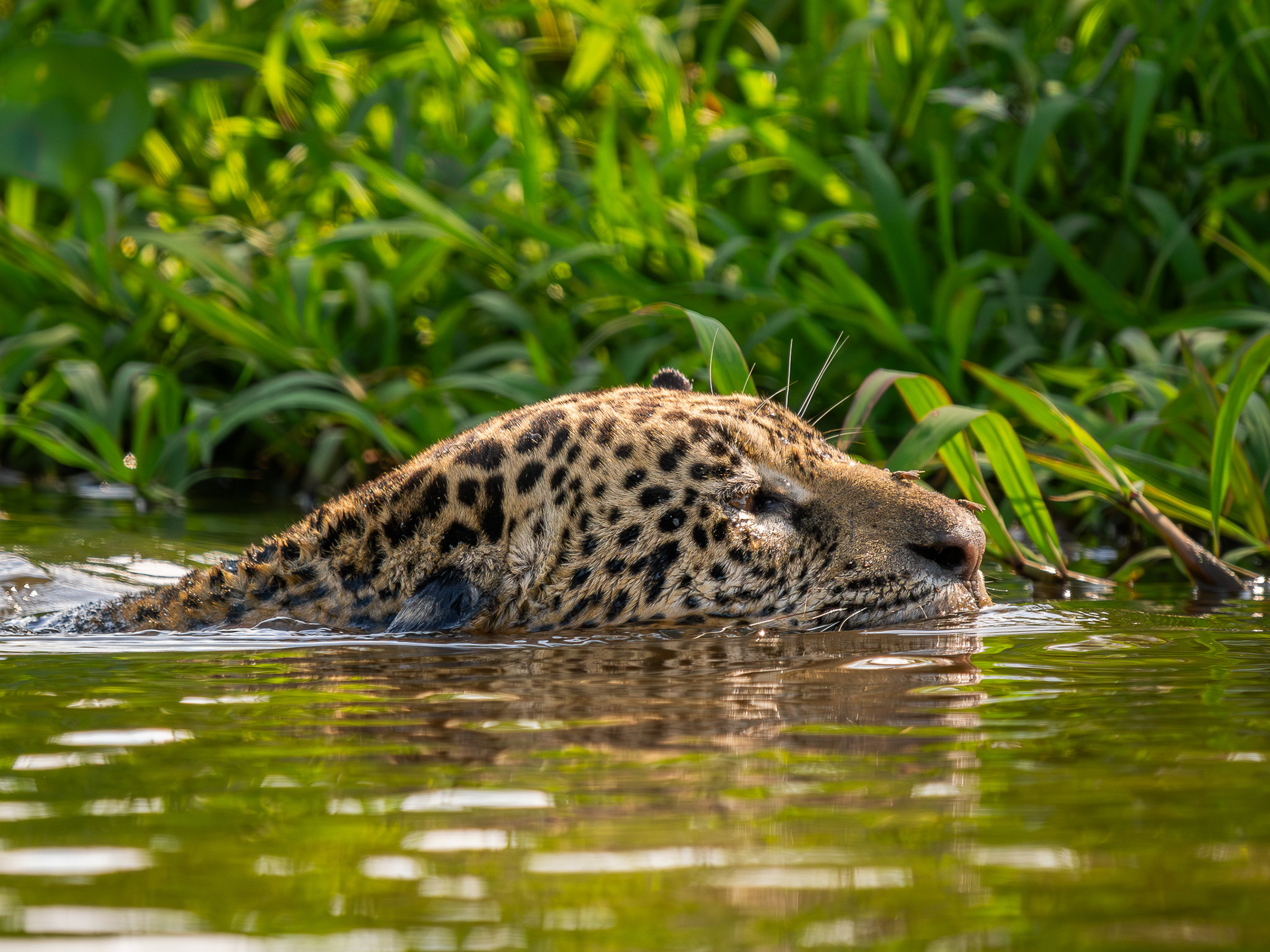
Jaguar
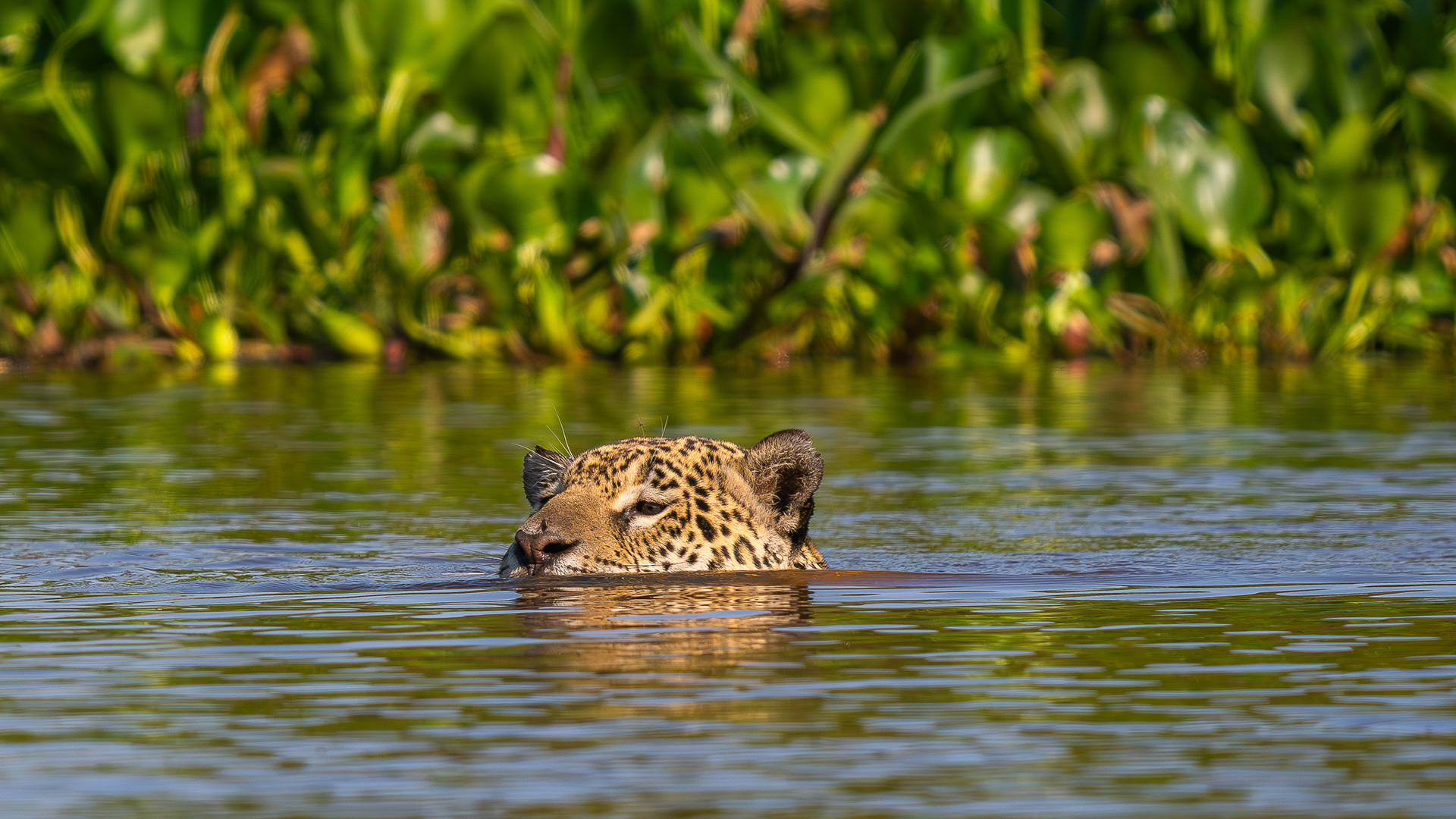
Jaguar
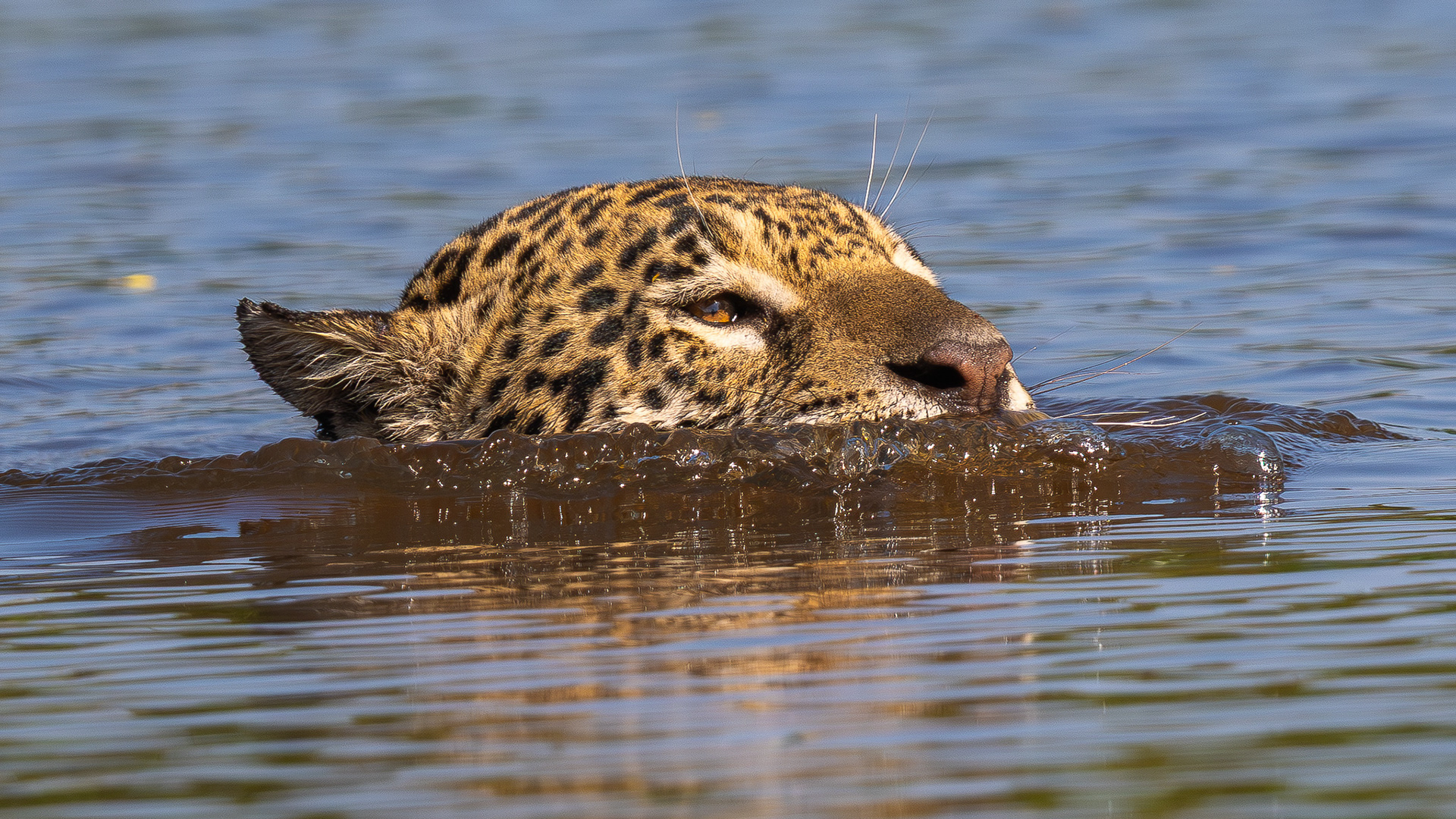
Although Jaguars are generally nocturnal, those in the Pantanal frequently hunt during daylight hours, taking advantage of prey basking along the riverbanks. Their main food source is Caiman, followed by Capybara, as well as fish and, occasionally, Anacondas.
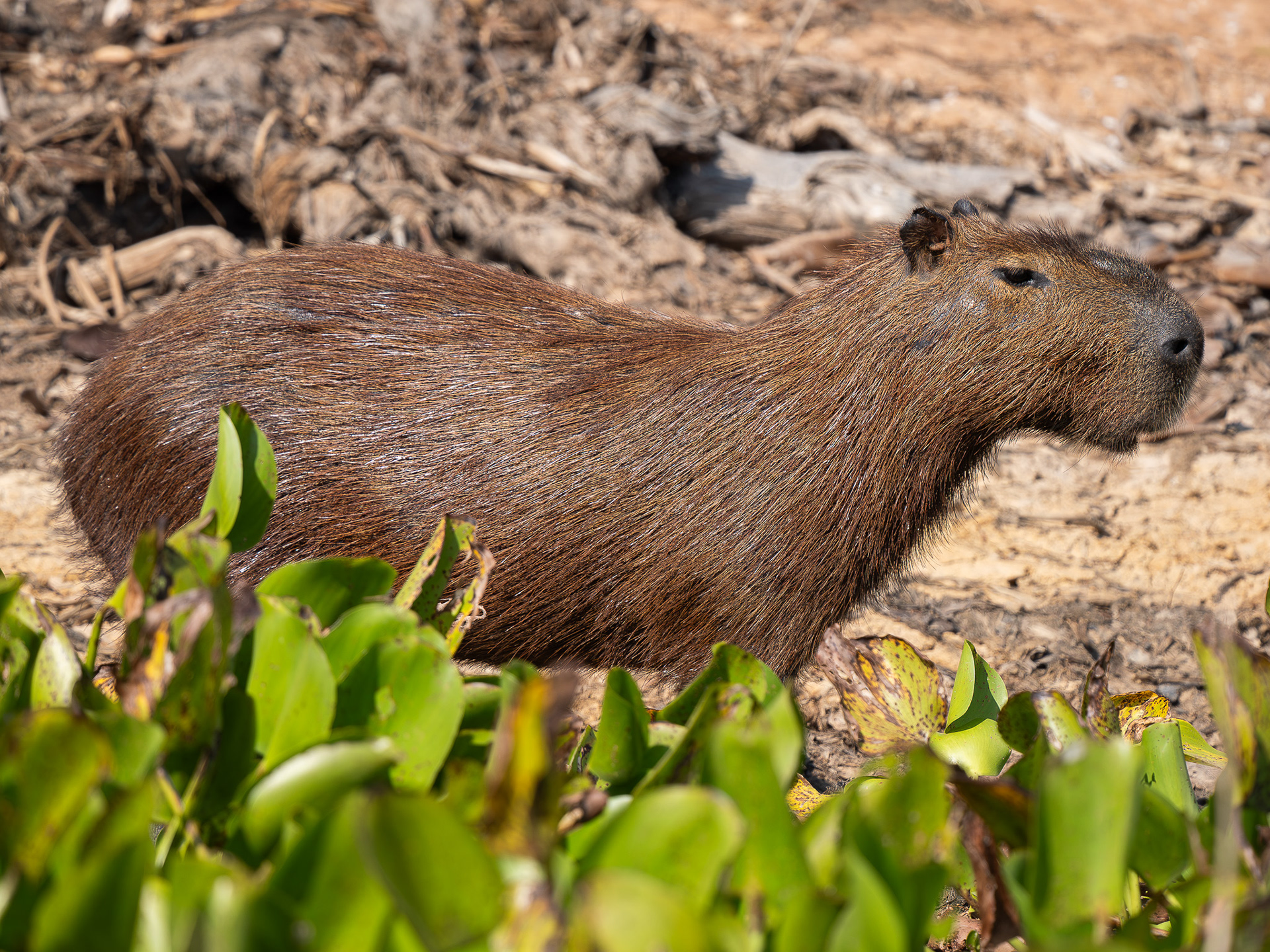
Capybara
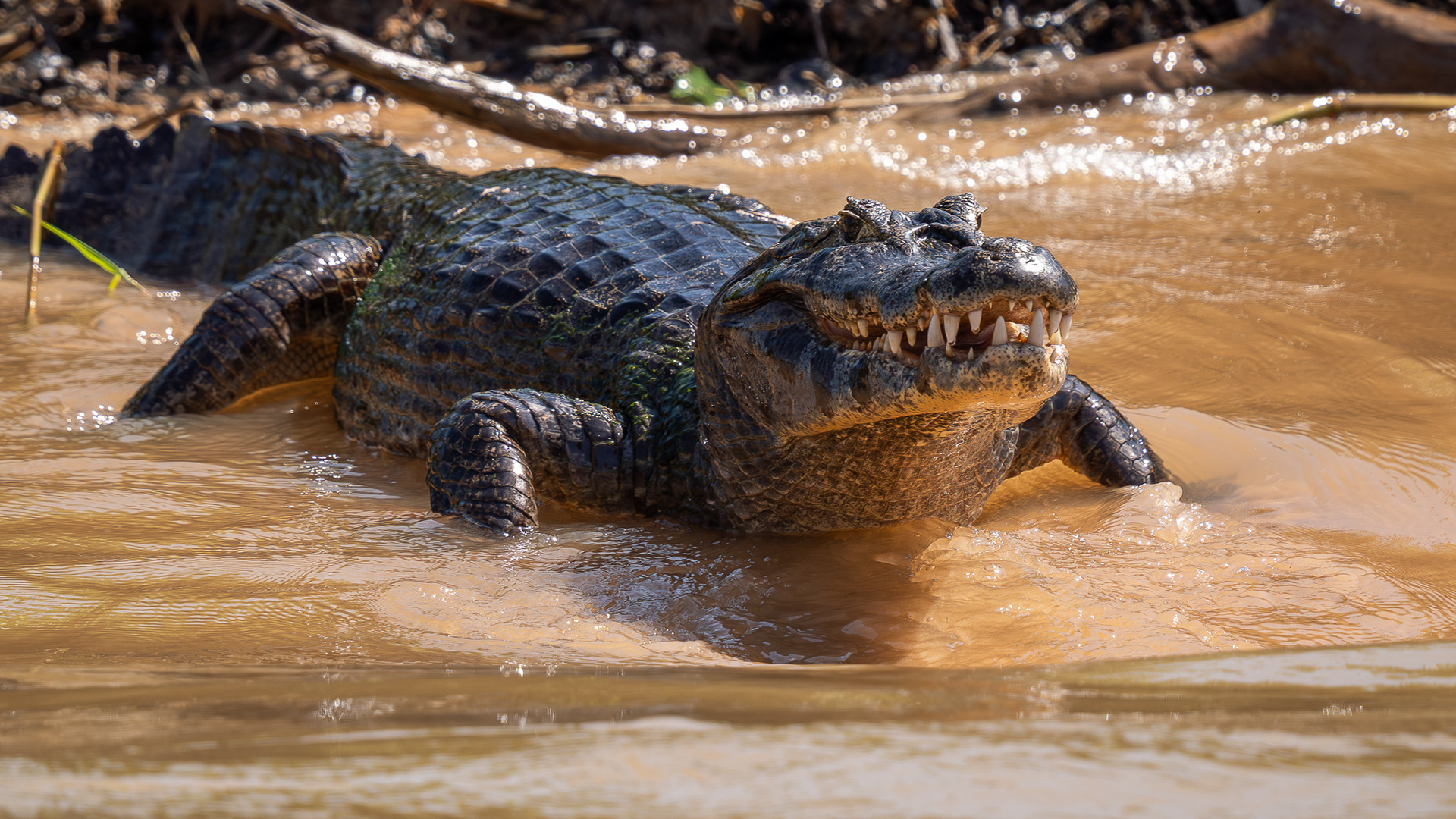
Yacaré caiman
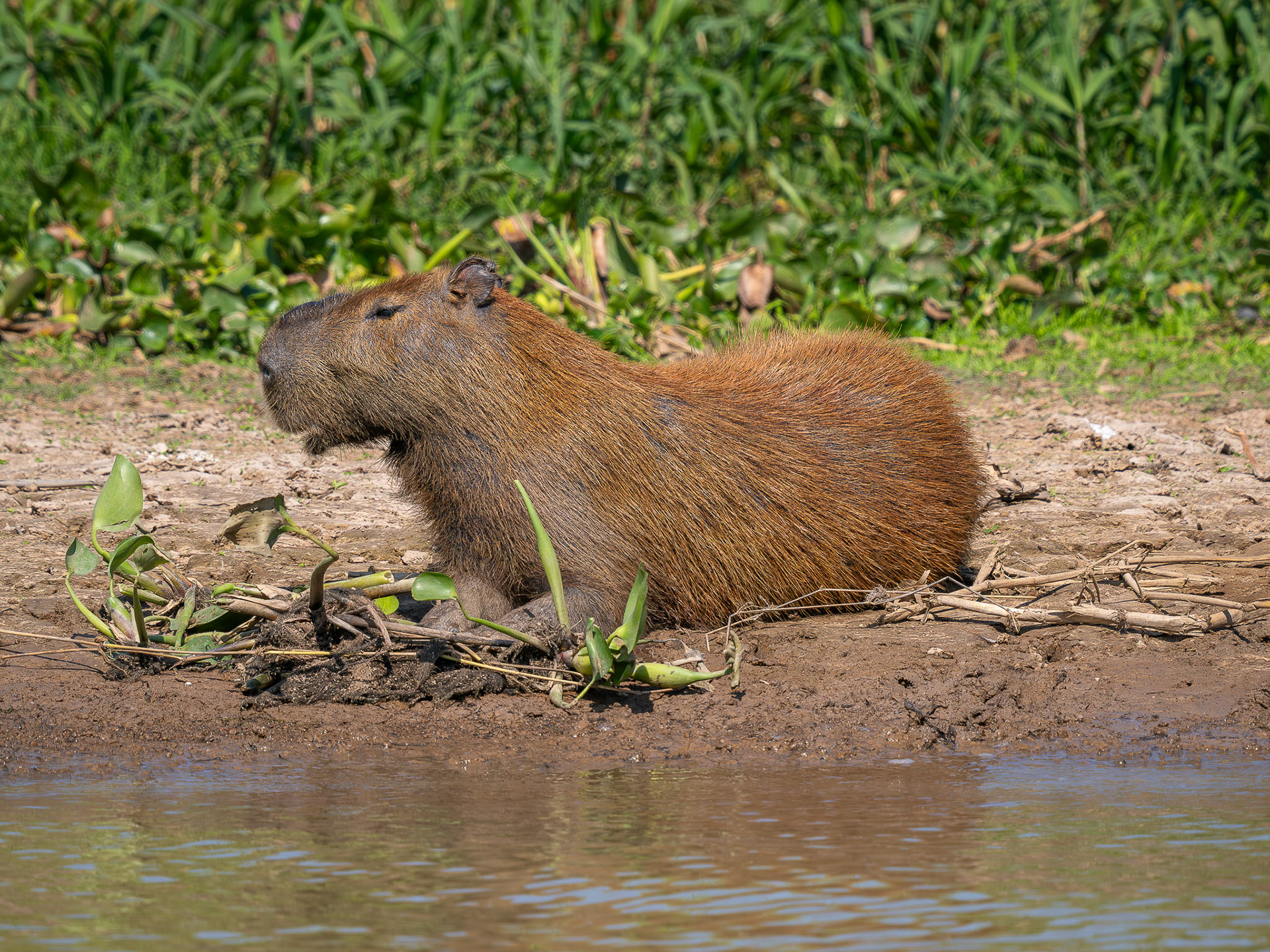
Capybara
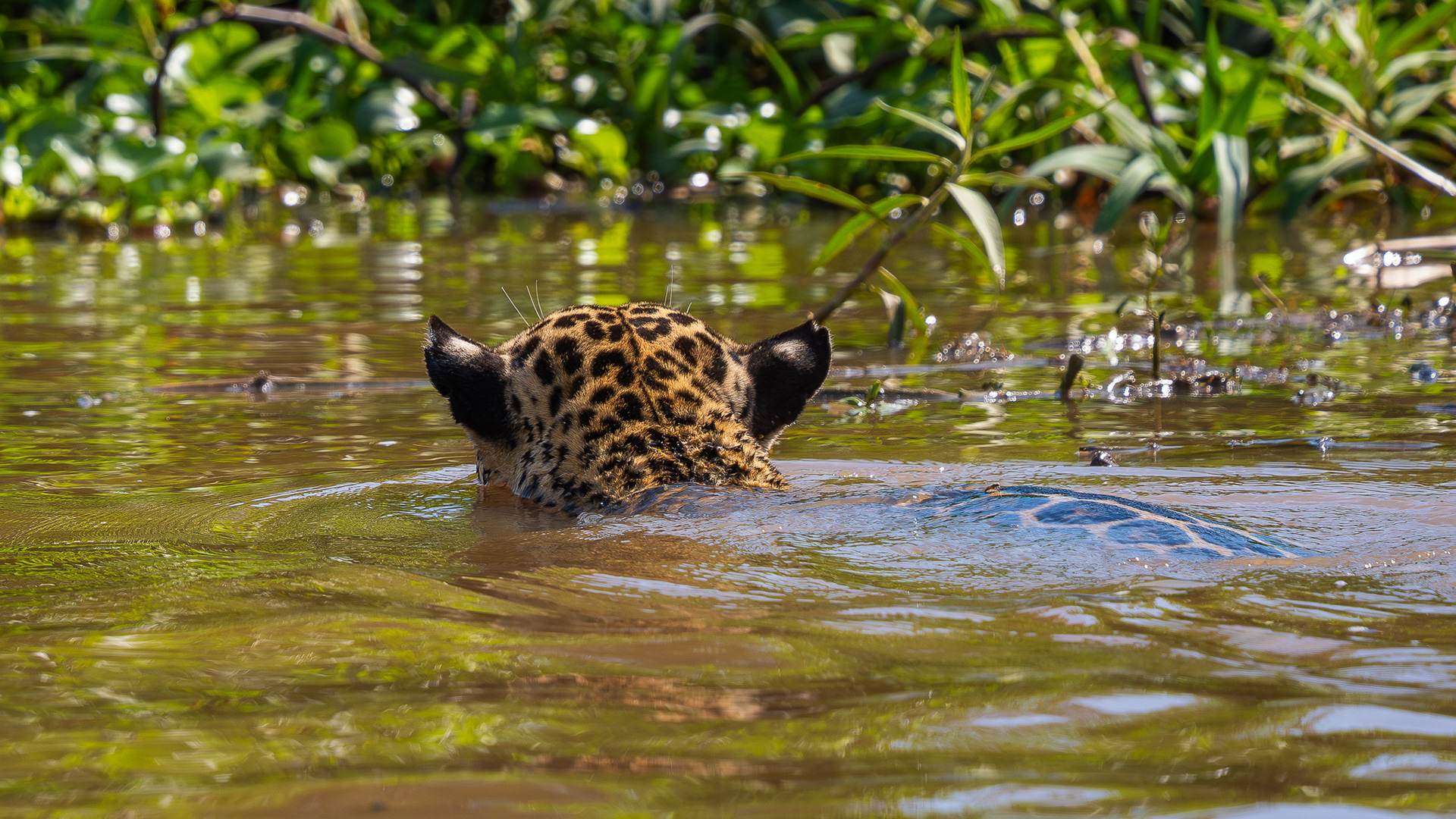
Jaguar
Jaguar
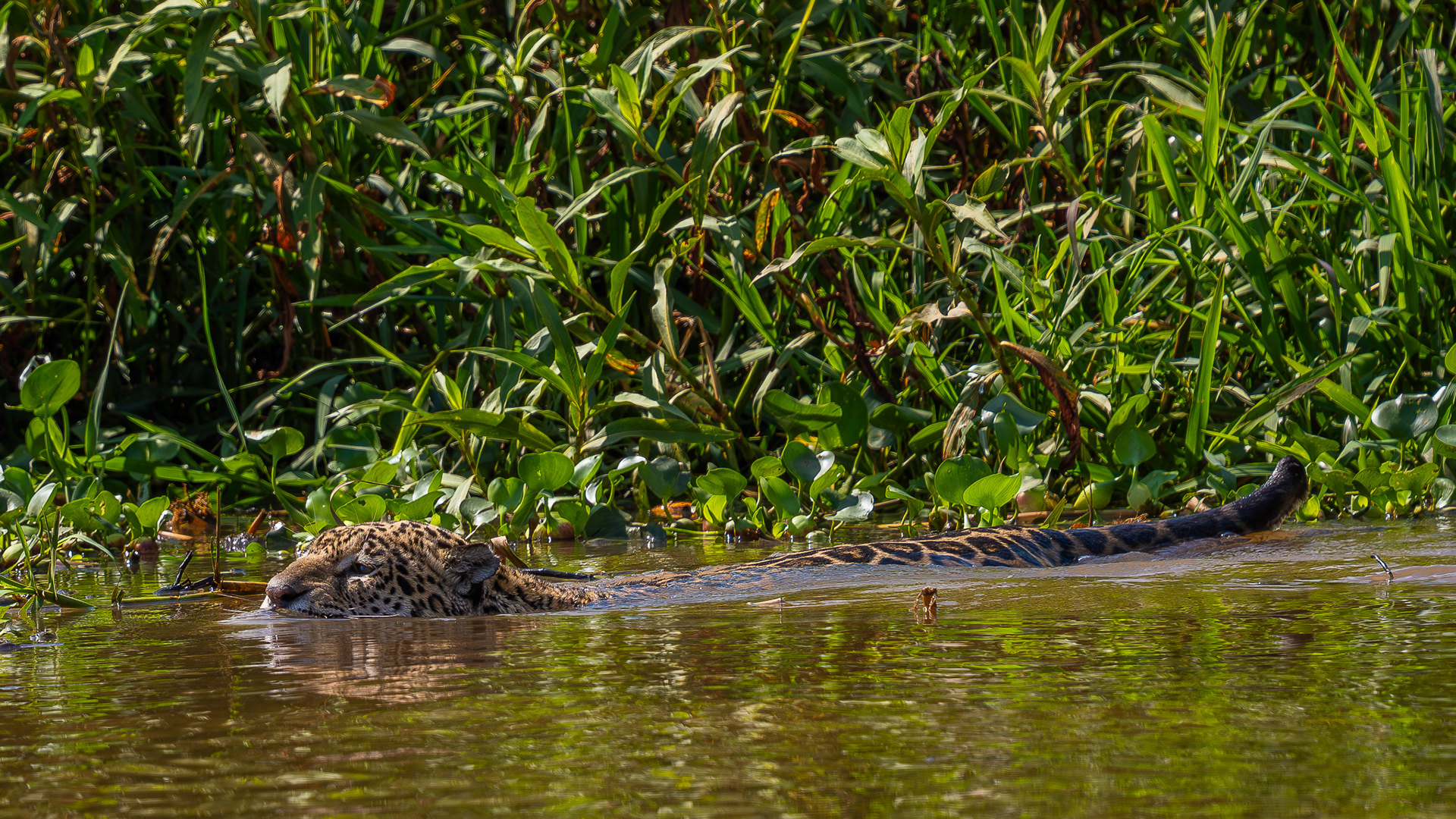
The Jaguar's aquatic hunting strategy is a striking combination of stealth and sheer power, supported by its exceptional strength and confidence in the water as a highly capable swimmer.
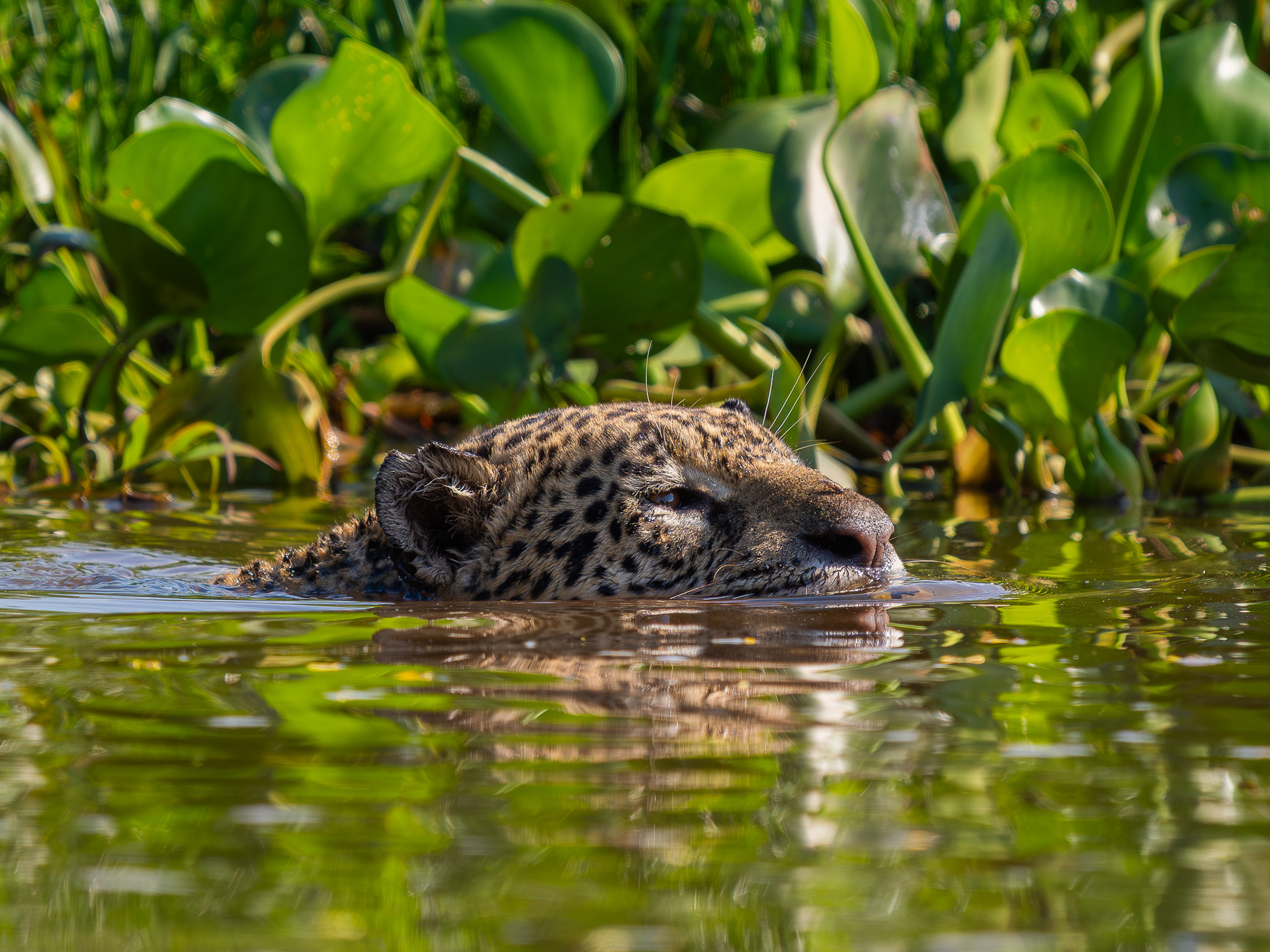
Jaguars glide silently through the water, with only their eyes and nose above the surface, approaching unsuspecting prey before launching an explosive attack. Once the prey is subdued, they are strong enough to haul carcasses as heavy as their own bodies from the water back onto land to feed.
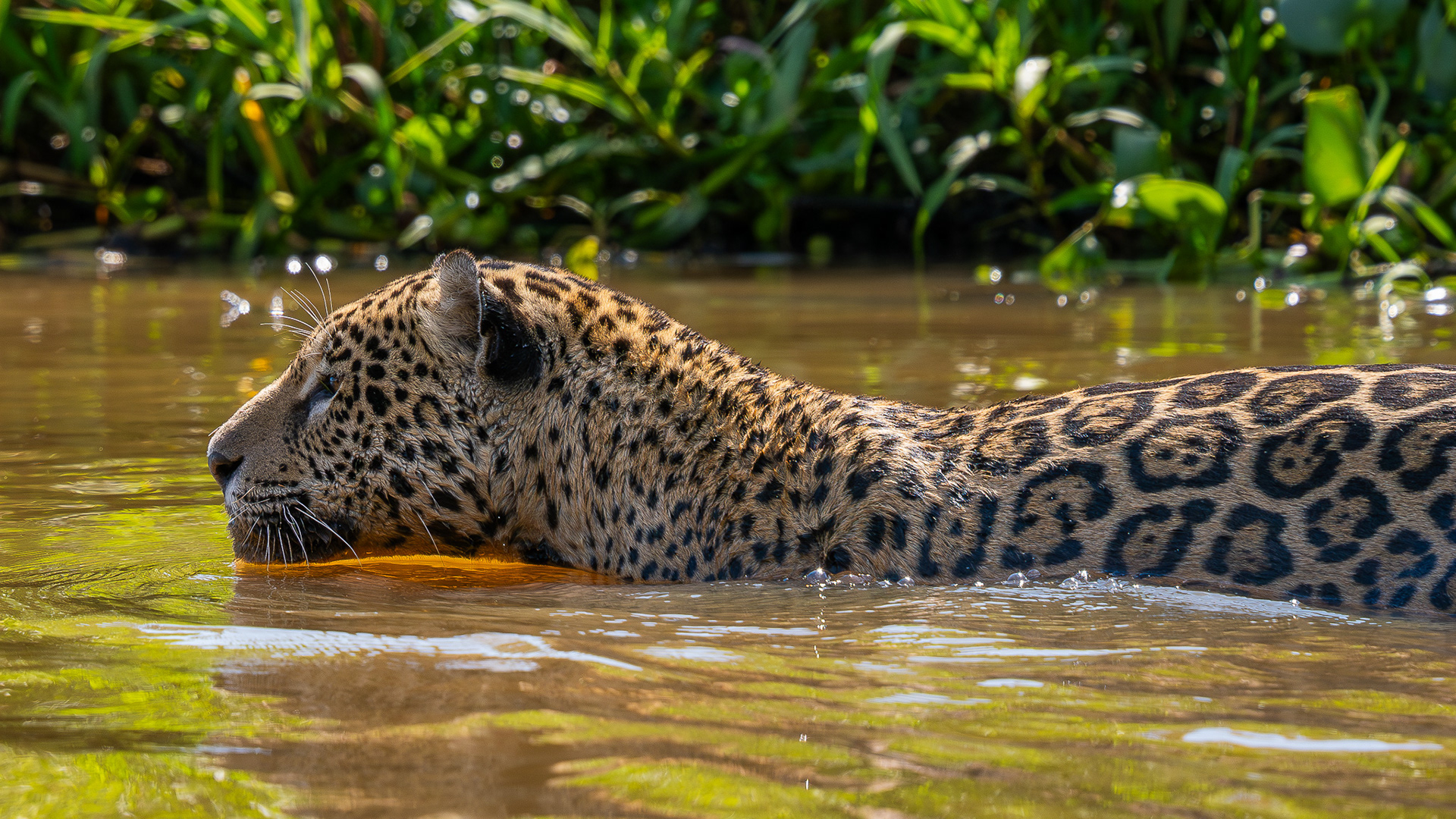
Watching a Jaguar swim as it hunts, whilst sitting low in a small boat almost at water level, is an extraordinary experience. At such close range, you feel completely immersed in its world. Encounters like this are raw and powerful and offer a rare and intimate glimpse of an apex predator perfectly at home in its natural environment.
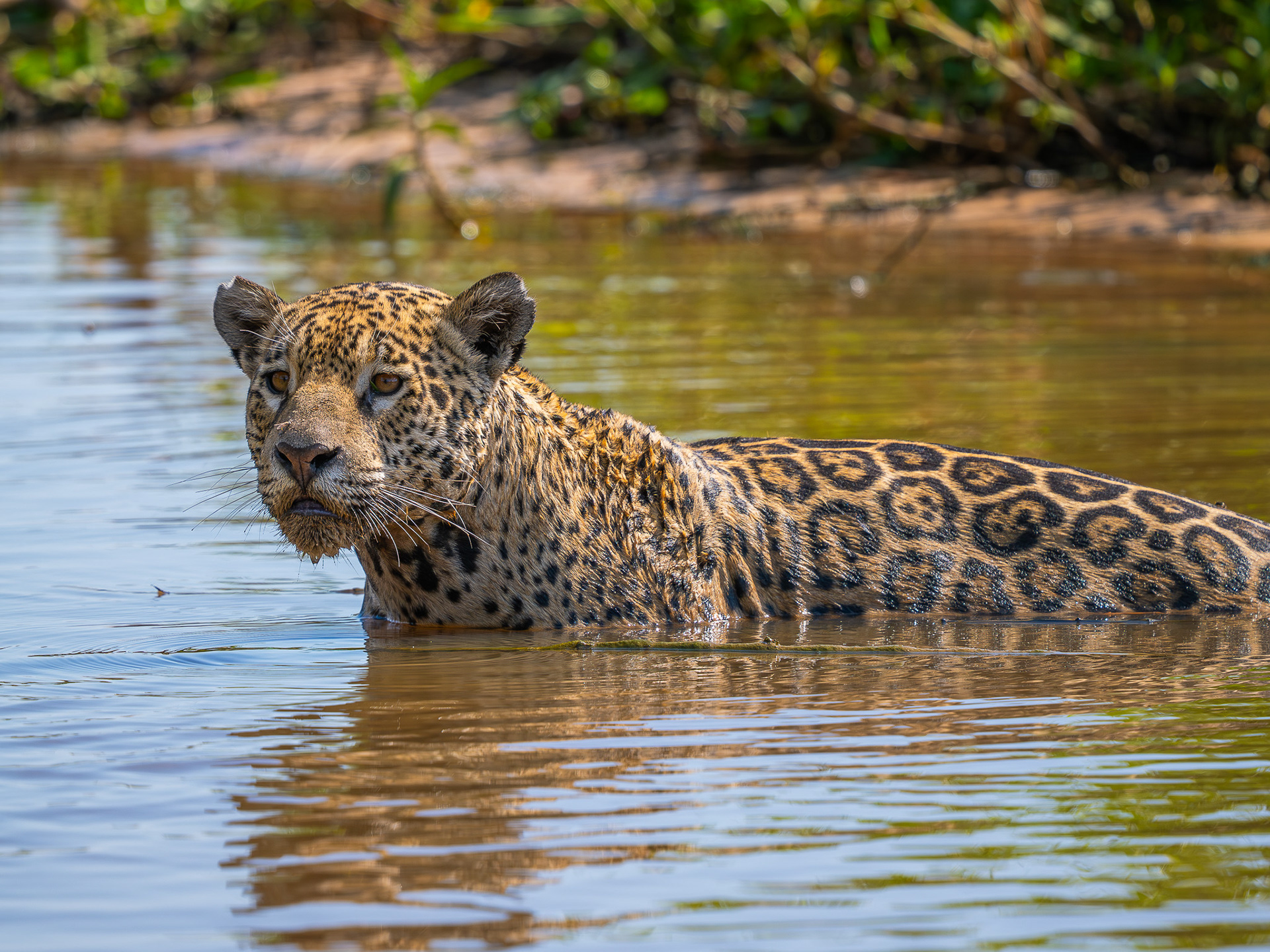
A powerful Jaguar stands chest-deep in the calm river, its spotted coat glowing in the early morning light, eyes fixed and alert as it searches for prey.
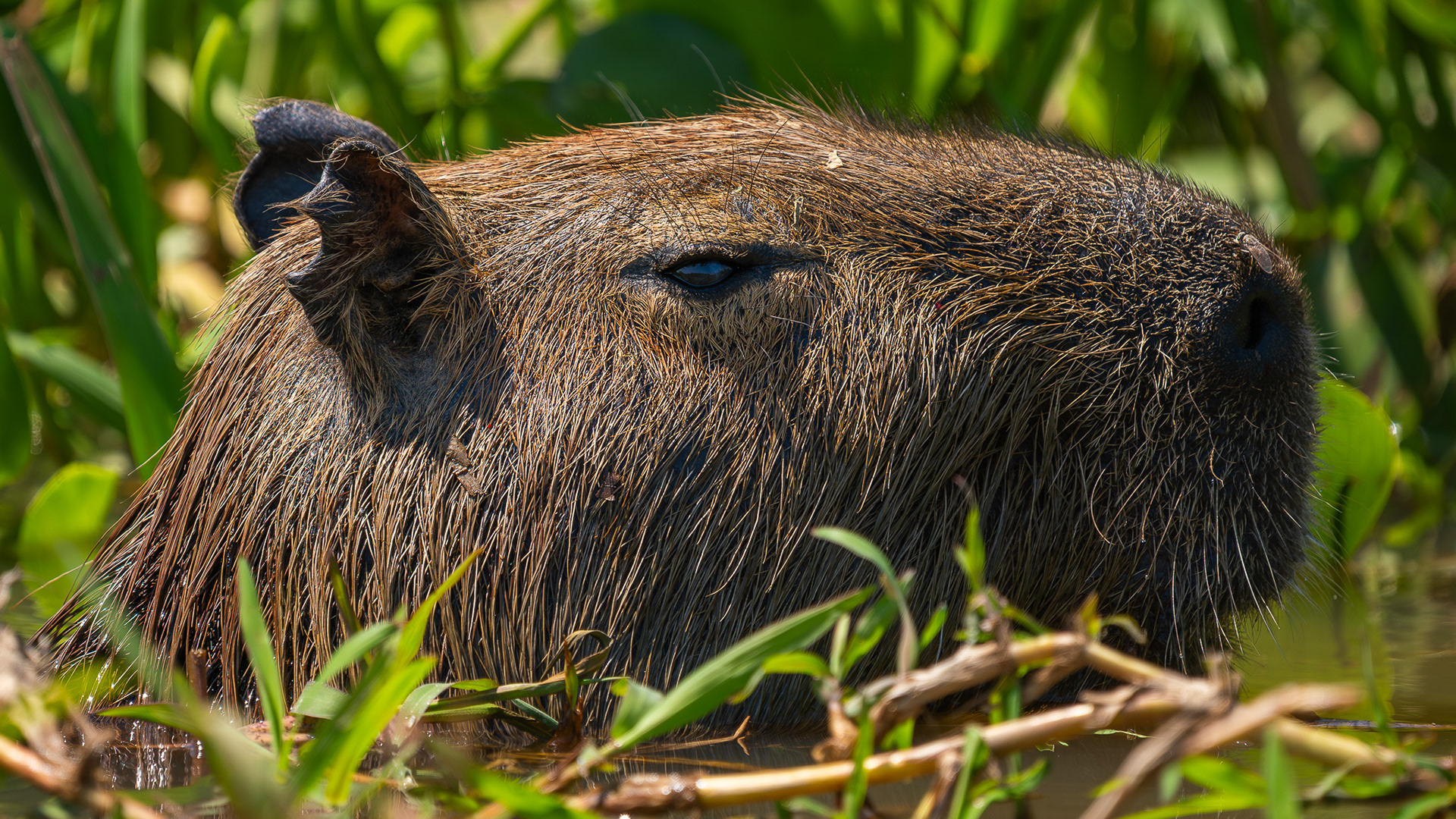
Capybaras often evade Jaguars by diving into rivers and weaving through dense mats of Water Hyacinth, using their semi-aquatic nature and strong swimming ability to their advantage. With their eyes, ears, and nostrils positioned high on their heads, they can remain almost completely submerged, exposing only the very top of their heads to avoid detection.
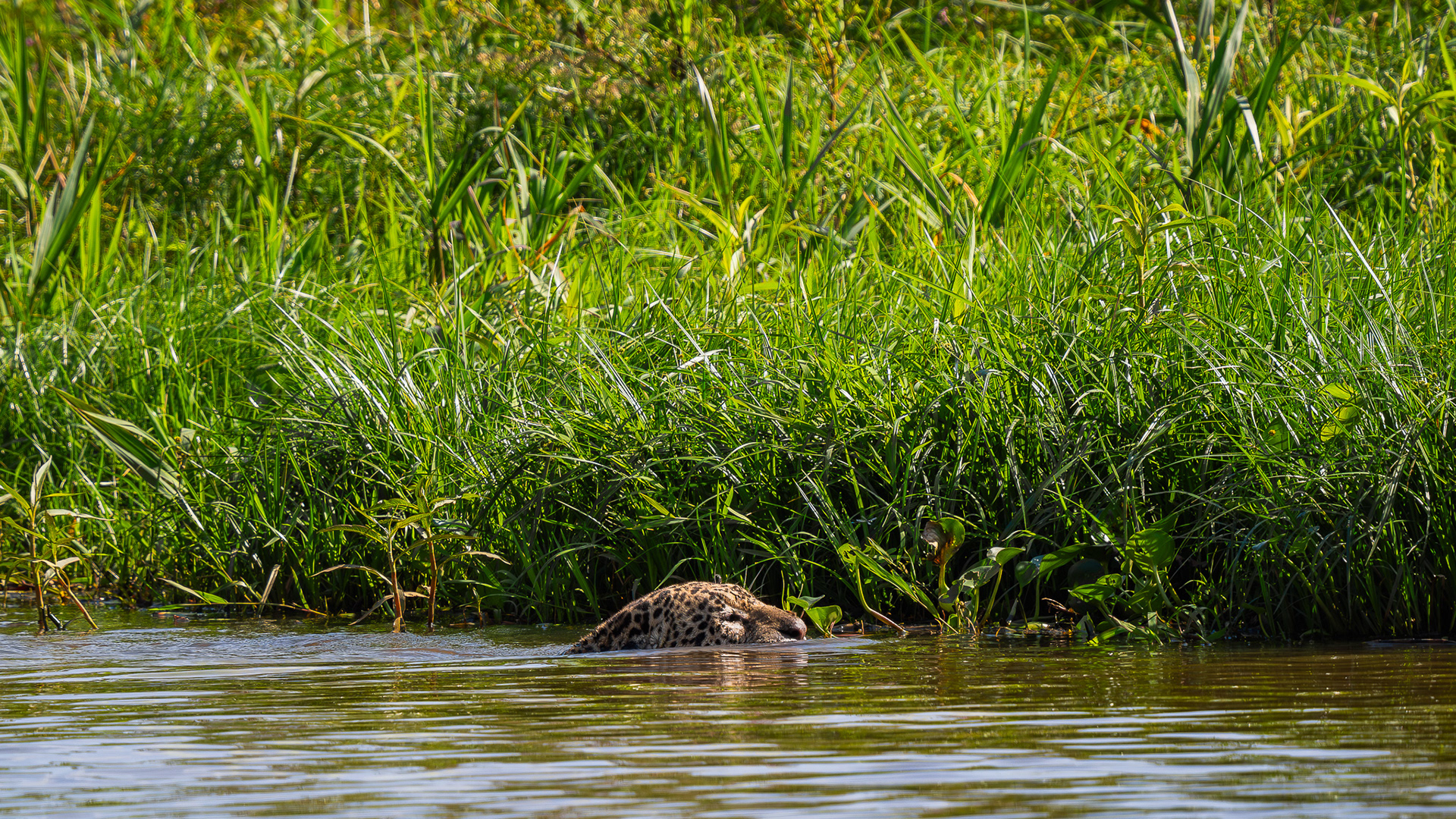
A Jaguar swims along the riverbank, eyes locked on the water as it searches for hidden prey in the dense undergrowth.
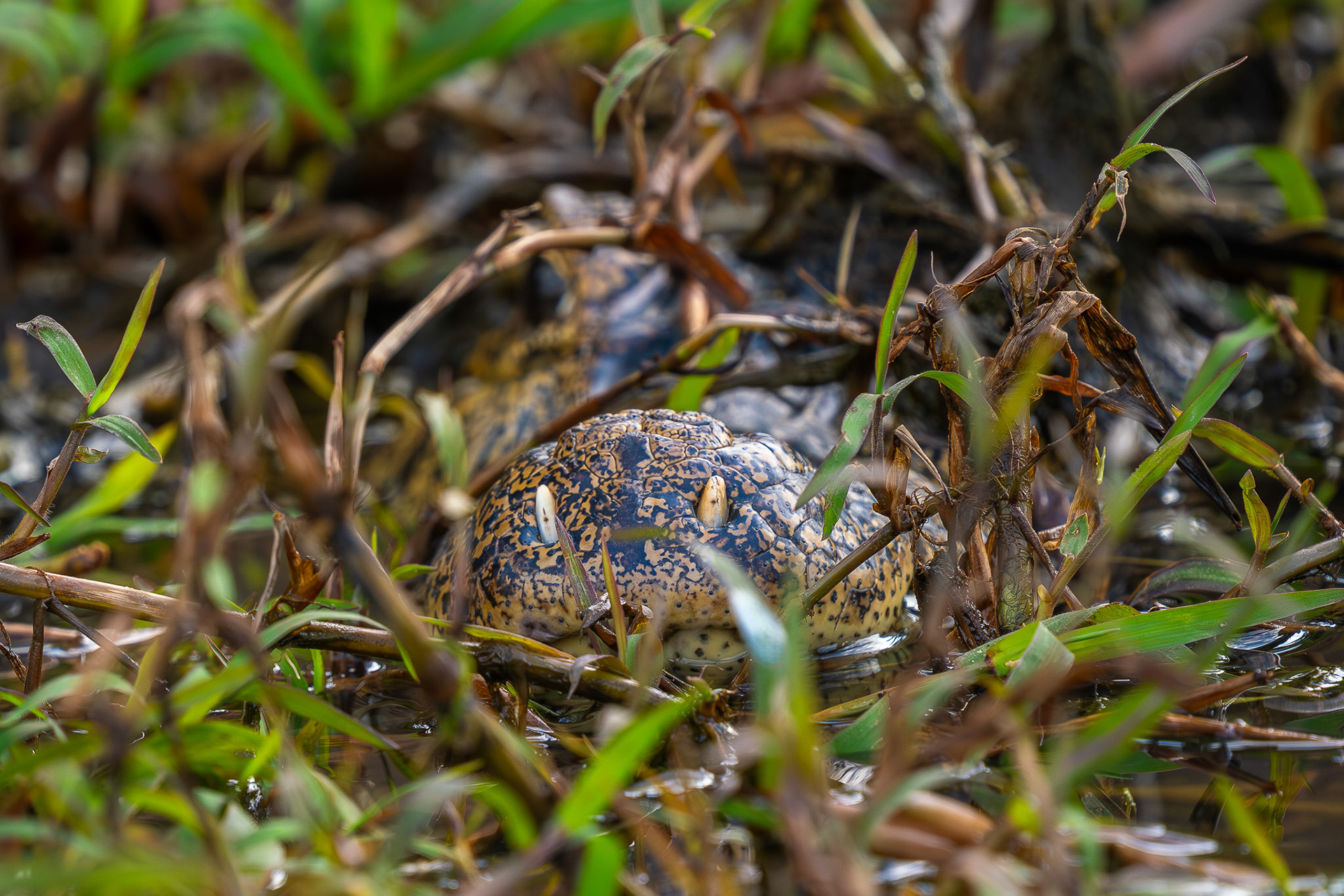
The Yacaré Caiman is a master of camouflage, often concealed within dense, tangled undergrowth and floating vegetation along riverbanks and swamps.
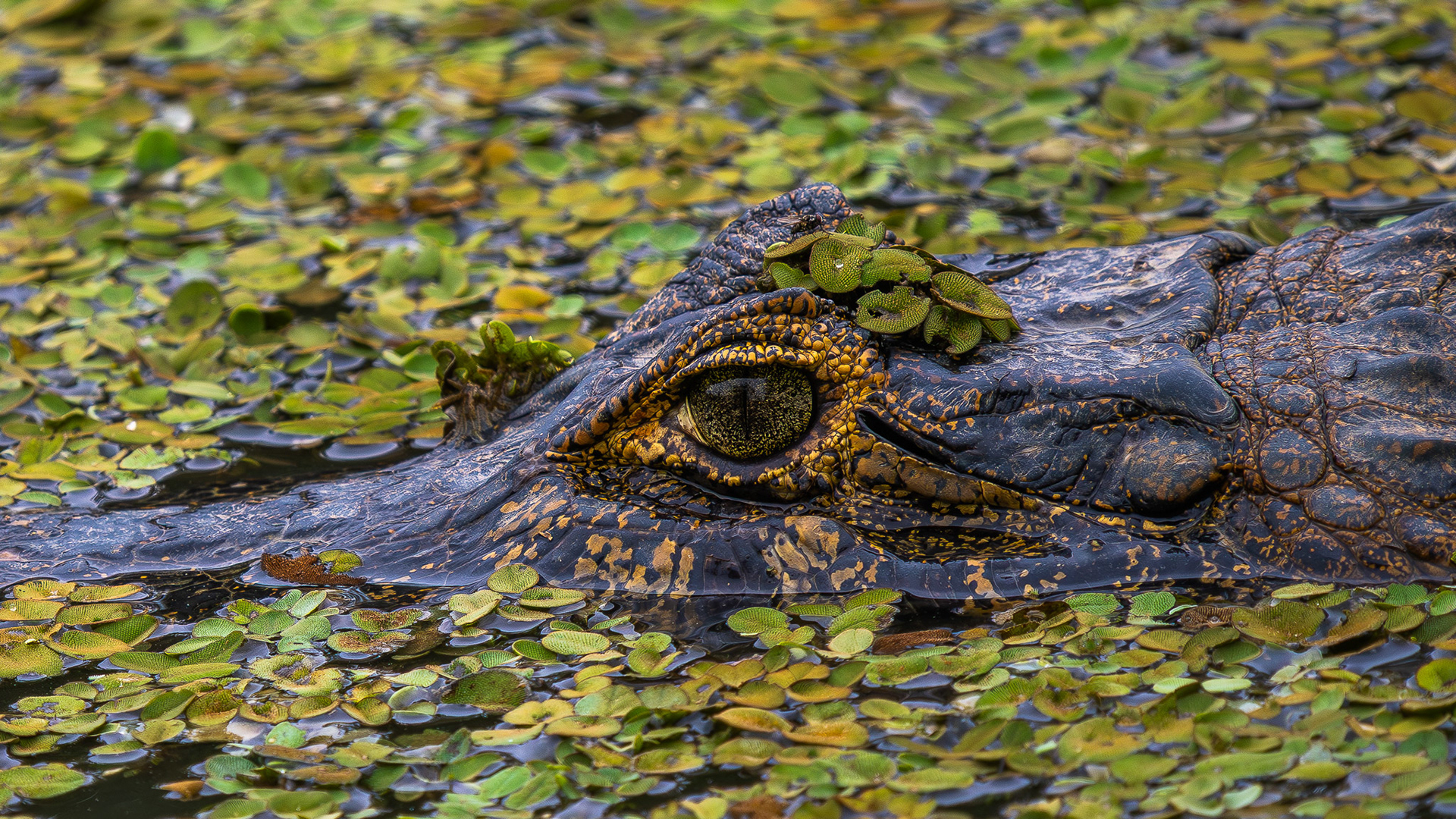
By remaining partially submerged with only its eyes and nostrils above the surface, the Yacaré Caiman can patiently wait for fish, birds, or small mammals to come within reach. This natural camouflage, combined with its remarkable stillness and stealth, makes it a highly effective ambush predator.
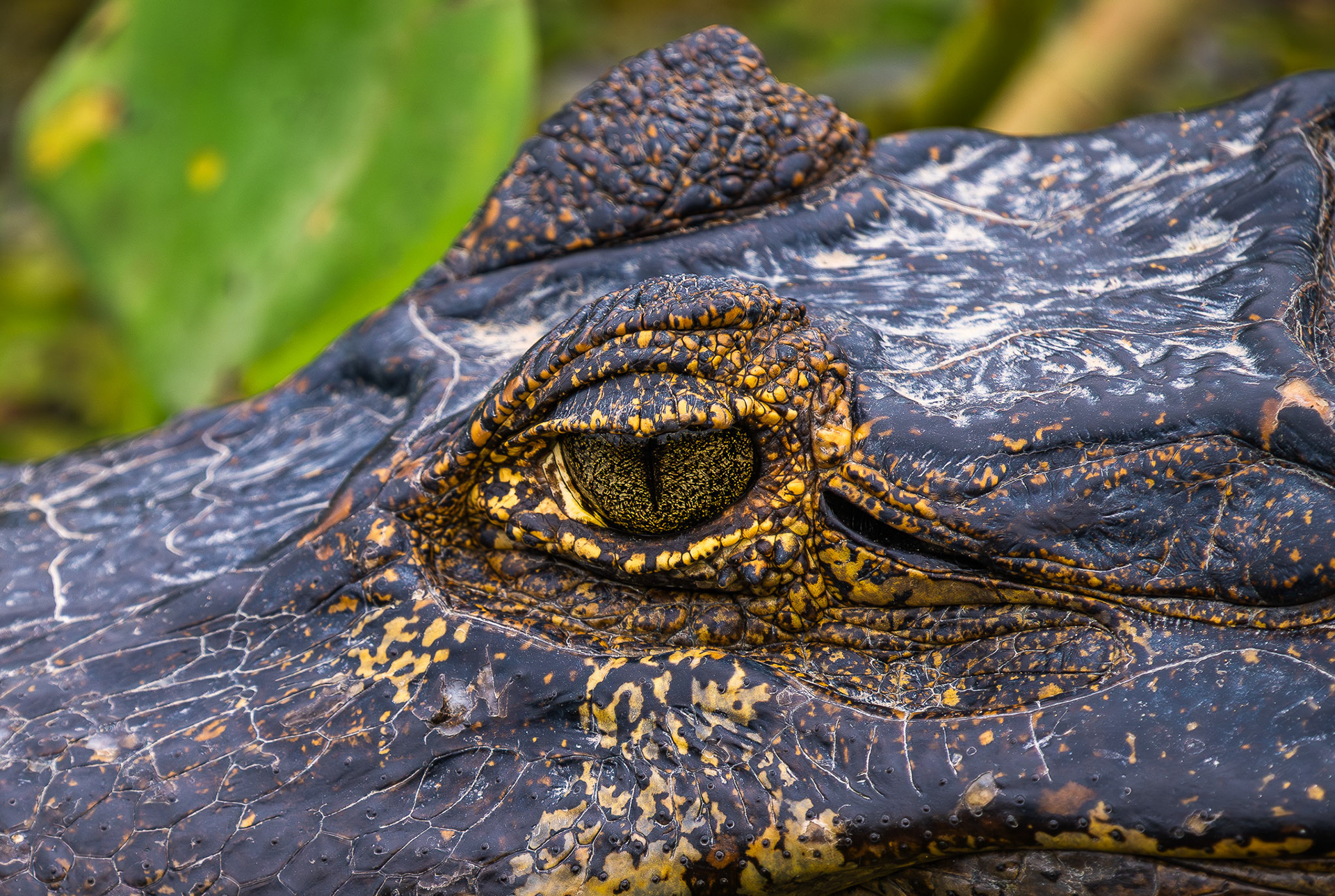
The protective armour above the Caiman's eye shields it from debris and struggling prey.
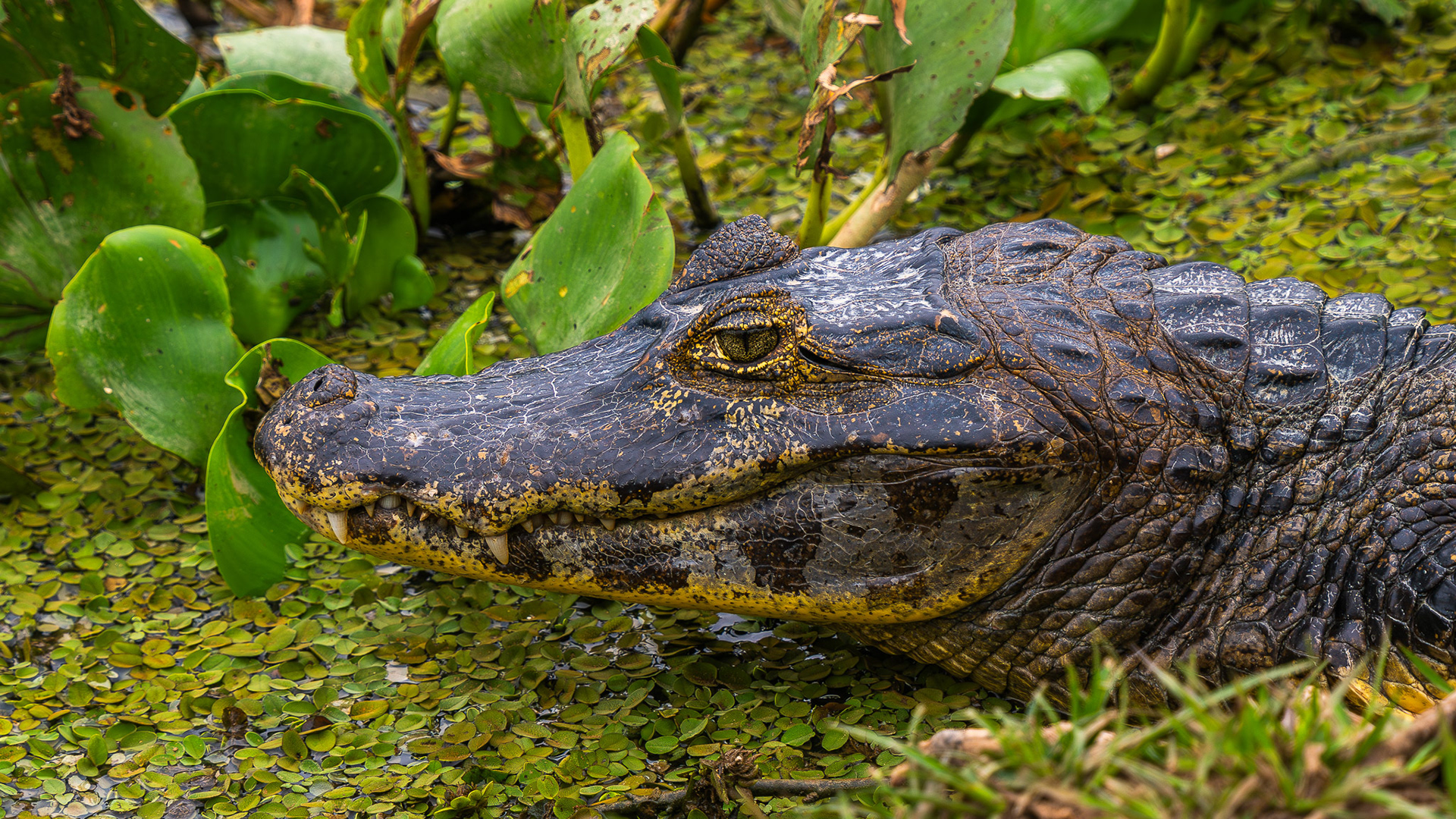
In the Pantanal, even the Caiman must remain vigilant as one of its few natural predators is the powerful Jaguar.
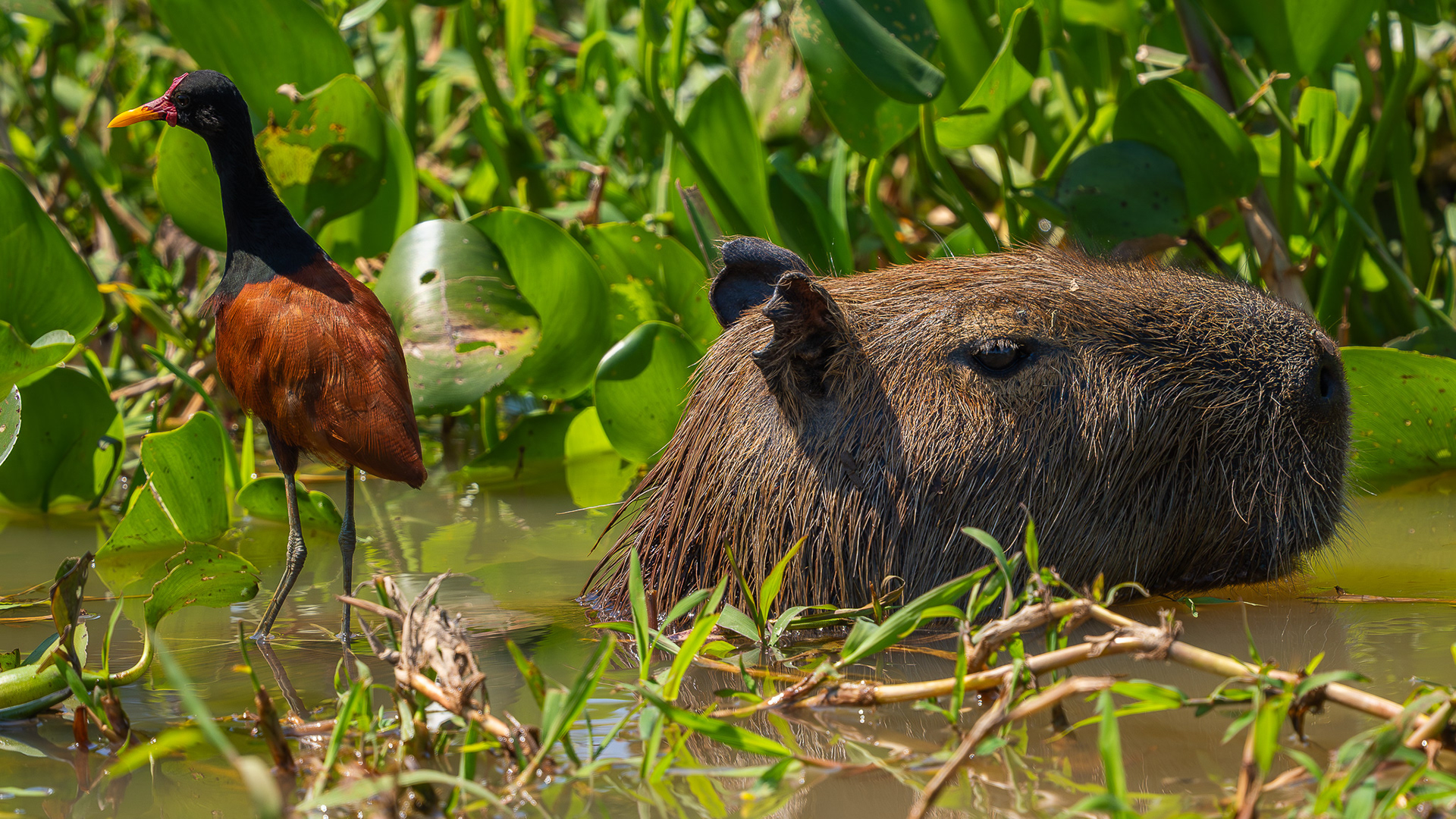
A Wattled Jacana with a half-submerged Capybara - its long, slender toes perfectly adapted for walking on floating vegetation. The two are often seen together in a mutually beneficial partnership: the Jacana grooms the Capybara, picking off ticks, flies, and other parasites, and in return gains a protein-rich meal from the insects it collects.
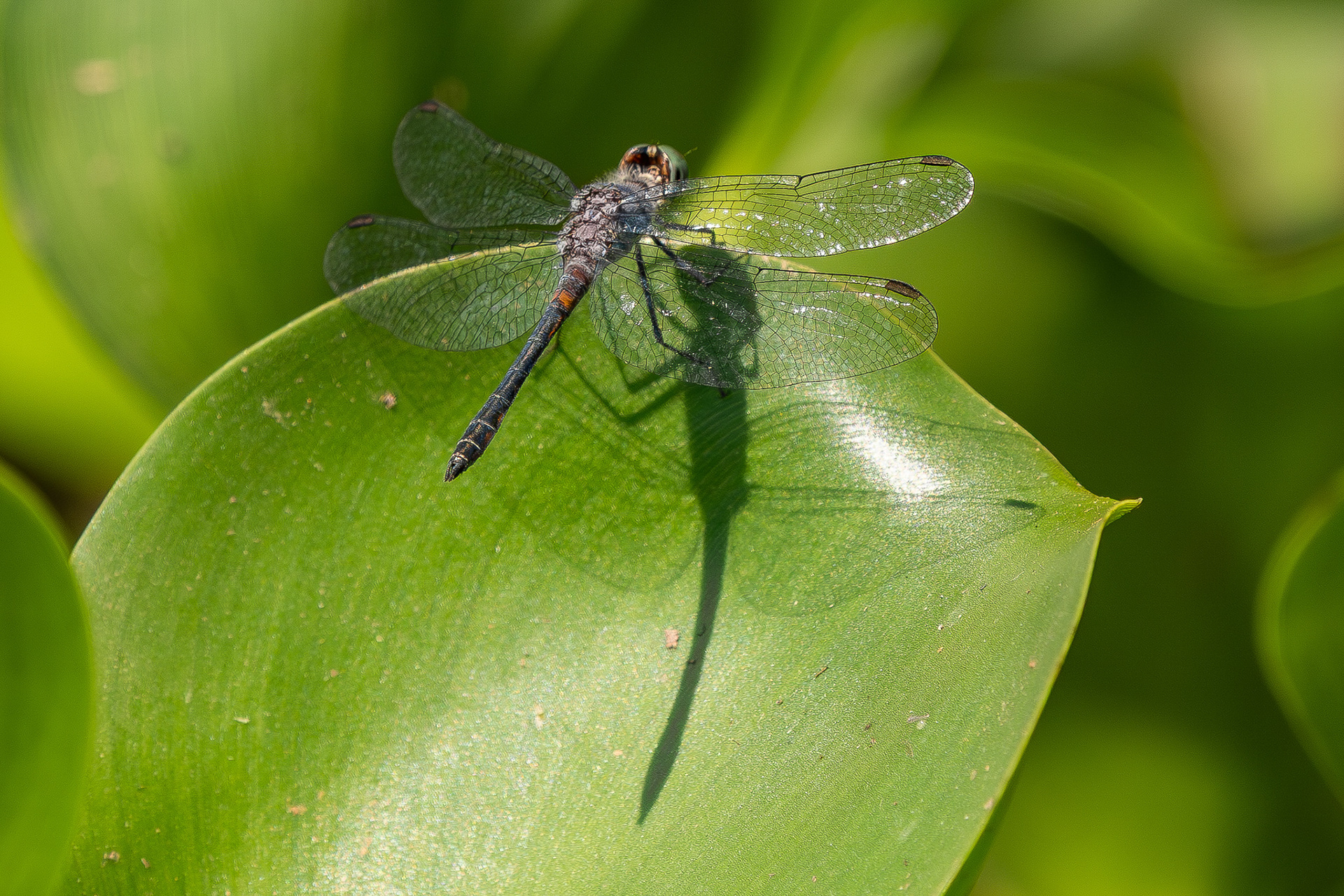
A dragonfly perched lightly on a broad green leaf.
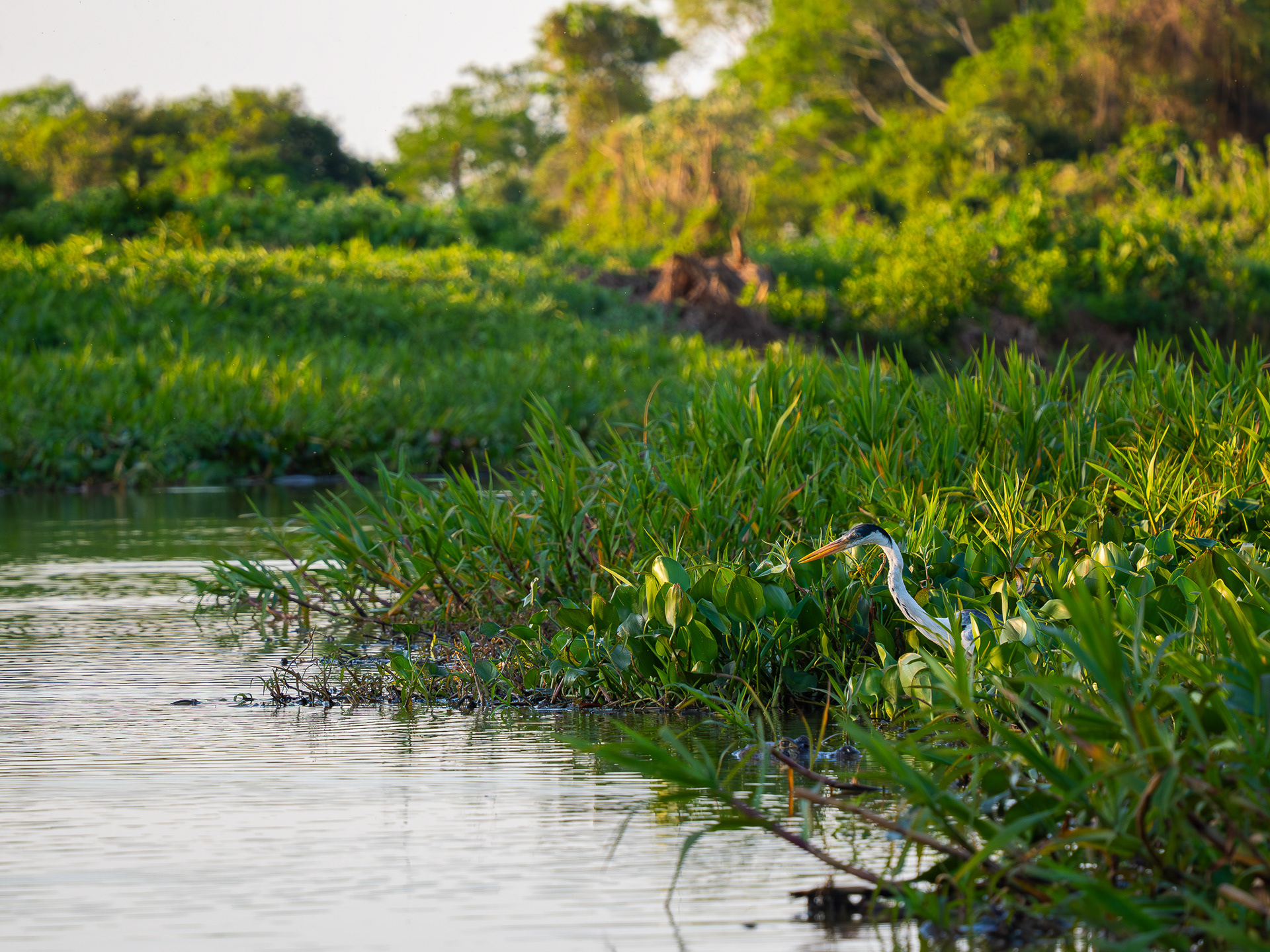
A Cocoi Heron at home in the wetlands of the Pantanal, thriving among its rivers, lakes, marshes, and flooded grasslands.
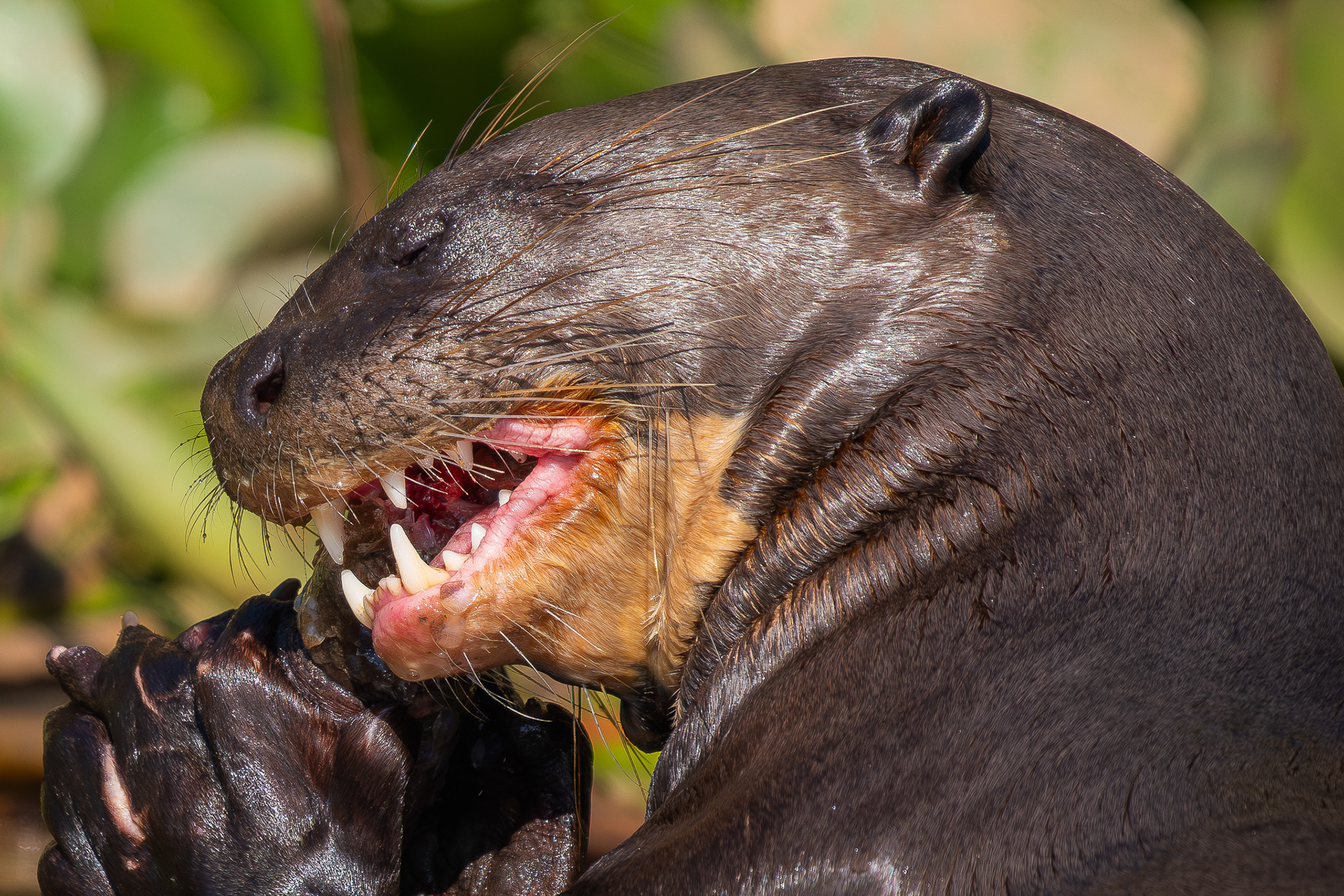
White canines gleaming, the Giant River Otter devours its freshly caught prey.
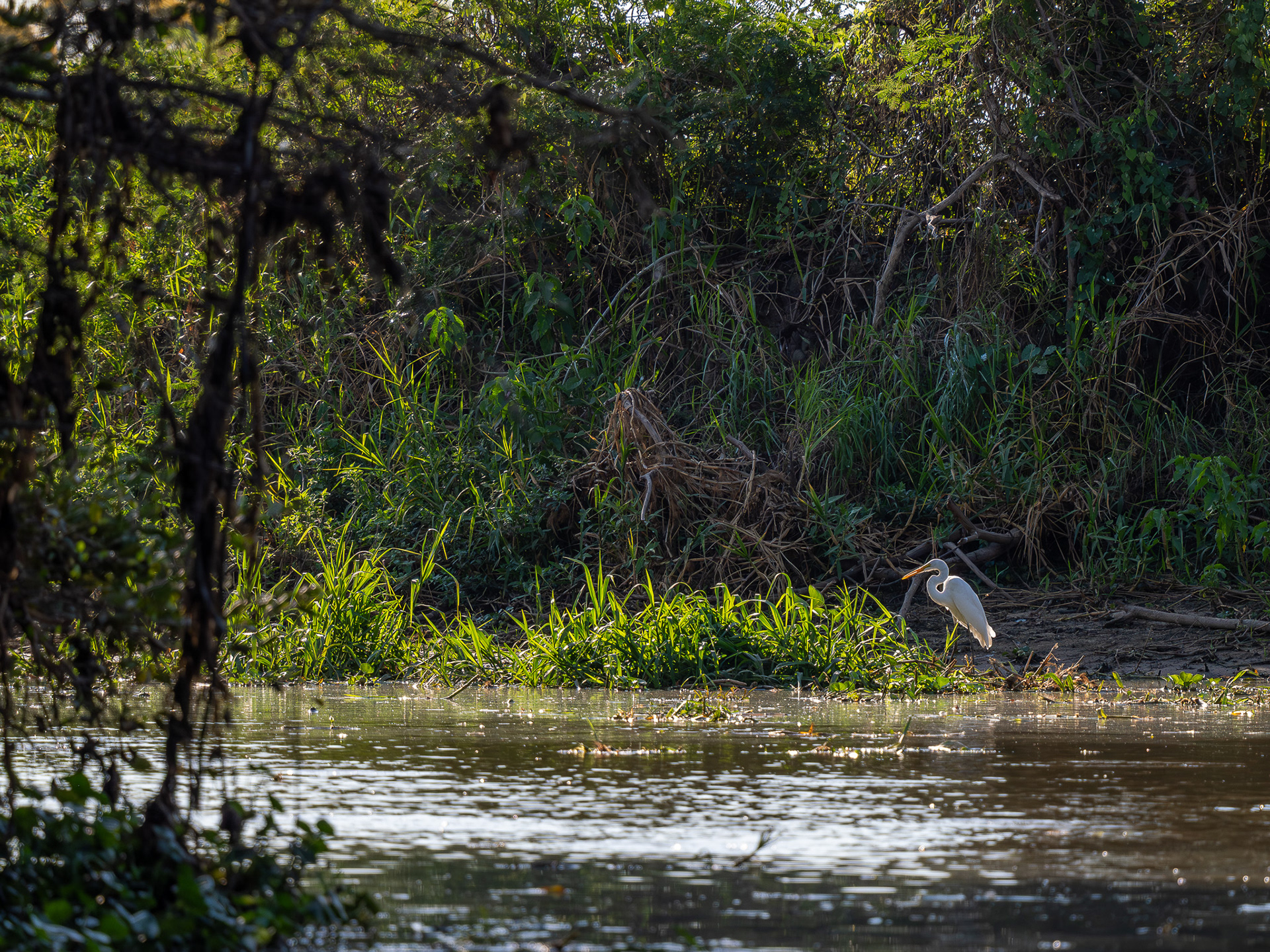
The Great Egret is found throughout the Pantanal's marshes and seasonally flooded plains.
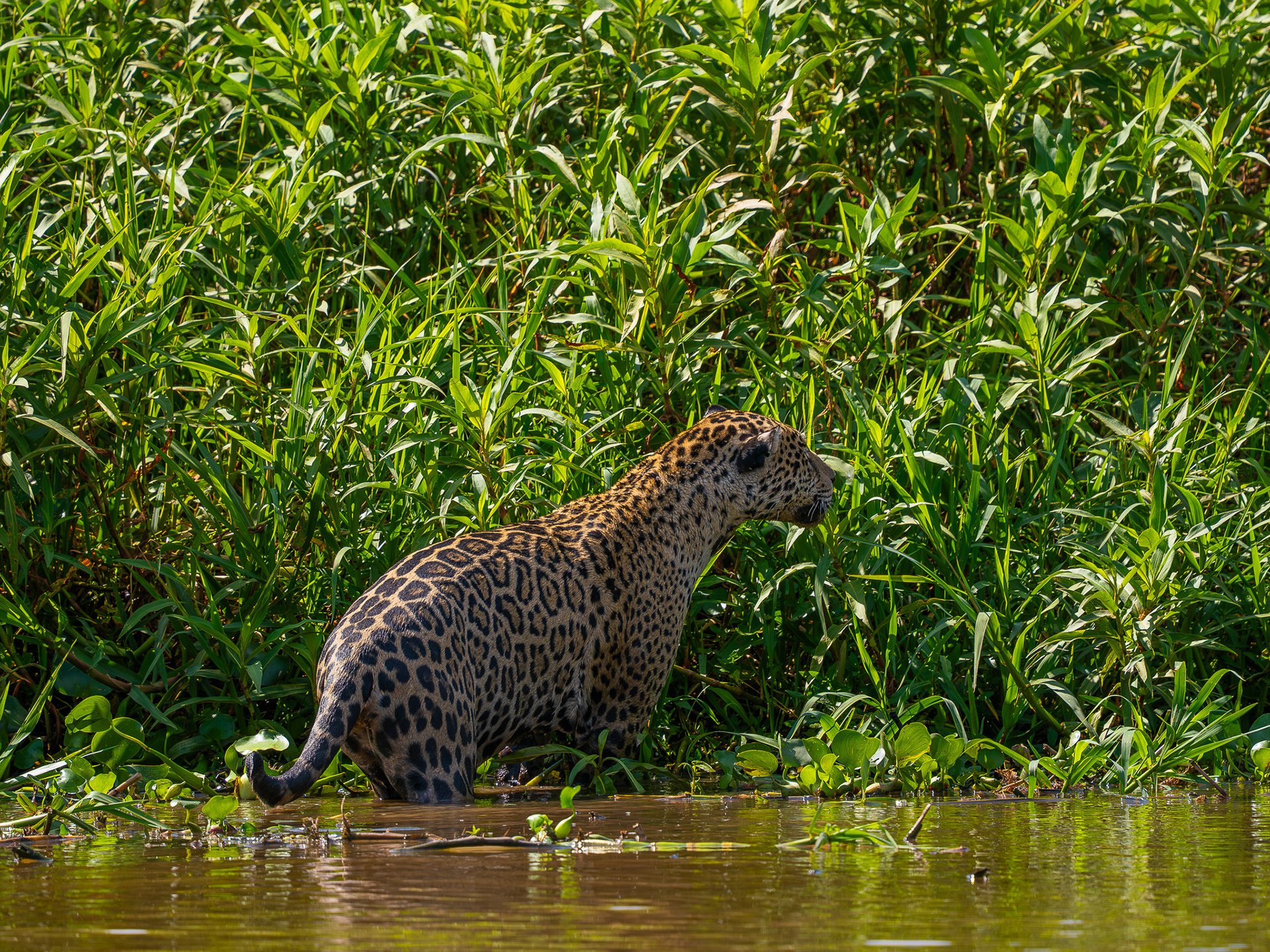
A Jaguar steps from the water and pauses on the riverbank, tense and staring into the undergrowth. After edging forward to investigate, it suddenly turns, splashes back into the river, and swims away.
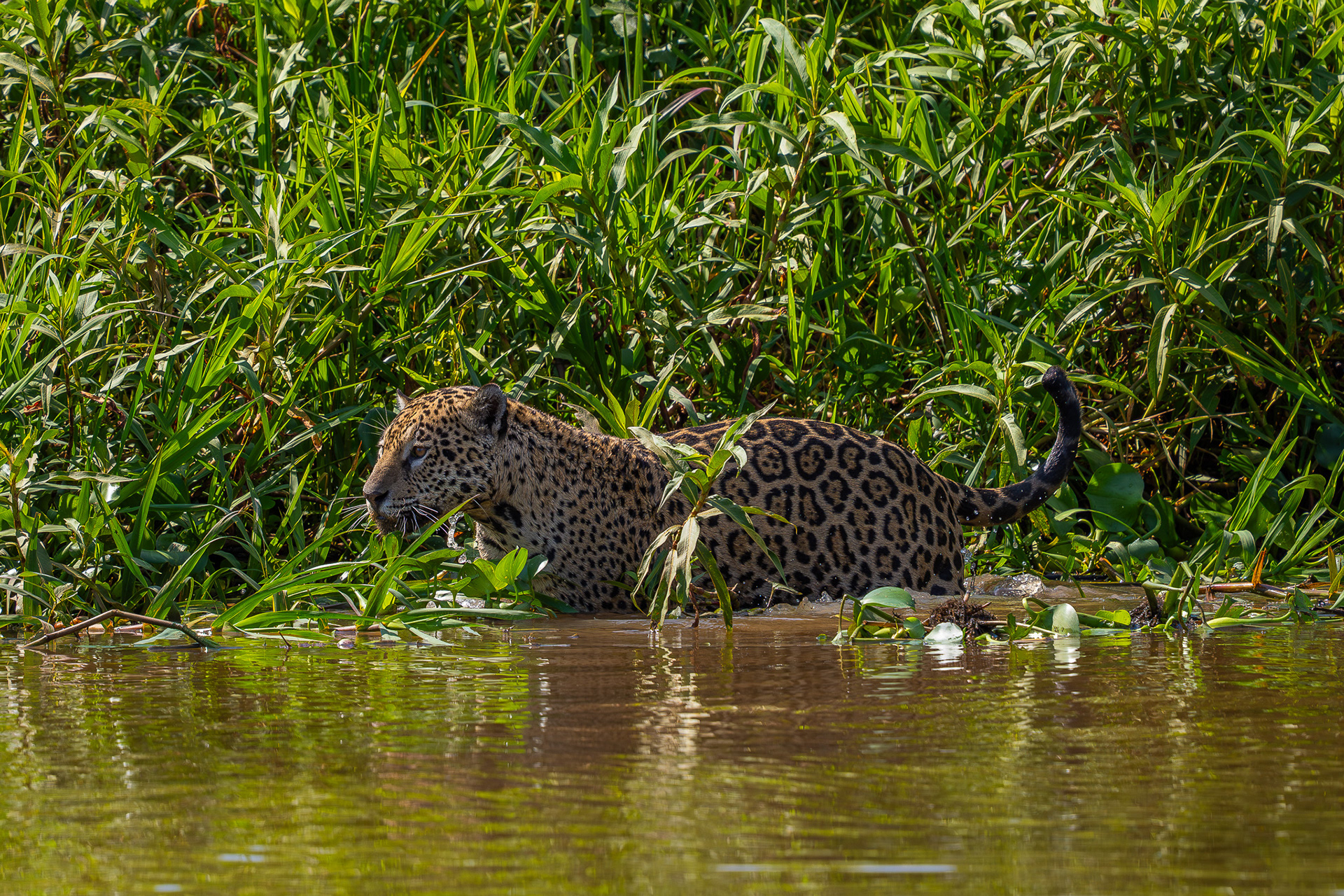
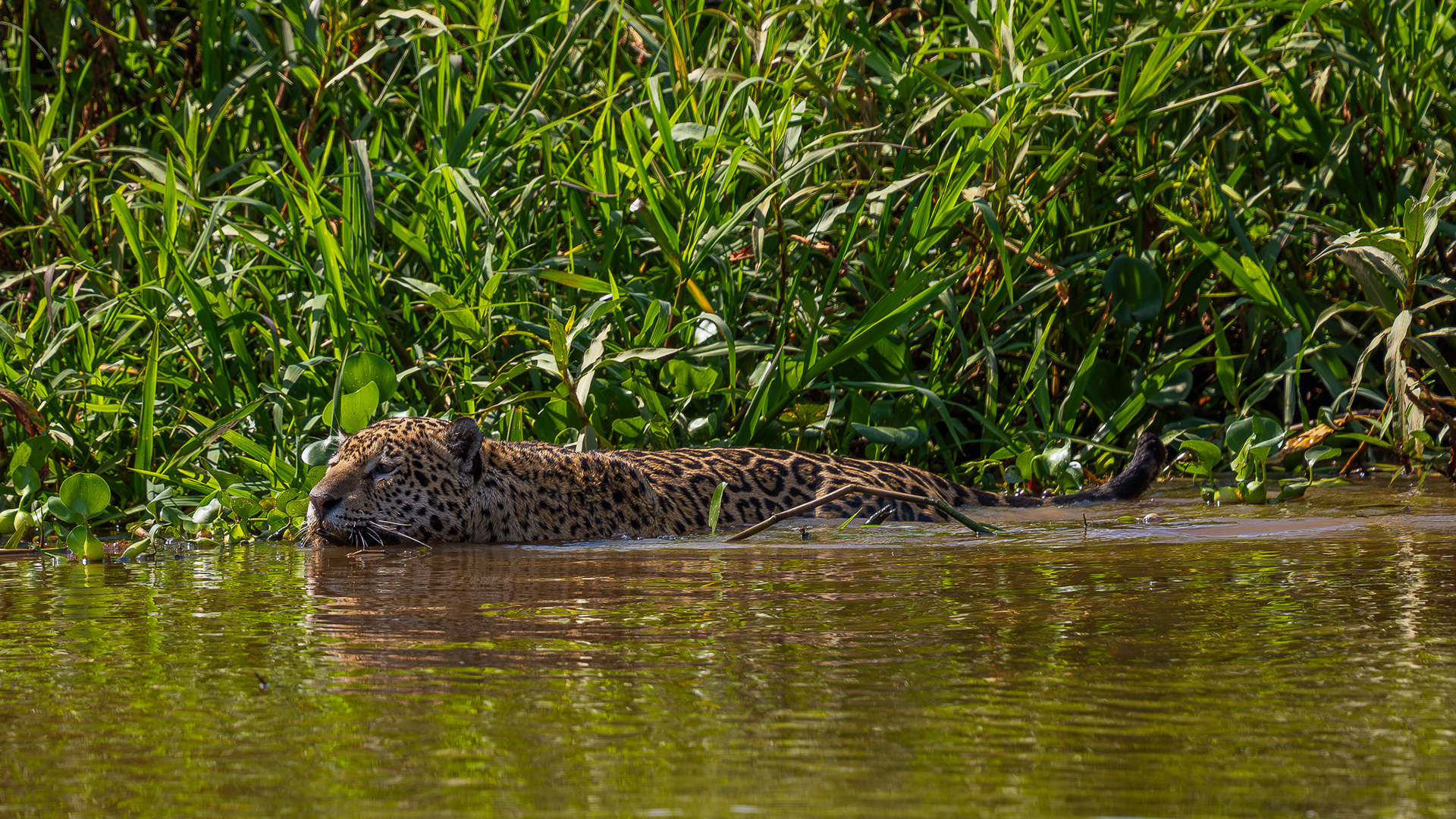
Jaguar
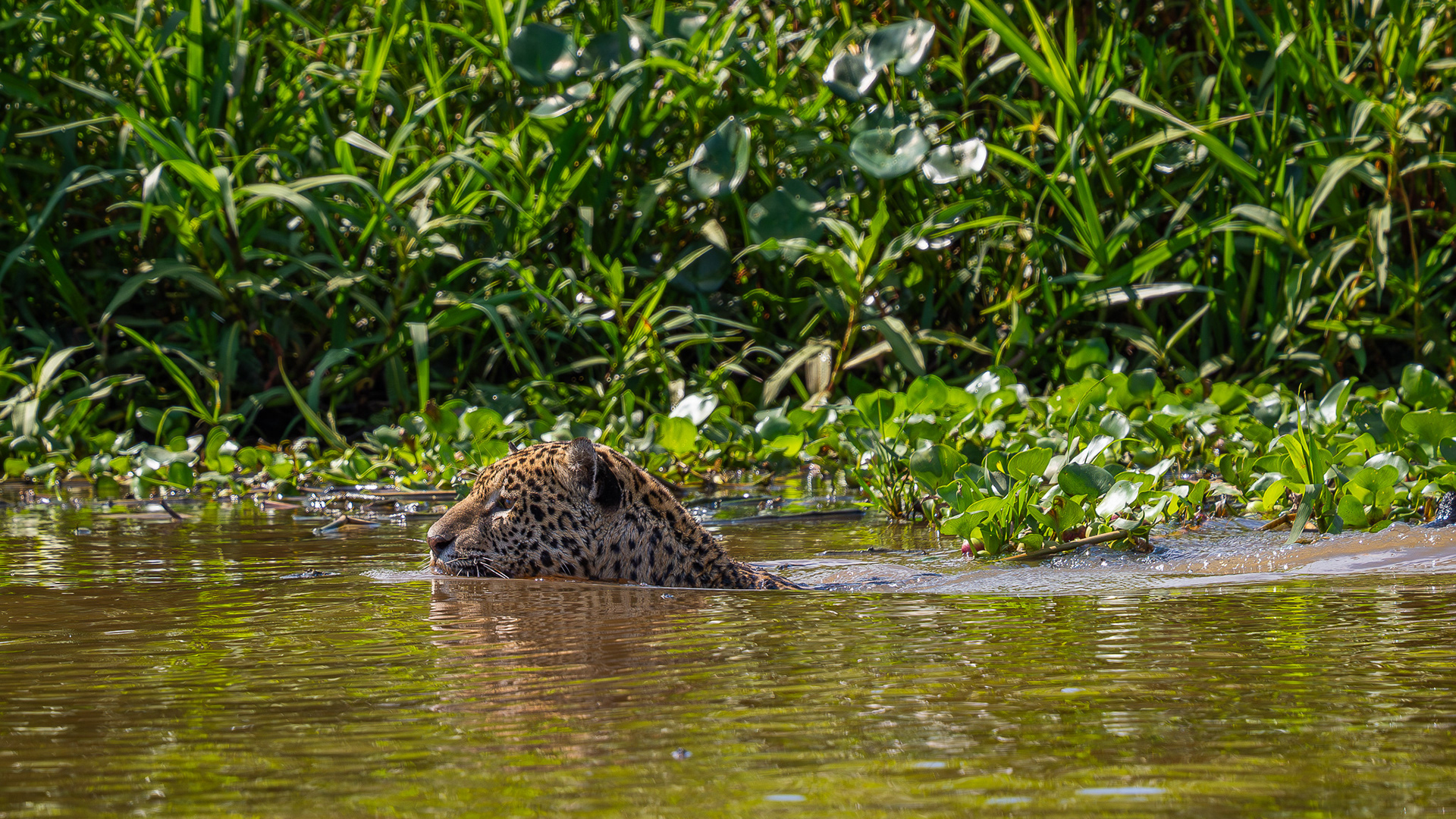
Jaguar
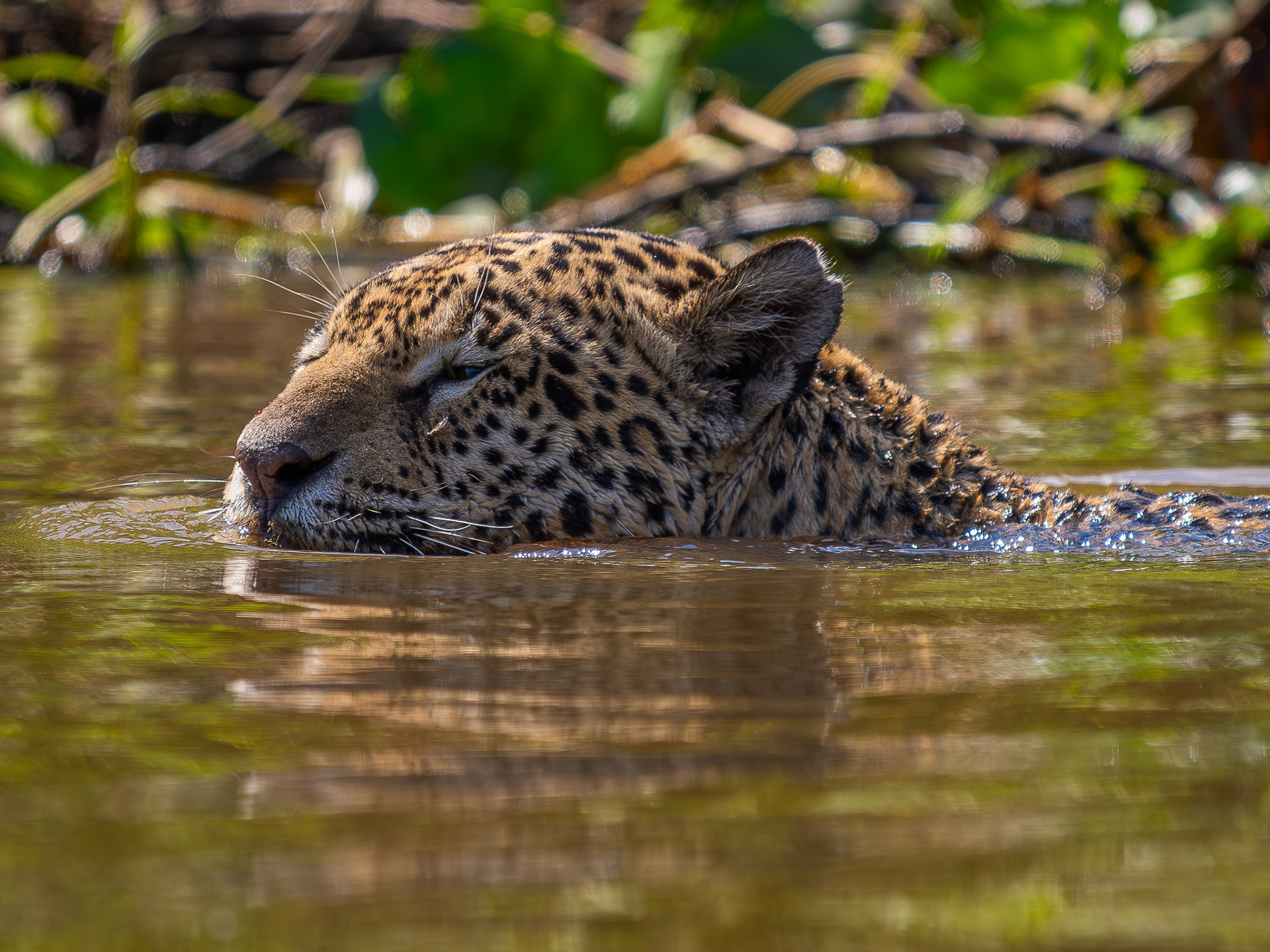
Face-to-face with the wild - a Jaguar swims alongside our boat in the heart of the Pantanal. An unforgettable encounter, offering a rare glimpse into the life of one of nature's most elusive predators.
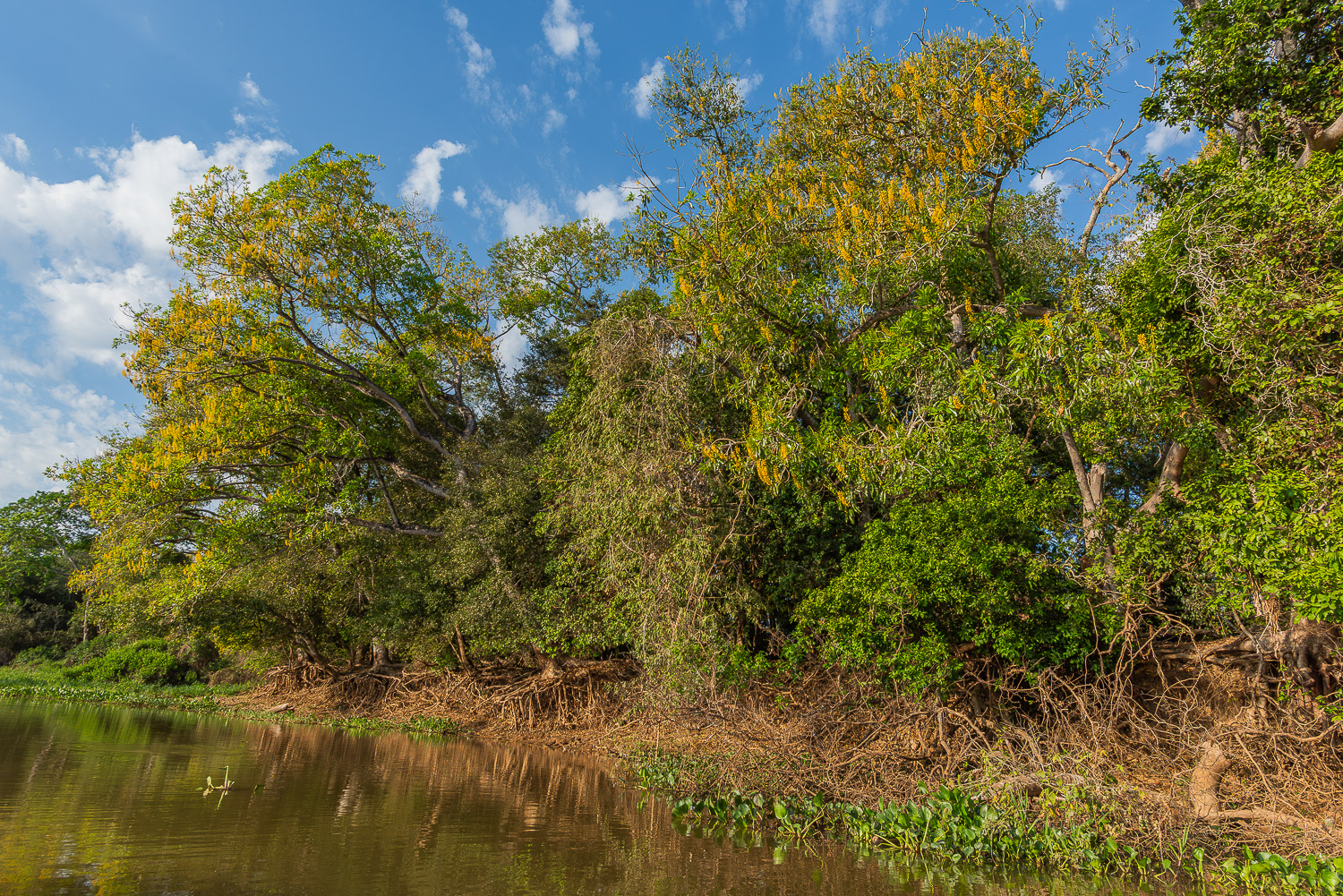
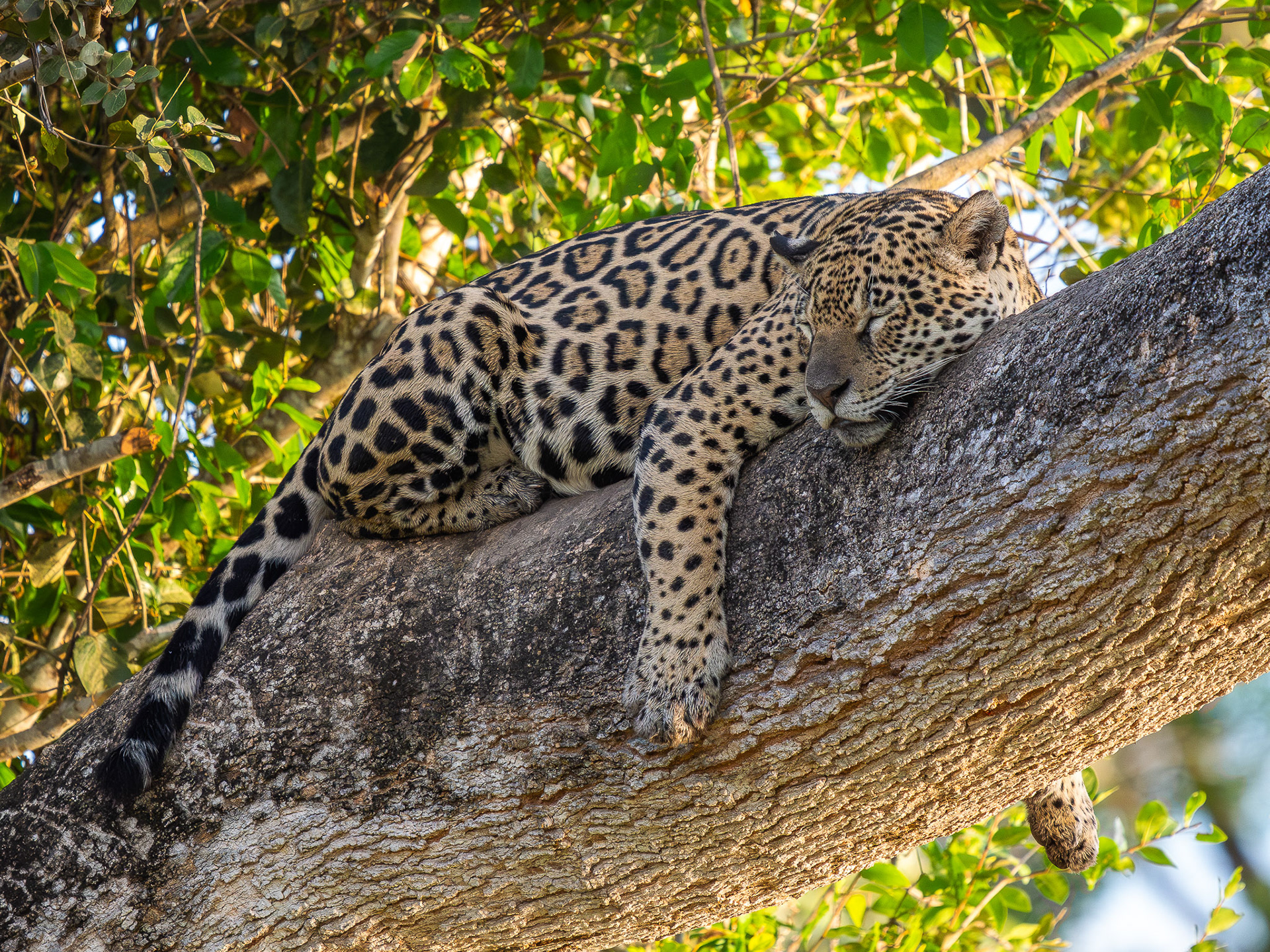
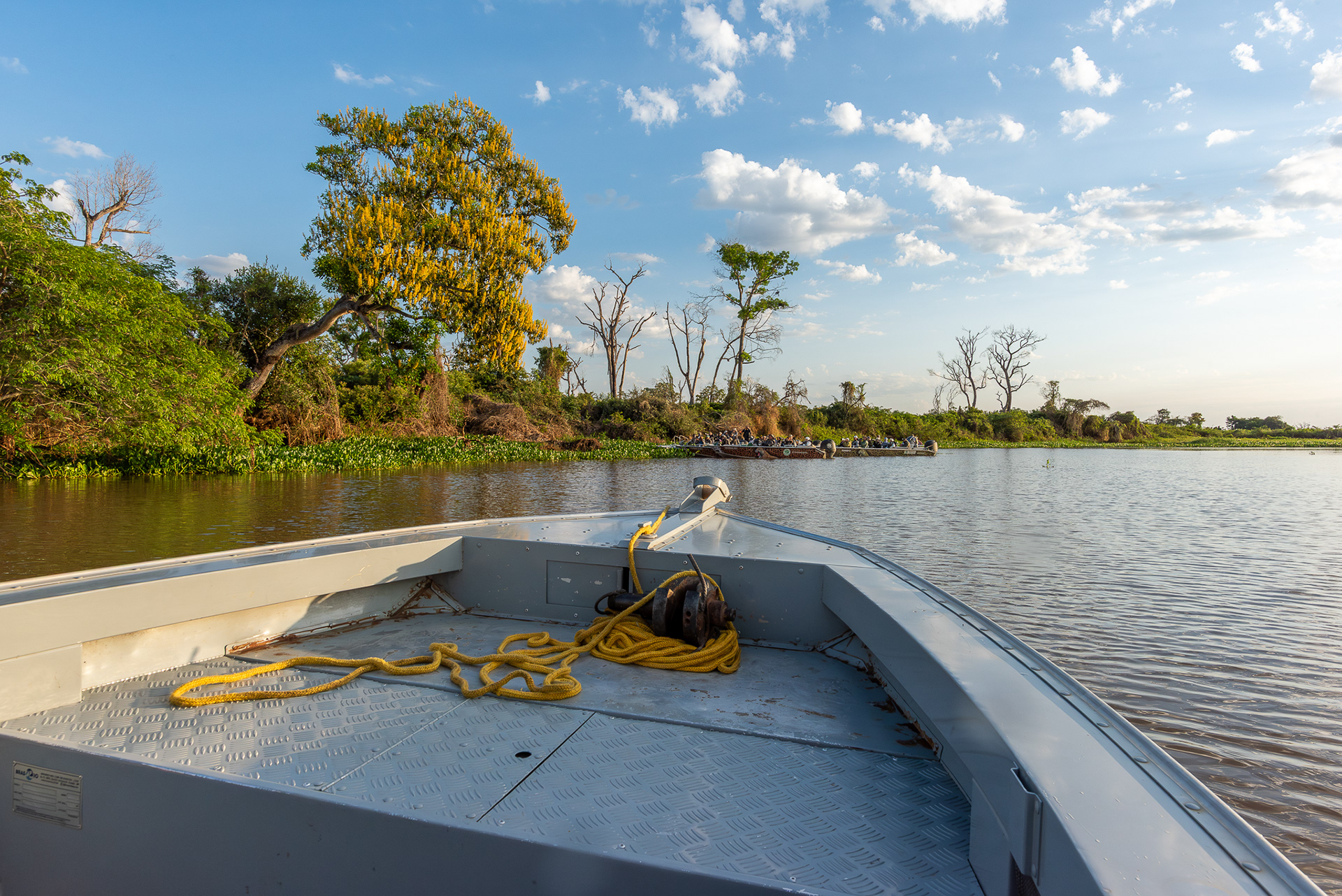
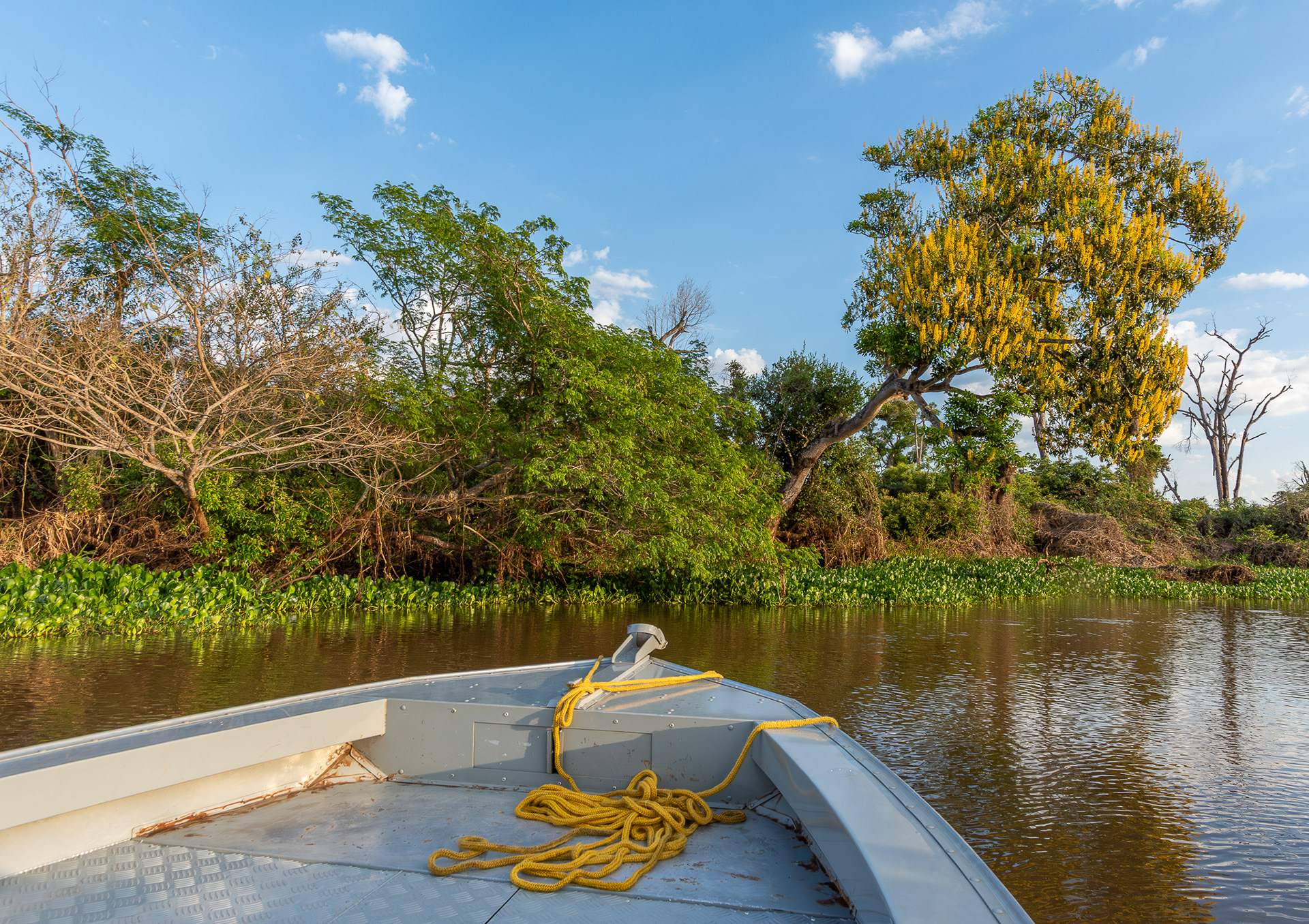
Drifting quietly along the river, our guide spots a cluster of boats near the bank. There, stretched across the leaning trunk of a tree adorned with bright yellow flowers, lies a Jaguar - relaxed yet unmistakably powerful, its golden coat marked with dark rosettes. We cut the engine and drift closer with the current. The Jaguar lifts its head, amber eyes calmly sweeping over us. For a brief moment, we are seen. Then it lowers its head again, completely at ease in the wild.
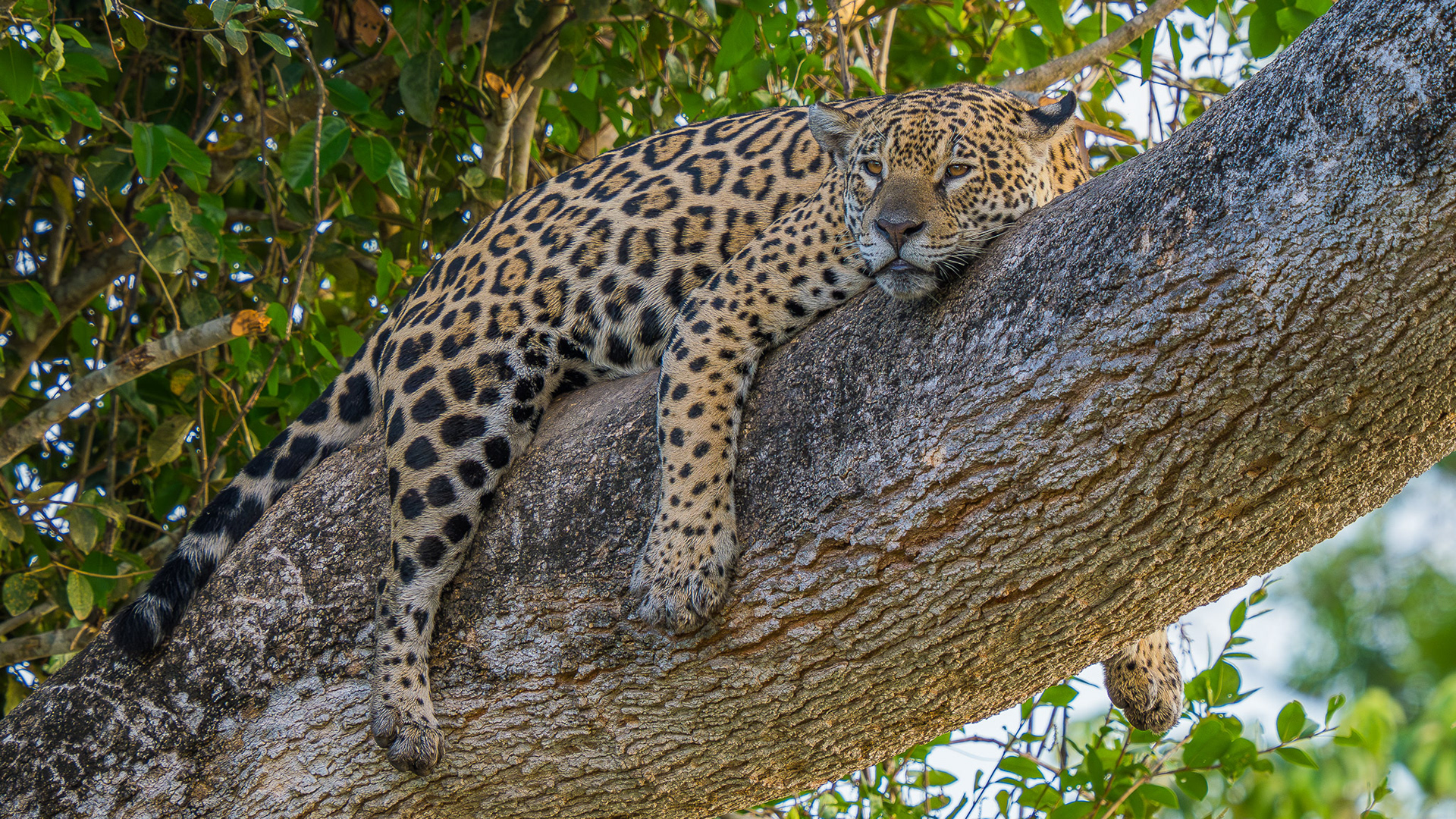
Observing a Jaguar from a boat on a river in the Pantanal, especially one resting in a tree, was unforgettable. Everyone on board shared the thrill of seeing one of the world's most elusive big cats.
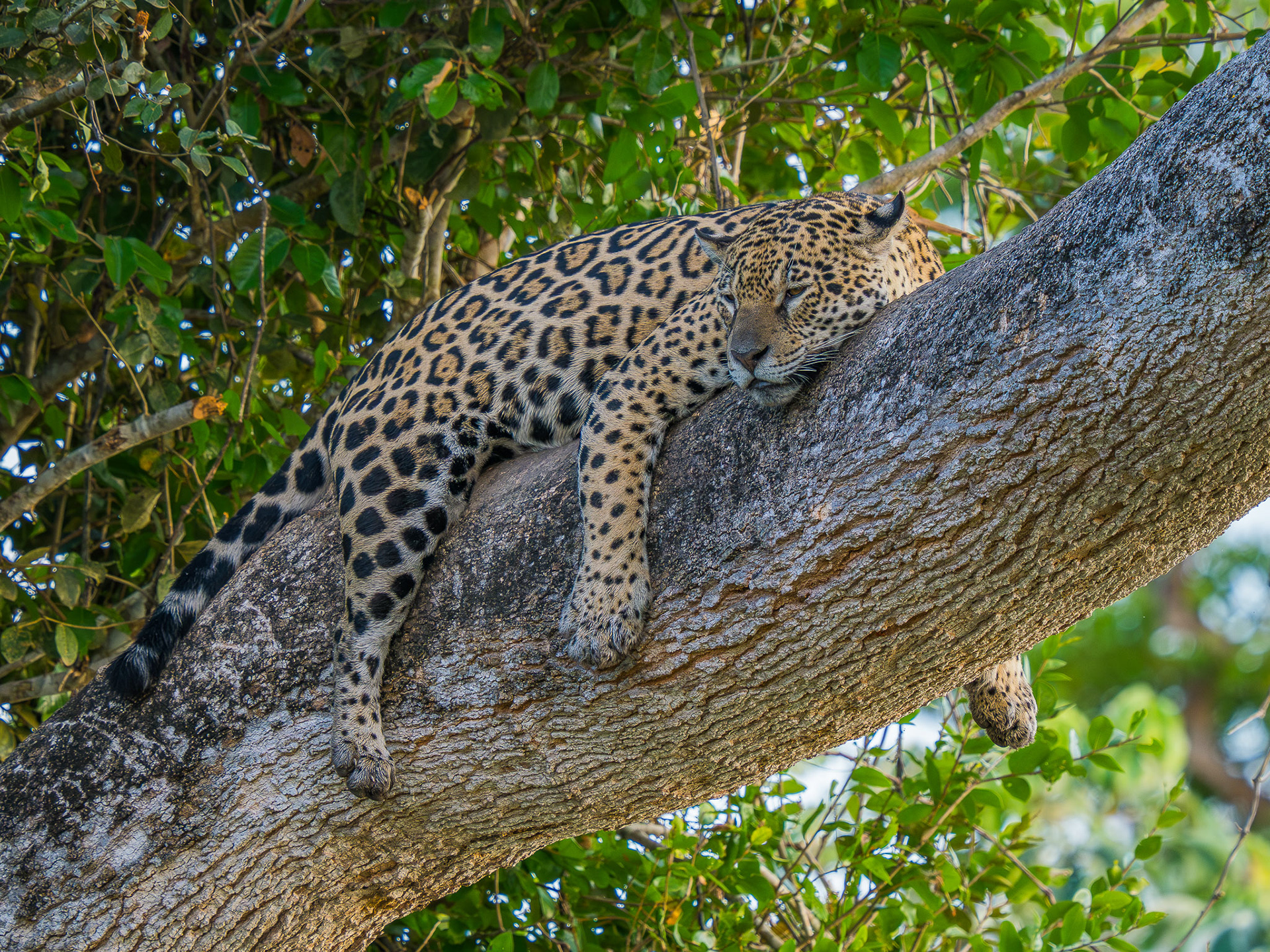
The female Jaguar lounges on a tree trunk, perfectly at ease in her habitat.
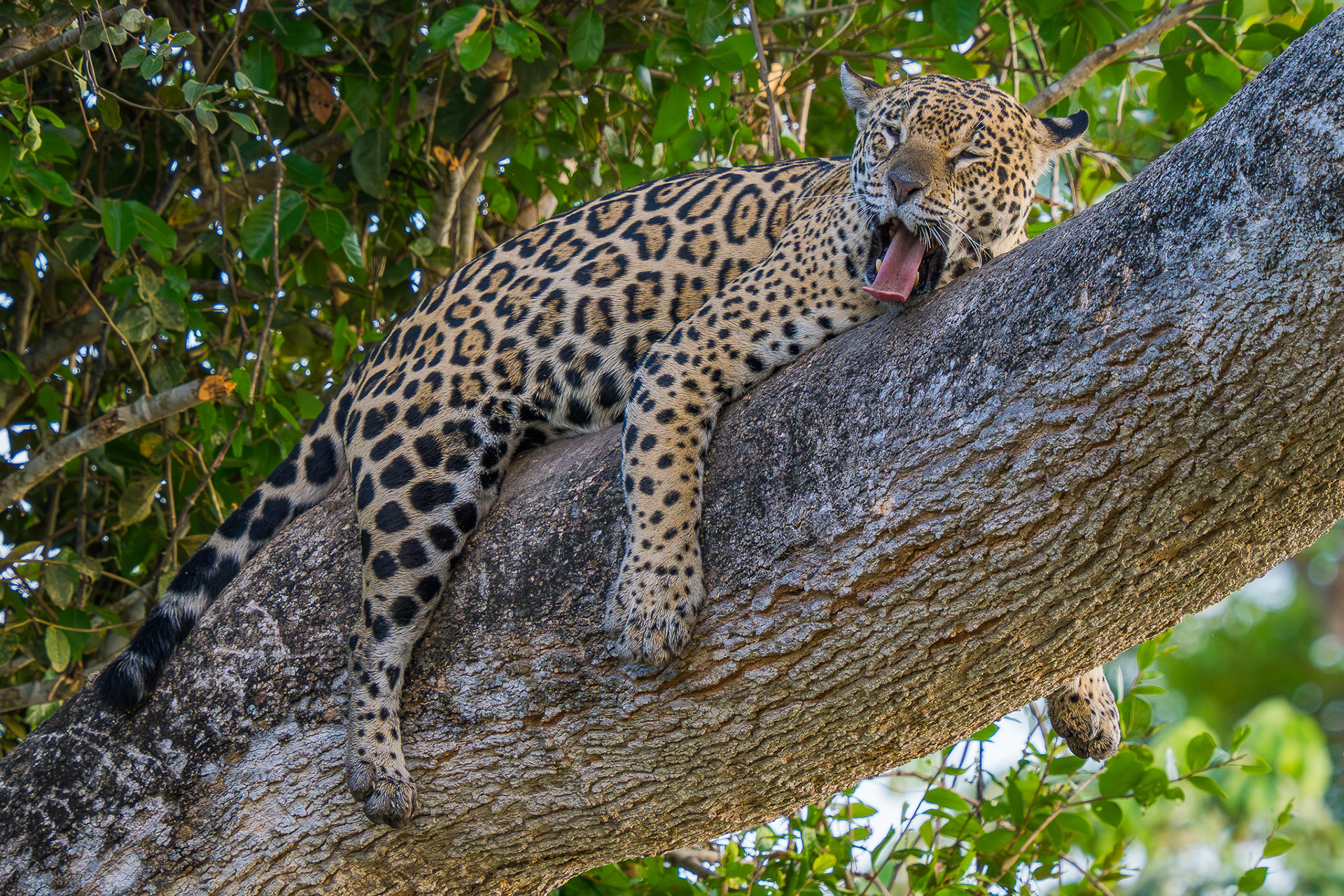
Waking from rest, big cats often yawn when preparing to become active.
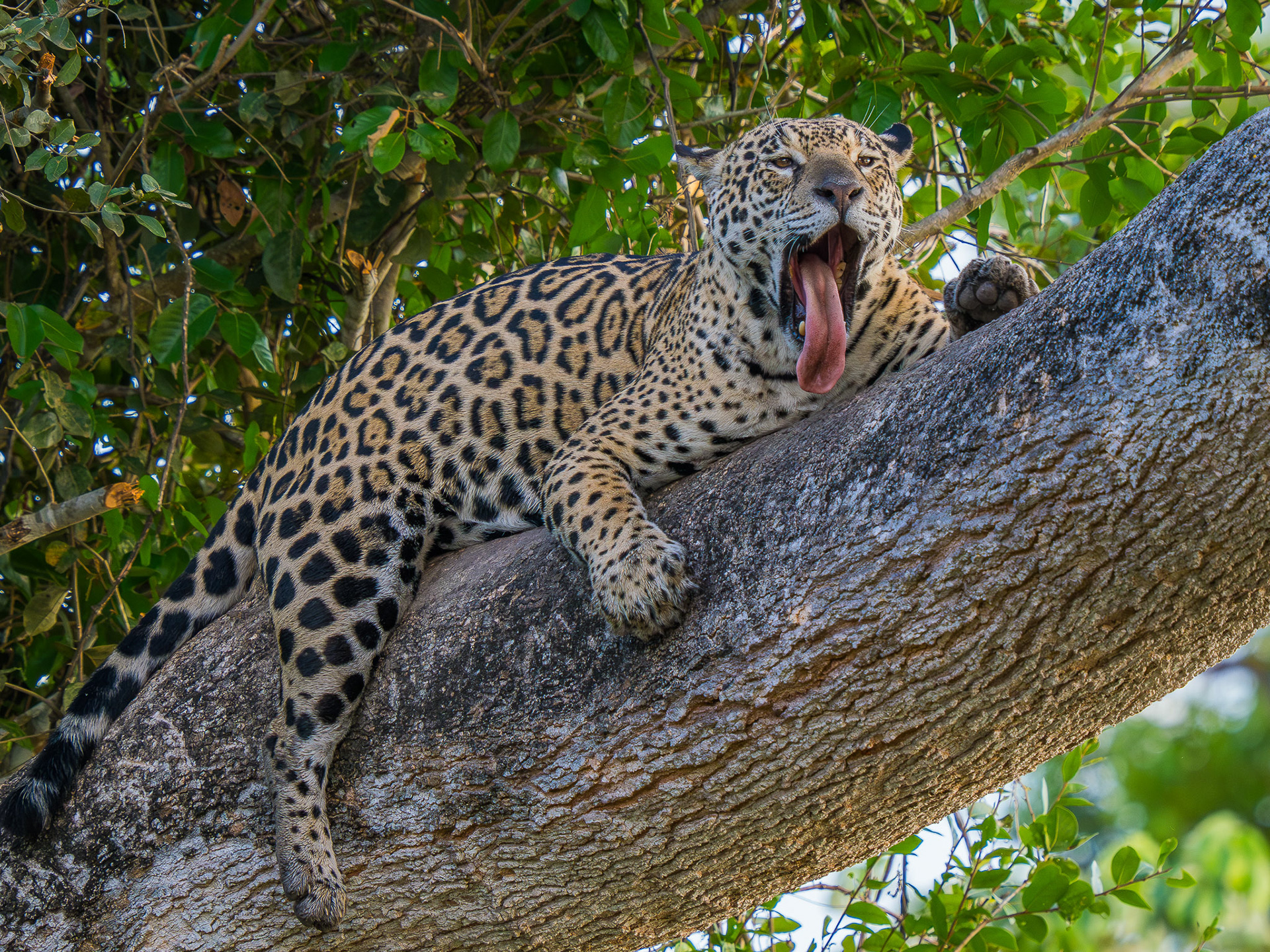
Her powerful jaws part slowly, revealing a long pink tongue unfurling in a wide, unhurried yawn.
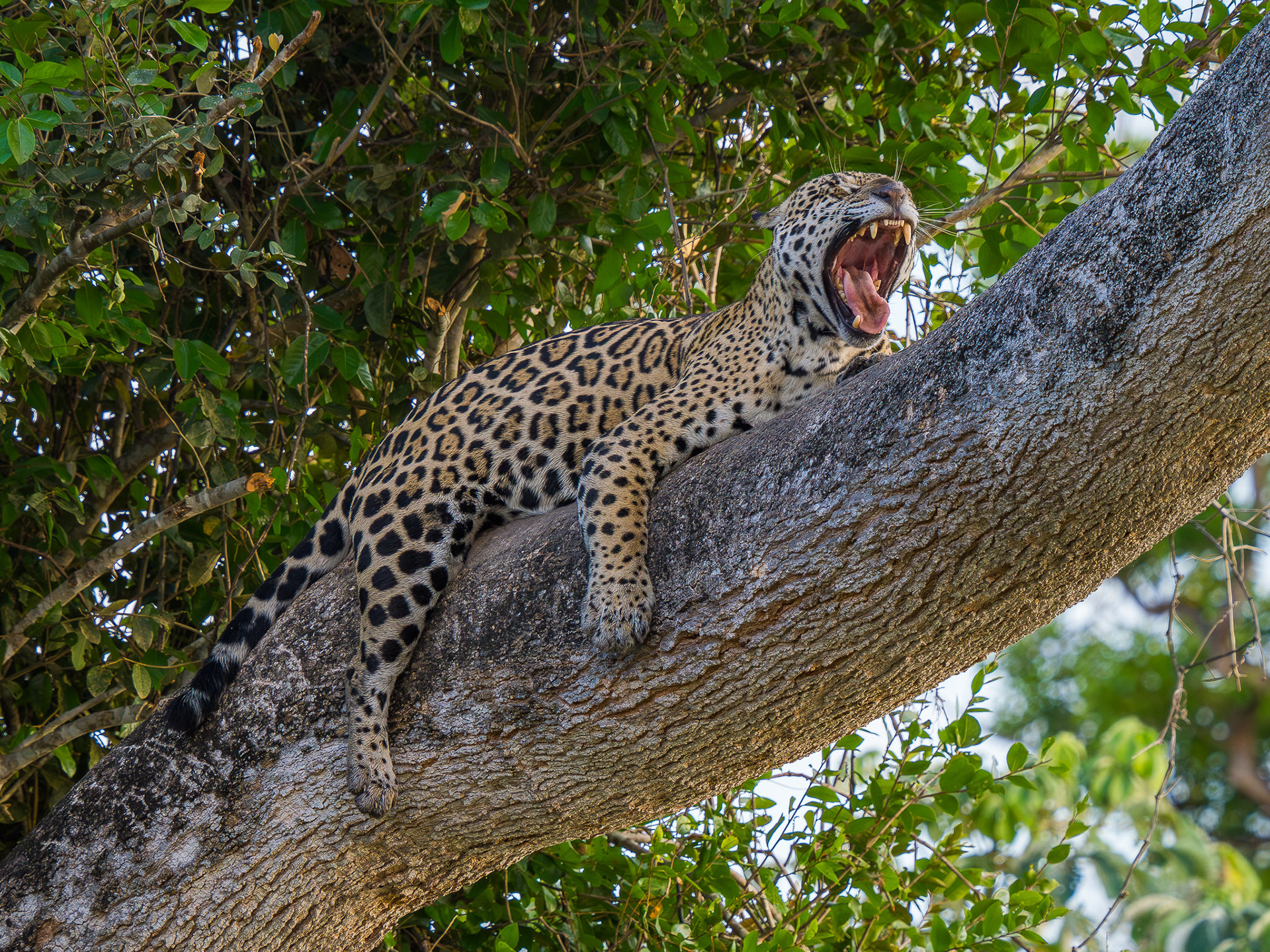
A rare glimpse inside the jaws of one of the rainforest's apex predators.
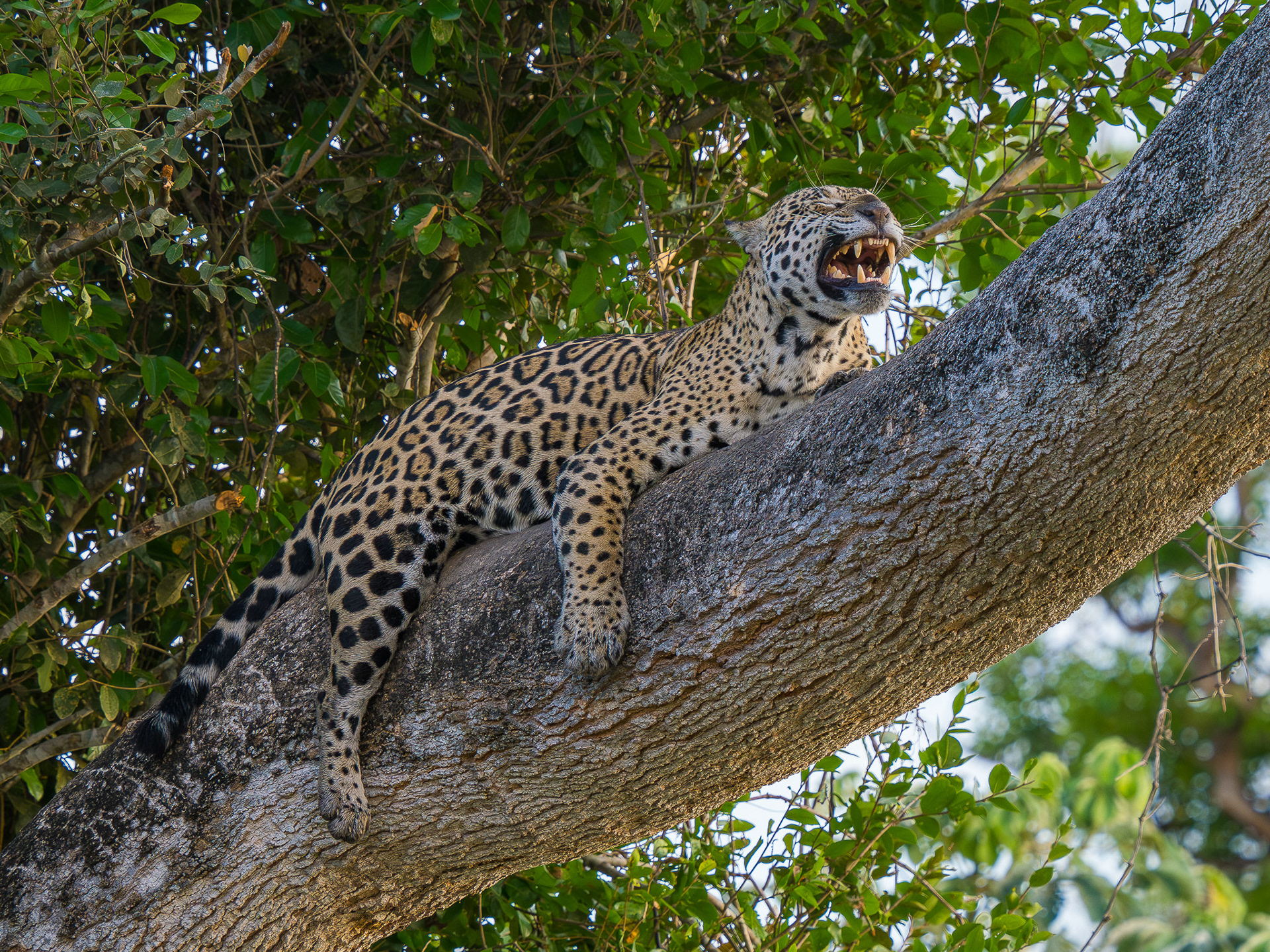
She yawns, with her canines on full display
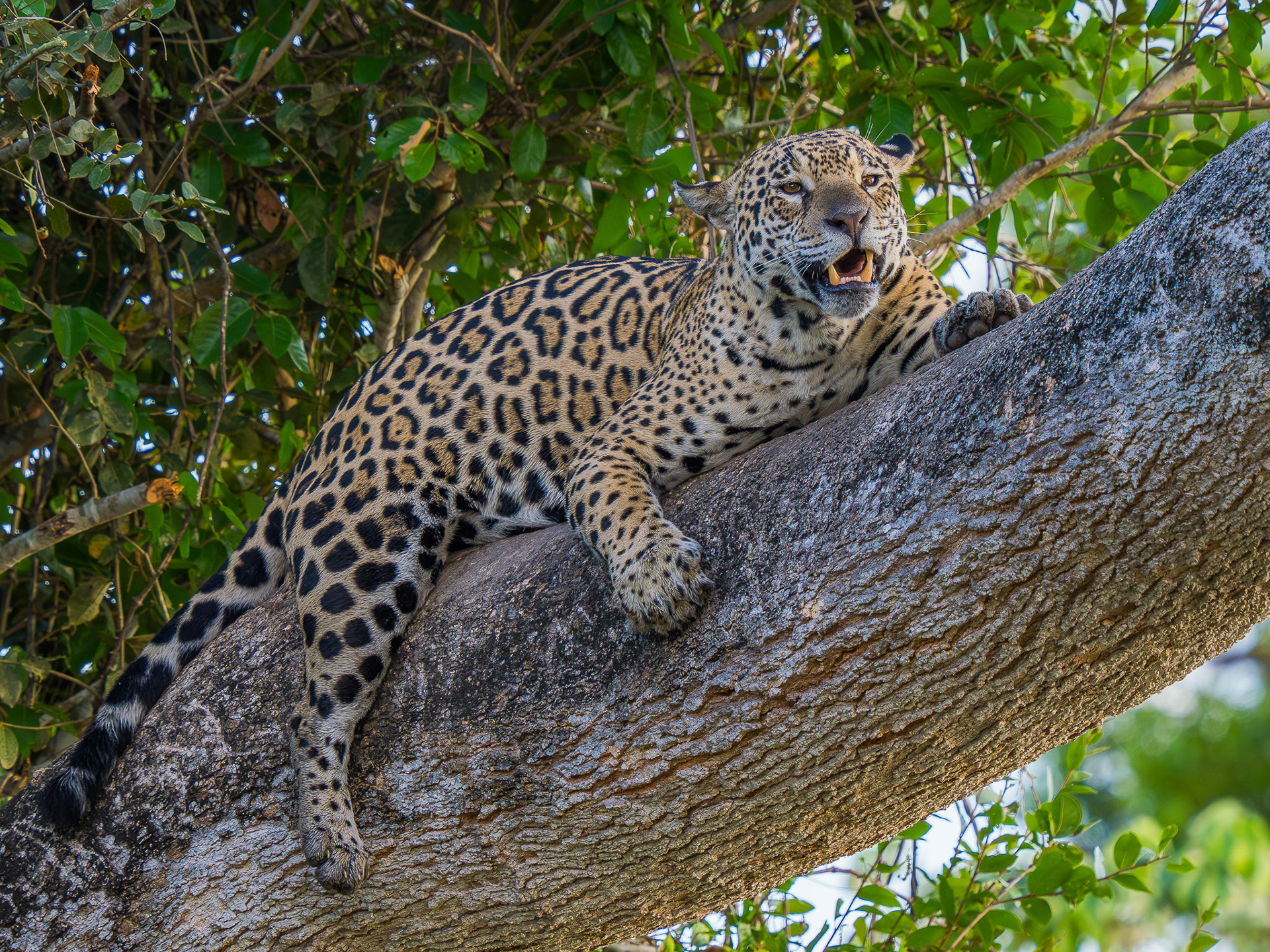
After a deep yawn, Jaguars often appear re-energised, as the increased oxygen intake helps stimulate alertness and readiness.
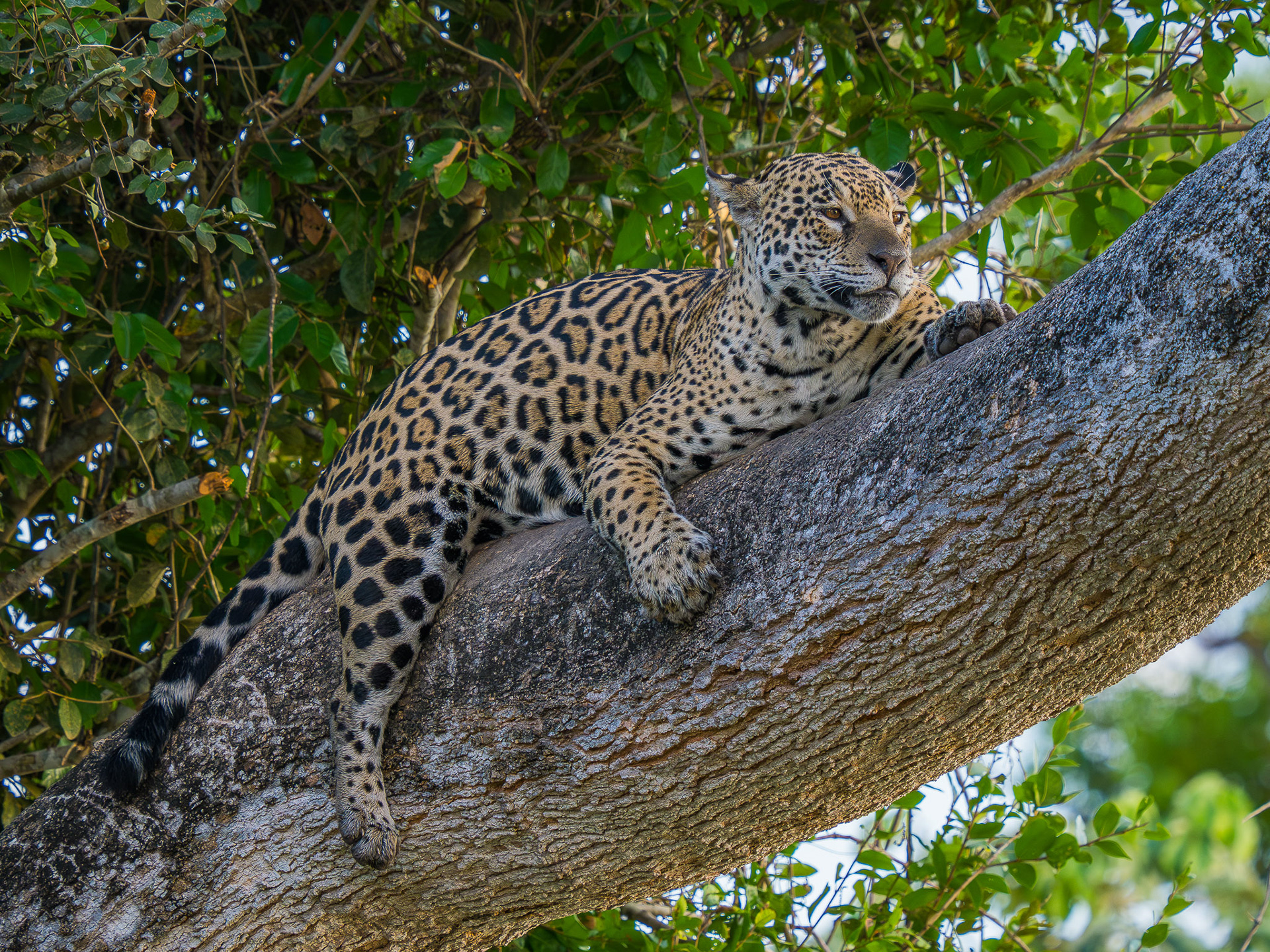
She is now looking more alert and ready to move.
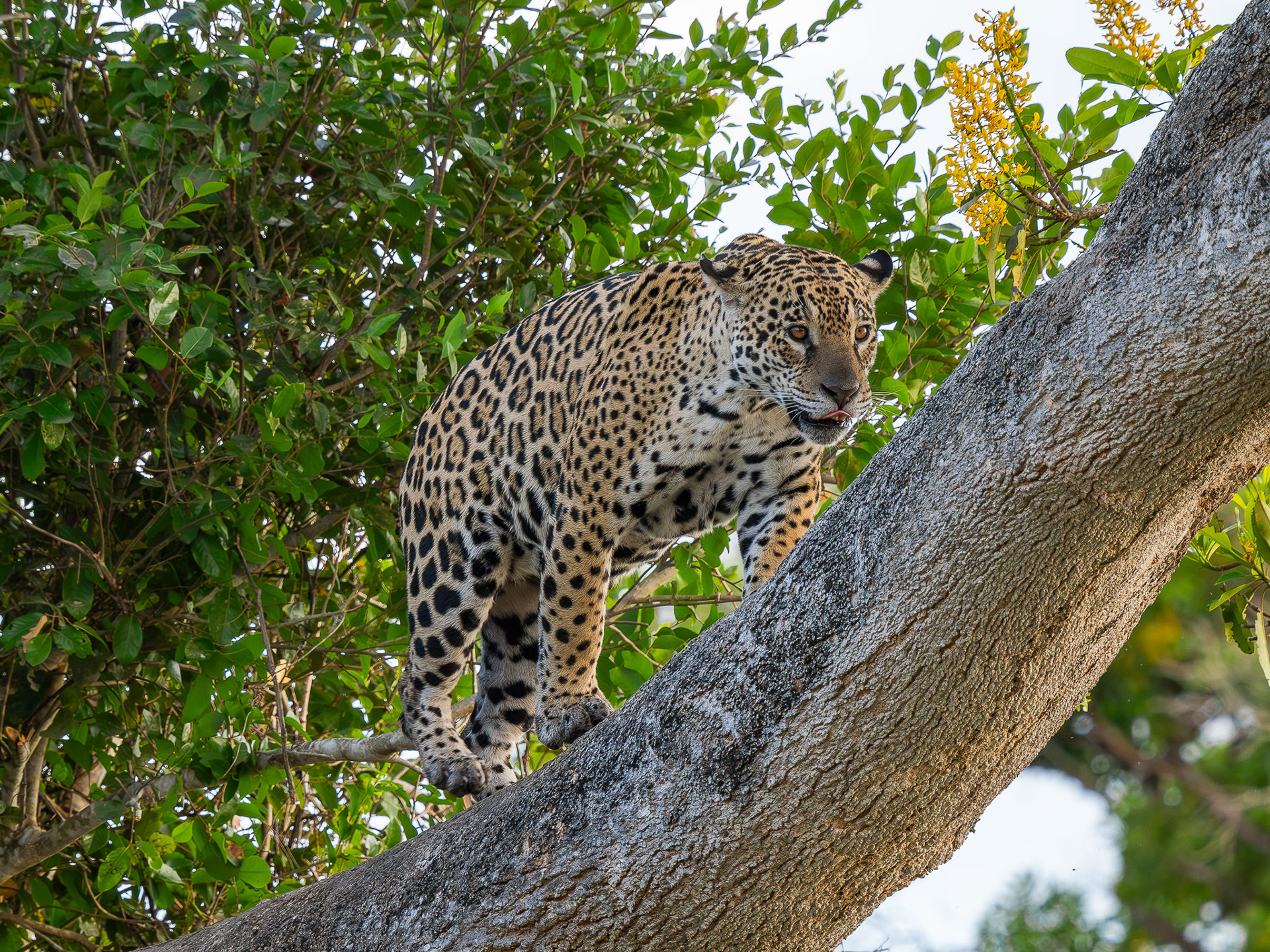
She rises and starts to climb further up the tree trunk.
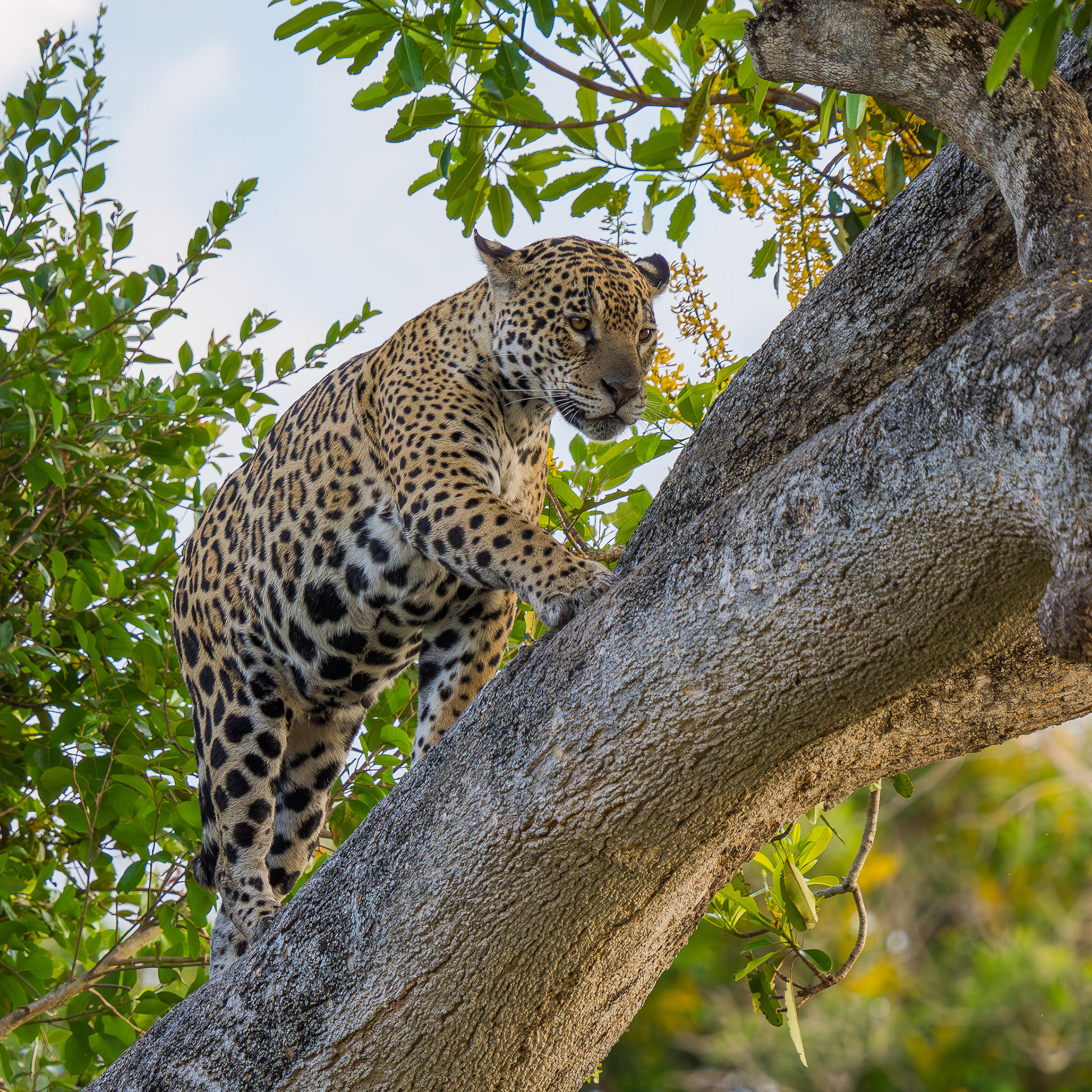
She climbs higher to gain a better view point over the water.
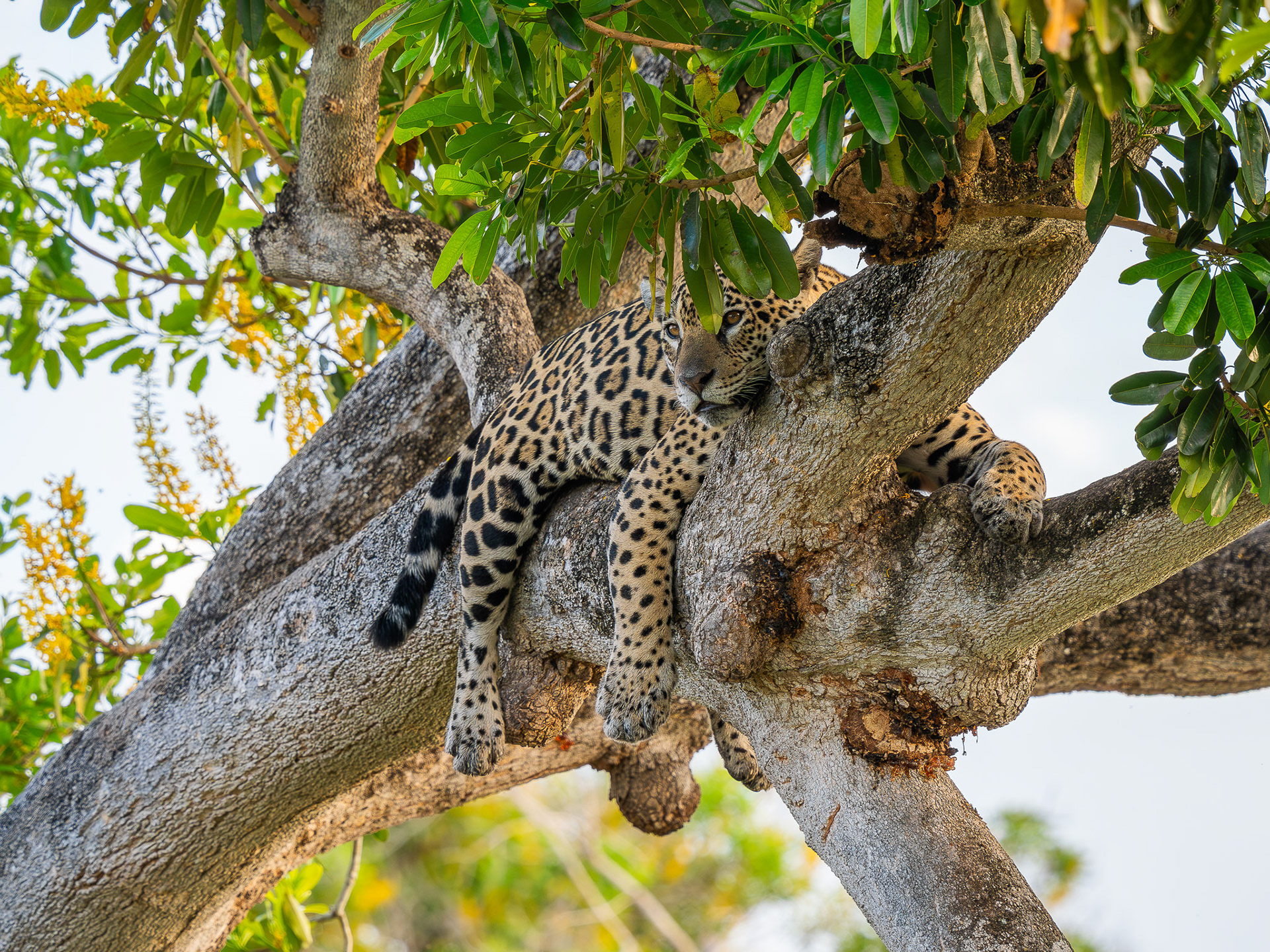
Perched higher in the tree, she relaxes again, enjoying a commanding view of the river.
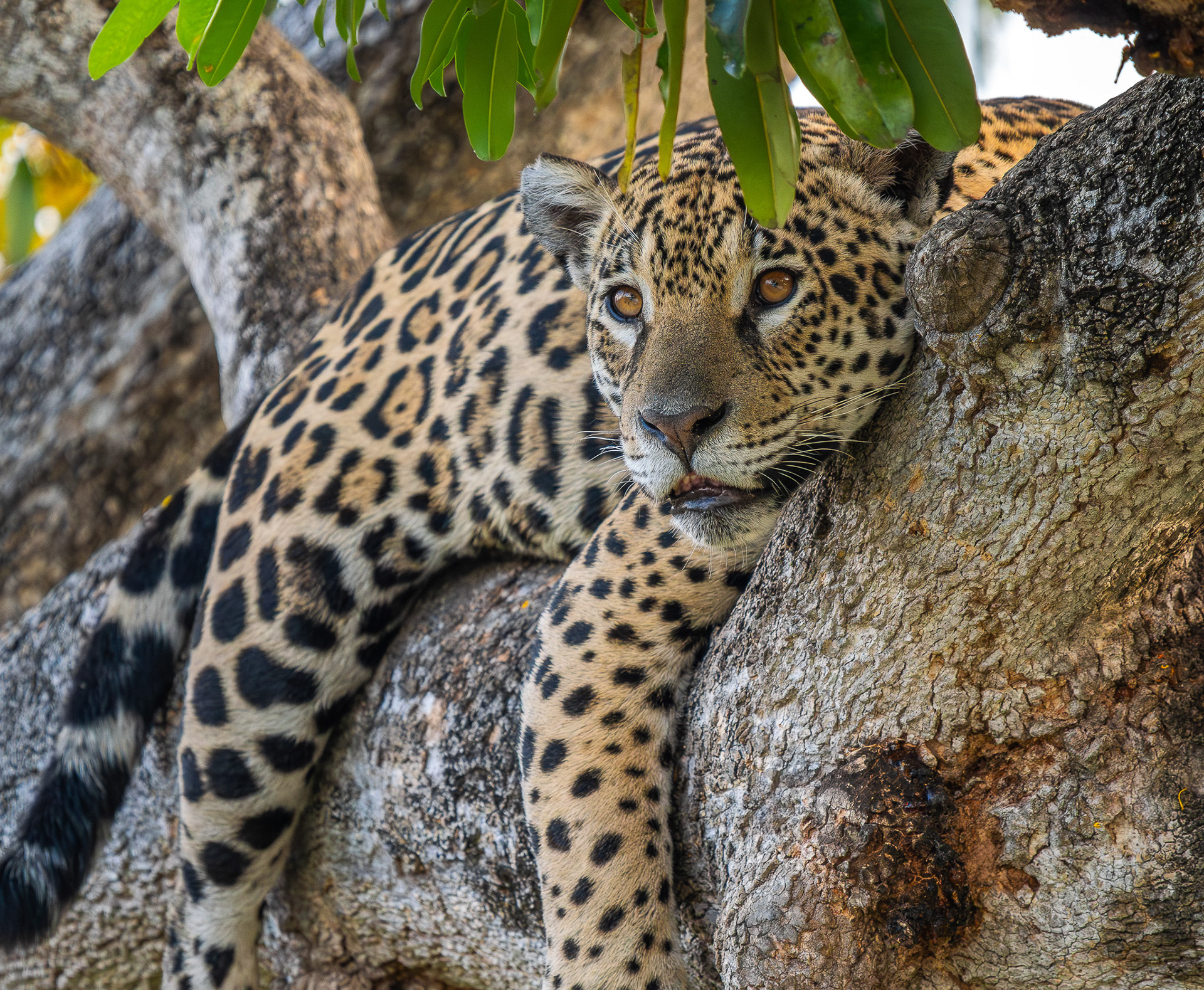
Relaxed, yet alert, the Jaguar watches from her higher perch.
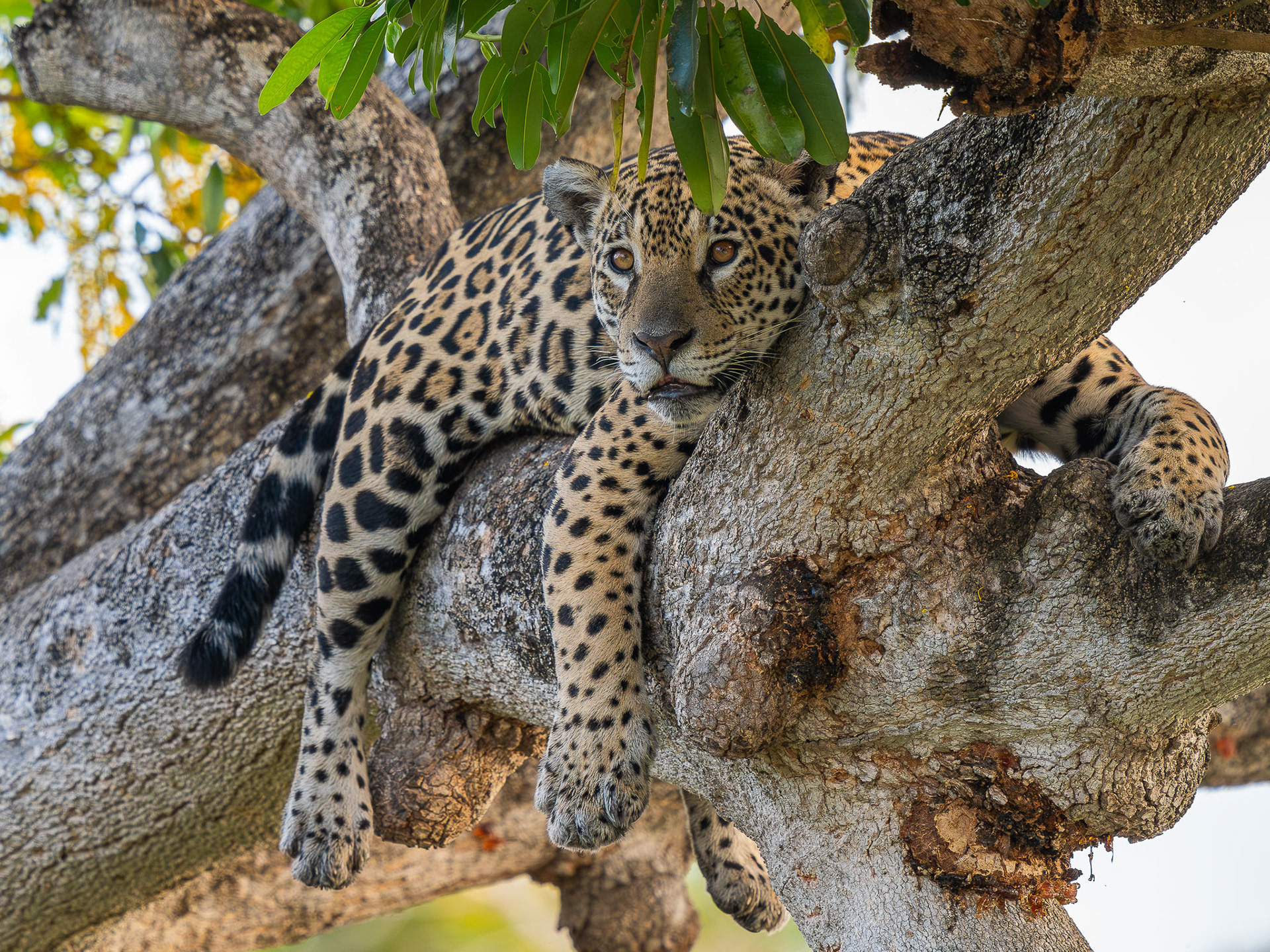
From her treetop vantage point, the Jaguar surveys the river below, eyes focused and watchful for prey.
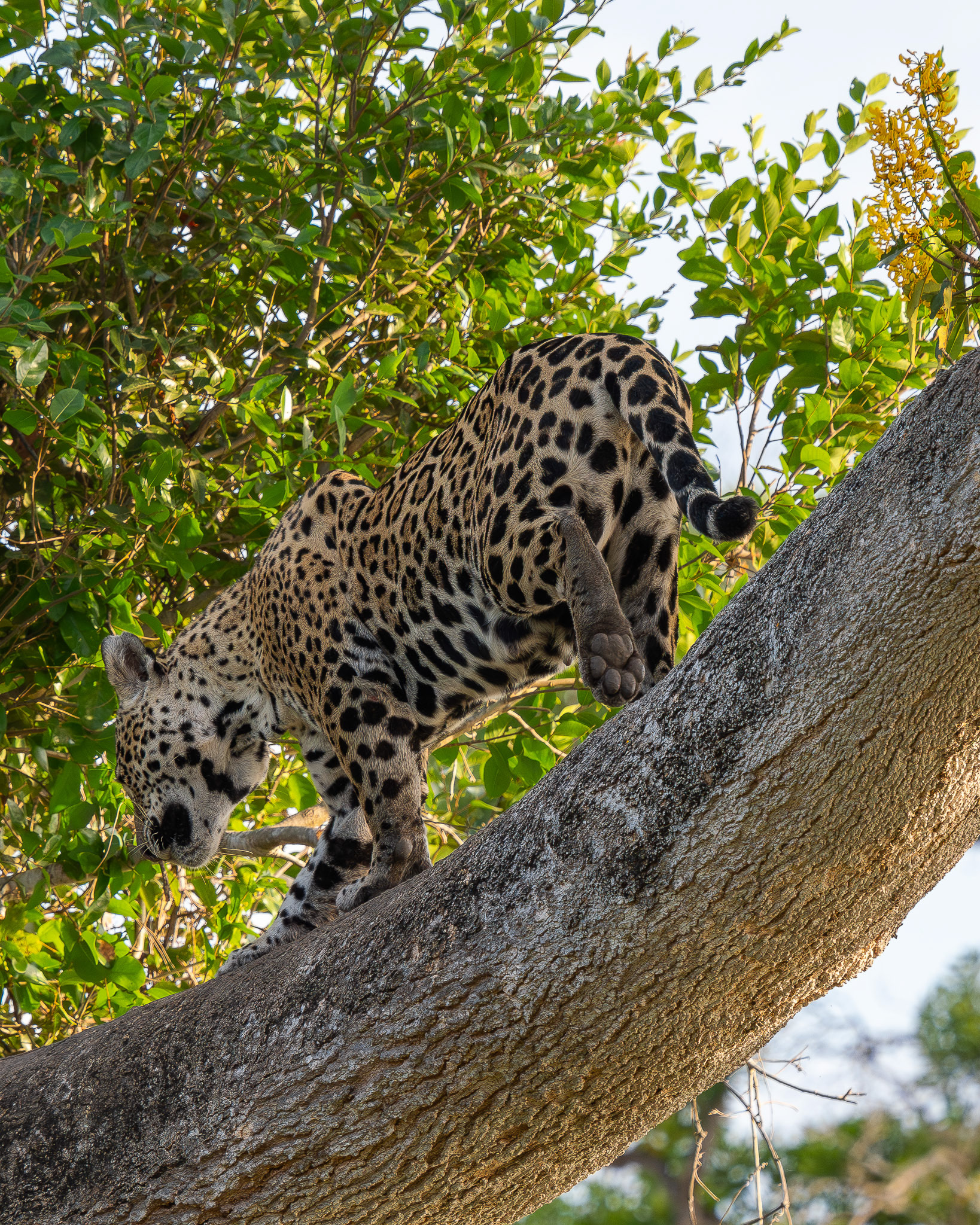
After a while, she carefully descends the sloping trunk. As she moves lower, a powerful hind leg stretches out, revealing the soft pads of her rear paw.
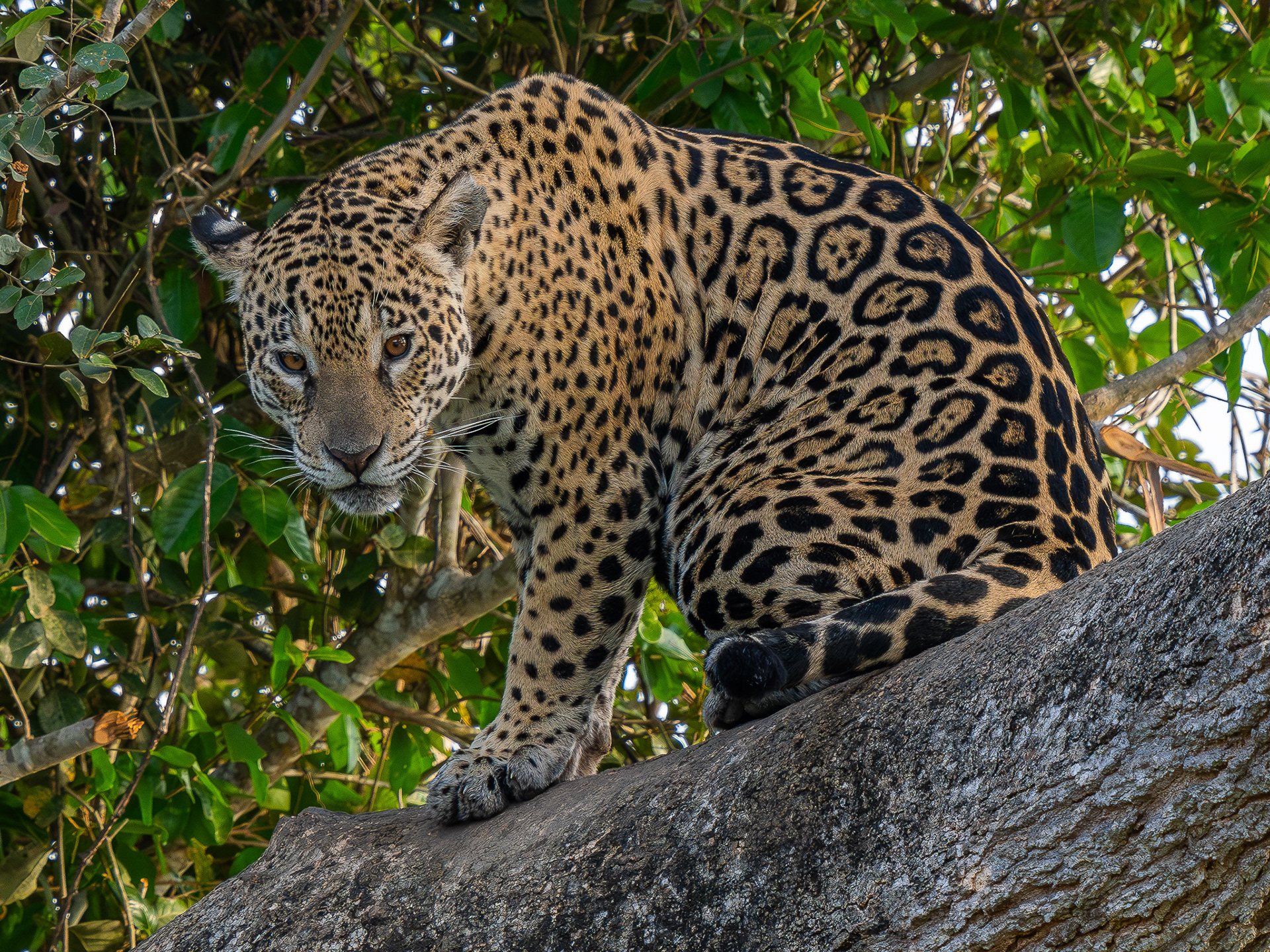
As she sits on her haunches at the base of the sloping tree, her muscular body is relaxed yet alert. From this perch, she gazes intently at the river below, her ears twitching at distant sounds.
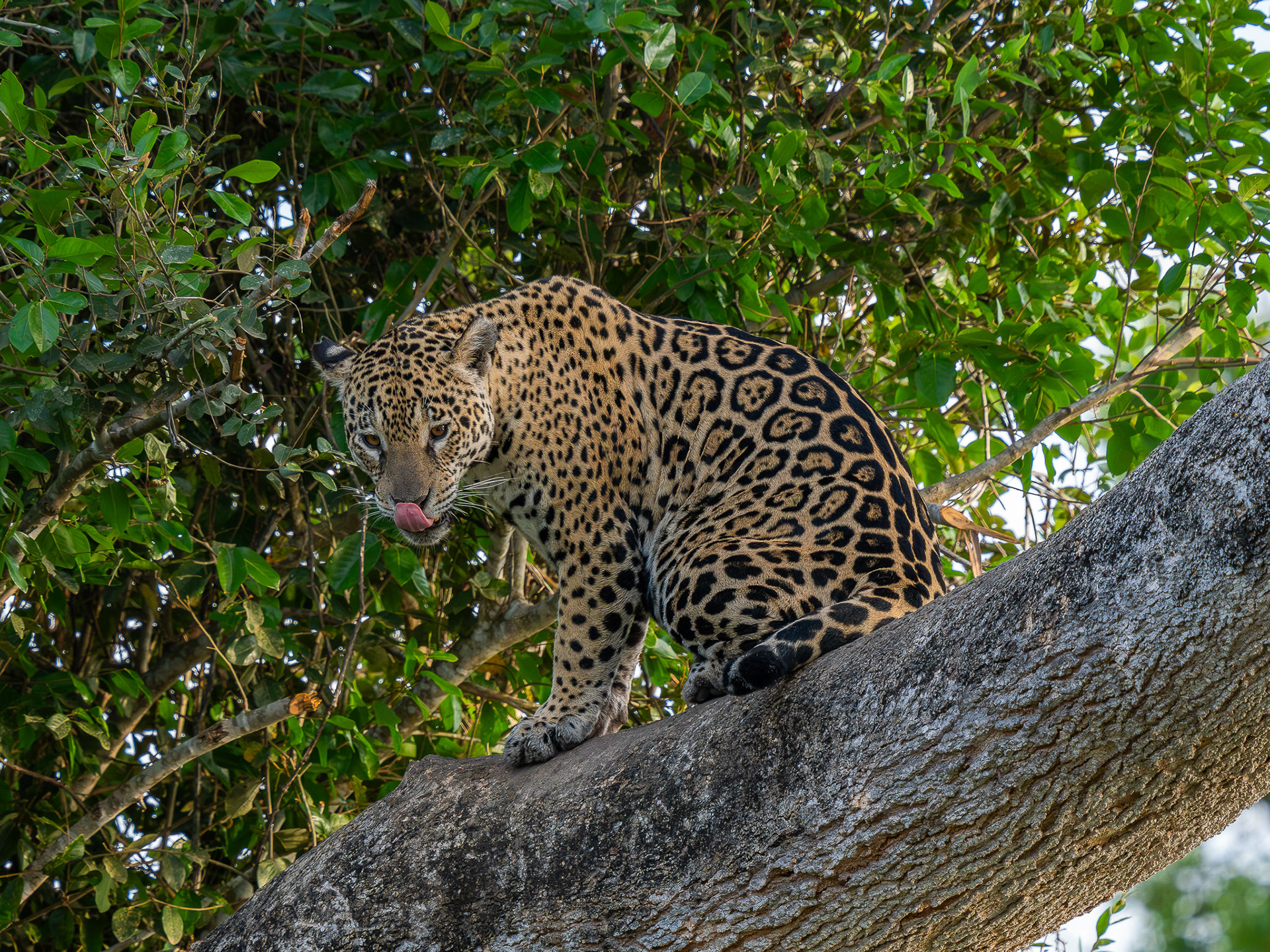
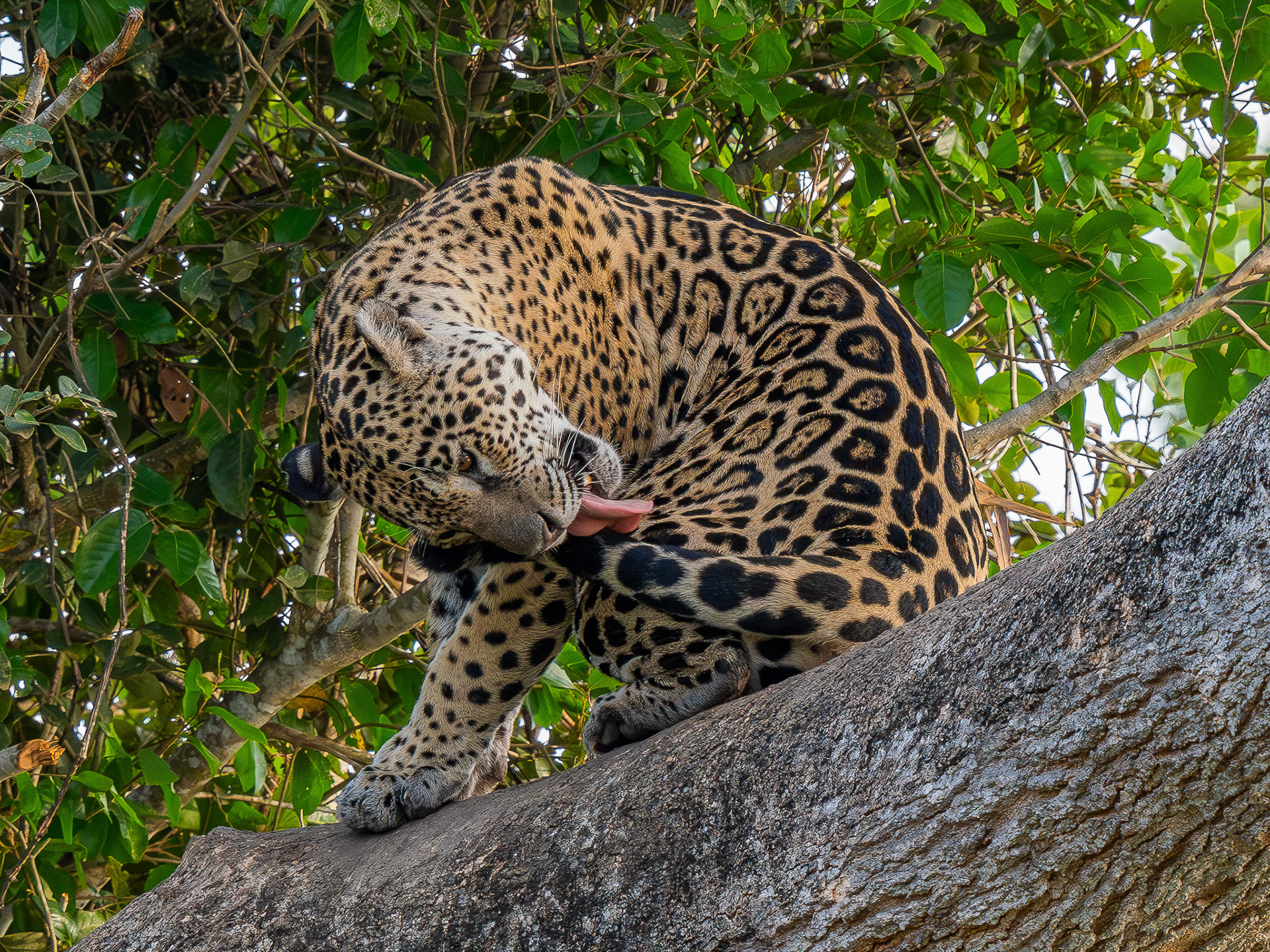
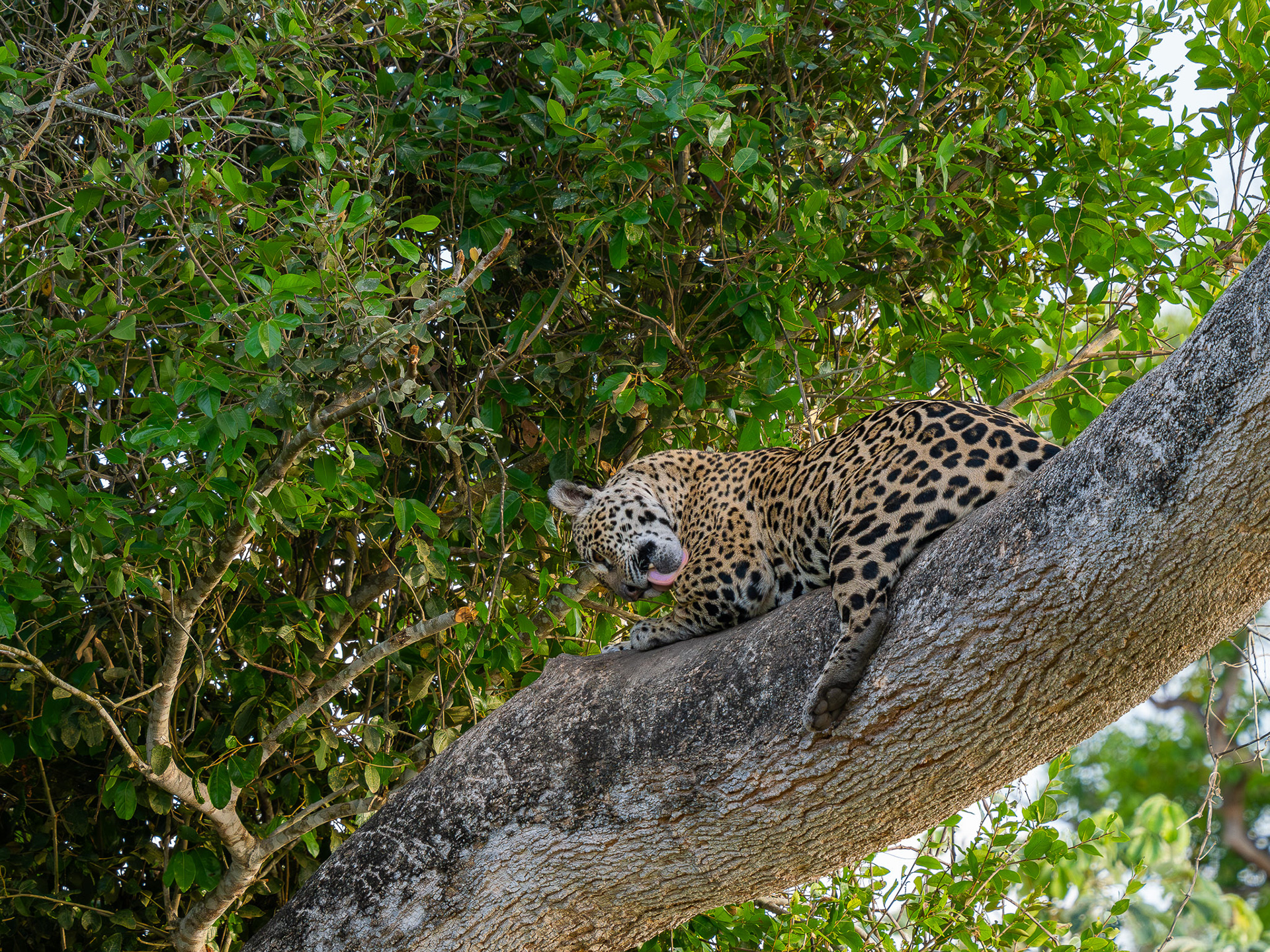
Grooming her golden coat, patterned with bold black rosettes, her long pink tongue sweeps slowly through the dense fur.
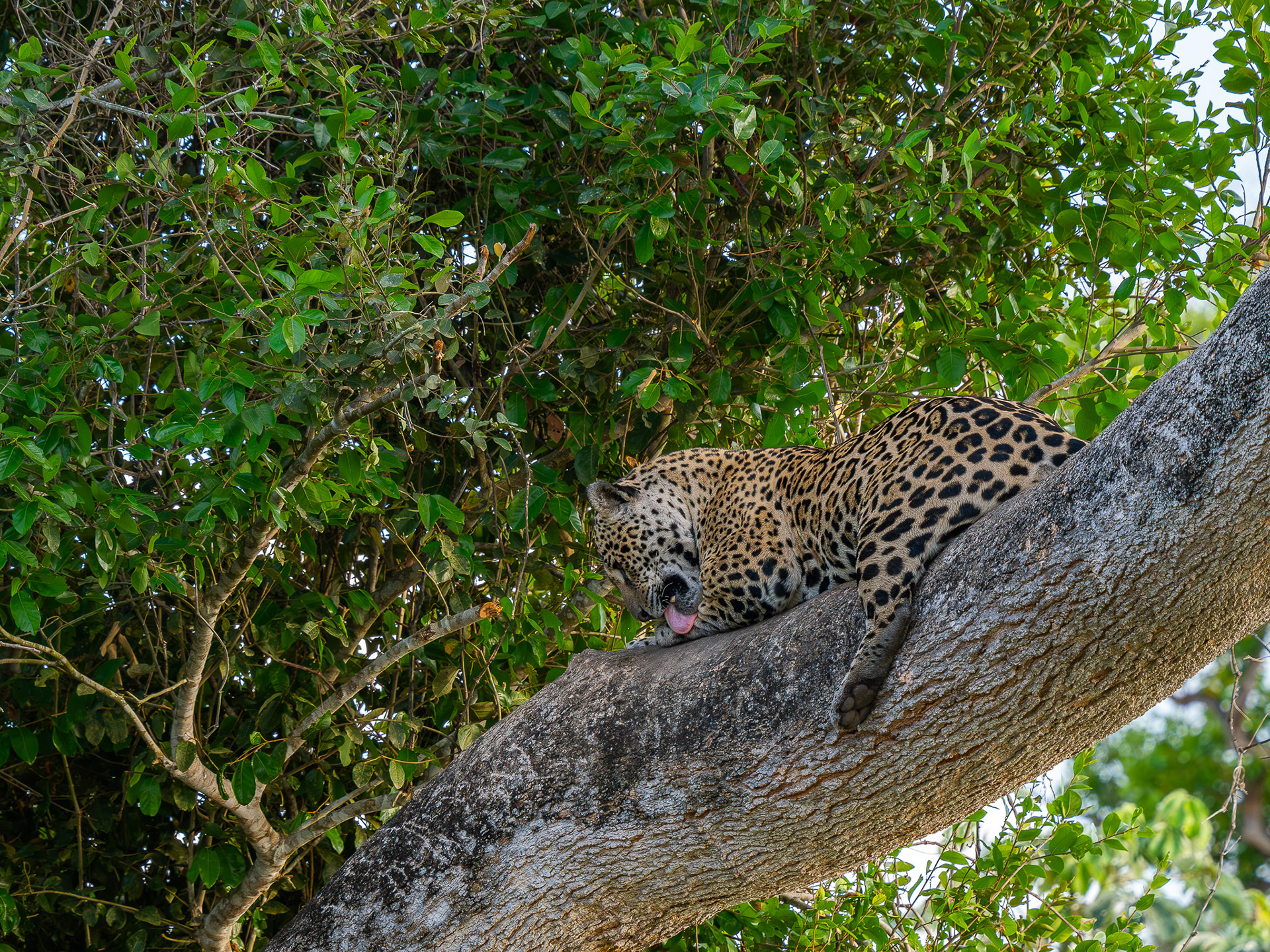
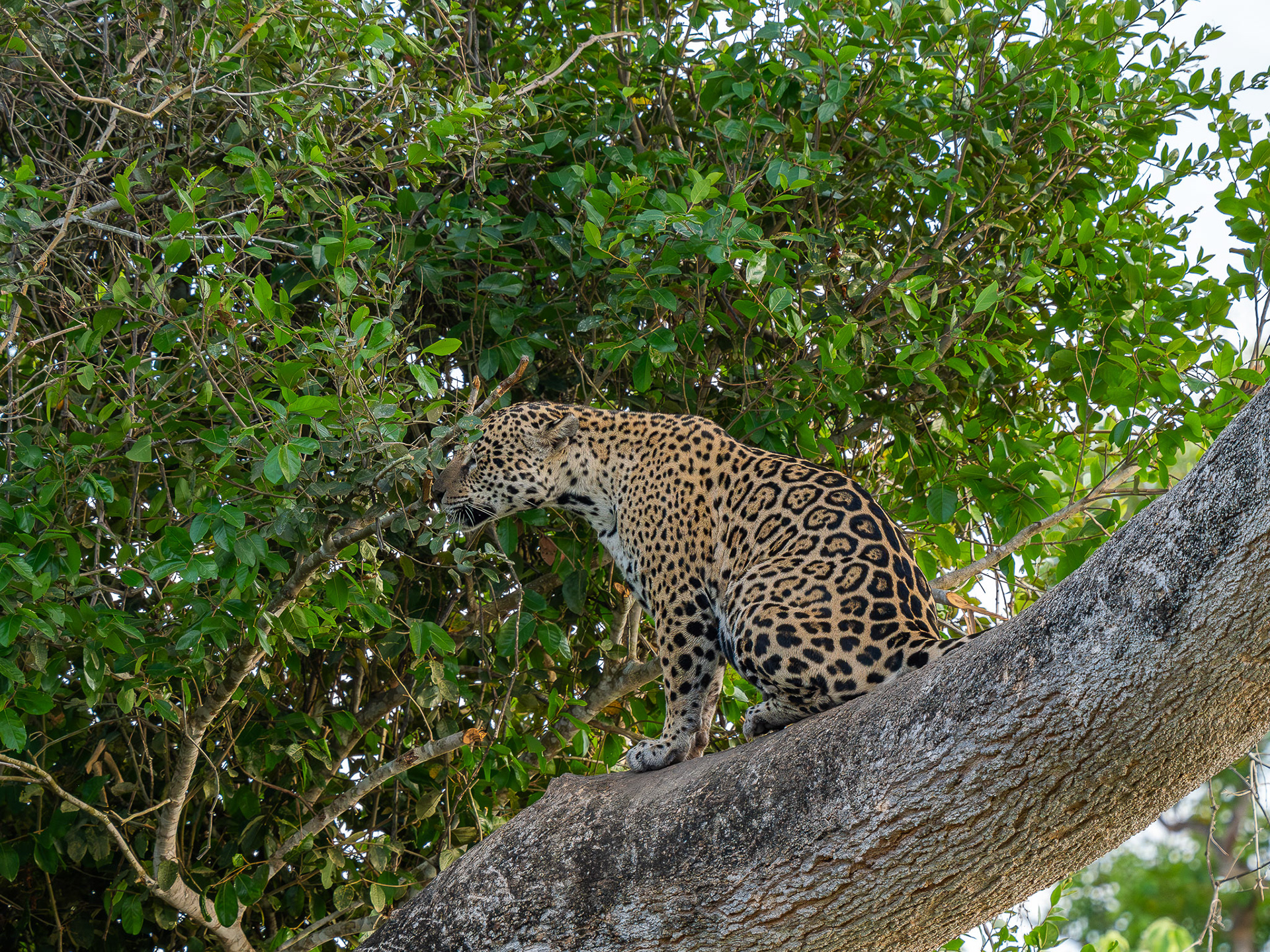
After grooming, the Jaguar lifts her nose to sniff a low-hanging tree branch.
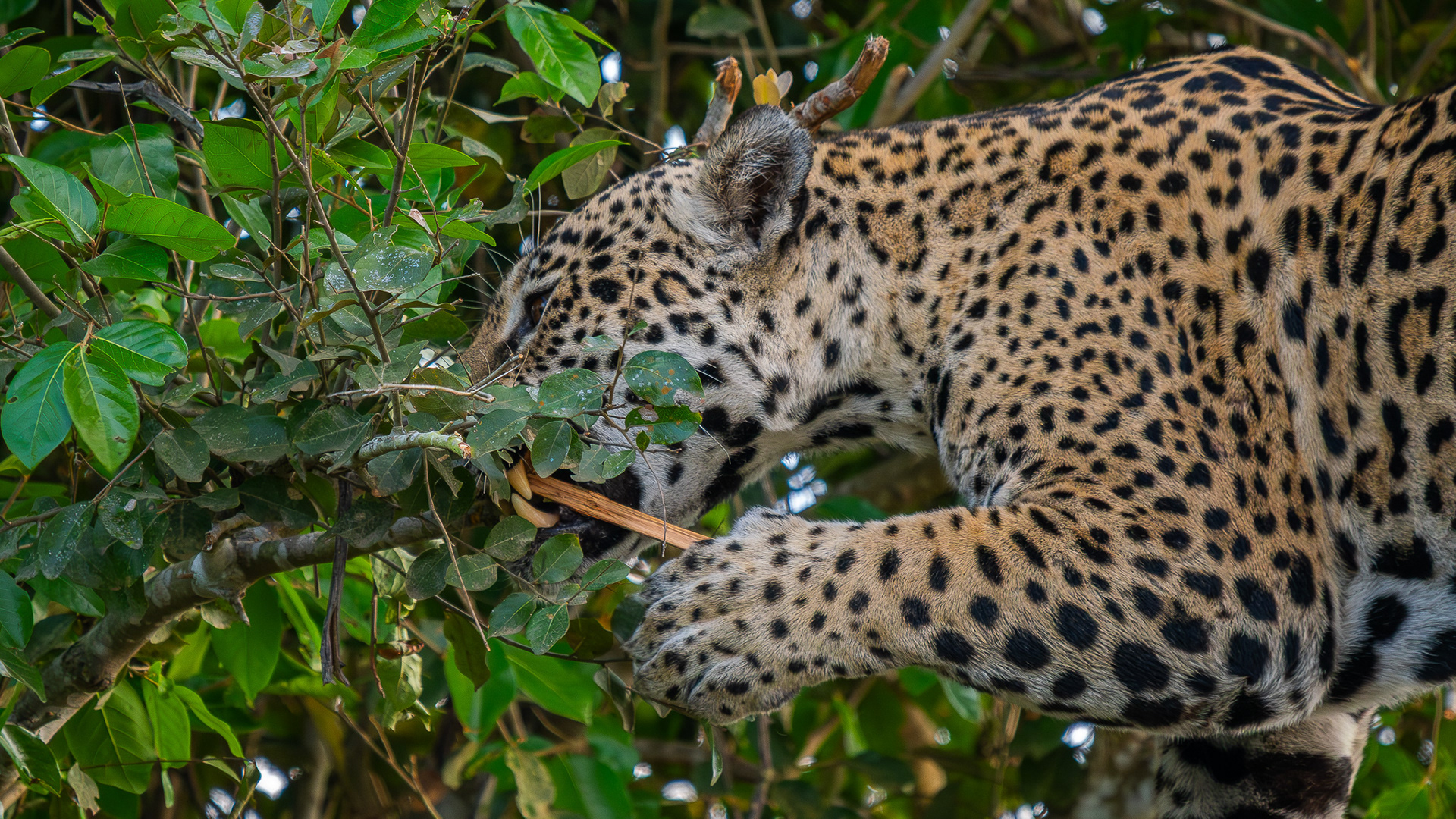
After a long sniff, she opens her jaws and gently grips the branch between her massive canines. The wood creaks softly as she chews, testing its texture. Jaguars often chew branches to investigate scents and mark their territory, leaving subtle signals for other Jaguars whilst testing the wood with their powerful jaws.
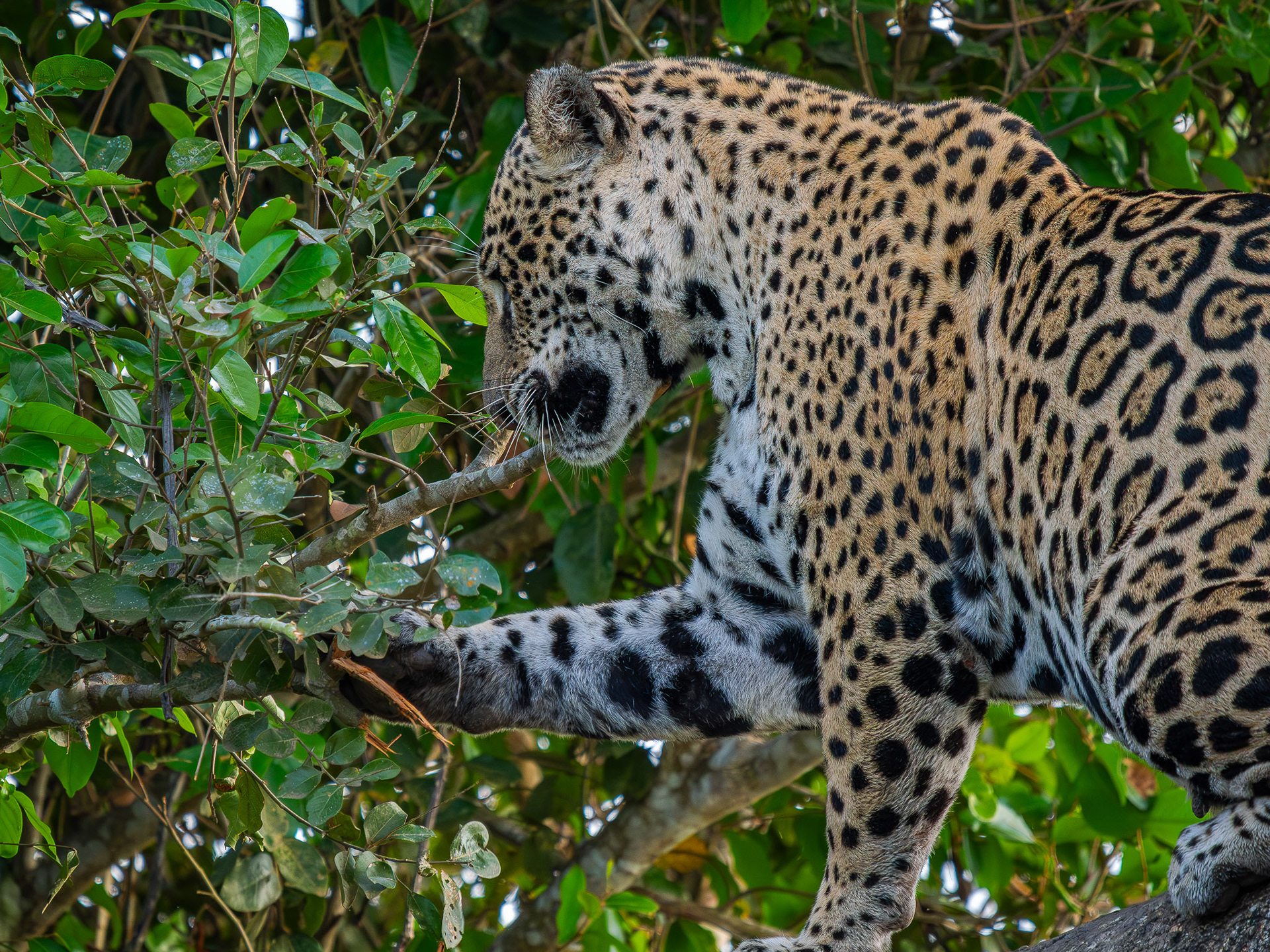
She lifts her right paw to strike the low branch, testing it with a swift, powerful swipe.
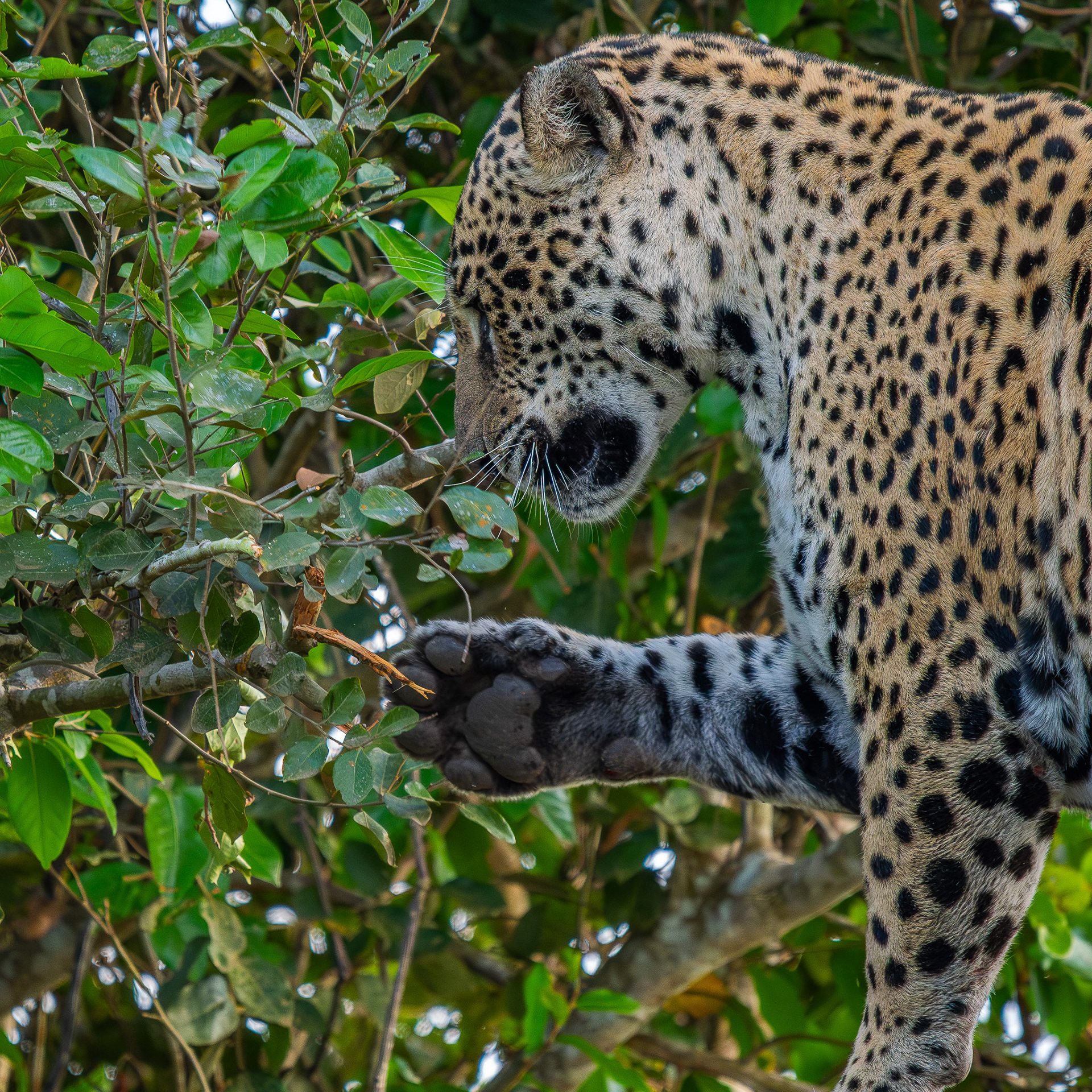
She gently taps the low branch with her massive right paw, soft pads clearly visible.
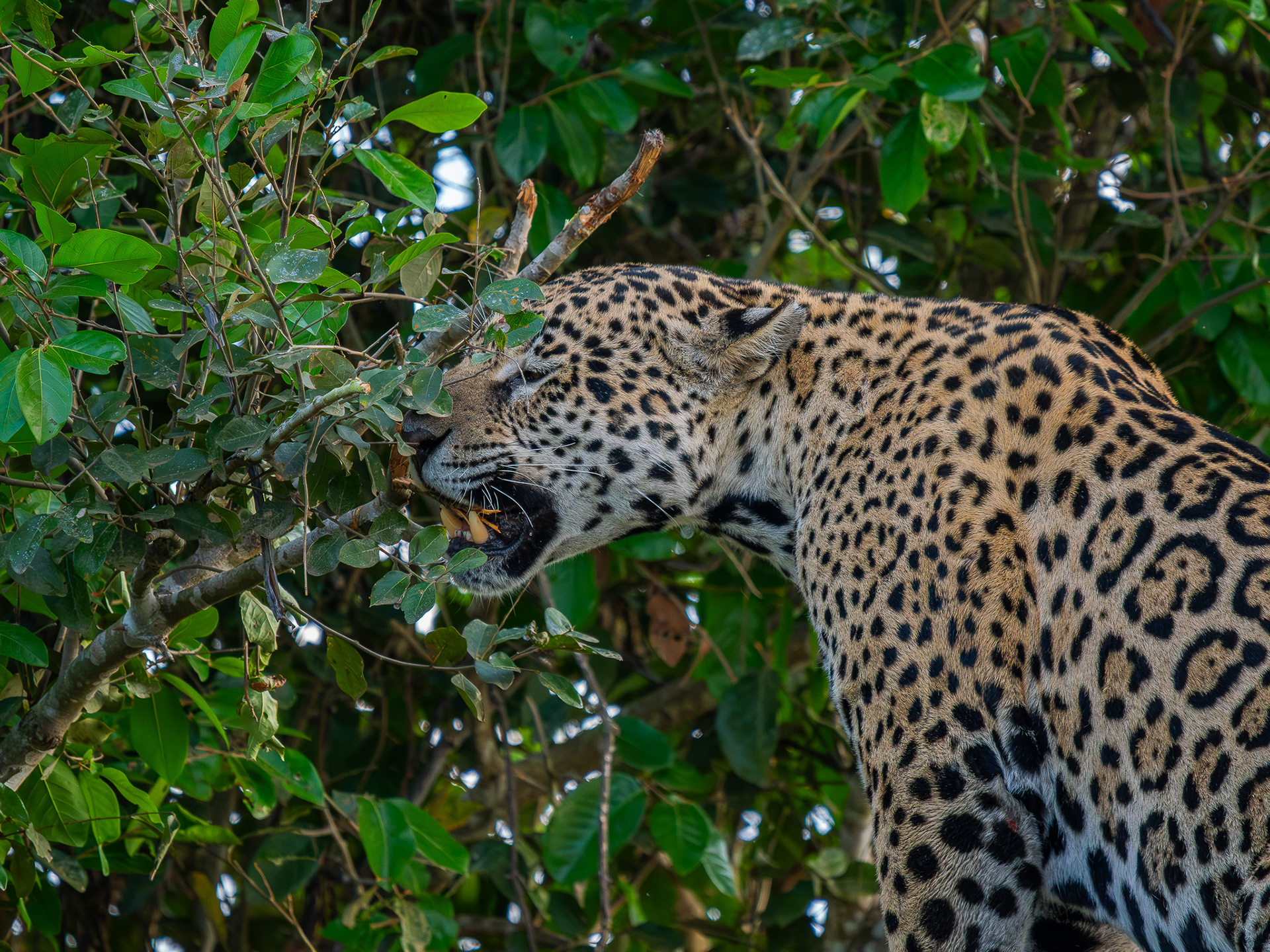
She lowers her head and resumes chewing on the broken branch, her powerful jaws working steadily and deliberately.
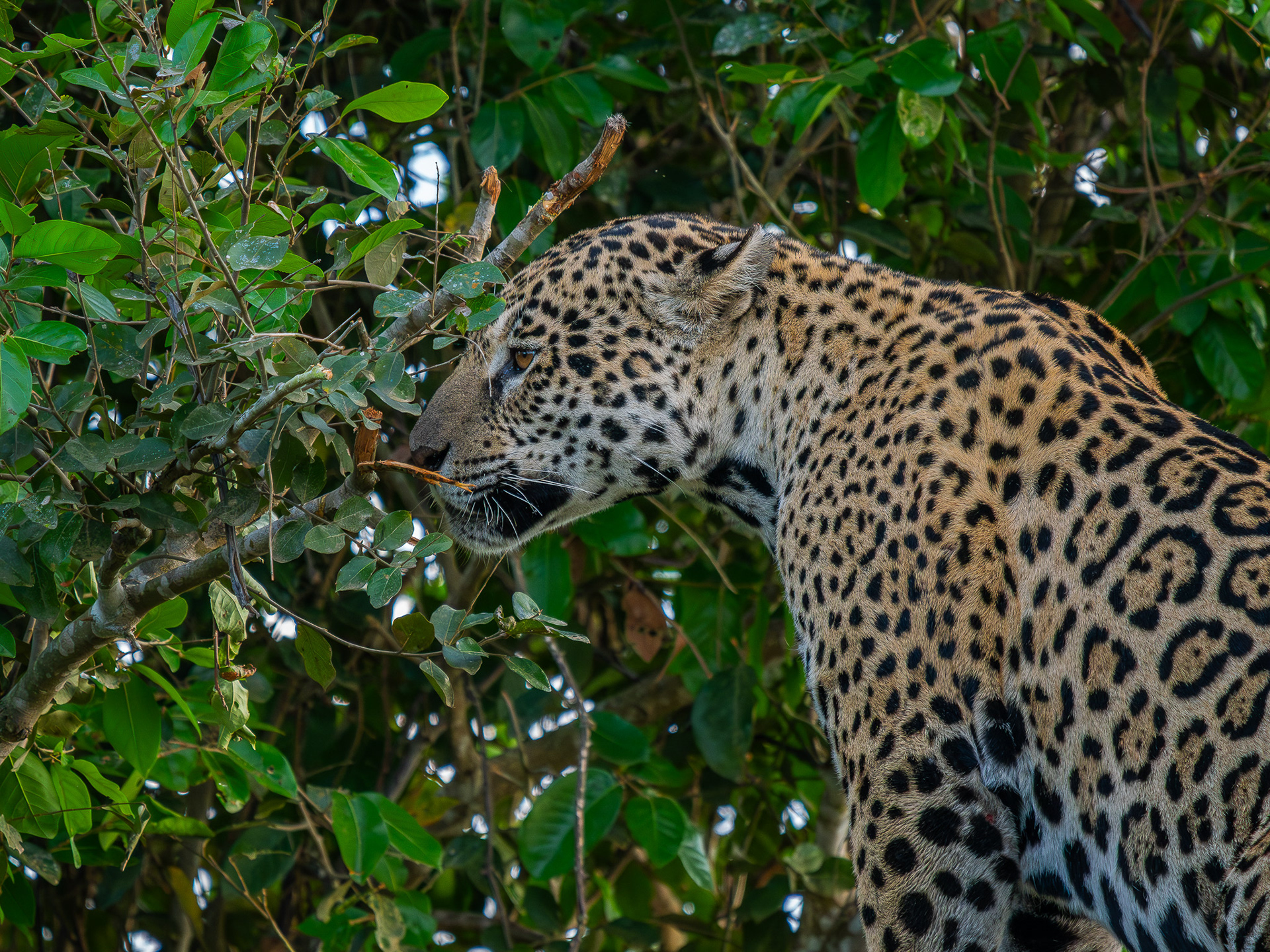
She pauses and releases the branch from her jaws. Leaning in for one last deliberate sniff, her whiskers brush the bark as she draws in the lingering scent. Her nostrils flare softly, amber eyes calm and focused, before she lifts her head - satisfied with the silent message carried on the wood.
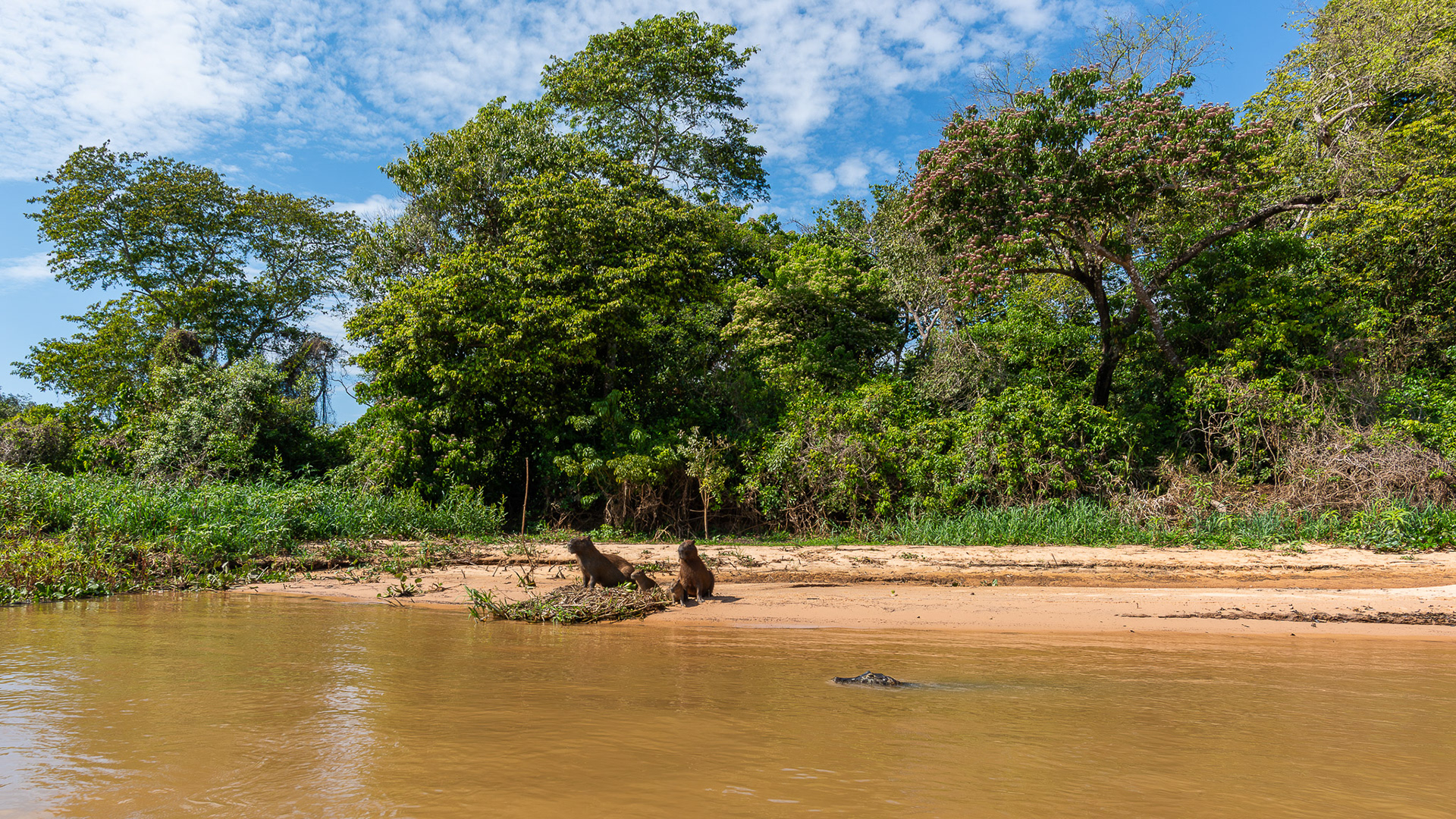
On a golden sandy riverbank, a Capybara family rests in the sun, the young nestled close to the adults. Nearby, a Caiman glides past with only its eyes and snout above water. Both are aware of each other. The scene captures the serene yet untamed beauty of the wetlands - a delicate co-existence within one of the world's most biodiverse landscapes.
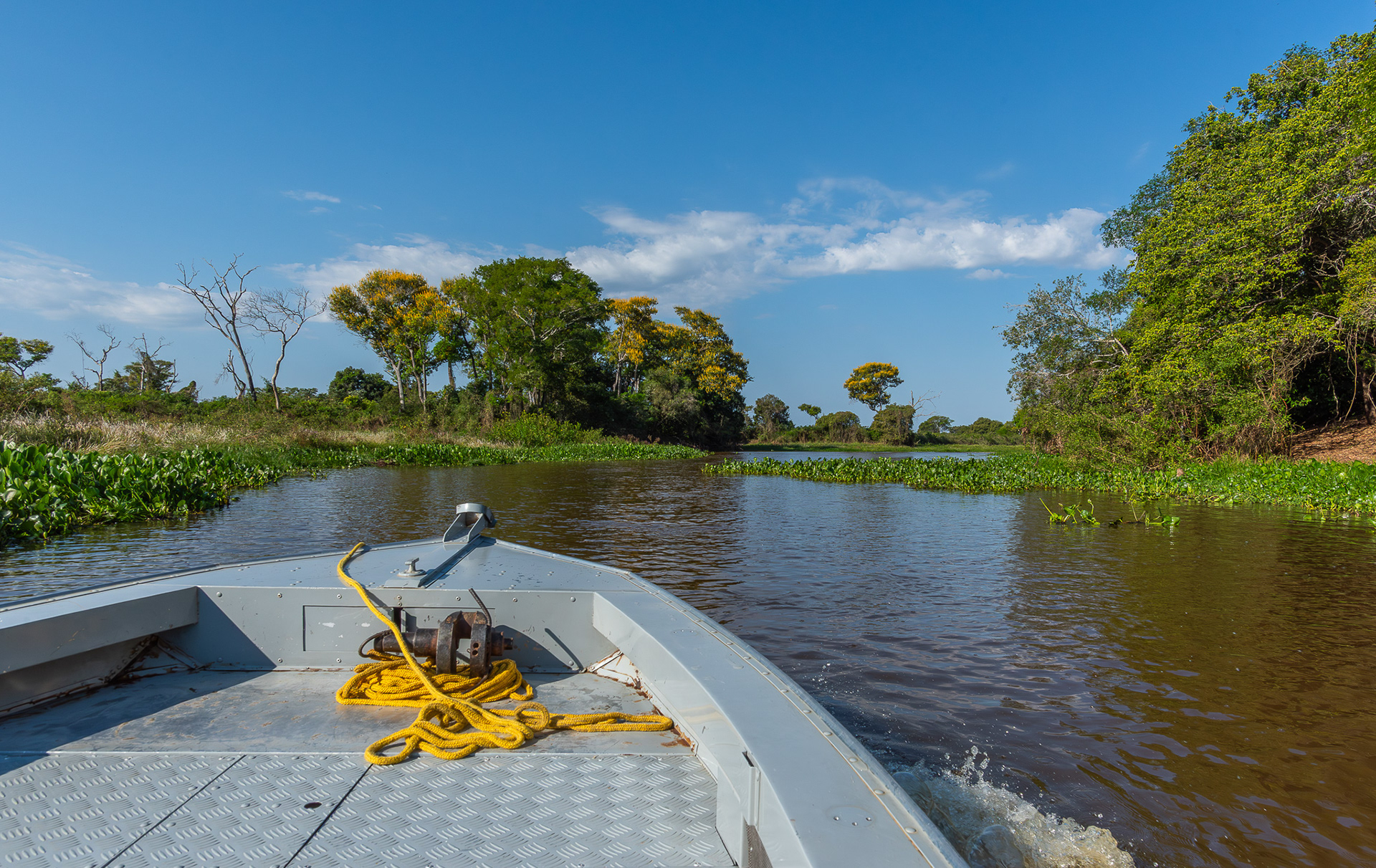
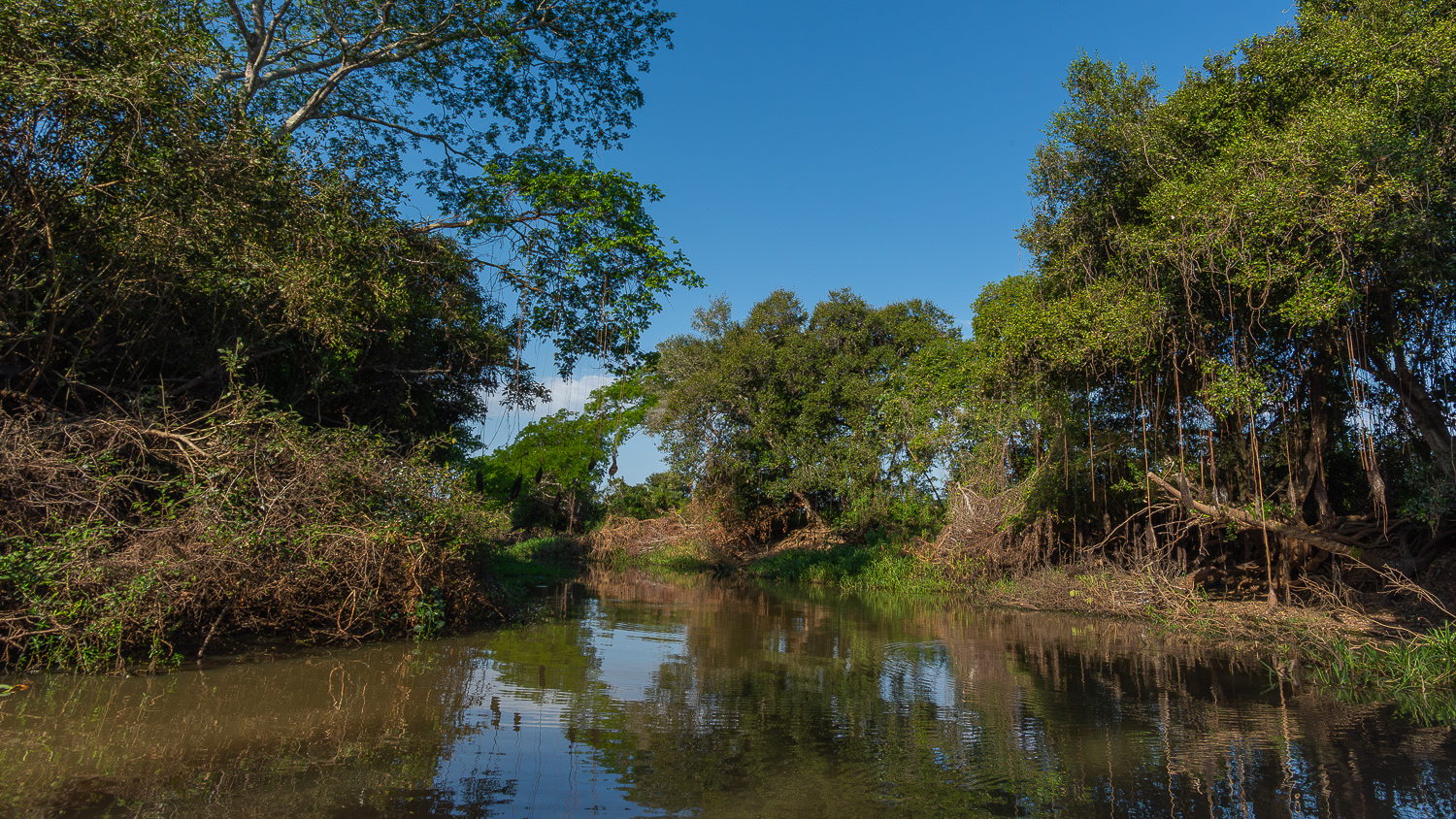
Our search for the Jaguar continues along the serene backwaters of the Pantanal, where every bend in the river feels like a promise. Somewhere in this vast wilderness moves the beautiful Jaguar, and the search itself becomes part of the adventure - patient, watchful, and filled with anticipation.
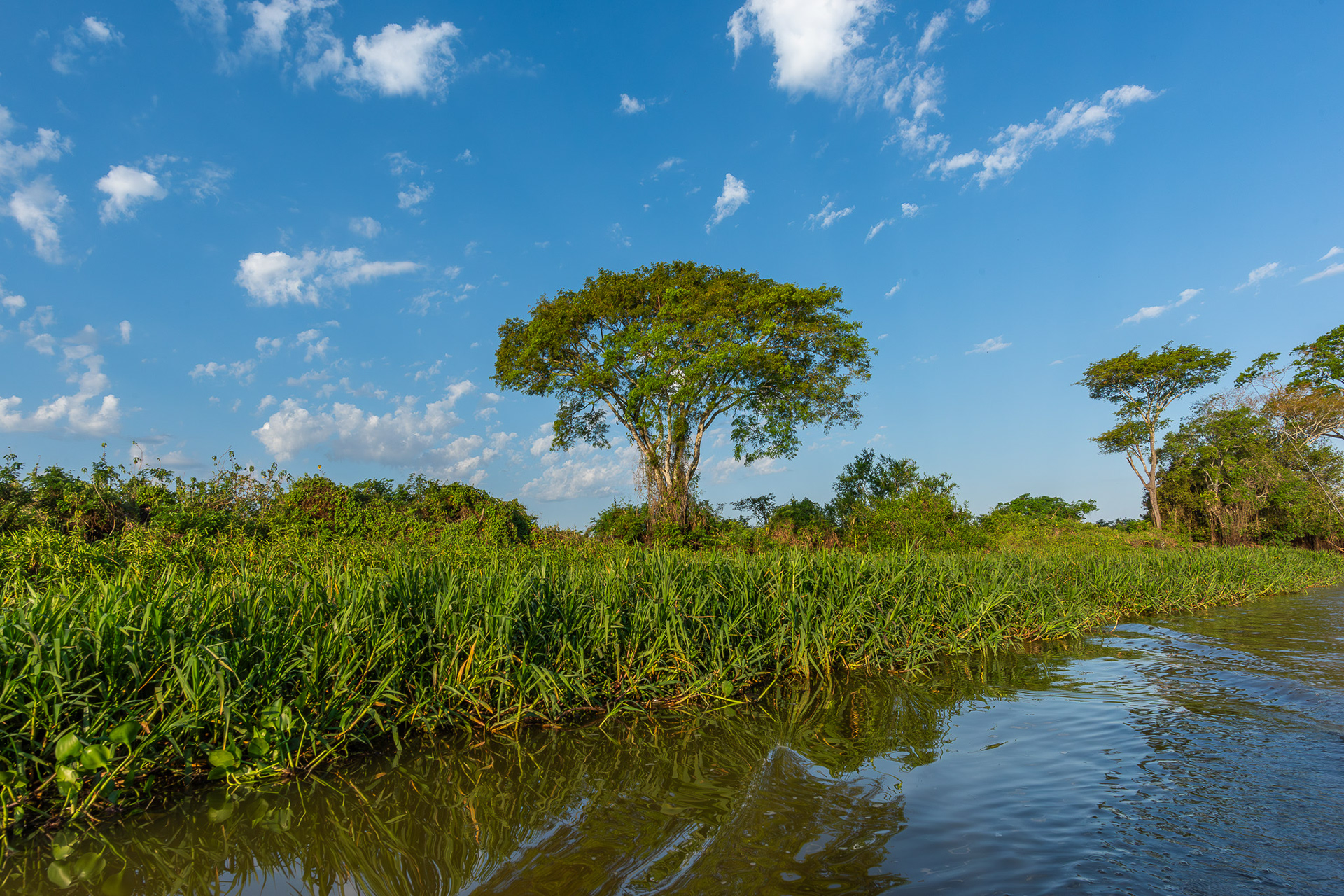
The Pantanal's lush green vegetation stretches beneath a brilliant blue sky.
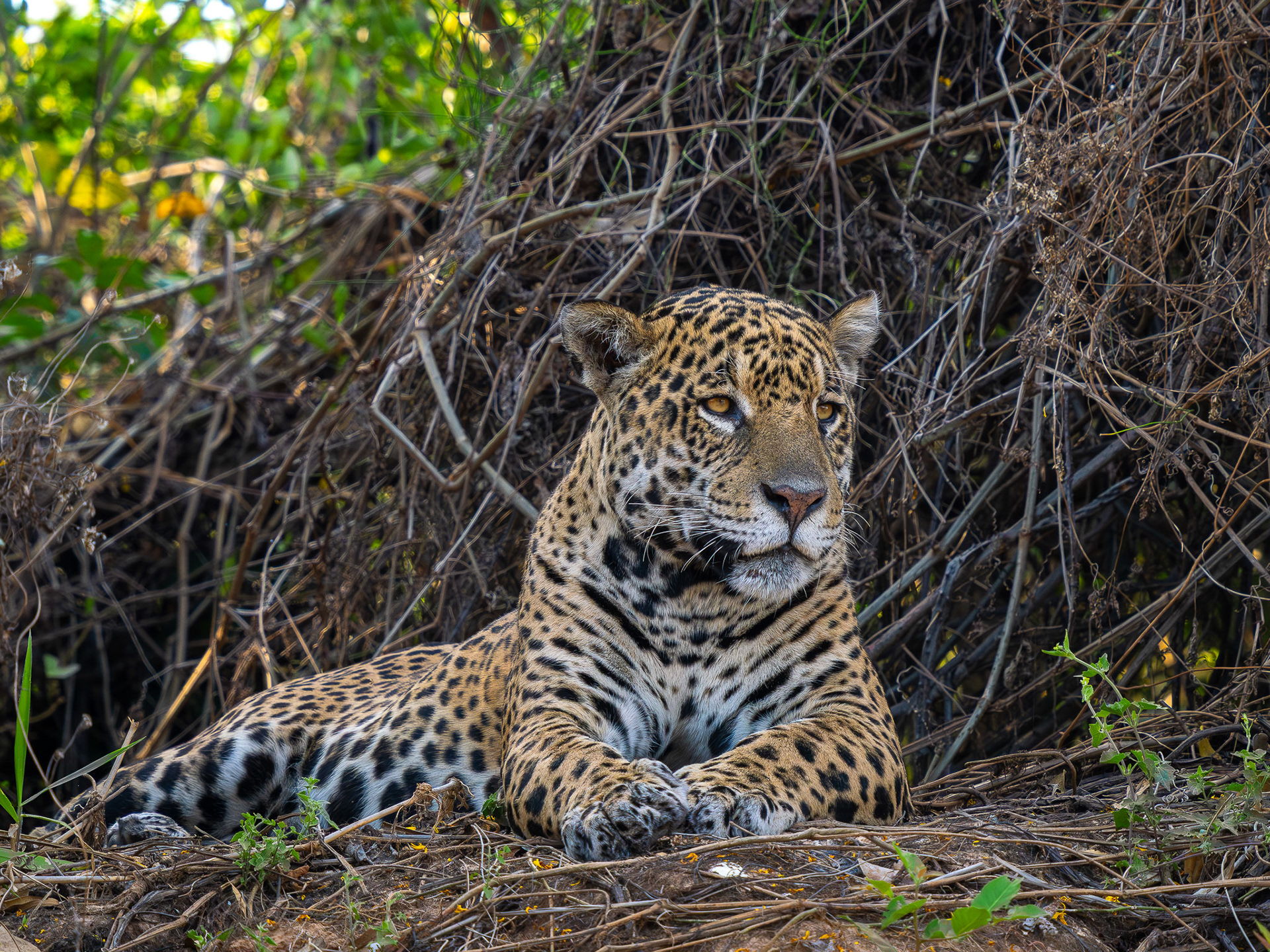
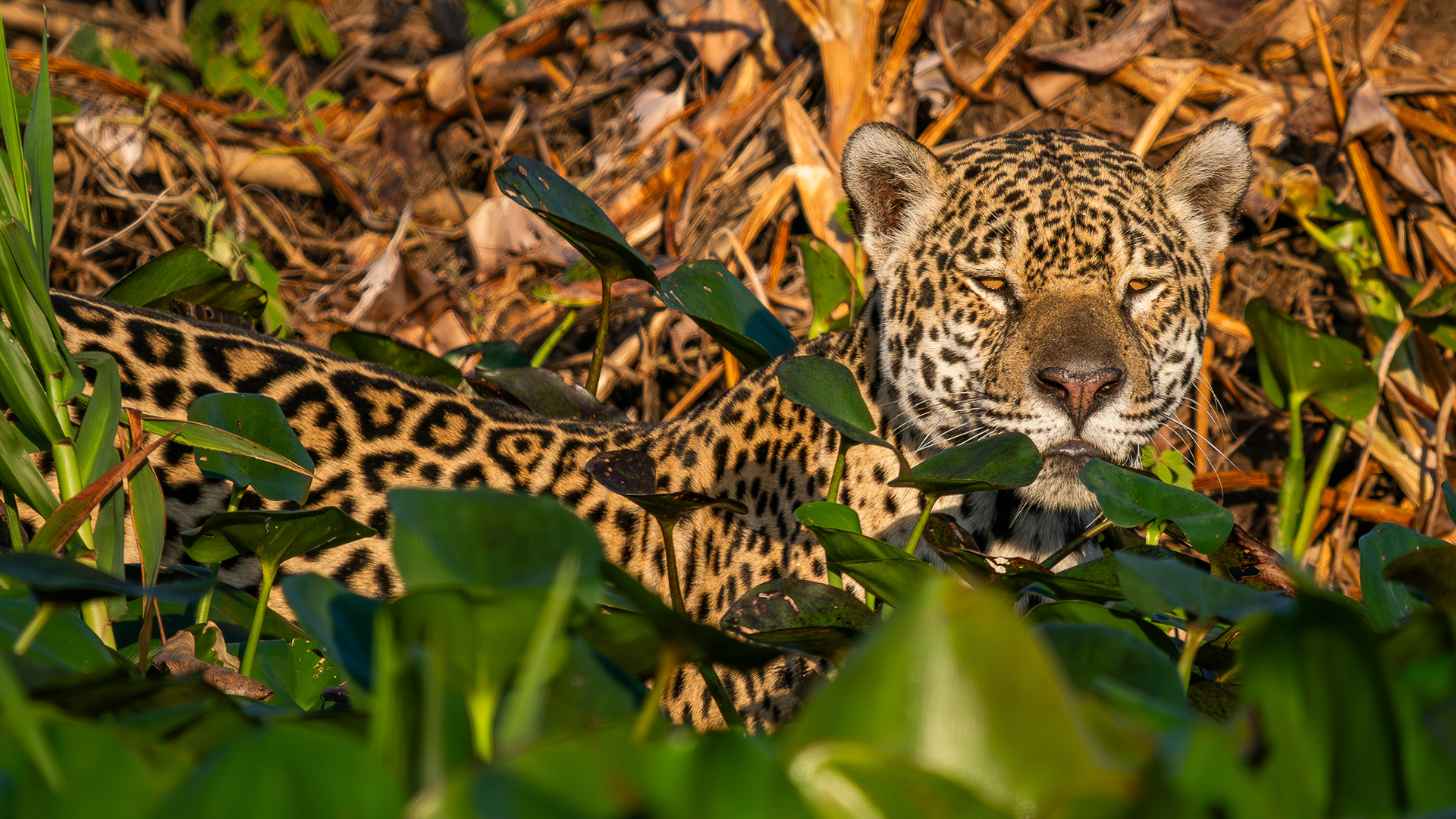
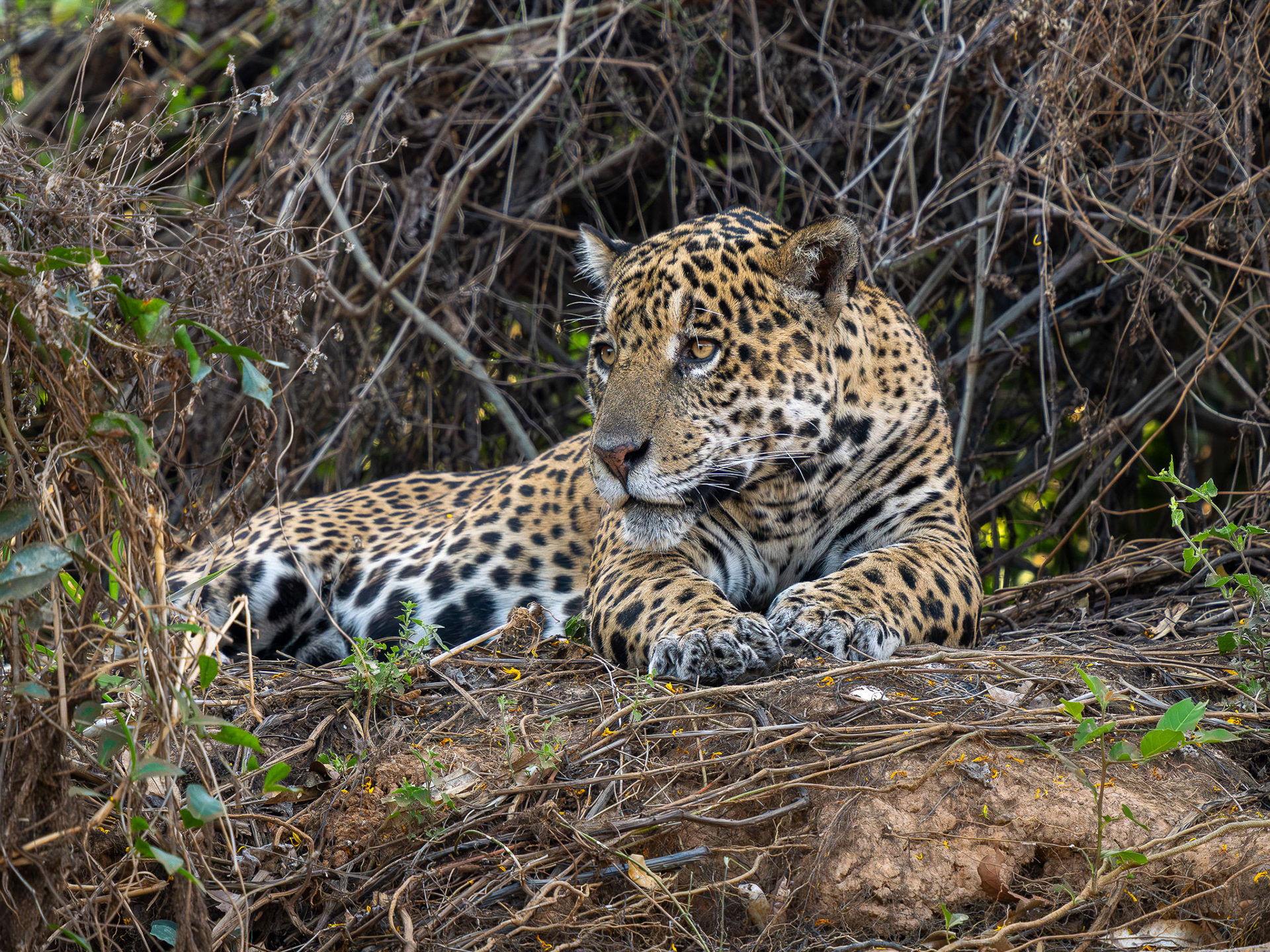
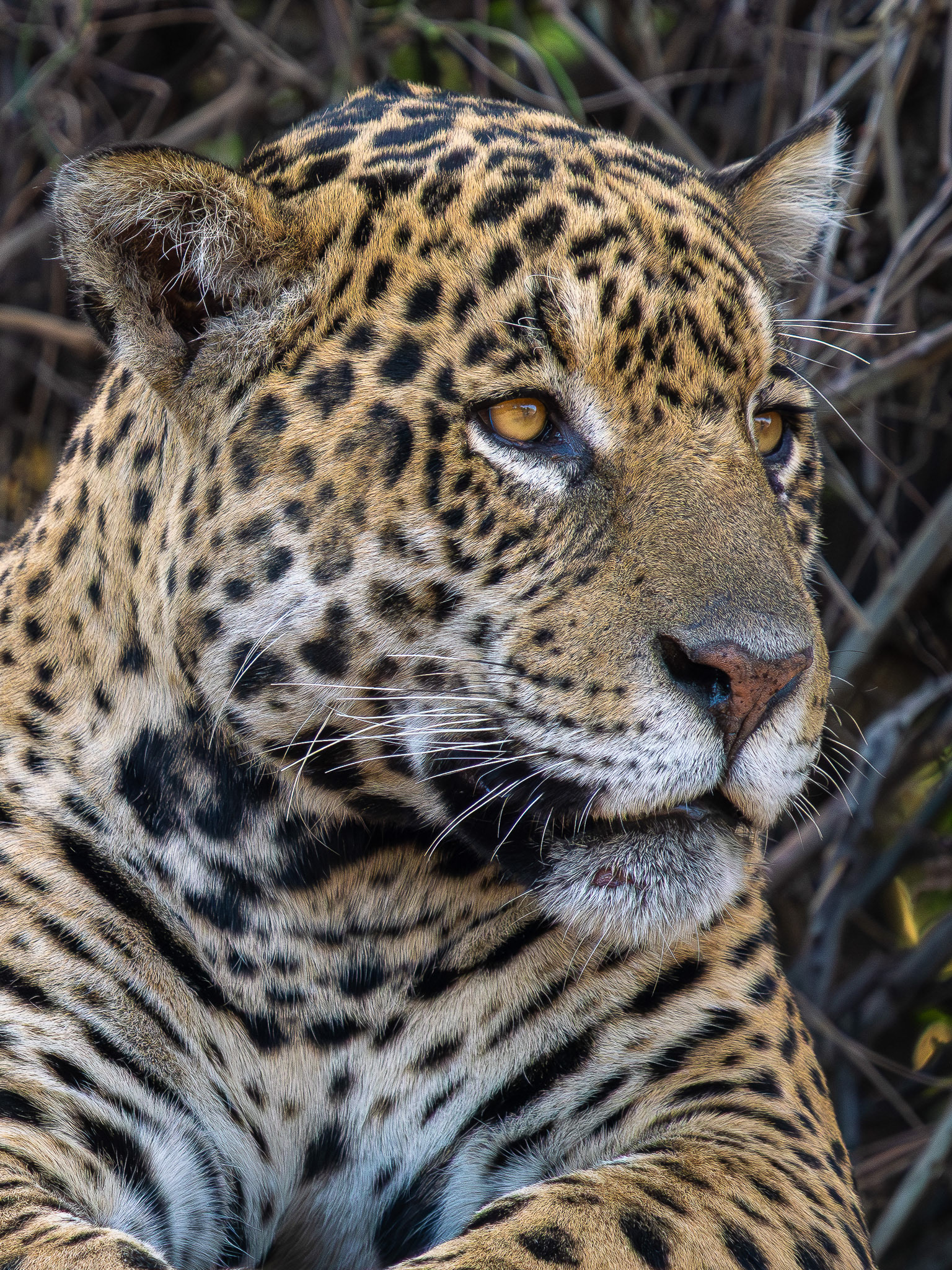
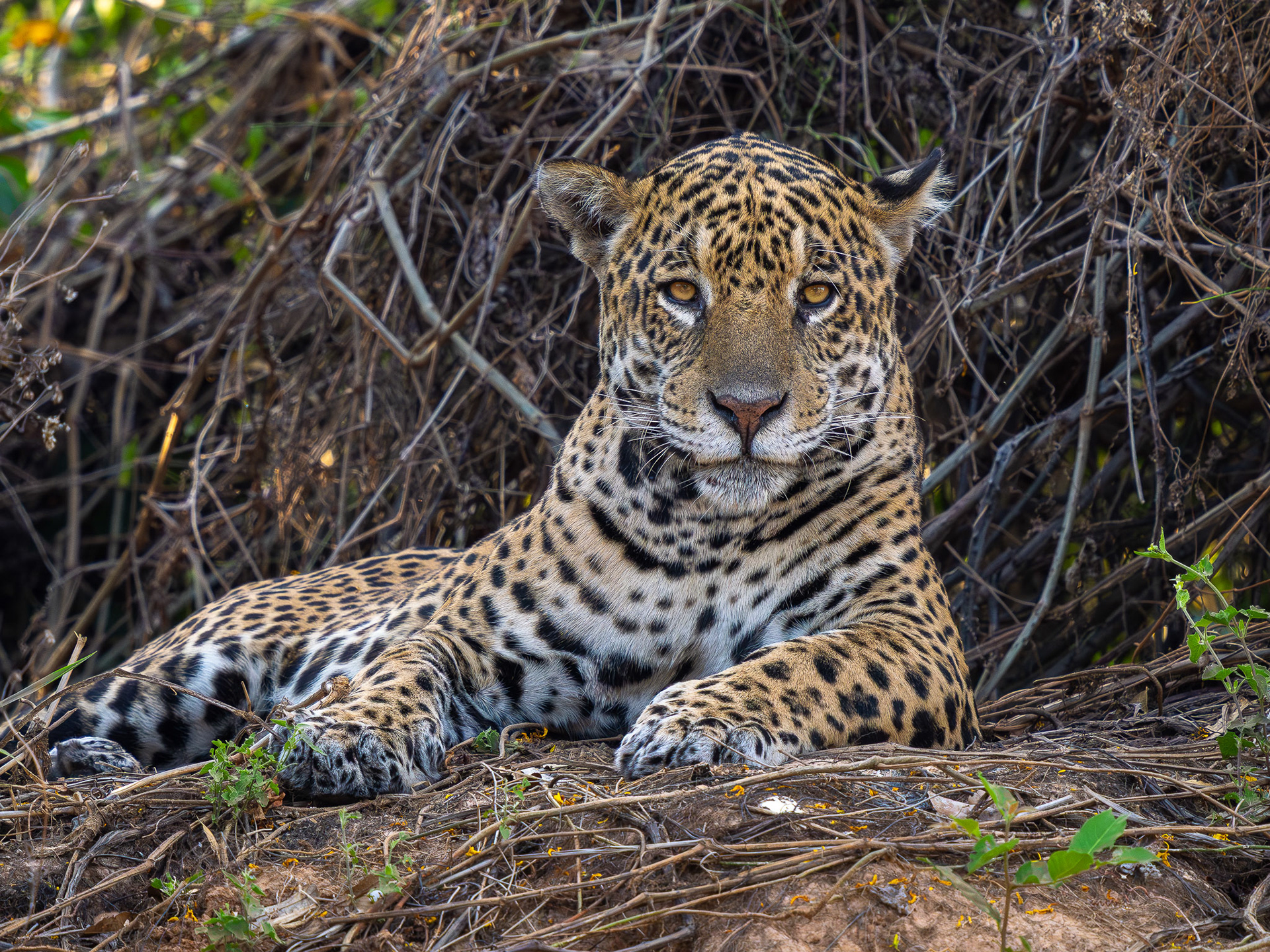
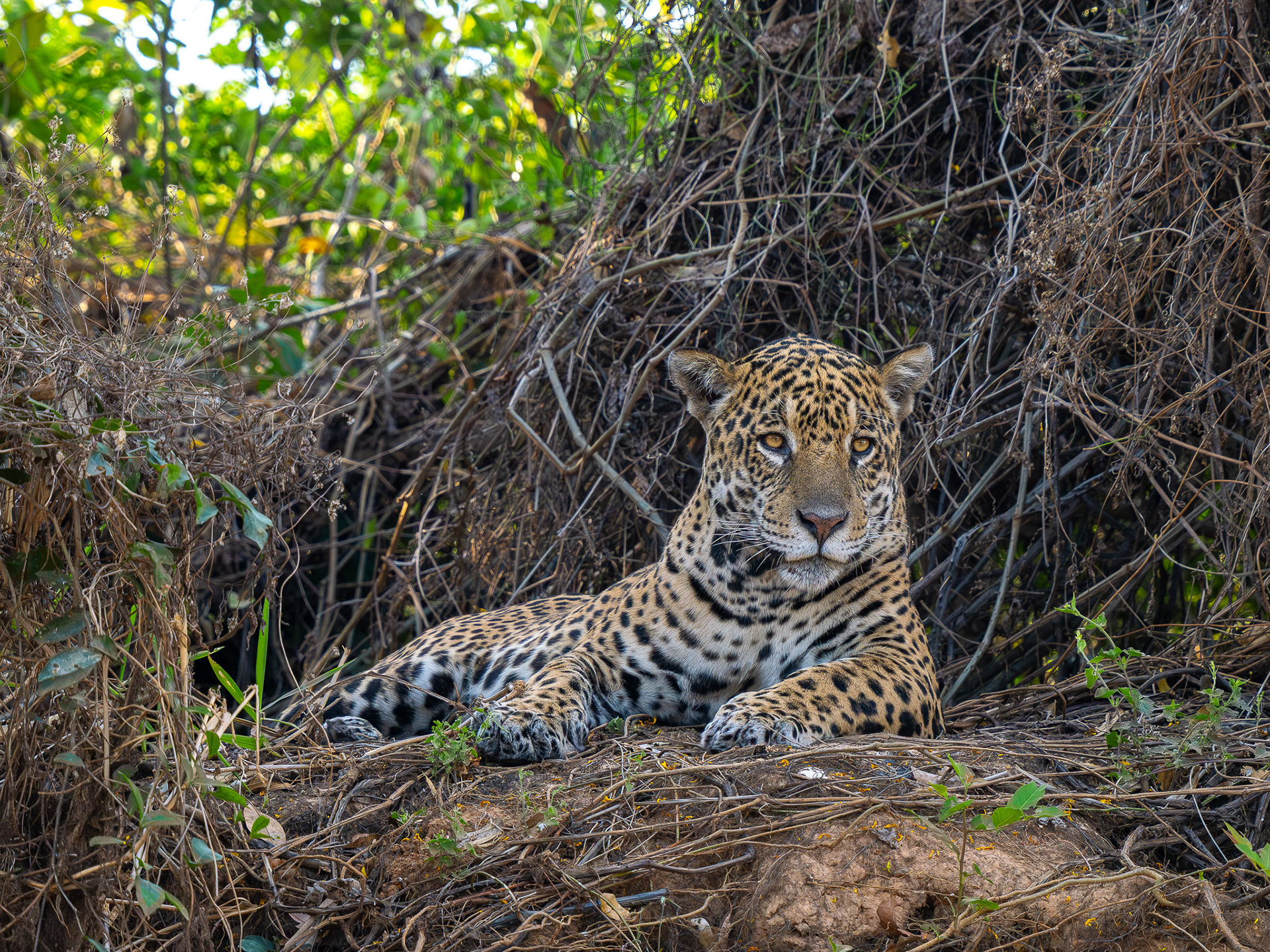
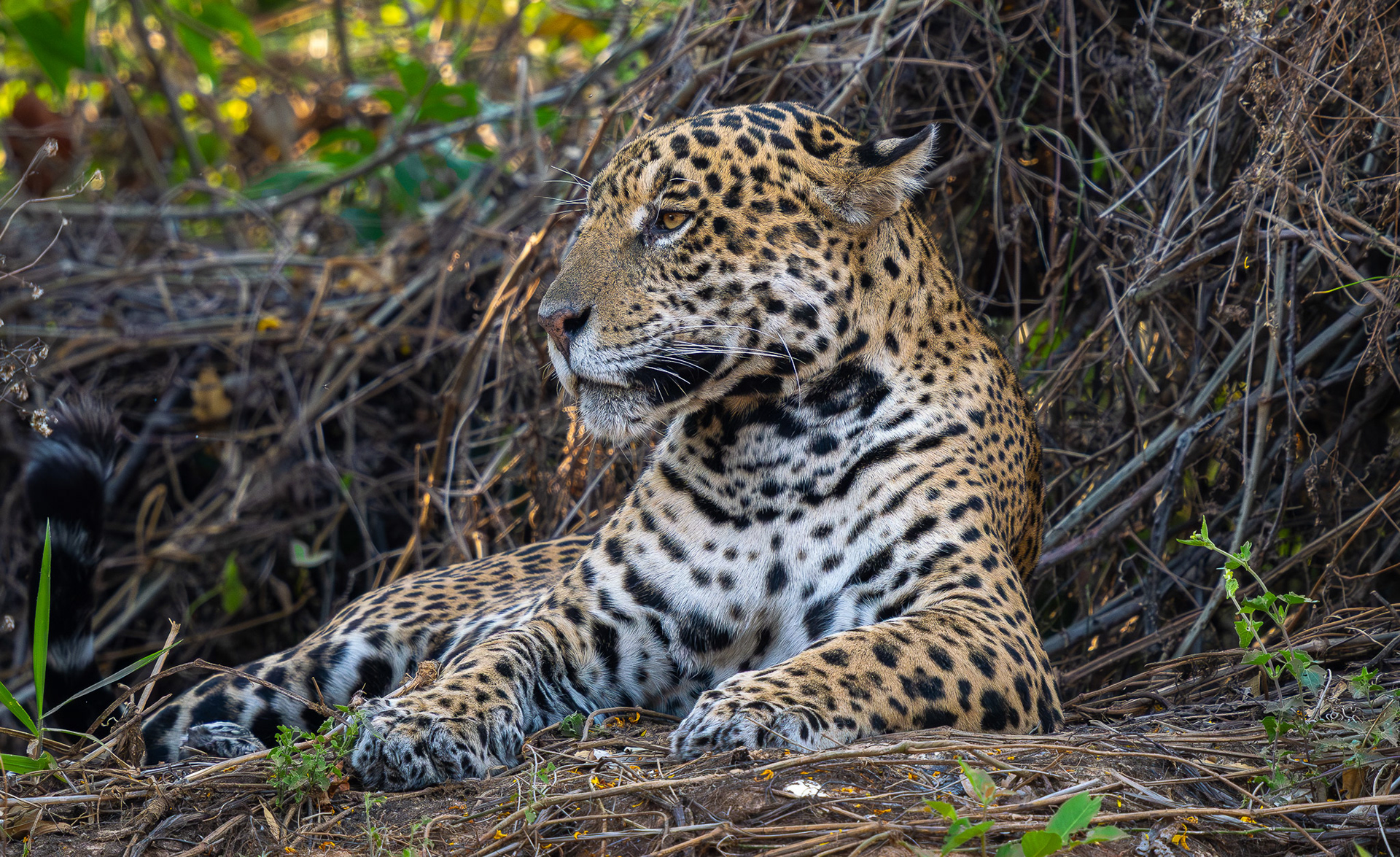
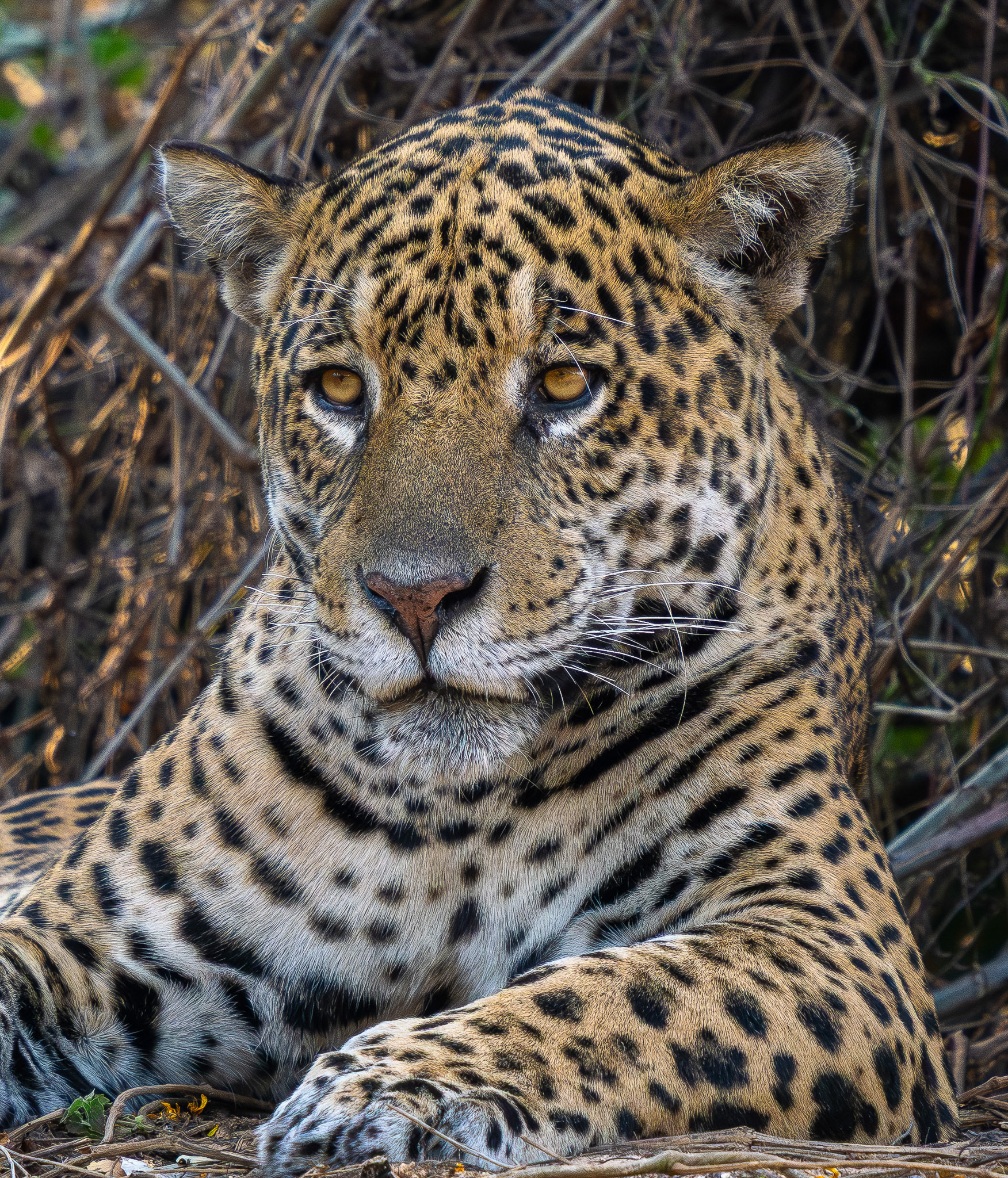
Our patience paid off when we spotted this male Jaguar stretching out along a ridge above the water, he appeared completely relaxed and at ease in his surroundings.
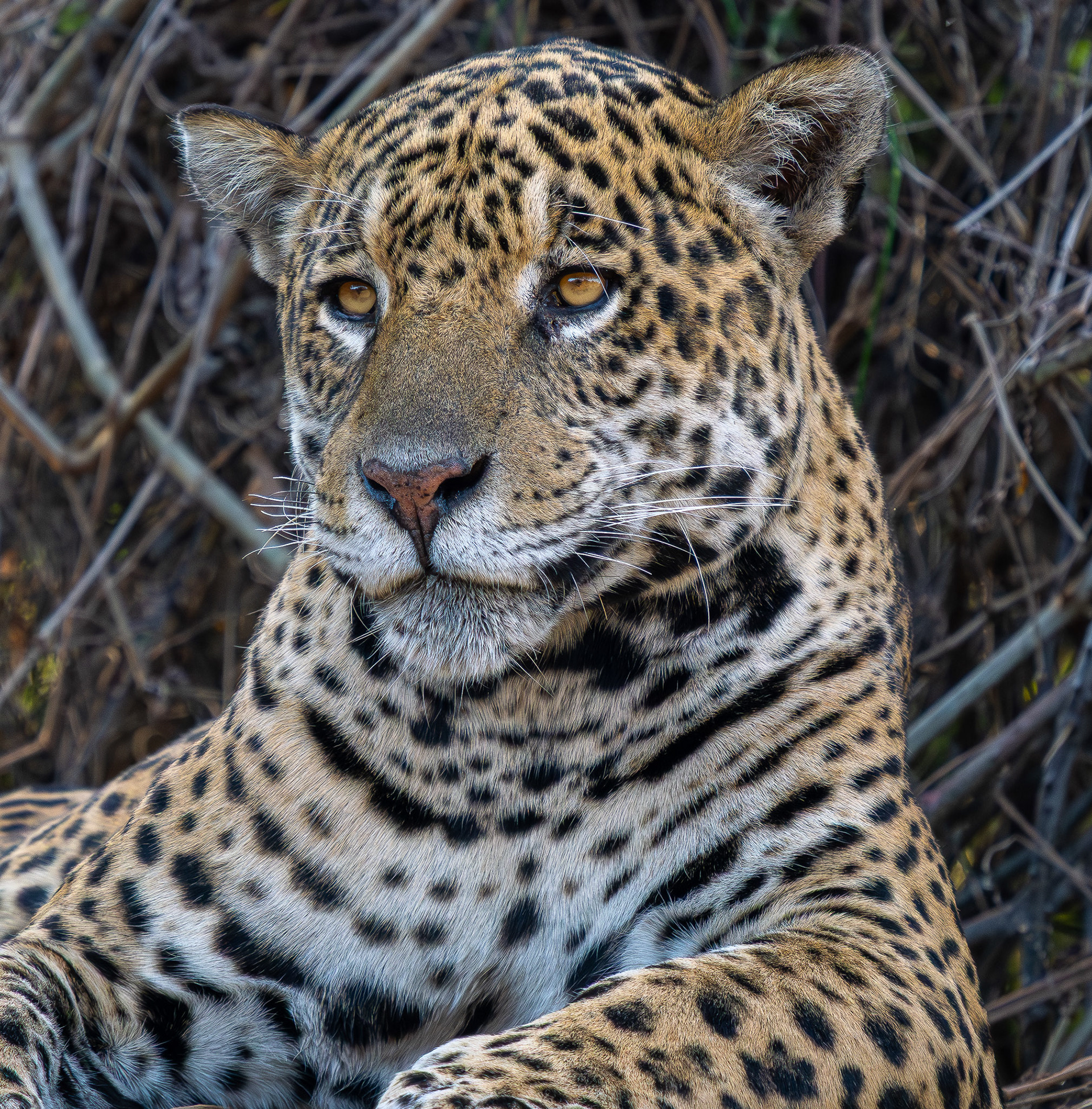
His amber eyes glowing in the warm light as he rests, alert to every movement along the water's edge. The Jaguar appeared completely relaxed in our presence, allowing us time to quietly observe and capture many images of this magnificent creature.
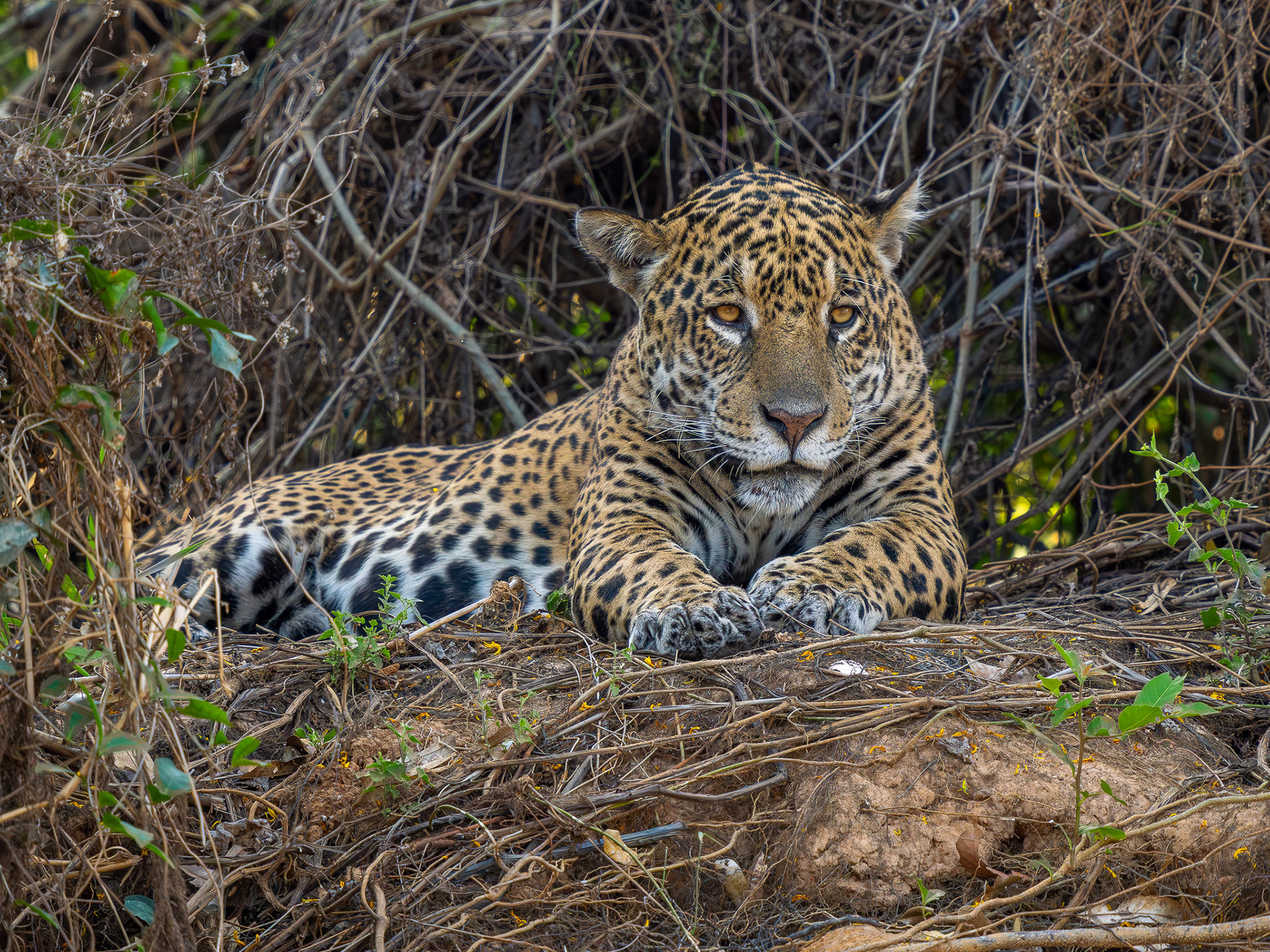
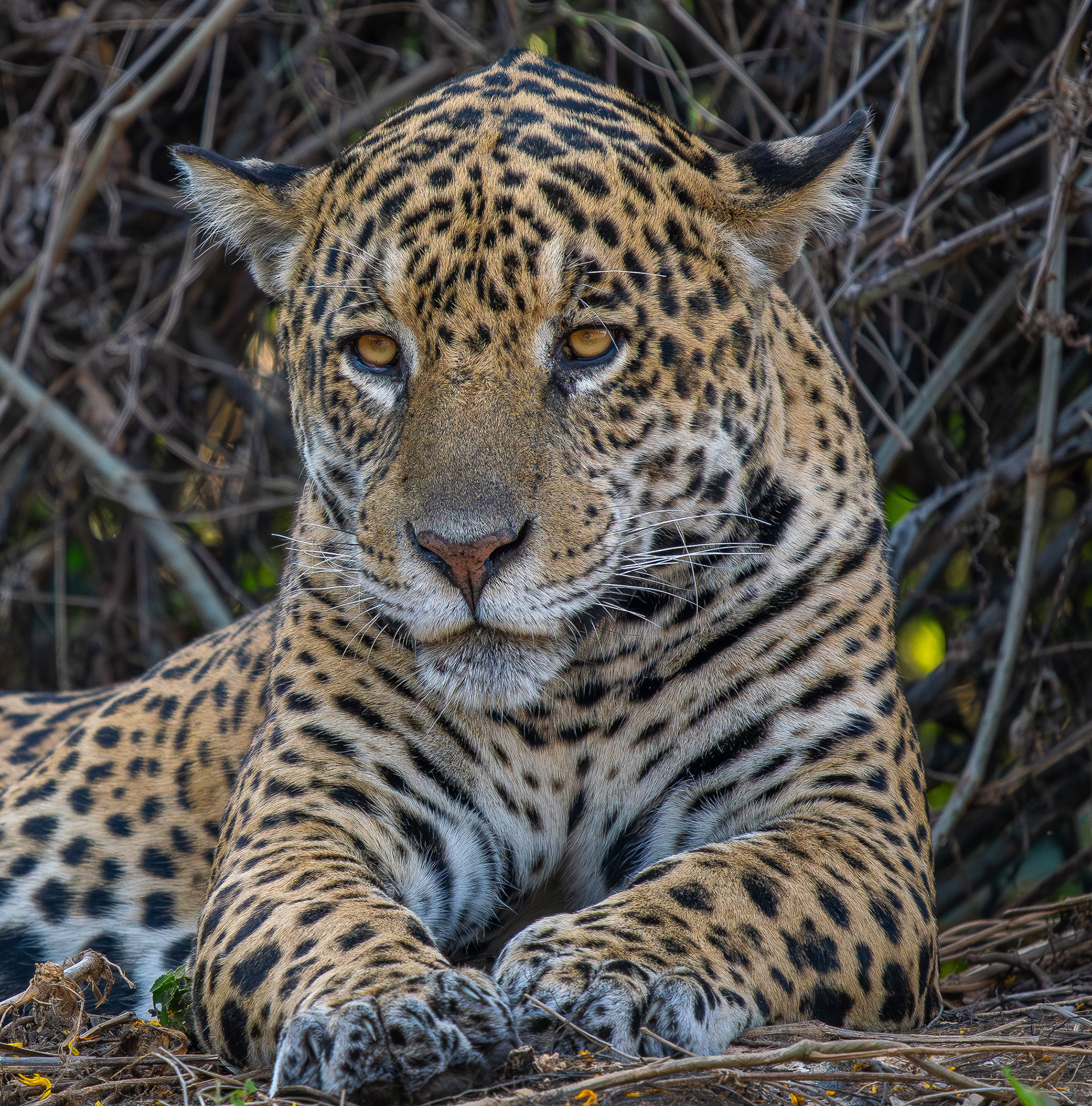
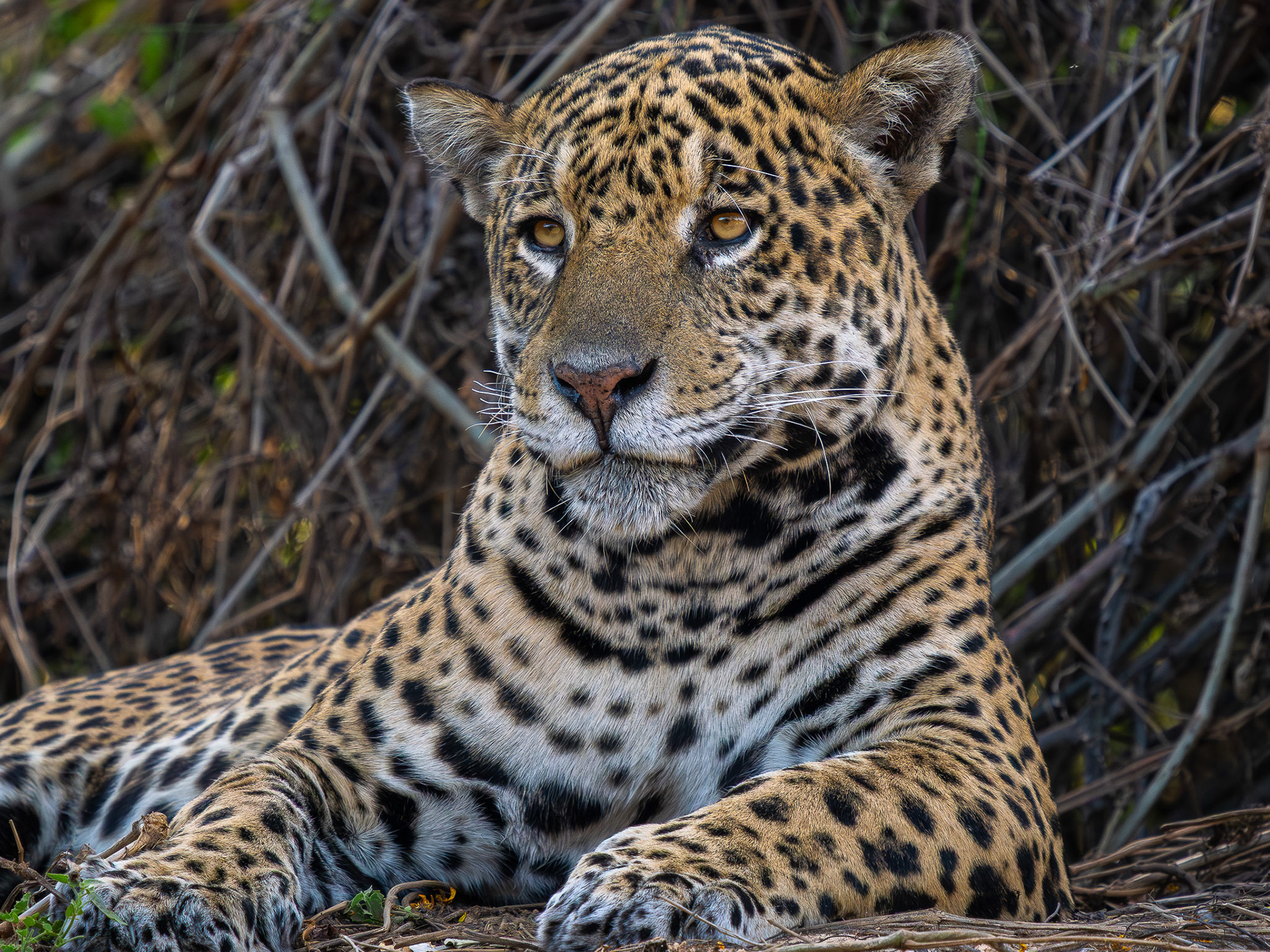
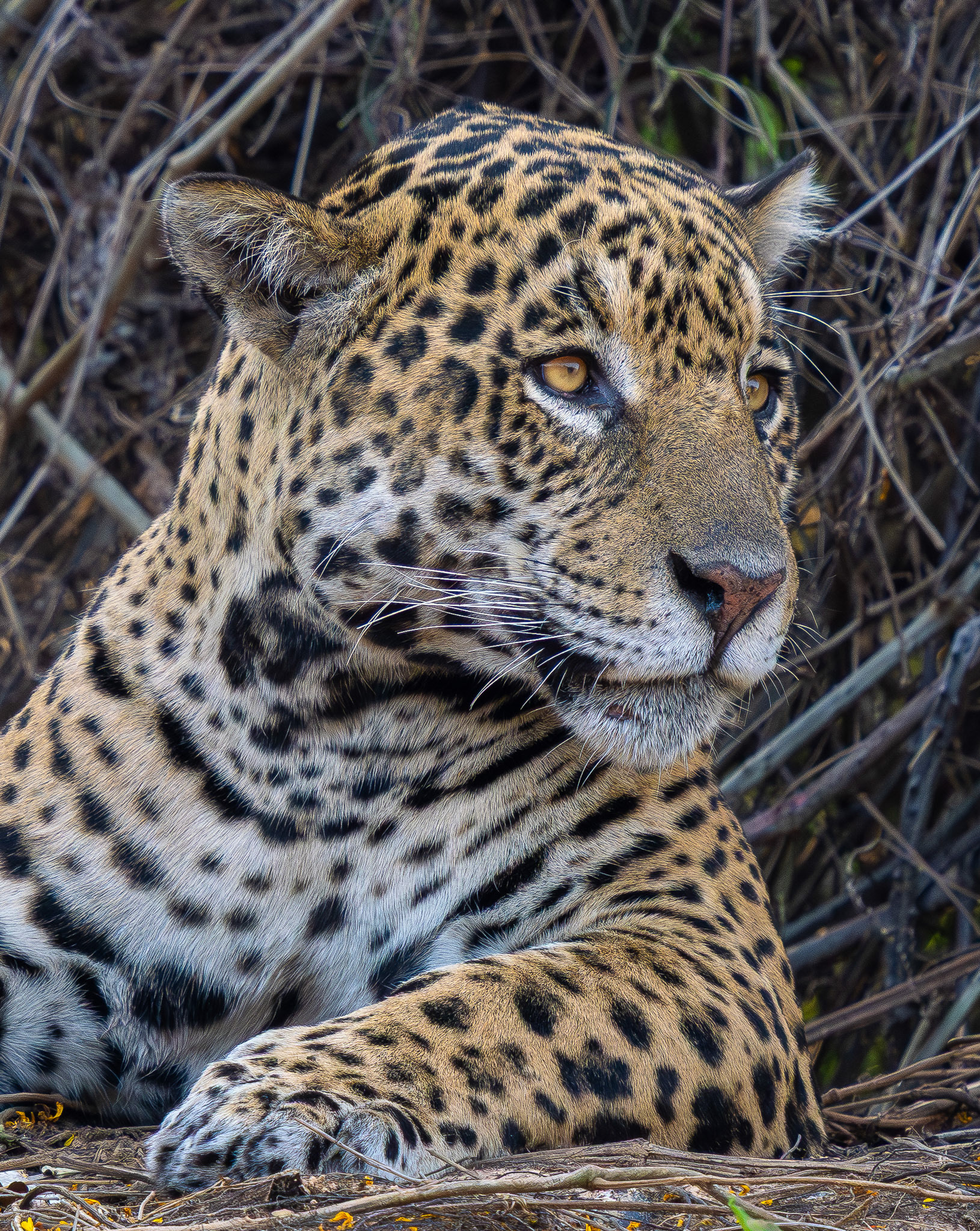
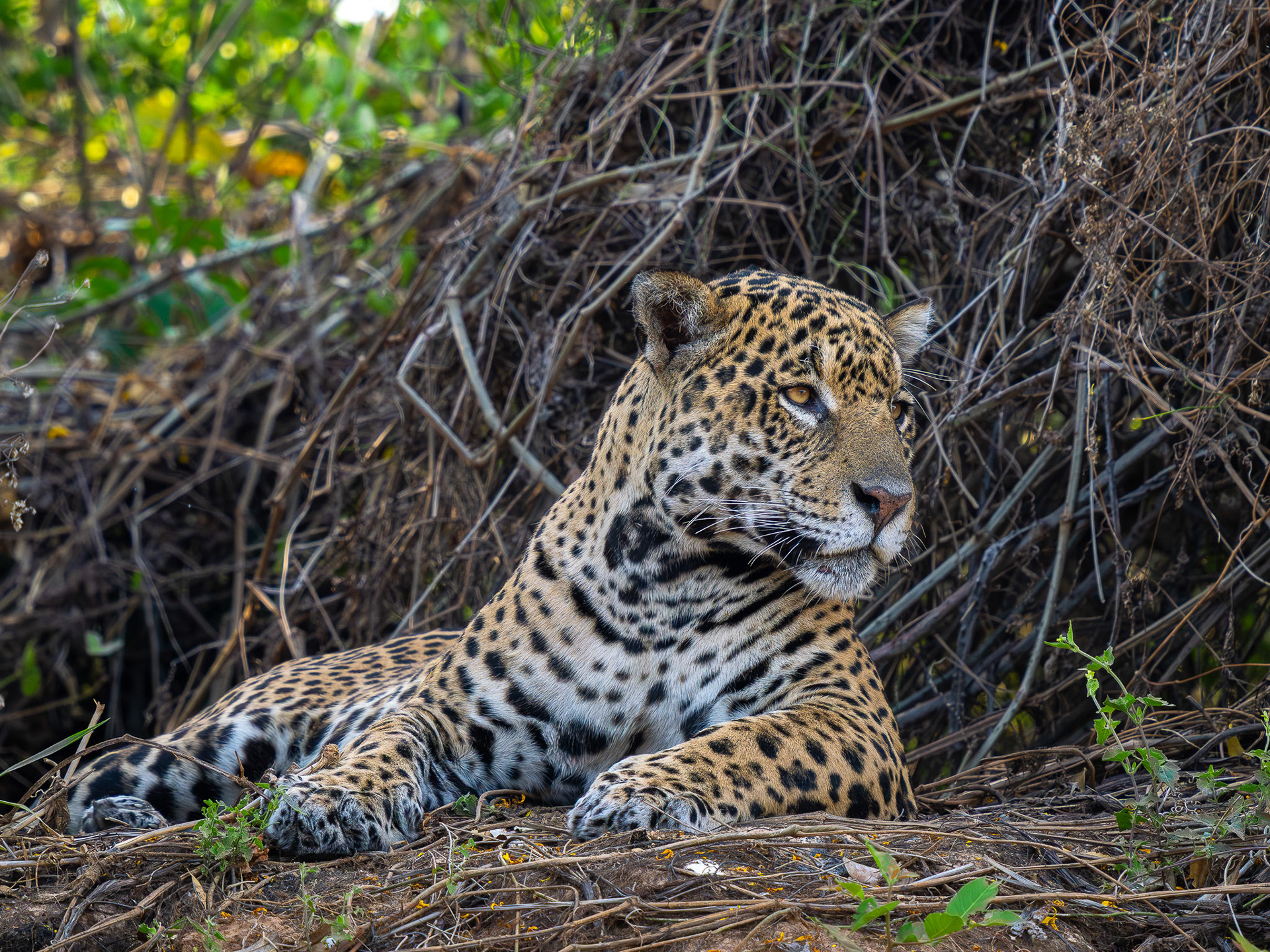
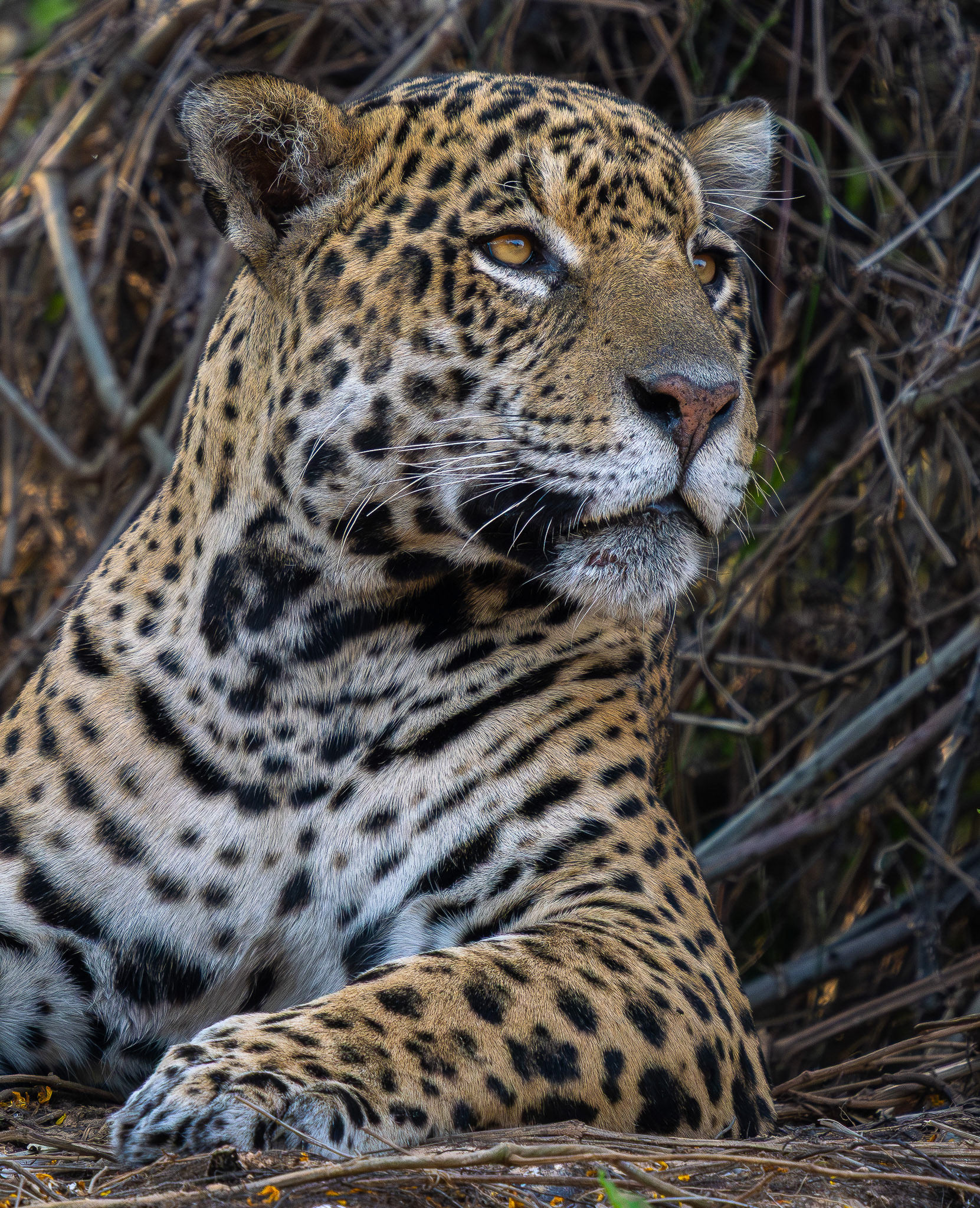
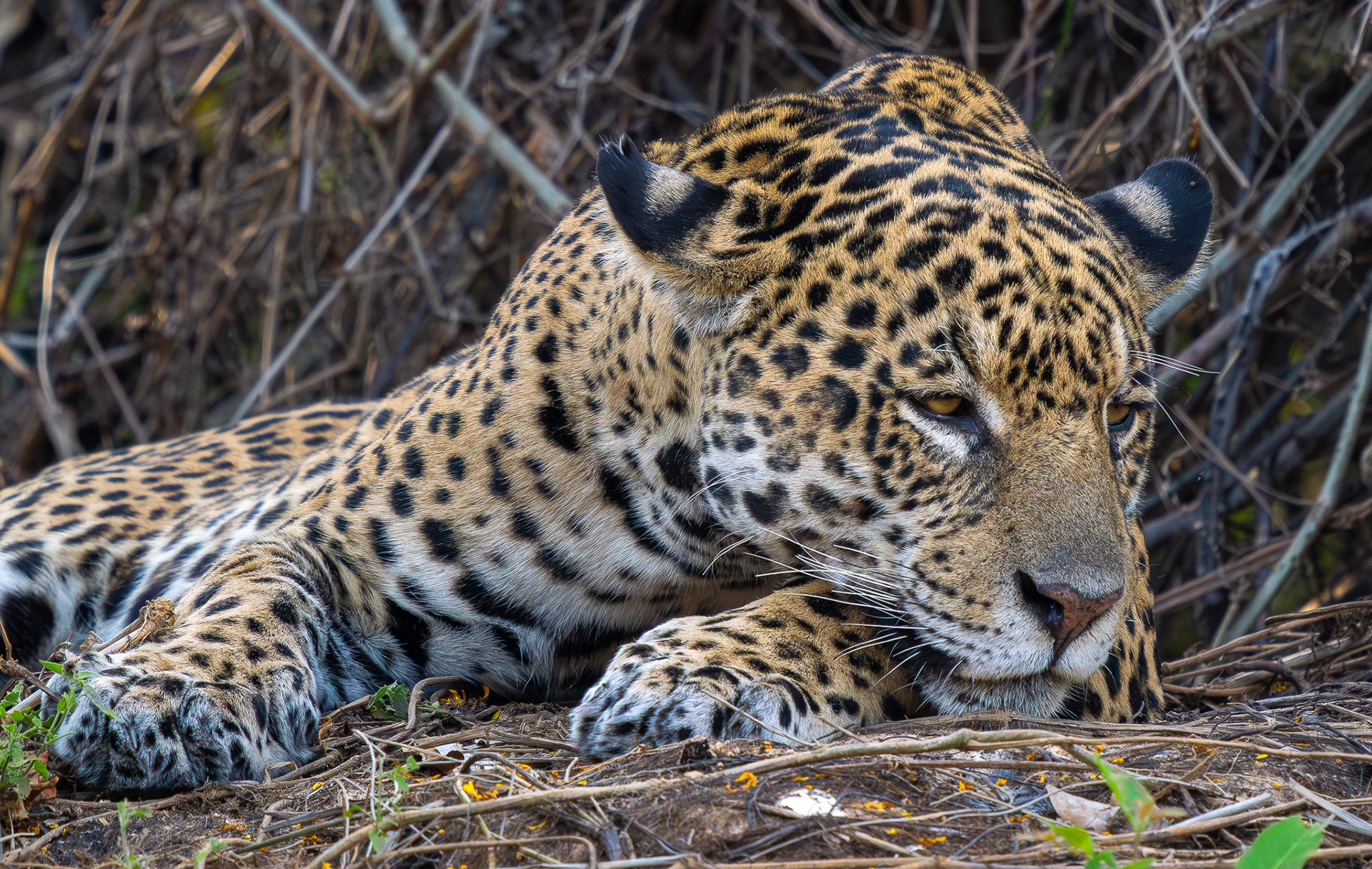
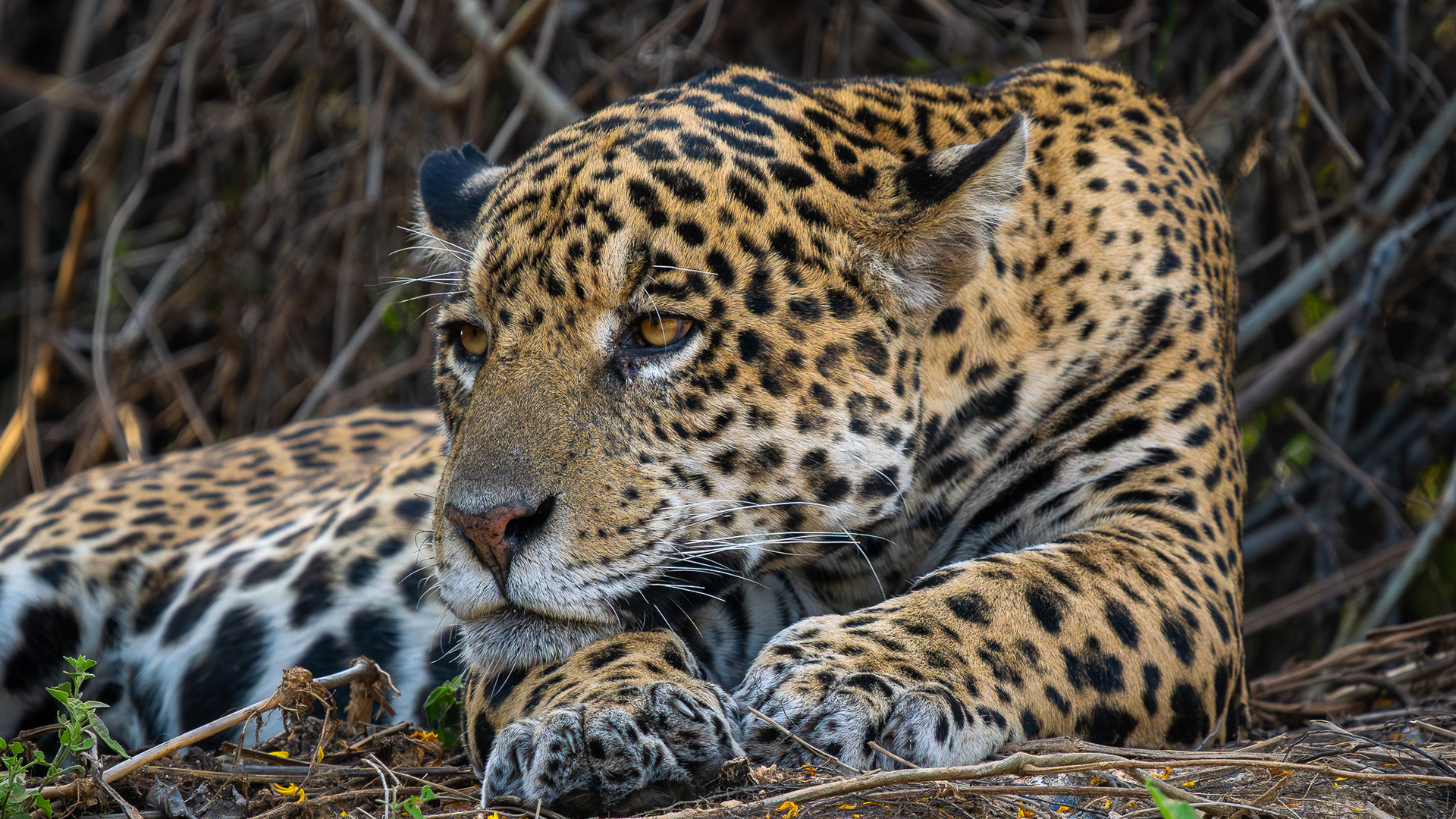
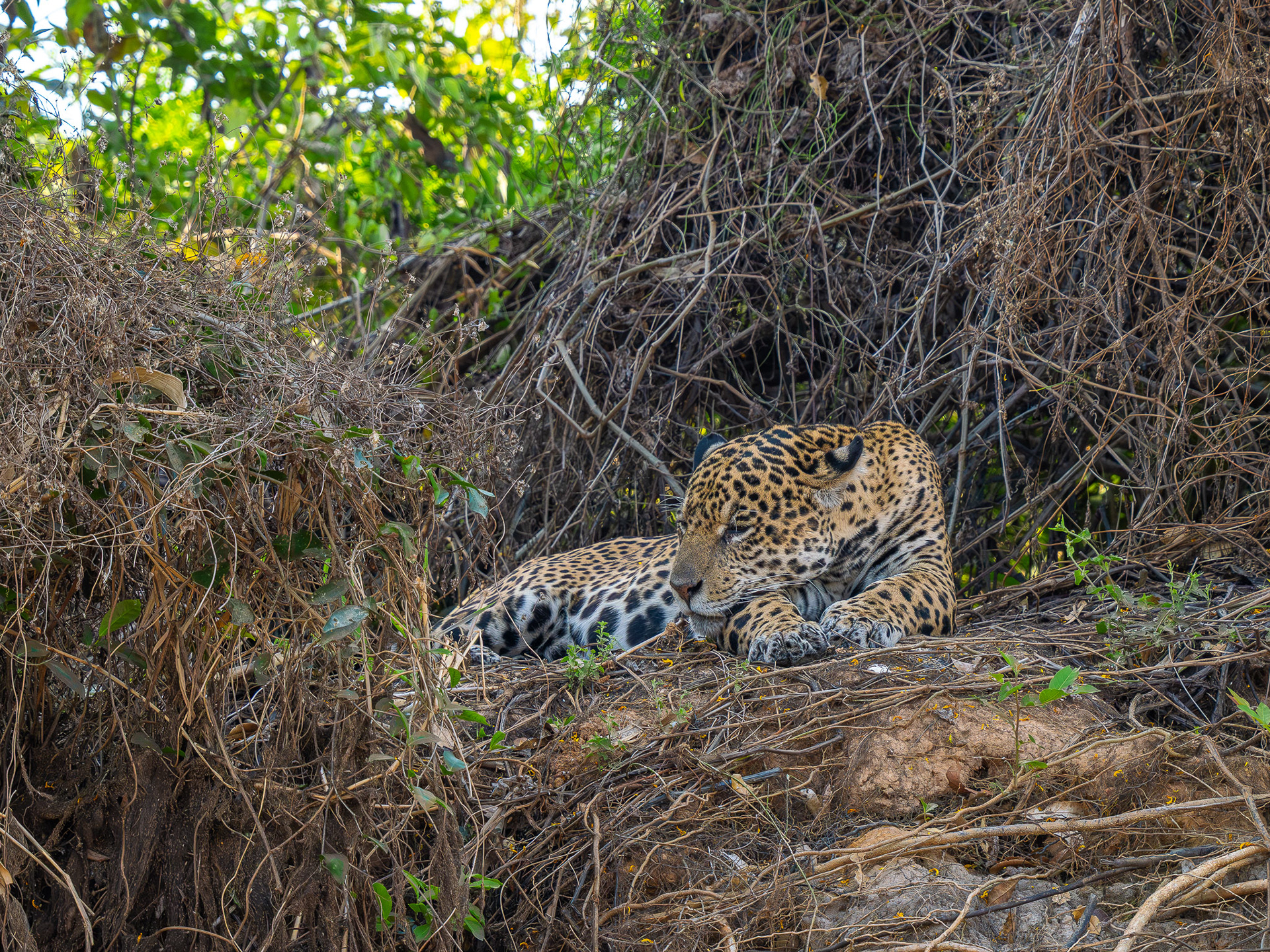
Eventually, he tired of watching us, he rested his head on his paws, eyes half-closed but still alert to distant sounds.
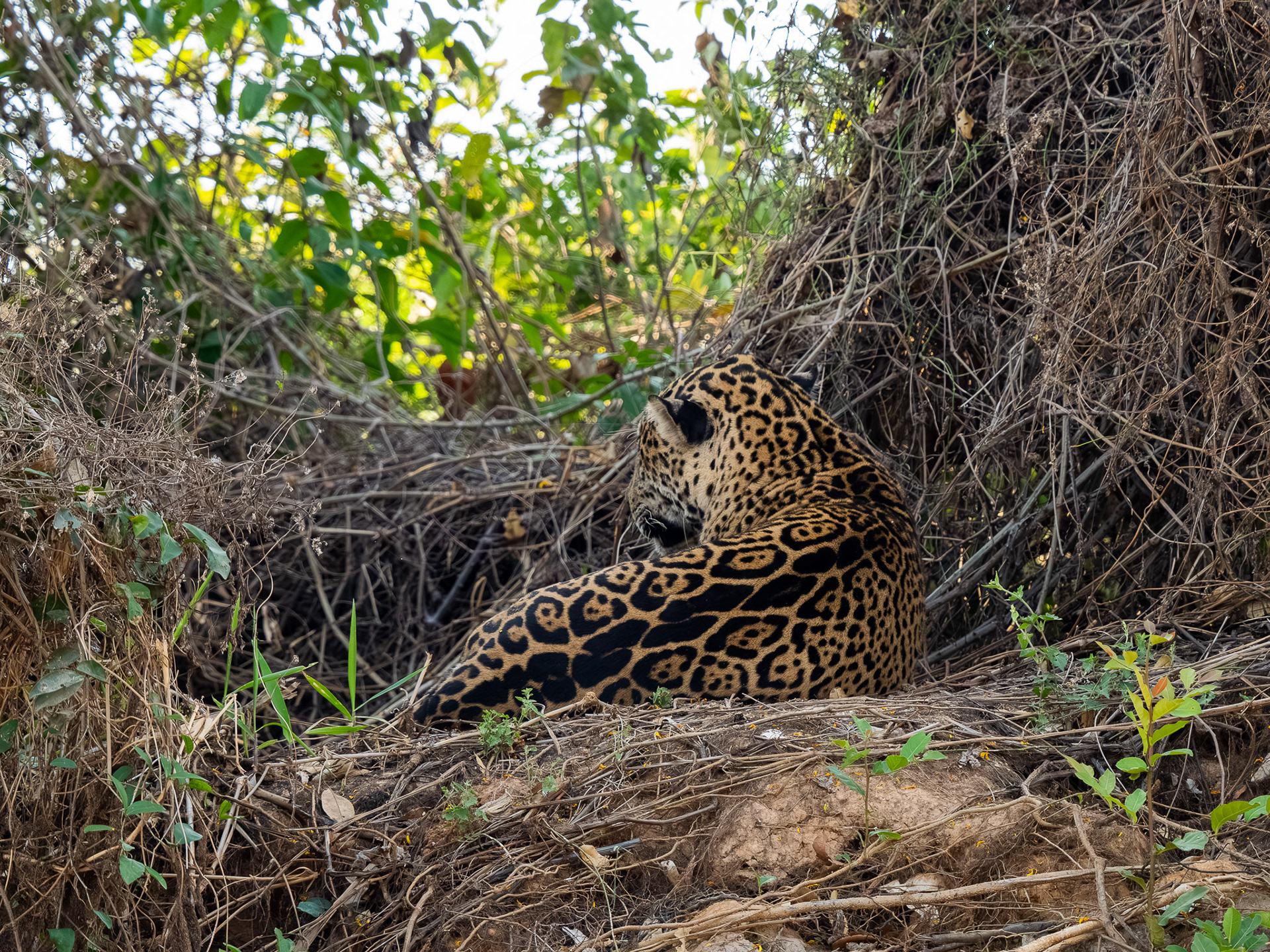
He then turned his back on us, revealing the beautiful markings along his sleek spine. In the soft light, each marking stood out clearly against his golden coat. A final, effortless display of the beauty and power that defines this remarkable animal.
Photographs: ©Don Davies
We travelled to the Pantanal with Wildlife Worldwide and were accompanied by an excellent guide and naturalist, Lucila Rosales (Lucy), whose knowledge and expertise greatly added to our experience.
v Click below to view next Gallery v
v OR v