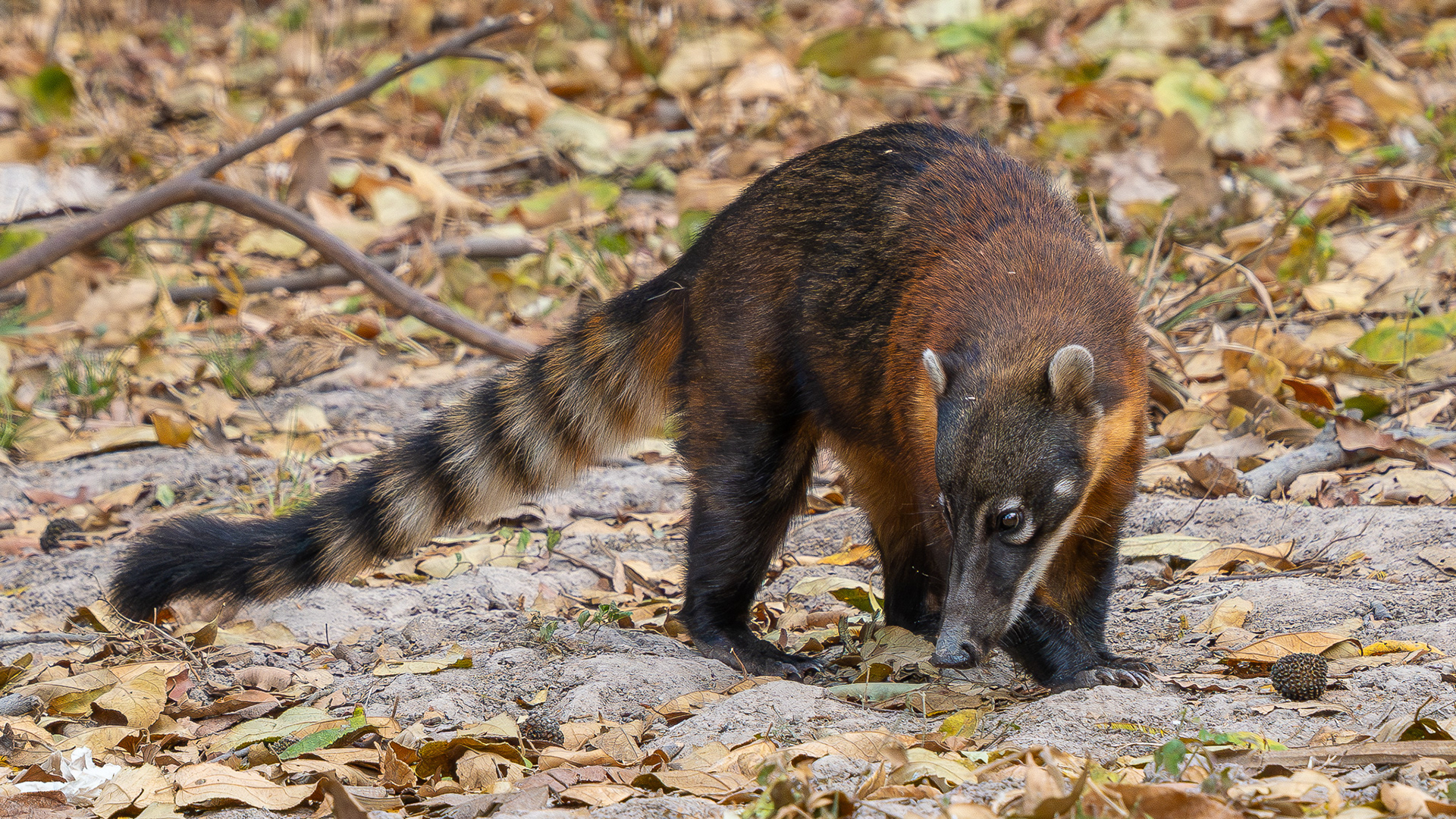
Coati
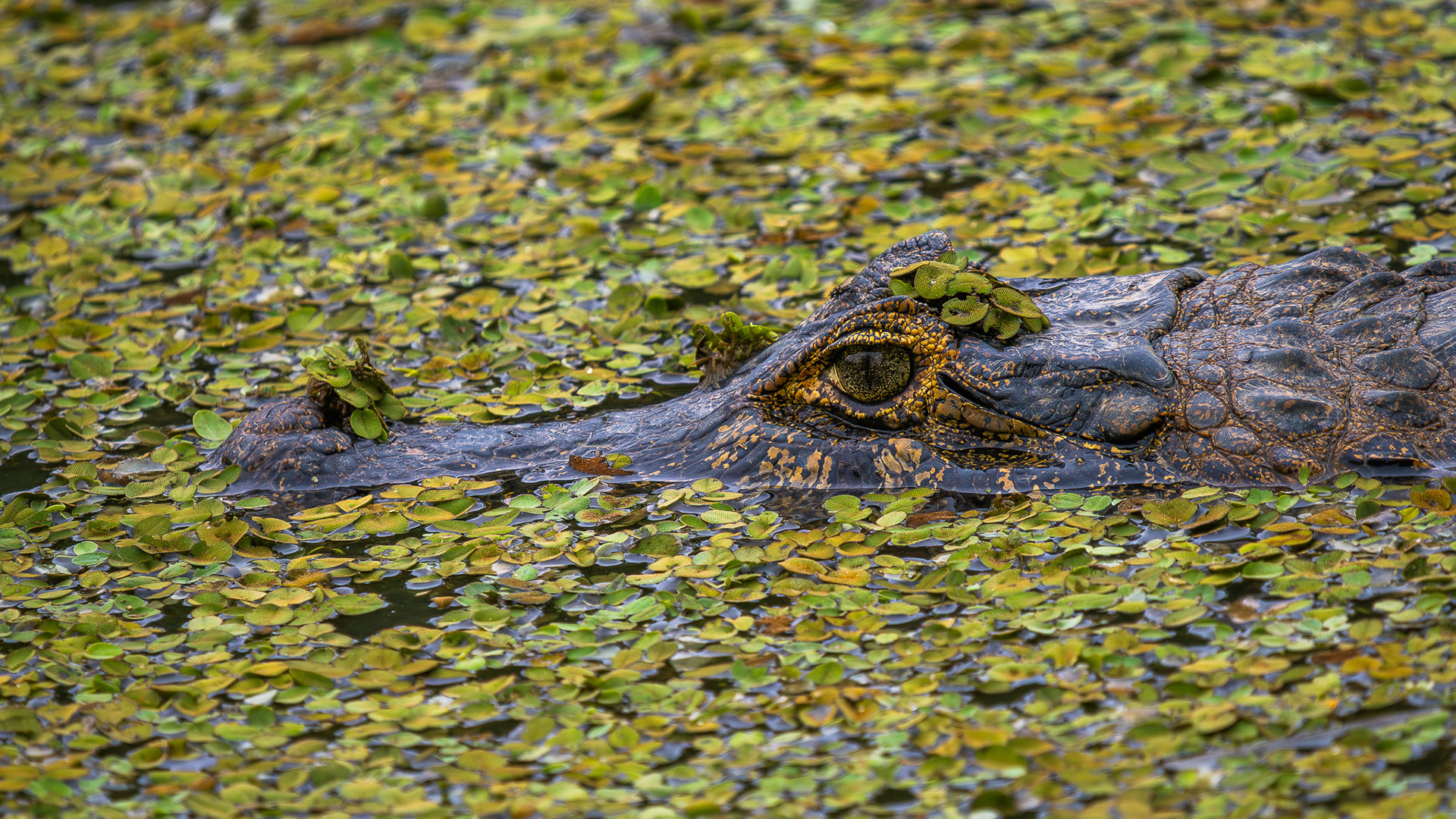
Yacare Caiman
Wildlife of the Pantanal (1)
Brazil - South America
The Pantanal is in the centre of South America. Spreading over a huge area of central-western Brazil, it crosses over the borders into Bolivia and Paraguay. It is the largest wetland in the world and hosts an amazing variety of wildlife.
The following images are of some of the wildlife we managed to photograph on our trip to the Northern Pantanal in late August 2025.
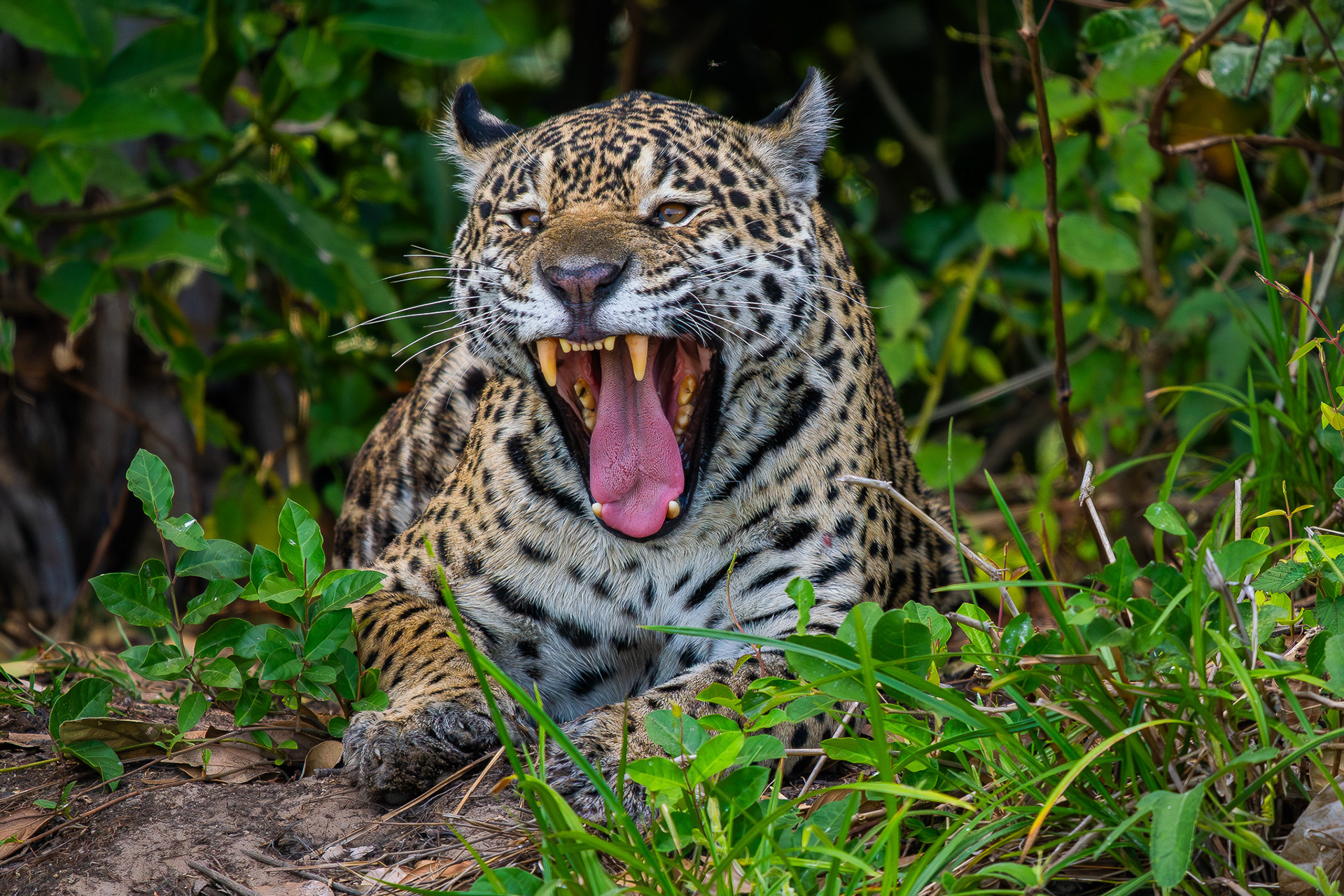
^ The Pantanal Jaguar
The Jaguar (Panthera onca) is the apex predator and iconic big cat of the Pantanal, largest cat in the Americas and the third-largest in the world.
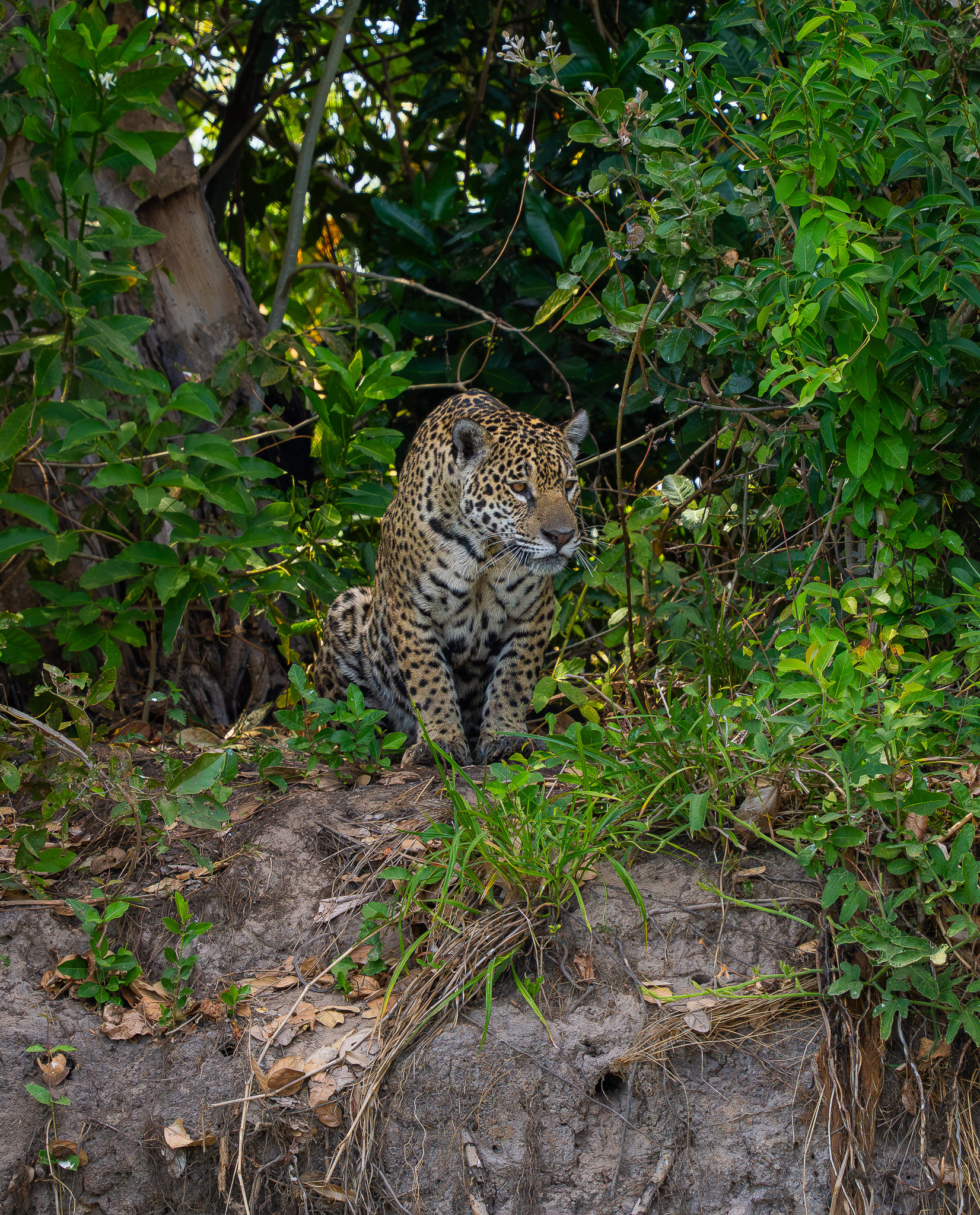
Whilst Jaguars are typically nocturnal, the Pantanal population often hunts during the day to take advantage of prey basking in the sun along the riverbanks.
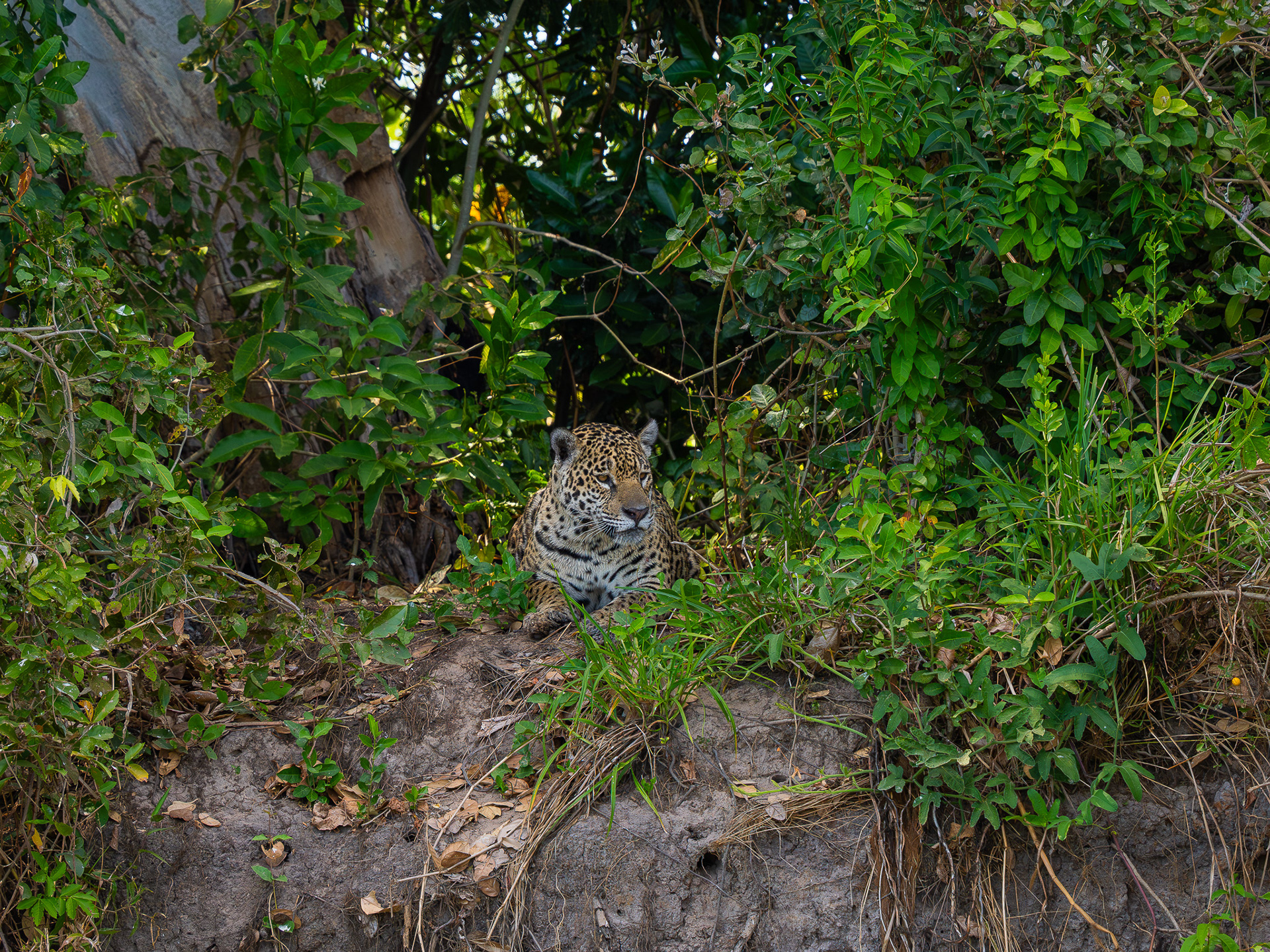
We came across this female Jaguar resting on a quiet riverbank, her eyes locked on the water below as she waited patiently for any subtle ripple that might signal her next meal.
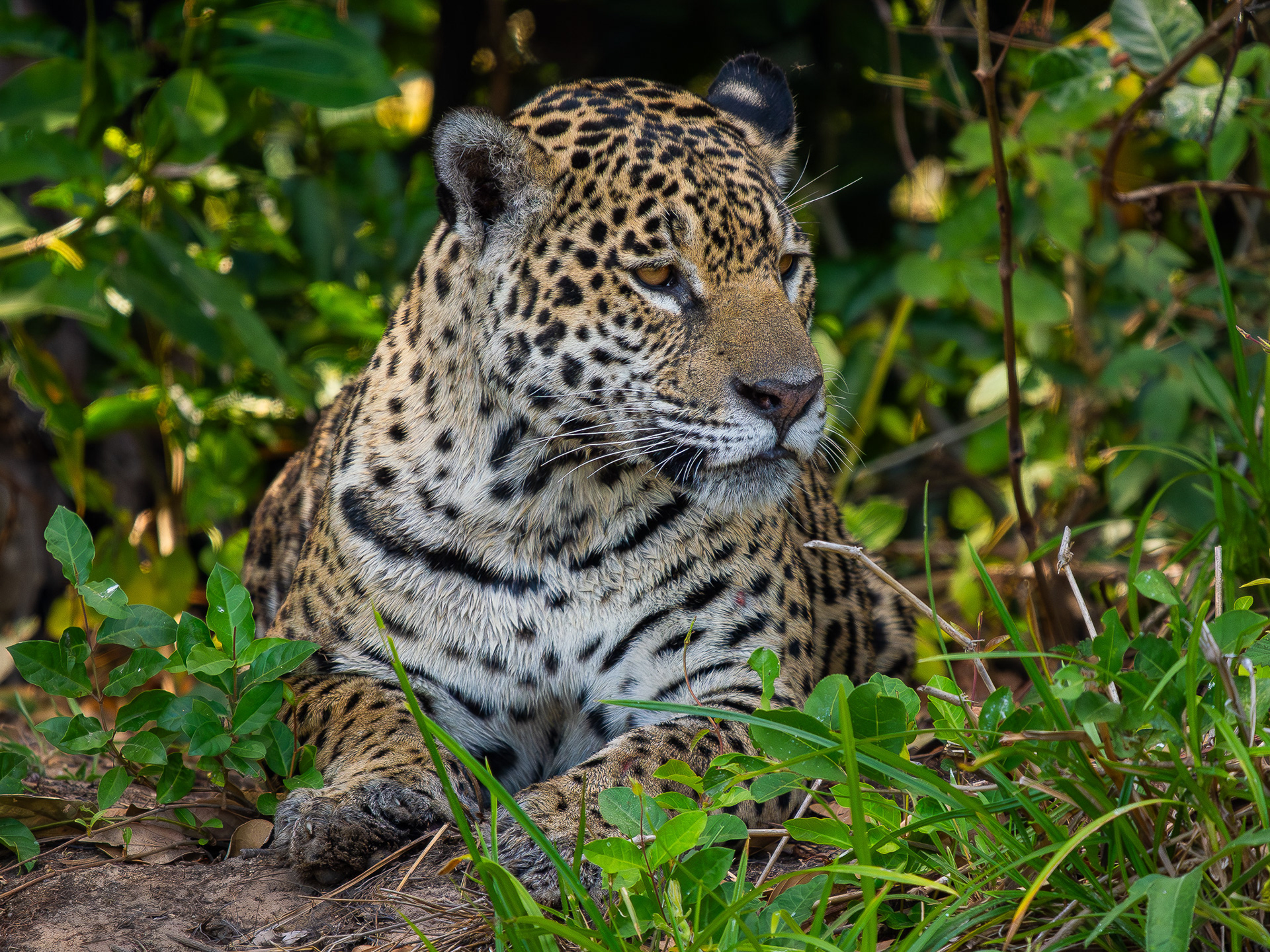
Her long white whiskers (vibrissae) are essential sensory tools used to detect prey. These sensitive hairs stand out sharply against her tan-and-black rosetted fur.

She cleans herself by carefully preening the fur on her chest with her long pink tongue, which is covered in rough, hook-like structures called papillae. When a Jaguar grooms its body, these tiny barbs act like combs - efficiently removing dirt, loose hair, and even parasites from its coat to keep it in prime condition.

She licks her lips, revealing her lower canines.
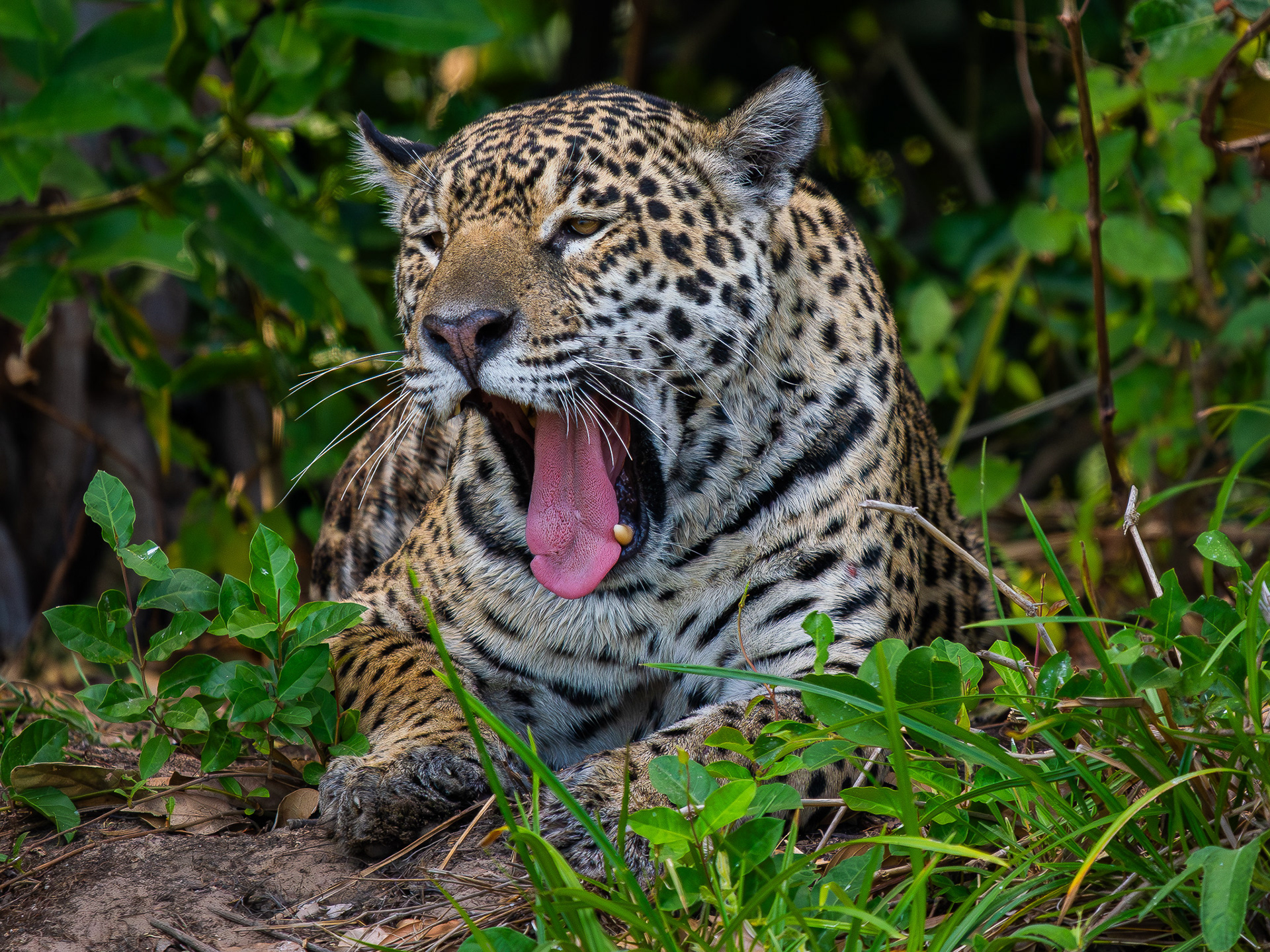
She begins to yawn.
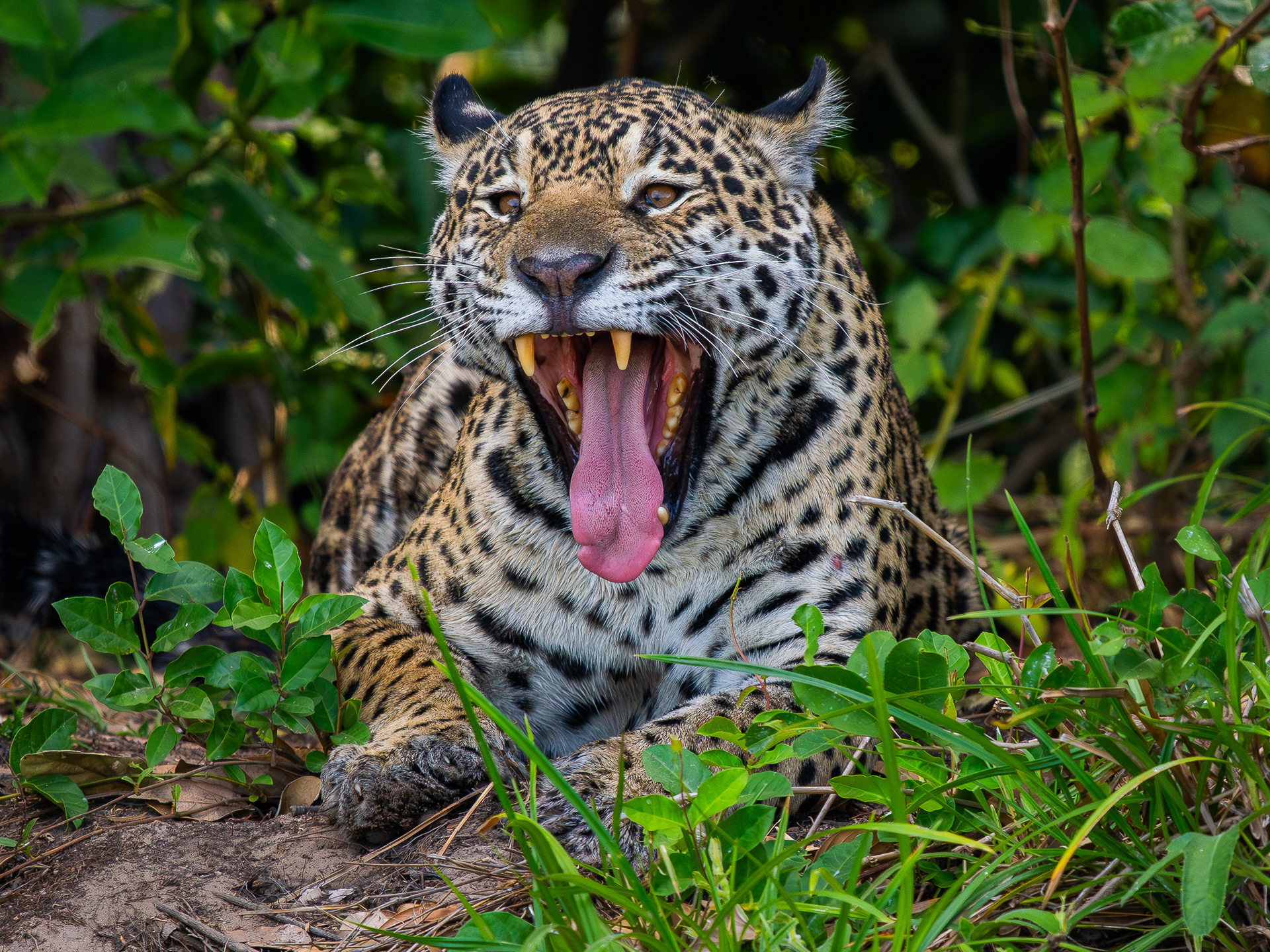
A wider yawn exposes her formidable canine teeth and long pink tongue, offering a fleeting glimpse of the power behind her calm exterior.
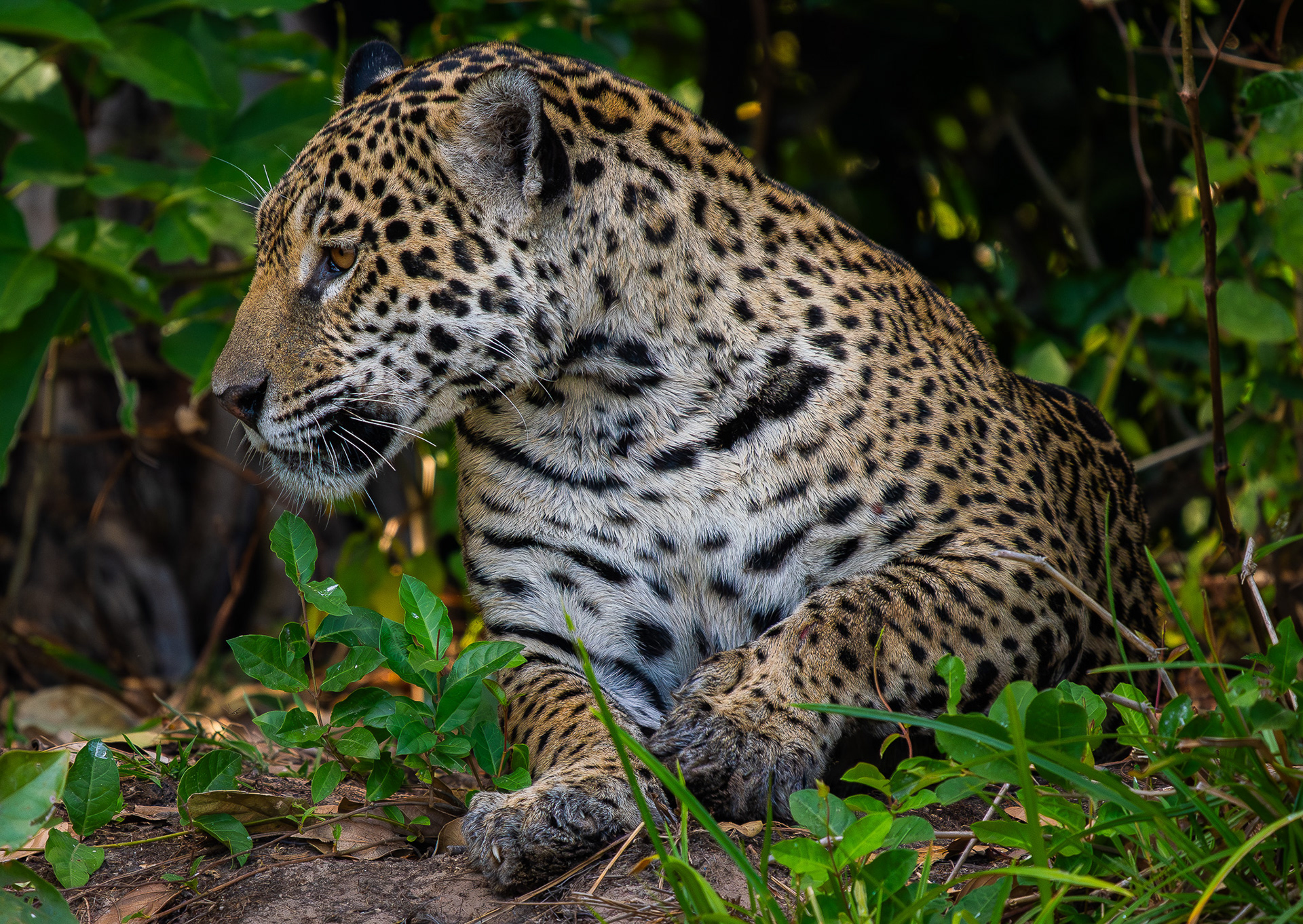
Her sudden alertness and fixed stare indicate she is assessing a ripple, splash, or sudden movement in the river.
^ Giant River Otter
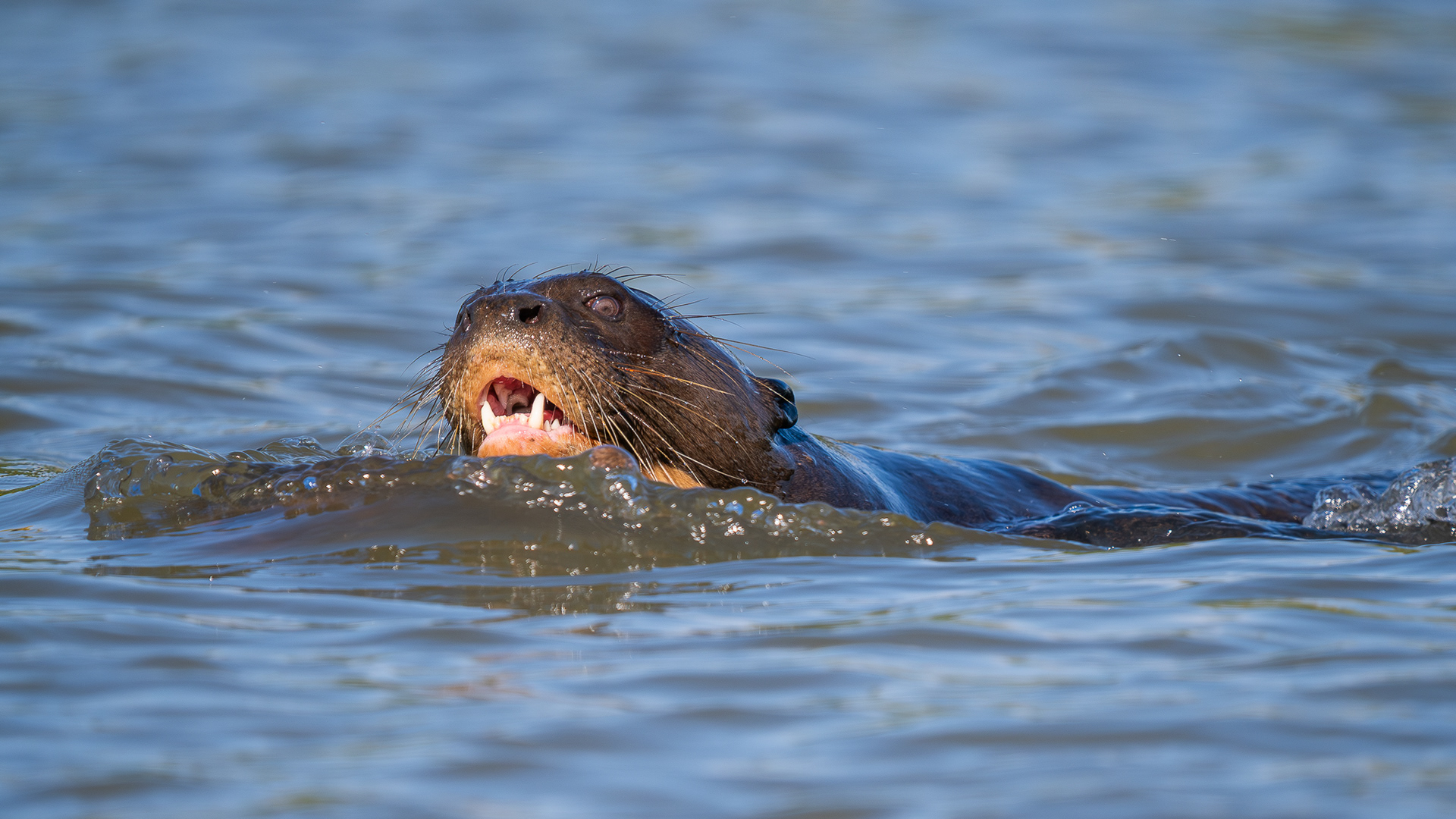
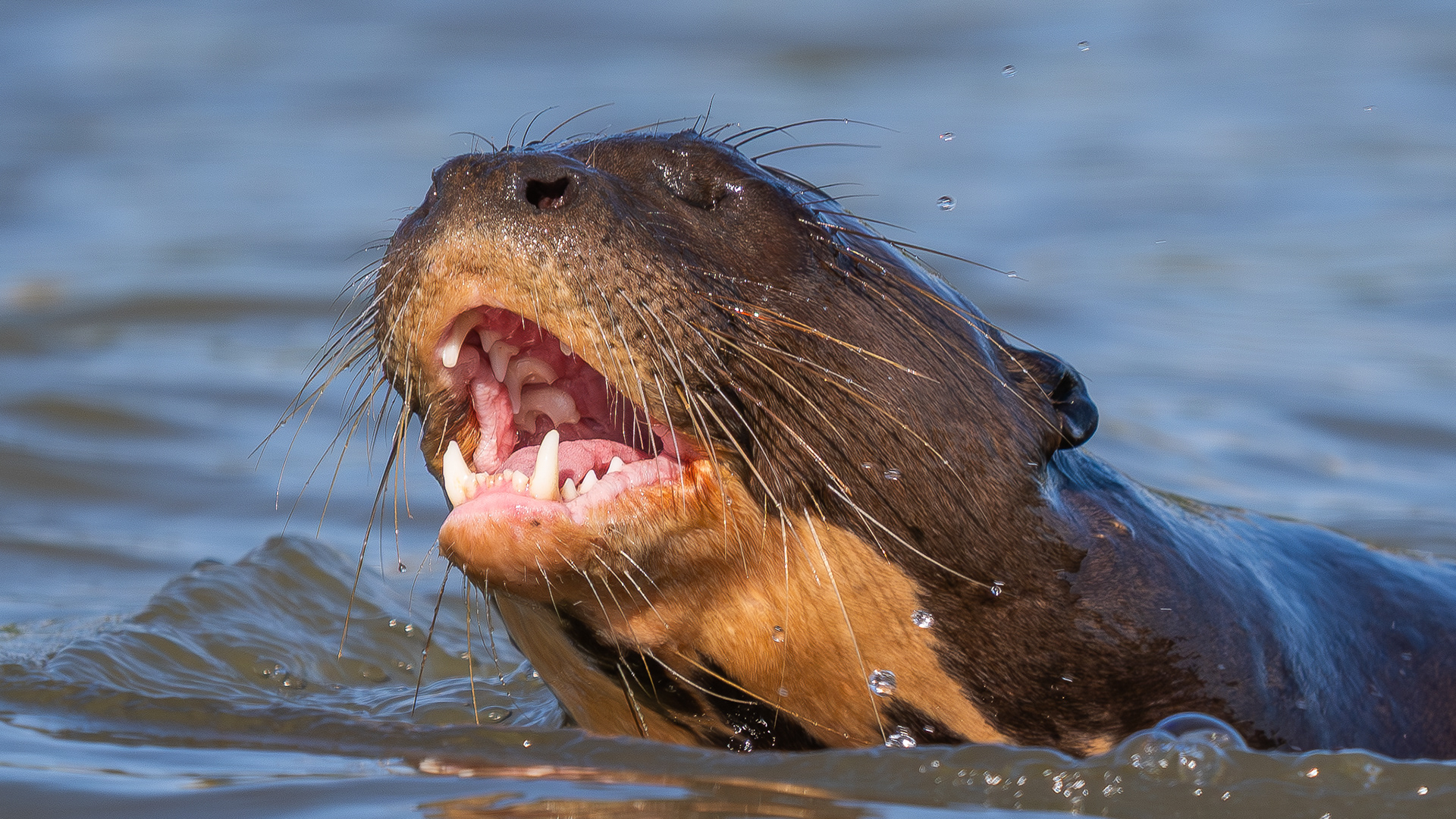
The Giant River Otter is the world's largest otter, reaching lengths of up to six feet. Perfectly adapted to life in the water, it can close its ears and nostrils whilst diving and uses its sensitive whiskers to detect vibrations from prey. Its strongly webbed feet provide powerful propulsion, while a long, muscular, flattened tail acts as an efficient rudder. Together, these remarkable adaptations make the Giant River Otter an exceptionally agile and formidable swimmer.

Giant River Otter can consume up to 5kg of fish each day, though their diet also includes crabs, small caiman, and even young anacondas. They live in close-knit family groups of around 15 to 20 individuals and are the most vocal of all otter species, maintaining constant contact through a lively range of calls and chatter. Highly territorial, they actively mark and patrol their range, establishing dens by digging into riverbanks where the family rests and raises its young.
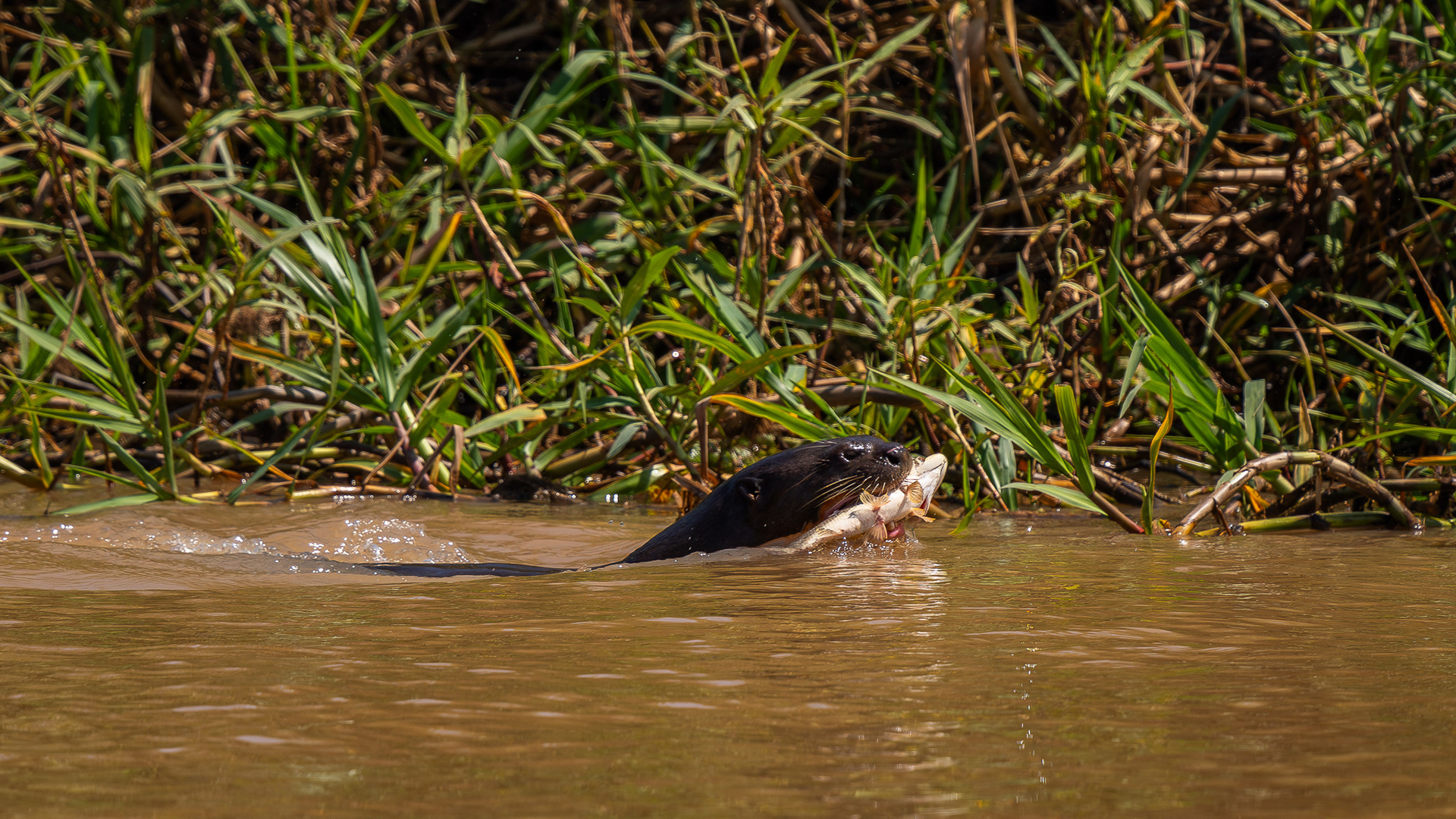
A Giant River Otter darts through the water with remarkable speed, its sleek, muscular body slicing effortlessly through the river. A fish is clutched firmly in its jaws, demonstrating its skill as a top predator in this rich wetland ecosystem.
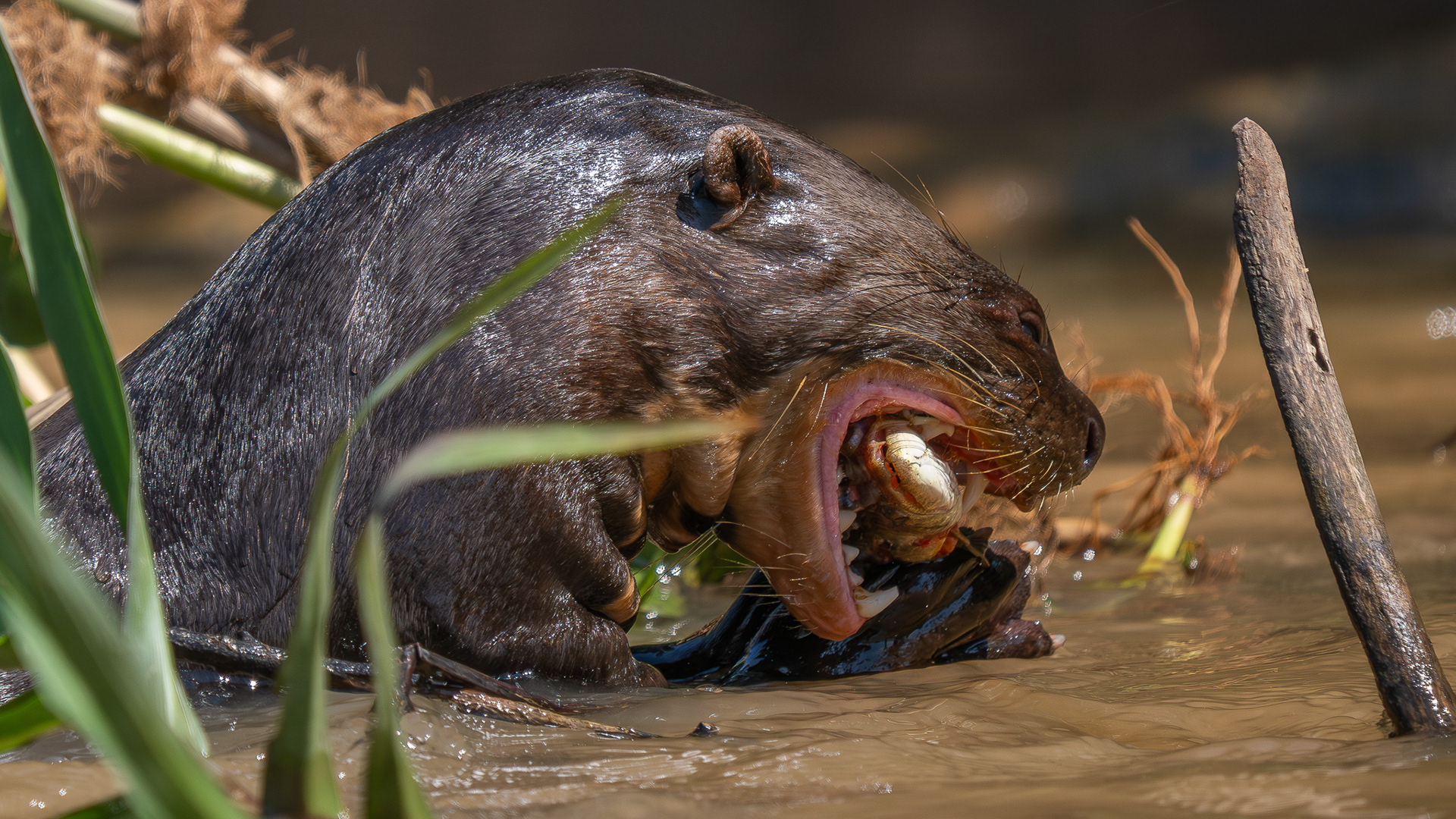
Giant River Otter are often nicknamed the 'River Wolf' because of their co-operative hunting strategies and highly social nature. They hunt in co-ordinated groups, working together to herd and capture prey, and maintain strong family bonds within their tight-knit clans.
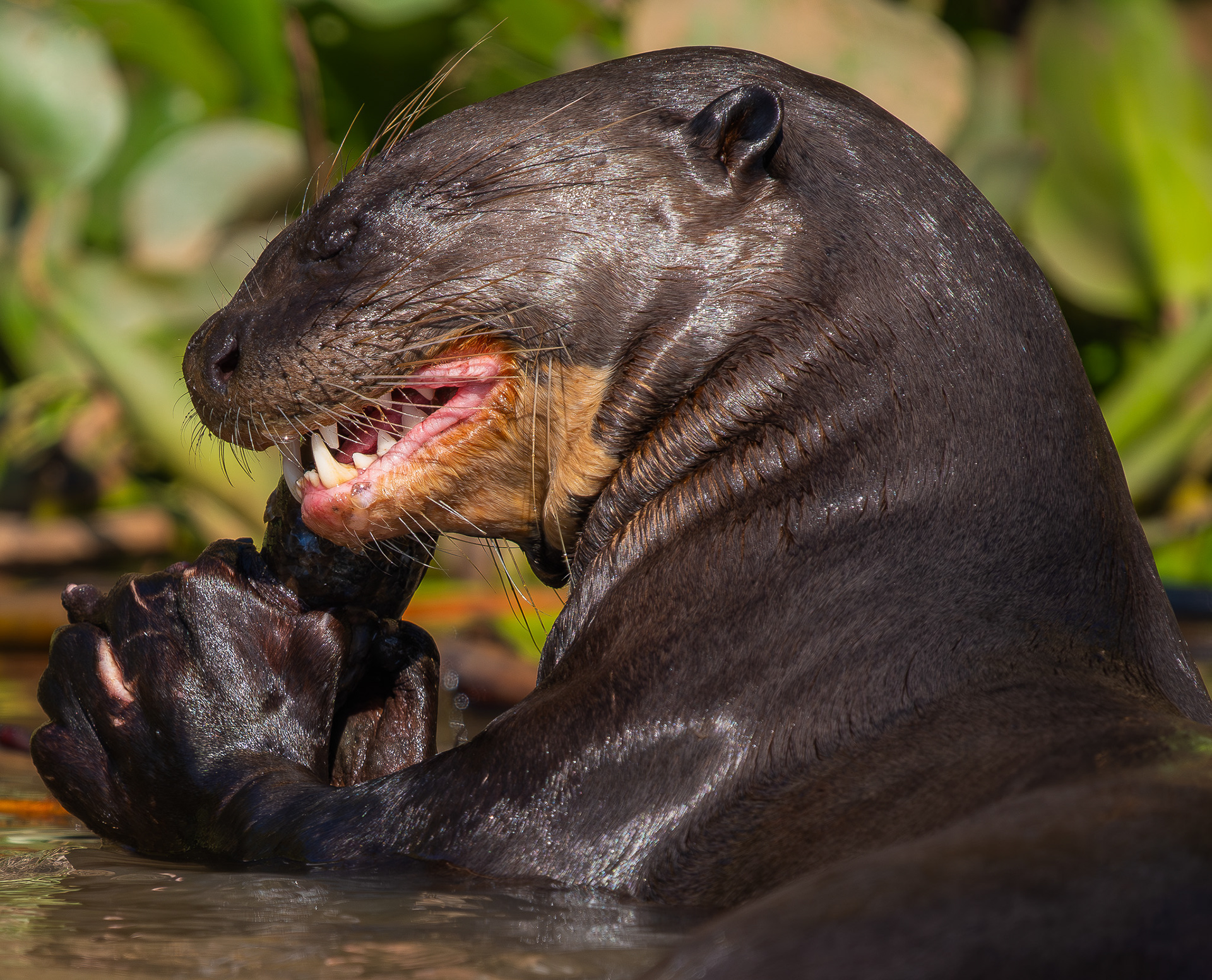
This Giant River Otter eagerly devours a freshly caught fish, gripping it firmly in its jaws and tearing into the flesh, briefly revealing its sharp canine teeth as it feeds.
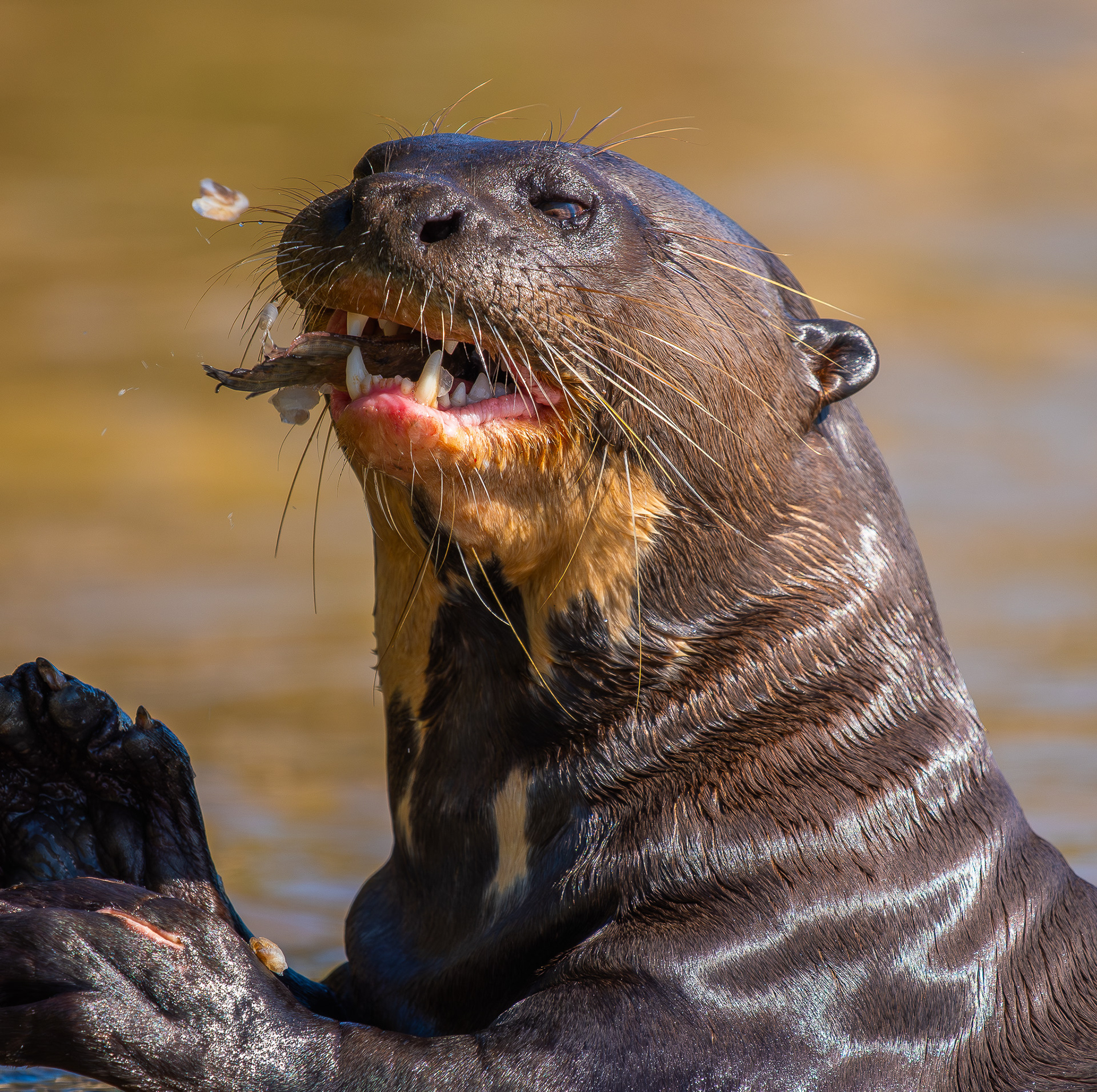
Finishing the last remains of its fish meal, the Giant River Otter uses its powerful jaws and sharp teeth to tear through the final mouthful. Focused and intent, it savours every bite before slipping silently back into the water.
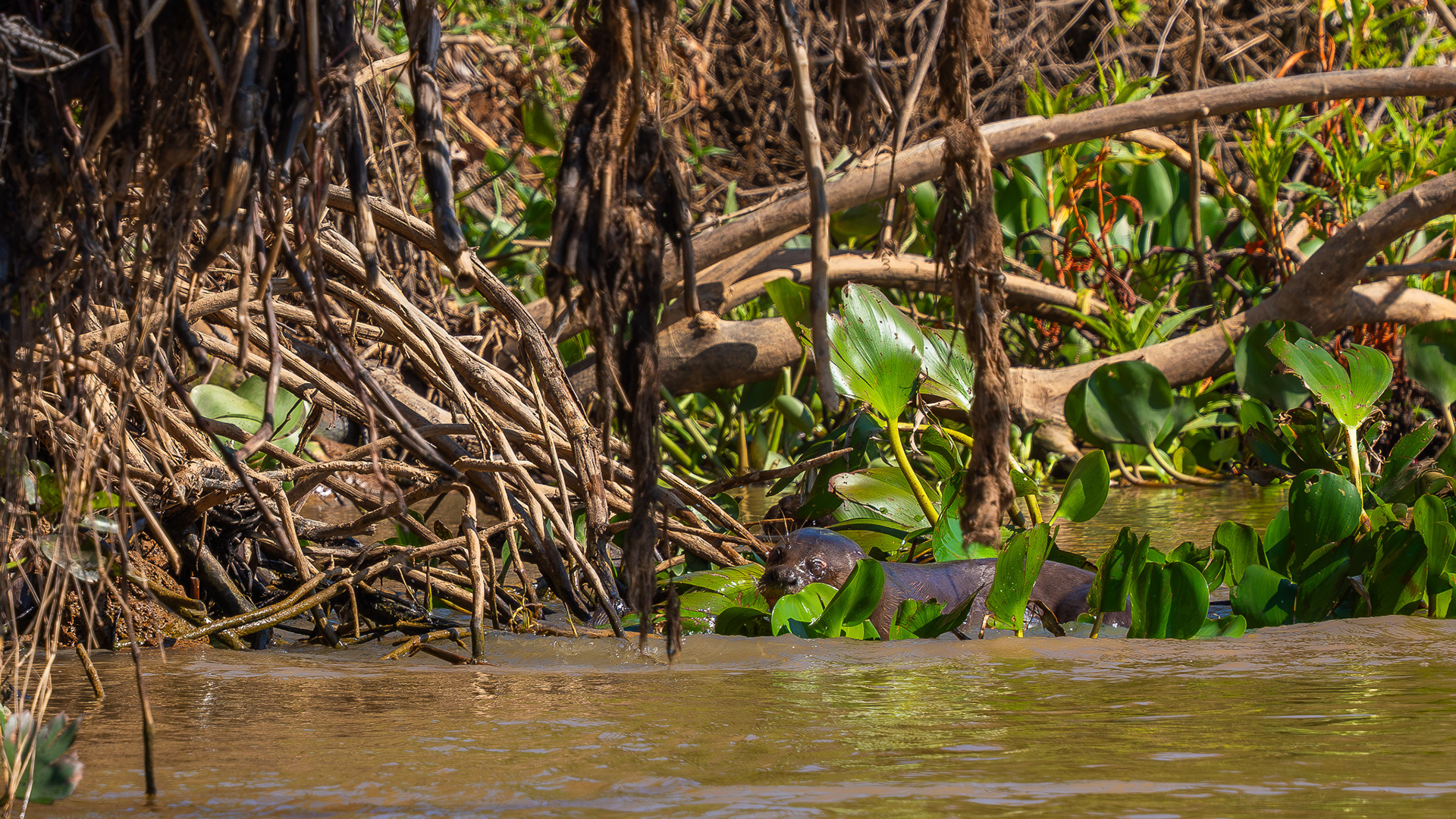
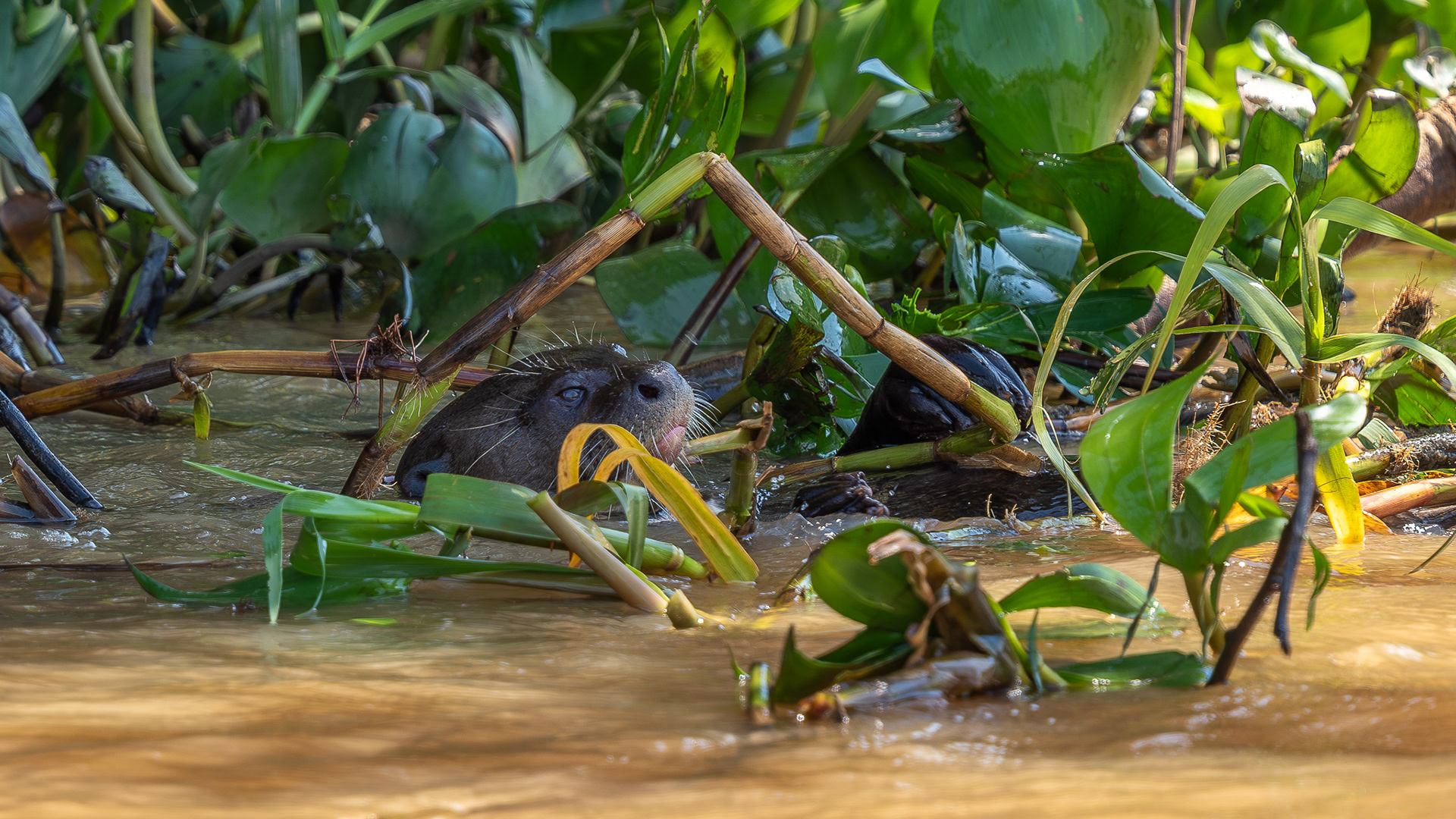
Almost hidden among the thick, lush riverbank vegetation, this Otter melts into a tangle of leaves and shifting shadows - alert eyes peering through the greenery for a fleeting moment before it disappears deeper into cover.
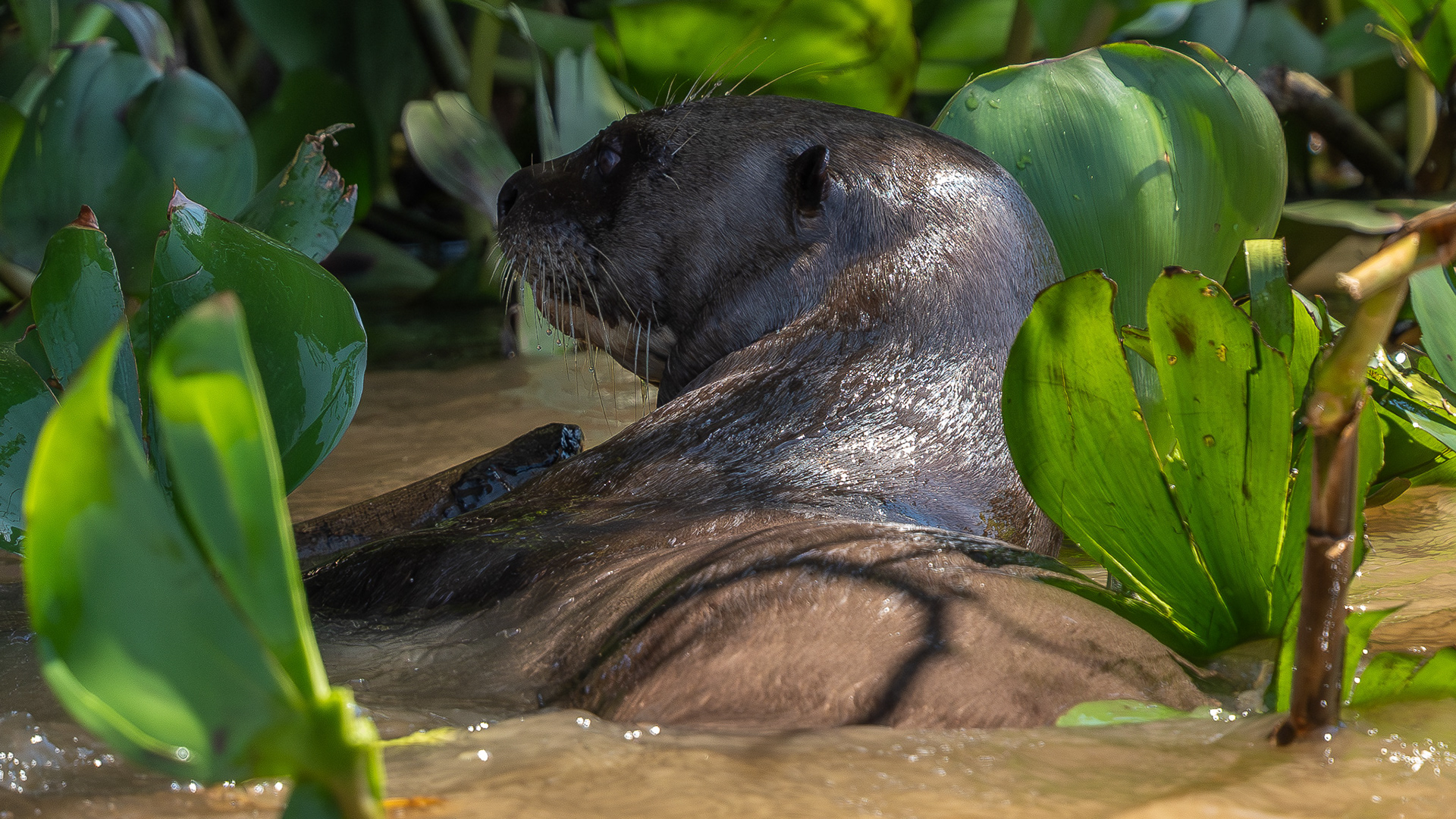
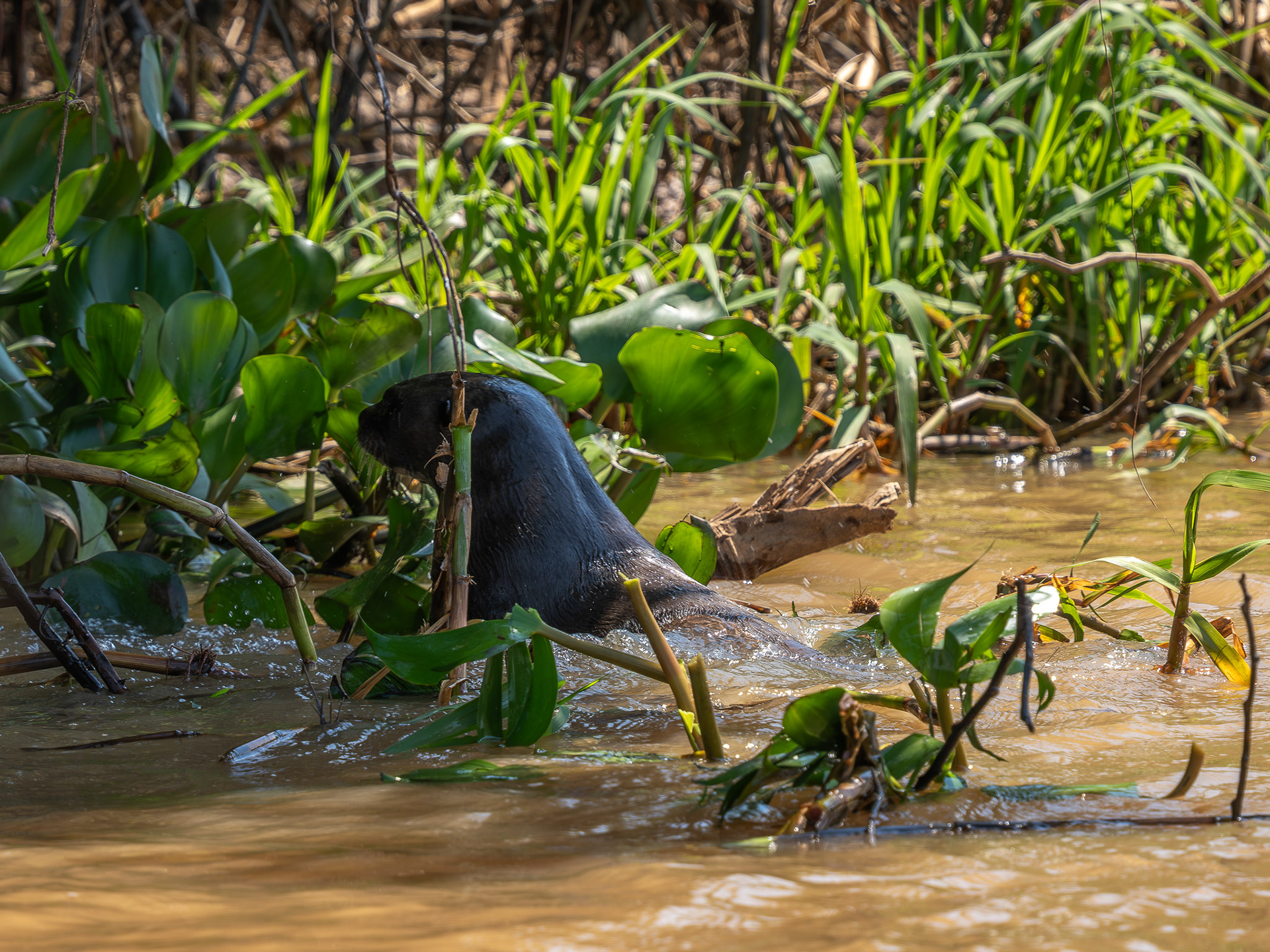
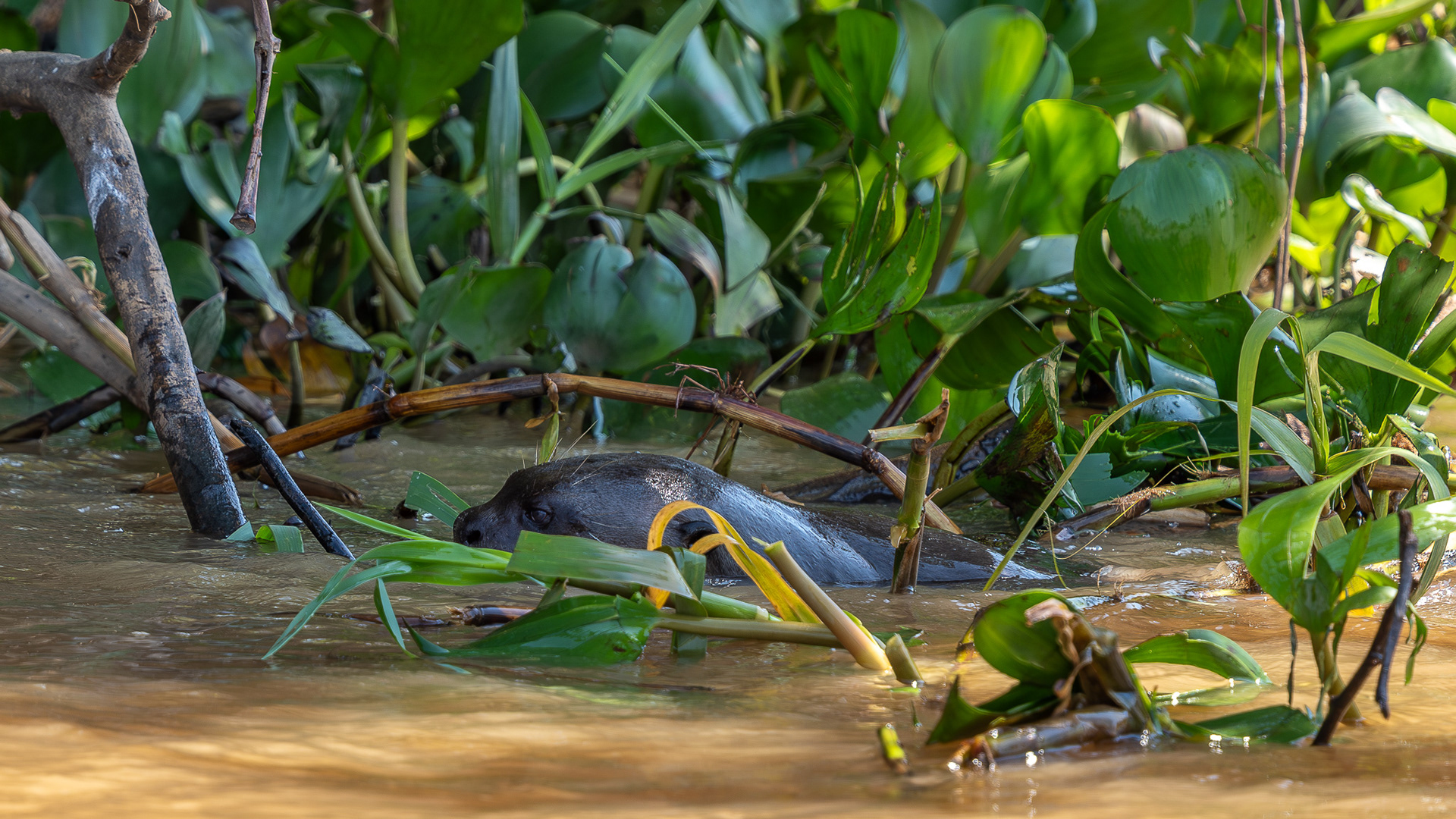
The Otter floats on its back in the golden-brown water, its sleek body drifting lazily with the gentle current. Thick, lush undergrowth hangs low over the water, dense green leaves and trailing branches forming a shaded canopy that brushes the surface. In the warm light, the earthy tones of the river shimmer beneath the overhanging foliage as the otter rests peacefully in its rich wetland home.
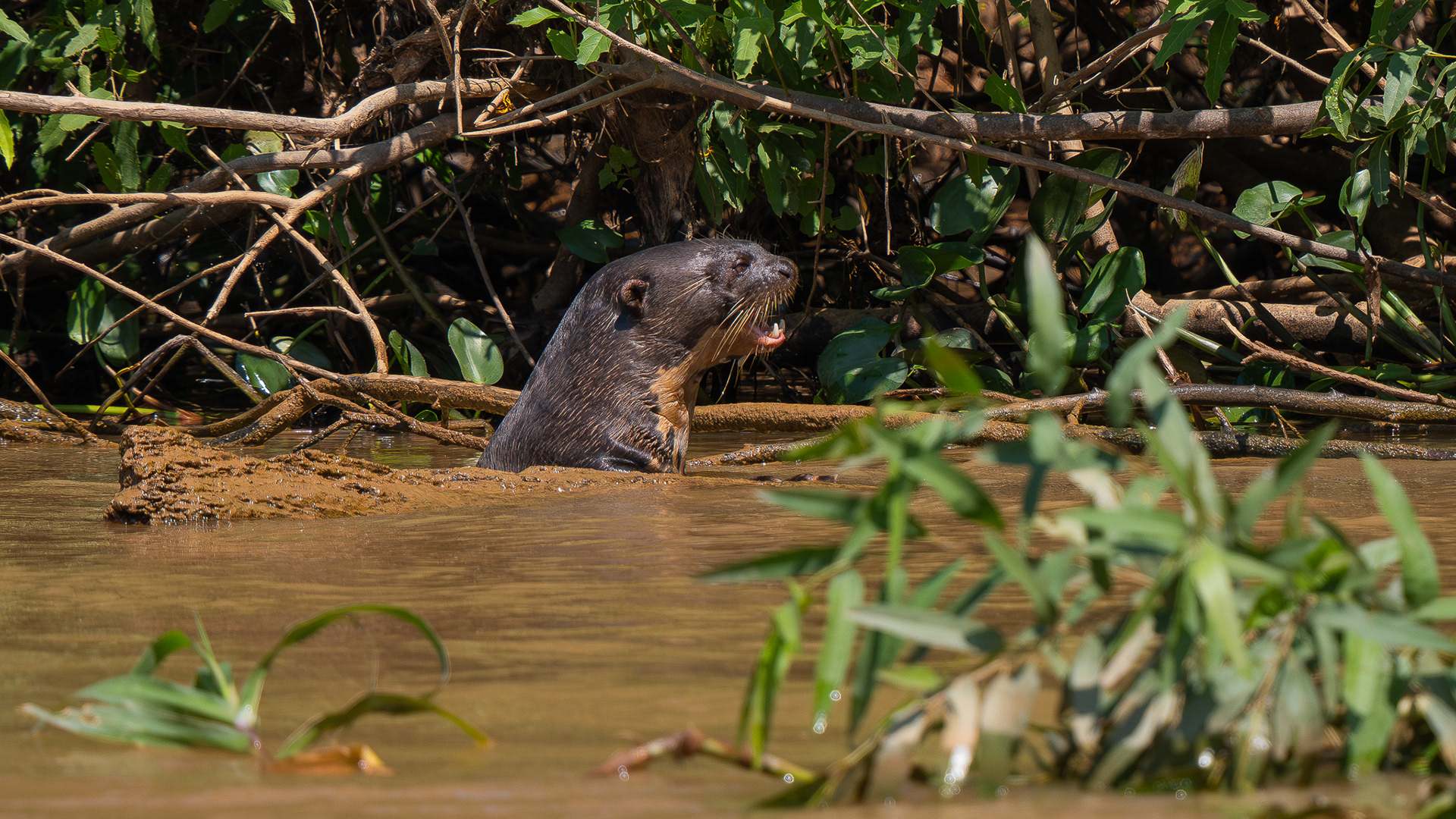
Giant River Otters are the most vocal of all otter species, possessing a sophisticated 'vocabulary' that reflects their complex social lives.
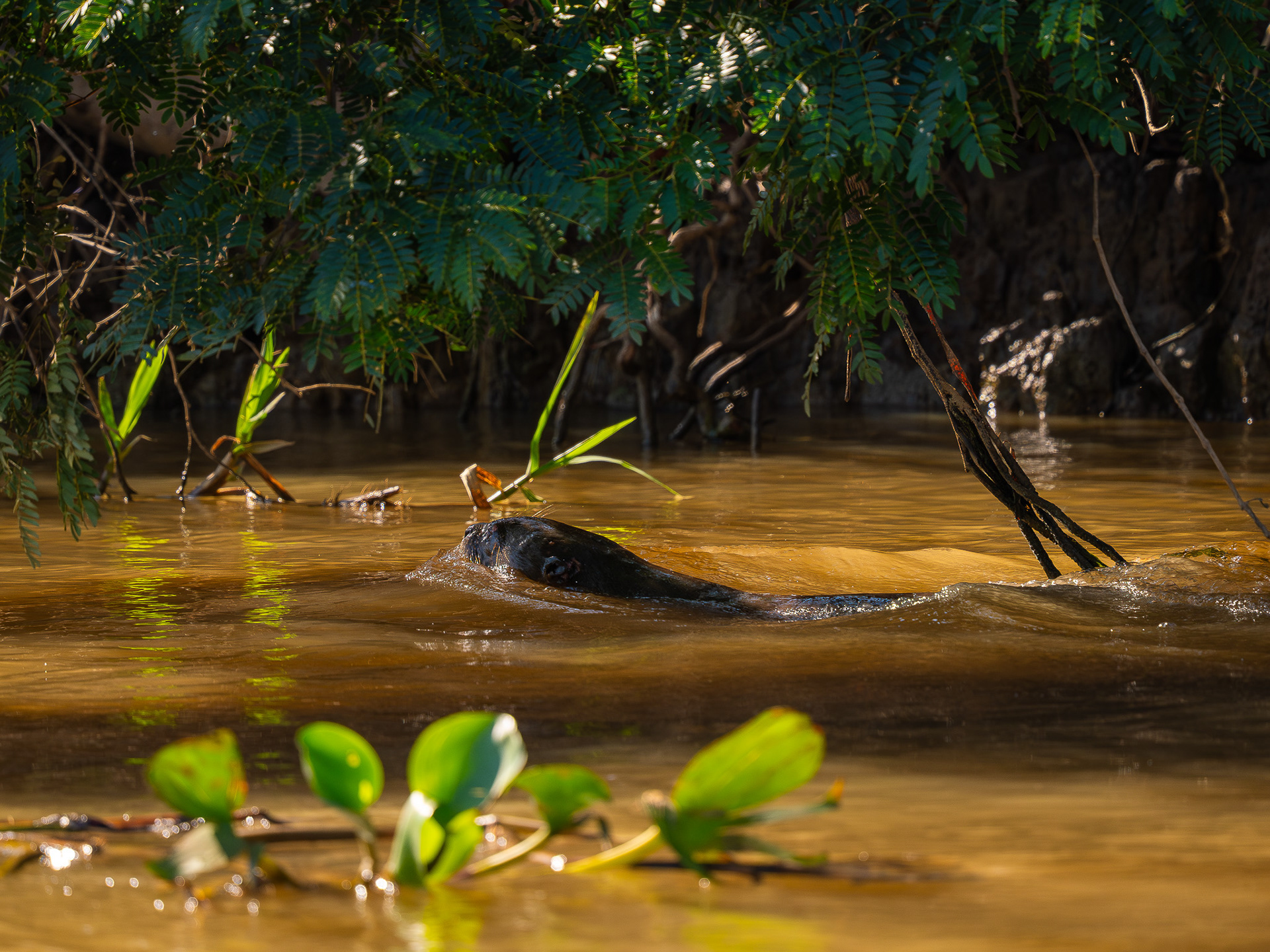
Swimming through golden river water, a Giant River Otter glides just beneath the shimmering surface. Overhanging trees cast dappled shadows as sunlight filters through the canopy, illuminating the warm amber tones of the Pantanal wetlands.
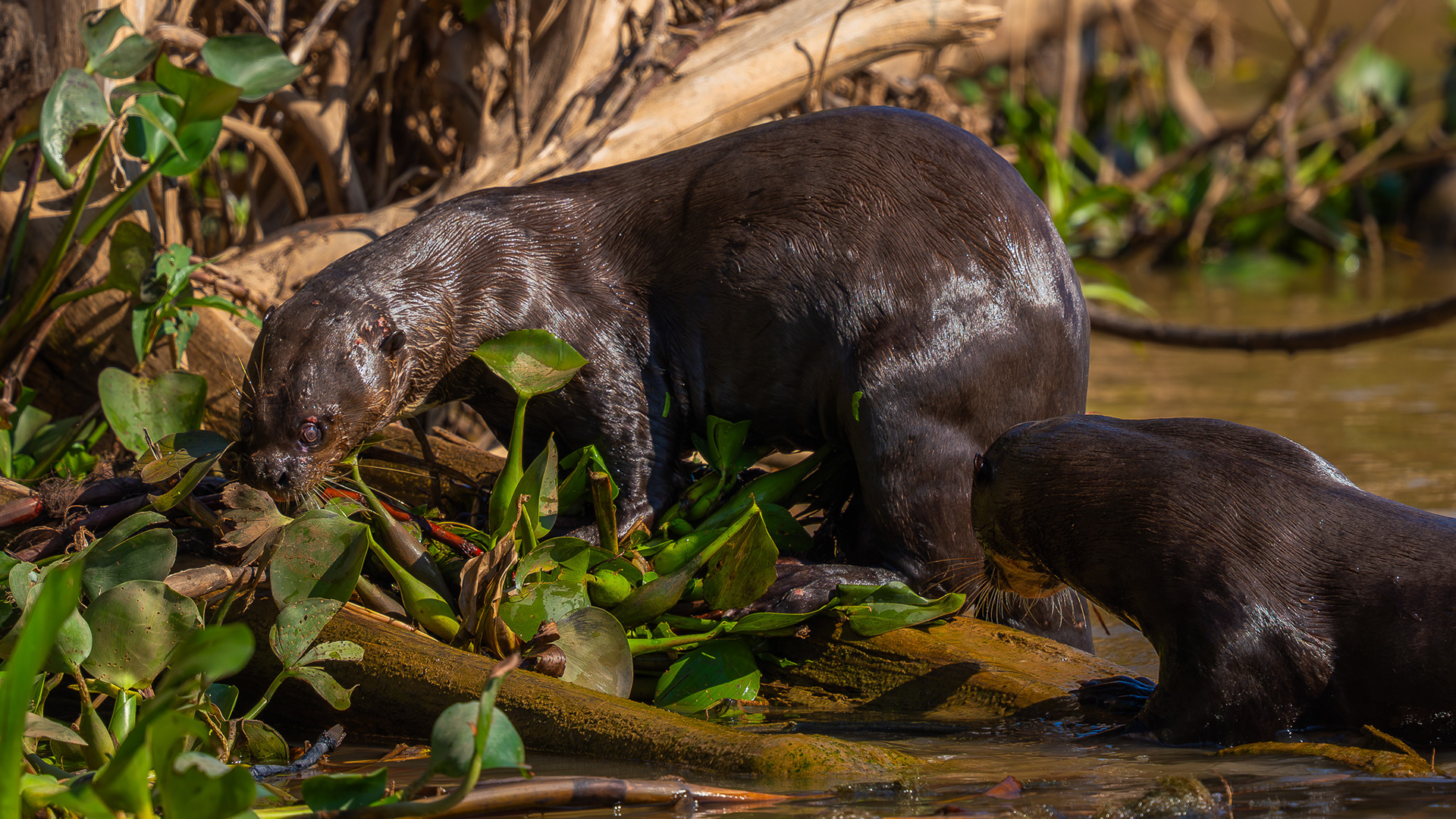
Otters emerge from the river, their sleek bodies glistening, before they scramble up the muddy bank and vanish into their vegetation-hidden den.
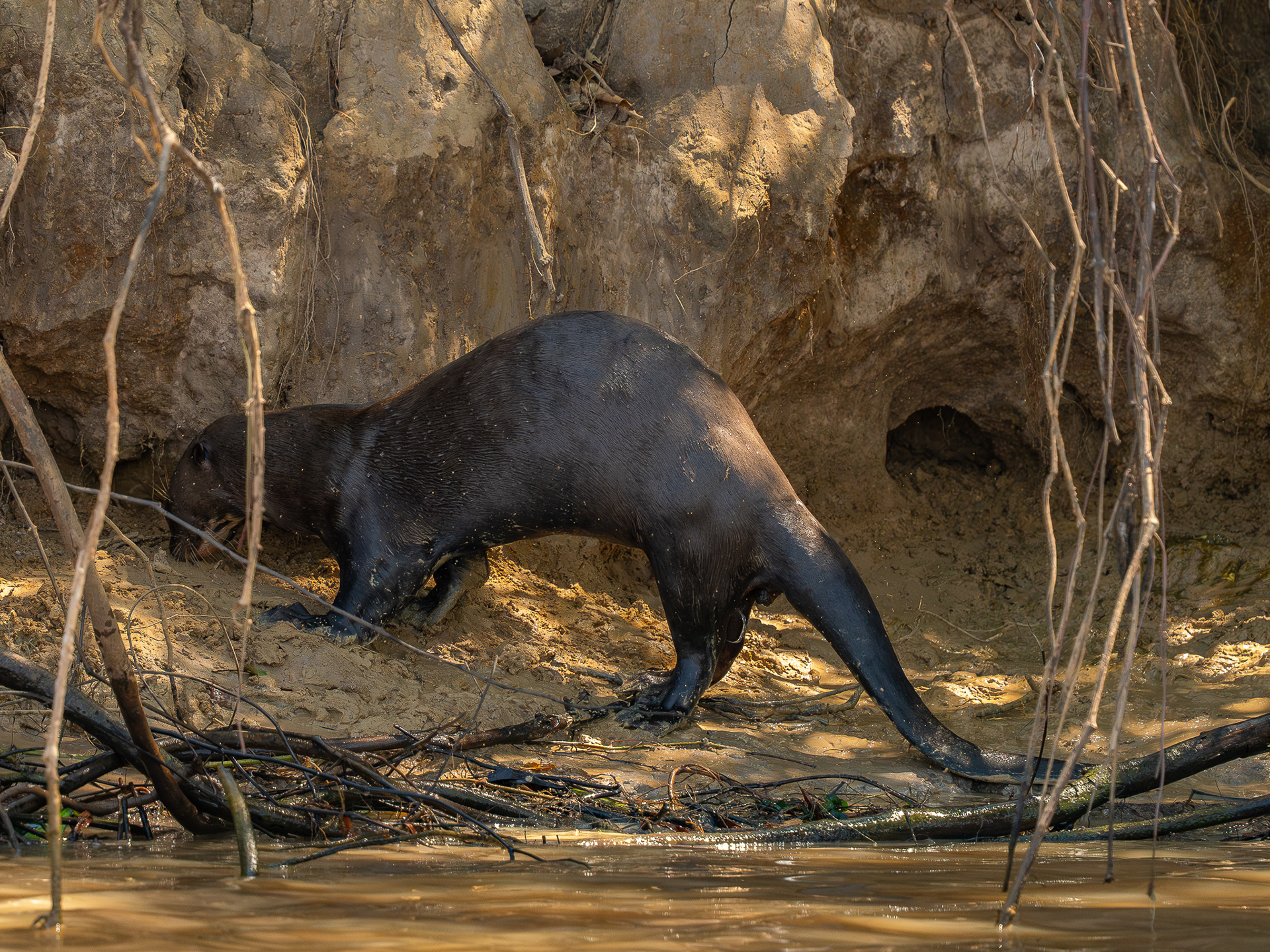
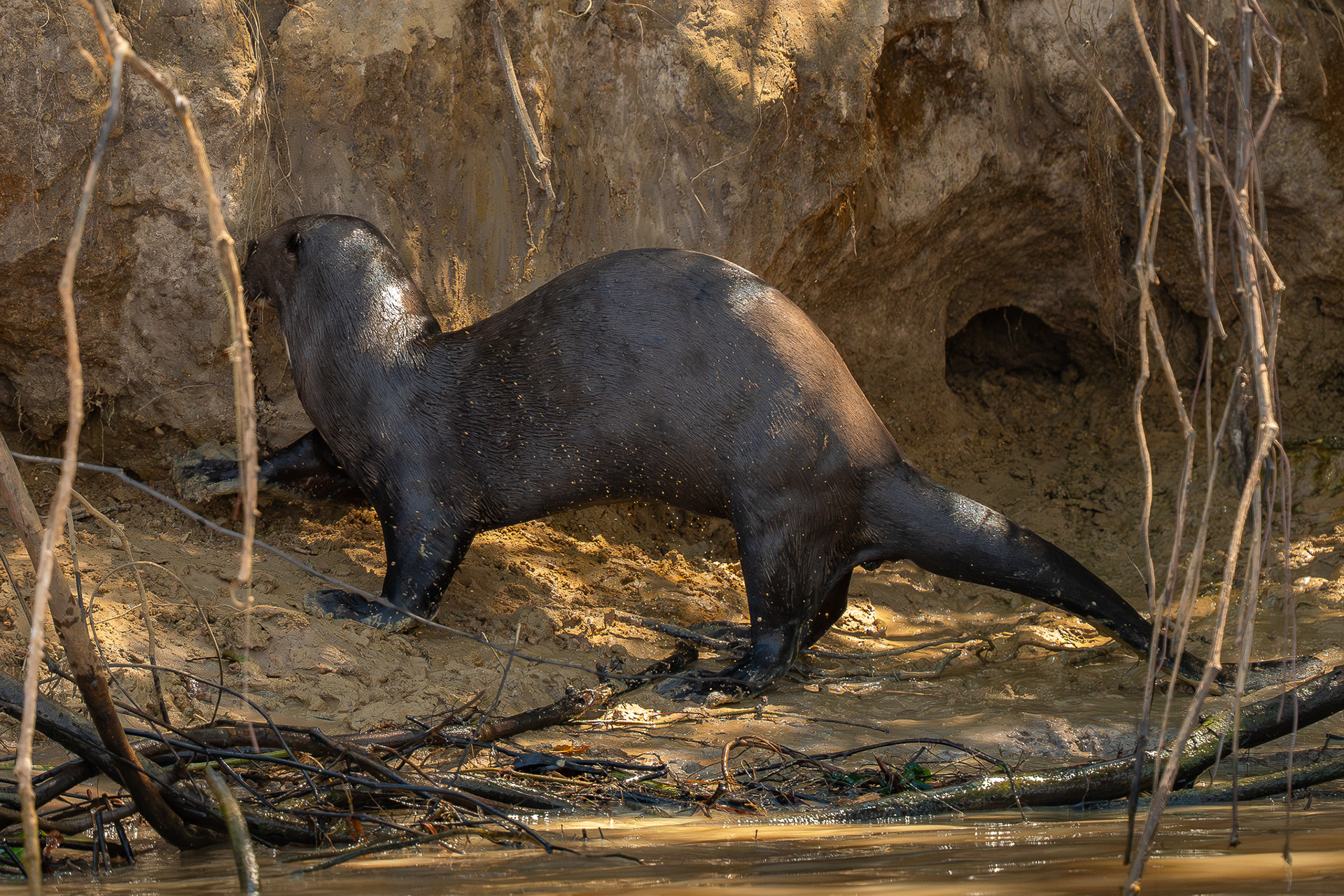
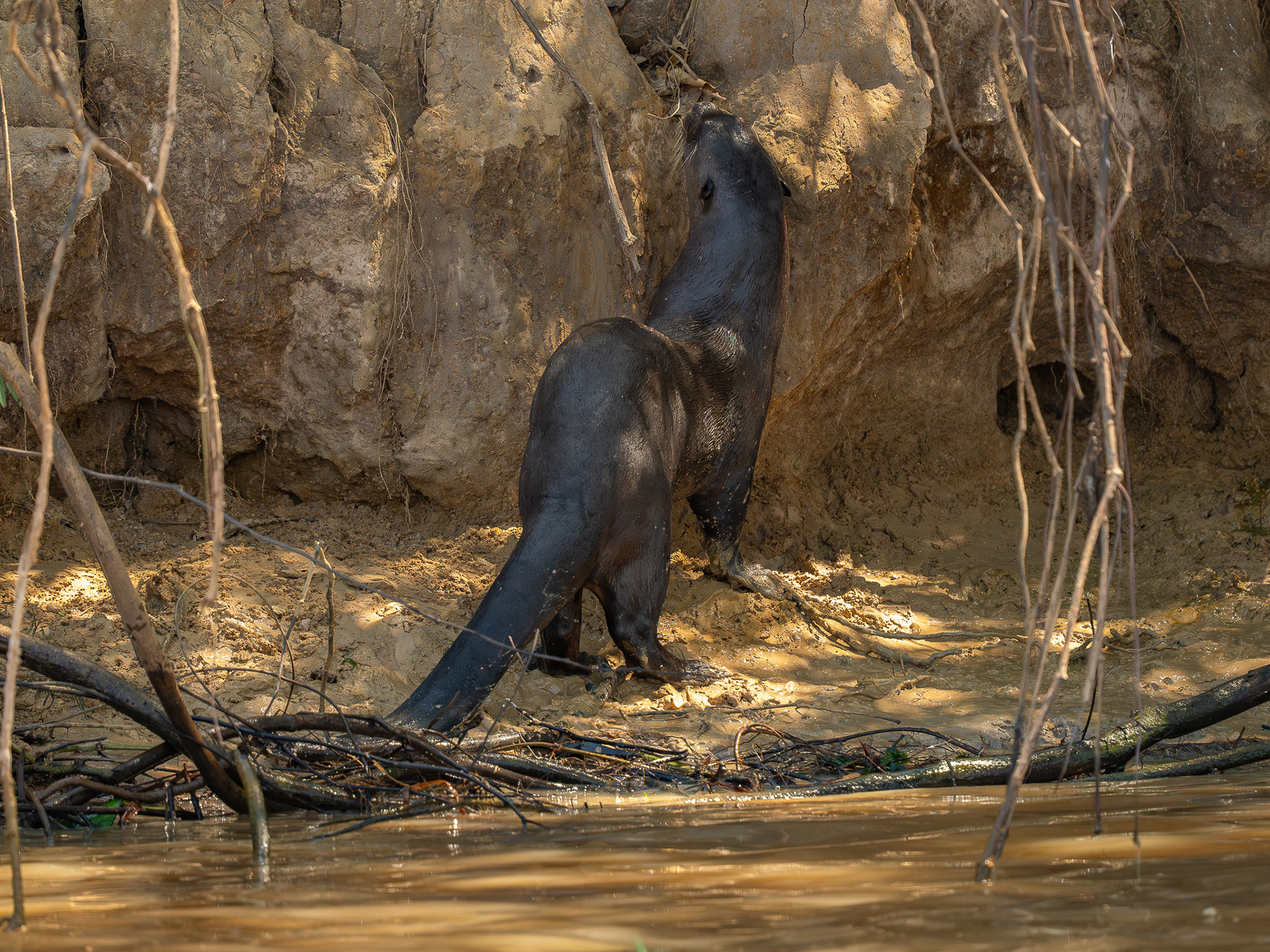
Giant River Otters mark their dens and territories using urine, feaces, and scent gland secretions in communal latrines. These latrines signal territory boundaries, help family members recognise each other, and may convey reproductive information. Often placed in prominent spots along rivers, they act as 'scent billboards', reinforcing social bonds and maintaining the group's territory.
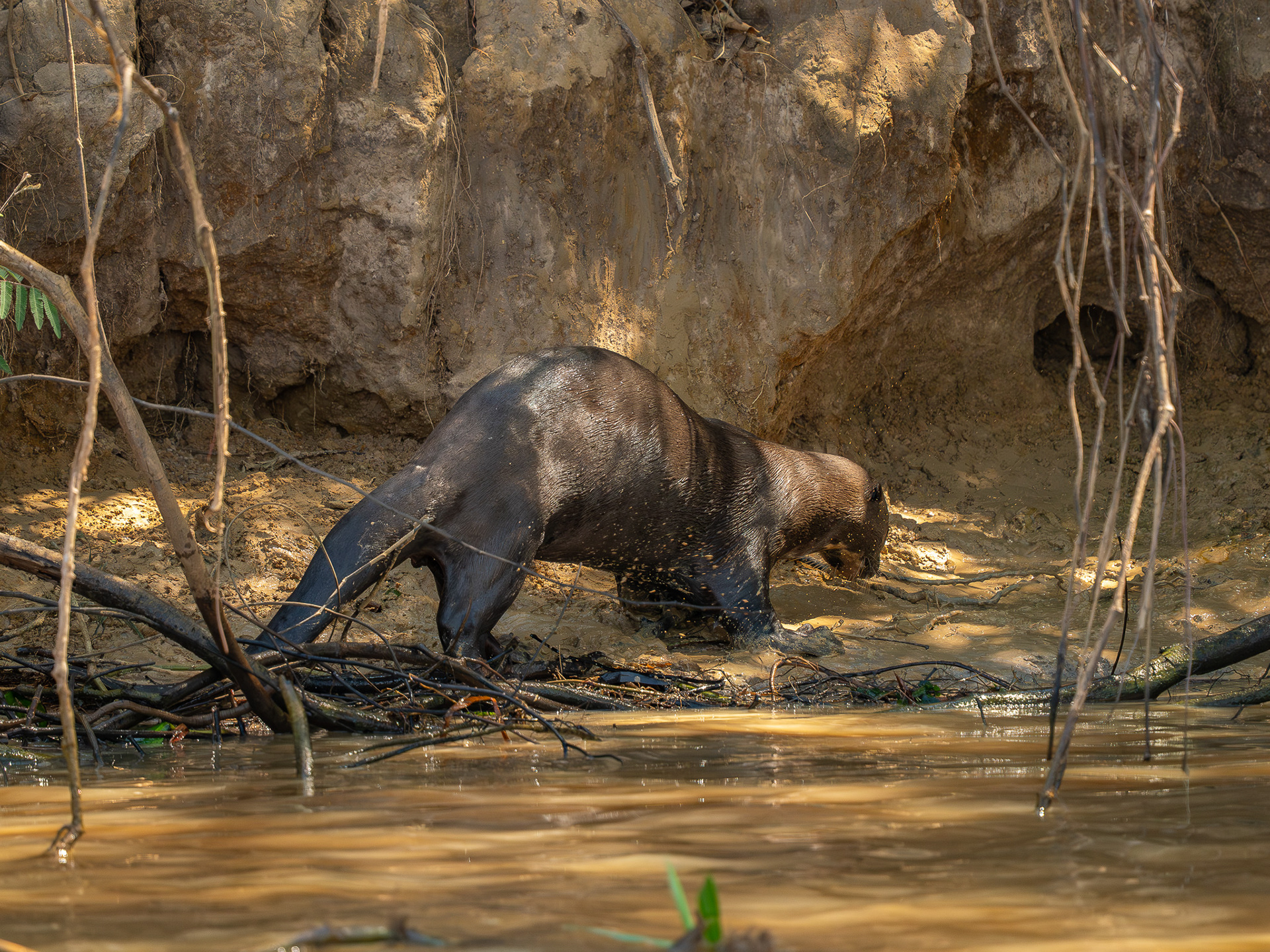
Otters mark their dens and territories with urine, performing a distinctive 'mud dance' along the riverbank. They rub and stamp their feet into the soft mud, spreading their scent to leave clear signals for other otters.
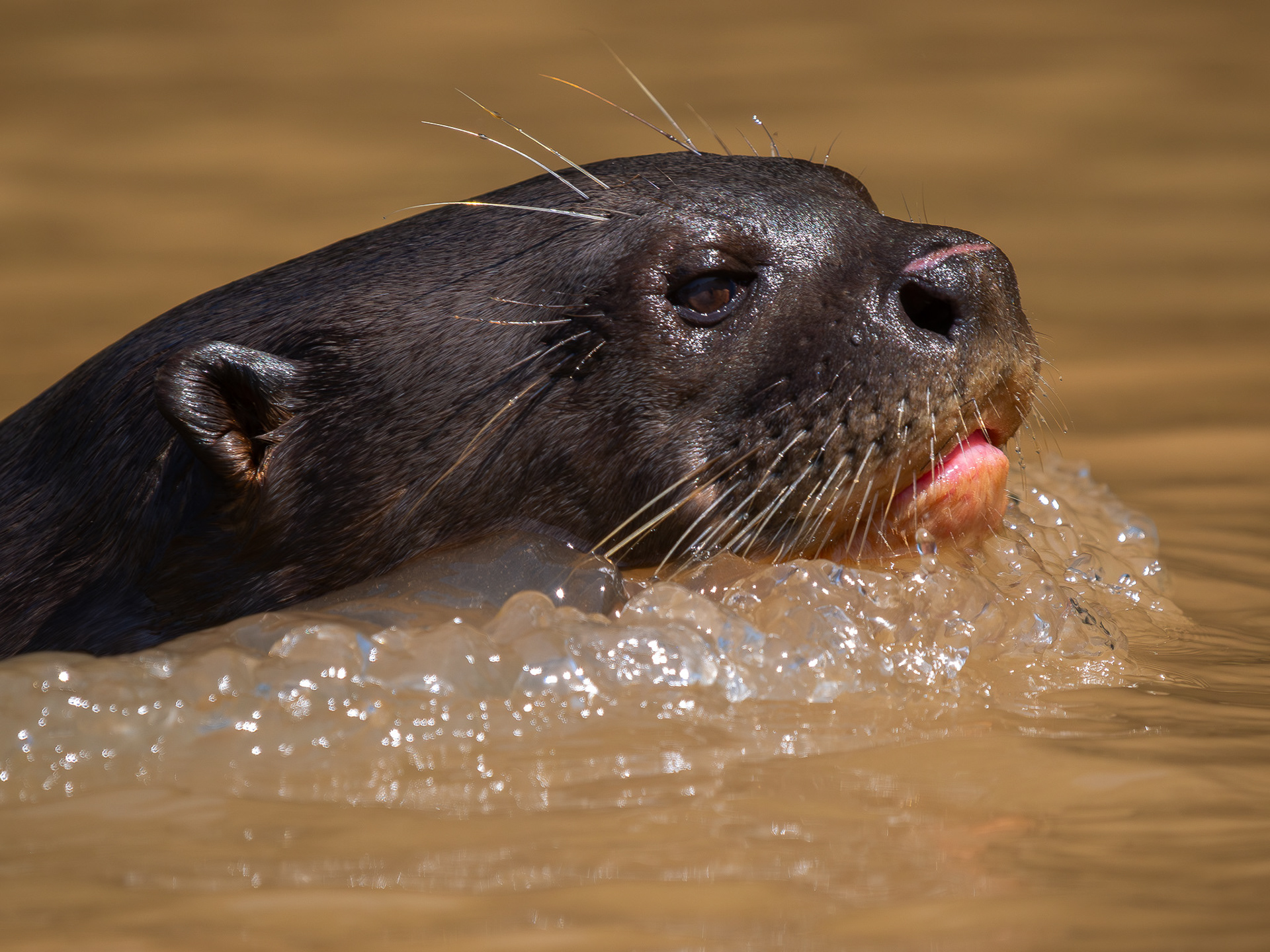
Their bodies are highly flexible and streamlined, allowing them to glide with minimal resistance.
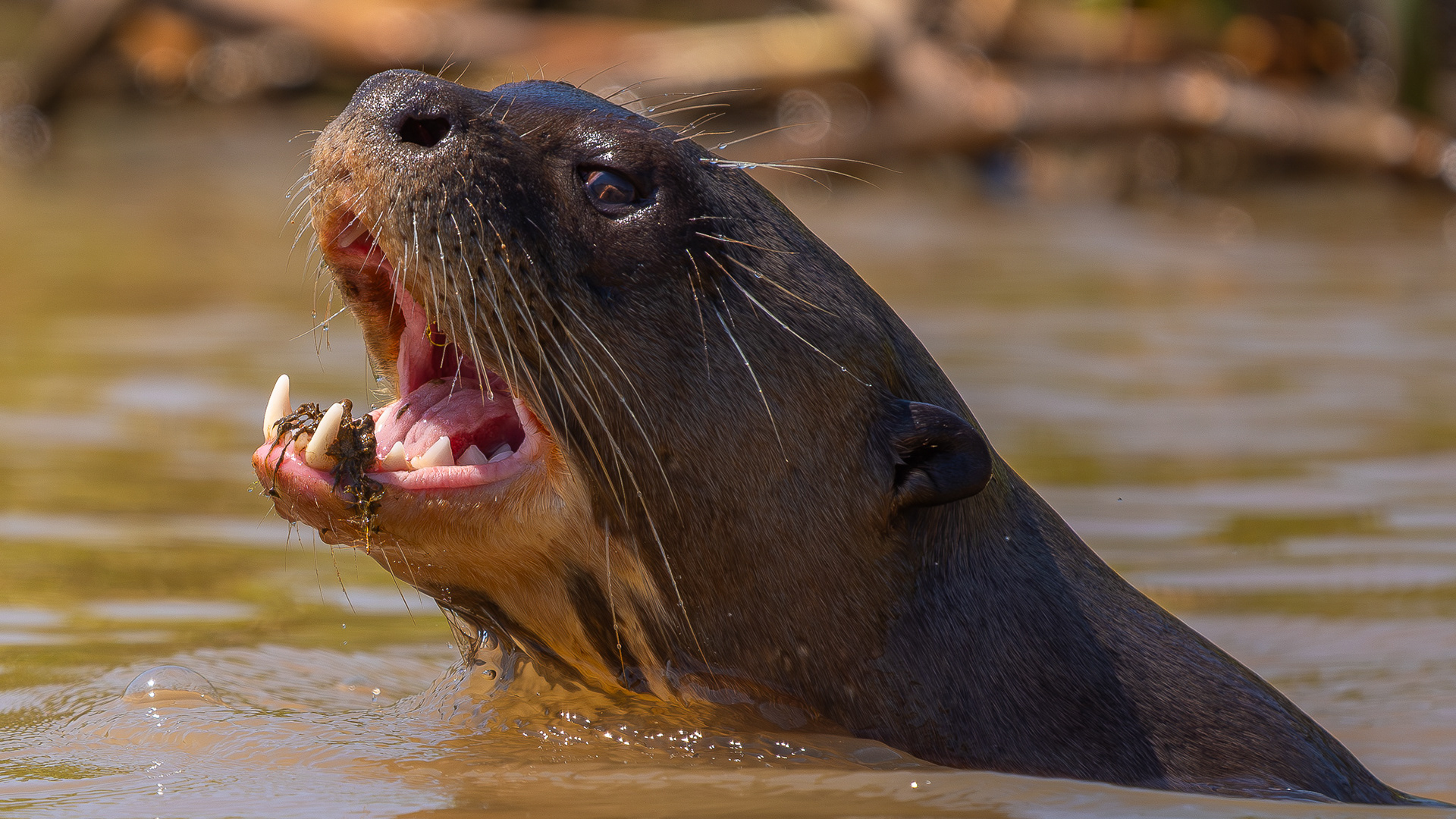
They possess highly sensitive whiskers that help them detect the movement of prey in murky river water.
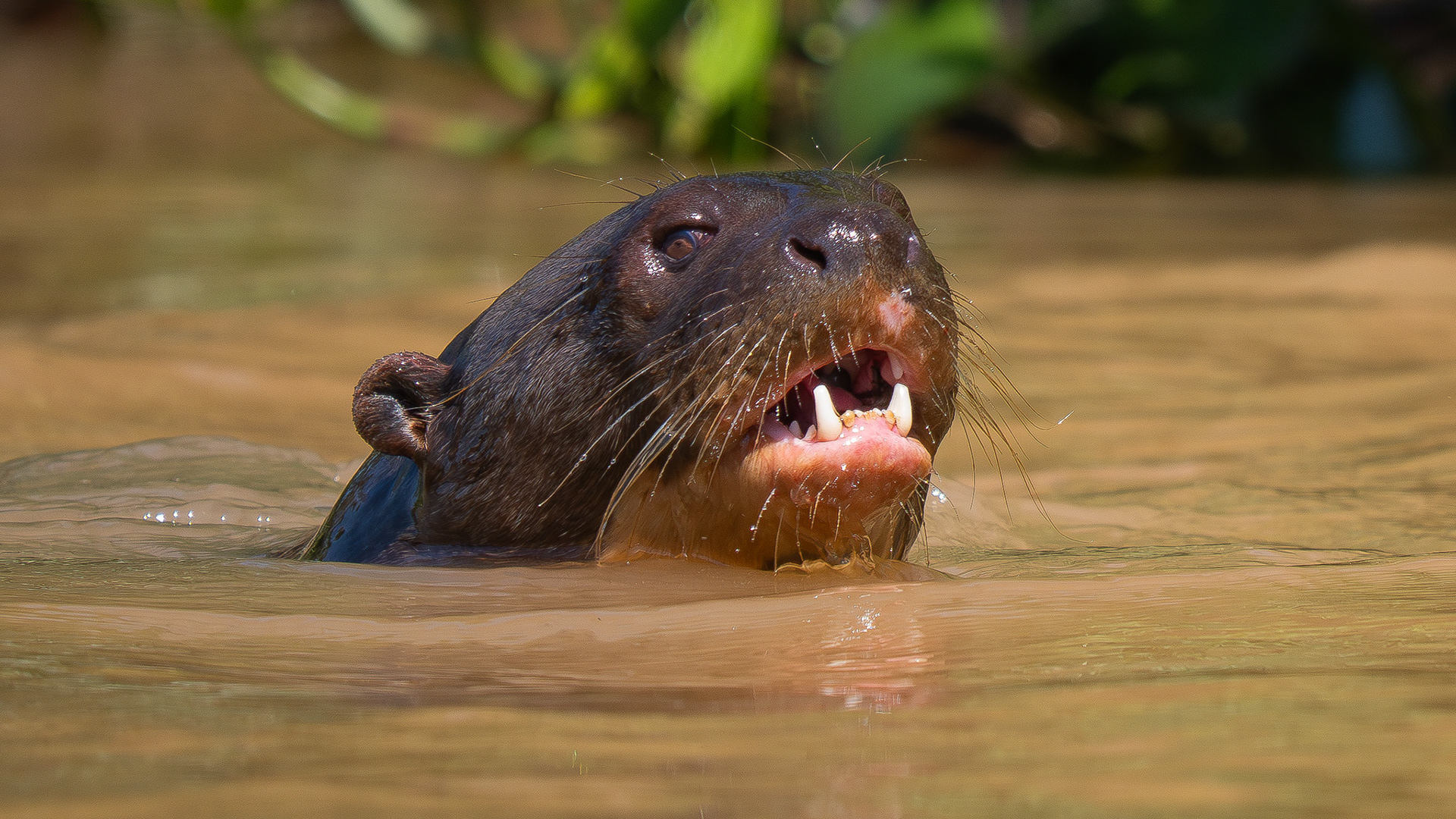
A Giant River Otter slowly raises its sleek head from the murky water, fixing us with an intense, unblinking stare. From our small boat, we feel we have been given the once-over by one of the wetland's most charismatic and vigilant predators.
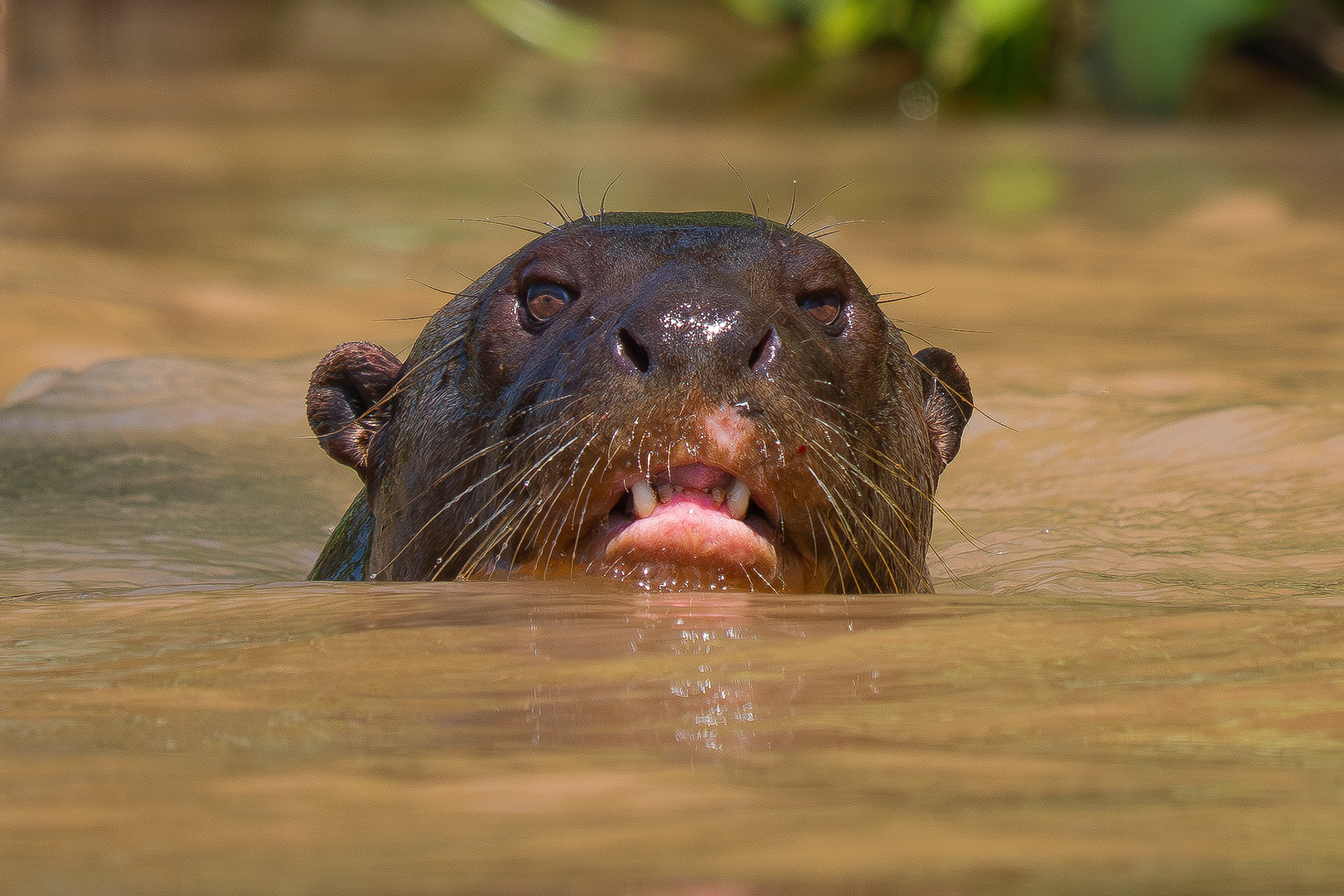
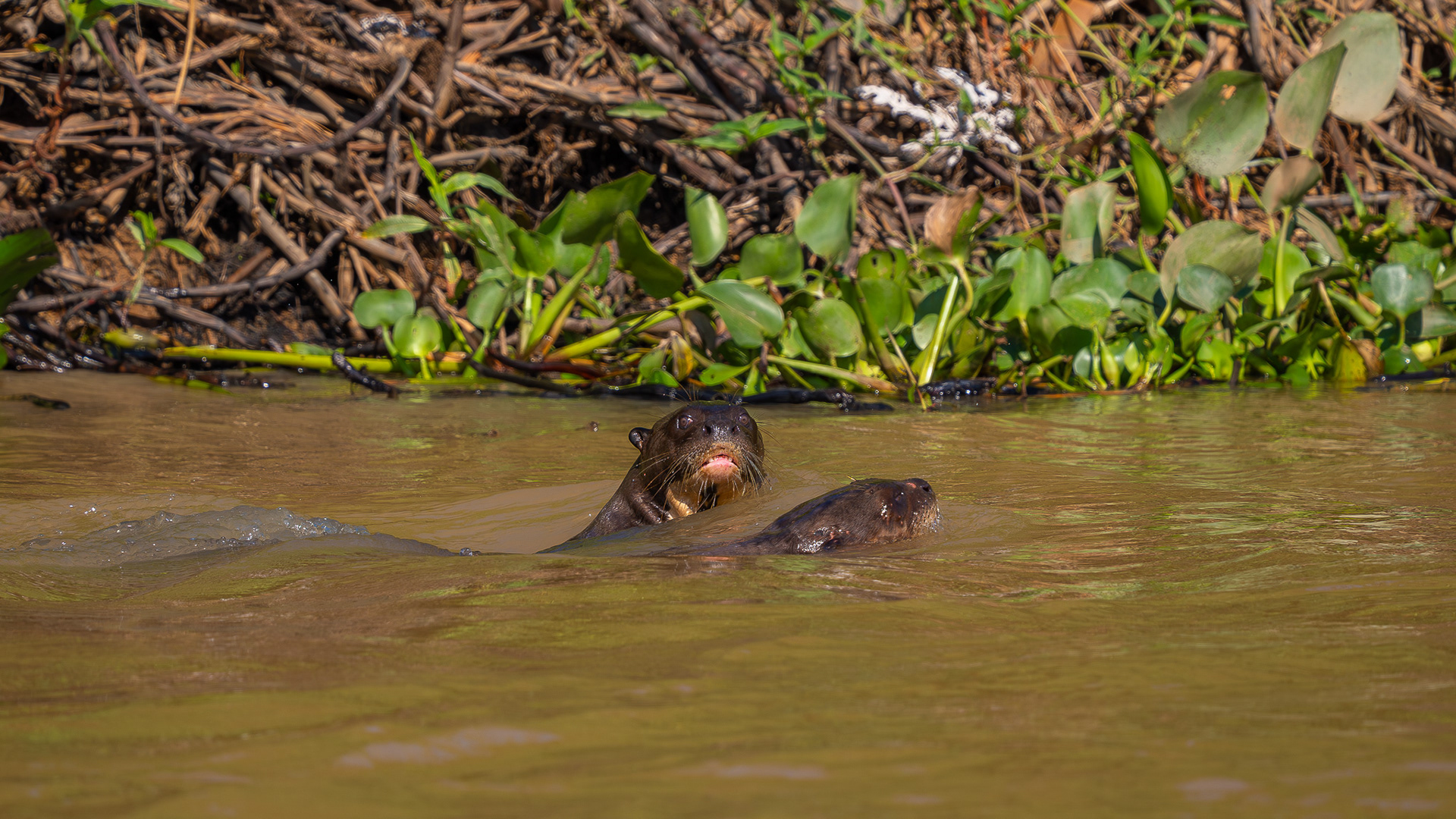
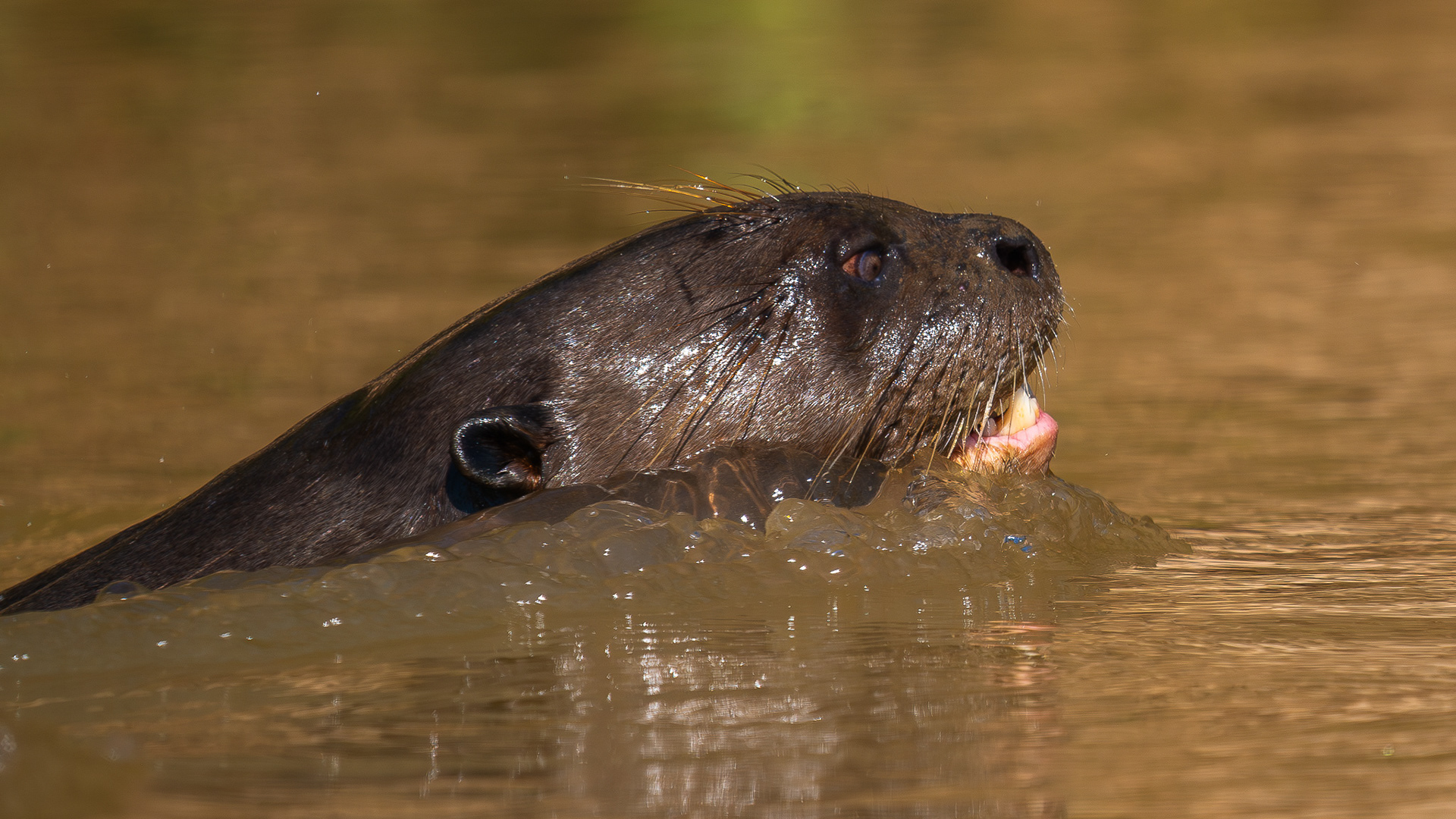
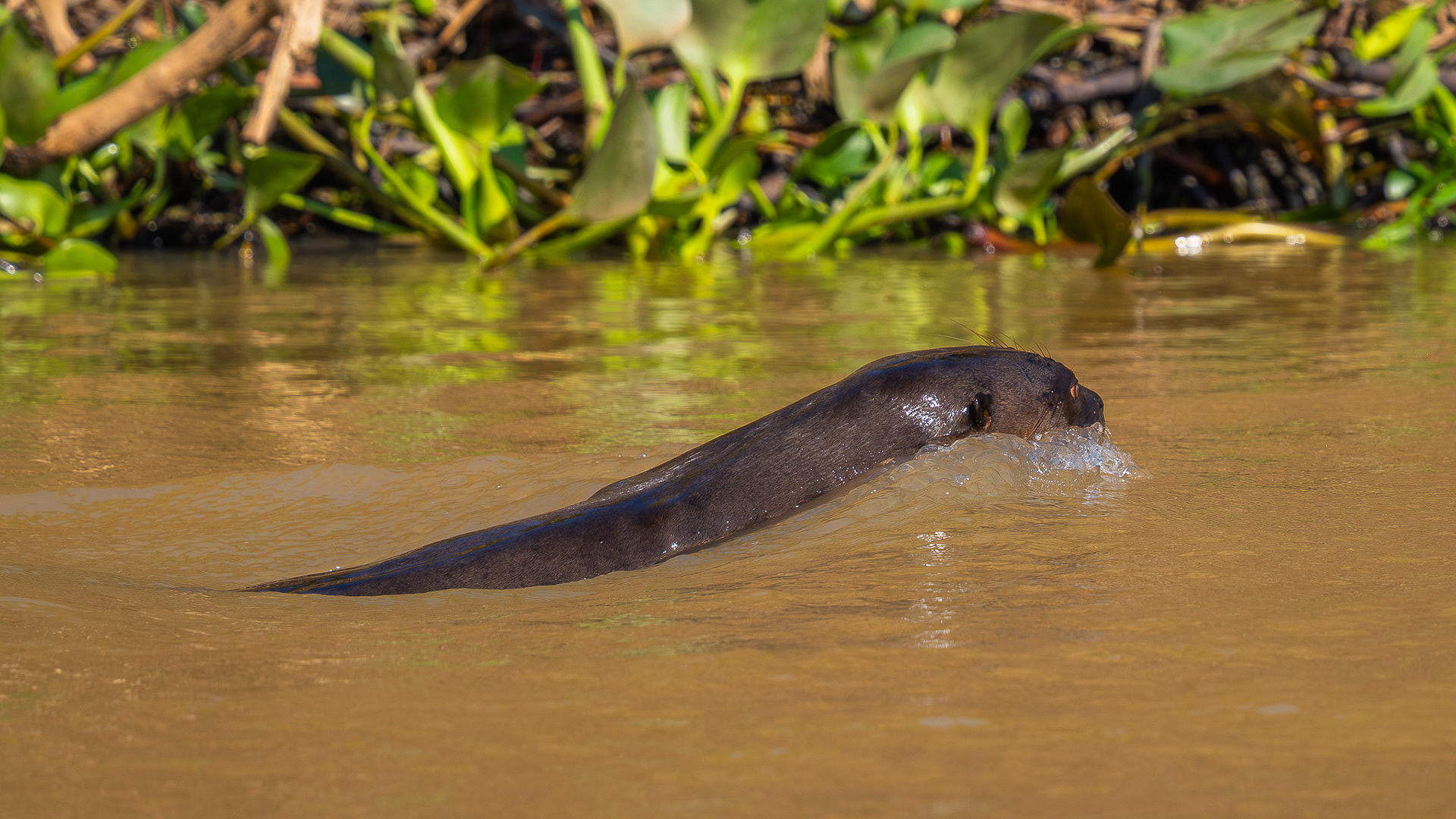
Giant River Otters are exceptionally fast swimmers, using their powerful, fully webbed feet and a long, muscular tail that acts as a rudder, to navigate and steer through the water.
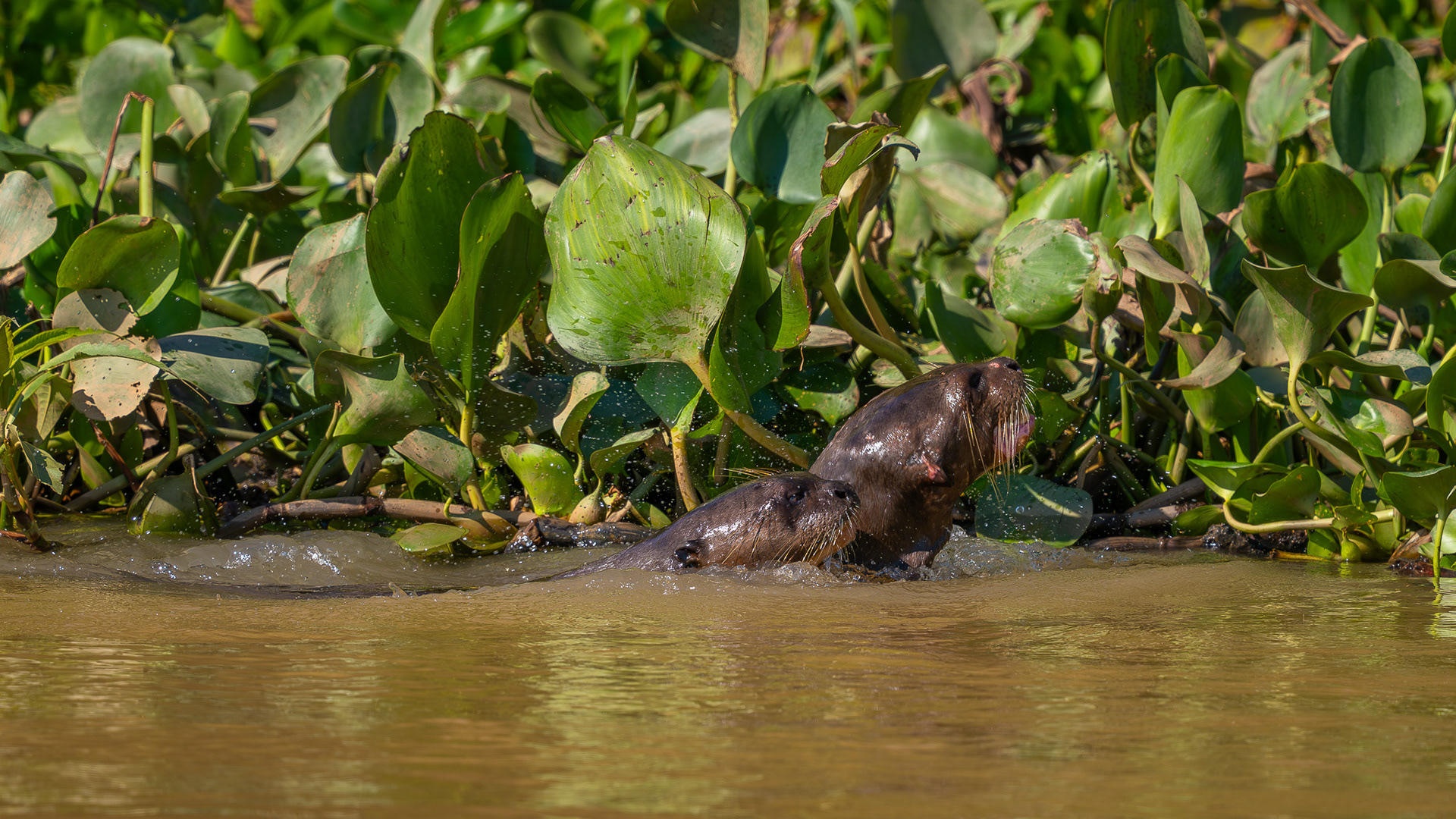
Being highly social predators, they frequently hunt in pairs, using co-operative strategies to catch fish, crustaceans, and occasionally small Caiman.
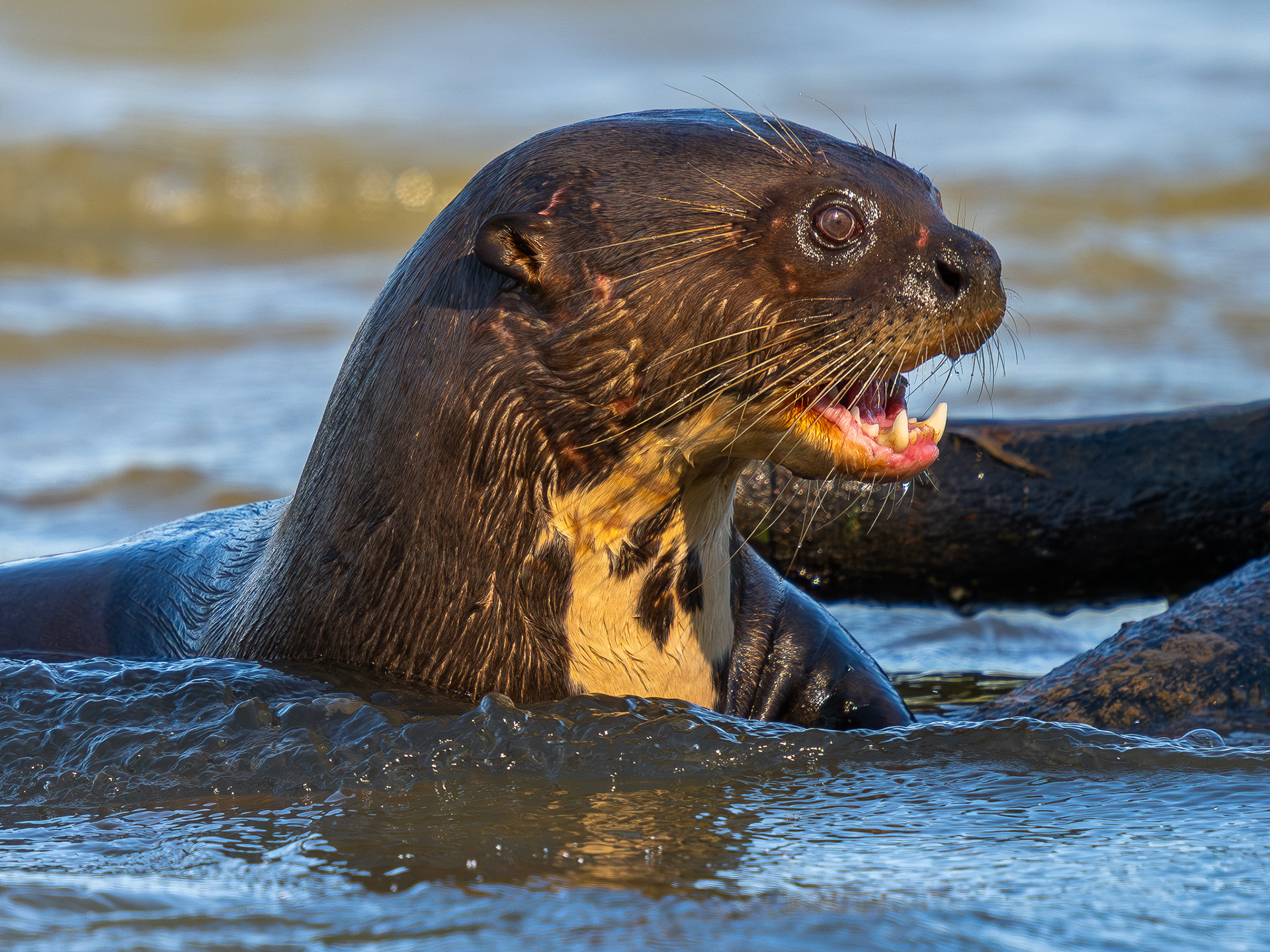
At first light, a Giant River Otter gazes out with wide, vigilant eyes. The early sun catches its dark fur and long whiskers, bathing each strand in a soft, golden glow.

With a fresh catch secured, this Otter braces itself against a fallen branch in the river, feeding as the golden light of dawn glows on the water and glistens across its sleek fur.
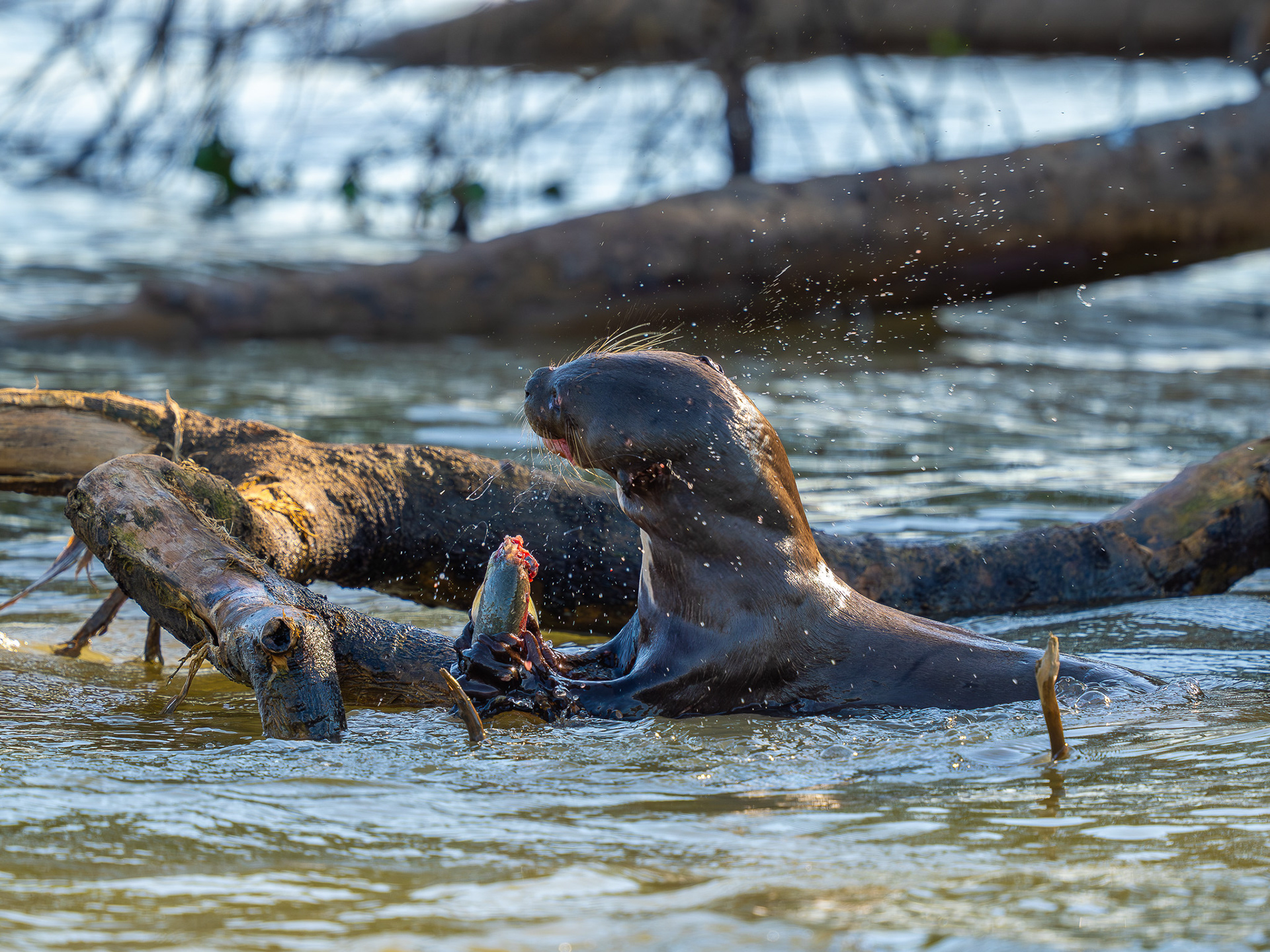
With powerful jaws, the Otter tears into the fish. As it jerks its head back, droplets of water spray outward in all directions, catching the light as they arc through the air.

As the Otter tucks into its meal, its whiskers glisten and ripples spread across the water from the force of the tussle. Muscles flex beneath its sleek, dark fur as it feeds intently.
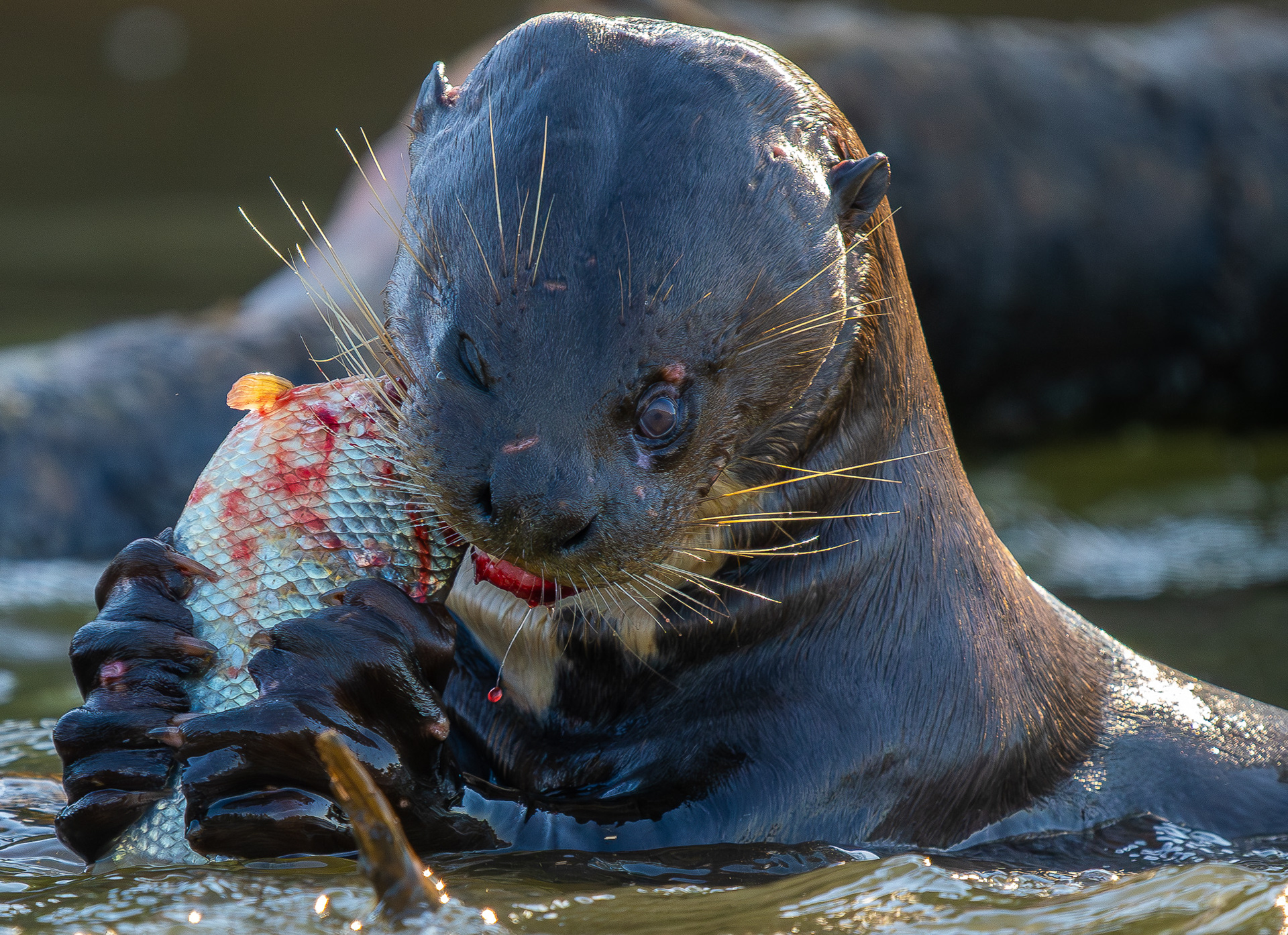
Clamped tightly in its front paws, the scaly silver body of the freshly caught fish glints in the light and the Otter's golden whiskers shimmer against its dark, sleek fur. With steady, powerful bites, it feeds intently; a single droplet of blood gathers at the corner of its mouth before falling into the river below.

The silver, scaly fish is gripped firmly in powerful webbed forefeet, sharp claws embedded in its glistening scales as thin red lines of blood run down its body.
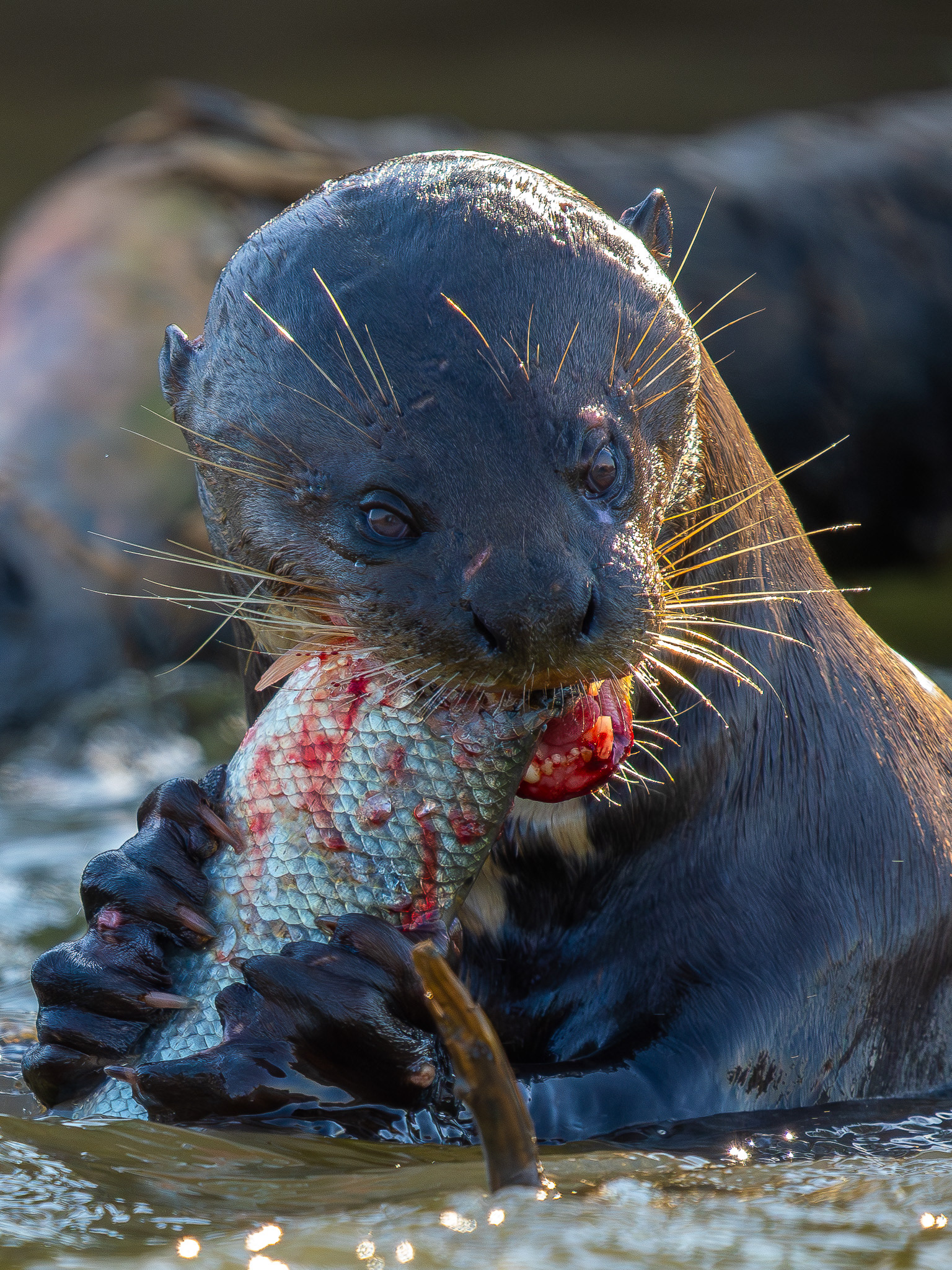
The Otter gnaws into the freshly caught fish, blood staining its muzzle - a vivid, unfiltered moment of predation.
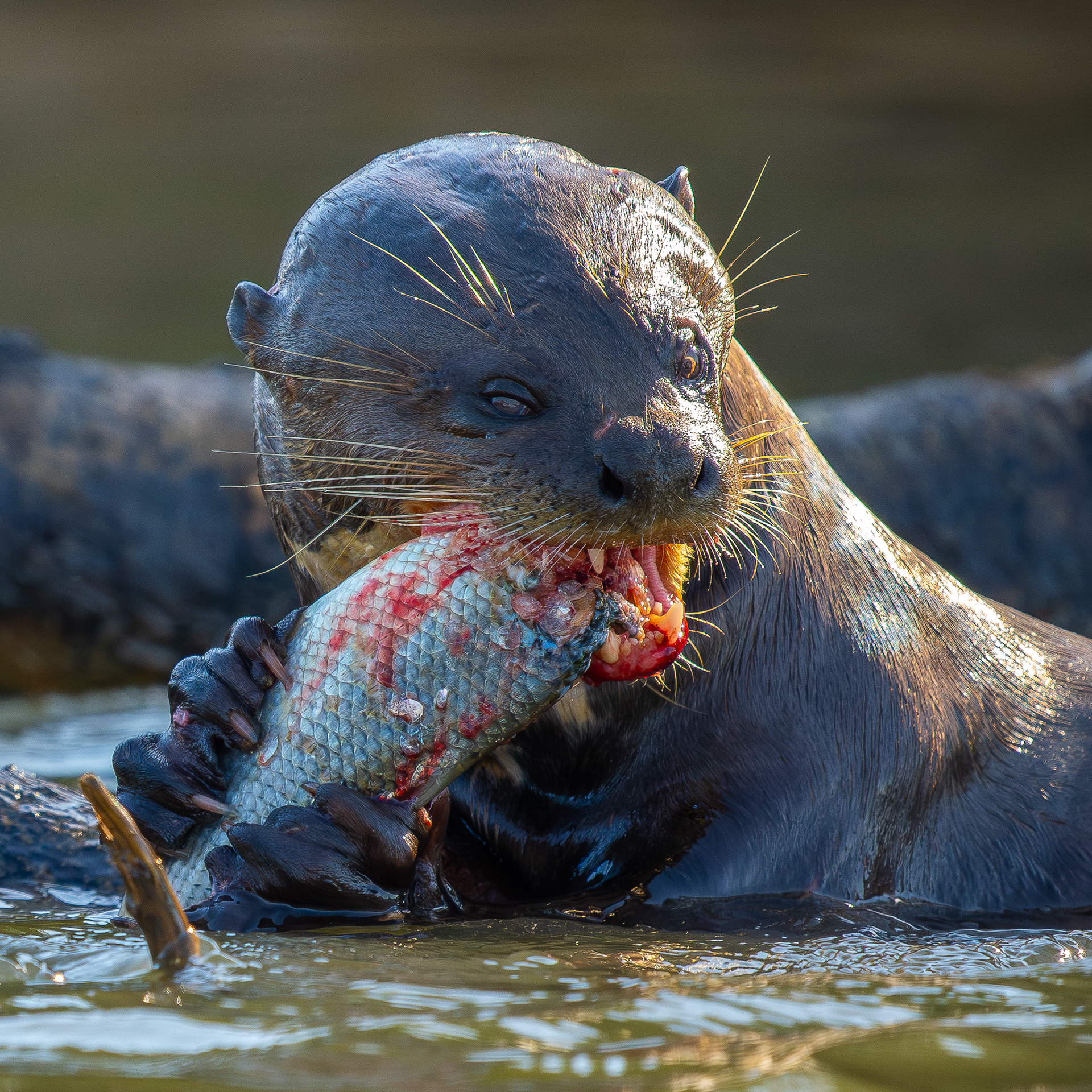
A Giant River Otter enjoys fish for breakfast in the Pantanal.
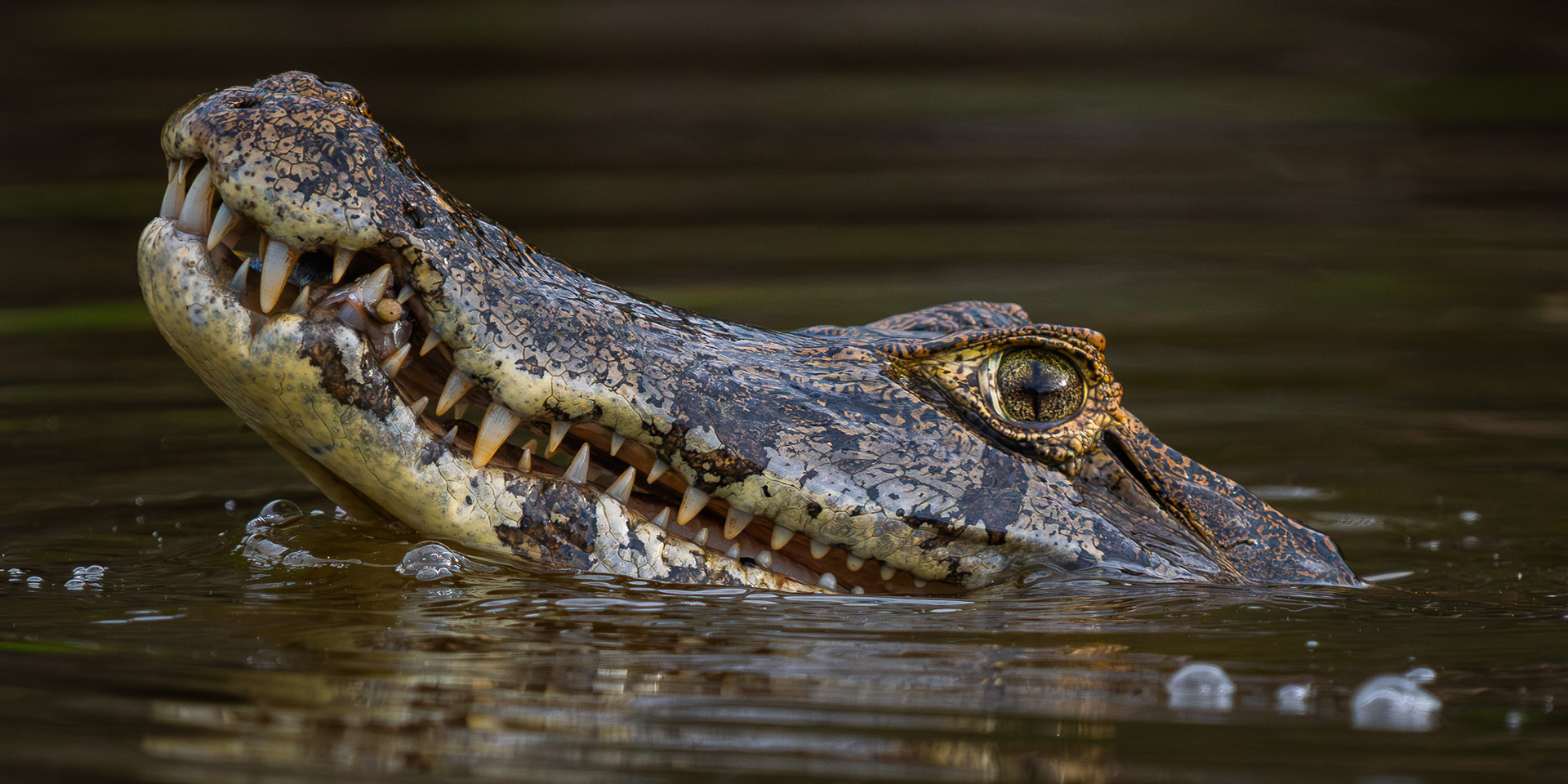
^ Yacaré Caiman
The Yacaré Caiman (Caiman yacare) thrives in the Pantanal, the world's largest tropical wetland, forming the planet's largest crocodilian population of around ten million.
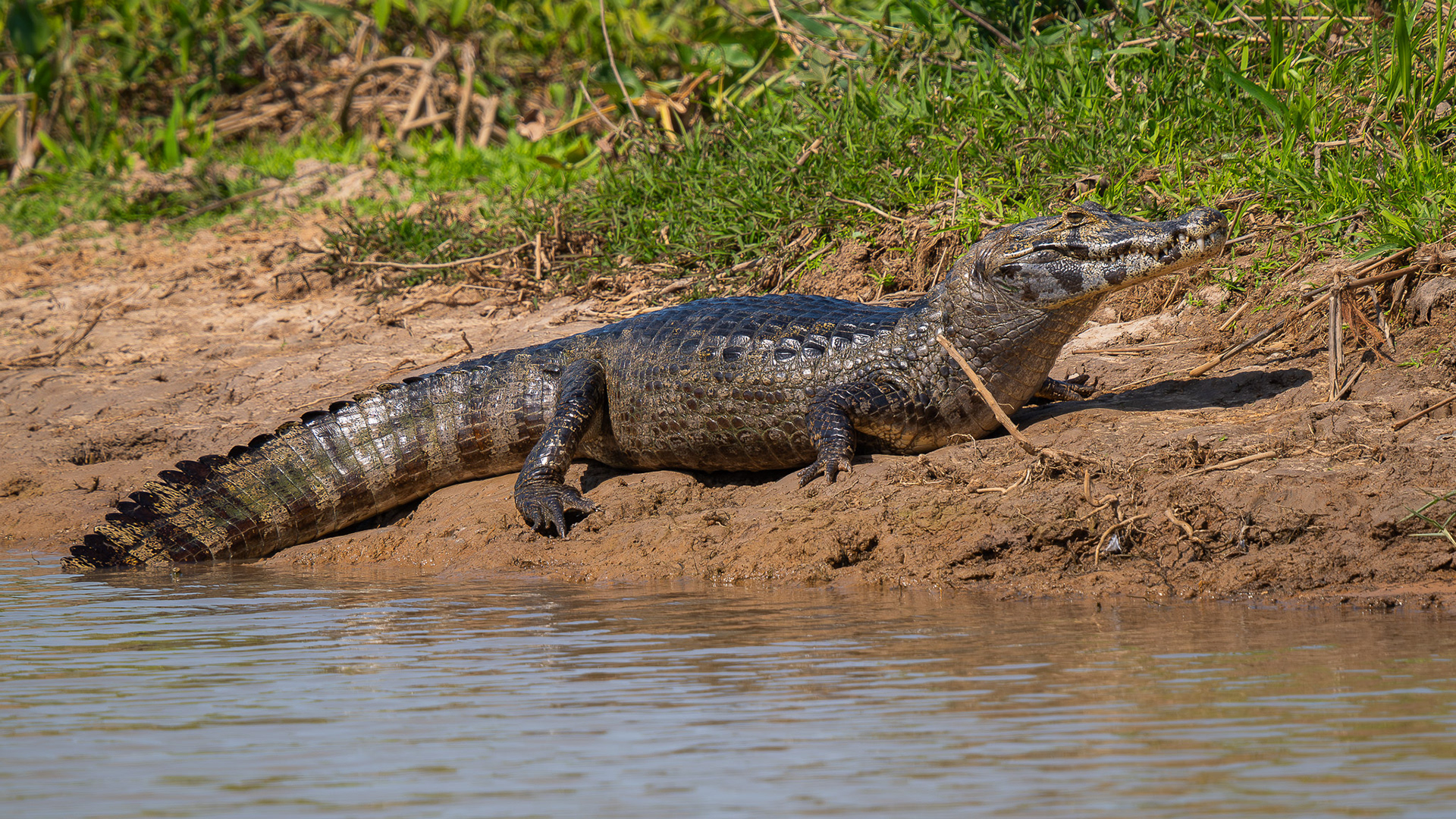
The Yacaré Caiman is frequently seen basking on river beaches in the Pantanal, stretching out in the sun to regulate its body temperature. As a cold-blooded reptile, basking allows it to warm up after time spent in the water, boosting its energy for hunting. Its natural camouflage helps it blend seamlessly into the sandy, muddy riverbanks while it rests.
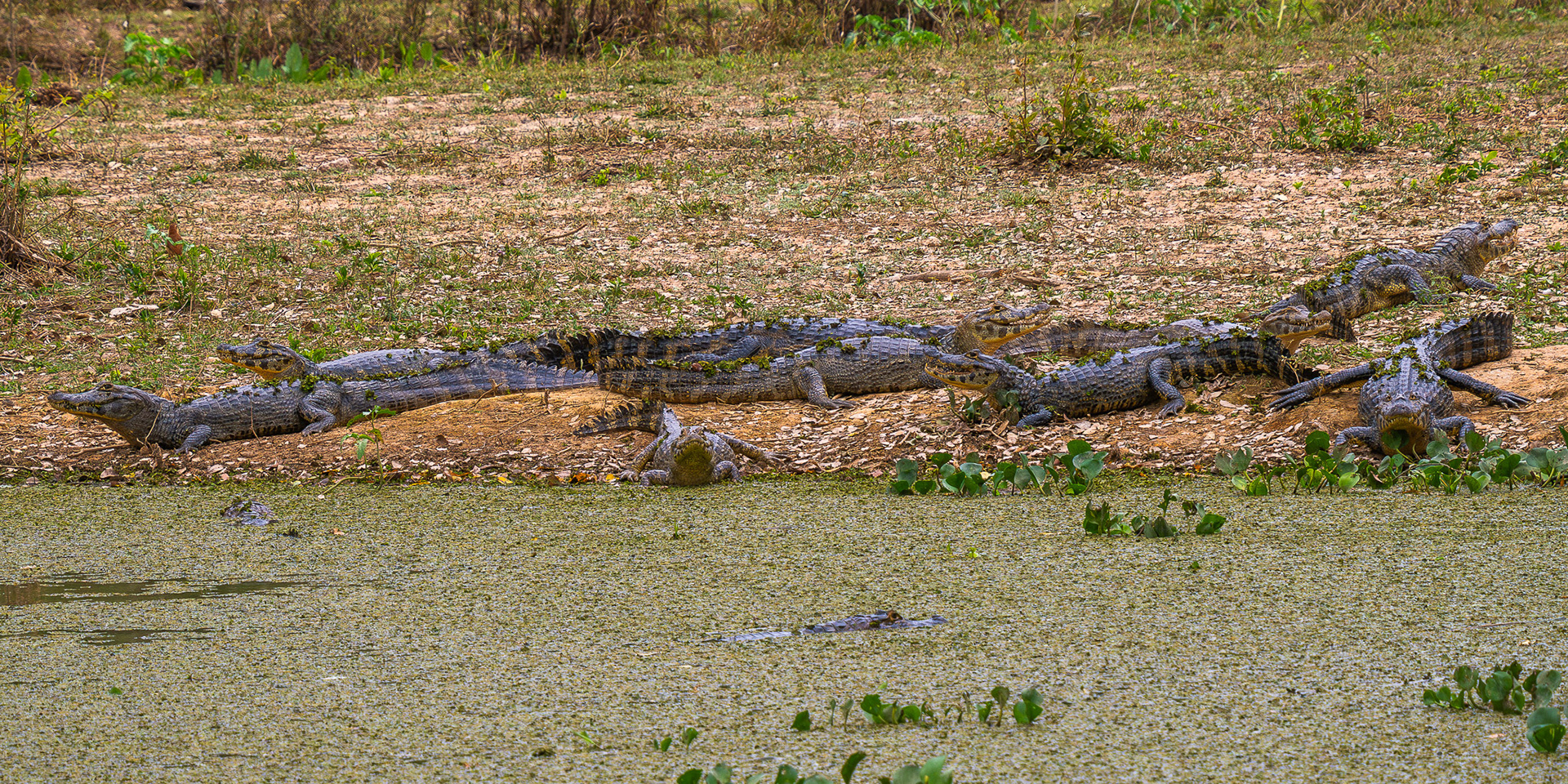
Yacaré Caiman often congregate in large numbers around shrinking water bodies during the dry season, gathering in the remaining pools as rivers and wetlands recede.
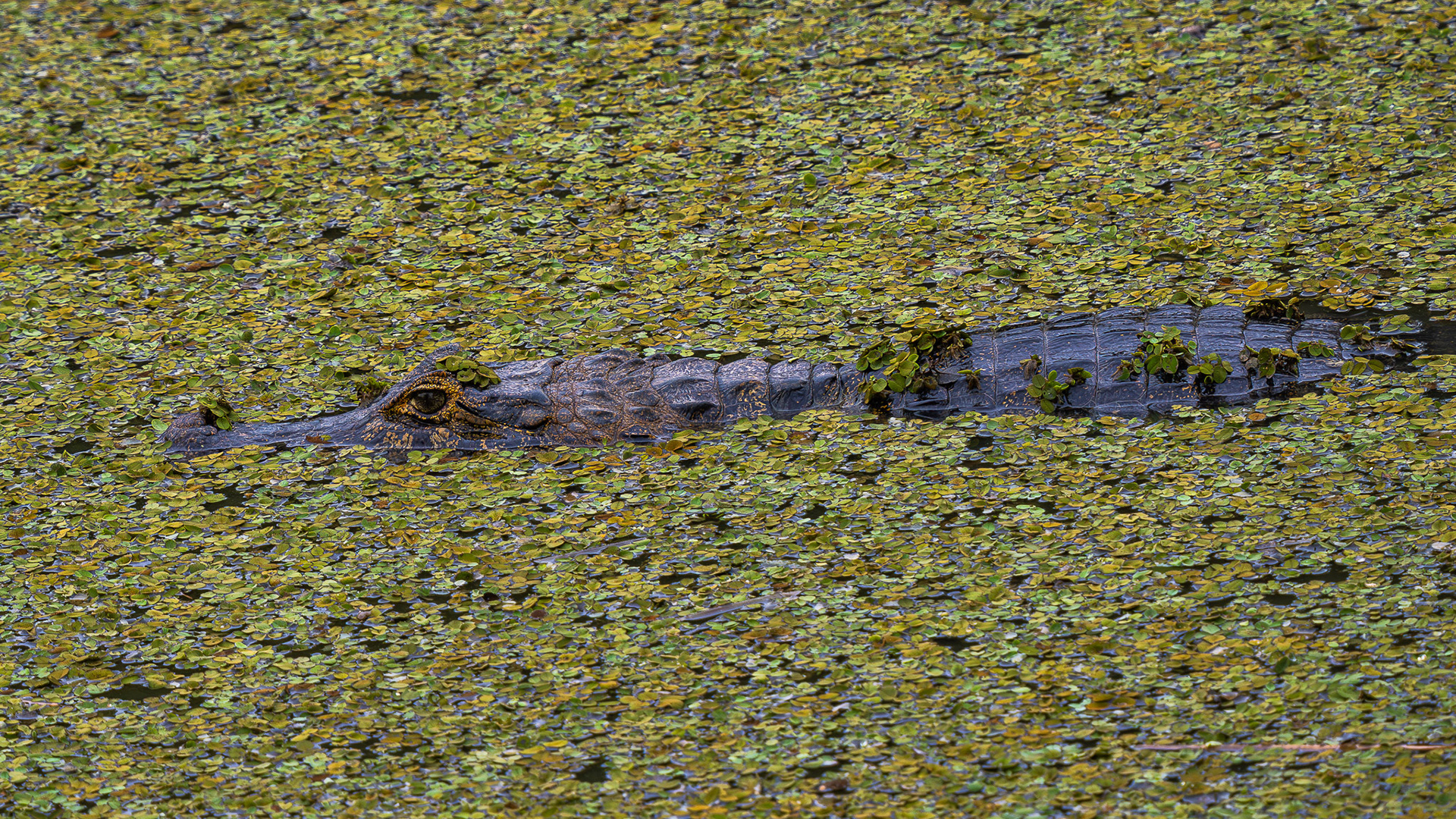
The Yacaré Caiman relies on highly effective camouflage to disappear into the wetlands. Its olive-brown coloration, marked with dark bands, blends seamlessly with muddy water and dense vegetation. The rough, armoured scales minimise light reflection, helping it resemble driftwood or floating debris as it waits motionless for prey.
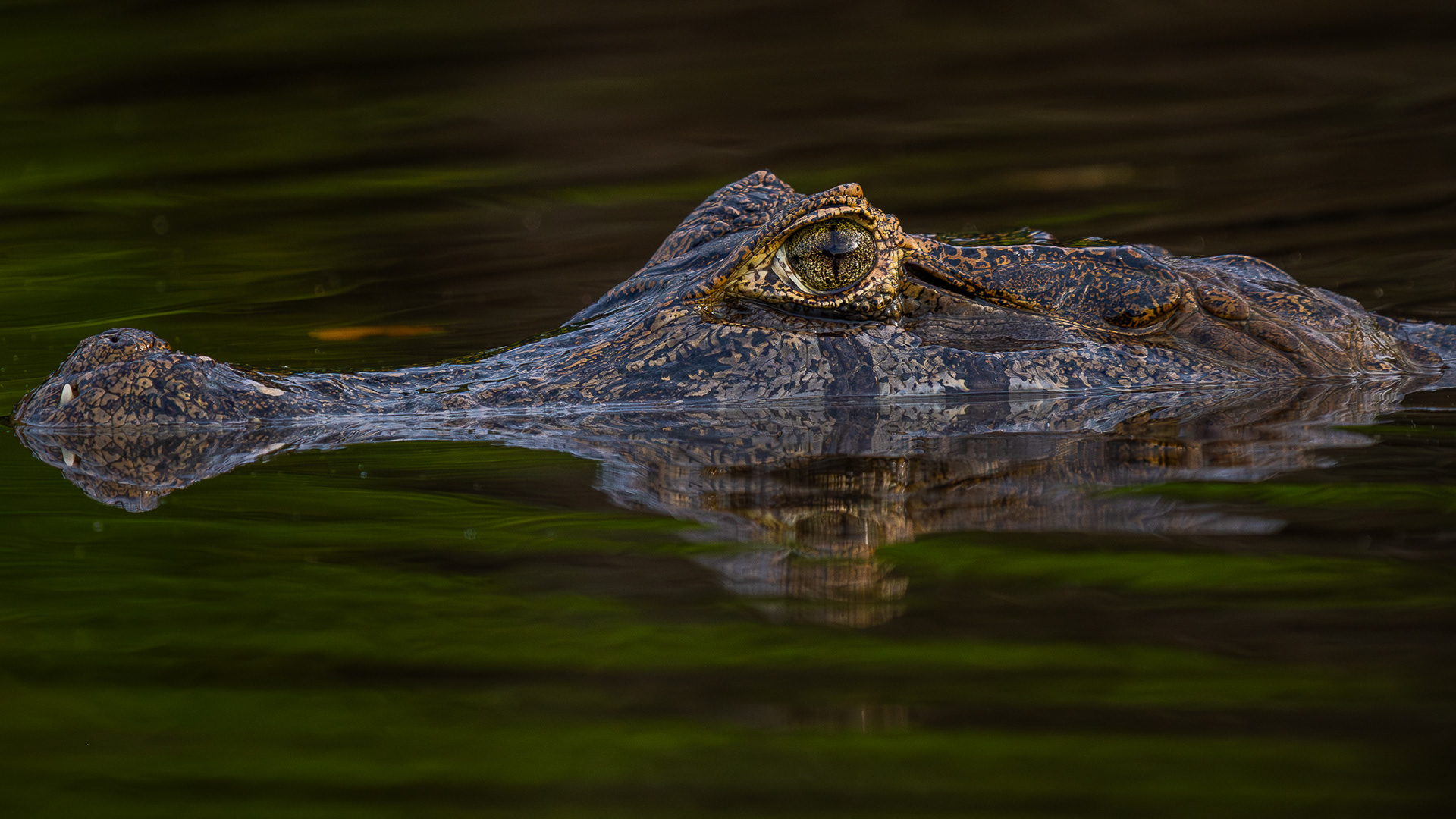
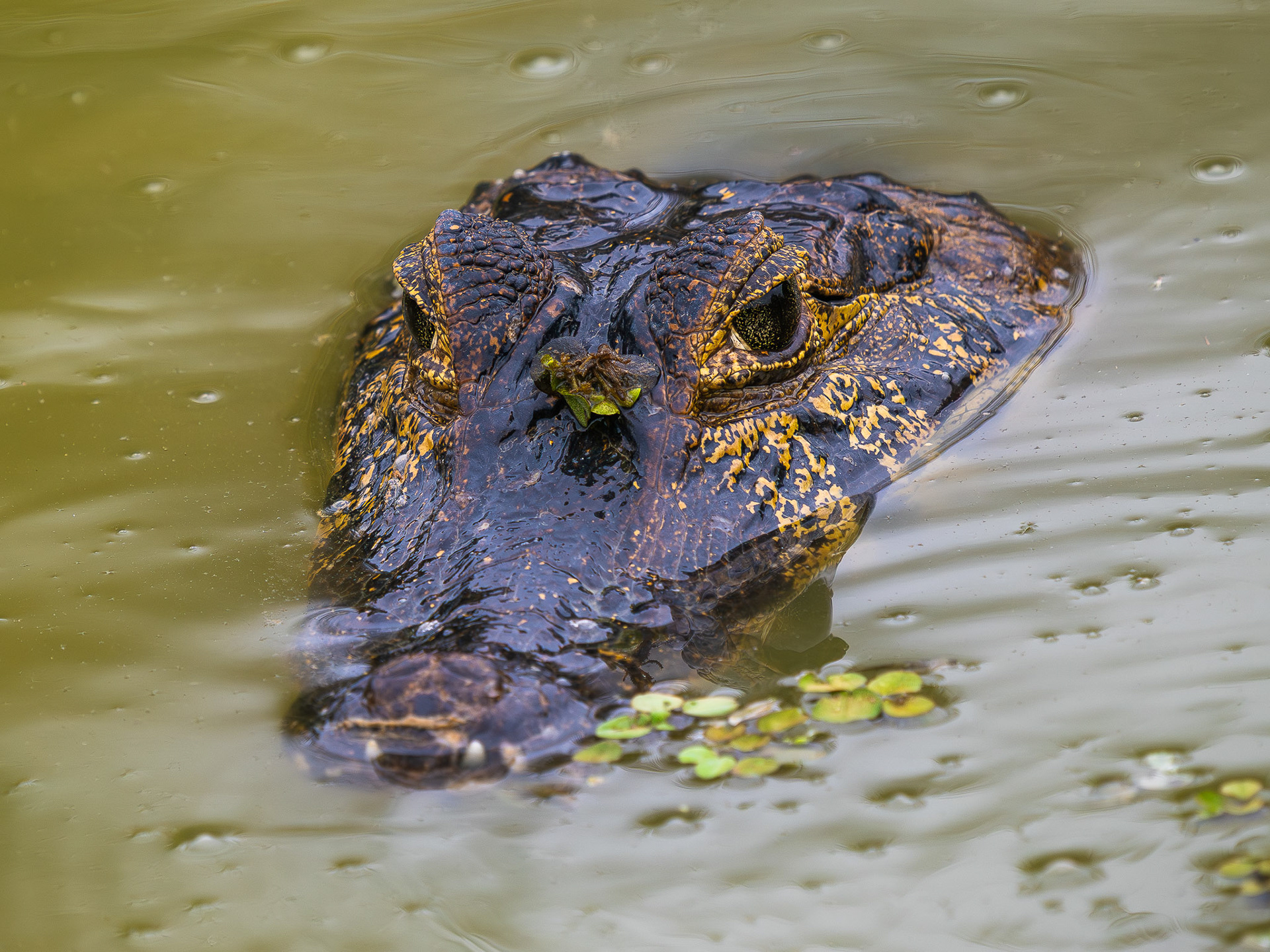
It often submerges its body with only its eyes and nostrils visible, making it almost invisible to unsuspecting prey in rivers and marshes.

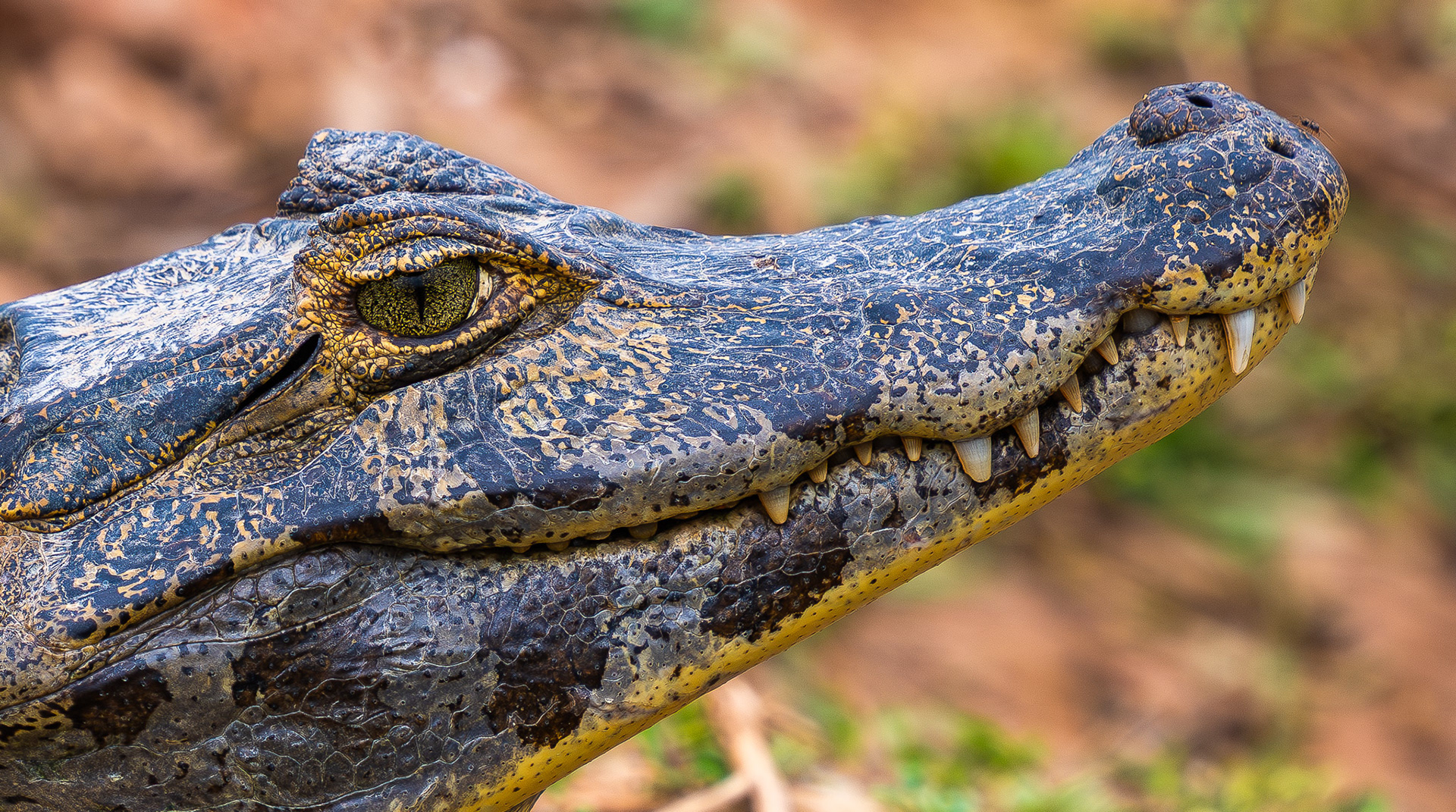
The Caiman has around 60 sharp, conical teeth designed for gripping rather than chewing prey. When its jaws close, the teeth interlock, allowing it to firmly hold slippery animals such as fish. Like other crocodilians, it continuously replaces lost teeth throughout its lifetime.
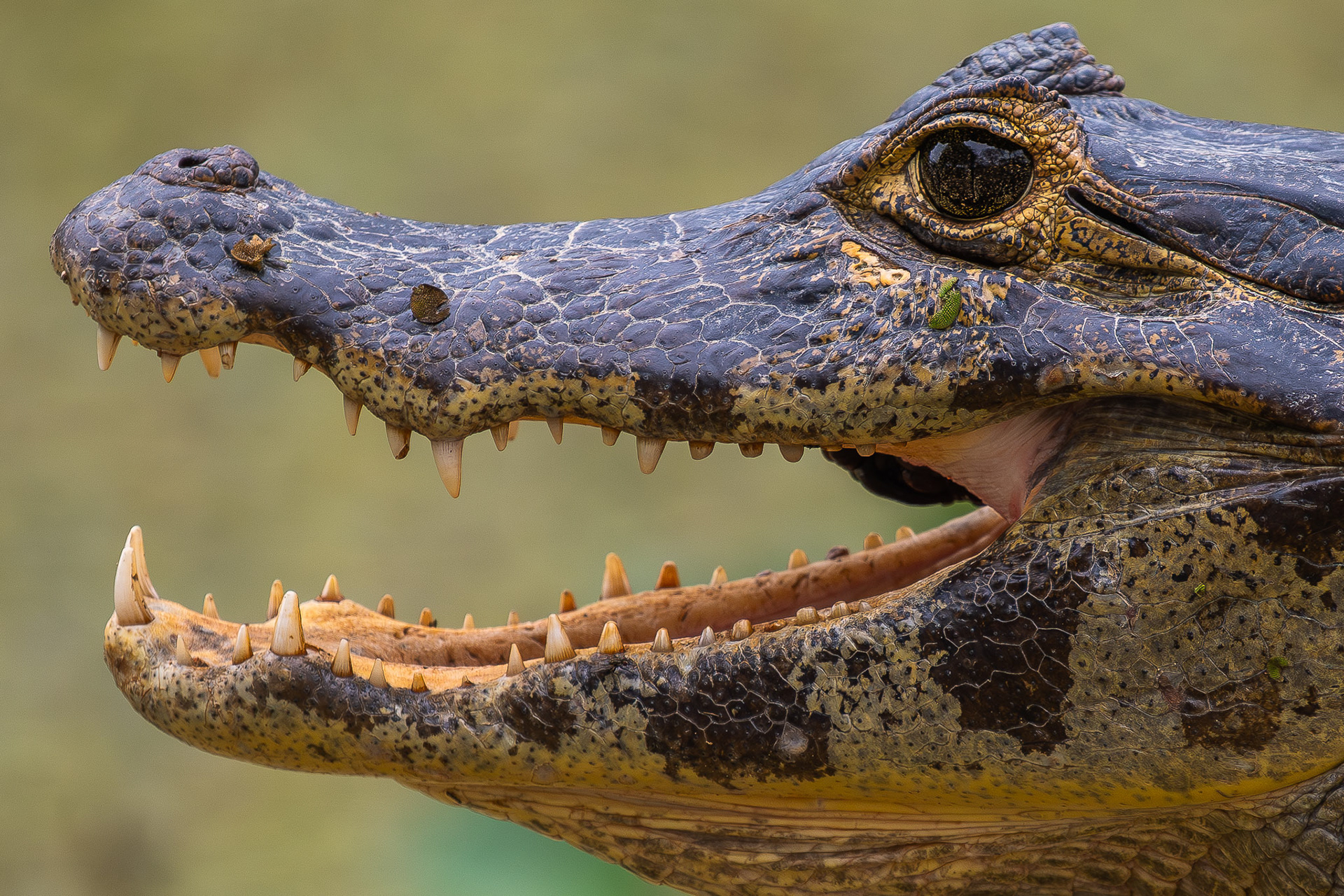
The Caiman is a cornerstone of the Pantanal ecosystem, acting as both predator and prey. It regulates populations of fish, snails, and small mammals, helping maintain ecological balance, while also serving as a key food source for apex predators like the Jaguar and the Green Anaconda, supporting the region's biodiversity and stability.
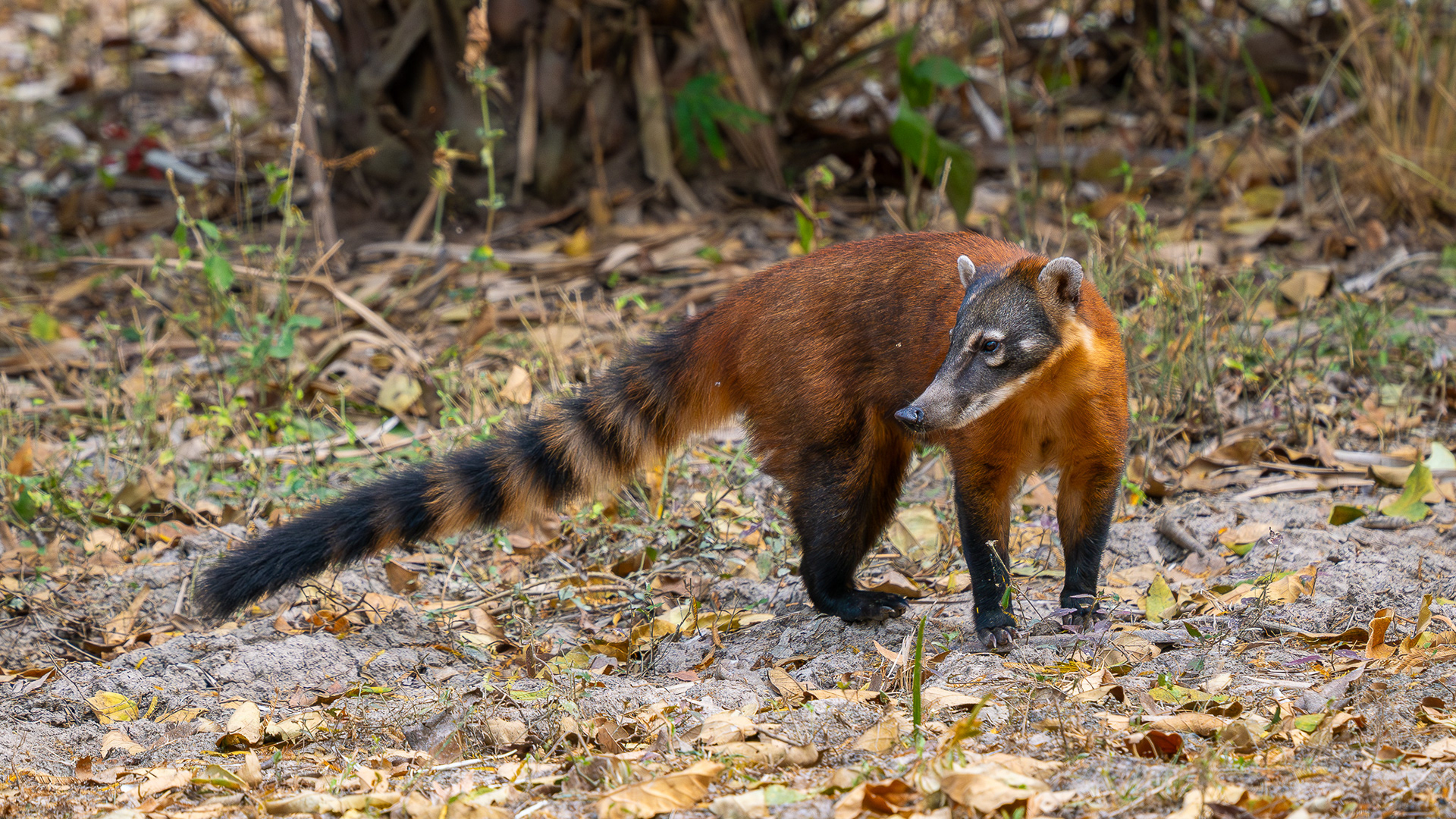
^ South American Coati
The South American Coati (Nasua nasua), also called the Ring-tailed Coati, is a highly social and adaptable member of the raccoon family. It is easily recognised by its long, flexible snout, distinct facial markings, and ringed tail. An opportunistic omnivore, it feeds on fruits, insects, small vertebrates, eggs, and carrion. Females and young live in social groups, while adult males are usually solitary. They are widely distributed across South America and are commonly seen in the wetlands of the Pantanal.
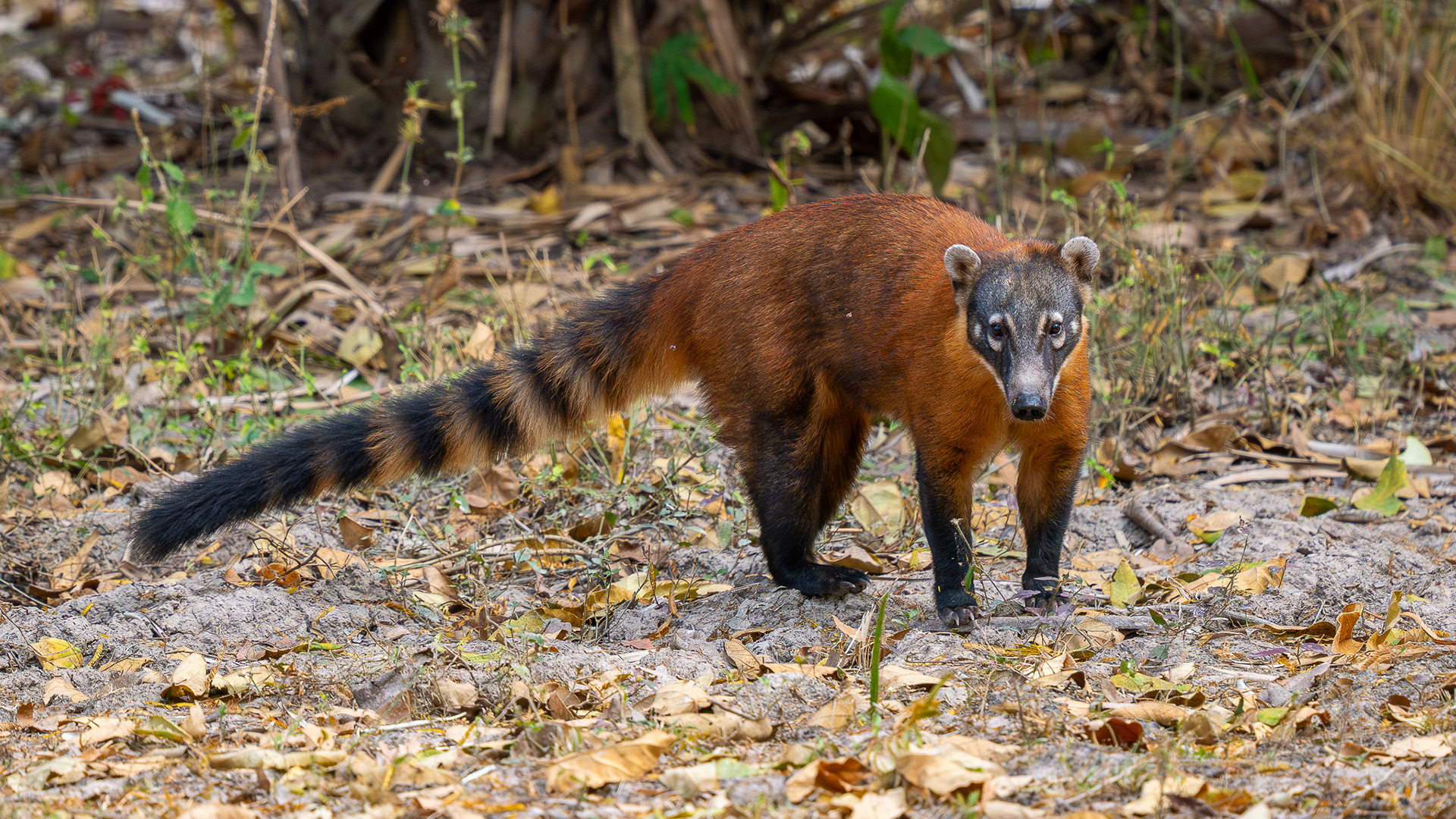
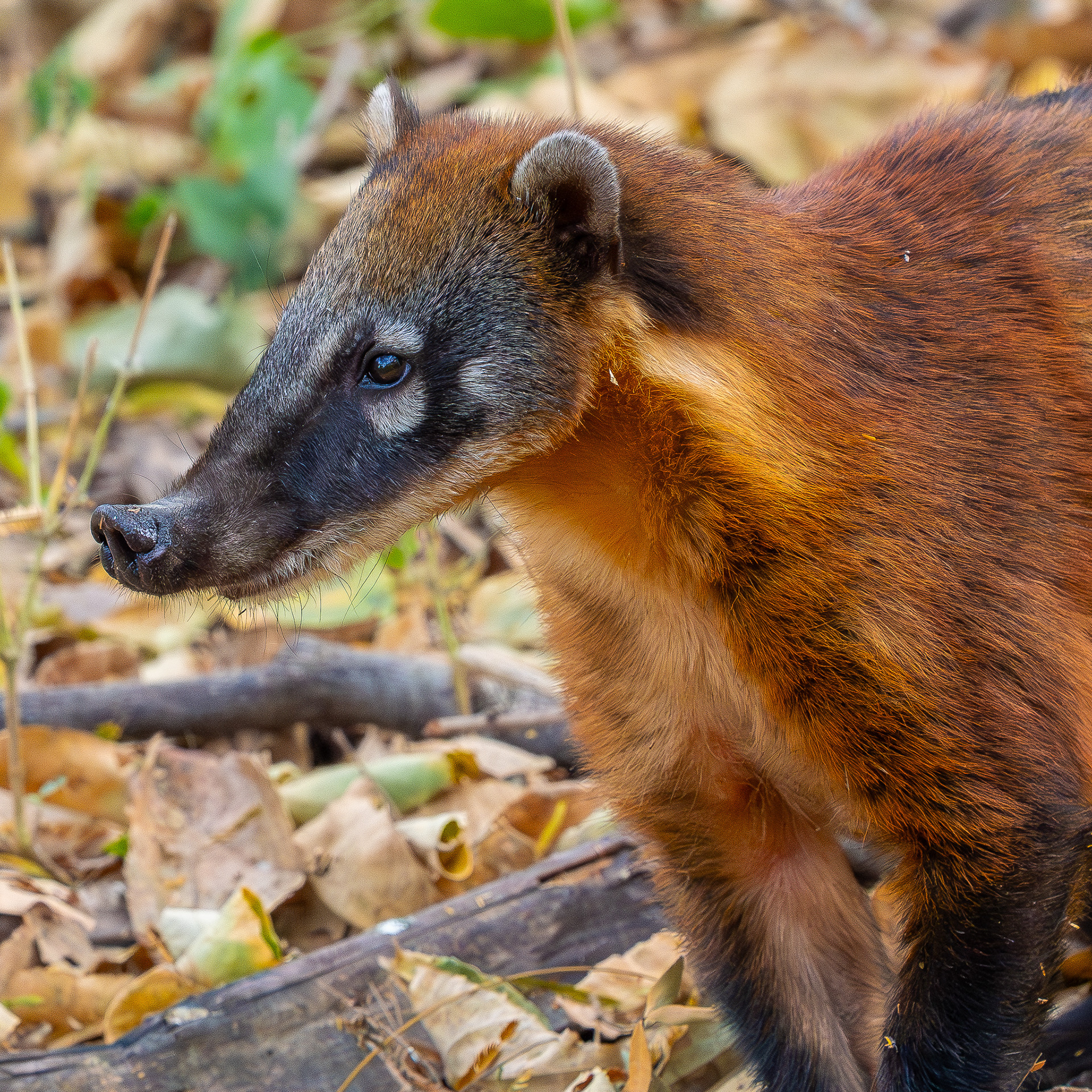
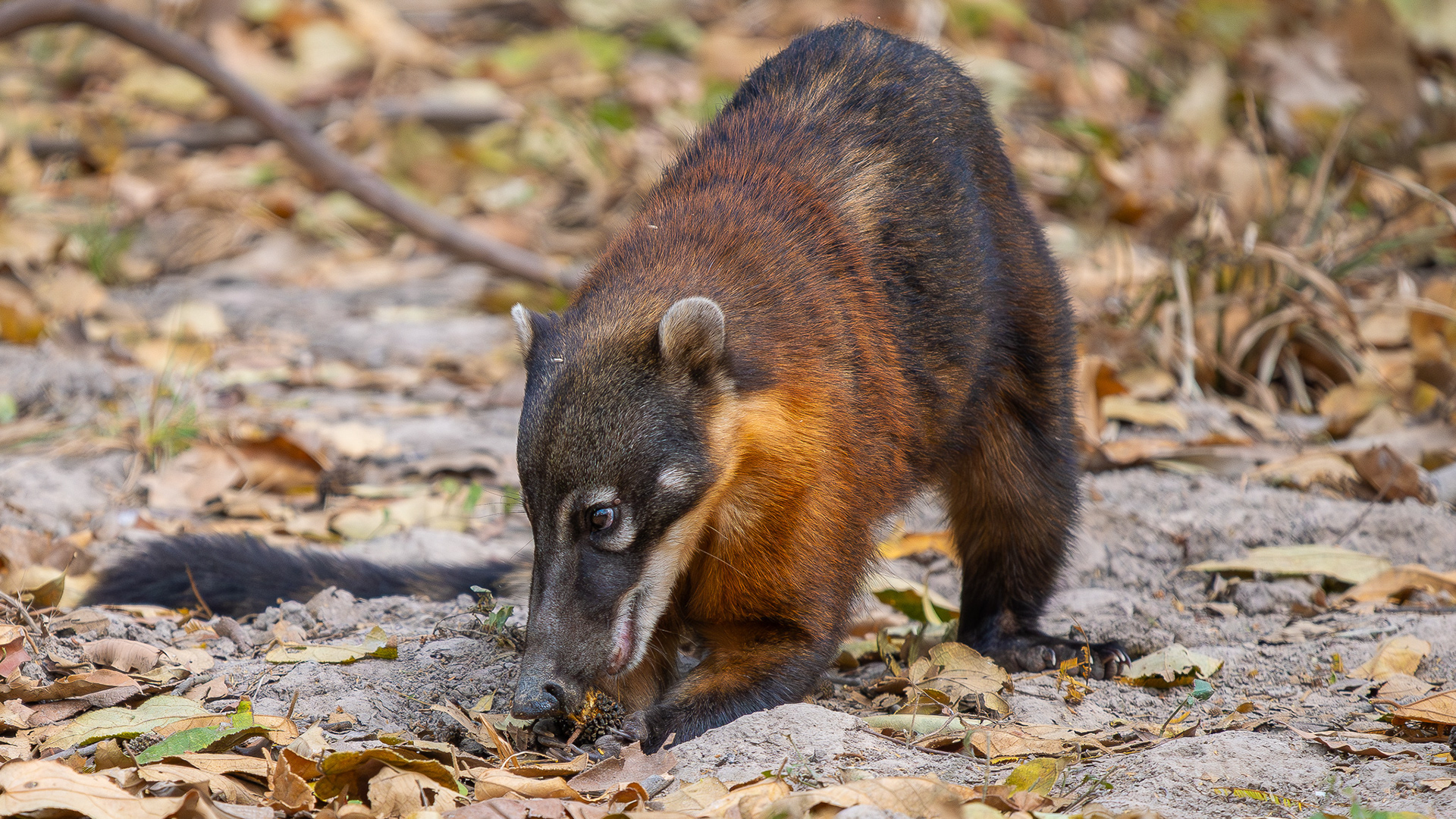
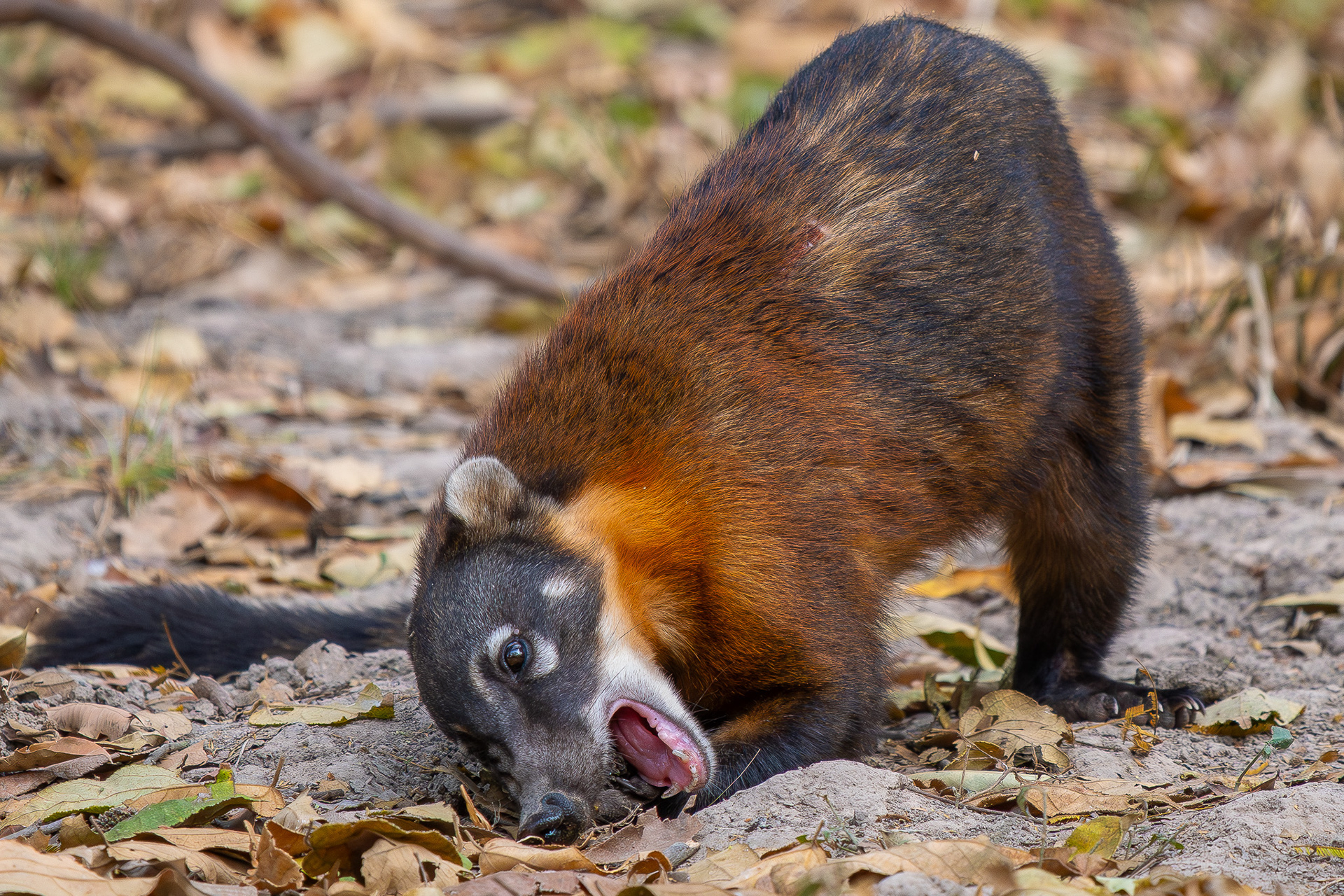
Coatis use their long, flexible snouts to sniff and probe for food hidden in leaf litter and crevices. Known as 'nature's excavators', they spend much of the day foraging on the forest floor and in the canopy for insects, fruit, and small animals.
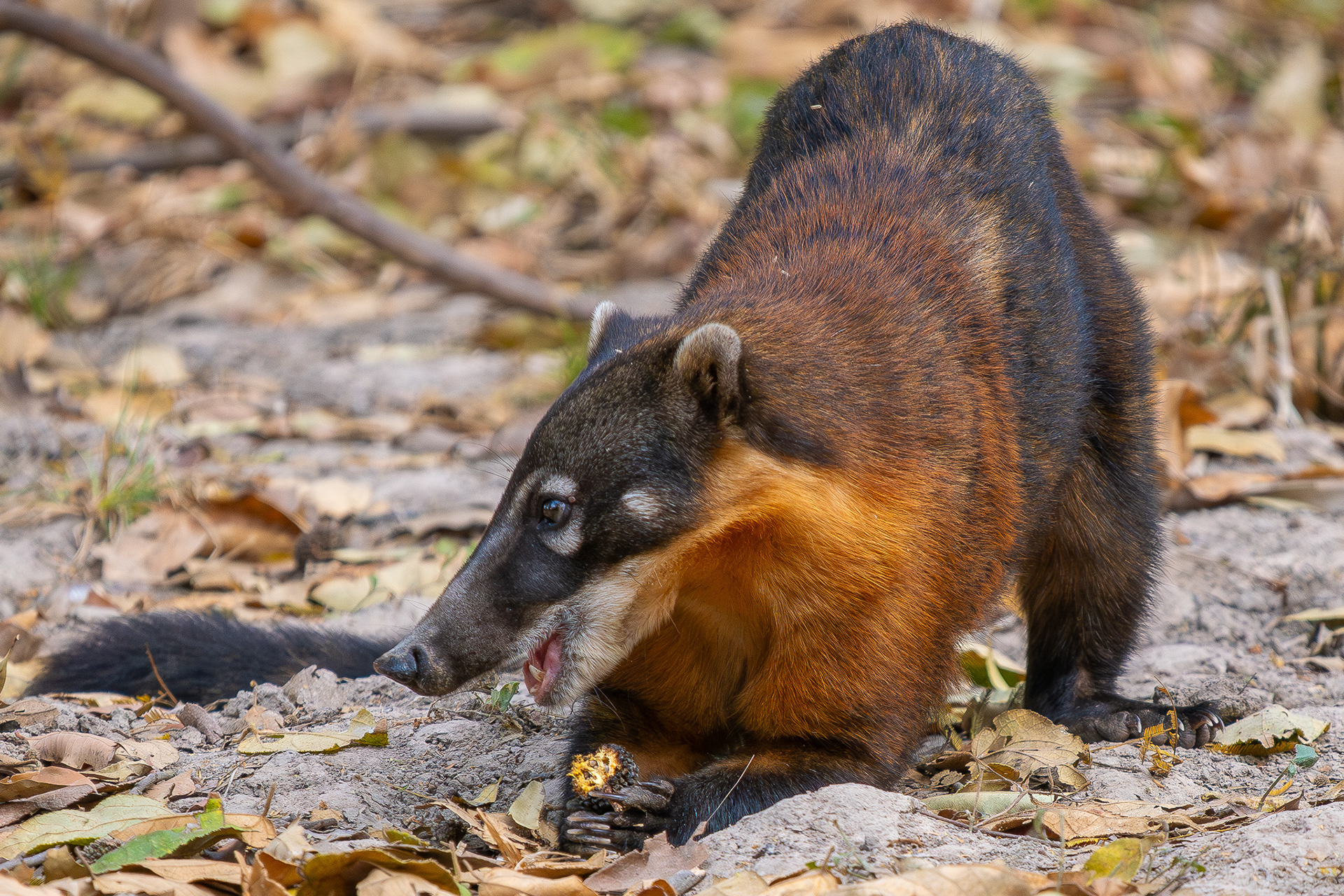
They have highly dexterous front paws used to grasp food while eating, and non-retractable claws adapted for climbing and digging. By eating fruit and dispersing seeds, they also help regenerate the forest.
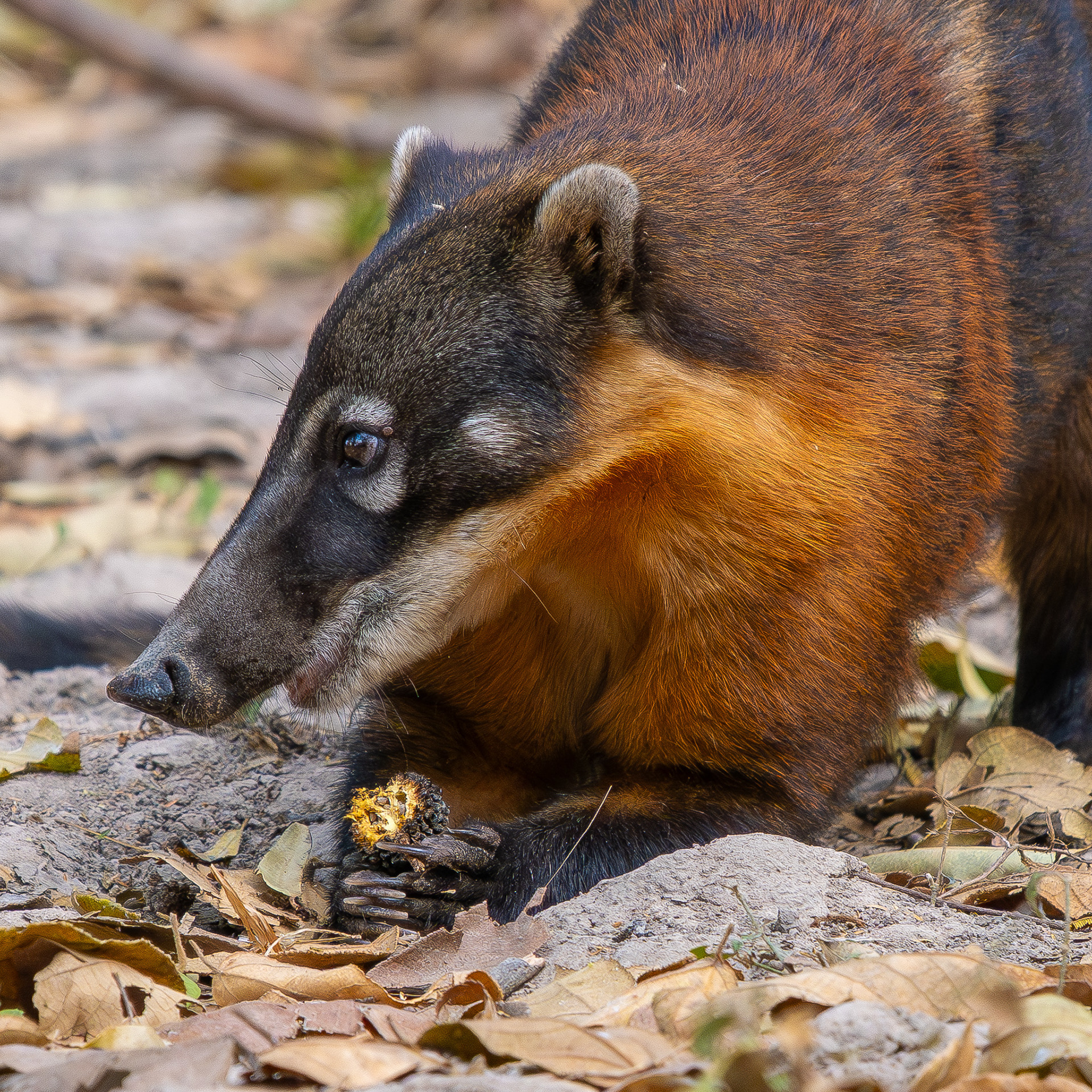
A Coati feeds on fallen fruit found among the leaf litter.

^ Capybara
The Capybara (Hydrochoerus hydrochaeris) is the world's largest rodent. In this vast Brazilian floodplain, Capybara are highly visible, semi-aquatic herbivores that thrive in social groups along riverbanks.
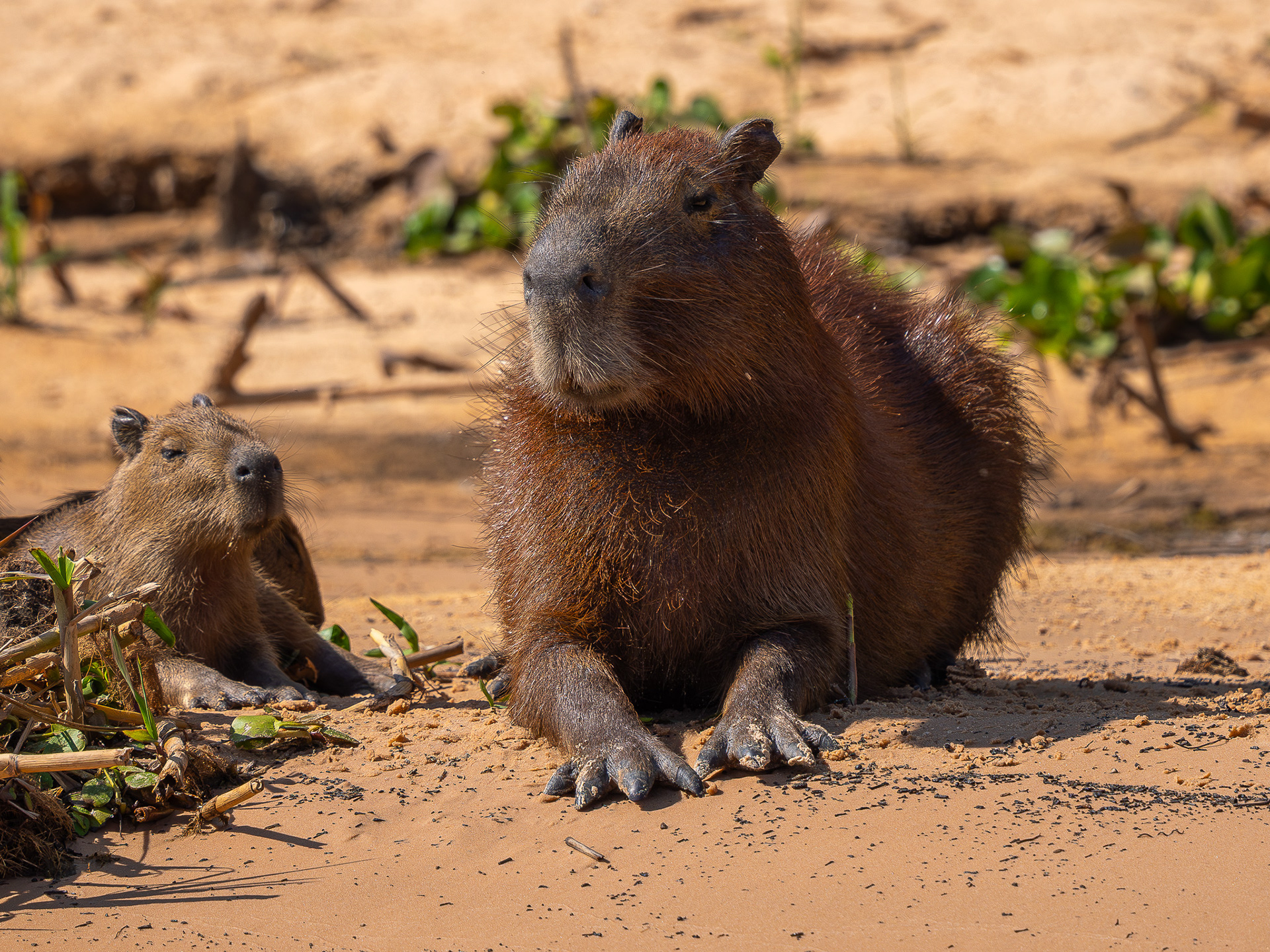
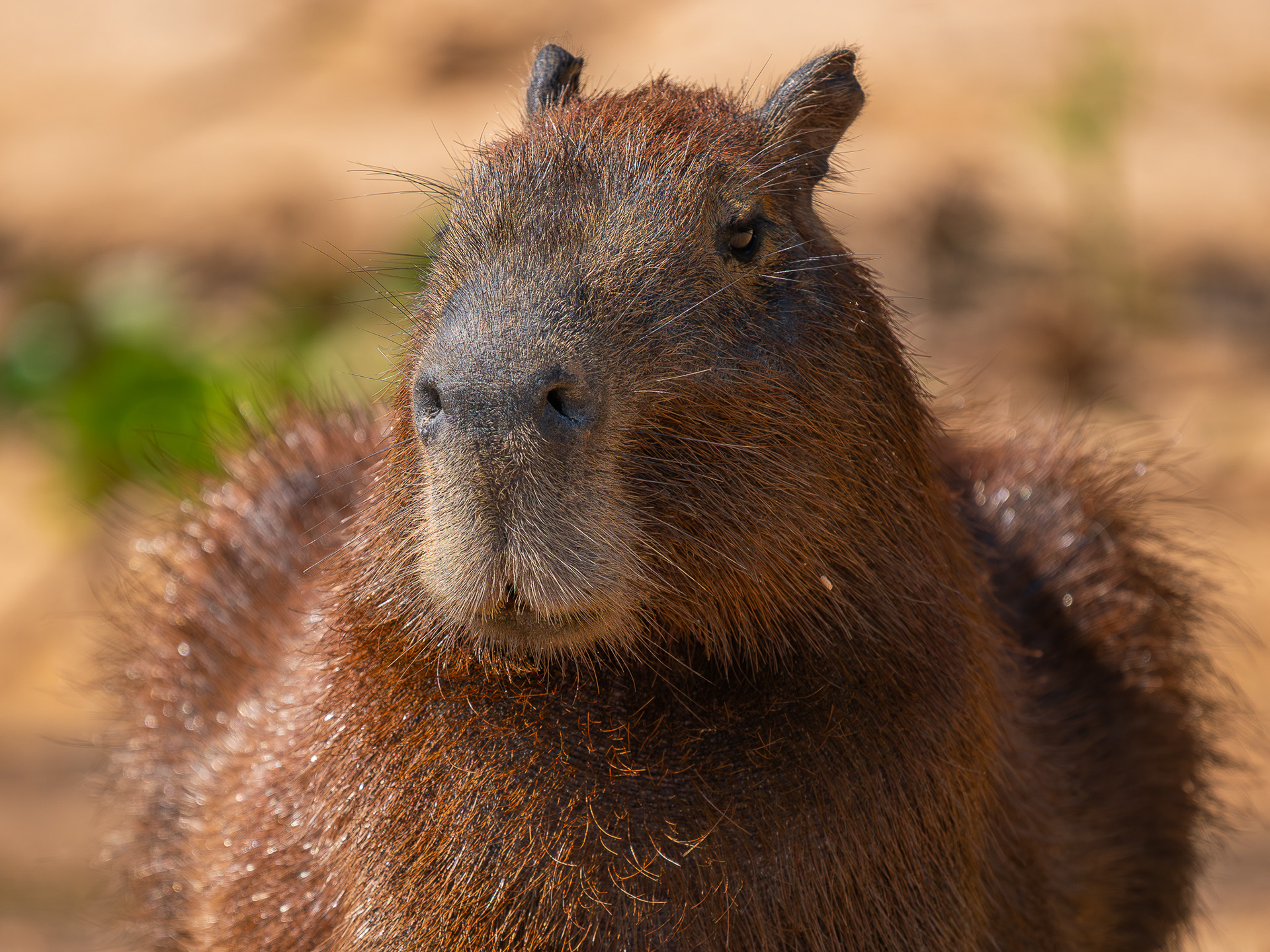
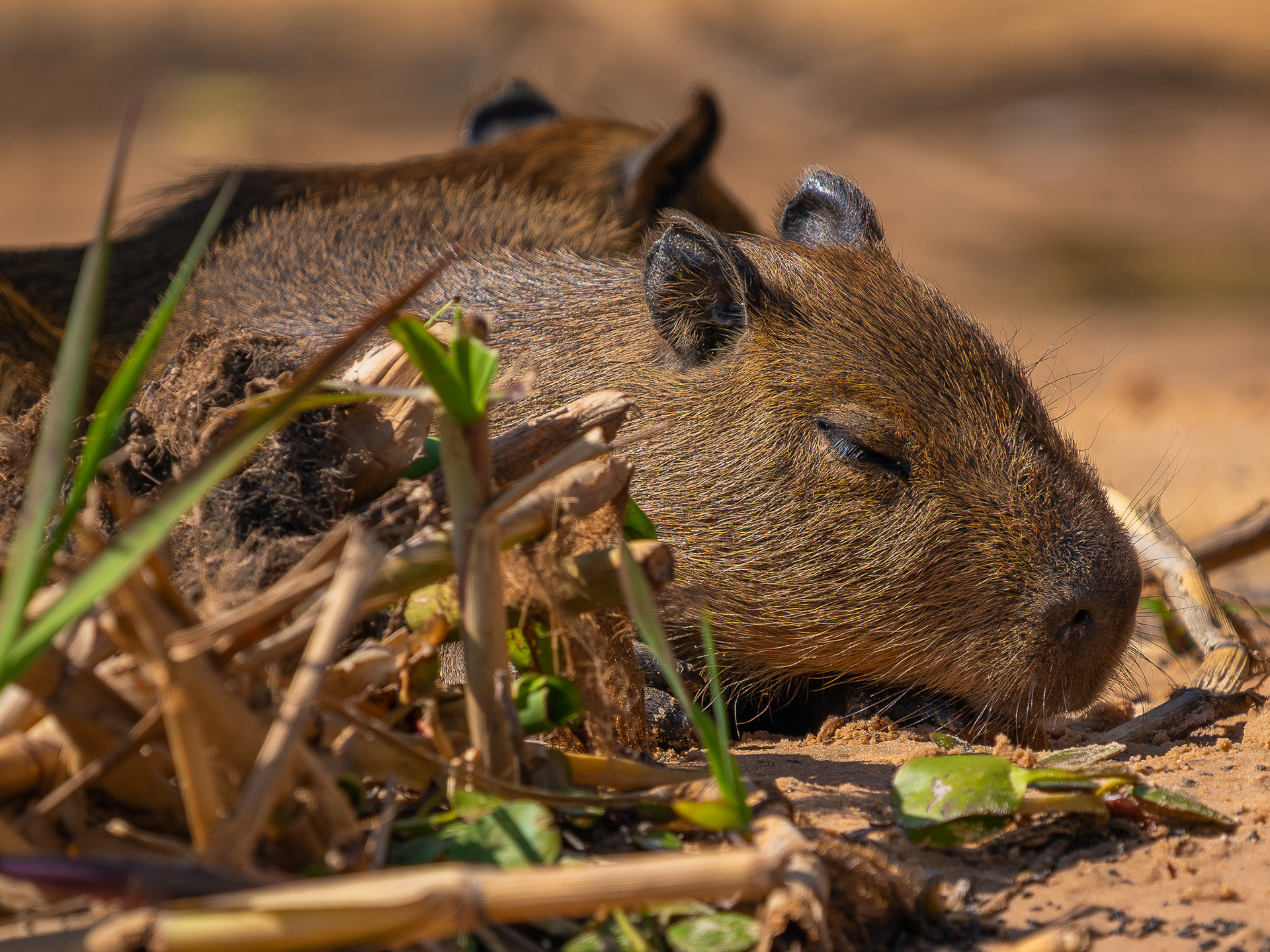
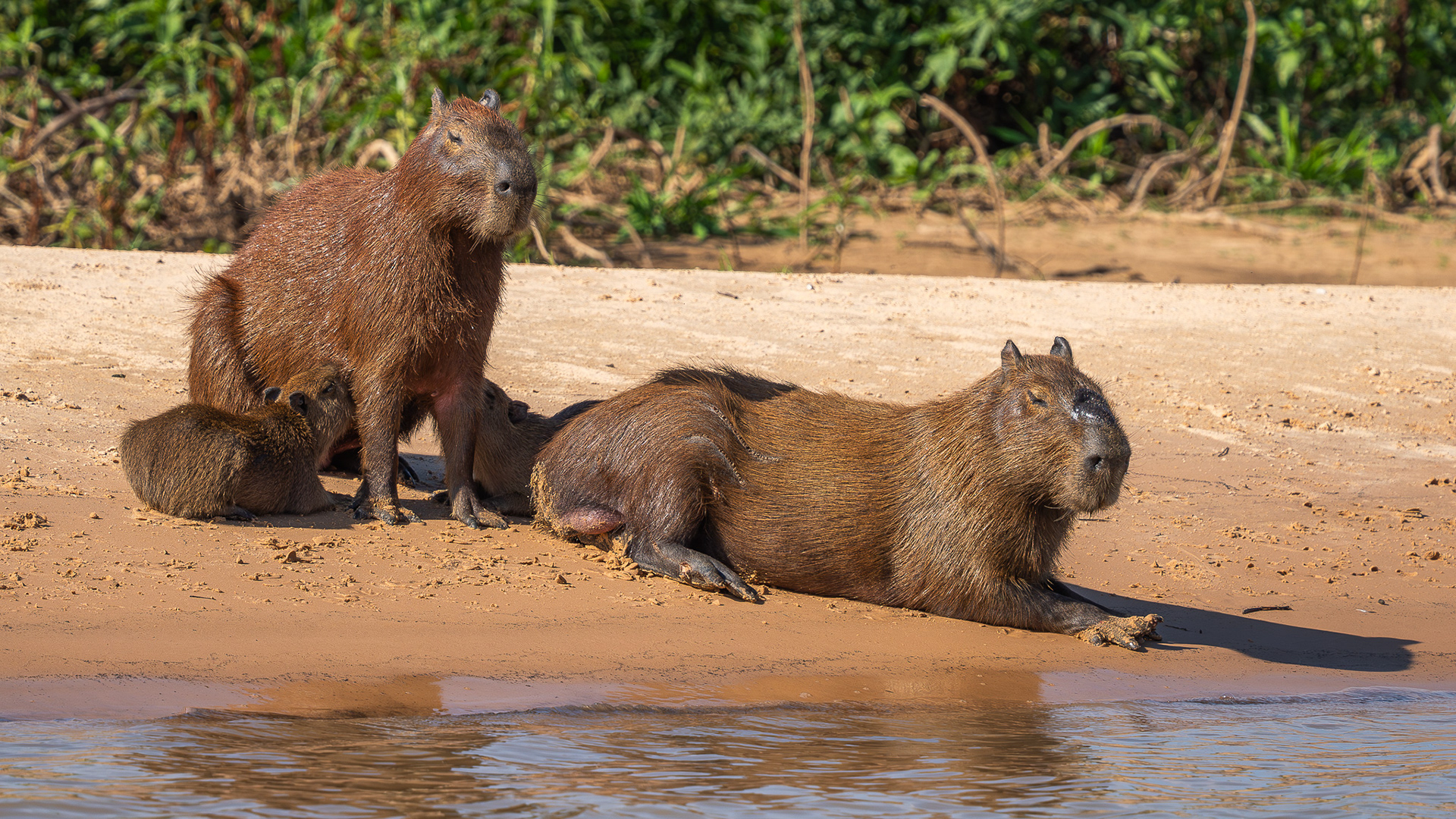
Capybara live in social groups usually made up of one dominant male, several females, their young, and a few subordinate males. The offspring typically remain with the group for their first year. Pups are born highly developed - fully furred, with open eyes and a complete set of teeth and are able to walk and swim almost immediately. They nurse from their mother as well as from other lactating females in the group. Although they begin nibbling on grasses within a day or two of birth, they continue to suckle for around three months.

The Capybara has long, coarse fur, unlike the soft coats of many mammals, with colouring that ranges from reddish-brown to yellowish-brown. Its water-resistant coat helps it dry quickly after swimming—an important adaptation for its semi-aquatic lifestyle. Unusually for rodents, capybaras also have sweat glands within the hairy areas of their skin.
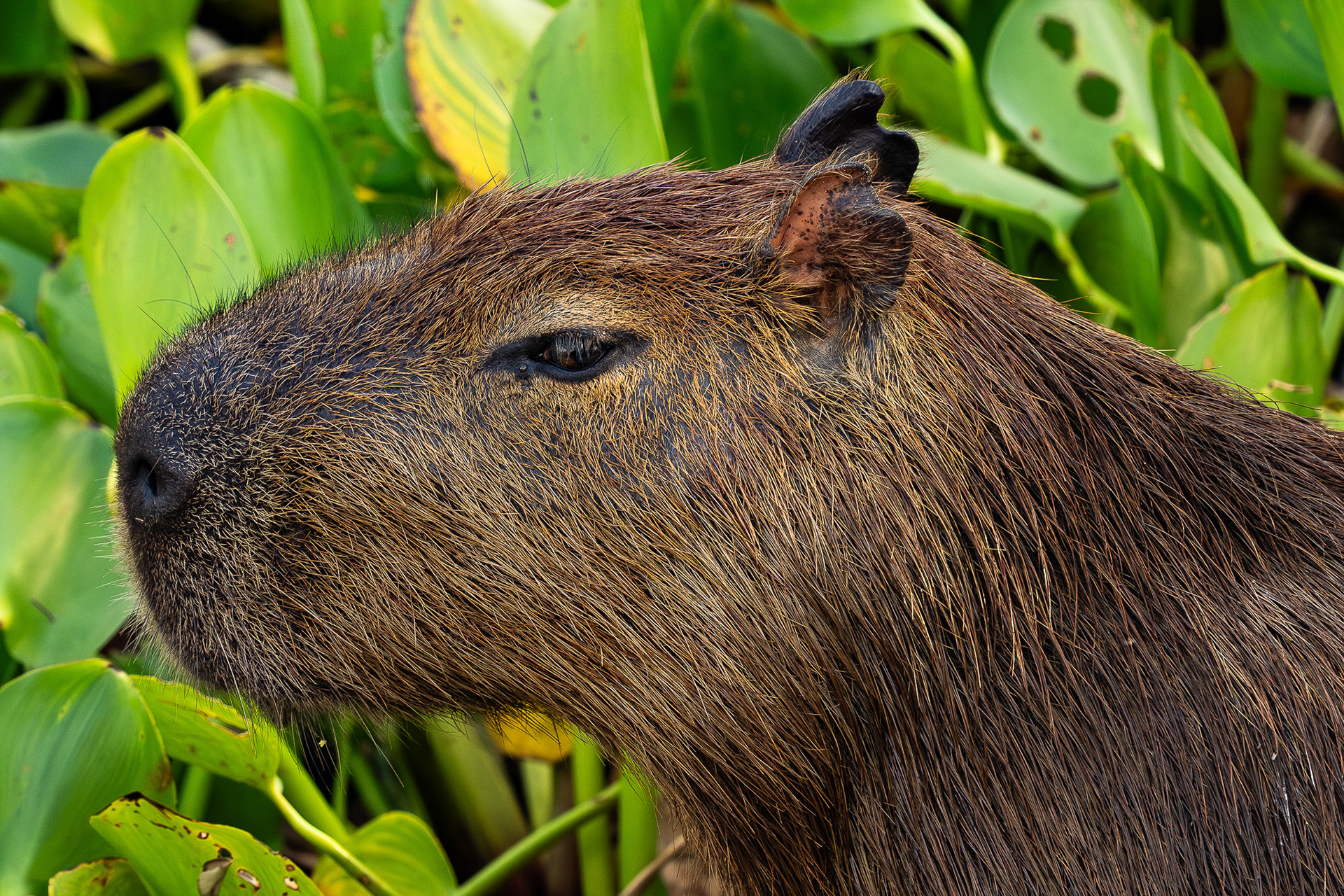
Capybaras are strict herbivores, feeding mainly on grasses and aquatic plants. Their continuously growing incisors help them chew tough vegetation, and to maximise nutrient absorption they practise coprophagy - re-ingesting their own faeces.
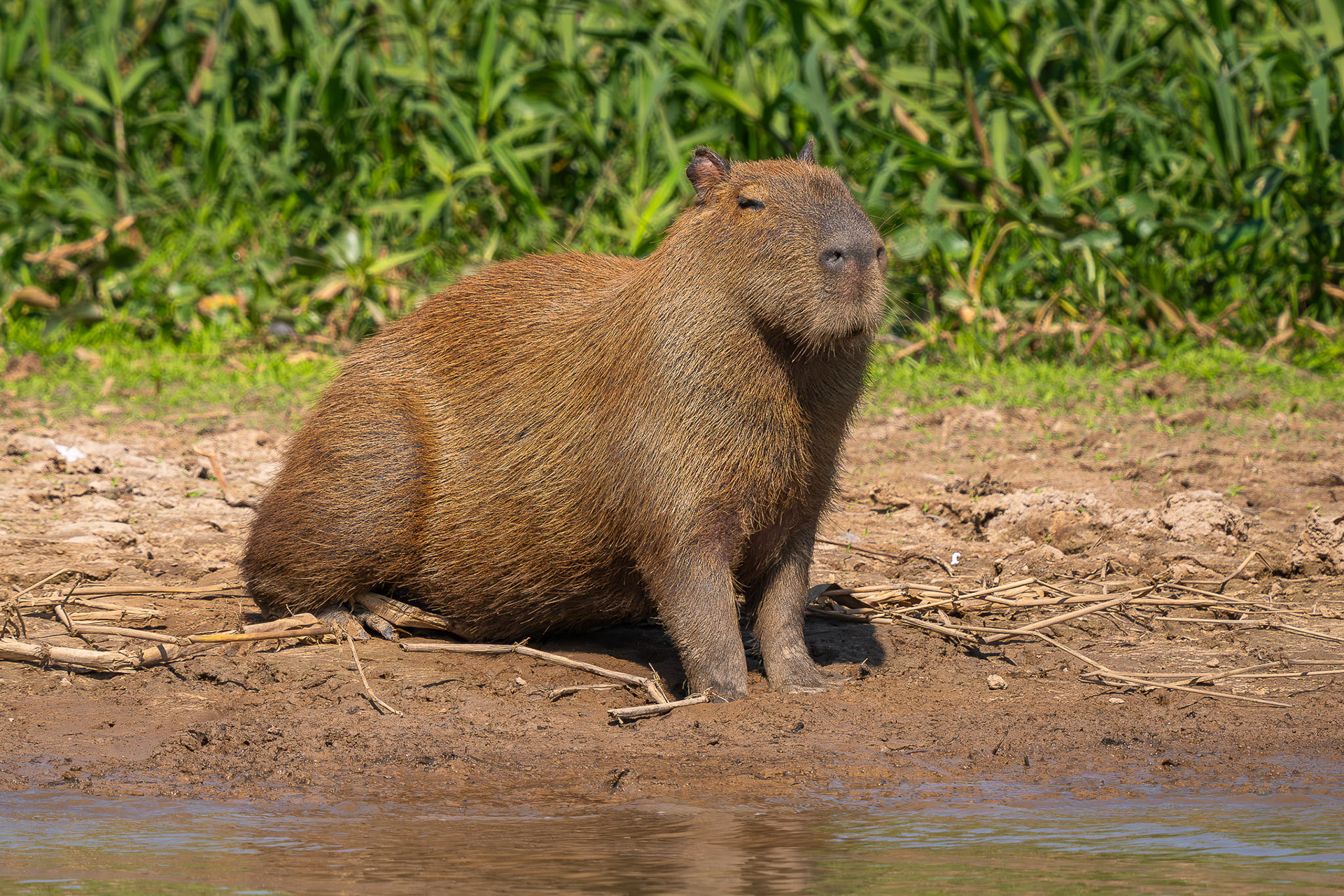
Capybara usually remain close to rivers, and if threatened, they quickly leap into the water where they have a clear advantage. Excellent swimmers, they can hold their breath for up to five minutes to evade predators.
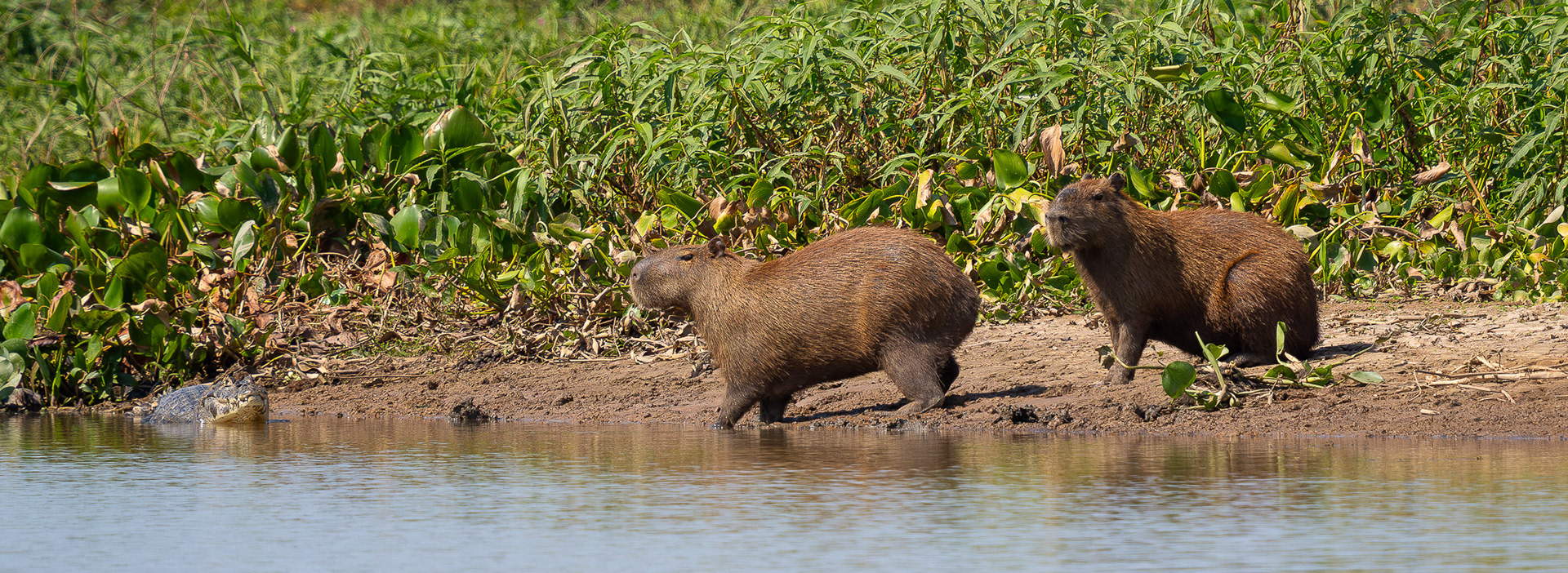
If a Capybara detects a stalking Jaguar, it will often emit a loud, dog-like bark to alert the rest of the group - prompting a sudden, collective dash for the safety of the water.
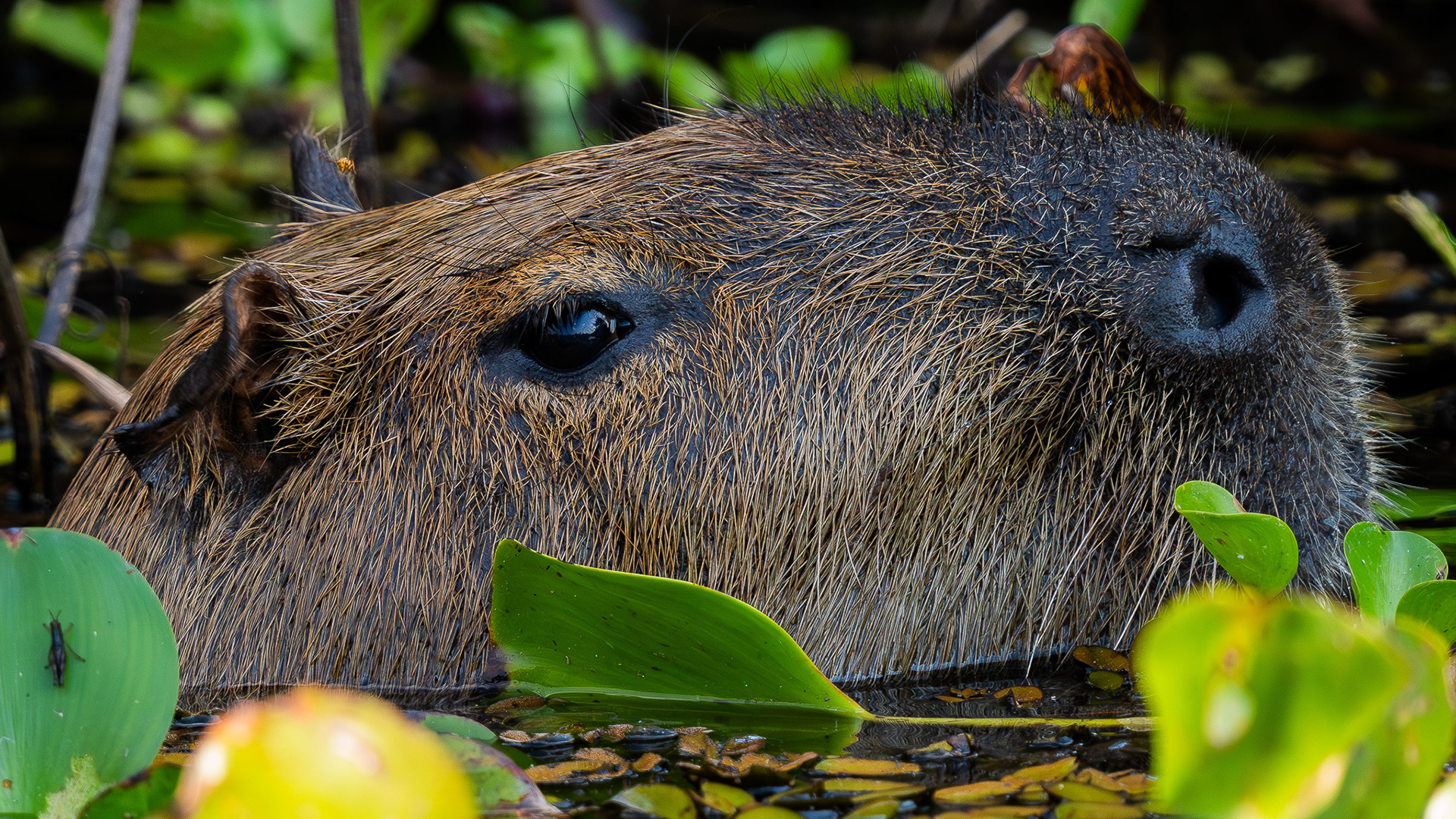
Half-submerged, its alert eyes and whiskered snout emerges between glossy green leaves of the water hyacinths.
The Ocelot Hide - SouthWild Pantanal Lodge
An Eco-lodge in the Northern Pantanal, located on the banks of the Pixaim River.
SouthWild Pantanal Lodge offers a unique, high-success opportunity to observe wild Ocelots at close range from a specially designed hide. Guests watch from a tiered, mini-grandstand seating area, safely enclosed by fencing. Ocelots are typically seen just five to nine metres away in their natural habitat, illuminated by floodlights that make high-quality low-light photography possible without the need for flash. Although accustomed to the quiet presence of people, the cats remain completely wild. Around sunset, they often emerge to explore the area, sometimes drawn by small treats such as chicken provided by staff. This thoughtful setup allows for reliable sightings while beautifully highlighting the Ocelot’s grace and agility.
On our first visit to the hide, we sat for two long hours, hardly daring to breathe, remaining utterly still and silent as we waited for an Ocelot to appear. But that night, none came. Our only companions were the mosquitoes, droning persistently in our ears!
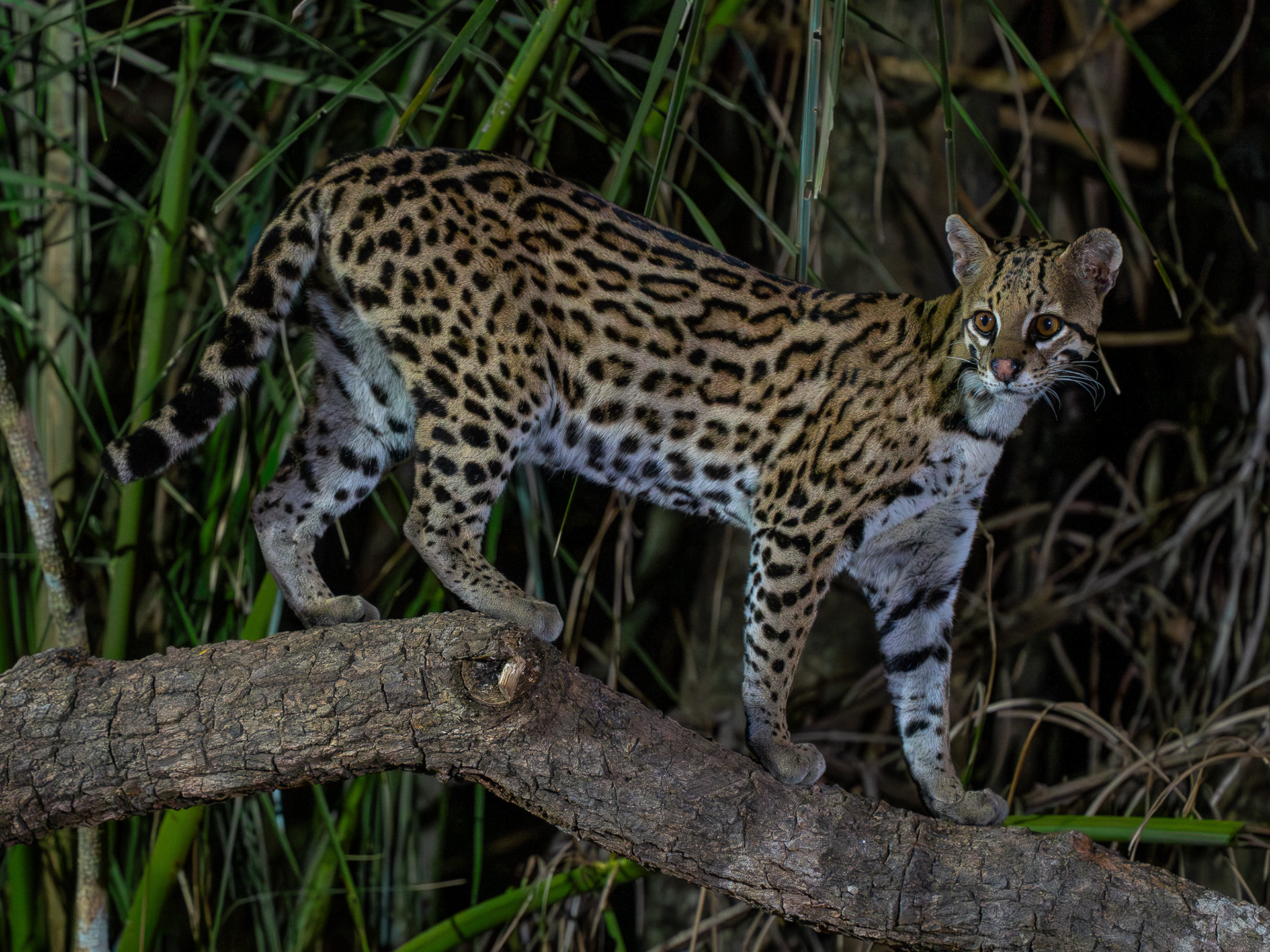
On our final evening at the lodge, we decided to try our luck once more. Another two hours slipped by with nothing to show for it but the ever-present mosquitoes, and we began to think it simply wasn’t meant to be. Then, without warning, a beautiful Ocelot emerged from the darkness and into the light, its rosette-patterned coat shimmering softly beneath the spotlights.
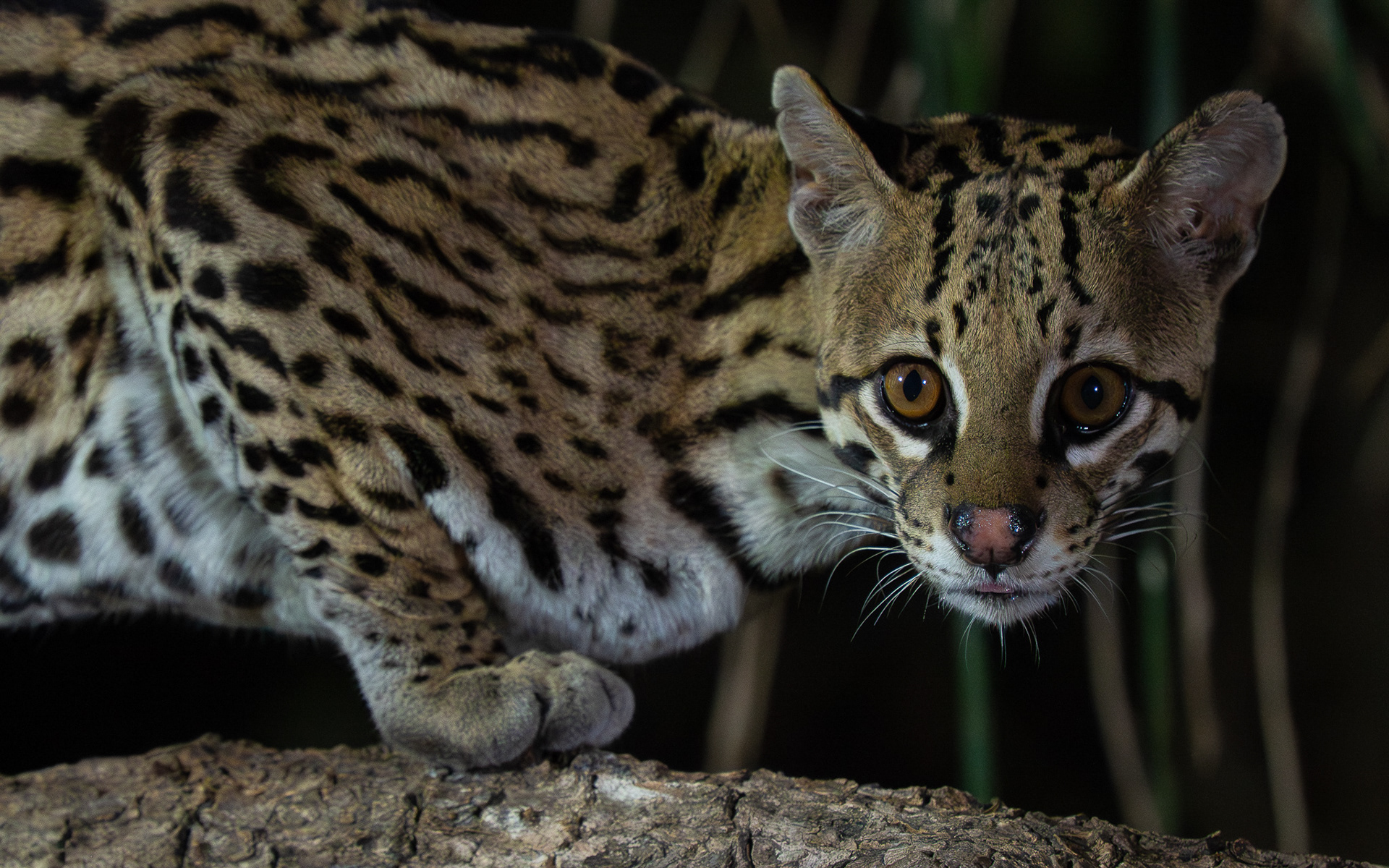
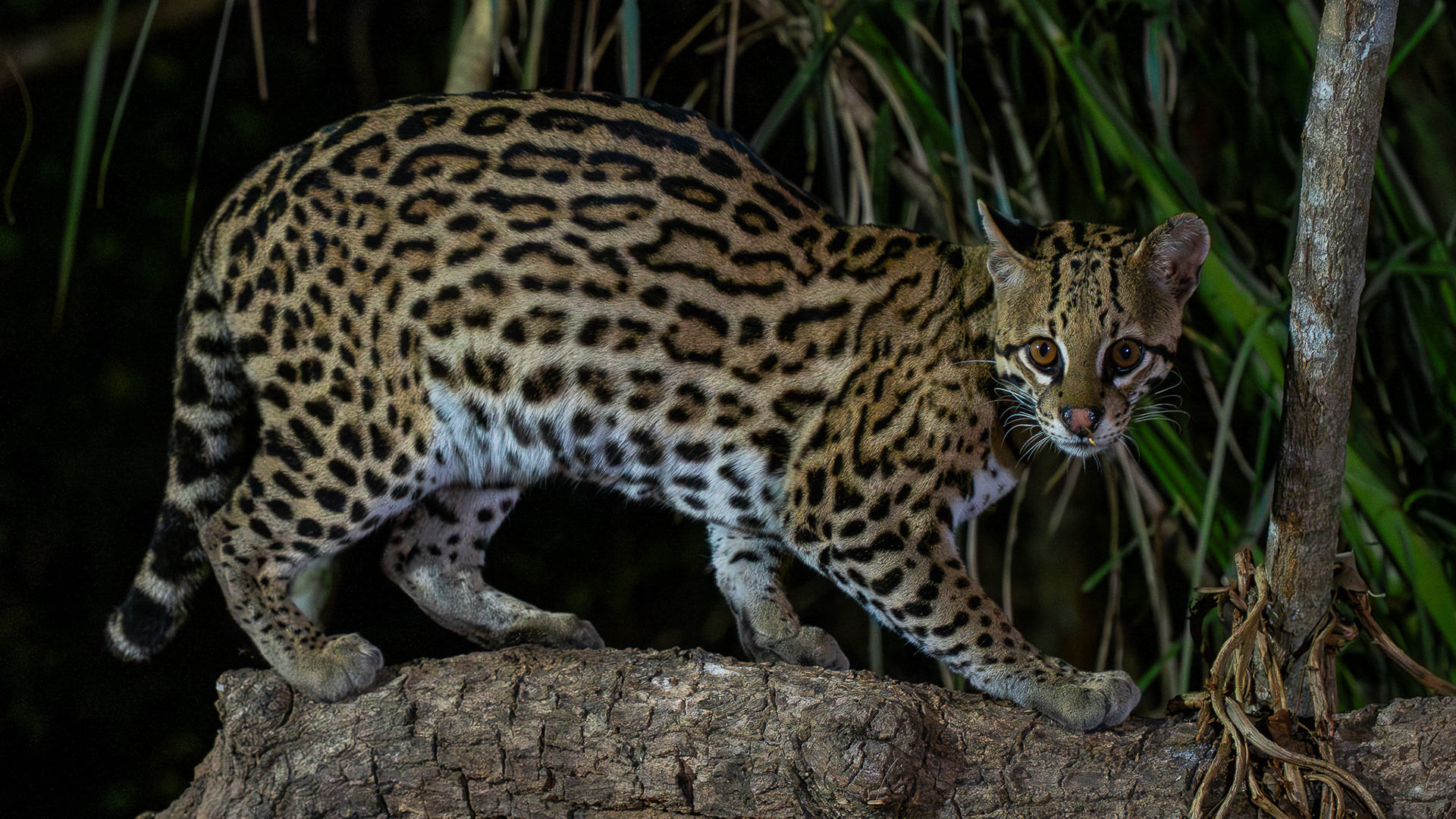
Below are a selection of my photographs taken from the hide.
^ Ocelot
The Ocelot (Leopardus pardalis) is a medium-sized wild cat found throughout the Pantanal. Recognised for its striking chain-like rosette coat, it is primarily nocturnal and extremely elusive, making it far harder to spot than many other species that inhabit the region.
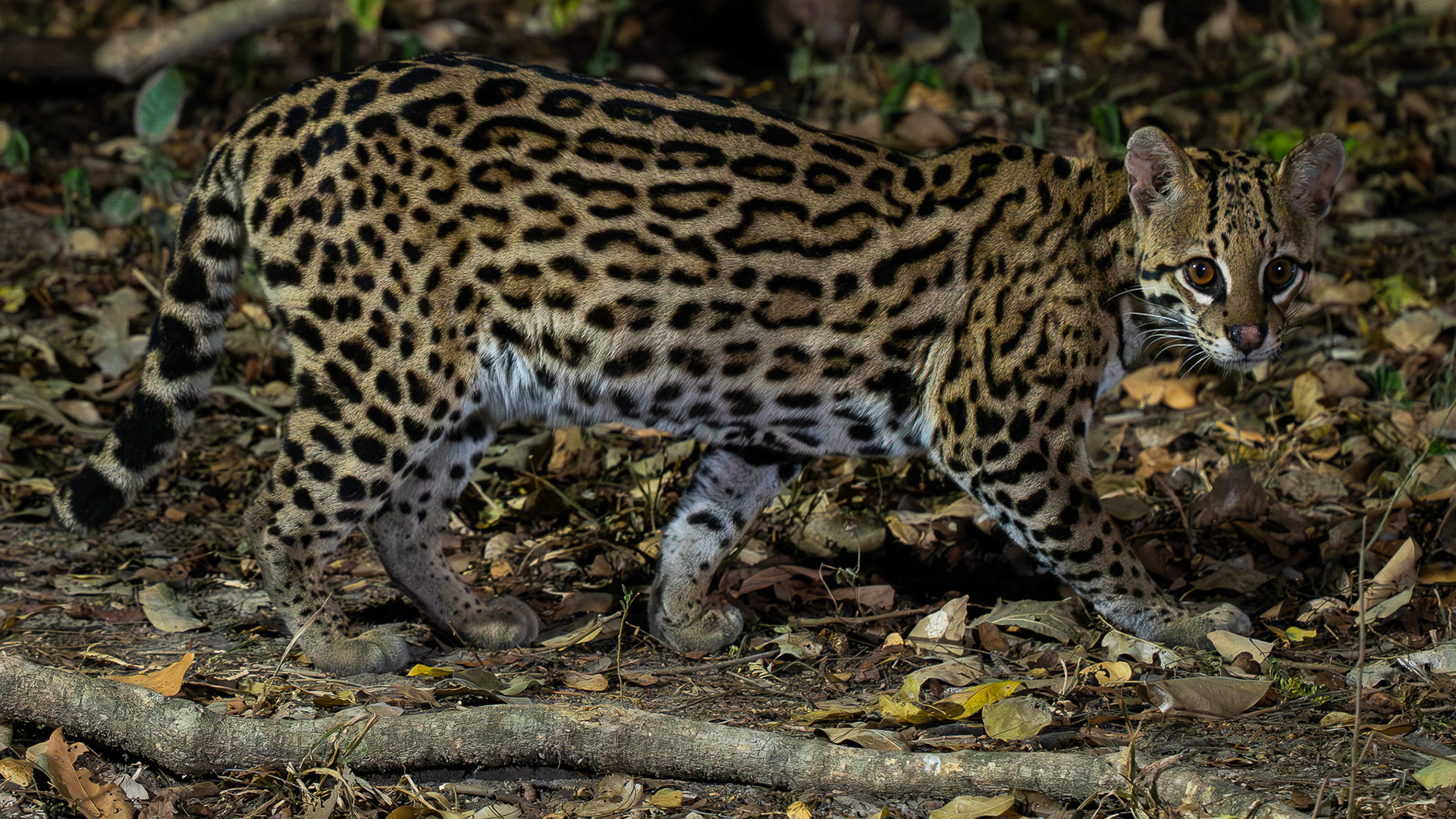
Ocelots have short, sleek fur with a rich creamy, tawny-yellow base colour. Their coats are beautifully patterned with bold black spots, streaks, and rosettes, many of which connect to form striking chain-like designs along the body. In contrast, the underbelly, inner limbs, and parts of the tail are a soft white, creating a sharp and elegant colour contrast.
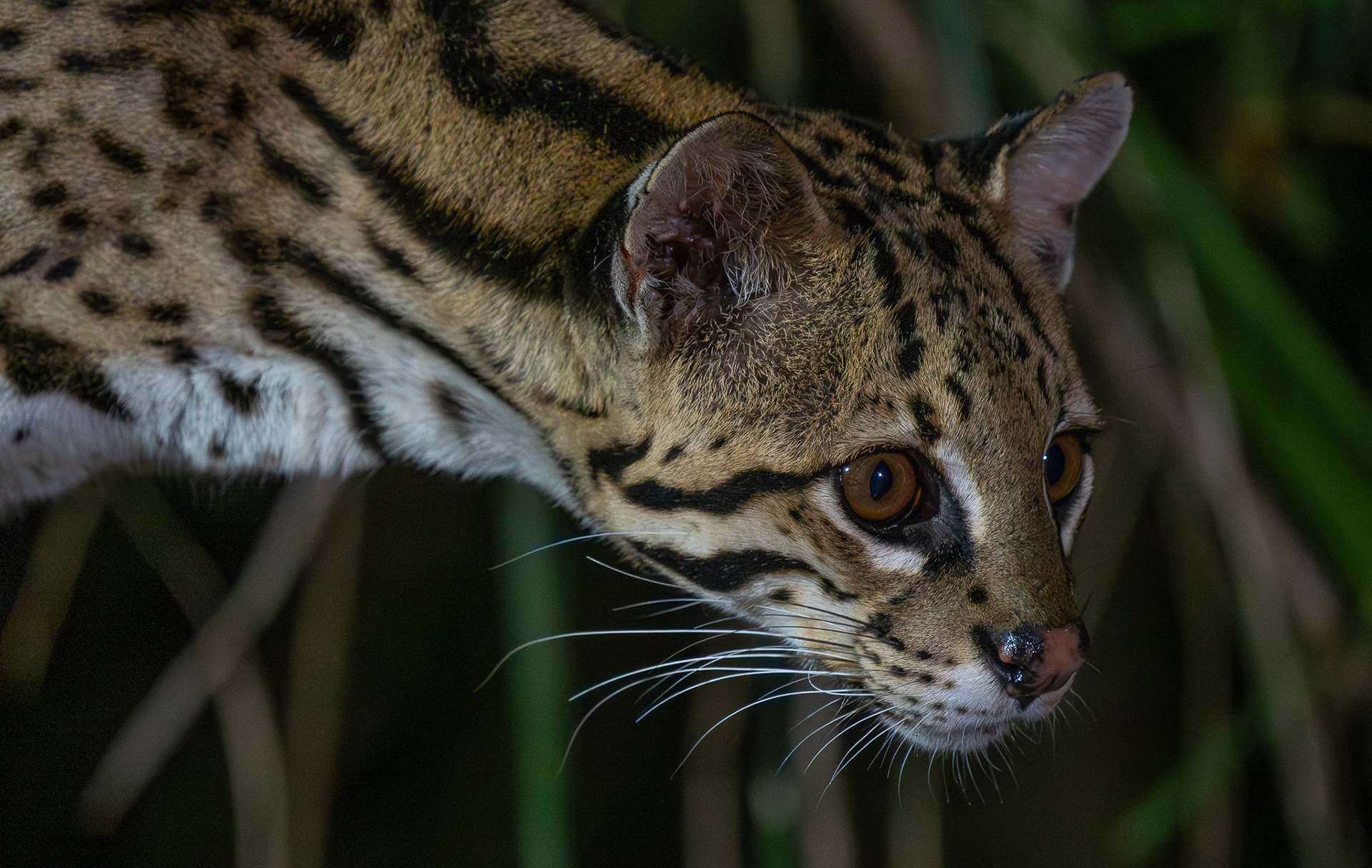
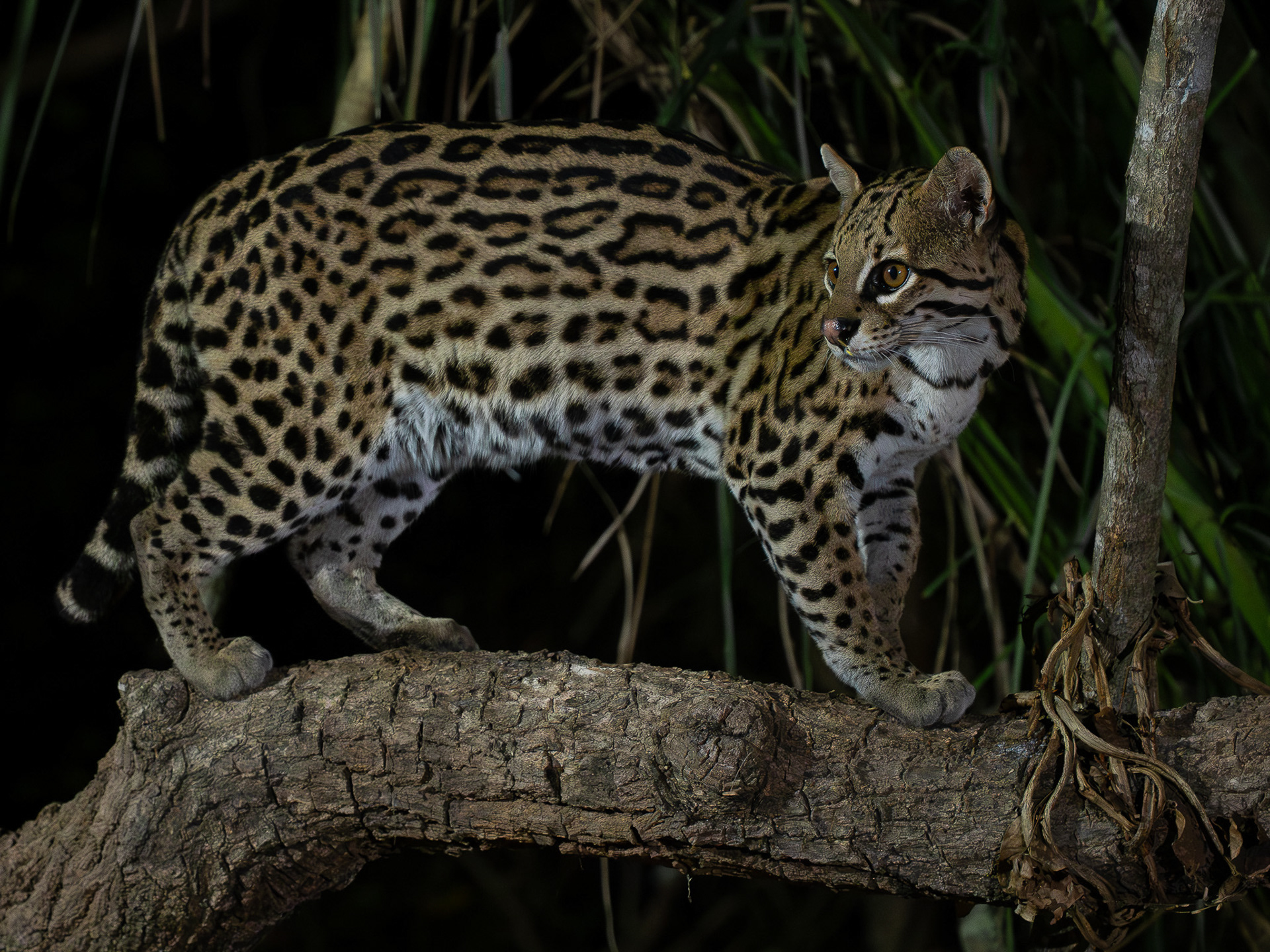
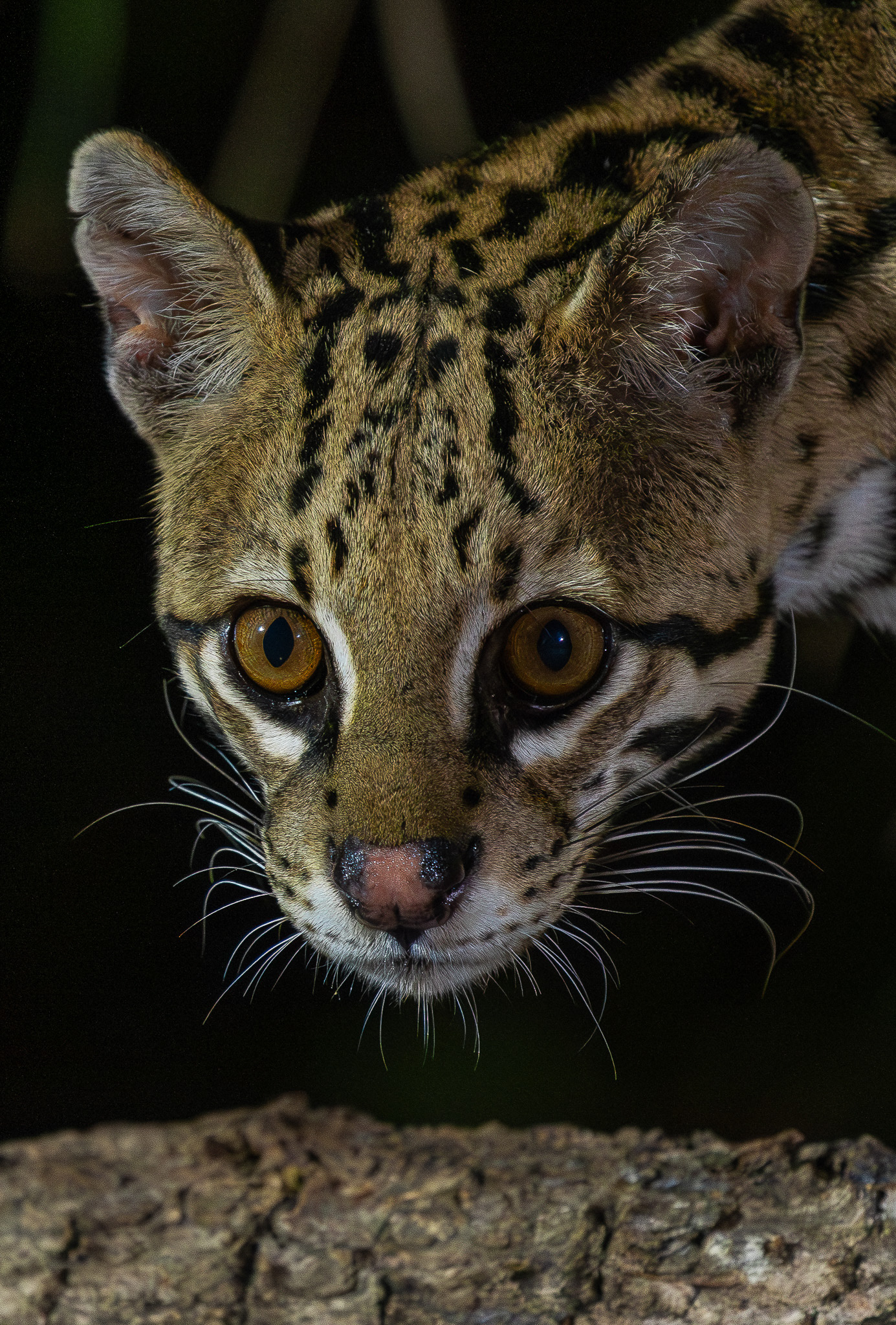
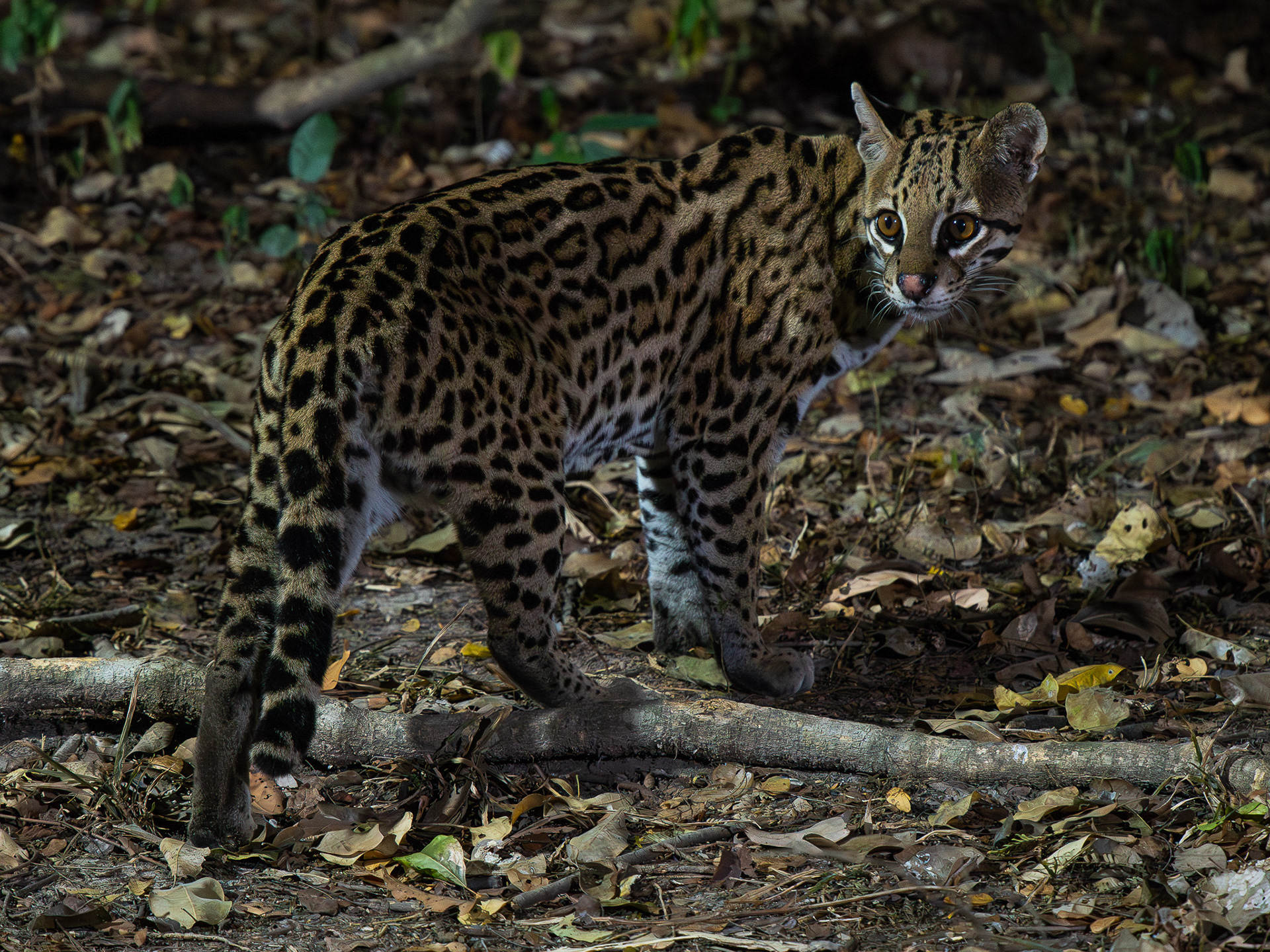
Ocelots have distinctive black stripes on each cheek and bold black-and-white lines around their eyes. These markings help break up their facial outline in the wild, providing camouflage.
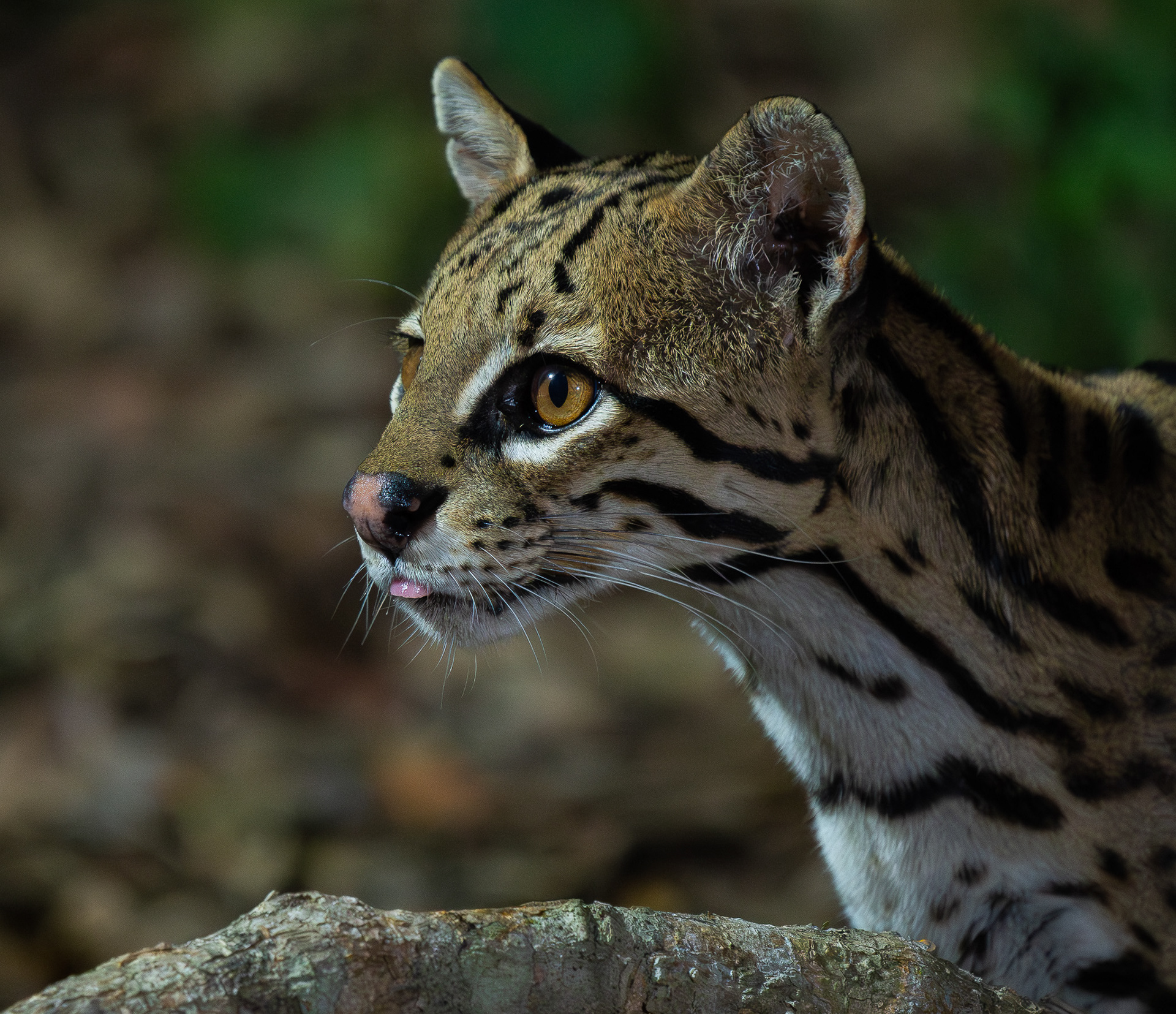
They have highly sensitive whiskers that help them sense their surroundings, especially in low light or dense vegetation. Ocelots are most active at dawn, dusk, and night, when these senses make them effective hunters.
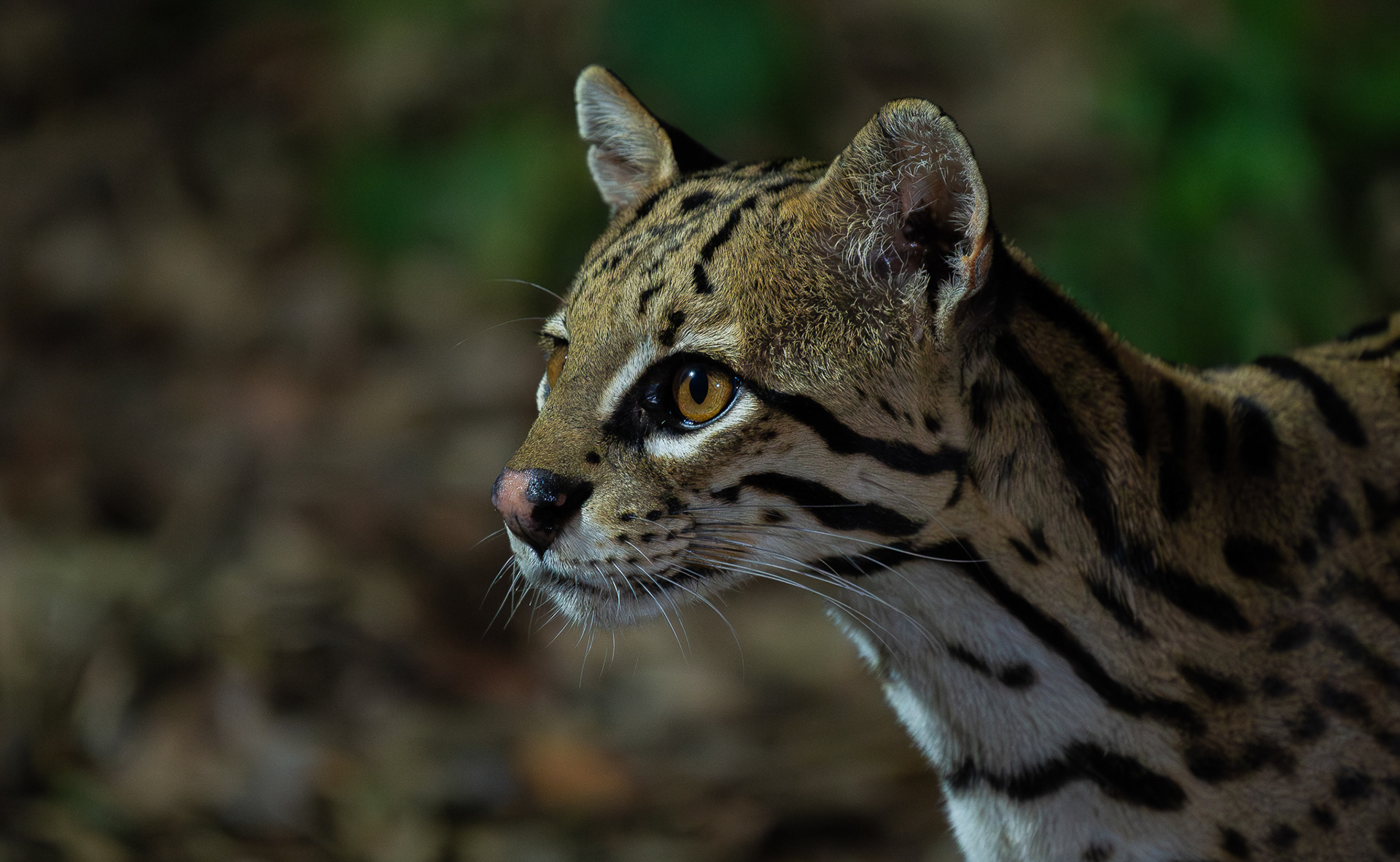
Adult Ocelots typically have dark brown eyes in natural light. Like many nocturnal predators, their eyes can reflect light due to a special layer behind the retina. When illuminated at night or under artificial light, their eyes often reflect a golden or amber hue.
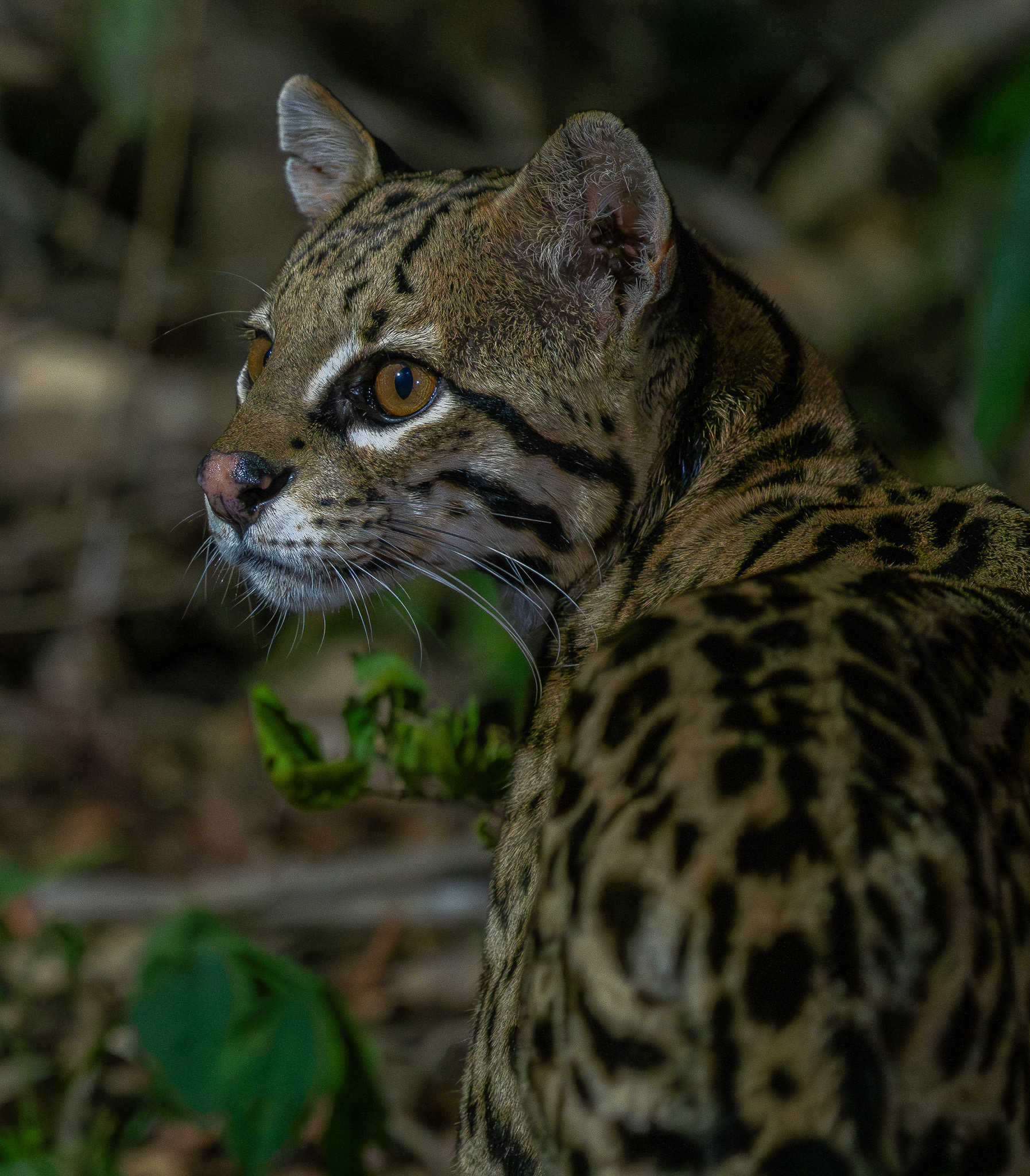
In the Pantanal, their diet consists primarily of small wild rodents, but they also hunt fish, land crabs, reptiles, and even small primates like monkeys. They are not afraid of water and are efficient swimmers, which is essential for survival in the Pantanal's seasonally flooded landscapes.
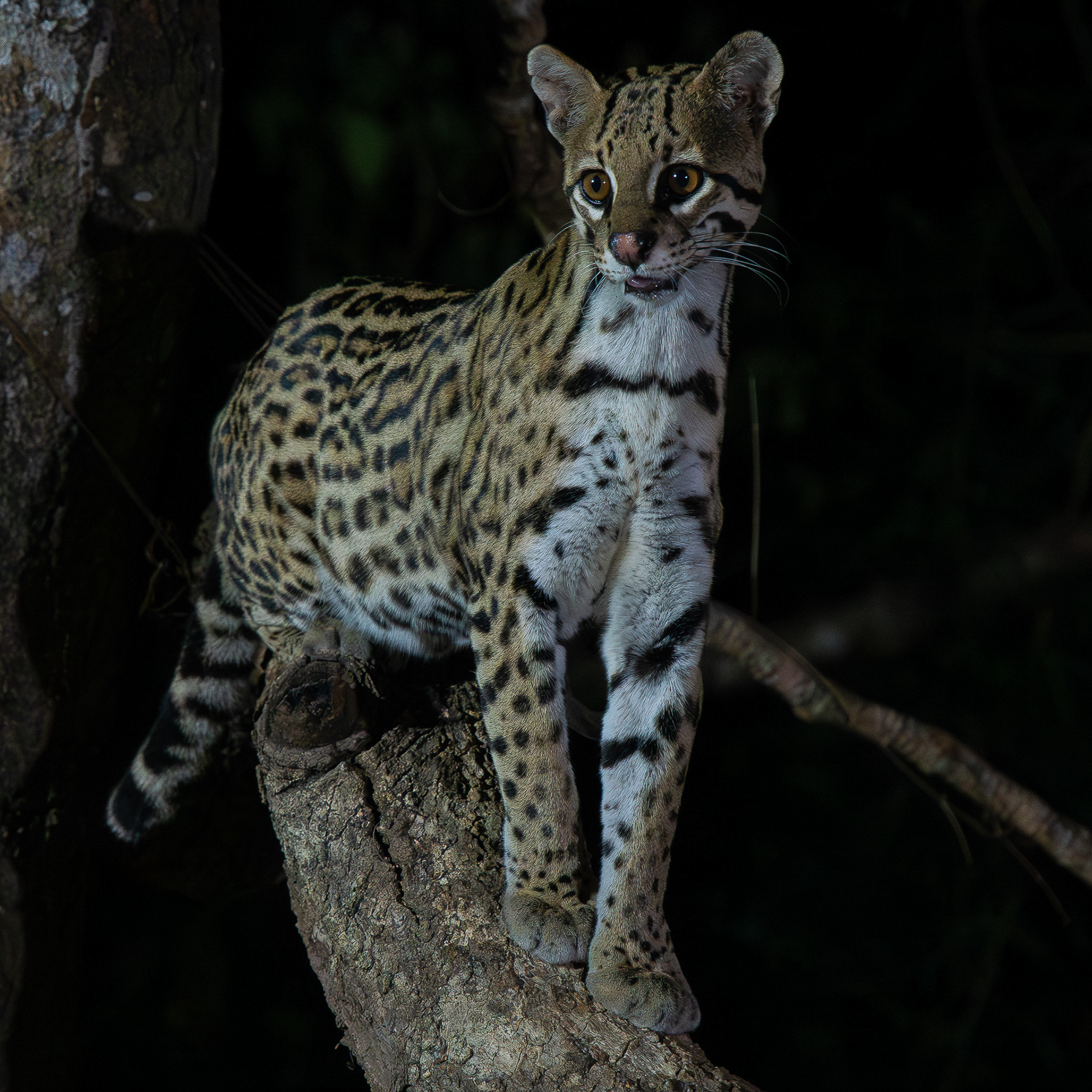
Although they spend much time hunting on the ground, Ocelots are excellent climbers, frequently using the canopy to rest, scan for prey, and navigate flooded areas. They have proportionally large paws that aid climbing and manoeuvring.
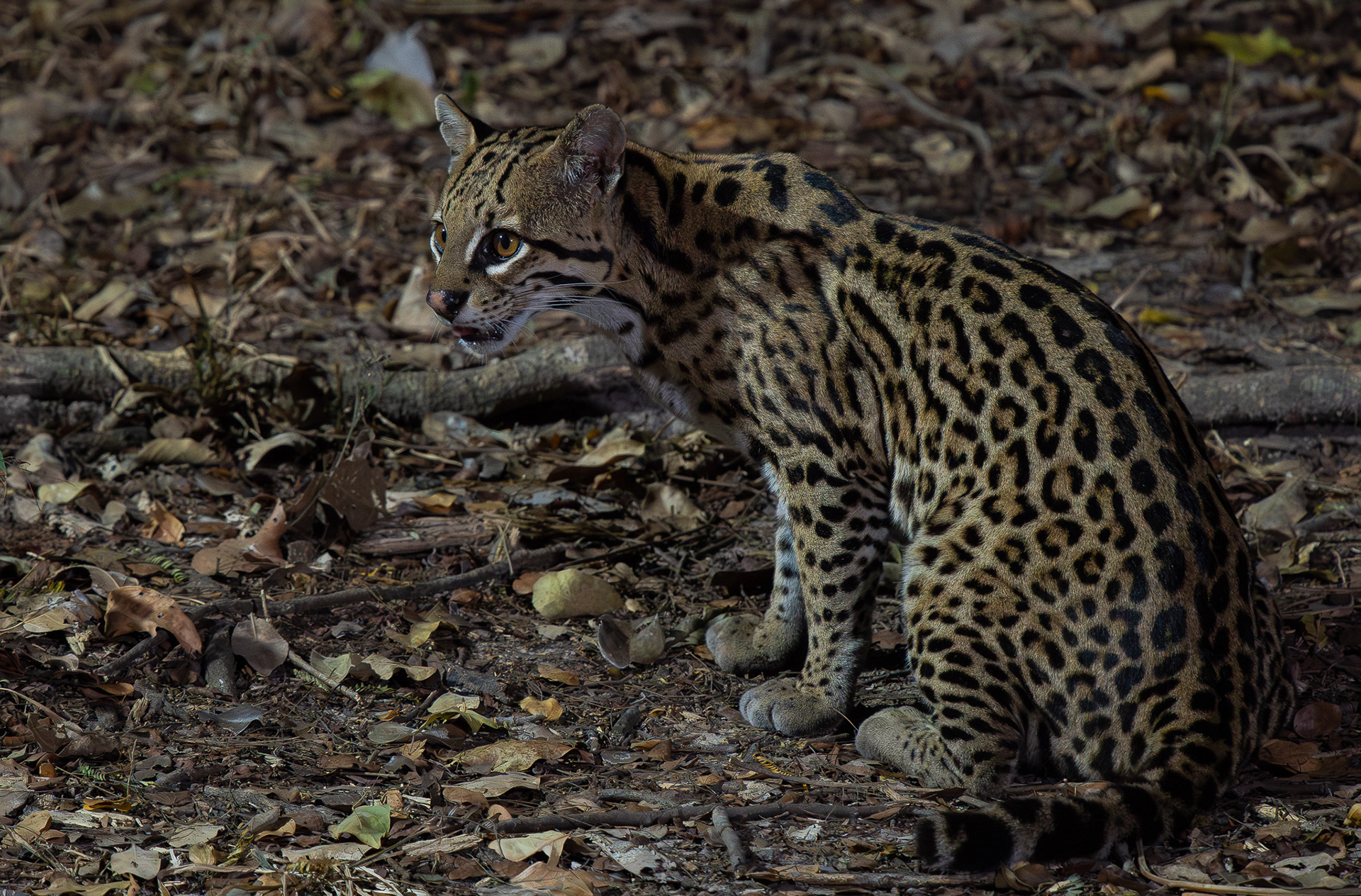
While primarily nocturnal, Ocelots are frequently active during the day when it is cloudy or rainy and are often called the 'ghost cat' due to its elusive nature. It is a master of the flooded forests and dense vegetation of the Pantanal wetlands.

The Ocelot is one of the most elusive and striking wild cats of the Americas. Seeing one in the wild, especially under spotlight at night was incredibly special.
Thank You to SouthWild Pantanal Lodge.
Photographs: ©Don Davies
We travelled to the Pantanal with Wildlife Worldwide and were accompanied by an excellent guide and naturalist, Lucila Rosales (Lucy), whose knowledge and expertise greatly added to our experience.
v Click below to view next Gallery v
v OR v