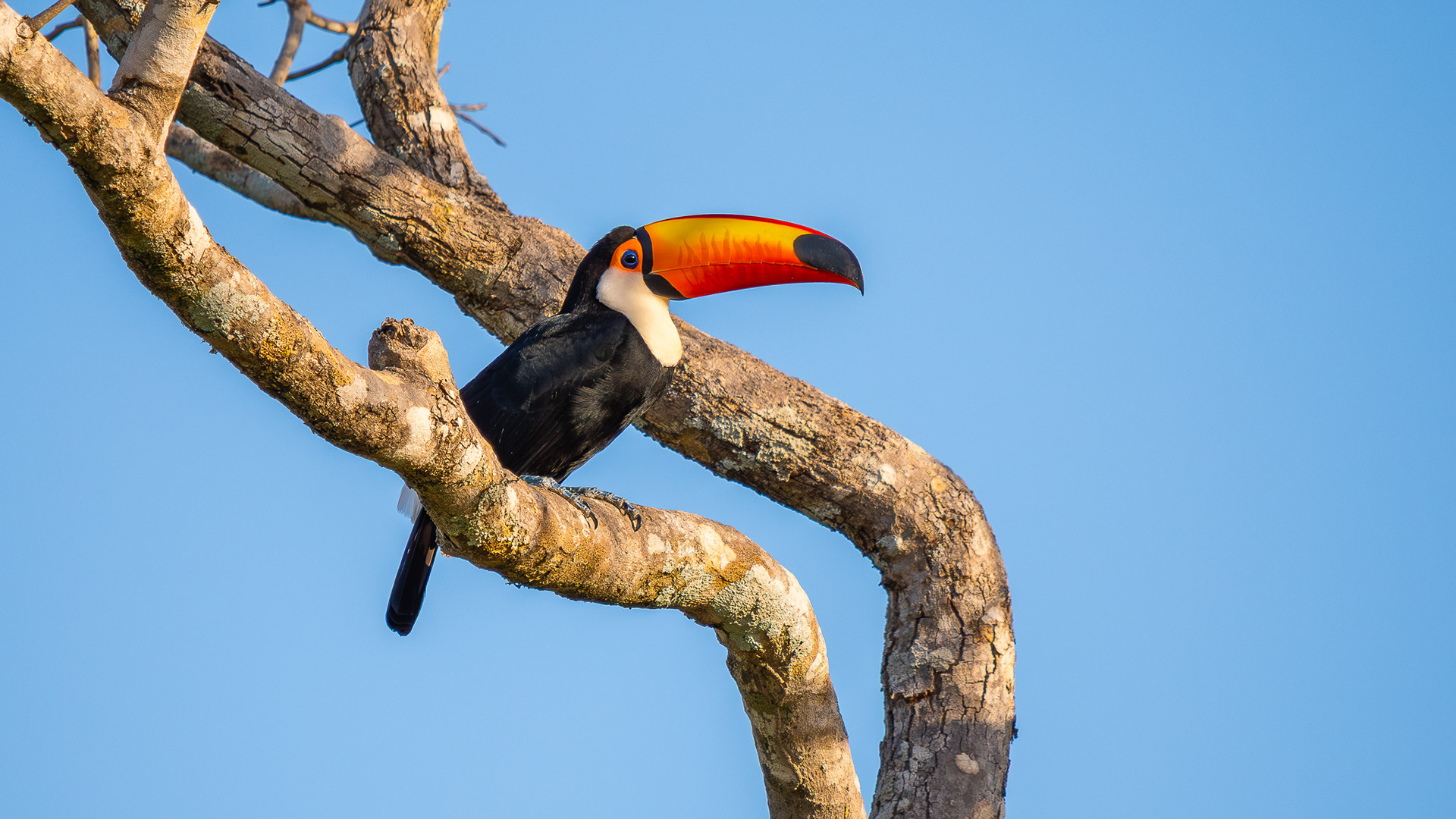
BIRDS OF THE PANTANAL (1)
Brazil - South America
The Pantanal is in the centre of South America. Spreading over a huge area of central-western Brazil, it crosses over the borders into Bolivia and Paraguay. It is the largest wetland in the world and hosts an amazing variety of birds.
The following images are of some of the birds we photographed on our trip to the Northern Pantanal in late August 2025.
^ Toco Toucan
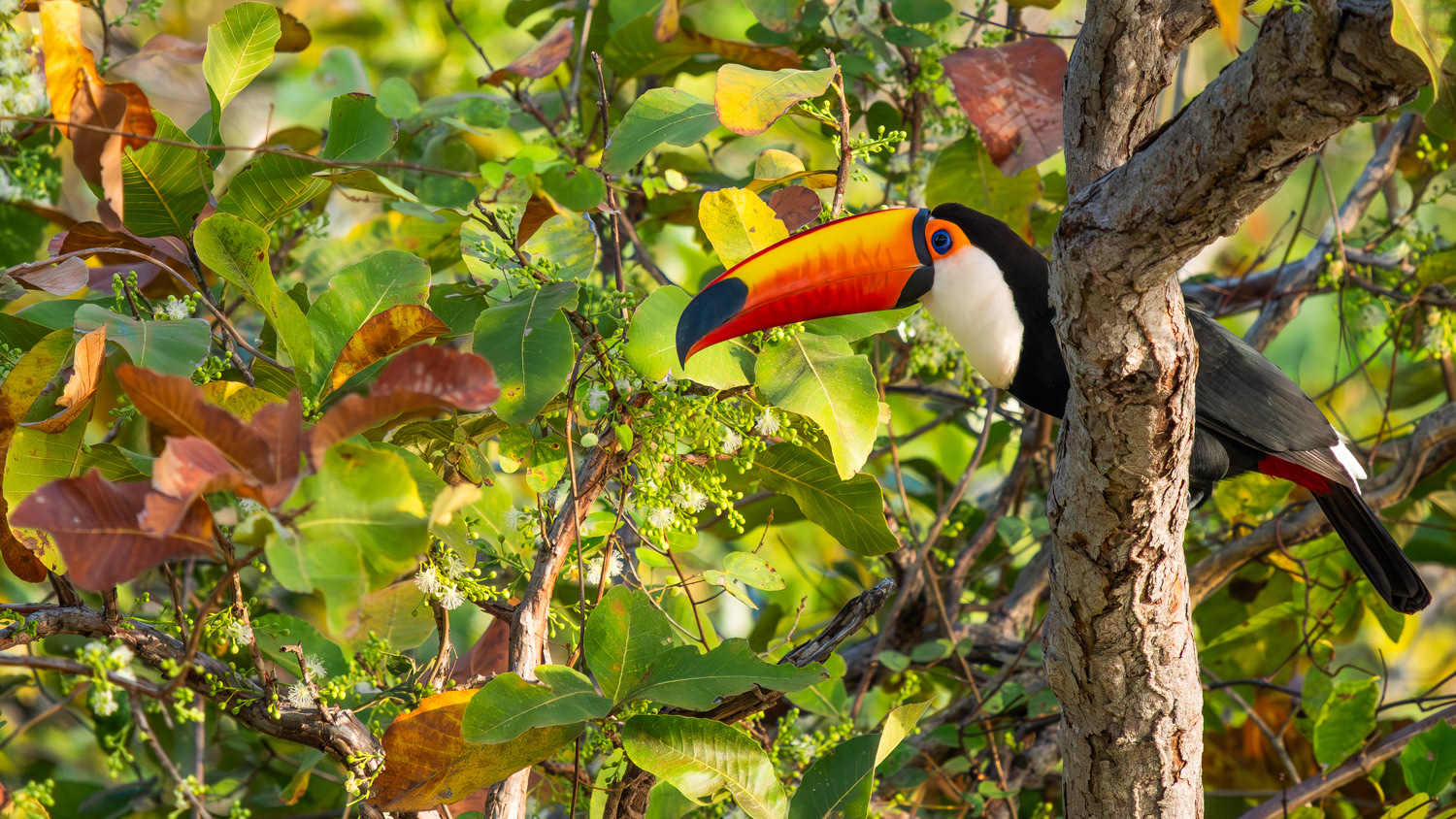
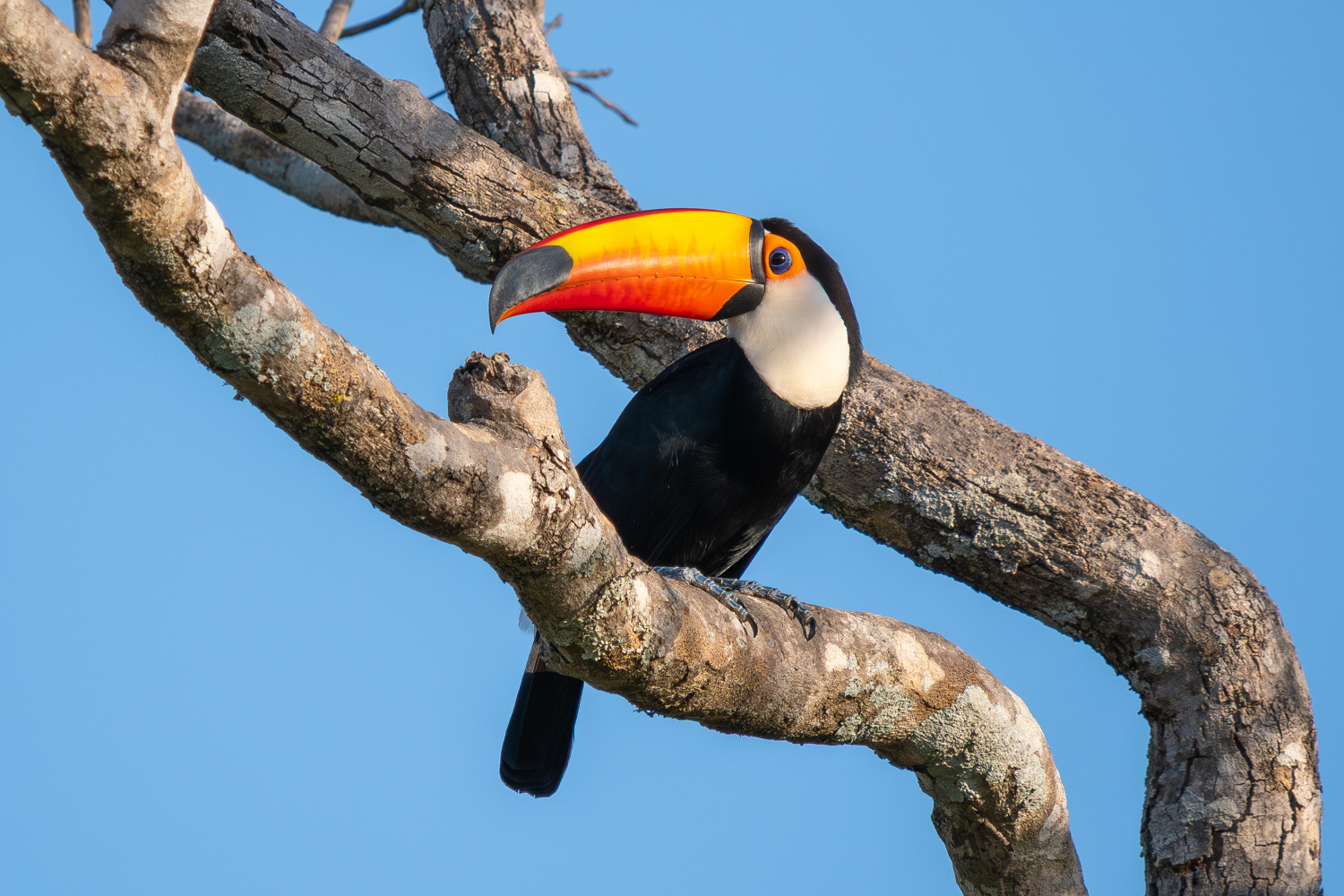
The Toco Toucan (Ramphastos toco) is the largest species of toucan and is native to South America. It can be found in countries such as Argentina, Bolivia, Peru, Paraguay and is widespread across the Pantanal wetlands and Amazon basin in Brazil.
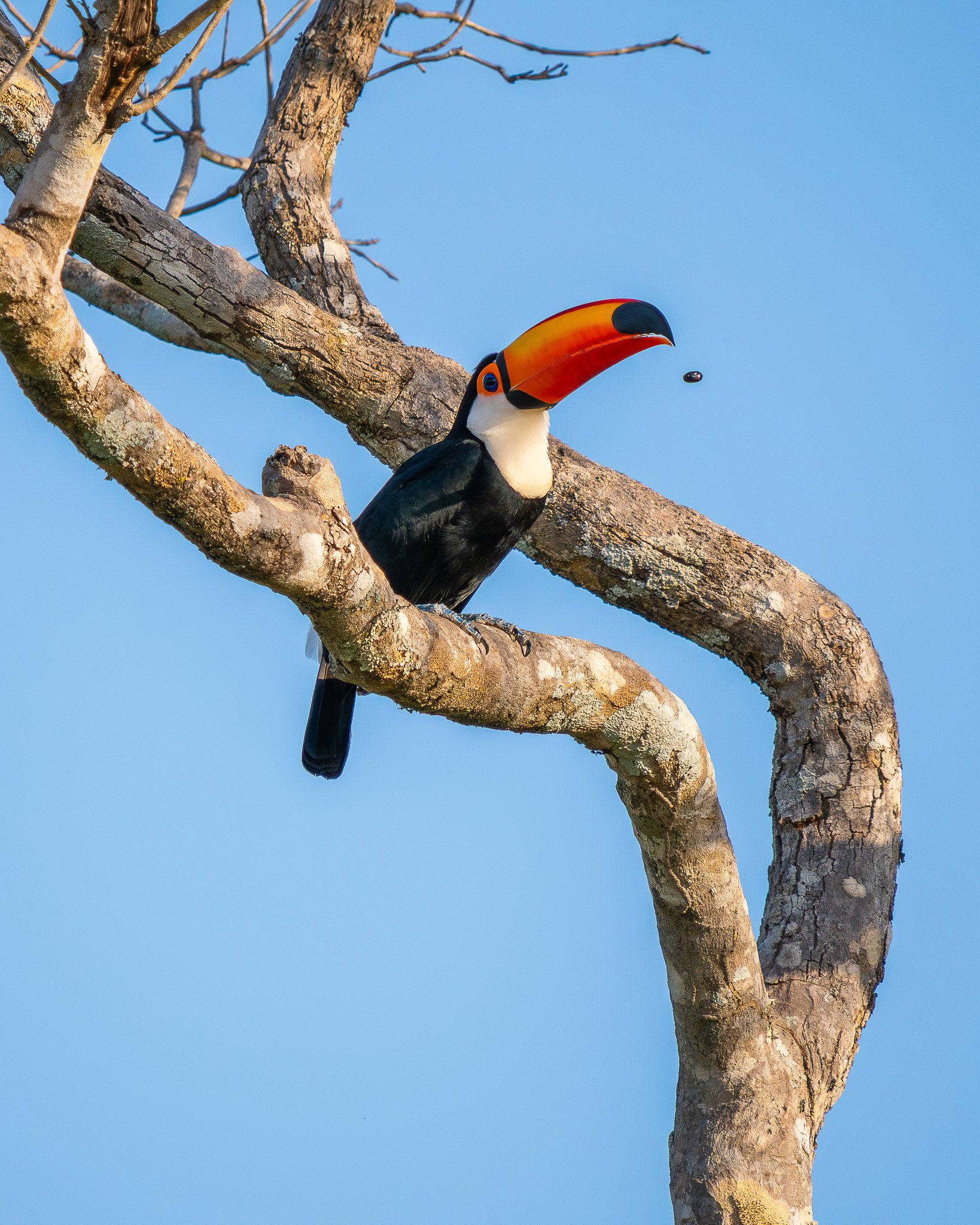
It is natural behaviour for a Toco Toucan to regurgitate and spit out seeds as part of its digestive process and it has a vital role as a seed-disperser in the rainforest.
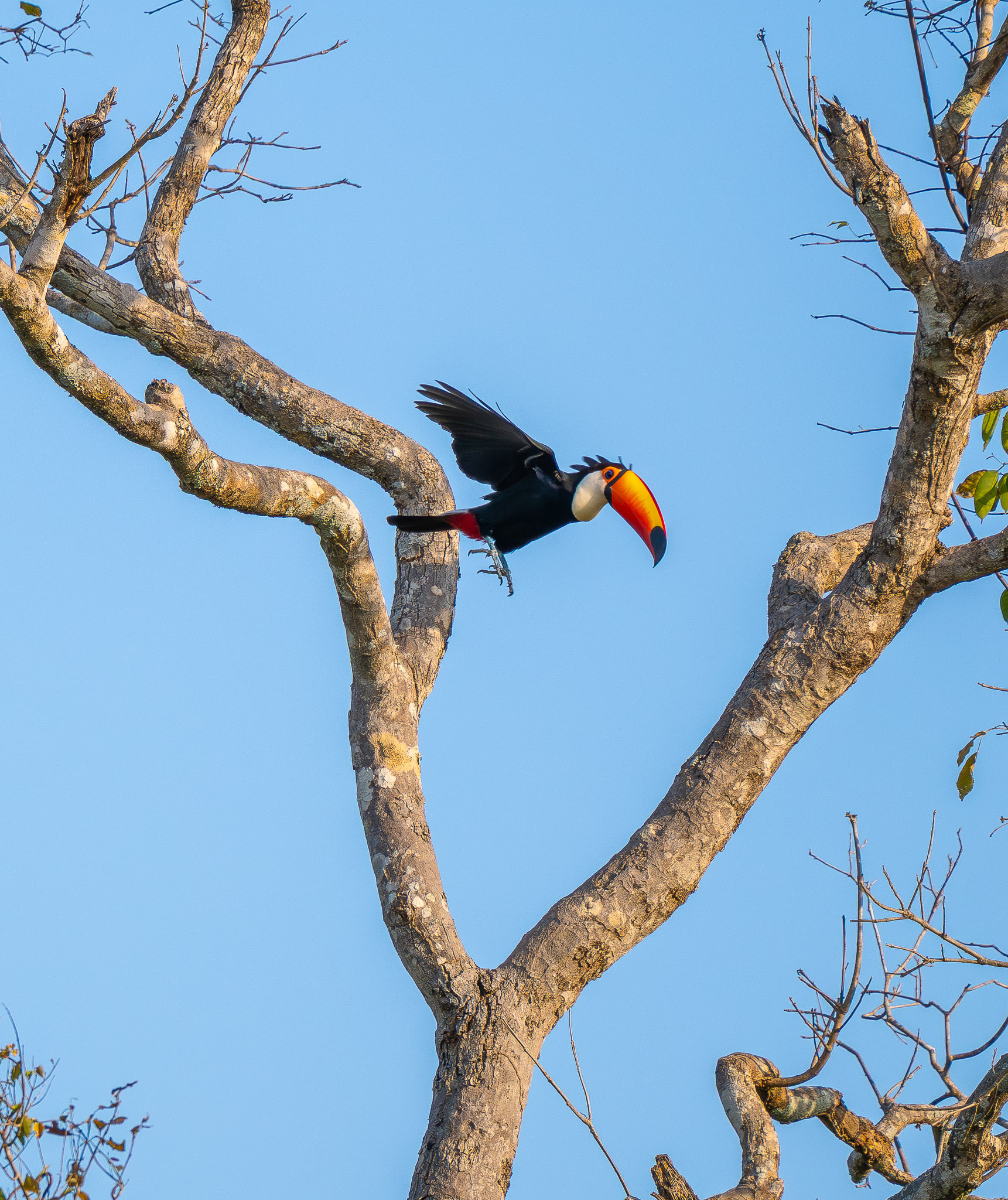
Toco Toucan leaping from a branch, briefly free-falling before gliding to the next perch. Its flights are usually short, alternating between strong wingbeats and smooth glides.
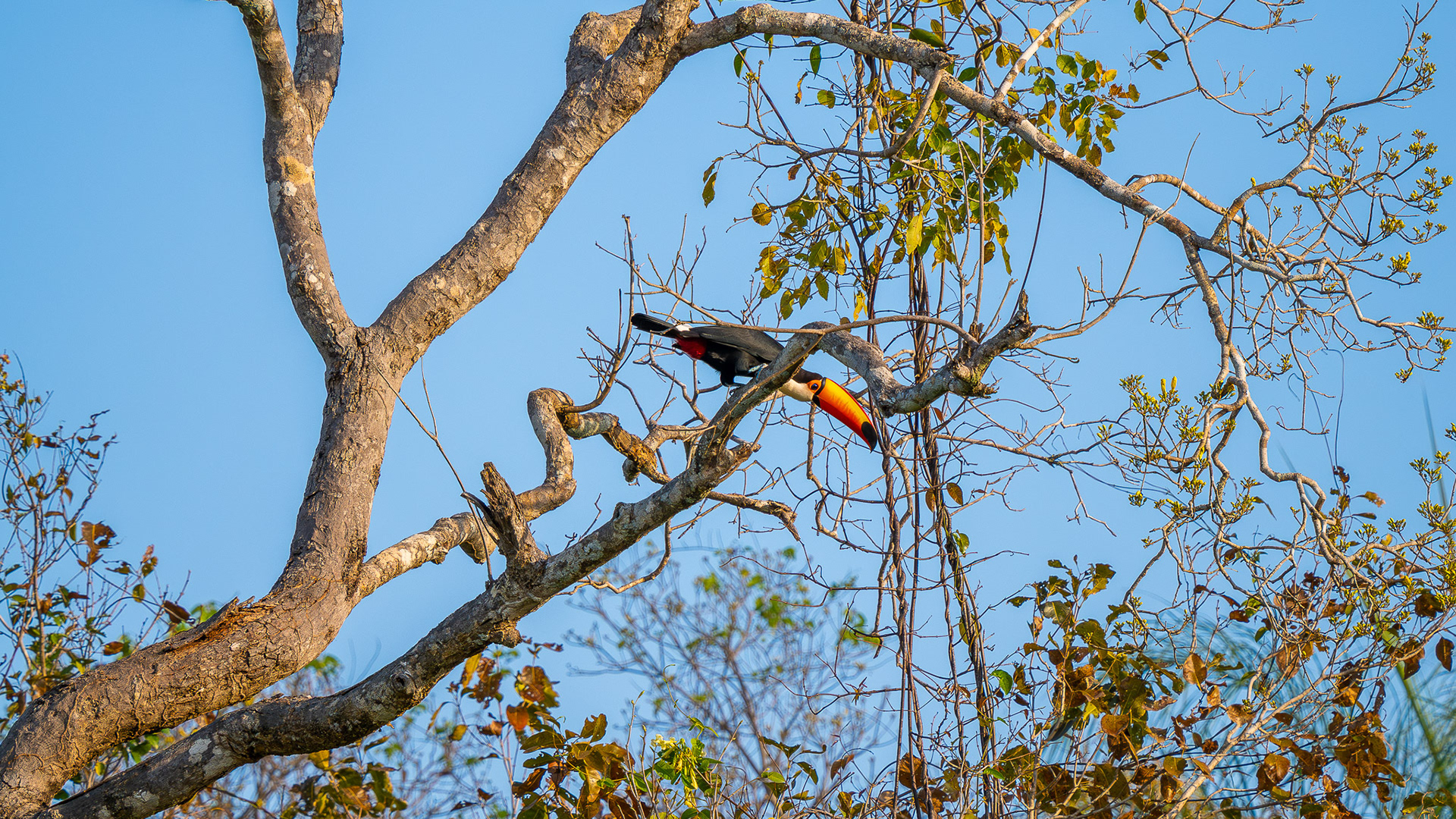
Toucans have strong legs with specialised toes (two forward and two backward) which allow them to grip branches securely and move with balance and ease. They generally hop between branches in the forest canopy and when foraging on the ground.
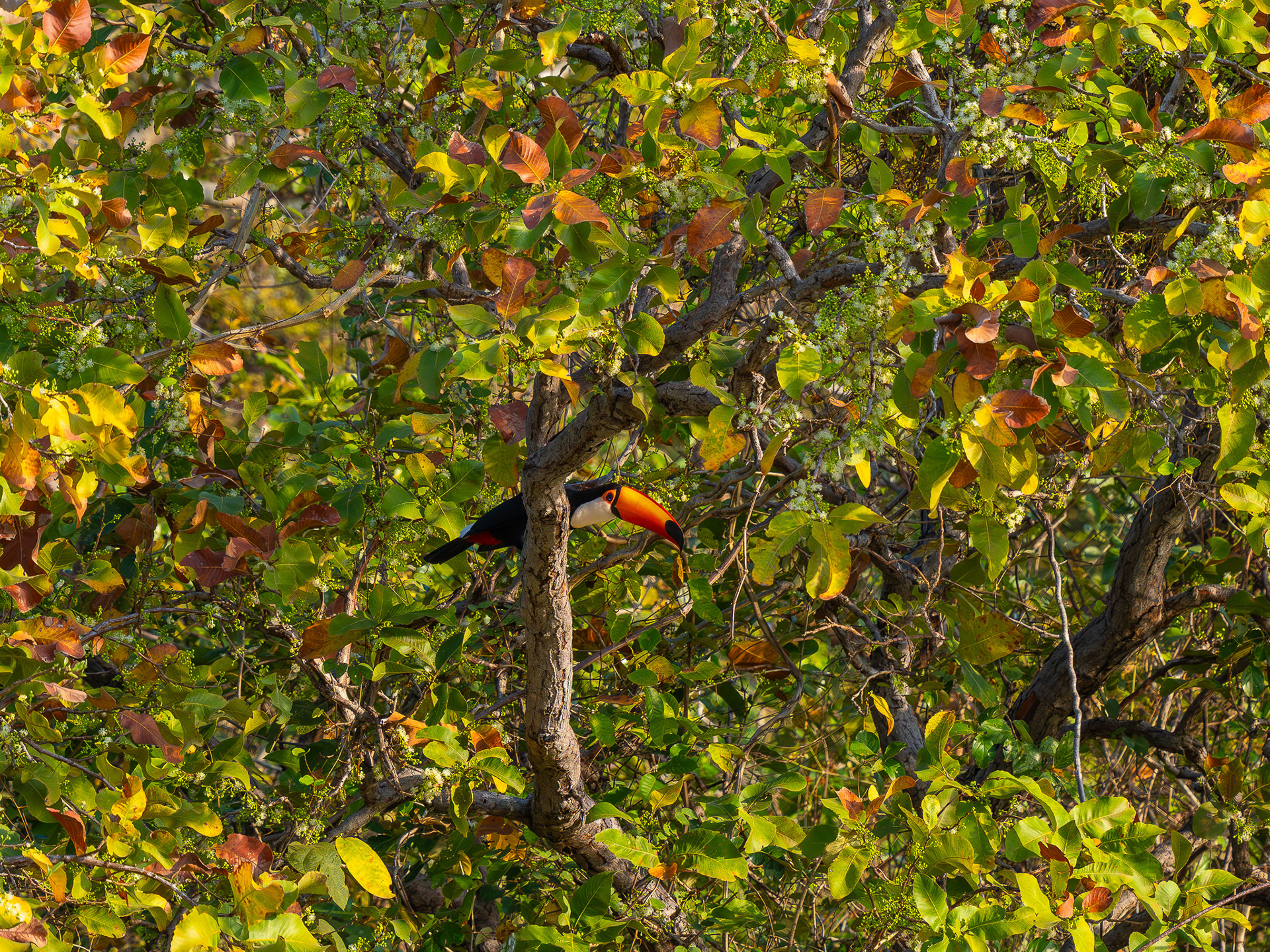
Despite its orange-yellow beak with a black tip, it is surprisingly effective for camouflage in the dim, filtered light of the canopy. The bright colours disrupt the bird's shape, helping it to blend into its surroundings.
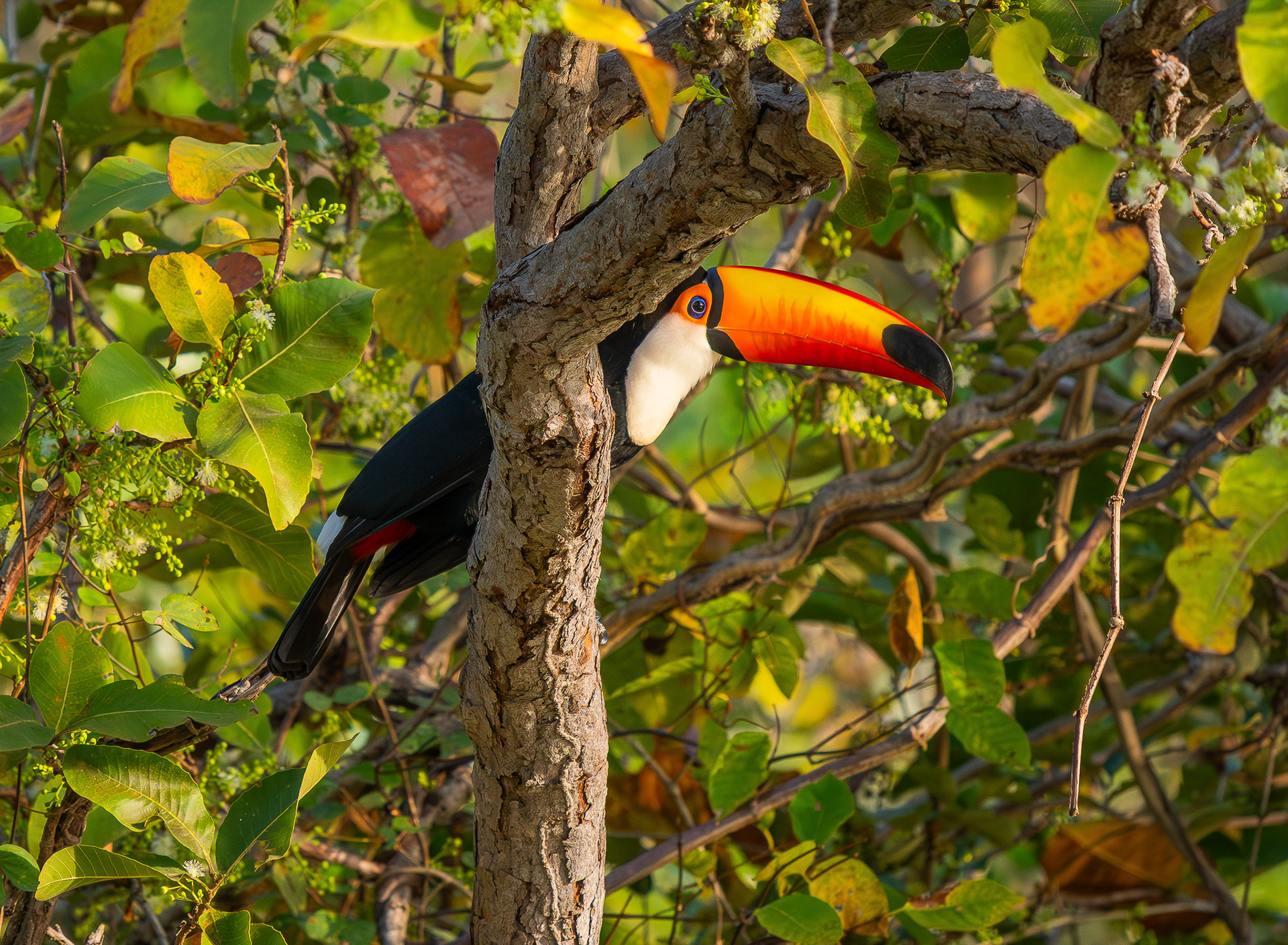
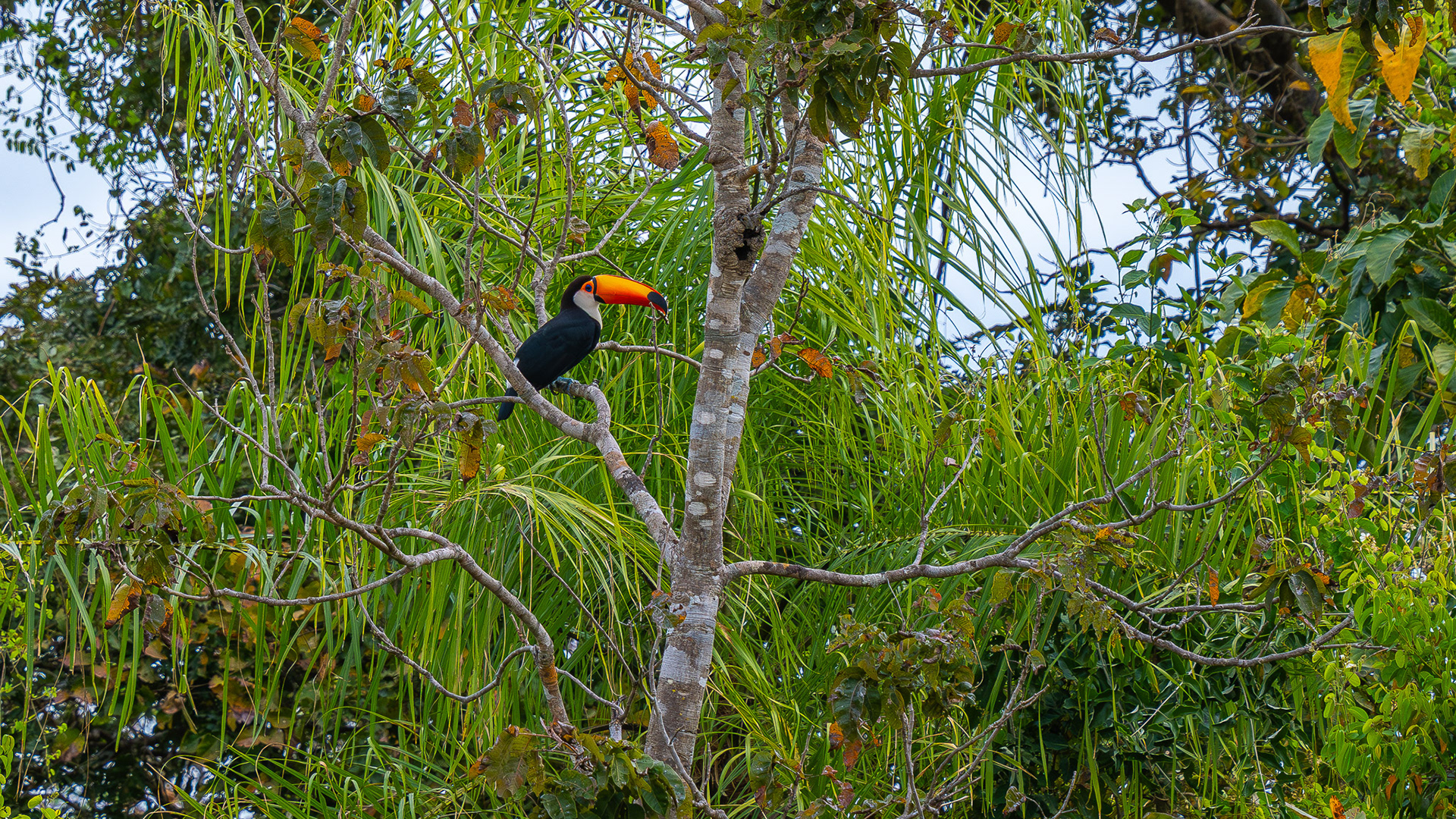
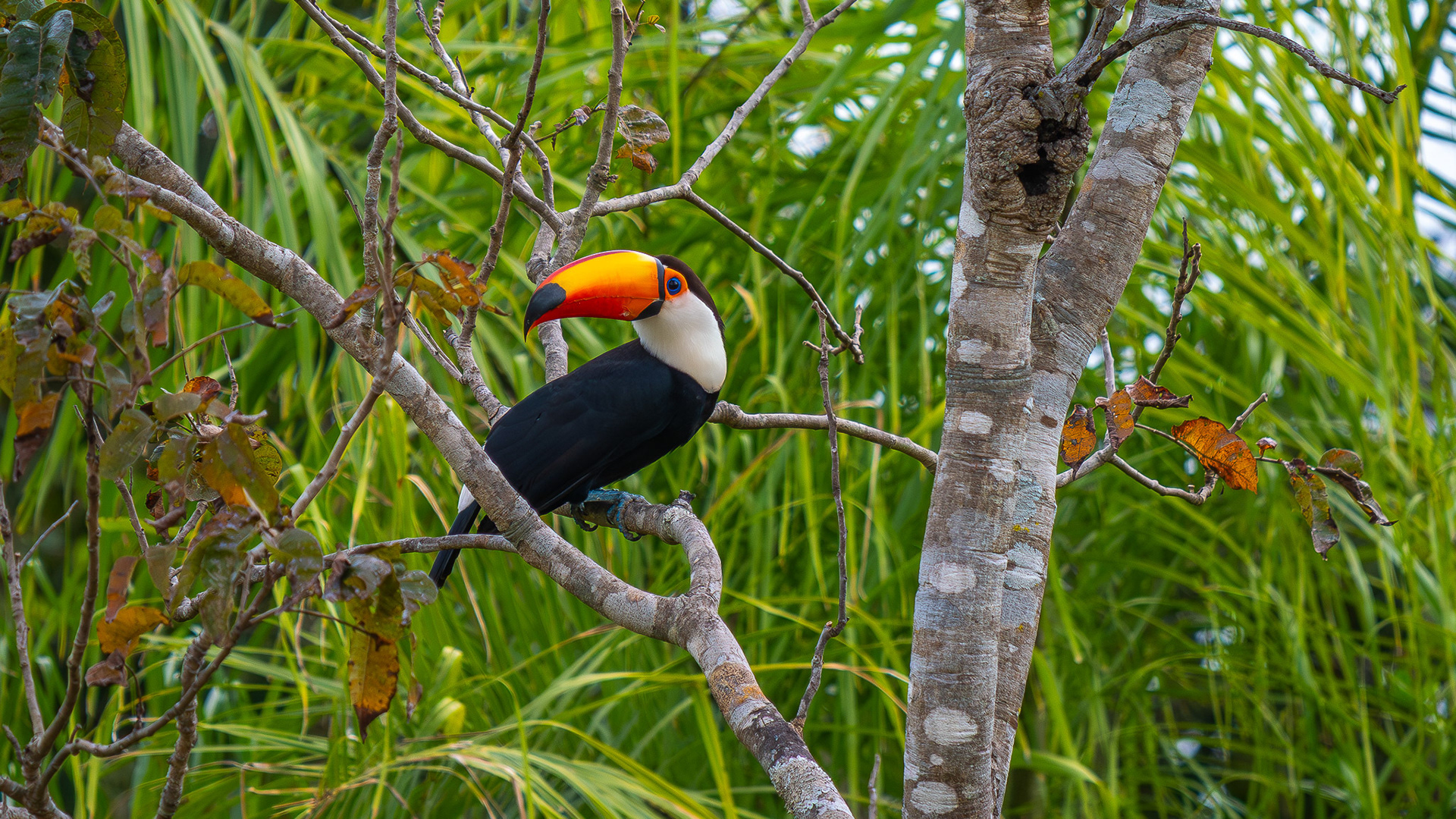
The Toco Toucan has a large but lightweight bill made of hollow keratin that helps it in many ways. It allows the bird to reach fruit on high branches and catch insects and small animals. Blood vessels near the surface of its bill also help the it to stay cool by releasing heat in warm weather.
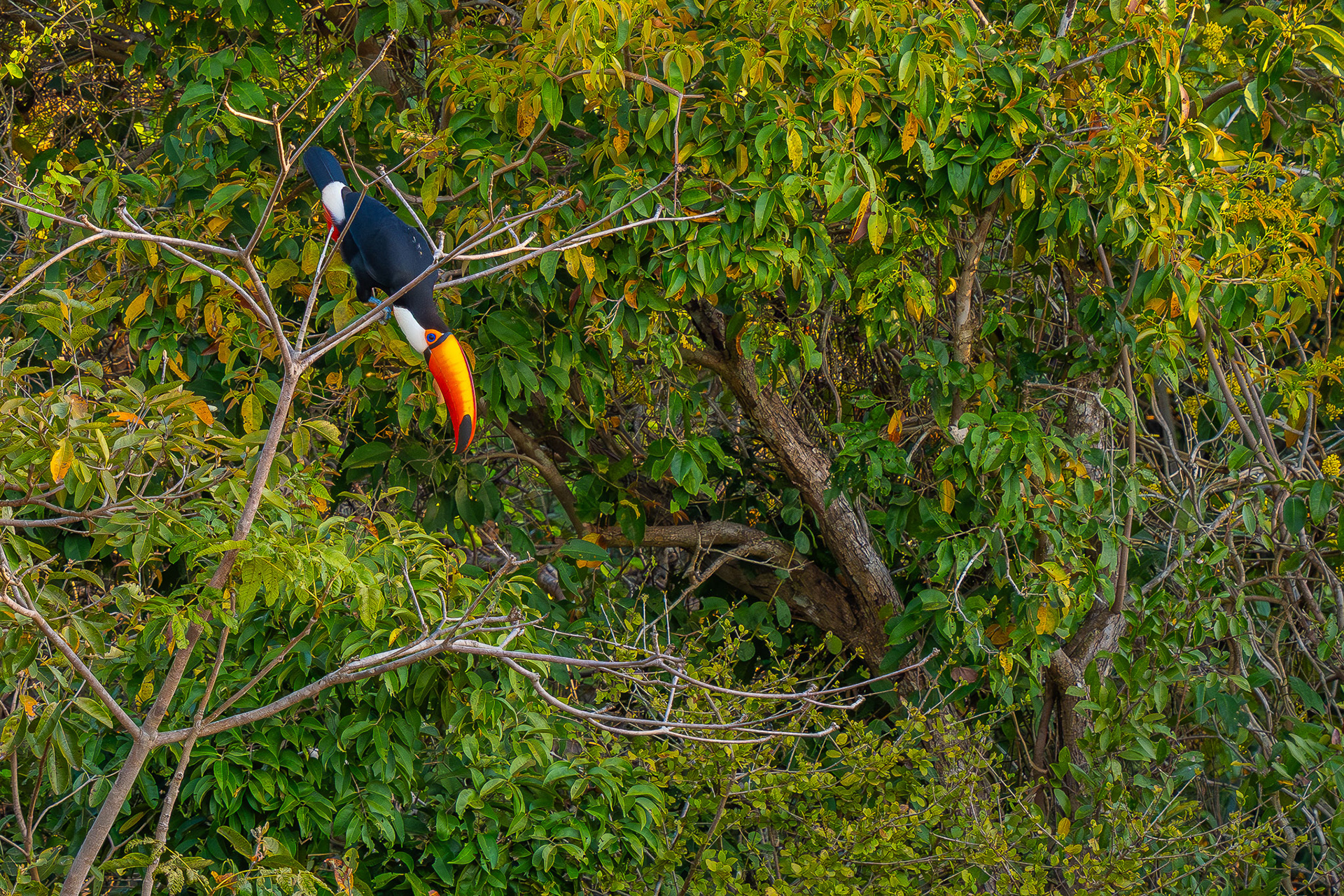
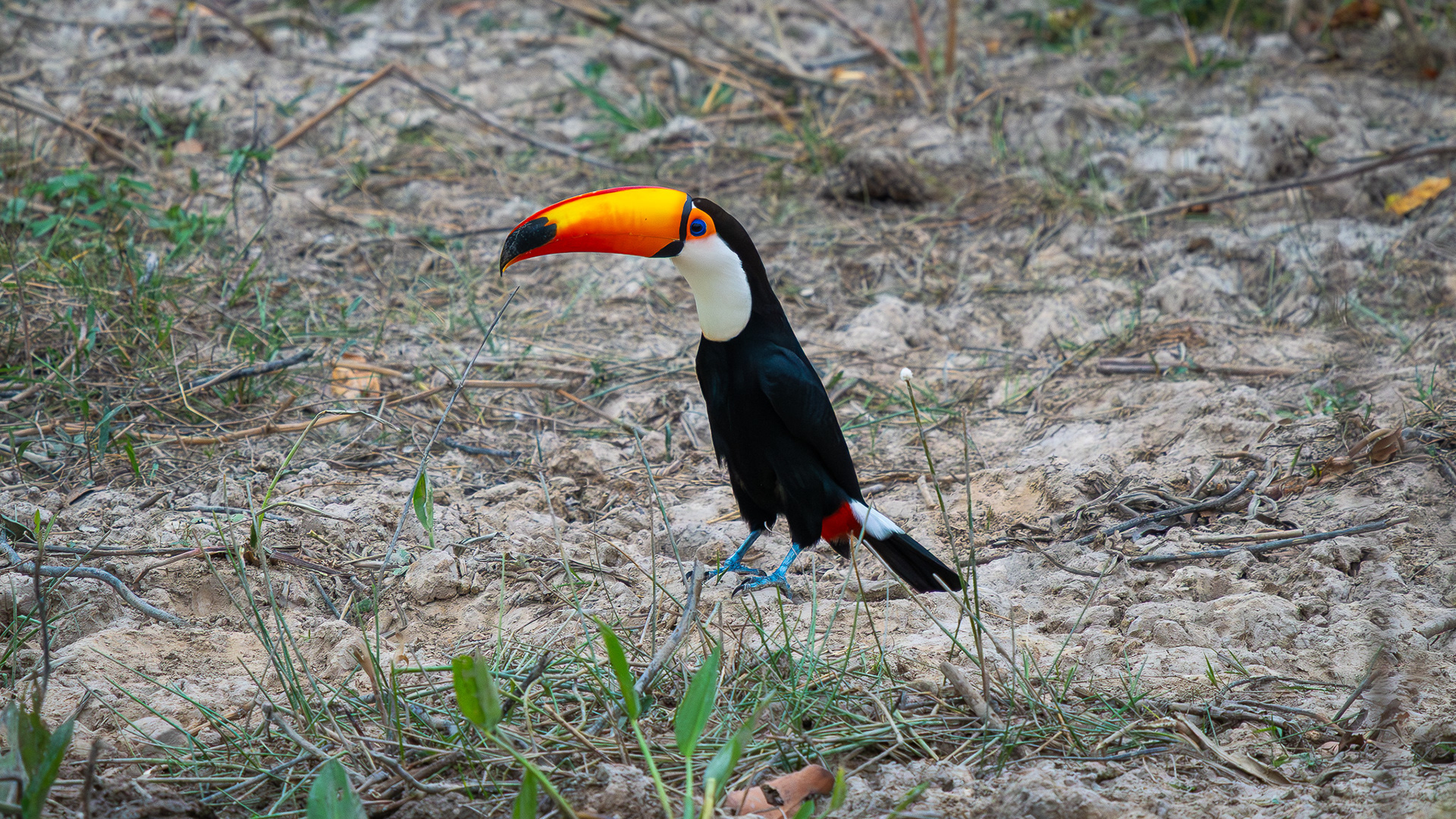
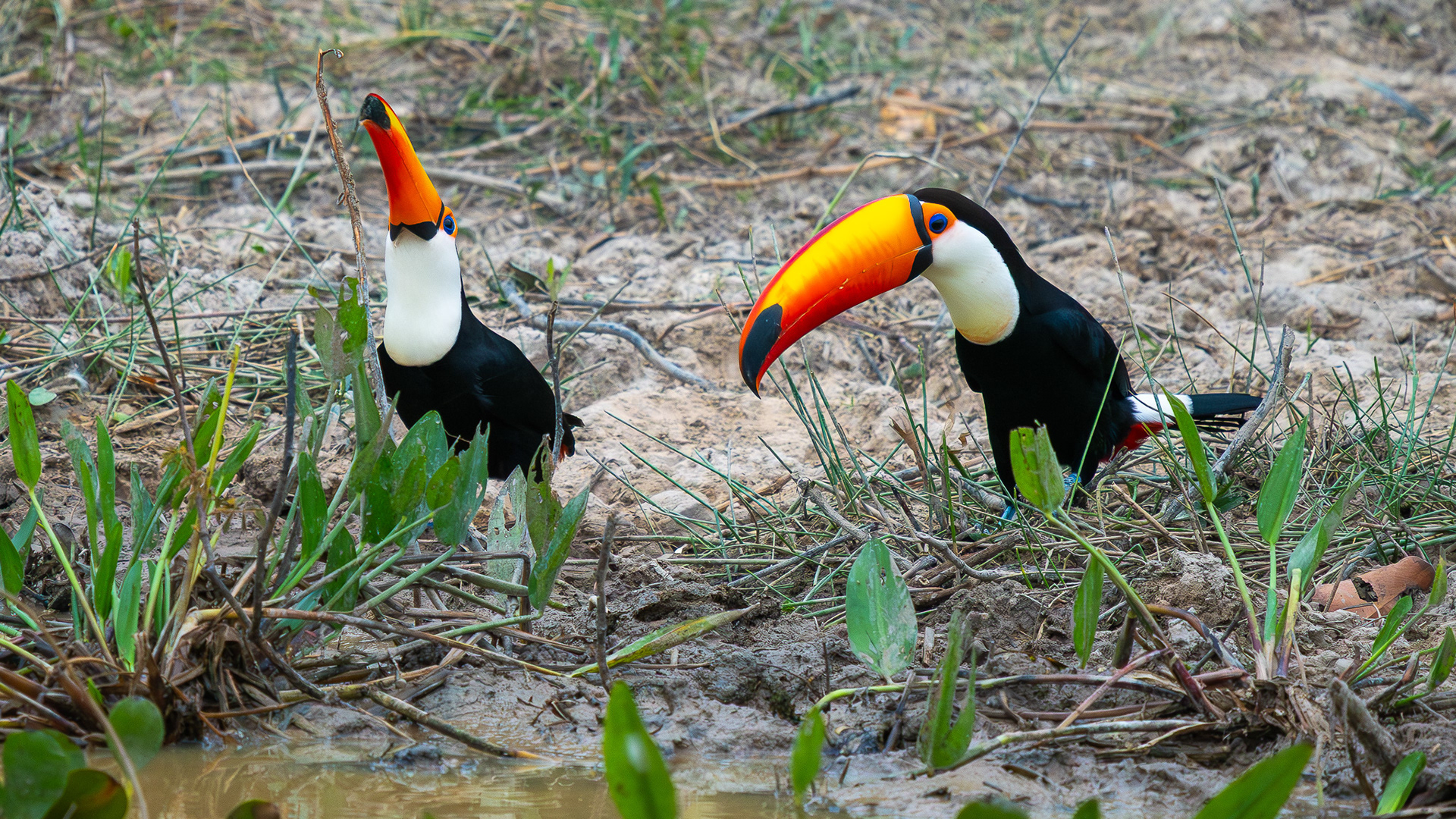
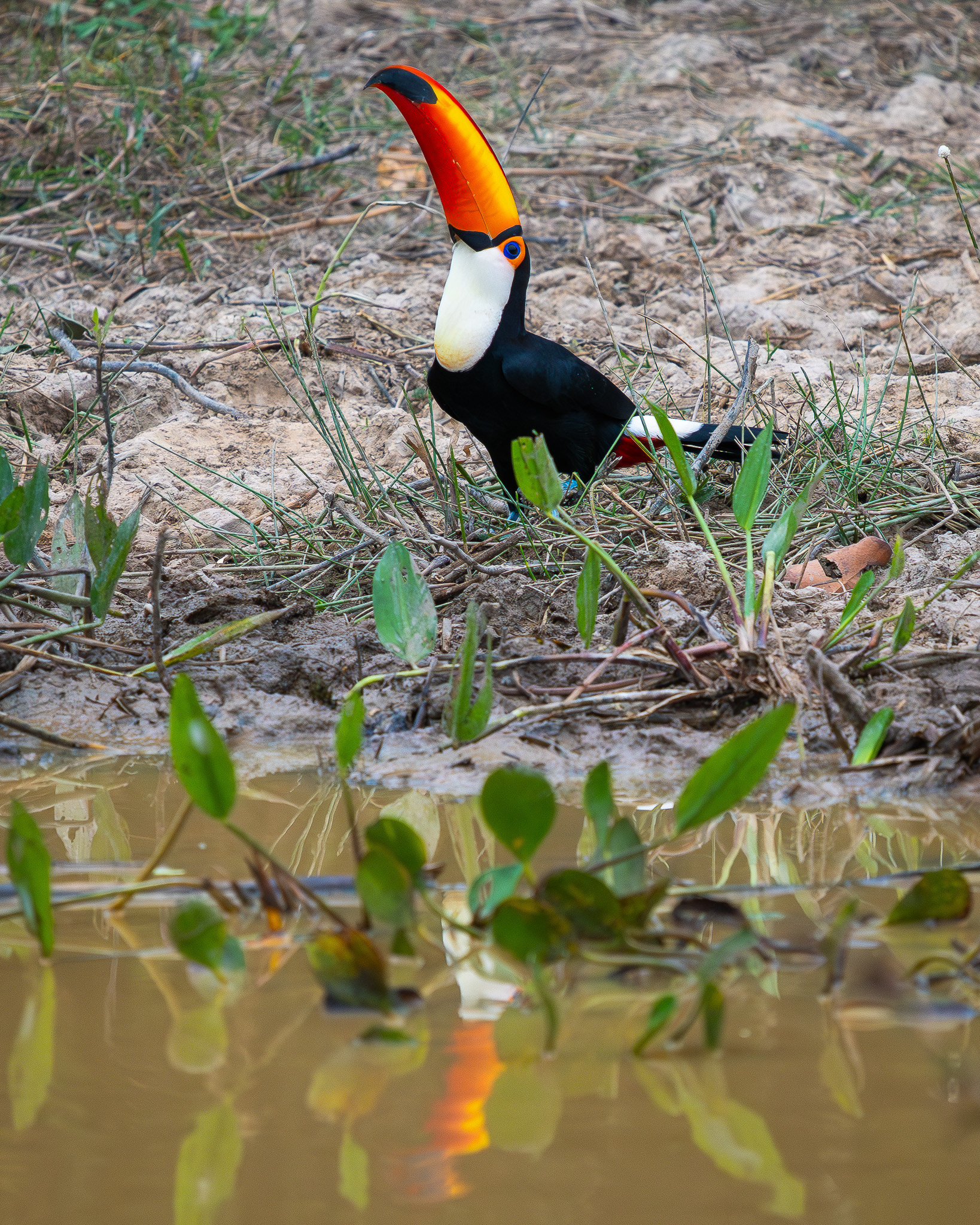
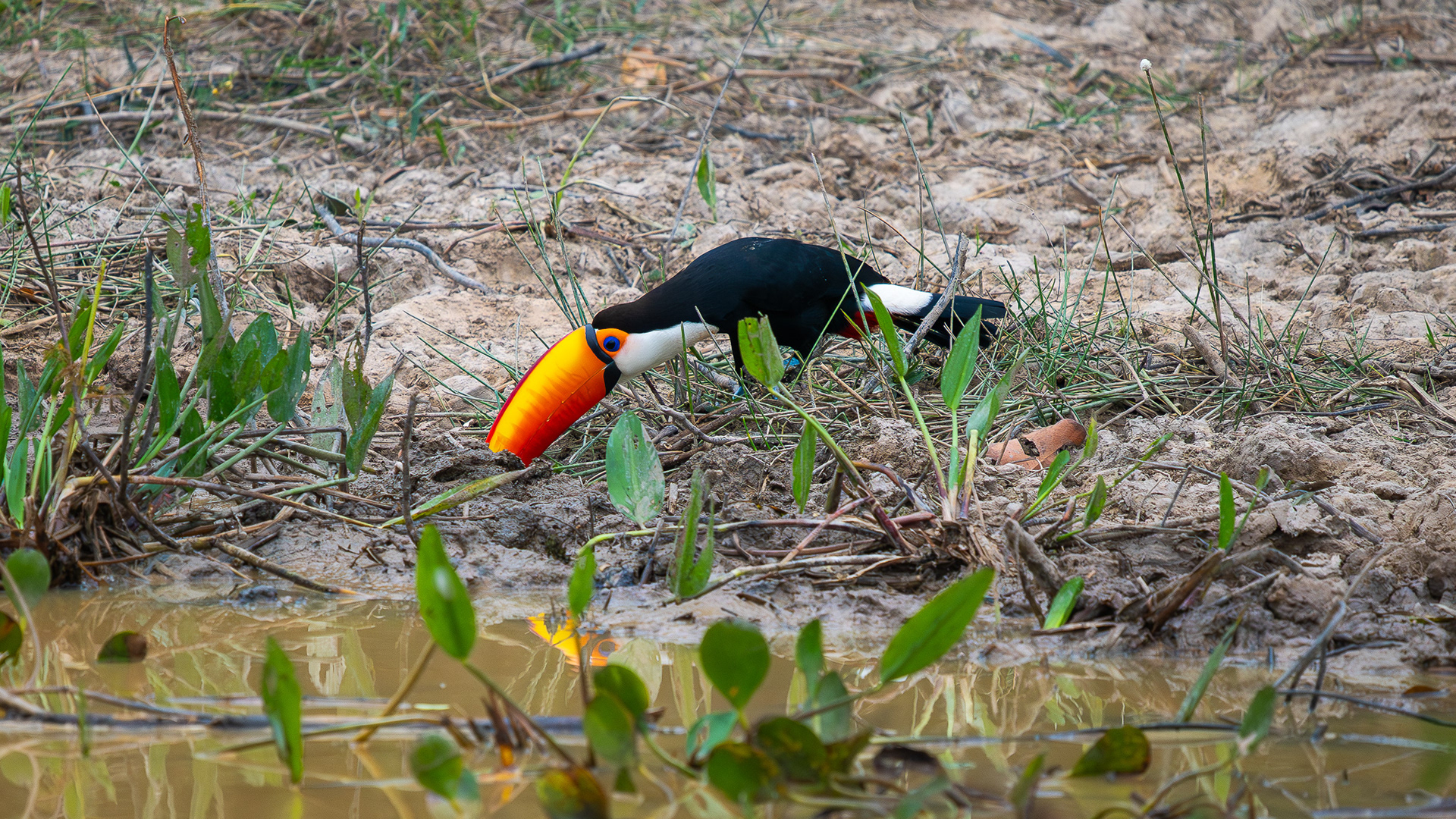
Toco Toucans get most of their hydration from the fruits they eat, though they also drink from shallow water by scooping it up and tilting their heads back to swallow.
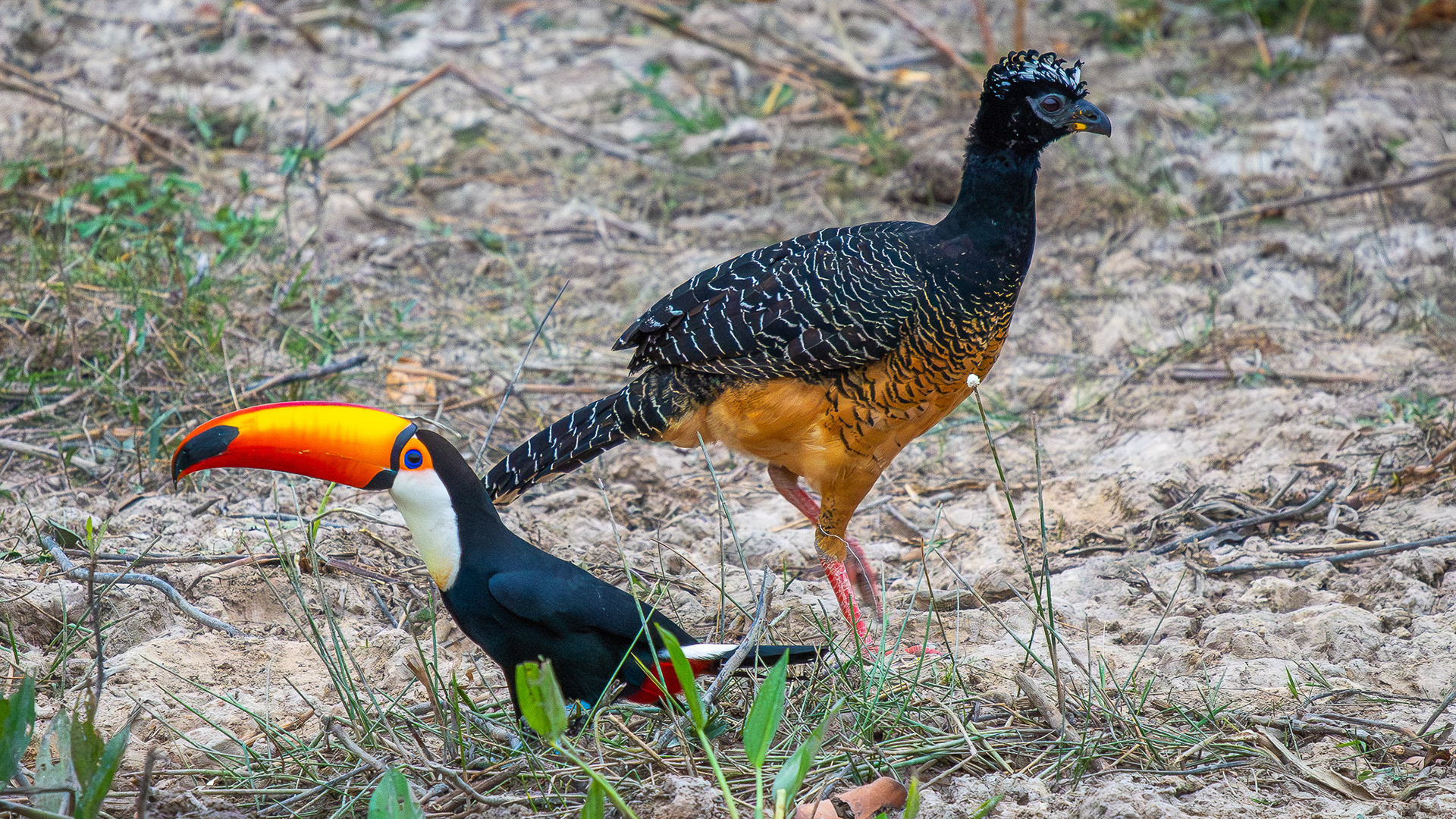
A Toco Toucan standing alongside a female Bare-faced Curassow (Crax fasciolata).
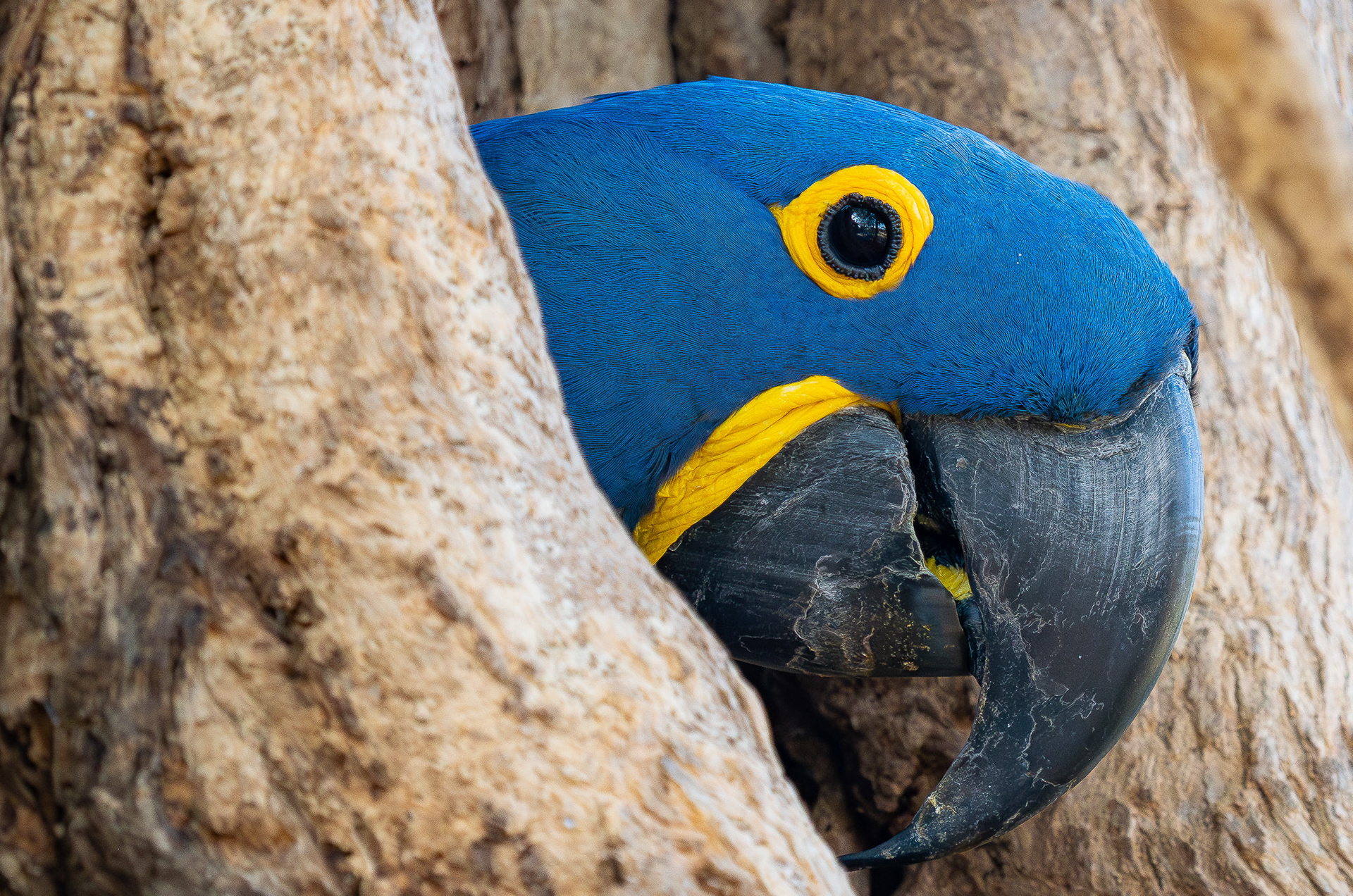
^ Hyacinth Macaw
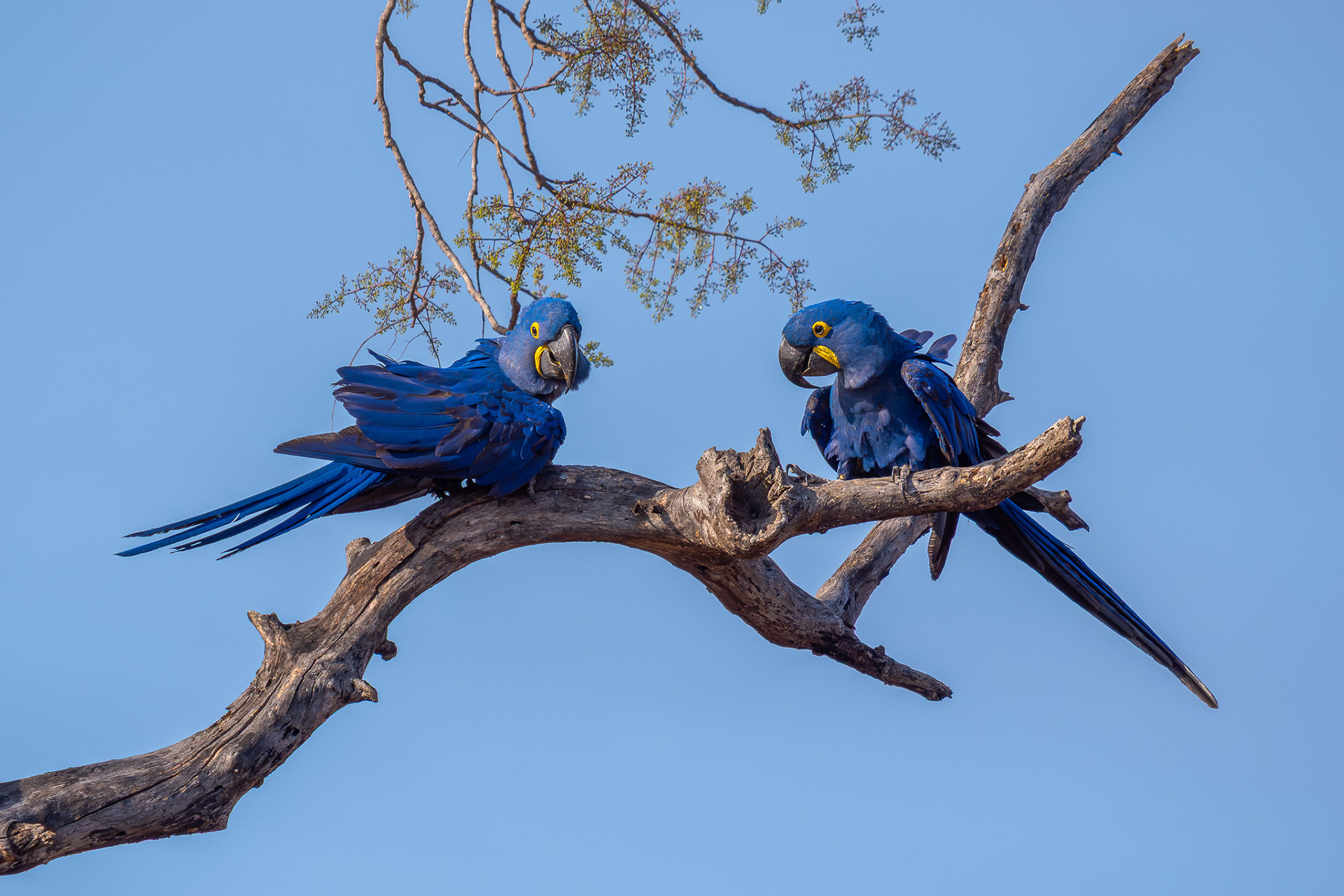
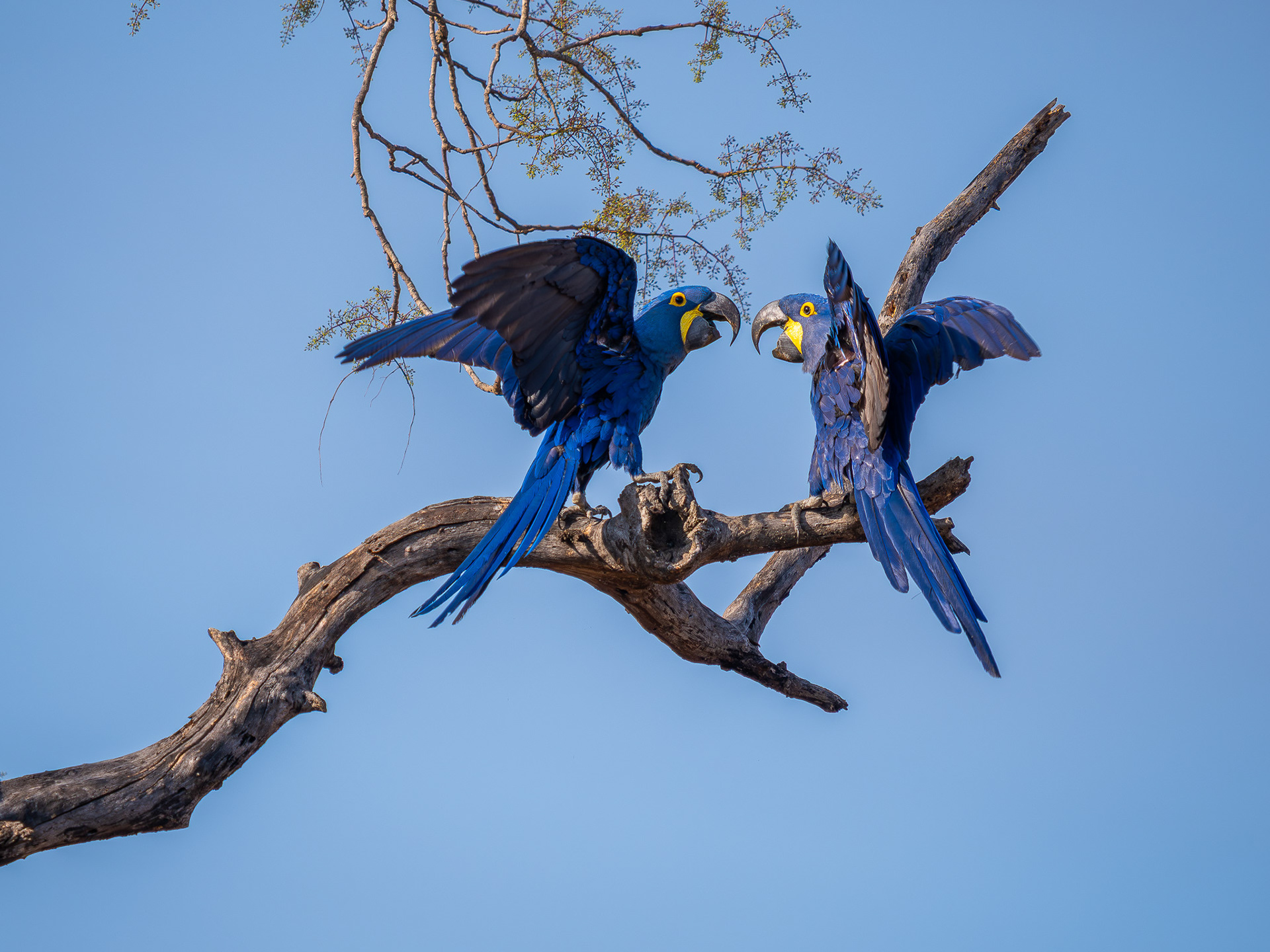
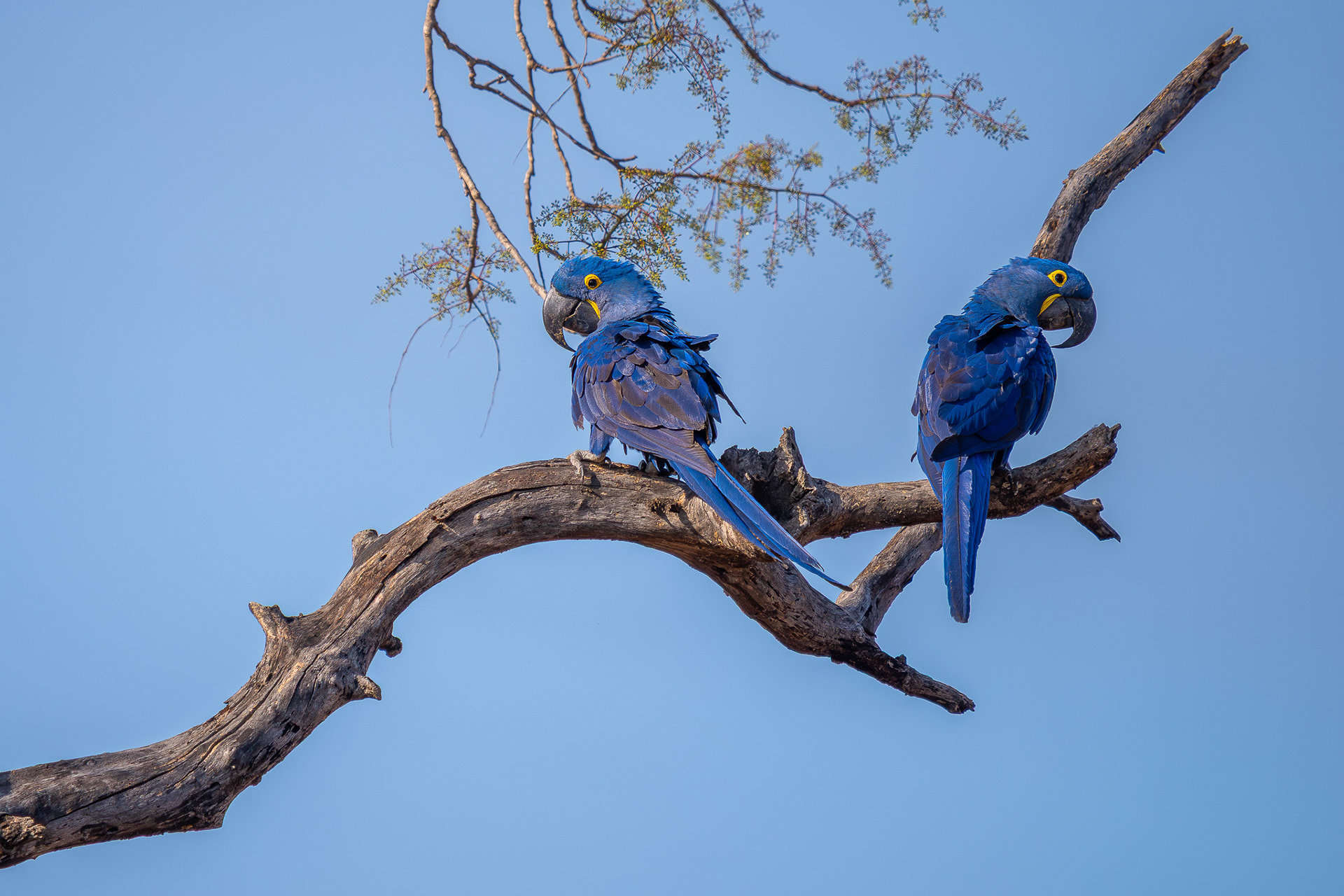
The Hyacinth Macaw (Anodorhynchus hyacinthinus) is the largest flying parrot in the world and is native to South America, with many living in Brazil's Pantanal region. It is easily recognised by its striking cobalt-blue feathers and bright yellow markings around the eyes and base of the beak. These birds live mainly in open, flooded grasslands and palm swamps, where they rely on acuri and bocaiúva palms for food and nesting. Their strong beaks allow them to crack hard nuts, and by doing so they help spread seeds, playing an important role in maintaining their ecosystem.
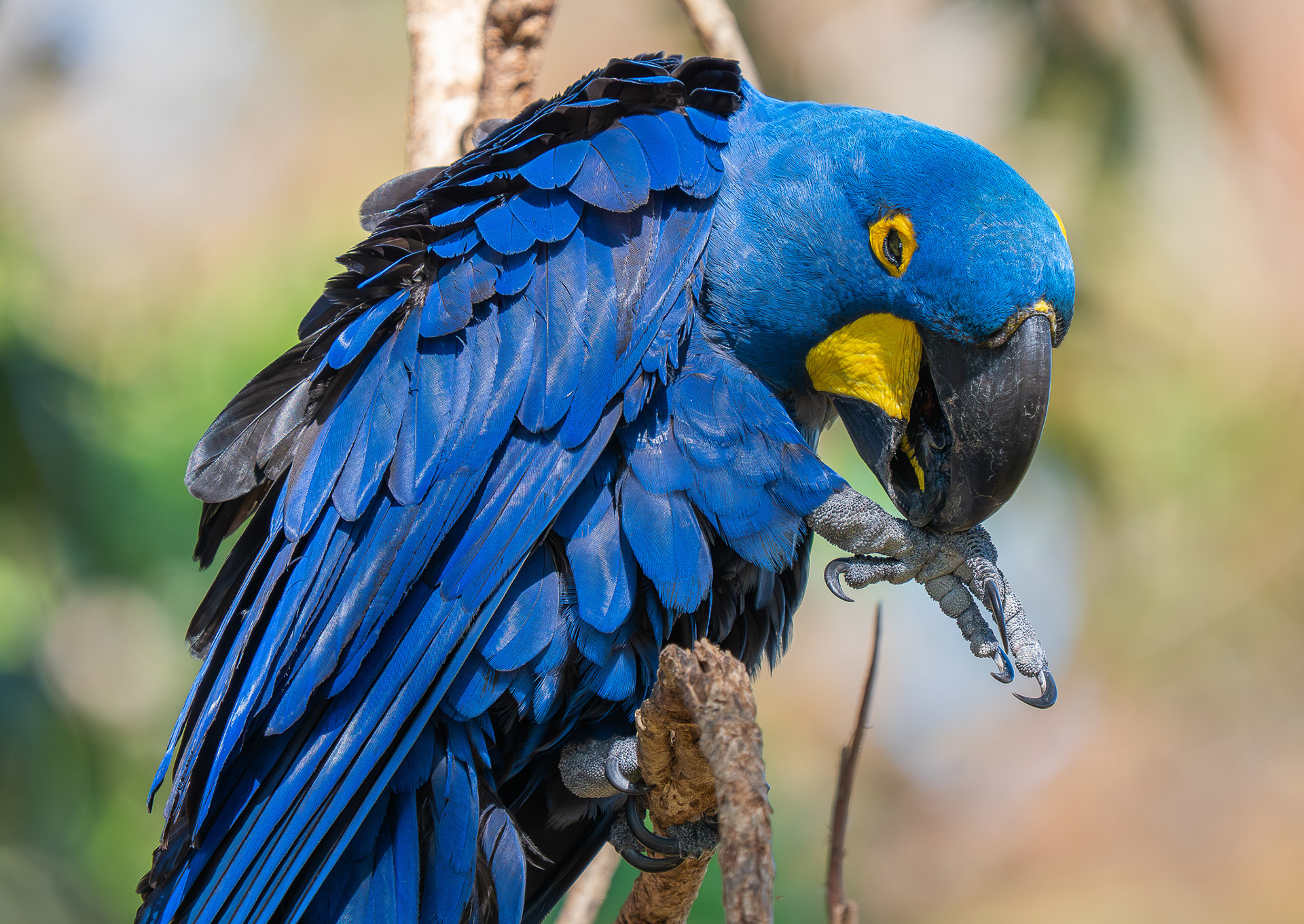
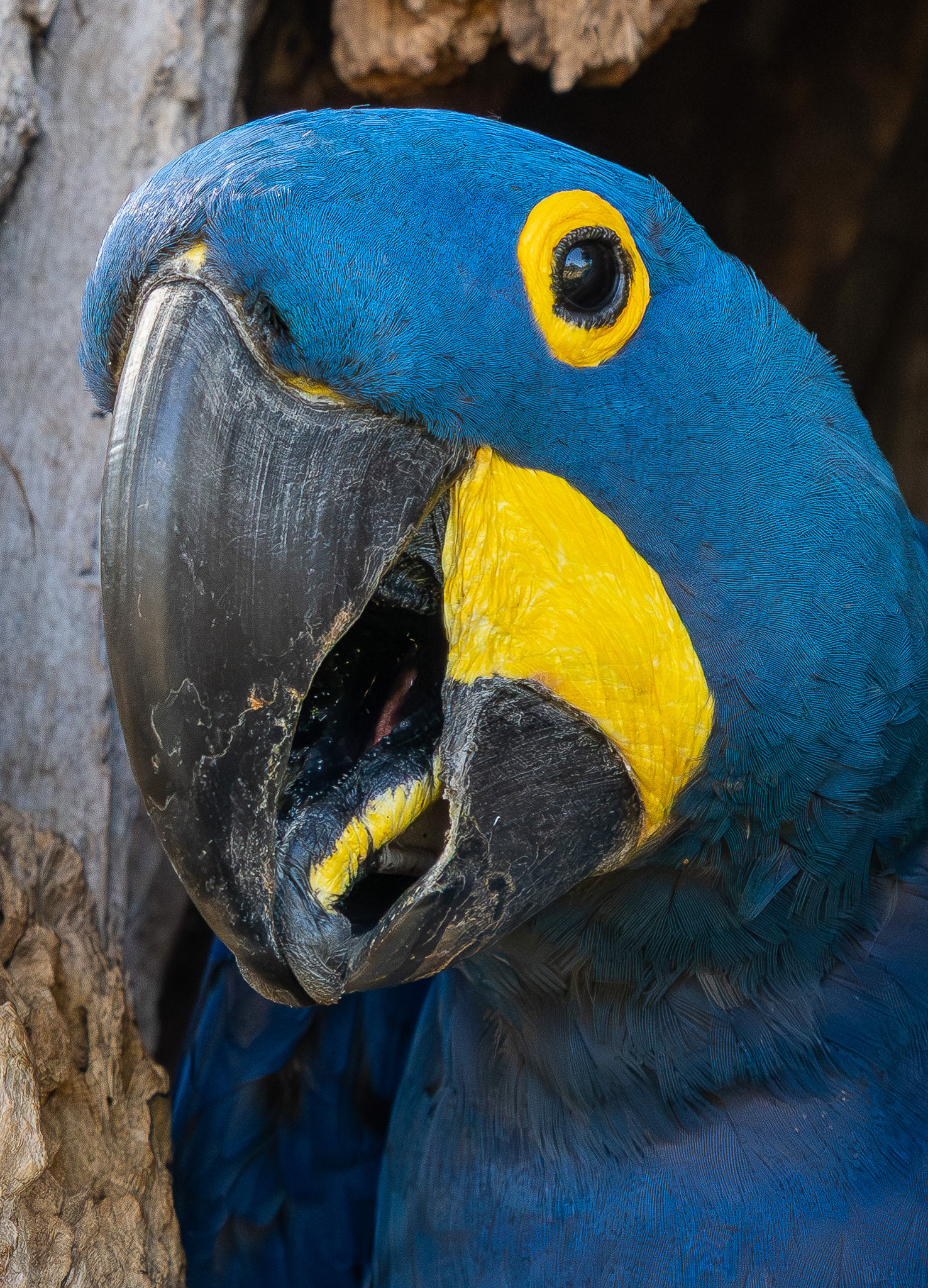
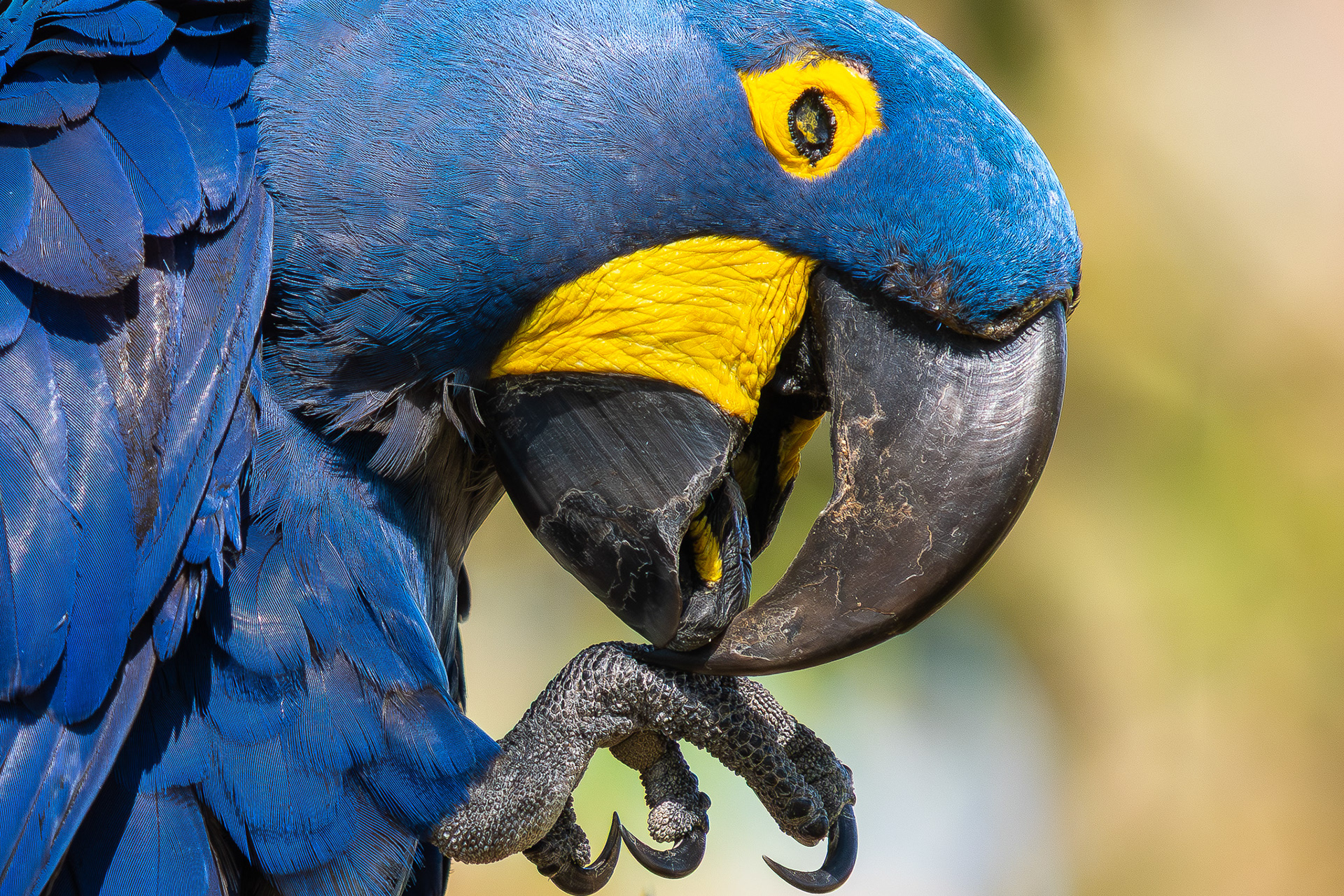
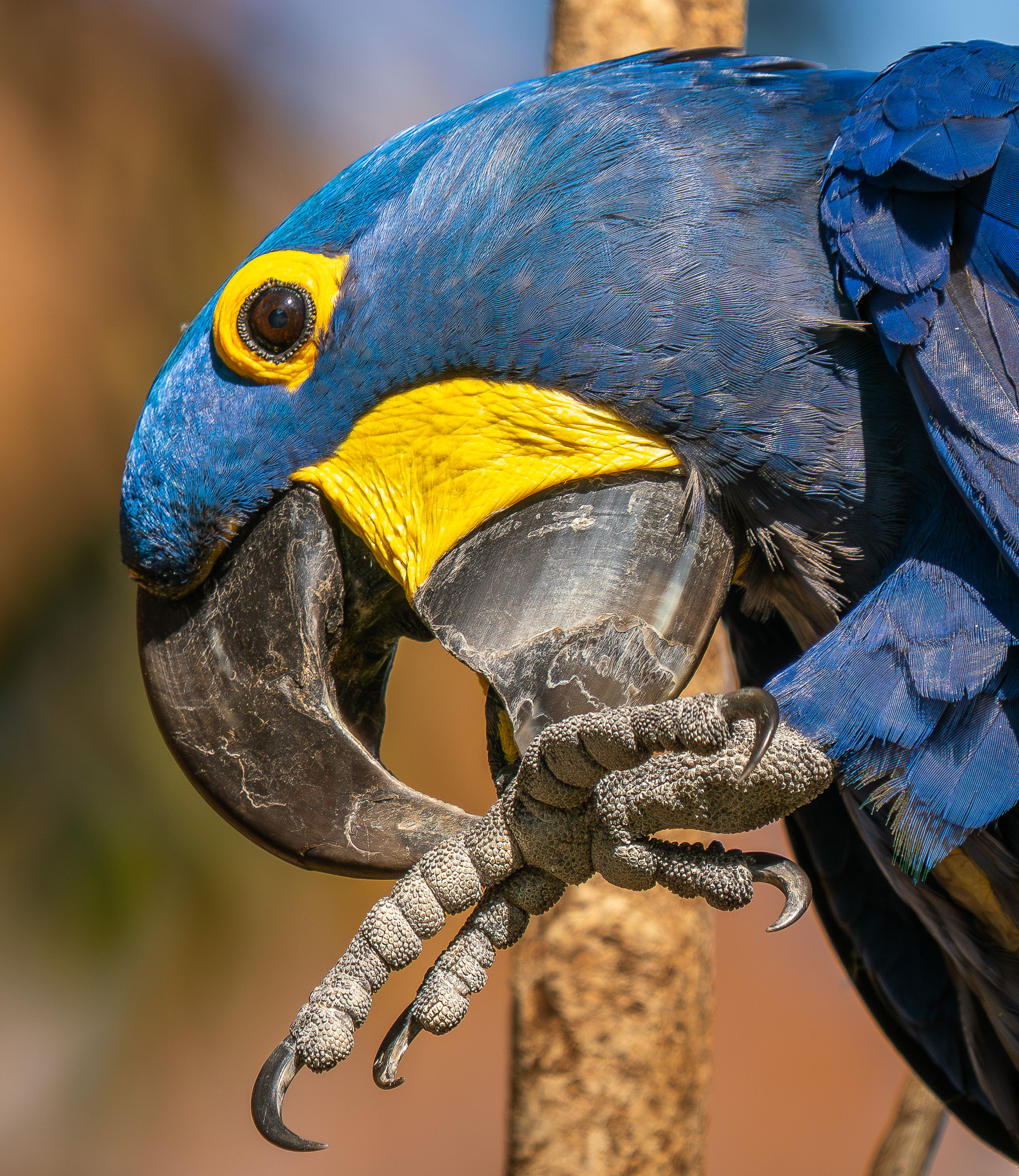
The Pantanal offers some of the best opportunities to observe these magnificent birds in the wild.
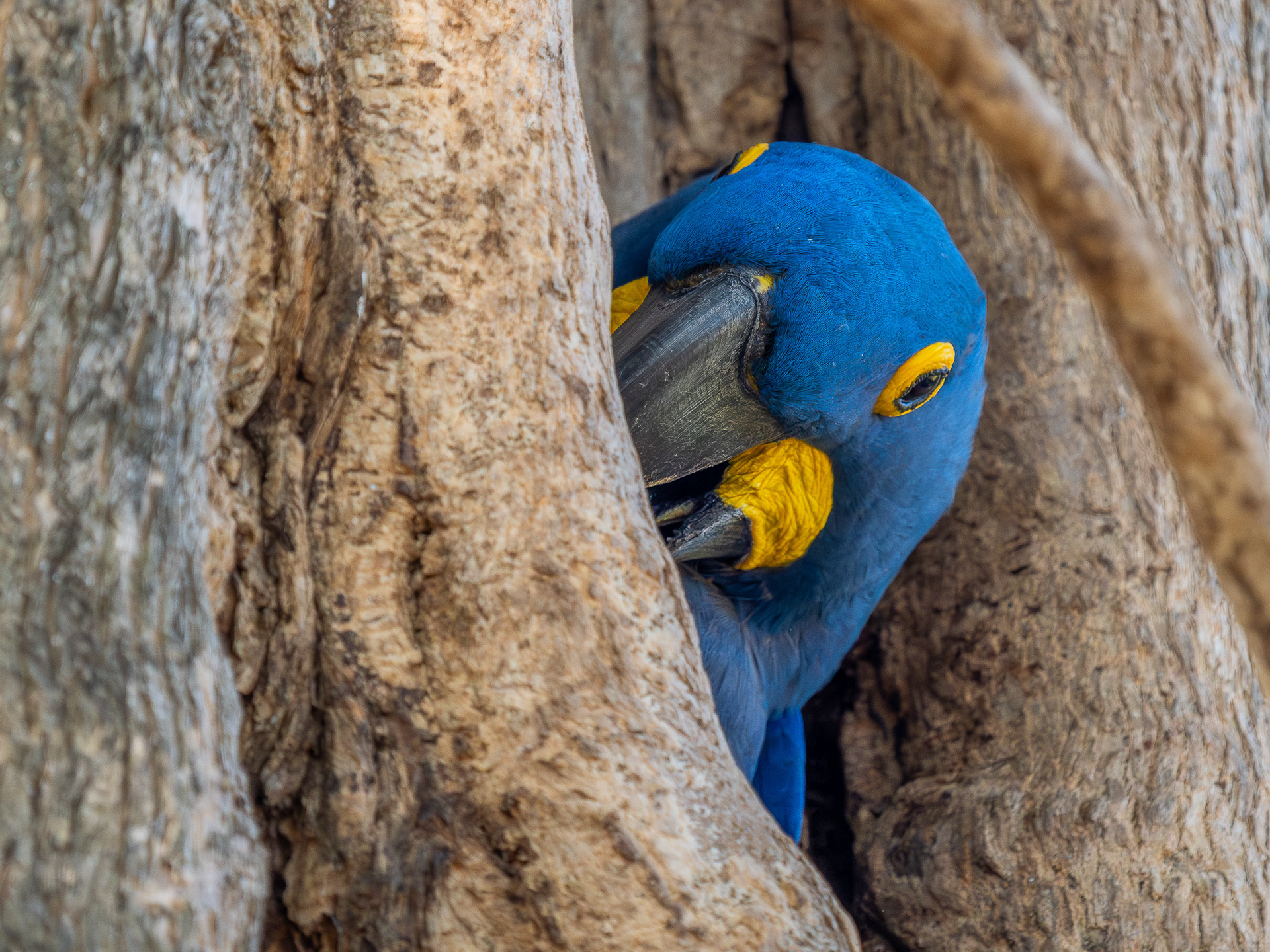
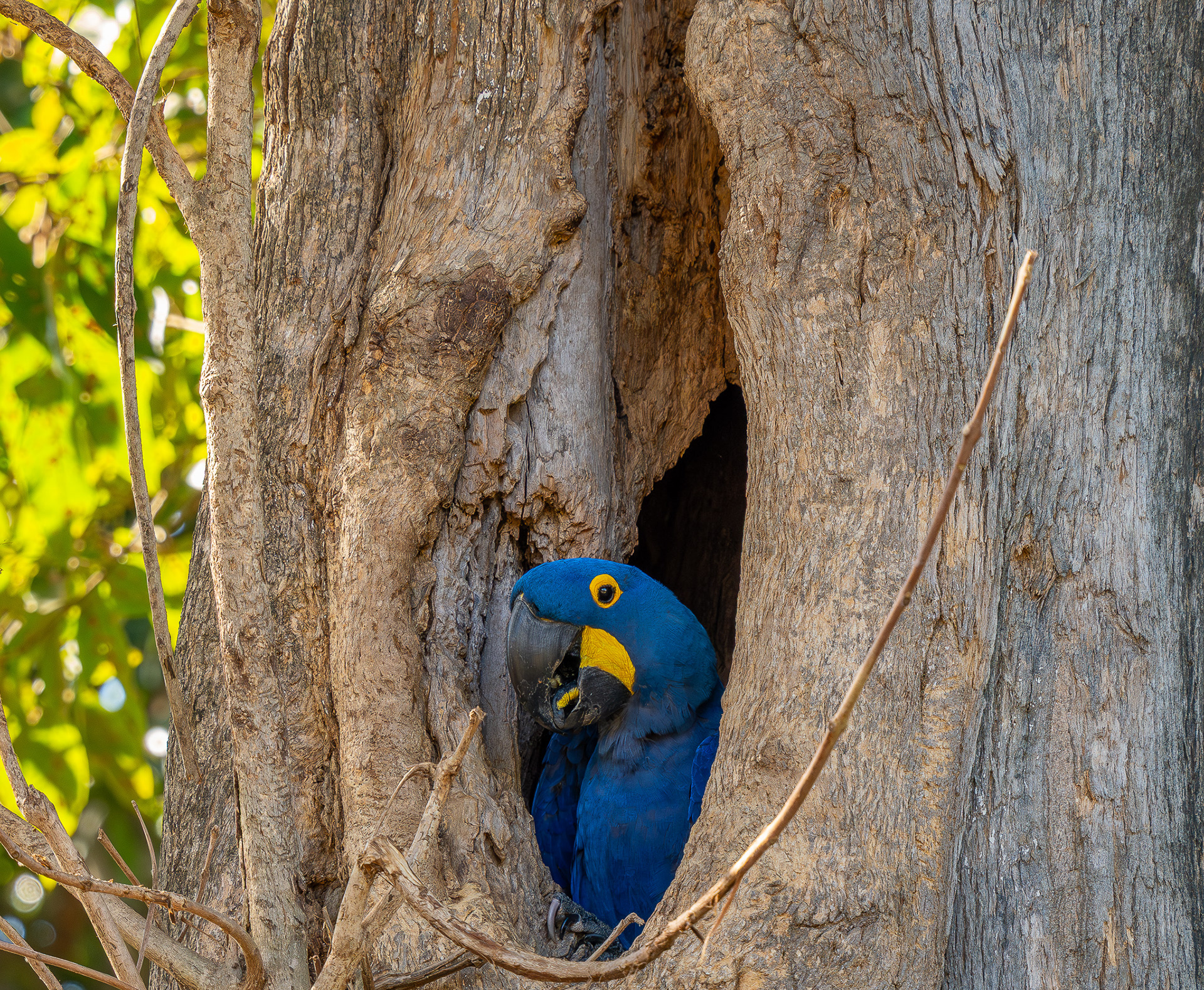
Macaws make their nests in tree cavities, frequently in mature manduvi trees or dead palms. The female incubates the eggs, while both parents tend to the fledglings for several months.
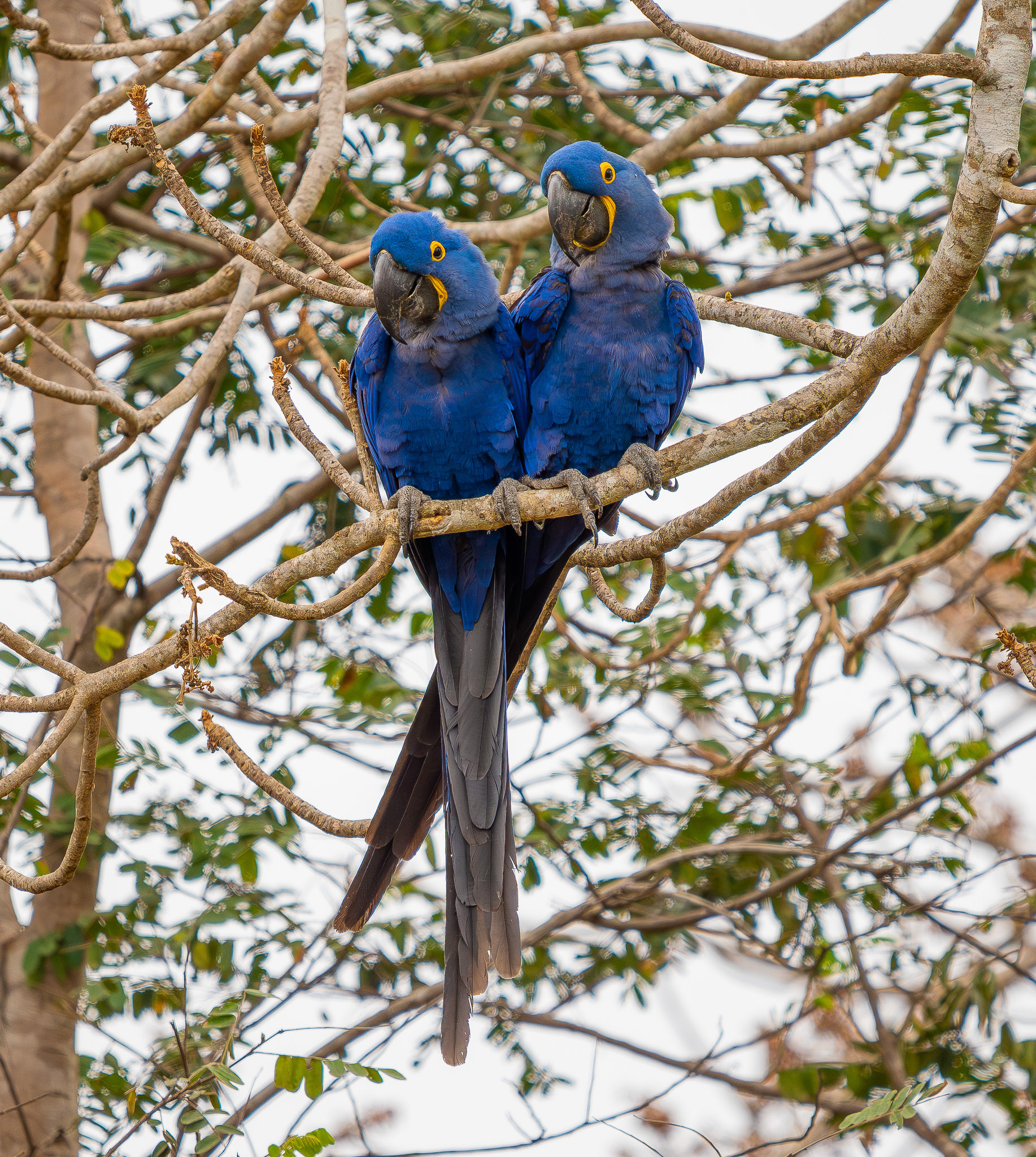
Hyacinth Macaws typically remain with the same mate for life, forming deep and lasting bonds.
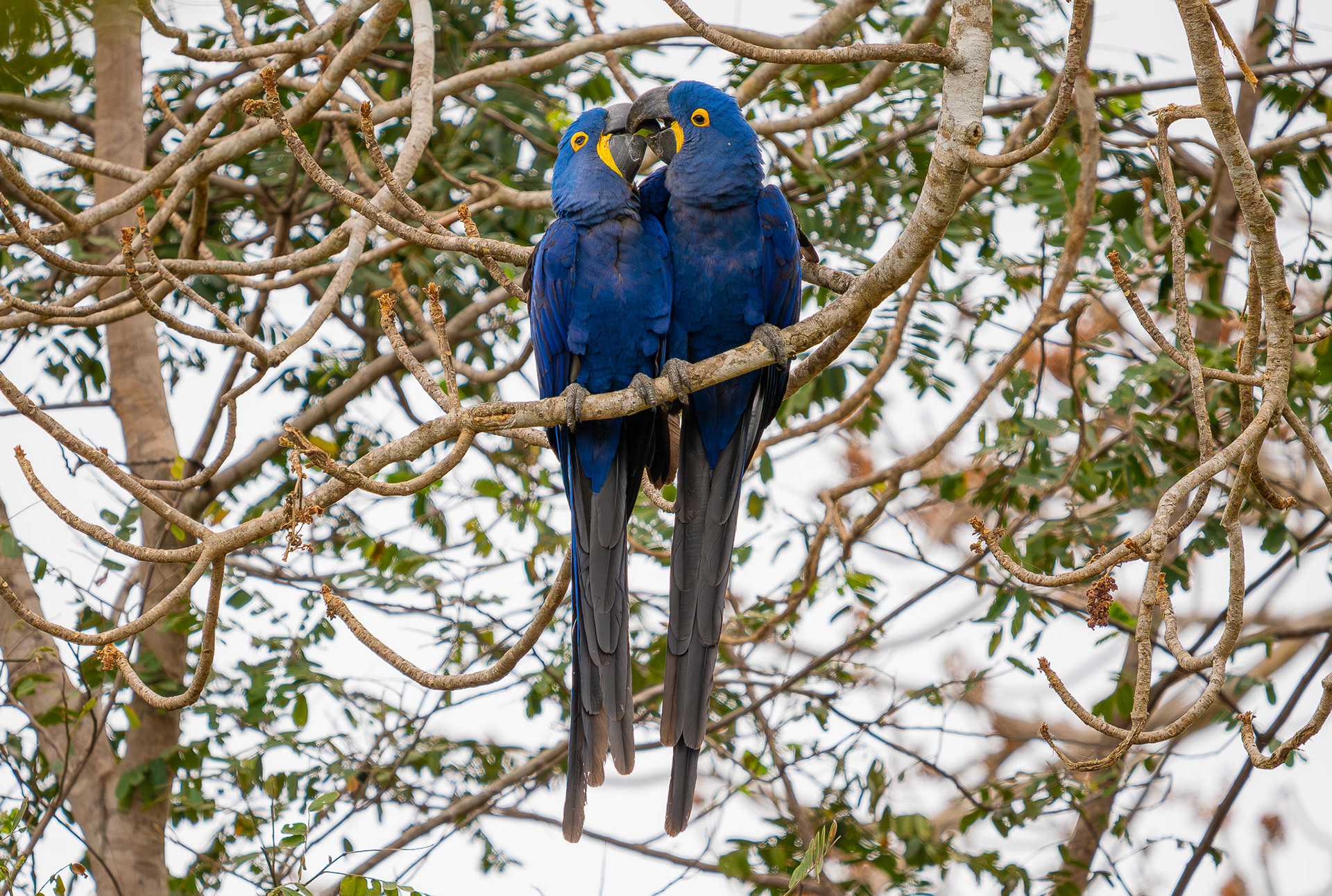
Pairs groom each other and spend most of their time together, even when foraging.
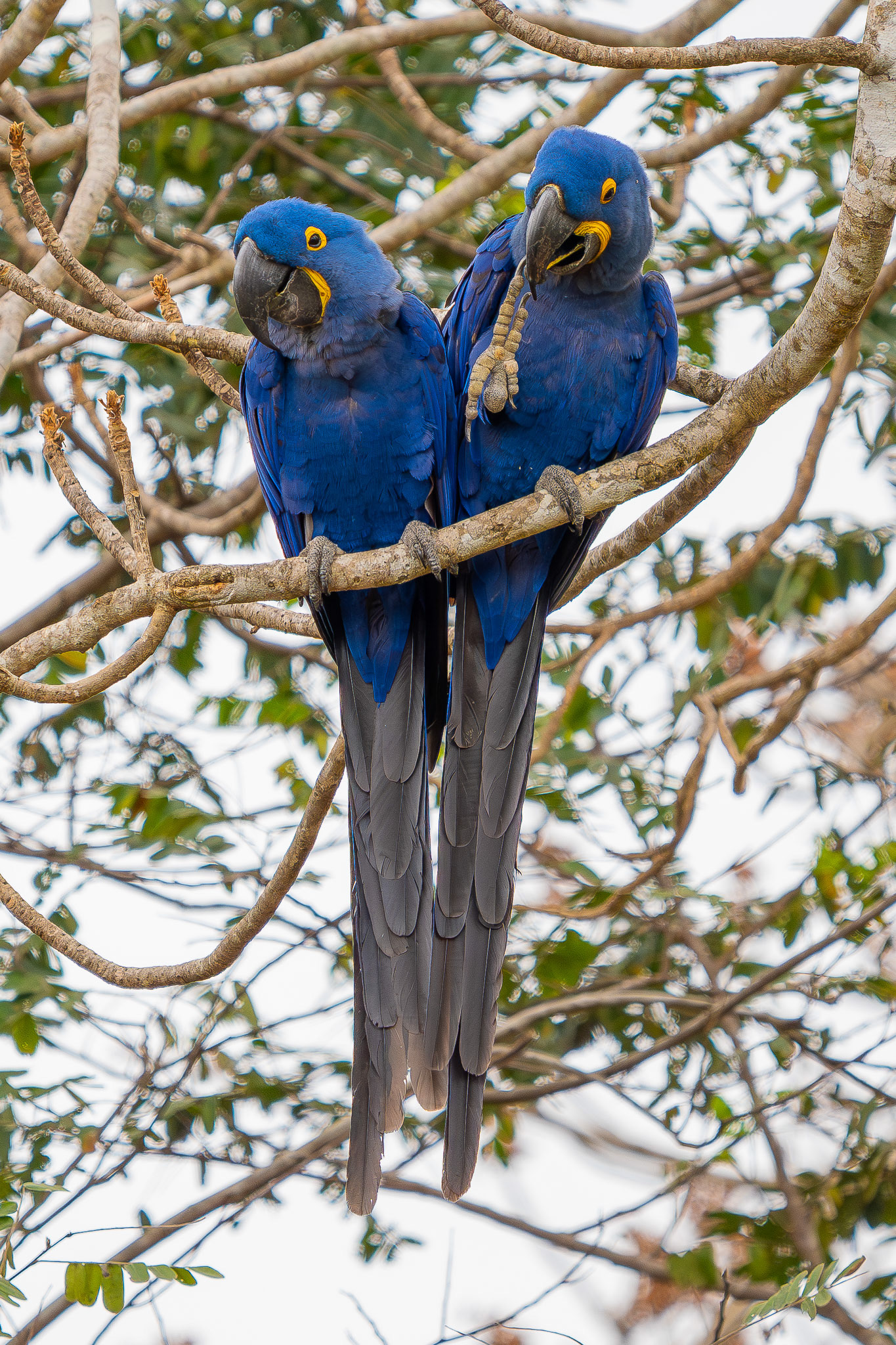
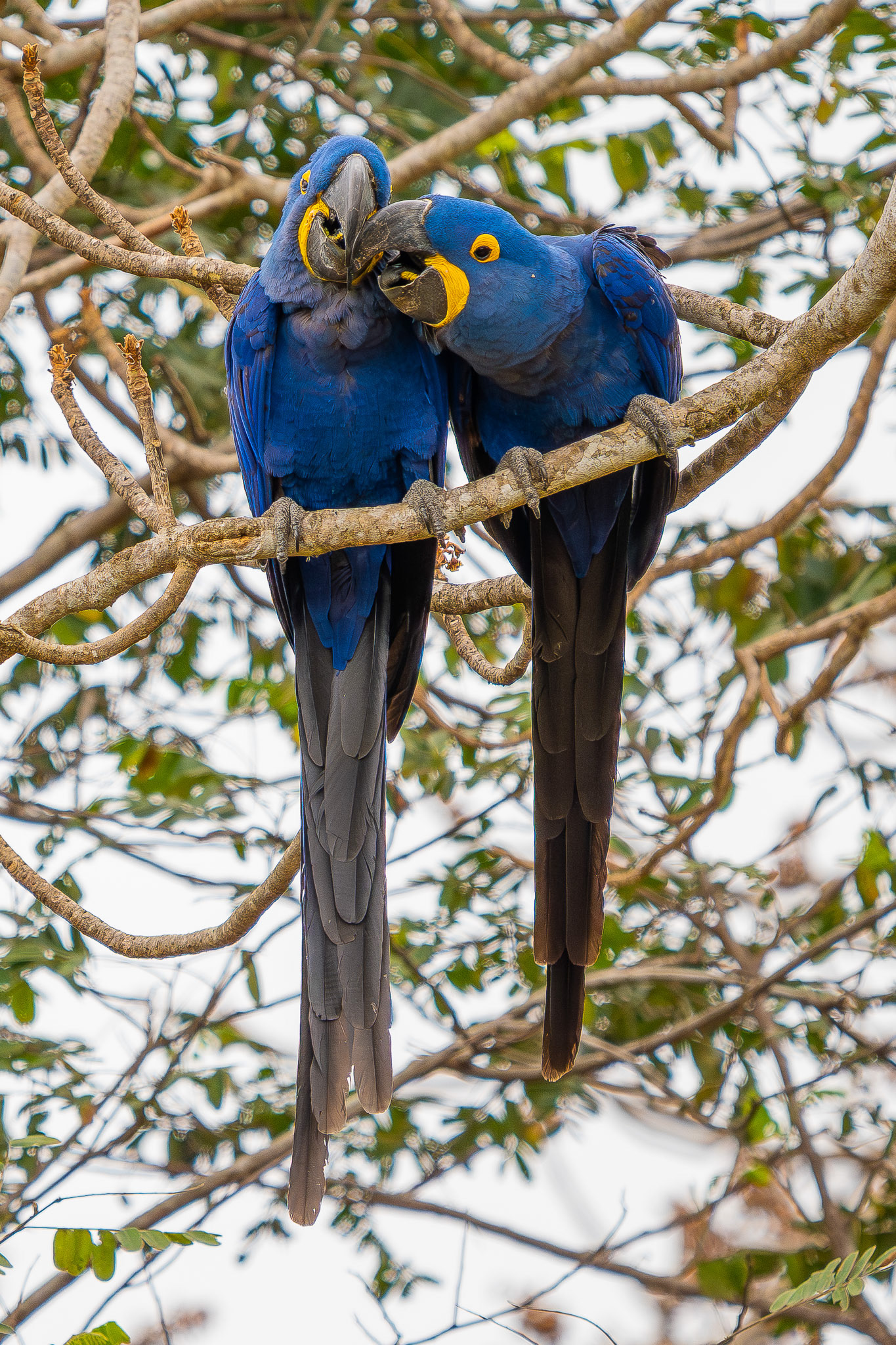
These striking, large blue parrots are exceptionally intelligent, highly social, and known for their raucous and far-carrying calls.
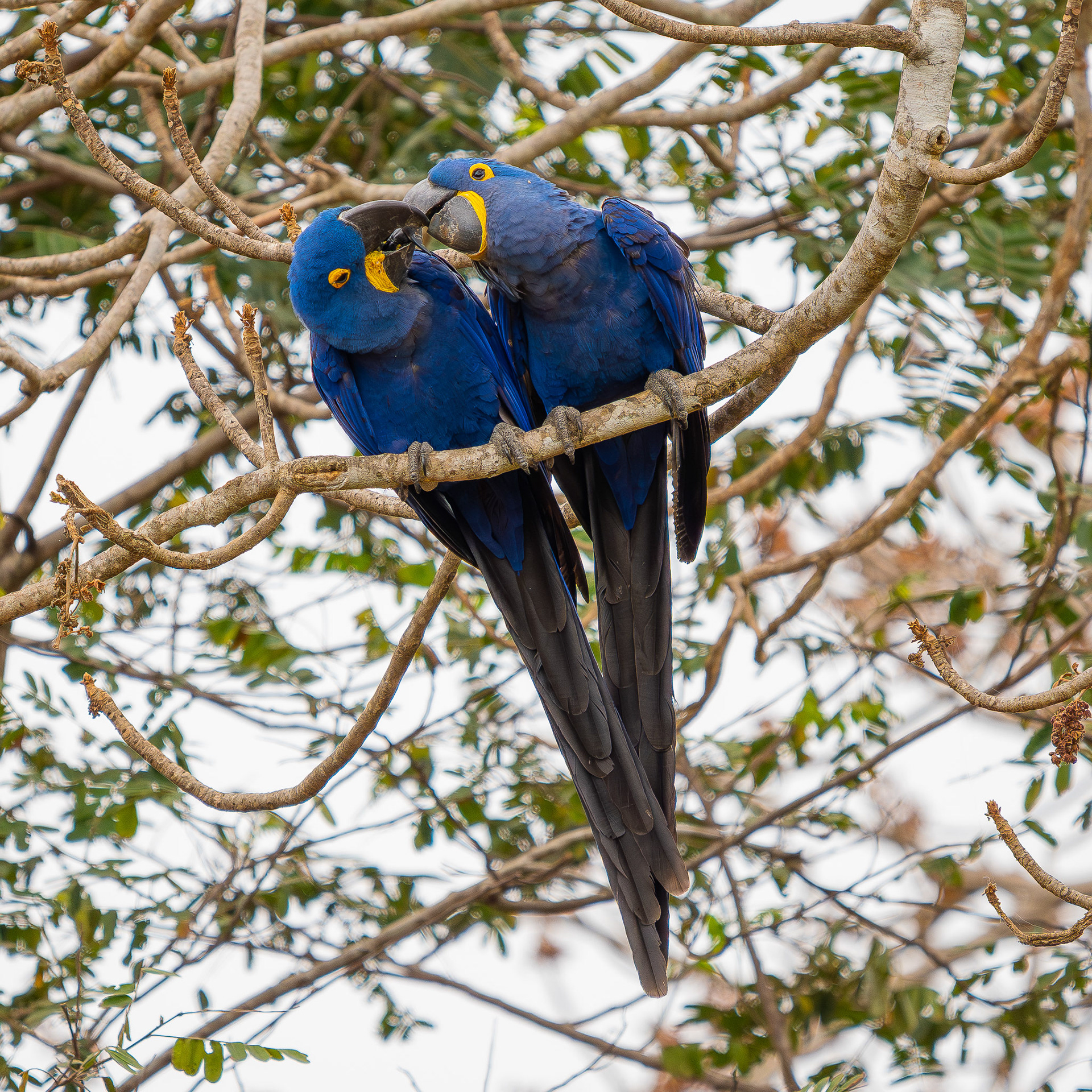
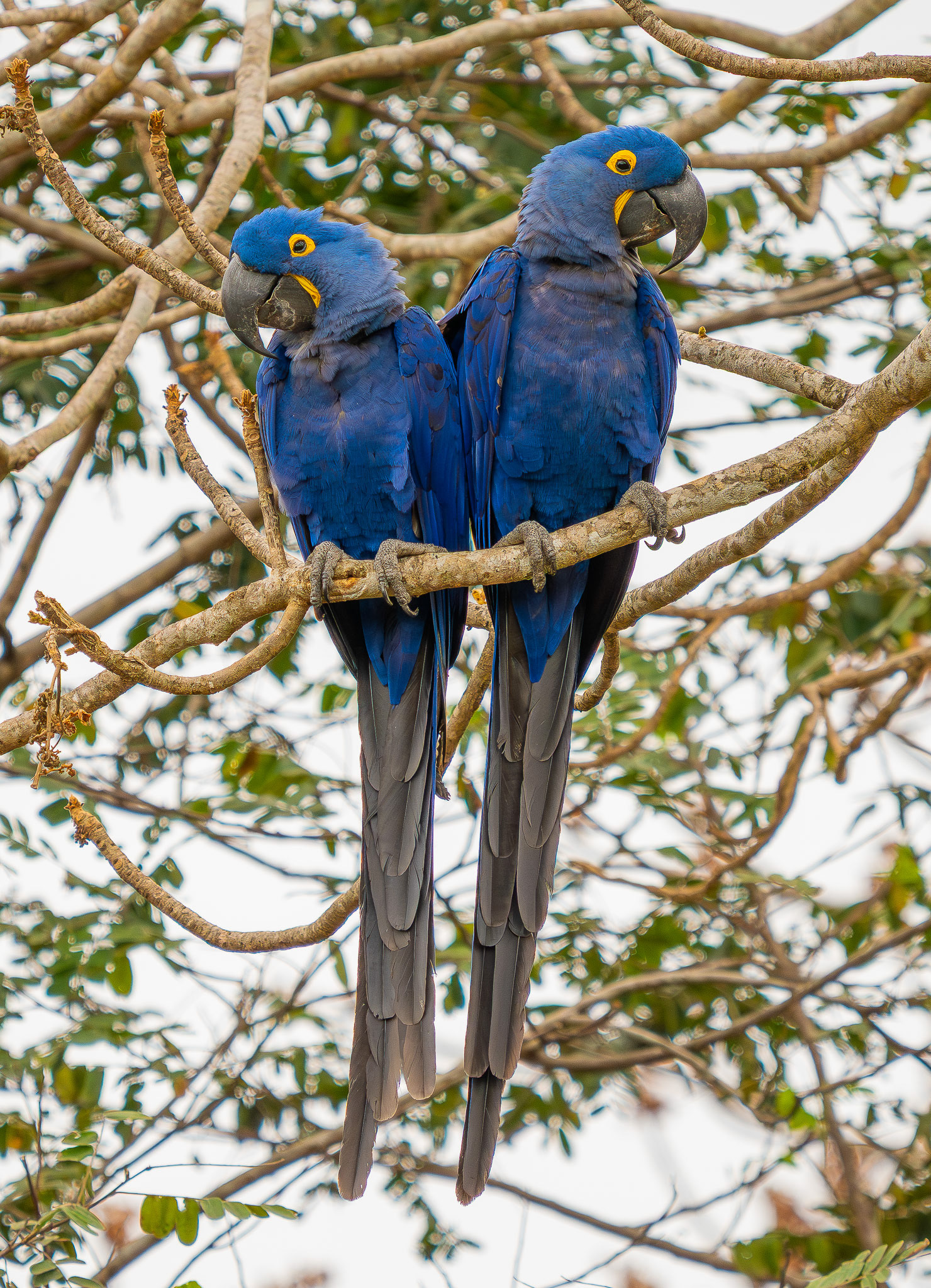
The Pantanal is a crucial stronghold for these birds. However, despite their resilience and iconic status, habitat loss and threats from the illegal pet trade remain major threats. Thankfully though, conservation efforts are starting to make a real difference.
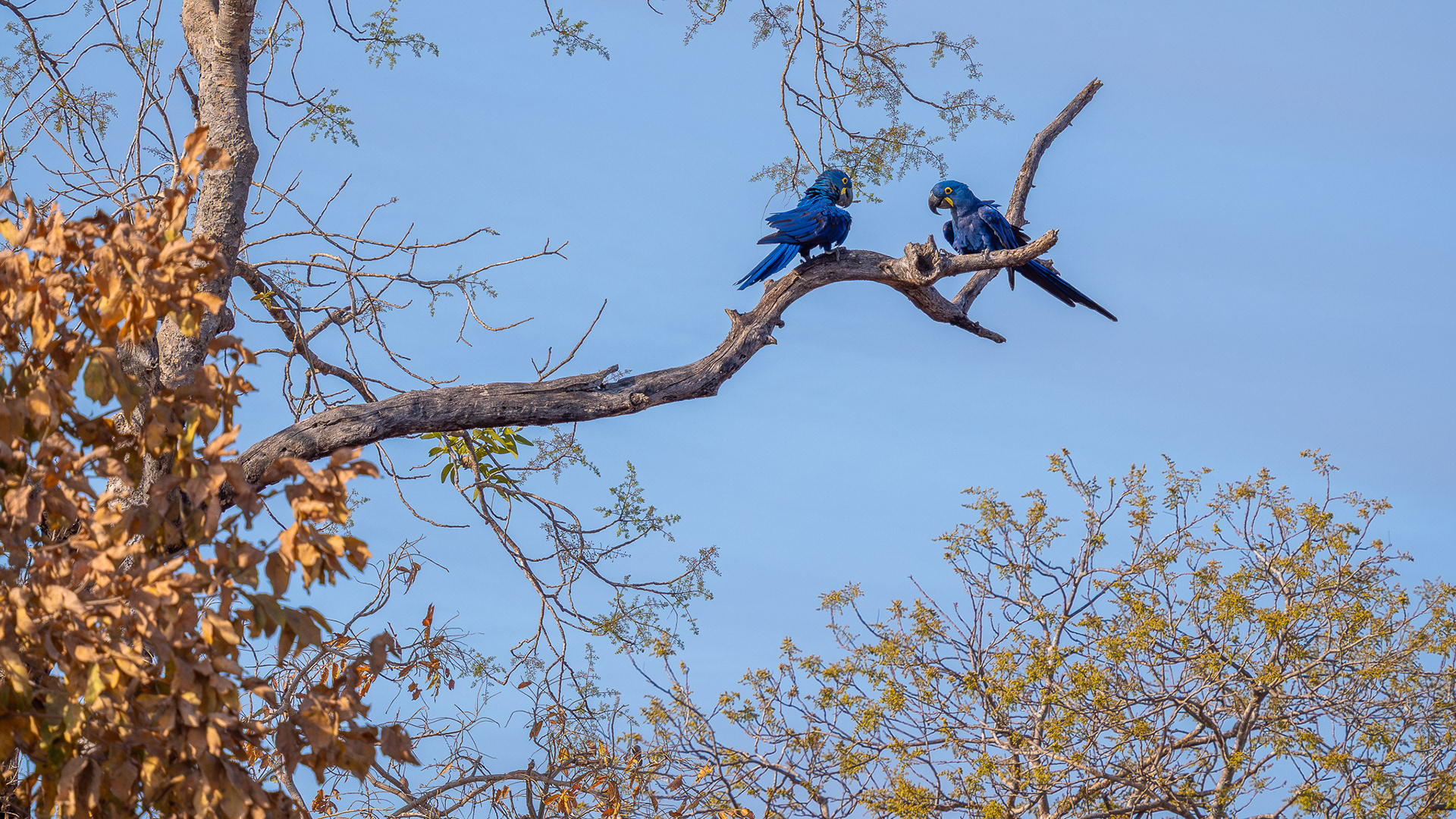
Due to said threats, these magnificent birds are listed under CITES, emphasising the importance of using only domestically hatched birds as pets.
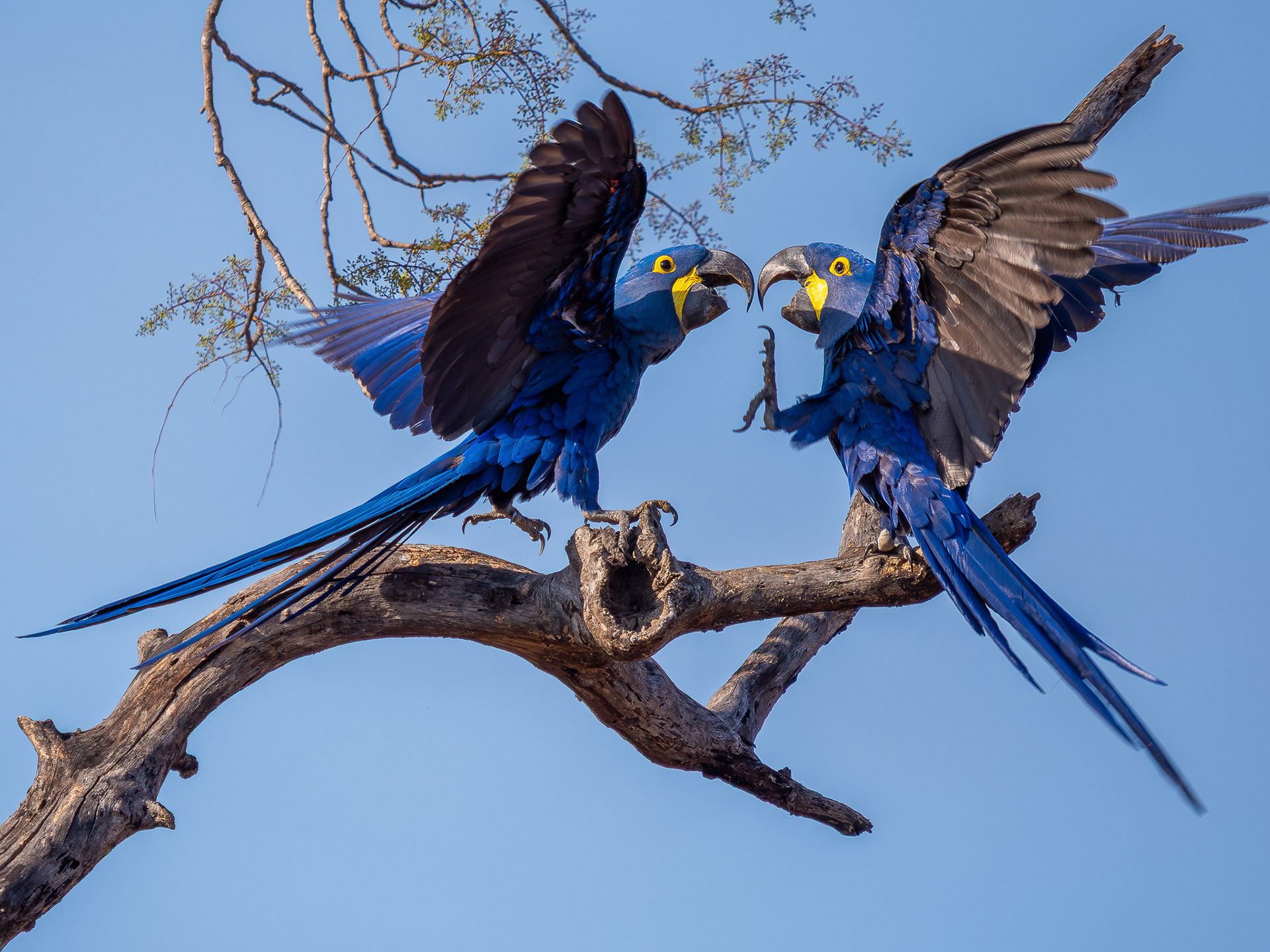
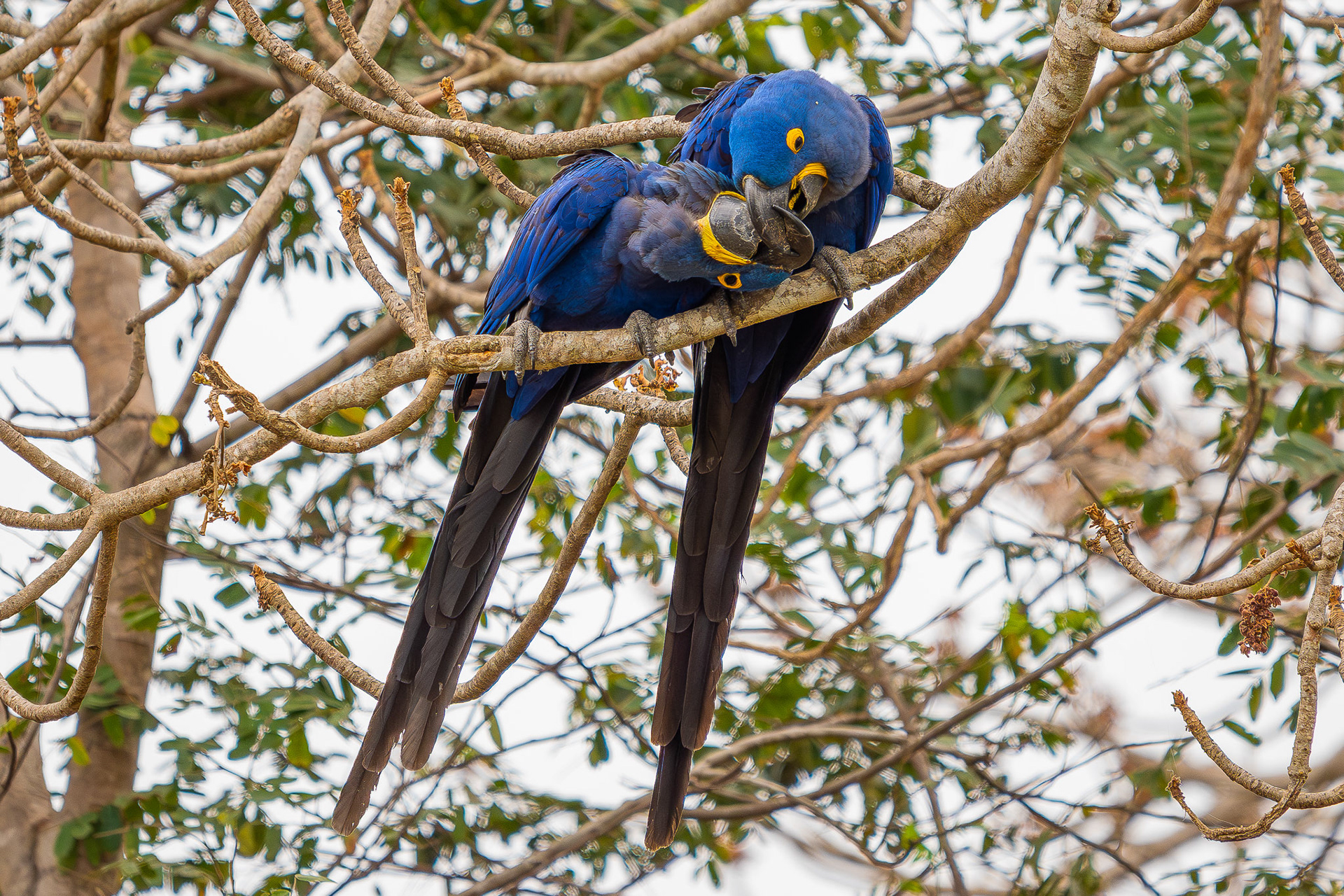
True love does not always run smoothly - this pair appear to be having a squabble!
^ Rufescent Tiger-Heron
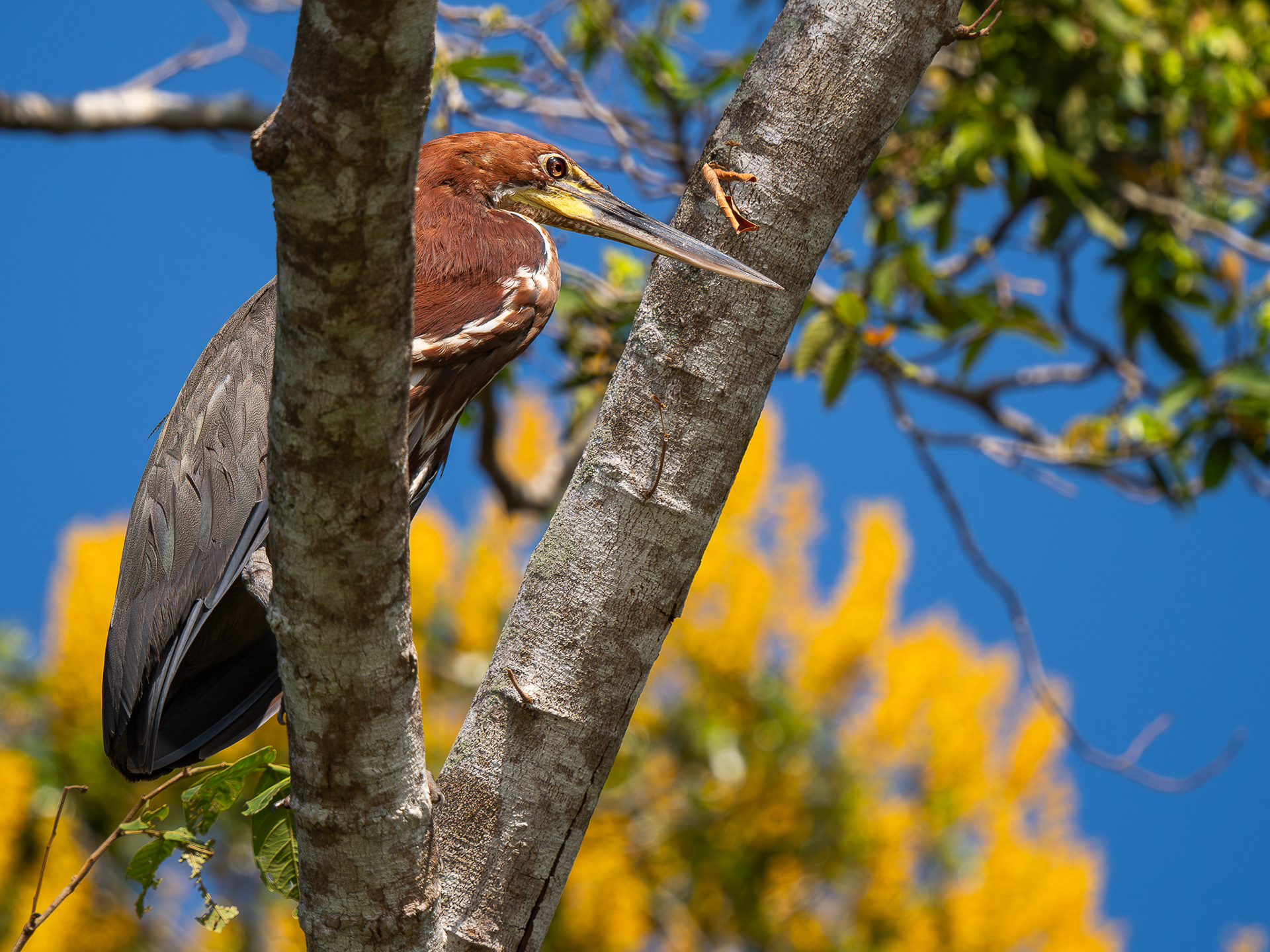
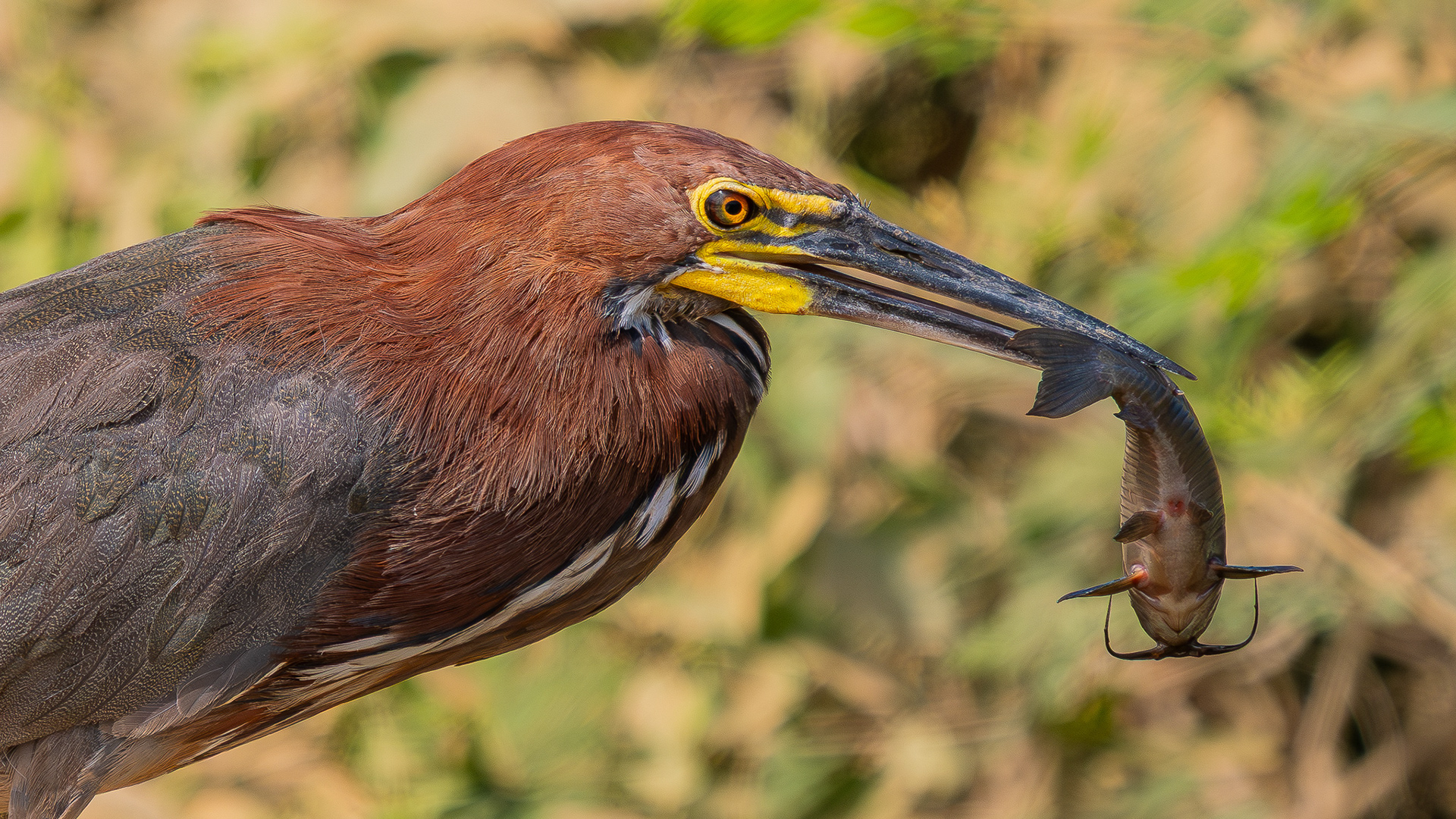
The Rufescent Tiger-Heron (Tigrisoma lineatum) is fairly common in the Pantanal.
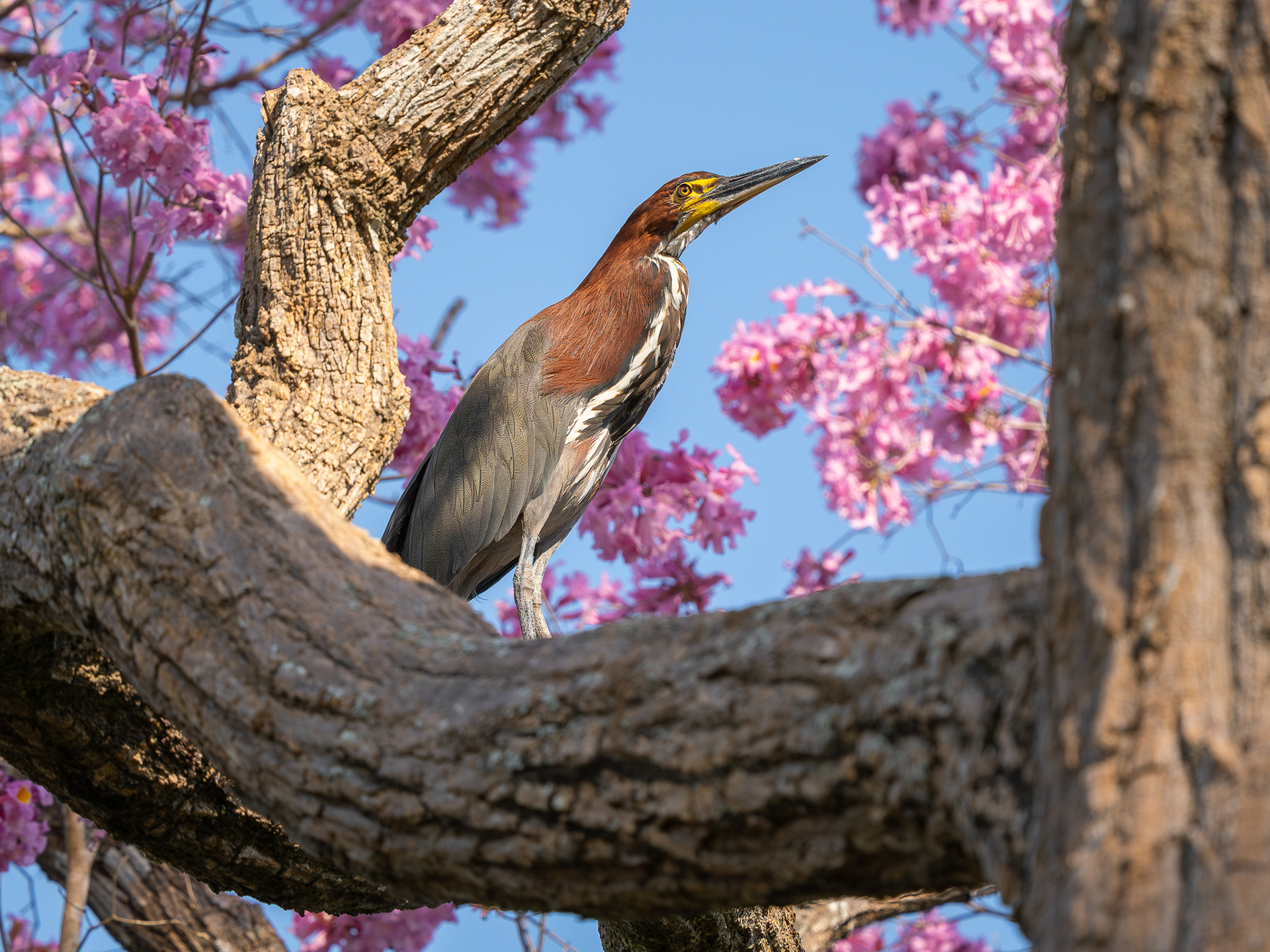
Although it is usually found standing patiently at the water's edge ready to ambush fish, frogs and small snakes, this individual was high up on the branch of a piúva tree in blossom.
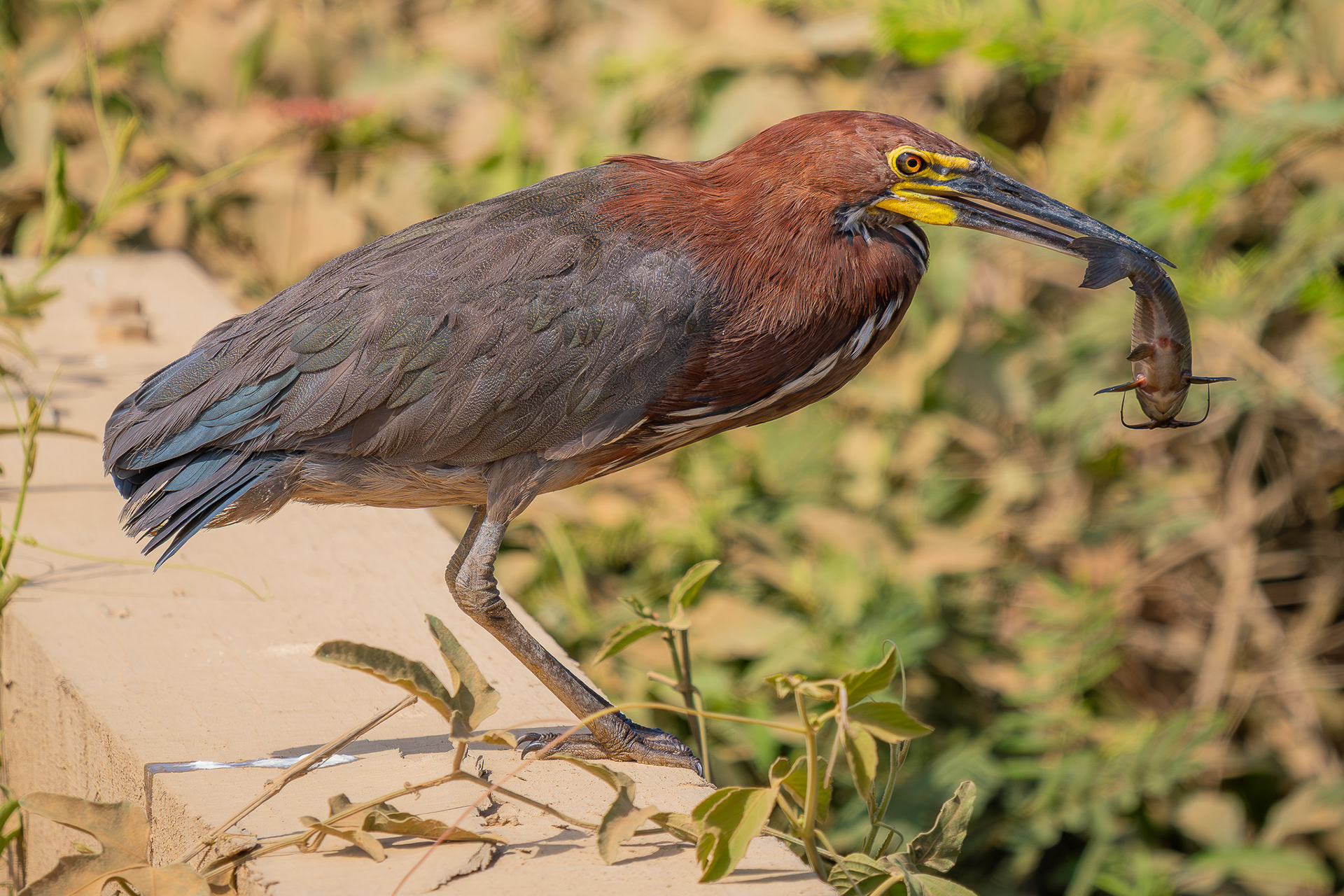
A Rufescent Tiger-Heron with a fish clasped in its dagger-like bill.
^ Crested Caracara
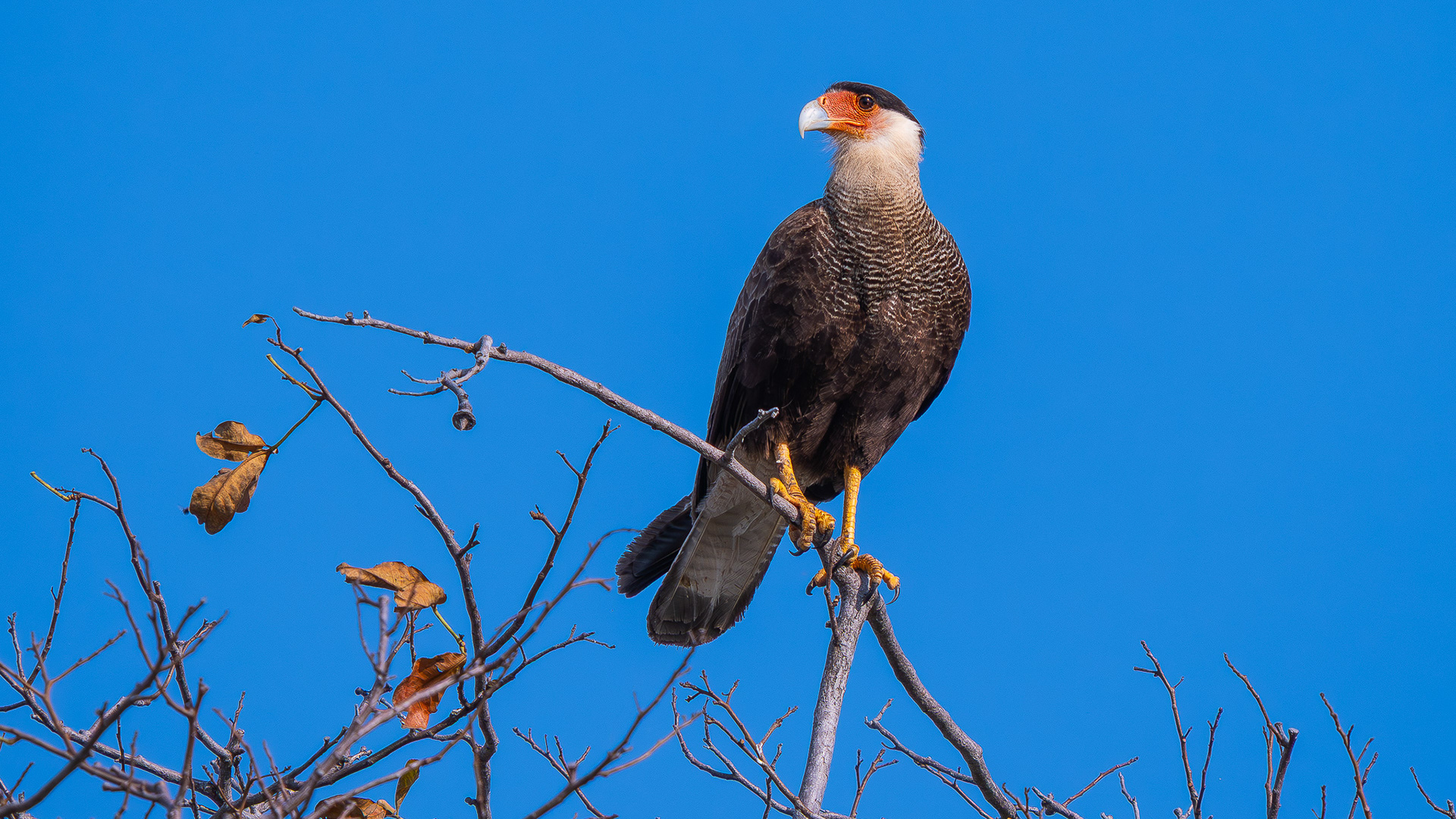
The Crested Caracara (Caracara plancus) is a bold and clever raptor. Using high vantage points, it hunts and scavenges, swooping down on prey or aggressively stealing food from other birds like vultures. Its diet is incredibly versatile, ranging from insects, reptiles, and small mammals to amphibians, fruit, and carrion. Combining hunting, scavenging, and opportunistic theft, the Crested Caracara is a fascinating and formidable presence in its environment.
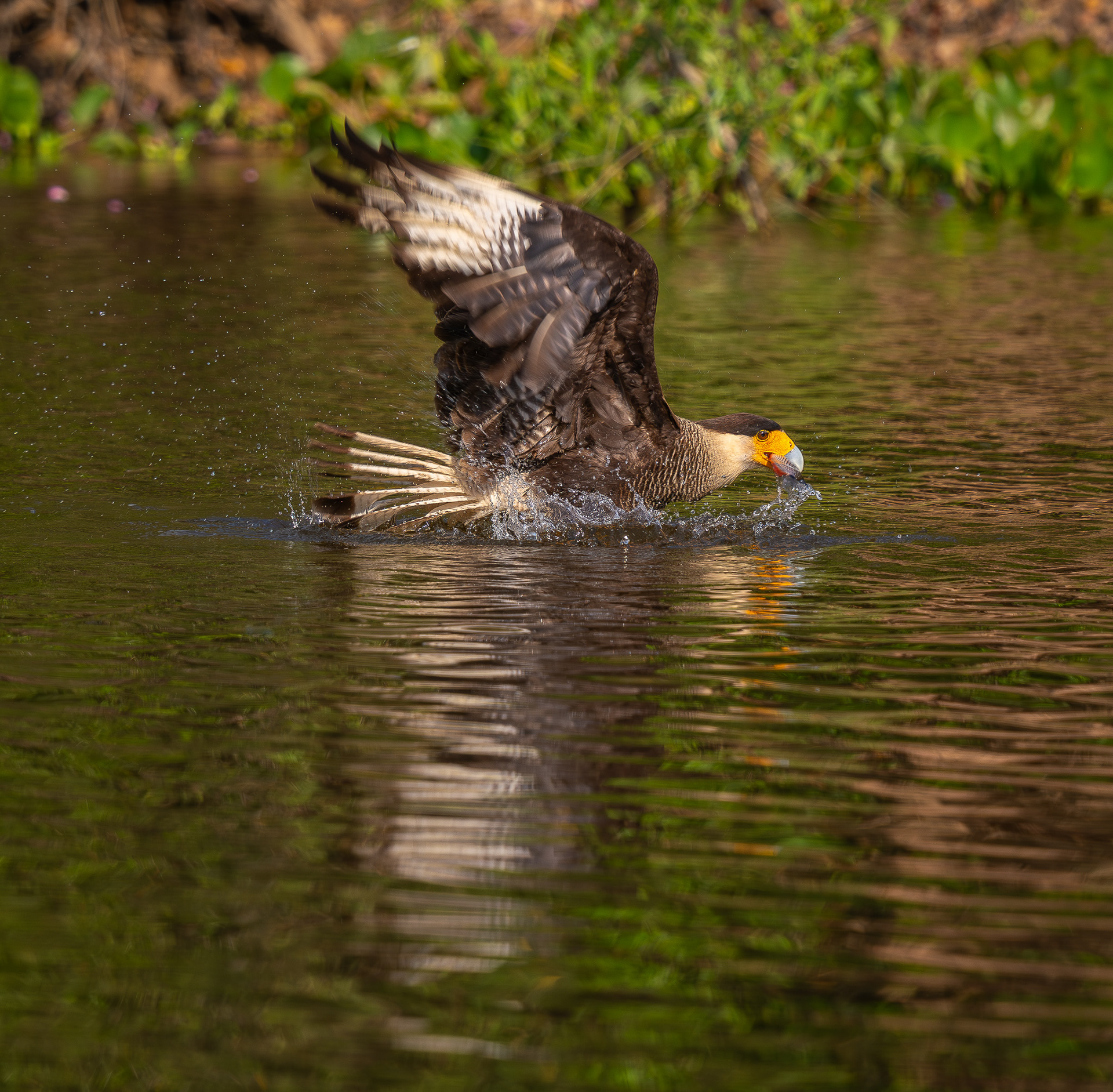
Wings a blur, the Crested Caracara sweeps low over the wetlands, breaking the water’s surface to snatch a fish in a split second of precision and power.
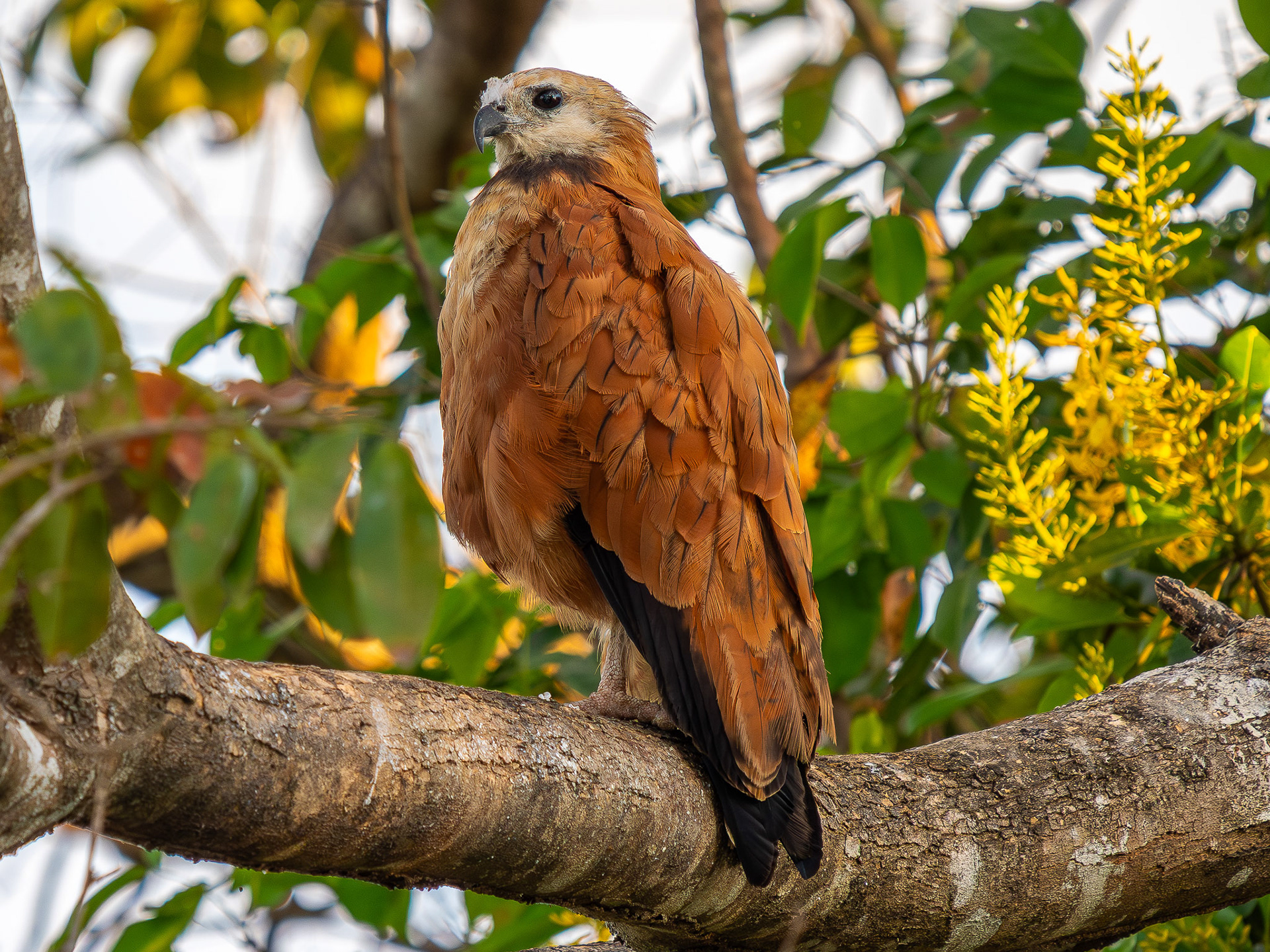
^ Black-collared Hawk
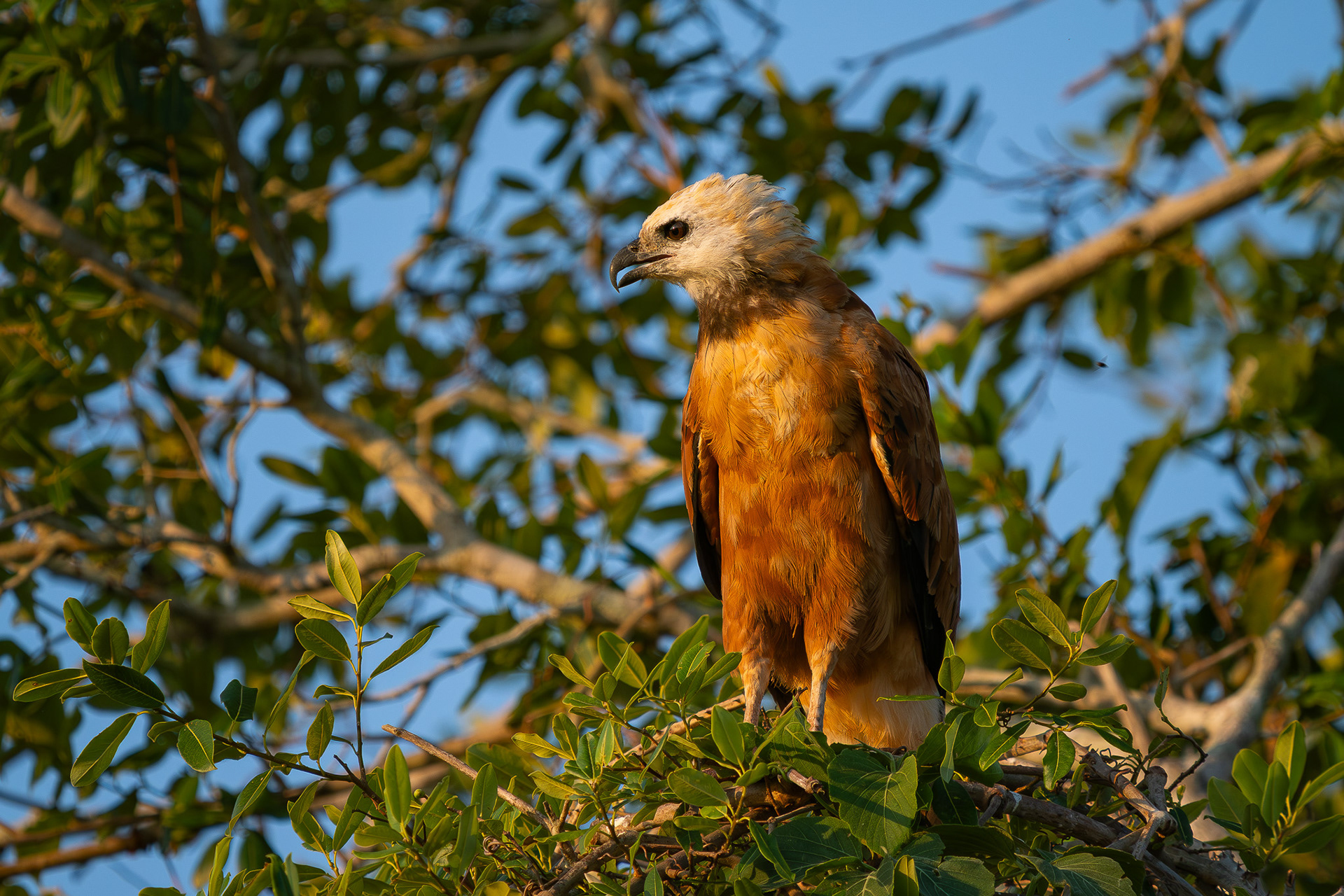
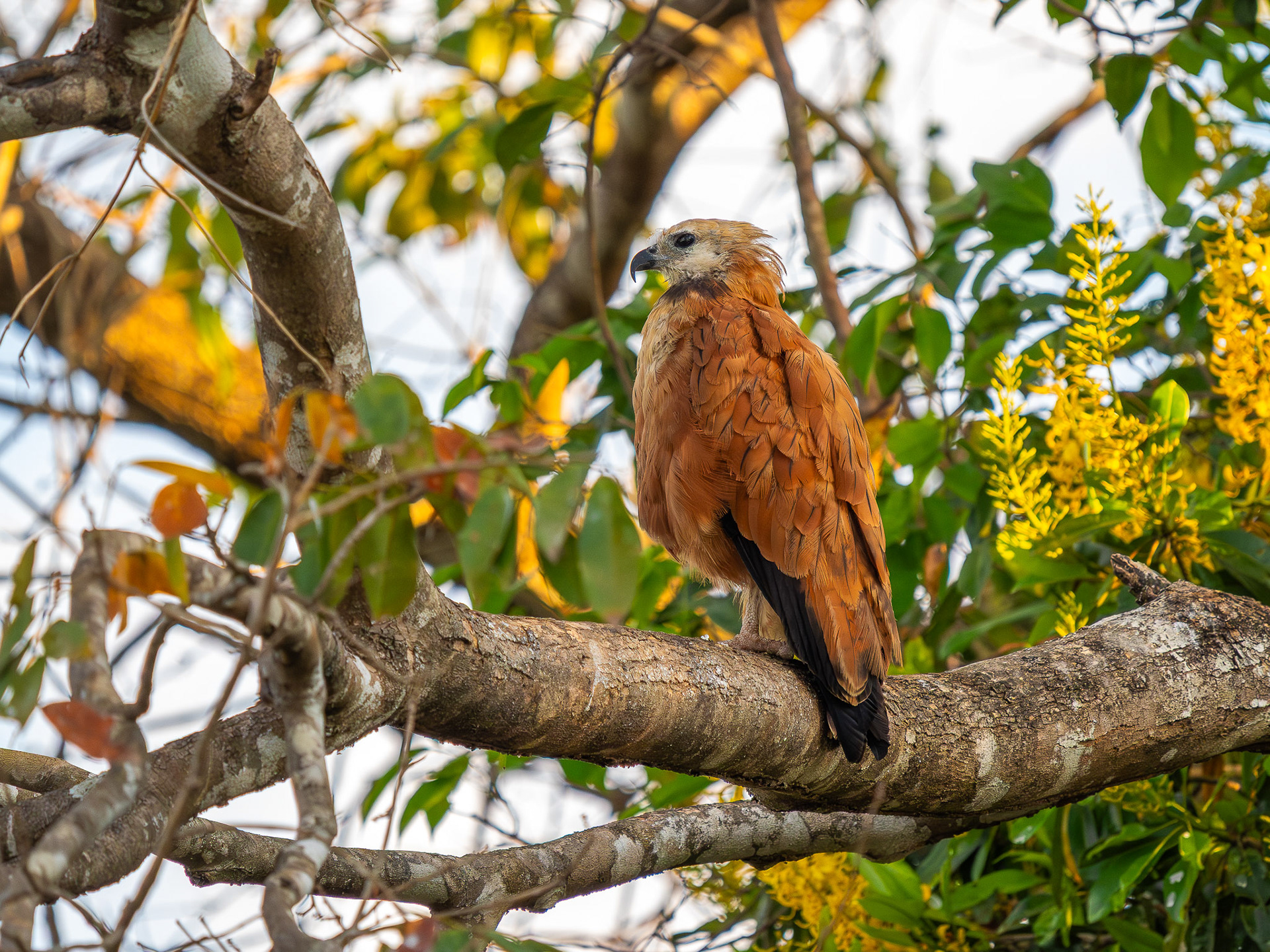
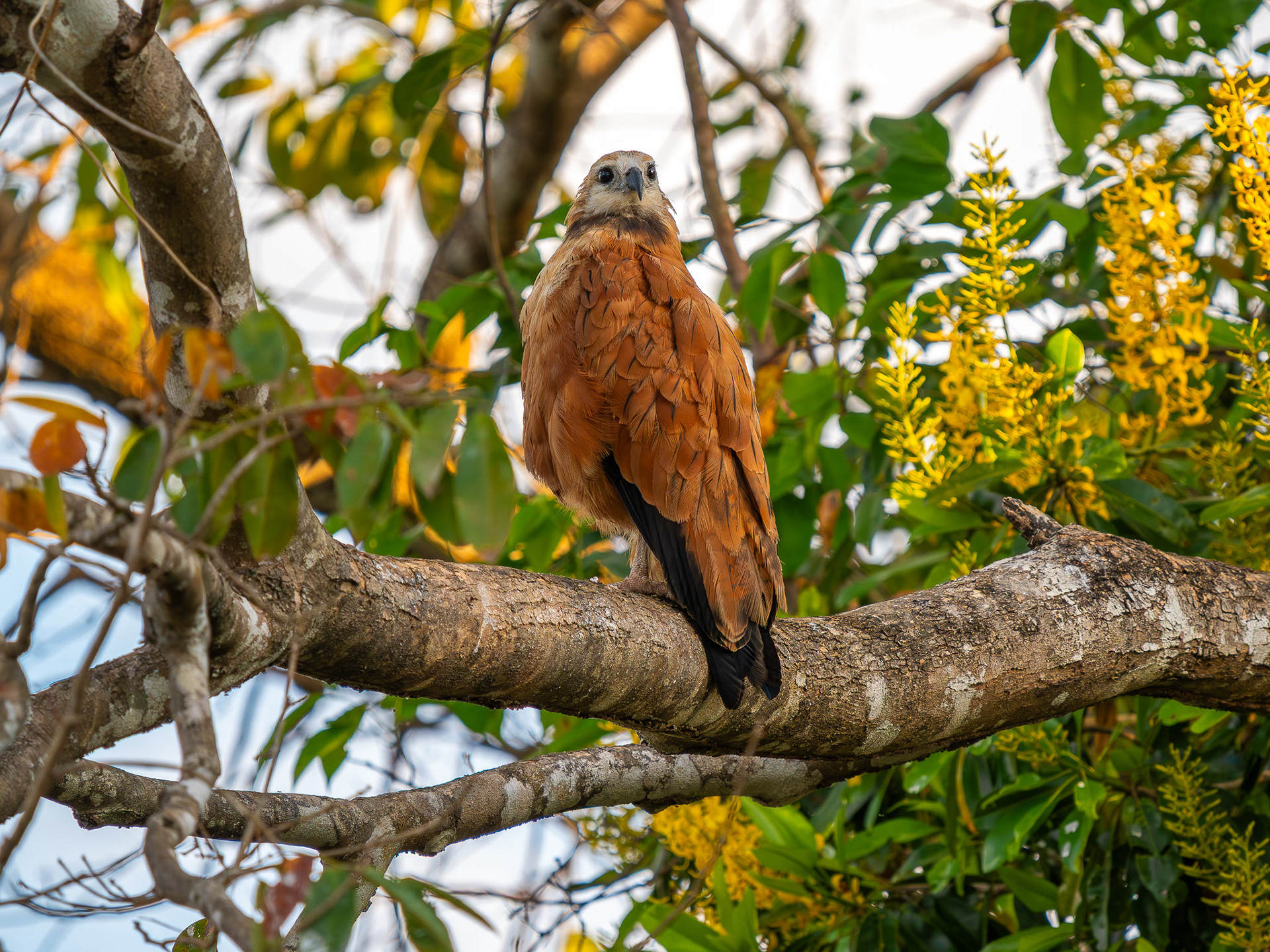
The Black-collared Hawk (Busarellus nigricollis) thrives in the Pantanal's wetlands, equipped with a hooked beak and powerful talons for capturing prey from the water. It hunts by perching on branches overlooking the water, then diving to snatch fish and small aquatic animals.
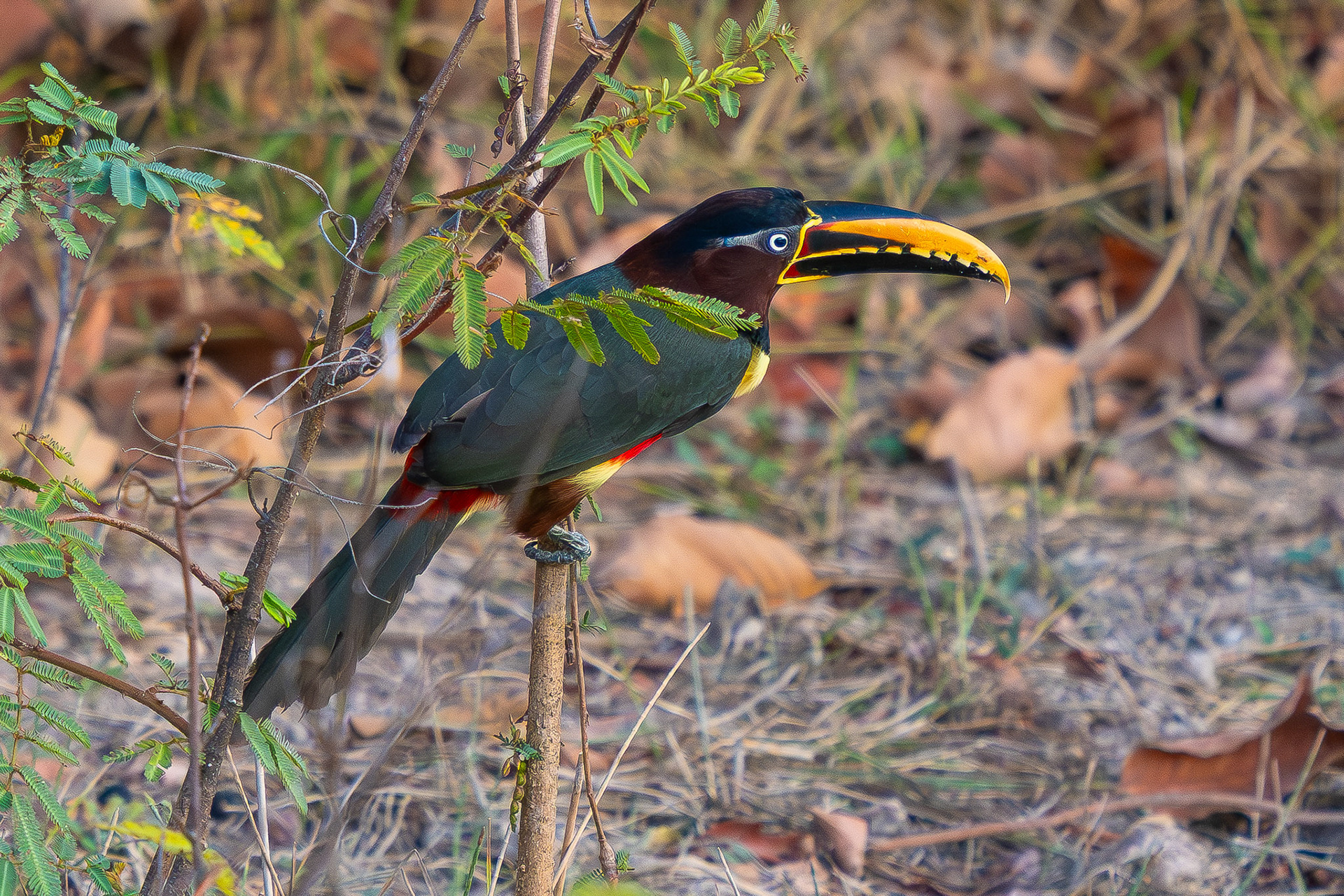
^ Chestnut-eared Aracari
The Chestnut-eared Aracari (Pteroglossus castanotis) is a medium-sized toucan. With a distinctive chestnut-coloured patch on its ears, a bright yellow breast with a thick red band, dark green upperparts, and a large, partially yellow and black bill with serrated 'teeth', it is more tolerant of habitat changes than its relatives and thrives in a range of environments, especially near water.
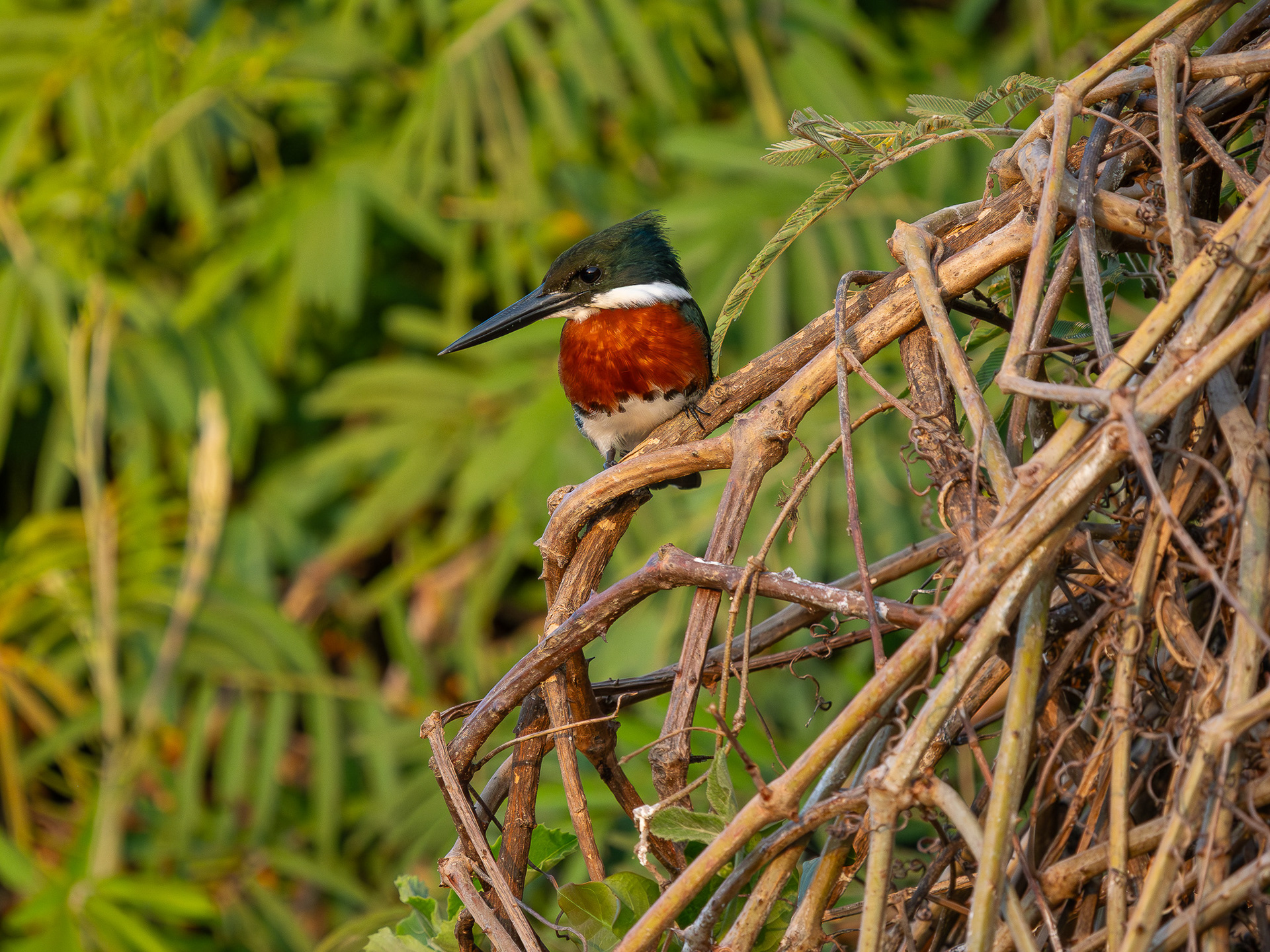
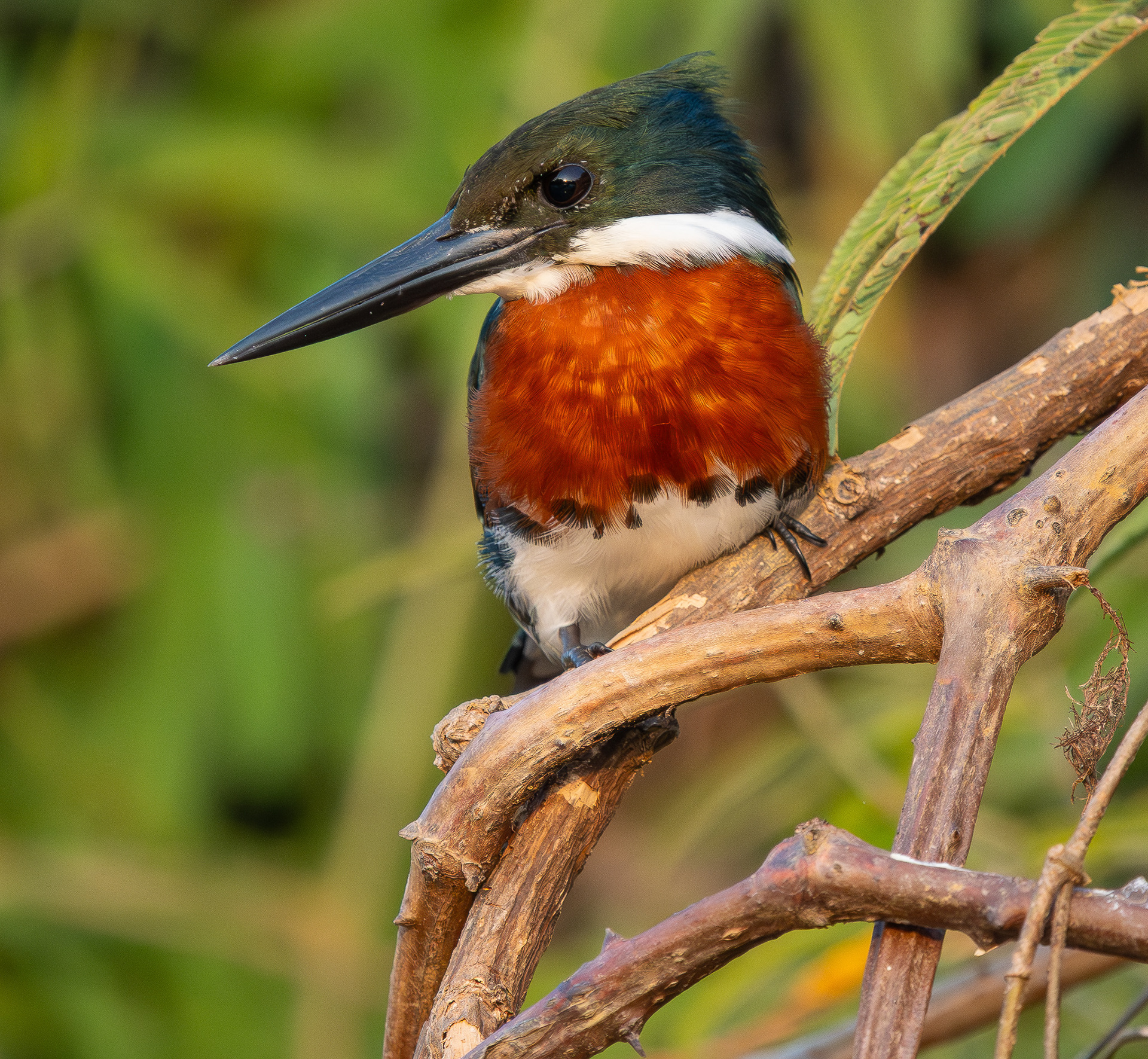
^ Green Kingfisher
The Green Kingfisher (Chloroceryle americana) hunts small aquatic prey, fish, insects and crustaceans by diving from low perches.
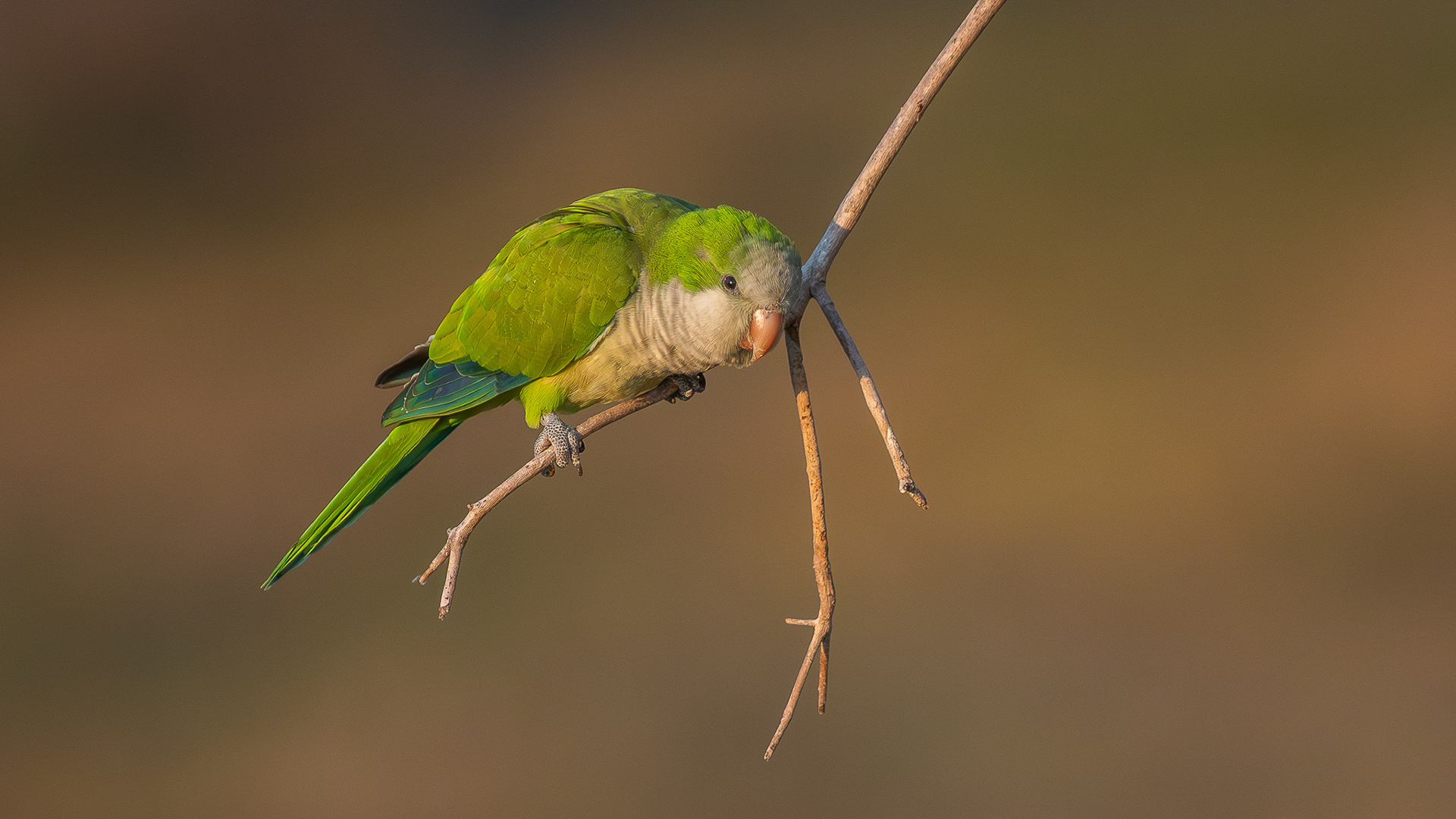
^ Monk Parakeet
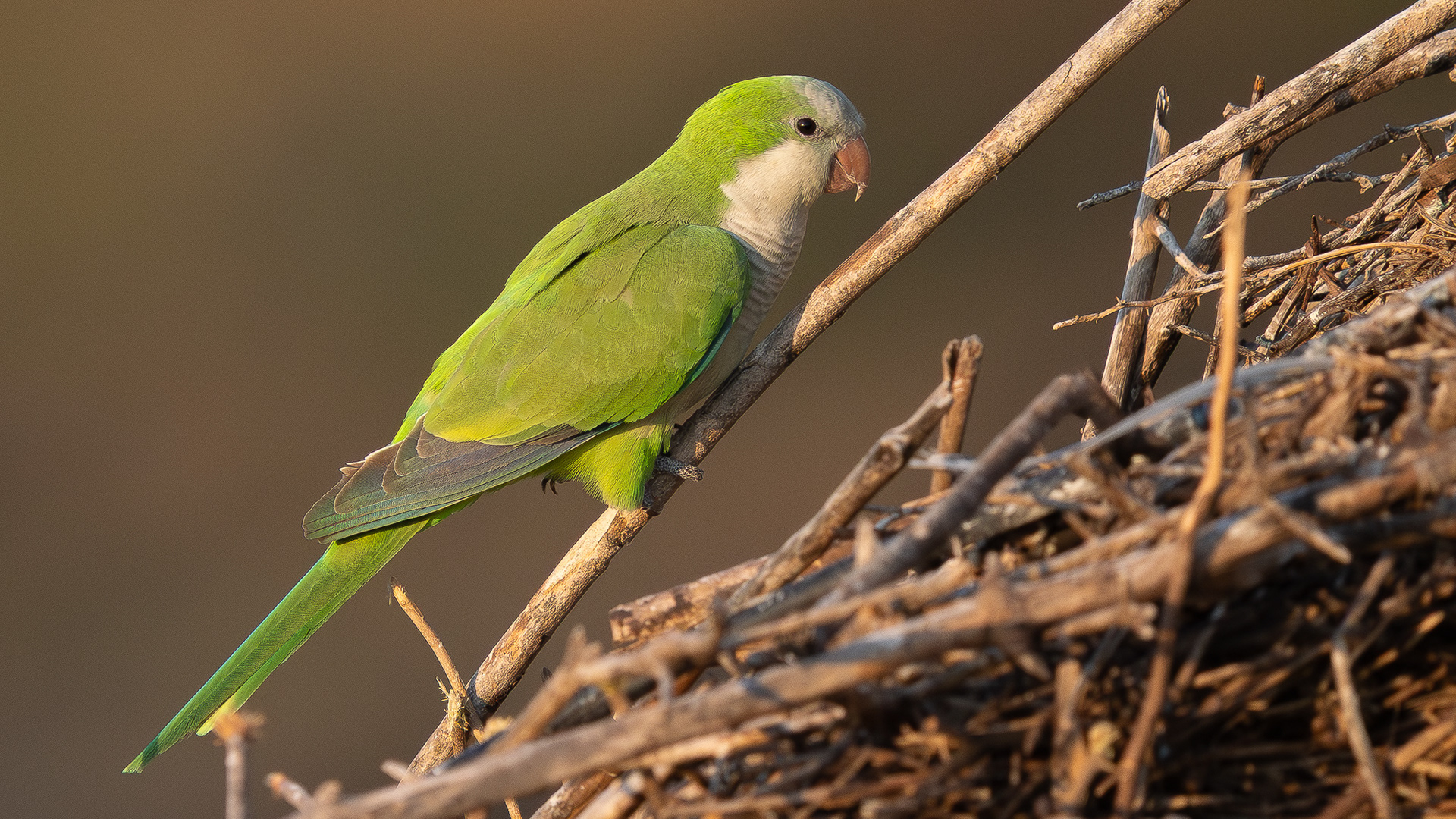
The Monk Parakeet (Myiopsitta monachus) is a common and integral part of the Pantanal's ecosystem. They are very social and noisy and known for their distinctive harsh calls. They can be found in open areas, often near water sources.
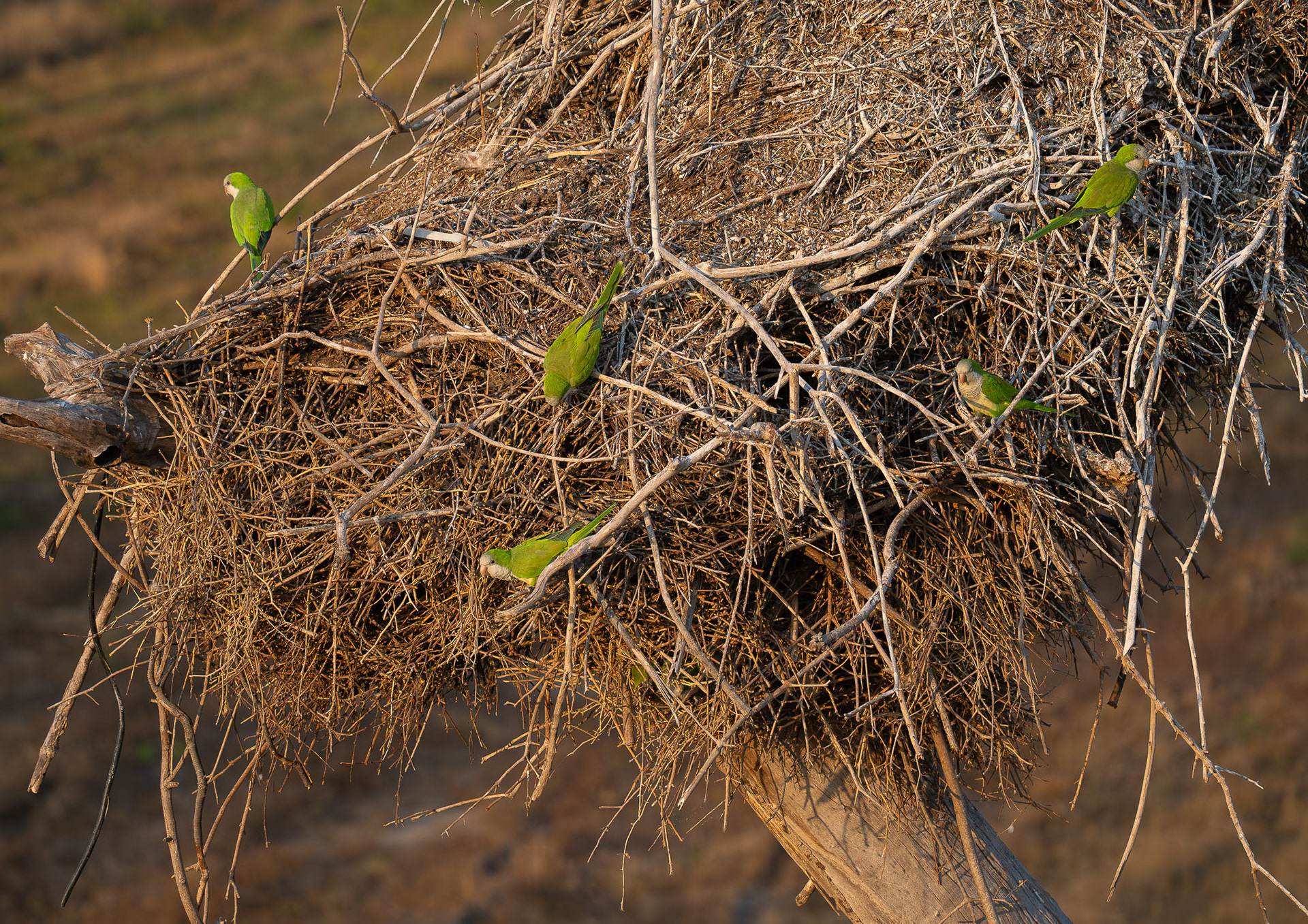
In the Pantanal, Monk Parakeets build large communal stick nests with multiple individual cavities, a rare trait for parrots. They often nest with Jabiru Storks, attaching their structures to the stork's massive nest, as seen above.
^ Ringed Kingfisher
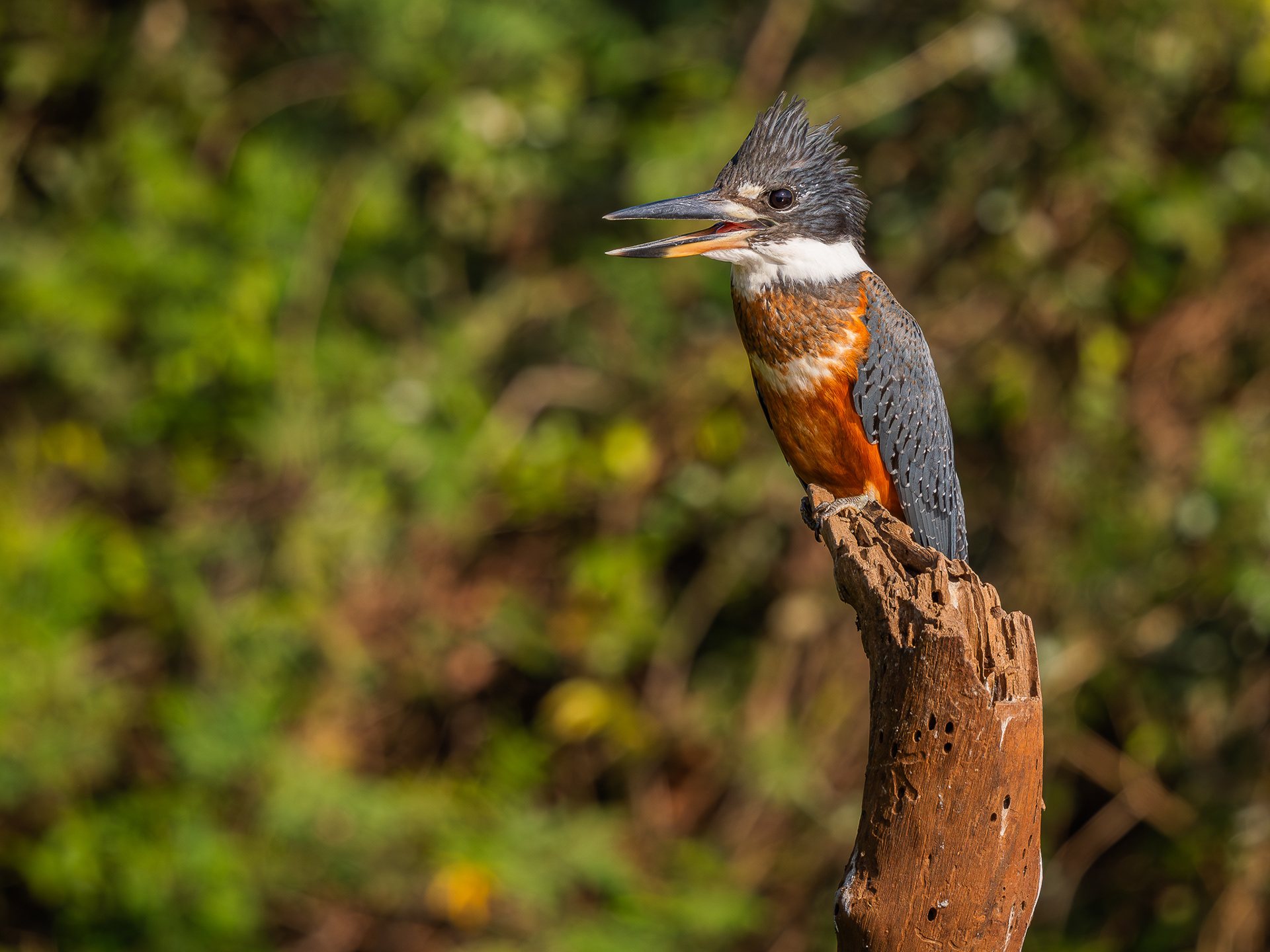
The Ringed Kingfisher (Megaceryle torquata) is a large, prominent, and common kingfisher in the Pantanal, easily spotted along rivers with its distinctive blue-grey body, shaggy crest, and rufous chest, often seen fishing from perches and known for its loud calls.
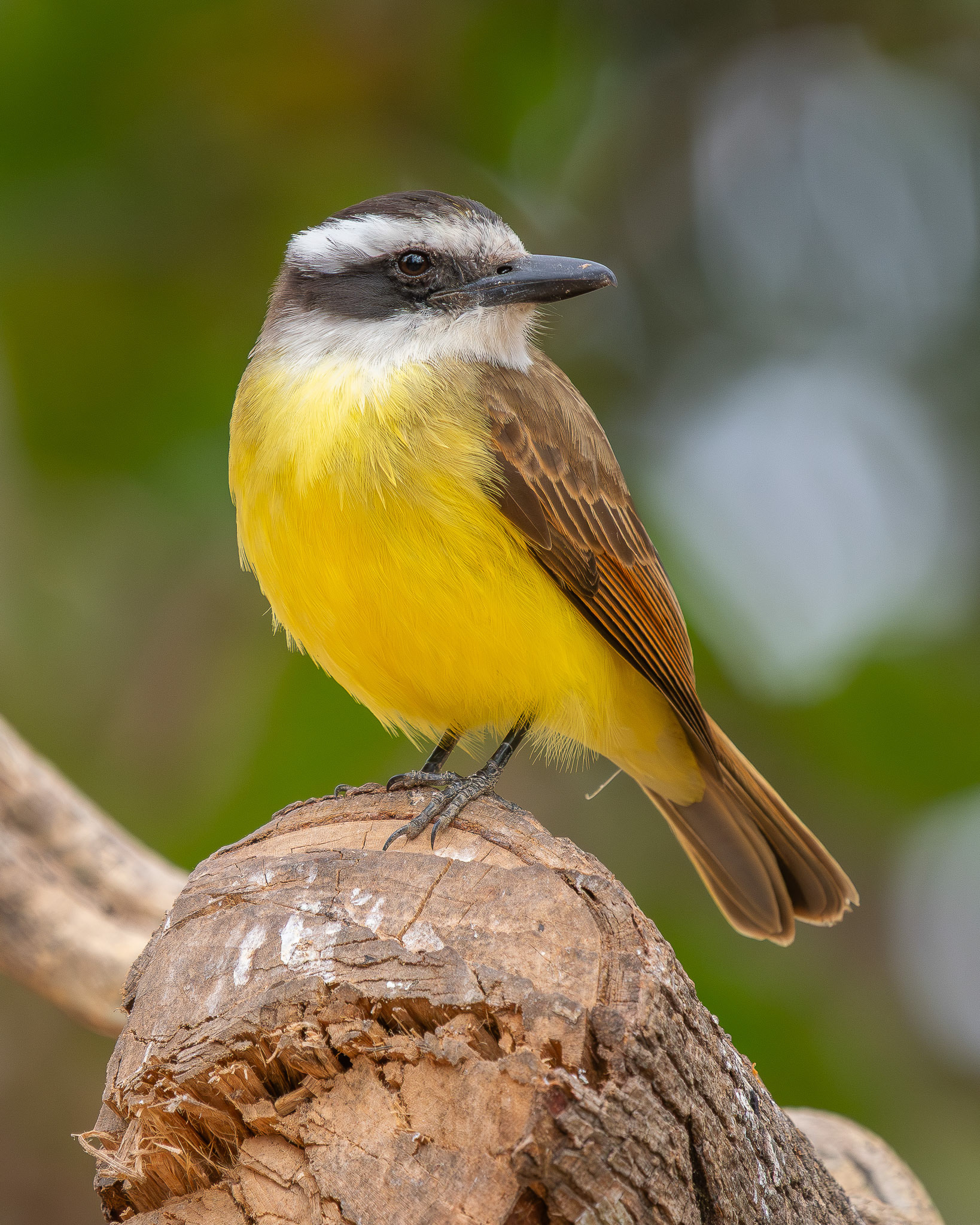
^ Great Kisskadee
The Great Kisskadee (Pitangus sulphuratus) is a large, noisy and brightly coloured tyrant flycatcher famous for its loud "kis-ka-dee" call.
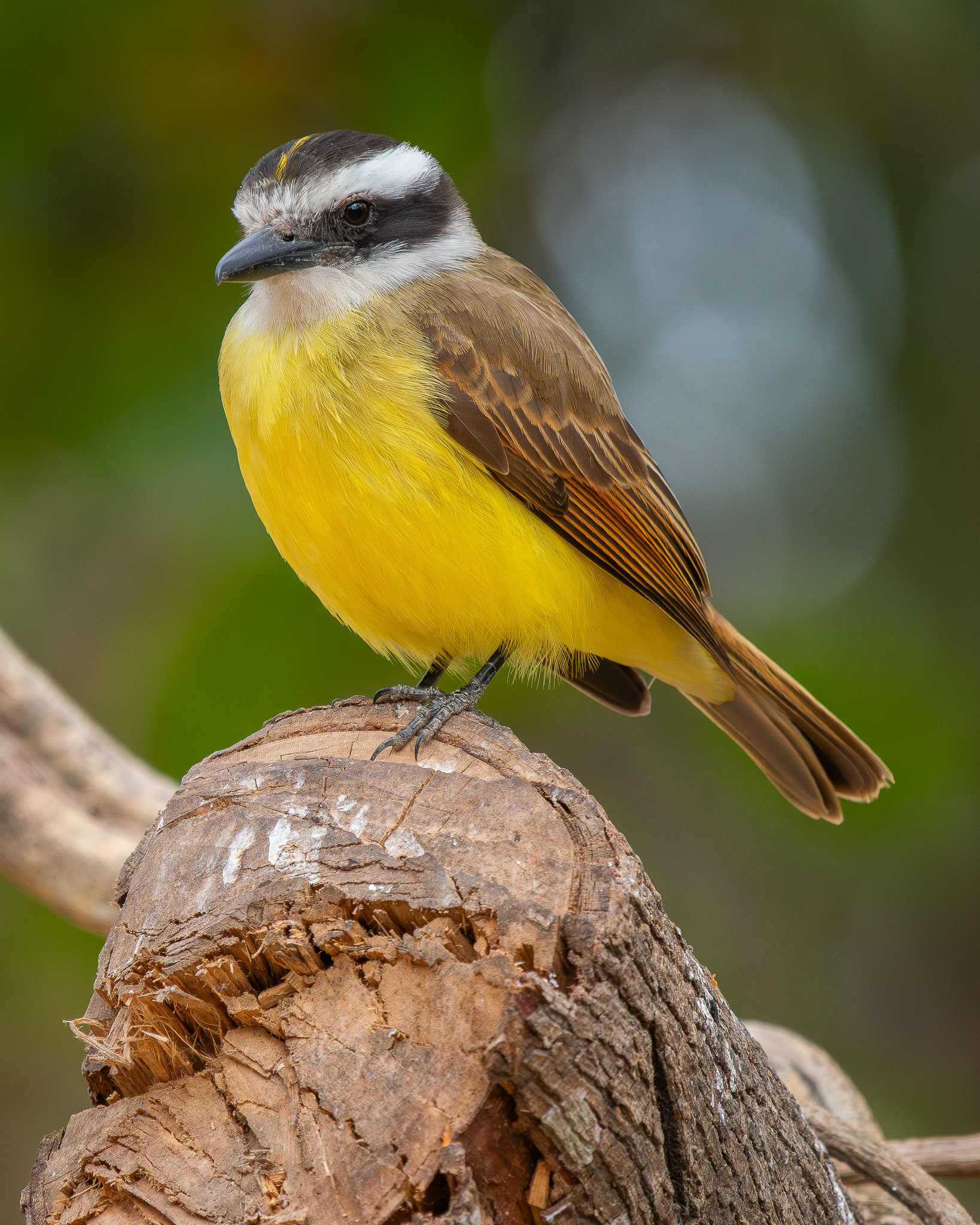
An omnivore, the Great Kiskadee eats insects, small fish, frogs and berries.
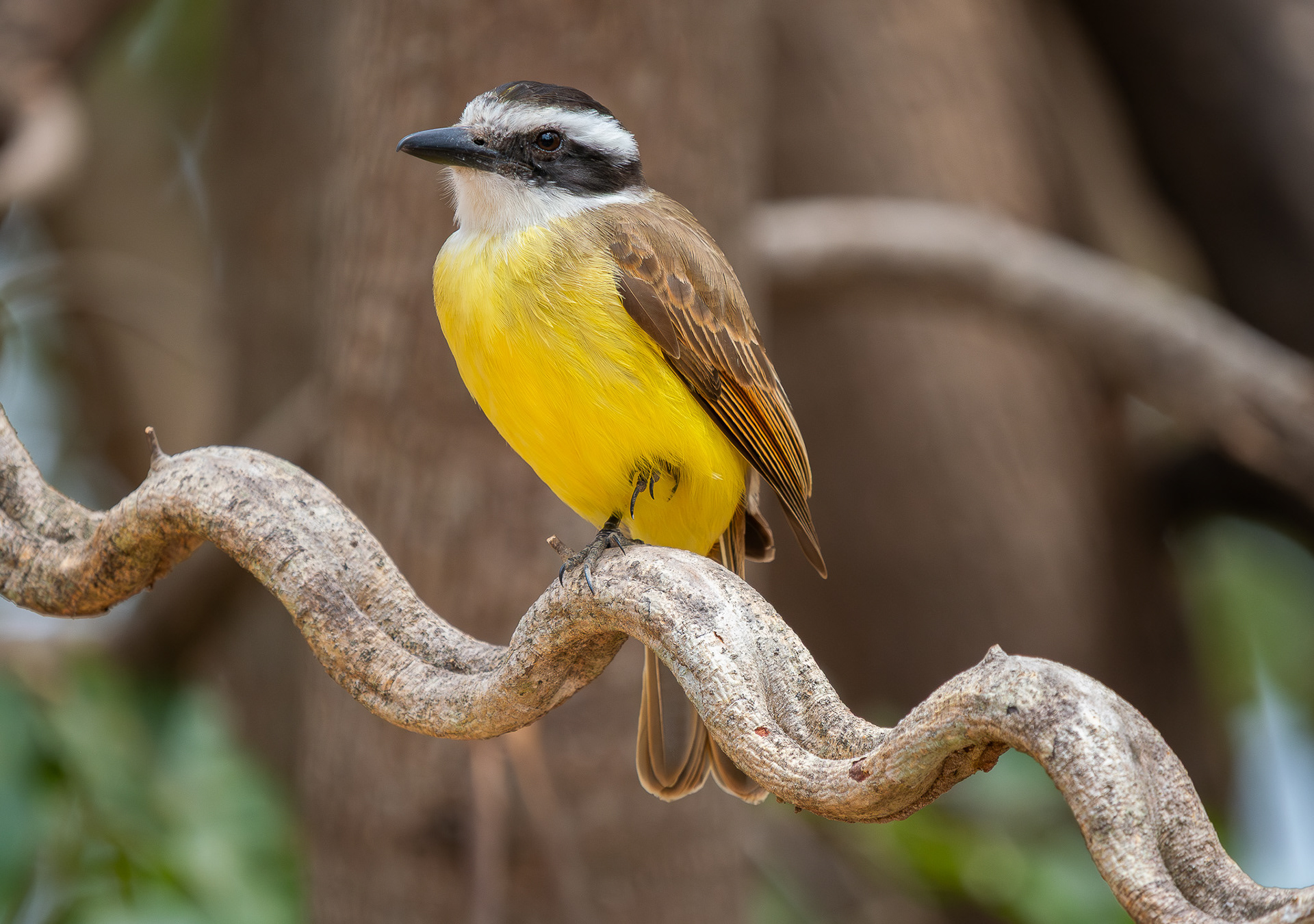
Perching on a high branch to watch for prey, it then swoops down, much like a Kingfisher, to catch small aquatic life.
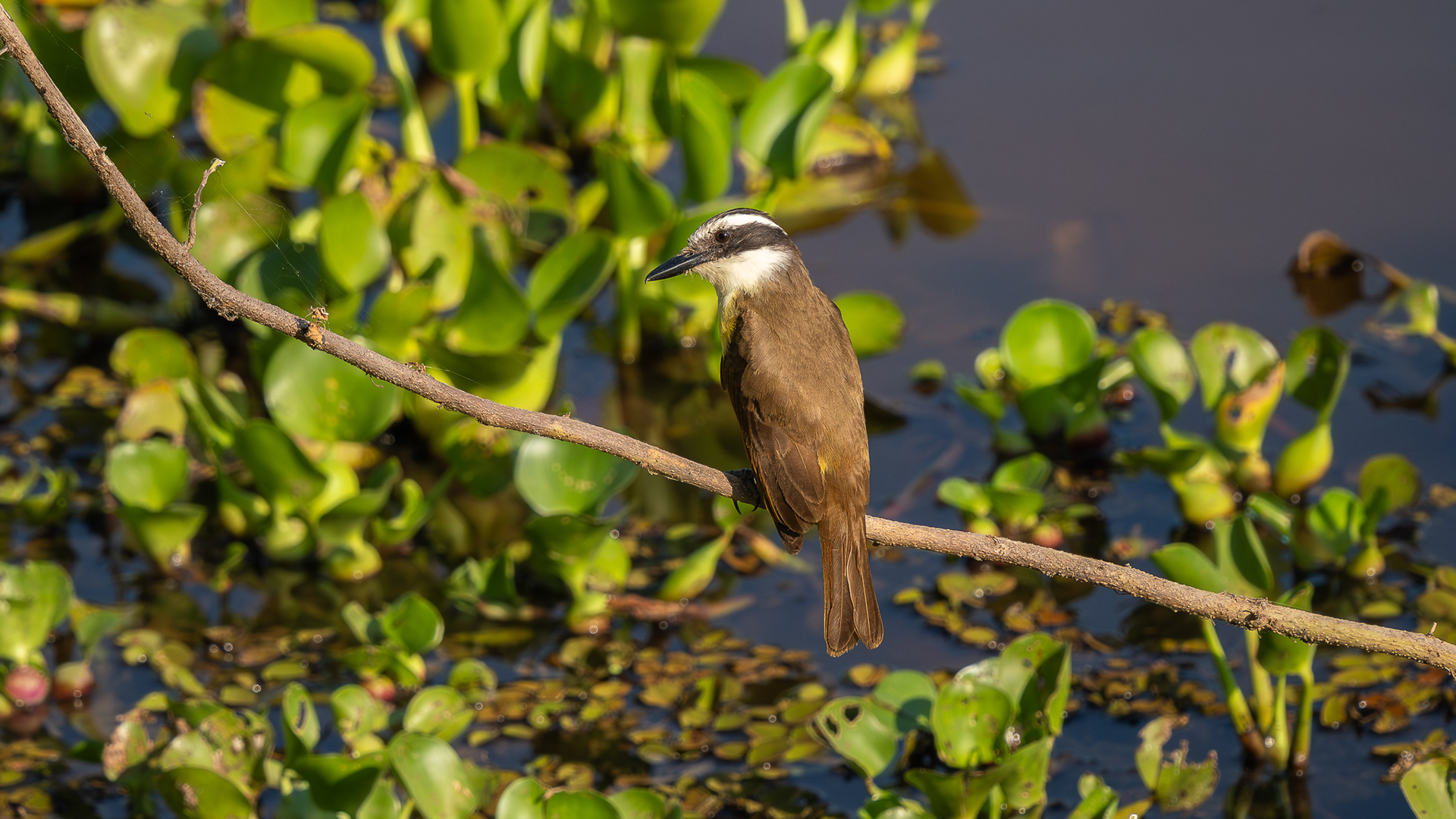
In the Pantanal it can be found in shrubby woodlands, forests and also near water bodies like rivers and ponds
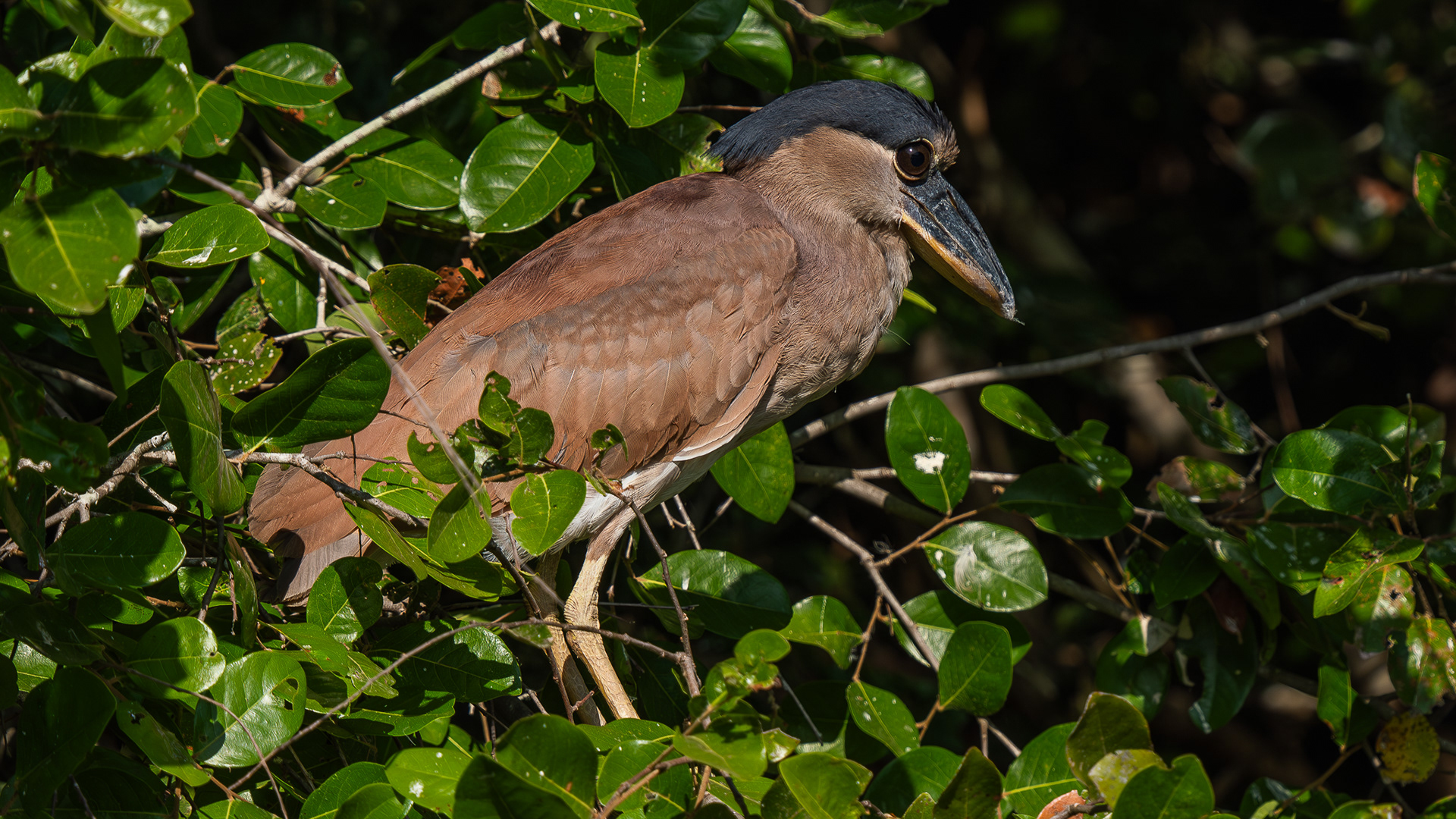
^ Boat-billed Heron
The Boat-billed Heron (Cochlearius cochlearius) is a nocturnal wading bird known for its distinctive bill, which it uses to scoop fish, frogs, crustaceans, and insects from the water.
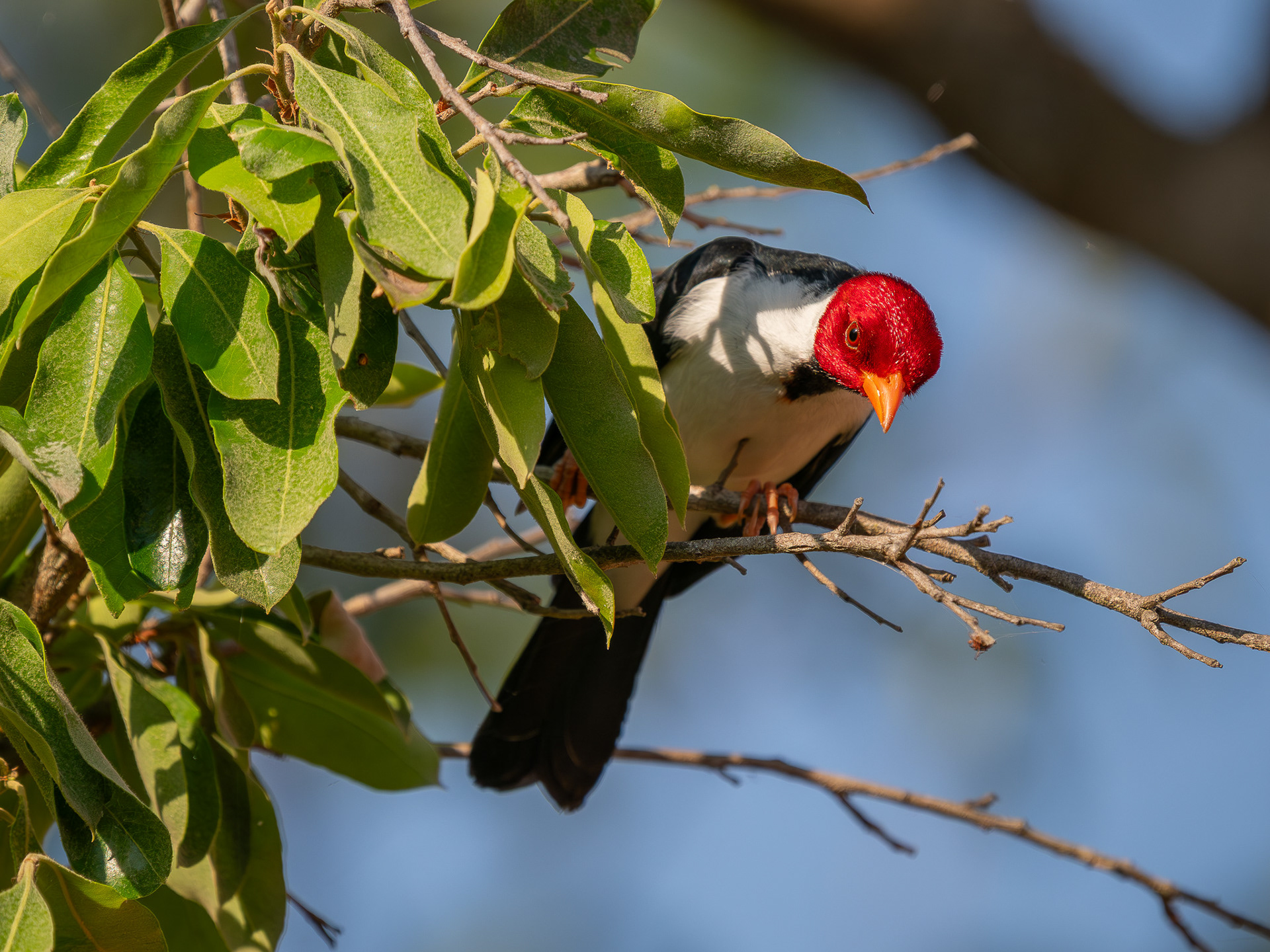
^ Yellow-billed Cardinal
The Yellow-billed Cardinal (Paroaria capitata) forages on the ground, often in pairs or flocks, eating fruits and seeds.
Photographs: ©Don Davies
We travelled to the Pantanal with Wildlife Worldwide and were accompanied by an excellent guide and naturalist, Lucila Rosales (Lucy), whose knowledge and expertise greatly added to our experience.
v Click below to view next Gallery v
v OR v